.svg)
Subscribe to our newsletter and get insights on how to grow your personal brand.
Thank you! Your submission has been received!
Oops! Something went wrong while submitting the form.
.svg)


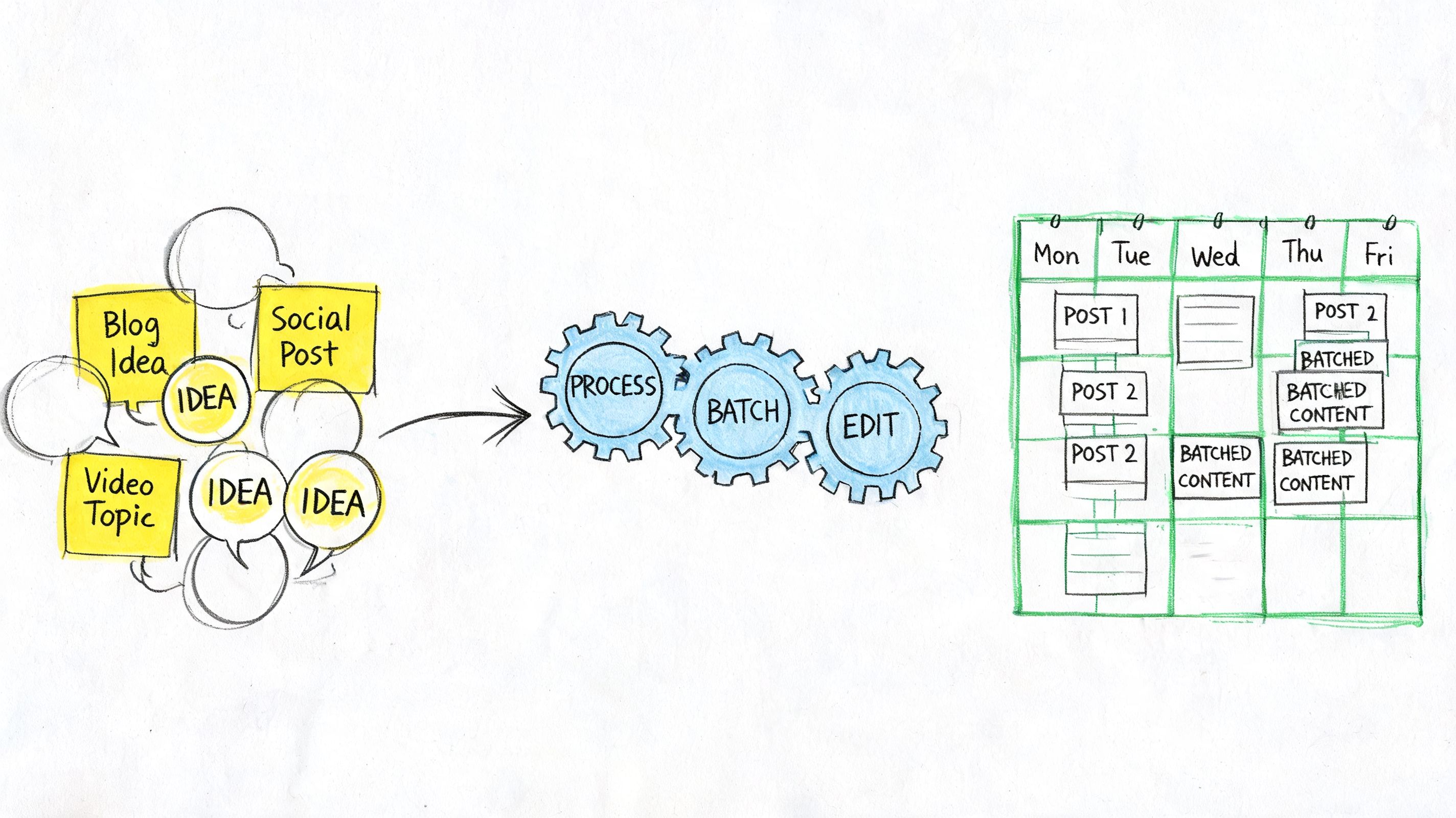
Content batching is a productivity system where you create all content for a set period in one dedicated session instead of making and posting something new every day. Done well, it can cut content creation time by 30 to 50%, largely because task switching can add up to 40% extra time and your brain may need up to 23 minutes to fully refocus after an interruption.
If you're a founder, this probably sounds familiar. You open LinkedIn with good intentions, stare at the blank post box, remember you need a client follow-up, jump to Slack, then come back later and publish something rushed because silence feels worse than mediocre content. You repeat that cycle all week and call it “staying visible.”
That isn't a content strategy. It's reactive publishing.
What is content batching? It's the opposite. You decide your themes, create multiple assets in one focused block, polish them together, then schedule them. You stop asking “What should I post today?” and start asking “What message do I want to own this month?” That shift matters if you're building a personal brand, because consistency isn't just about frequency. It's about showing up with a recognizable point of view, without letting content hijack your calendar.
A lot of smart operators sabotage their personal brand with a bad process.
They know they should post. They have real expertise. They even have stories worth telling. But they treat content like a daily emergency. Monday, they scramble for a thought-leadership post. Wednesday, they try to film a video between meetings. Friday, they remember they haven't posted in days and throw up a recycled opinion with no real angle.
That approach drains energy fast. Worse, it makes your brand look inconsistent even when your business is solid.
The issue usually isn't a lack of ideas. It's fragmented execution. You're switching from client work to writing, from writing to design, from design to scheduling, then back to operations. According to Living Abstracts on content batching, content batching can reduce total content creation time by 30 to 50% compared to creating posts ad hoc. The same source notes that task switching can add up to 40% extra time and the brain may need up to 23 minutes to fully refocus after an interruption.
That's why ad hoc posting feels heavier than it should. You're not just creating content. You're paying a mental reset tax every time you bounce between tasks.
Practical rule: If content feels harder than it looks on paper, your workflow is probably broken, not your creativity.
When I advise founders to batch, I'm telling them to stop improvising. Pick a content window, usually a week or a month. Then create in stages. Plan first. Write second. Record third. Edit fourth. Schedule last.
That structure gives you room to think strategically instead of reactively. It also makes consistency realistic. If you need a planning framework before you batch, start with this guide on how to create a content plan for your personal brand. If you want a practical way to map those ideas, a visual content calendar on Scheduler.social helps you see the full week at once instead of managing content post by post.
You don't need more discipline. You need fewer decisions.
Batching works because your brain hates constant mode switching.
Writing captions, filming a short video, resizing graphics, reviewing edits, and scheduling posts are not variations of the same task. They pull on different types of attention. When you move between them all day, you burn energy on setup, not output.
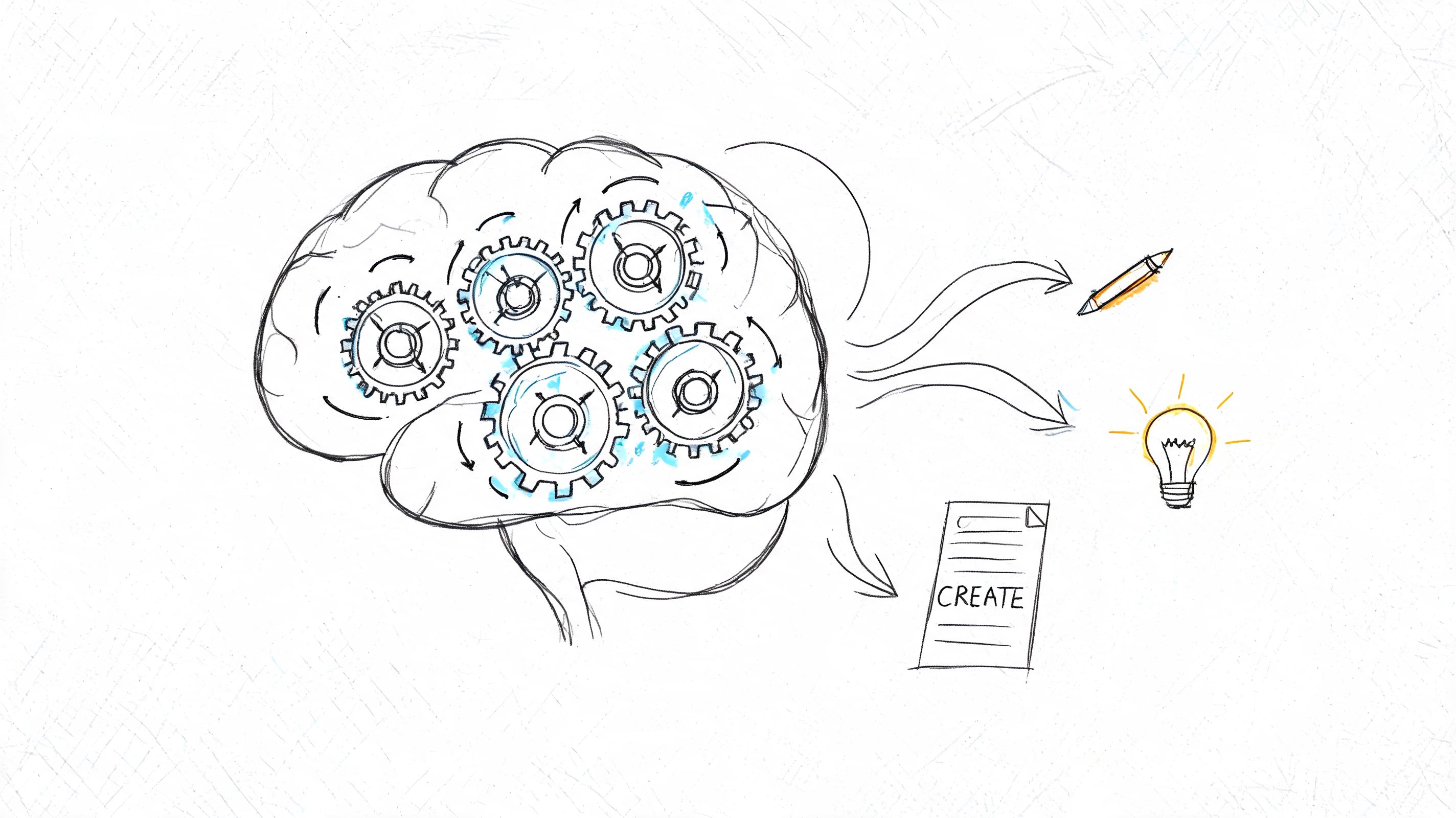
Think about a factory line versus a cluttered workshop. In the factory line, one station does one thing repeatedly and gets better with every repetition. In the workshop, one person keeps stopping to grab a new tool, reset the bench, and rethink the process.
Most founders run content like the workshop. They write one post, search for an image, answer email, come back to edit, then switch over to record a video. Every shift creates friction.
According to Evergreen Feed's breakdown of batch content creation, switching between different types of tasks can reduce a professional's efficiency by up to 40%. The same source says creators who batch similar tasks can maintain a flow state and report time savings of 50 to 70% within their first month of implementation.
That number isn't magic. The mechanism is simple. Fewer resets. More momentum.
Batching doesn't just help you produce faster. It usually helps you produce better.
When you write five captions in a row, your voice stabilizes. When you record multiple videos in one sitting, your delivery warms up. When you edit all your posts together, weak ideas stand out faster because you're comparing them side by side instead of evaluating each one in isolation.
Your best content usually comes after the first few reps, not before them.
That's why one of the easiest ways to beat inconsistency is to separate ideation from execution. Don't brainstorm while you're trying to write. Don't write while you're trying to design. And don't expect clarity to appear if you're forcing every task into the same hour.
If blank-page paralysis keeps slowing you down, read this piece on how to overcome writer's block and build your personal brand. The fix is rarely “try harder.” It's usually “reduce the switching.”
Some tasks belong in the same block because they use similar mental gears:
If you batch by platform alone, you can still end up scattered. Batch by task type first. That's the move that creates focus.
Many creators fail with batching because they try to “set aside some time for content” and call it a system. That's too vague. A real workflow has stages, owners, and outputs, even if you're a team of one.
Use this as your baseline.
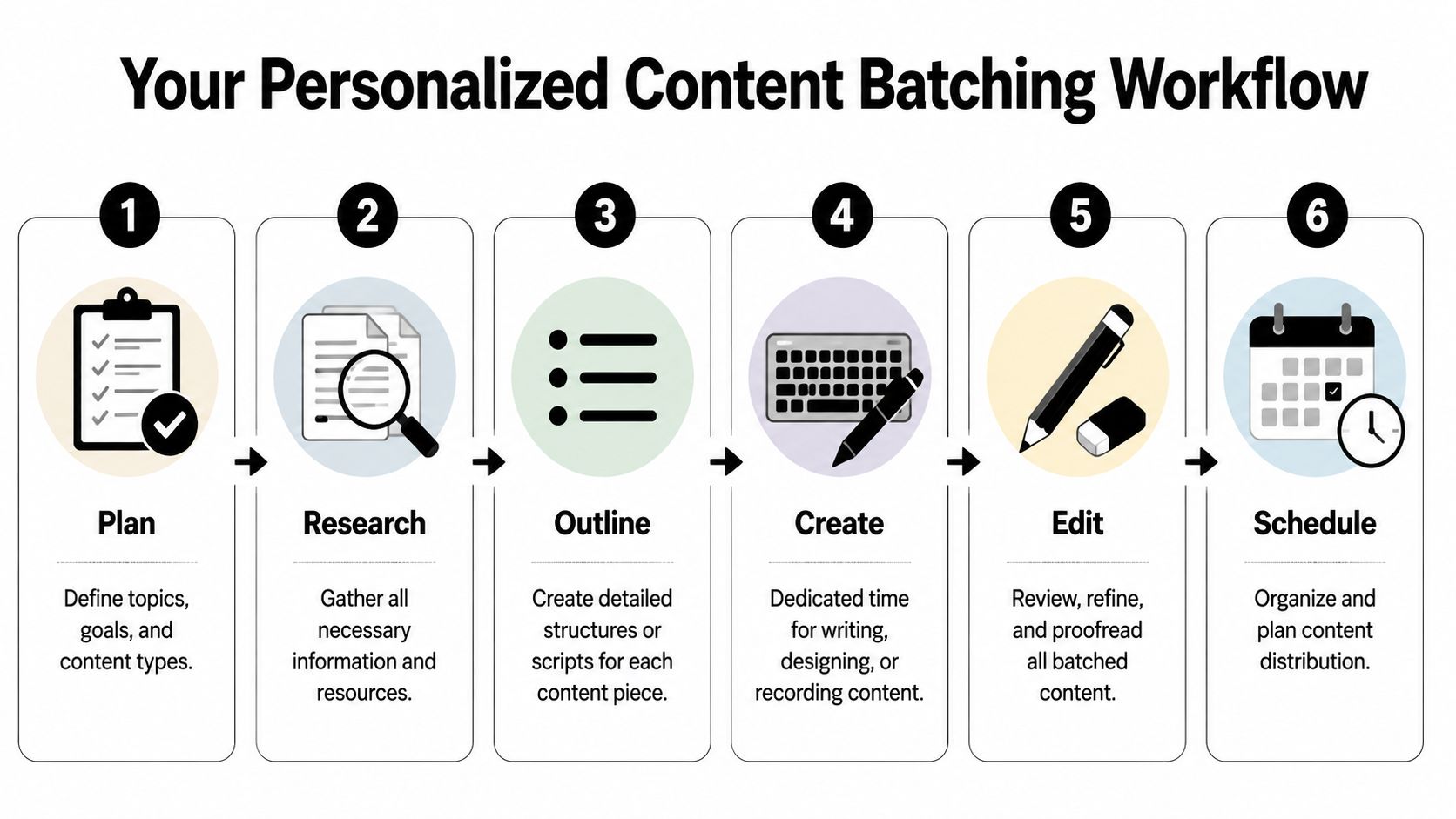
Start with planning, then move straight into research. In the planning block, choose the themes you want your brand associated with. For a founder, that might be operator lessons, market opinions, customer stories, hiring insights, or behind-the-scenes decision-making. Keep the themes tight so your audience learns what you stand for.
Then gather what you need. Pull screenshots, stats you're allowed to reference, examples from your own work, customer language from sales calls, and any notes from your voice memos or meetings. This step matters because weak batching often comes from trying to create before collecting raw material.
My advice: build around recurring pillars, not random inspiration. Random inspiration doesn't scale.
If you need a broader workflow lens outside content, this guide on how to reduce friction in your work is useful because batching succeeds when the surrounding process is clean too.
Outlining is where speed starts to show. Give every post a hook, one core point, and a simple takeaway. For short-form video, write talking points instead of full scripts unless you need precision. For written posts, rough beats are enough at first.
Then create in one medium at a time.
Later in the process, use video as a support layer, not a distraction.
Editing deserves its own block. Don't edit while drafting unless you're cleaning up something critical. Batch mode dies when you keep polishing sentence three before you've finished post one. Review all content together, tighten weak hooks, remove repeated ideas, and check that every piece sounds like you.
Scheduling is the final stage. Load posts into your scheduler, assign publish dates, add links, and write any distribution notes for your team. If a post needs same-day context, flag it as flexible instead of forcing it into auto-publish.
A clean weekly or monthly workflow usually looks like this:
That's the system. Keep it boring. Boring systems scale.
Consider the practical application for a busy founder who desires a visible personal brand without the need to manage content on a daily basis.
Monday morning is for direction. You sit down with your weekly themes and decide what you want the market to hear from you. Maybe one post is an operator lesson from a recent mistake. Another is a client insight. Another is a sharp opinion on the industry. You outline everything before lunch.
Wednesday is production day. You write your text posts first while your ideas are fresh. Then you record your short videos while you're already in delivery mode. If you use visuals, you hand those off or create them after your core ideas are locked.
Friday is review and distribution. You tighten language, approve final assets, and schedule the week ahead. If something timely happens in your market, you swap one scheduled post out and respond in real time.
| Day / Session | Time Allotment | Tasks |
|---|---|---|
| Monday planning block | 1 to 2 hours | Choose content pillars, review audience questions, outline the week's posts |
| Wednesday writing block | 2 to 3 hours | Draft captions, long-form posts, and video talking points |
| Wednesday recording block | 1 to 2 hours | Film short videos, capture b-roll, record voice notes for later repurposing |
| Thursday editing block | 1 to 2 hours | Edit copy, review recordings, finalize creative direction |
| Friday scheduling block | 1 hour | Load posts into your scheduler, set publish dates, add links and notes |
| Daily light touchpoint | Short check-in | Respond to comments, engage with relevant conversations, note fresh ideas |
You don't need a complex dashboard at the start. A plain working template is enough.
Core theme
What topic does this batch own?
Audience problem
What specific frustration, question, or desire does this content address?
Content formats
Decide whether this batch includes text posts, short videos, carousels, email, or a mix.
Key proof points
Pull examples, personal stories, screenshots, lessons learned, or customer language.
Publishing notes
Mark which pieces are evergreen and which ones need a timely trigger.
A strong batch is one idea expressed in multiple formats, not seven unrelated posts shoved into a calendar.
The point of the schedule isn't rigidity. It's removing the friction that keeps content stuck in your head instead of in front of your audience.
Tools matter, but not in the way many individuals think.
You don't need a huge stack. You need a stack that supports speed, review, and measurement. For most personal brands, that means one tool for planning, one for creation, one for design, and one for scheduling. Asana or Trello can manage your workflow. Google Docs or Notion can hold your drafts. Canva handles most founder-level visual needs. Buffer or Later can schedule and organize distribution.
If you're producing short-form ad creative or testing video variations, tools like the ShortGenius AI ad generator can help you build and iterate faster without turning every asset into a manual project. That's useful when batching starts to include paid distribution or multi-format repurposing.
A lot of people batch content and then measure the wrong thing. They feel productive because the calendar is full. That's not enough. Full calendars don't build brands. Useful content that drives response does.
According to Curata's content marketing statistics, top-performing organizations track outcomes, not just output. The most common KPIs include page views, shares and likes tracked by 45% of organizations, and leads prioritized by 48%. The same source says a strategic batching process can boost these metrics by 20 to 35% when content pillars align with campaign goals.
That gives you a better standard for what is content batching in practice. It isn't just a productivity move. It's a repeatable publishing system tied to business goals.
Use a simple scorecard for each batch:
If you want a broader software stack for creators and operators, this roundup of the best tools for content creators in 2026 to build your brand is a strong starting point.
The rule I push hard is this. Review every batch after it publishes. If you don't measure it, you're not batching strategically. You're preloading content and hoping.
Batching fails when it turns your brand into a vending machine.
The biggest risk is stale content. You create a month's worth of posts, schedule everything, disappear into operations, and assume consistency equals progress. It doesn't. If your market shifts, your audience starts asking new questions, or your tone drifts into autopilot, your content stops feeling alive.
According to Buffer's content batching resource, a major pitfall is content fatigue, where pre-scheduled content can feel disconnected and lead to a 15% drop in engagement after 3 months. The same source recommends a hybrid model of 70% batched content and 30% real-time engagement, and notes that 62% of solopreneurs struggle to track this performance.
That recommendation is right. Batch the foundational content. Leave room for timely reactions, spontaneous observations, and audience conversations. That's how you protect consistency without sounding robotic.
Batch your structure, not your humanity.
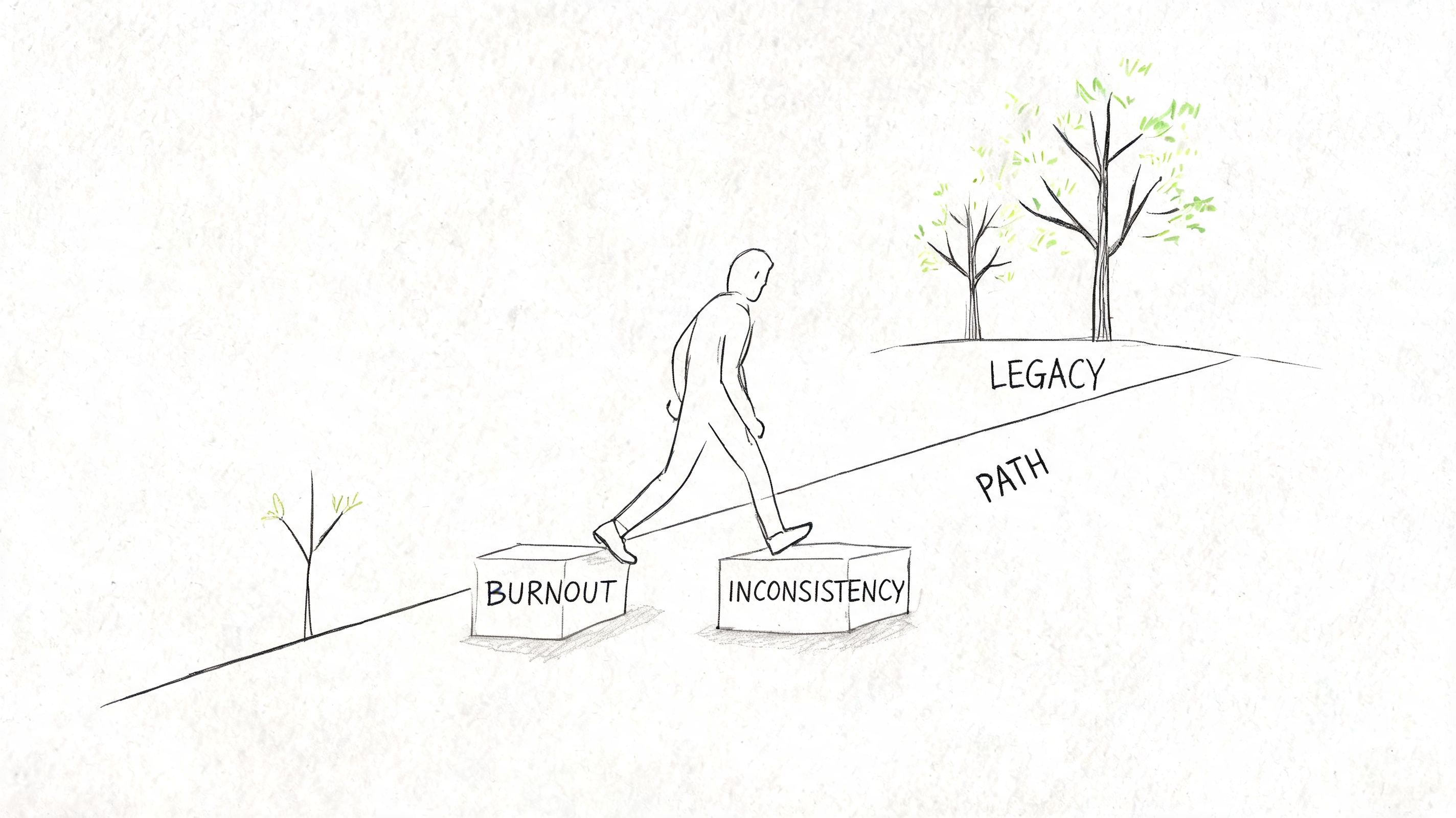
Founders who win with content do two things well. They build systems, and they stay present. That's the combination that turns content from a weekly burden into a long-term brand asset.
If you want that system built for you, Legacy Builder helps founders and professionals turn their stories, expertise, and ideas into consistent personal brand content without the daily scramble. You bring the perspective. Their team handles the strategy, writing, design, posting rhythm, and ongoing refinement so your content stays authentic, visible, and aligned with the brand you are trying to build.


You could – but most in-house teams struggle with the nuance of growing on specific platforms.
We partner with in-house teams all the time to help them grow on X, LI, and Email.
Consider us the special forces unit you call in to get the job done without anyone knowing (for a fraction of what you would pay).
Short answer – yes.
Long answer – yes because of our process.
We start with an in-depth interview that gives us the opportunity to learn more about you, your stories, and your vision.
We take that and craft your content then we ship it to you. You are then able to give us the final sign-off (and any adjustments to nail it 100%) before we schedule for posting.
No problem.
We have helped clients for years or for just a season.
All the content we create is yours and yours alone.
If you want to take it over or work on transitioning we will help ensure you are set up for success.
We want this to be a living breathing brand. We will give you best practices for posting and make sure you are set up to win – so post away.
Subscribe to our newsletter and get insights on how to grow your personal brand.
