.svg)
Subscribe to our newsletter and get insights on how to grow your personal brand.
Thank you! Your submission has been received!
Oops! Something went wrong while submitting the form.
.svg)


Most advice about virtual events starts in the wrong place. It talks about platform features, slide decks, and attendance spikes, then treats the event like a disposable webinar. That mindset misses the point for founders, creators, and operators building a personal brand, because virtual event hosting only becomes valuable when it strengthens your authority long after the live room closes.
The format has become mainstream fast, not because it's trendy, but because teams and audiences adapted to it at scale. One industry compilation reports that 93% of event planners transitioned from physical to virtual events in 2020 during the disruption, and the same source places the global virtual events market at USD 199 billion in 2022 with a projection of USD 1,066 billion by 2032 (Sci-Tech Today's virtual events statistics). That growth matters less as a headline than as a signal, virtual events are now an infrastructure layer for personal brand distribution, not just a backup plan.
The best way to think about it is simple. A webinar can attract attention, but a well-run event can shape how people describe you, what they remember about your perspective, and whether they keep seeing your content after the event ends. If you're still thinking in lead-capture-only terms, the guide to monetizing webinars is useful background, but the bigger opportunity is turning each session into an authority asset that compounds. The strongest personal brands don't just host events, they build a body of proof.
Most virtual events fail because they are built to end cleanly, not to keep working after the live room closes. The host spends time on a polished registration page, a tidy slide deck, and a competent speaker roster, then treats the live attendance number as the whole story. That may look organized, but it rarely creates the kind of durable audience relationship that builds a personal brand.
A personal brand grows when people keep encountering your ideas in different formats. One event appearance is easy to forget, repeated exposure is not. That is why event design has to favor content reuse, audience ownership, and clear positioning. The live event is source material, not the finished product.
Creators and founders often make the same mistake, they optimize for a single burst of attention and ignore the content lifecycle that follows. A live talk should feed a system, not sit there as a one-time performance. The event page, replay, clips, newsletter follow-up, and social cutdowns all need a specific job.
If the event is meant to support authority building, it should fit the rest of the brand strategy. The personal brand authority framework helps because it pushes the work beyond visibility and toward trust, consistency, and positioning. Those are the signals people remember, and they are what make later content land with more weight.
Practical rule: if the event cannot produce at least three follow-up assets, it is probably planned too narrowly.
The event also needs to support distribution you control. A host who only depends on the platform's live audience is renting attention for a few hours. That is a weak business model for a personal brand, even if the room looks busy.
The best hosts think like publishers. They build the run-of-show around quotable moments, reusable frameworks, and segments that can be clipped without losing context. A founder speaking on product strategy should leave with short video excerpts, a written recap, a short email takeaway, and a few social posts that sound like the same person, not four disconnected campaigns.
There is a trade-off here. A tighter event narrative can make the live experience feel more deliberate, but it also means saying no to extra topics that do not support the core message. That discipline usually pays off later, because the material is easier to repurpose and the positioning is cleaner. A scattered session may get polite applause, then disappear.
Audience ownership matters just as much. If the only place people see you is the event platform, you do not really own the relationship. You own it when attendees join your email list, follow your content, or come back for the next event because the first one felt useful.
The main shift is mental. Stop asking whether the event performed. Ask whether it changed how the market sees you, and whether it gave you enough material to keep that perception alive.
Before any platform choice or slide design, the host needs a precise answer to two questions, what does this event need to accomplish, and who exactly should care? Personal brand events fail when they try to satisfy everyone. They work when the goal is narrow enough to shape the content, but broad enough to support long-term authority.
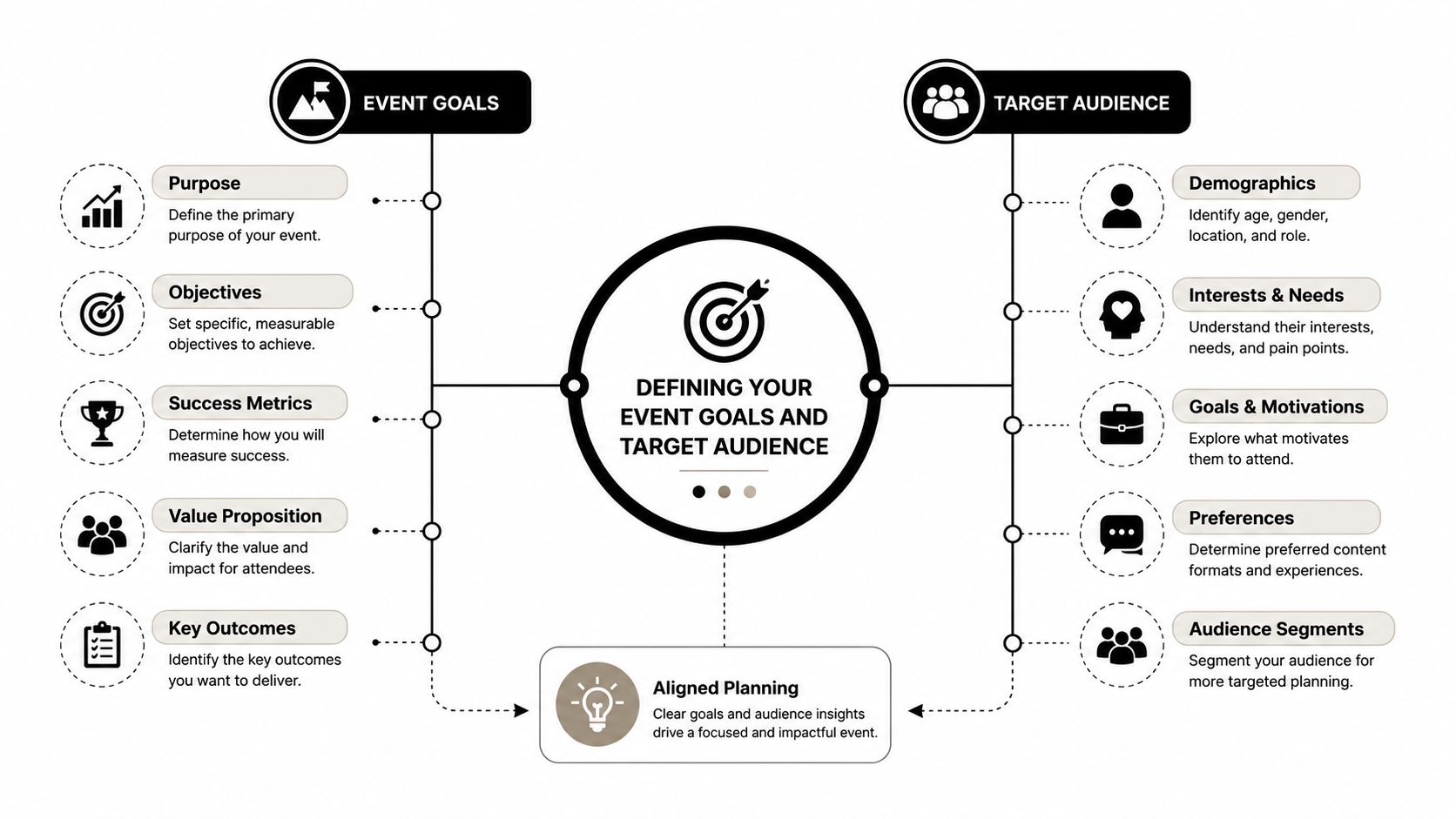
A founder launching a new offer might use a virtual event to demonstrate category expertise and move warm leads into a deeper conversation. A content creator might use the same format to sharpen audience perception and gather material for future posts. A SaaS leader may want a live event that supports product education while reinforcing credibility in a crowded market.
The point is that the same event format can serve very different brand objectives. So the goal needs to be written in plain language before the event is built. Think in terms of thought leadership, lead quality, community building, product launch support, or audience research.
One useful check is to ask what you want people to do after the event. Registering is not the goal. Rewatching, replying, sharing, booking, subscribing, or coming back for the next session are the behaviors that show brand traction.
A real audience persona goes deeper than title and company size. Map pain points, skepticism, content habits, and preferred formats. If your audience likes practical frameworks but avoids long live sessions, that should affect your run-of-show. If they prefer tactical examples over abstract strategy, the topic framing should reflect that.
People don't attend because an event exists. They attend because the topic feels like it solves a problem they already have.
Use a short validation loop before production starts. Send a pre-event survey, interview a few people from your audience, or test the topic in a newsletter or LinkedIn post. The feedback you get there is often more useful than any internal brainstorming session, because it shows you whether the idea is worth people's time.
The strongest events are designed around audience behavior, not host convenience. That's the difference between a generic session and a brand-building one.
Platform choice should follow the brand experience you want to create, not the other way around. A solo founder hosting a polished fireside chat has different needs from a team running a multi-session summit. The wrong platform makes everything feel heavier than it should, while the right one stays almost invisible to the audience.
For personal brand builders, simplicity usually wins. Heavy enterprise stacks can be overkill if the event is meant to feel intimate, fast-moving, and content-rich. What matters most is whether the platform lets you present clearly, engage live, record reliably, and repurpose without friction.
The best choice depends on the event format. A workshop needs clean screen sharing and easy attendee access. A panel needs speaker management and a stable backstage flow. A summit needs session organization, branded surfaces, and recording workflows that don't create extra work after the event.
| Criteria | Why It Matters | What to Look For |
|---|---|---|
| Branding control | Your event should look like your brand, not a generic room | Custom colors, logos, registration pages, and speaker visuals |
| Ease of use | Friction hurts attendance and creates host stress | Simple setup, intuitive host controls, easy attendee join flow |
| Engagement tools | Live interaction keeps the event from feeling like a lecture | Polls, chat, Q&A, reactions, and breakout options |
| Recording and replay | Replay value is part of the brand asset | Reliable recording, easy exports, and clean playback |
| Repurposing workflow | The event should feed future content | Highlight clips, transcript support, and editable assets |
| Integrations | Follow-up should not require manual data entry | Email, CRM, and automation connections that actually work |
If your audience already lives in Zoom, Zoom Events can reduce friction because the interface feels familiar, but branding is more limited than many creators want. If content repurposing is central to your strategy, platforms such as Goldcast and Zuddl are often evaluated because they lean into post-event content workflows and owned-brand experiences, while broader event systems like Bizzabo are better suited to more complex portfolios. Large-scale platform roundups like the comparison of virtual event platforms for B2B programs are useful if you're weighing production depth against operational complexity.
The practical test is this. If the platform makes you look more credible, more consistent, and easier to follow after the live event, it's doing the job.
Technical errors don't just waste time, they damage trust. If the audio cuts out, the screen share fails, or the panelist can't enter the room, the audience stops thinking about your message and starts thinking about your competence. For a personal brand, that's a bad trade.

A single general rehearsal is usually too blunt to catch role-specific issues. The better workflow is one technical check about a week before go-live, then a timed dry run 24 to 48 hours before the event. Both should use the exact presenter accounts, devices, links, and network conditions that will be used live.
That means testing microphone levels, camera framing, screen-share permissions, attendee join flow, and any permissions that affect panelists or co-hosts. It also means checking the backup connection plan before the event, not during it. If you wait until the day of the event to discover a routing issue or a permission mismatch, you're already behind.
Practical rule: rehearse the live room the way it will actually be used, with the same people, same devices, and same links.
The physical setup matters too. Good lighting, stable audio, a neutral background, and a camera at eye level make the whole session feel more intentional. You don't need a studio, but you do need enough consistency that the audience can focus on the message.
A clean checklist reduces last-minute drift. The host, moderator, and technical lead should know who is responsible for each item.
If the event includes multiple speakers, each one needs a role-specific check. The issues that sink live sessions are often small, a wrong link, a muted mic, or a panelist who never received the right permissions. The fix is rehearsal discipline, not heroics.
For a useful complement to the technical side, the best event teams pair setup with engagement planning. That's where the run-of-show gets sharper and the live room feels less like a broadcast and more like a conversation.
Virtual audiences drift when the format stays flat. A polished talk can still lose the room if it only asks people to listen. Engagement works better when it is built into the agenda from the start, because participation helps the event feel like a live exchange and gives the host clearer signals about what is landing.
The strongest sessions change pace every 10 to 15 minutes and add polls, quizzes, emoji reactions, or breakout discussions every 15 to 20 minutes. That cadence keeps people involved instead of waiting for the end, and it gives the host a better read on which ideas are sticking. It also helps a personal brand sound active and responsive instead of packaged and distant.
Long lecture blocks are the most common failure mode. They make the event feel longer than it is, and they reduce the value of networking tools, recordings, and follow-up surveys. A session in the 30 to 50 minute range usually leaves more room for focus than a padded hour-long talk, especially when the topic is practical and the speaker has a point of view worth remembering.
For hosts who want a sharper engagement playbook, the audience engagement techniques for brand builders guide is a useful reference because it ties interaction to brand memory rather than raw activity. That distinction matters in founder-led events. A busy chat looks good in the moment, but a clear perspective is what people carry into clips, comments, and future invitations.
Accessibility should be part of the first draft, not the cleanup pass. If captions, speaker diversity, timing, and communication are left until the end, the event can exclude people even when the technology works. The audience may never say it out loud, but the experience still feels narrower than it should.
The planning phase should account for hearing, visual, and other participation needs from the start. That includes agenda length, speaker mix, and how information is presented on screen. It also means writing invitations and reminders in plain language so attendees joining from different contexts can understand what to expect without extra effort.
Global scheduling is a strategy decision, not an afterthought. If your audience spans time zones, the live slot should reflect attendee behavior, not just presenter convenience. That can mean showing event times in multiple attendee time zones, rotating awkward live times for recurring events, and building the replay plan before launch. In practice, that is how a personal brand earns reach across regions without pretending everyone can attend live.
The virtual events guide from Zoom offers useful direction on serving distributed audiences and treating the replay as part of the event asset. The point is straightforward, people in different regions will not all show up live, and that is fine if the post-event package is strong. A live room, a replay, and clear follow-up messages can work together, especially when paired with WaveGen.ai social media tips that help the conversation continue after the session ends.
Inclusive design and smart scheduling make the event easier to attend, easier to remember, and more useful to revisit. That is how a virtual event supports brand growth instead of just filling a calendar slot.
The return from virtual event hosting shows up after the live room closes. A strong session should leave behind enough raw material to fuel short clips, articles, newsletters, social posts, and follow-up messages without forcing the host to start from zero. That is how a virtual event stops being a one-time broadcast and starts working as a content engine for personal brand growth.
Repurposing fails when it is treated as an afterthought. The better approach is to decide ahead of time which parts of the session can stand alone, then shape the run-of-show so those moments are easy to capture. Strong openings, clear frameworks, audience questions, and short tactical examples all deserve a place in the plan because they can become separate assets later.
Many hosts still record the session, upload the replay, and stop there. That leaves a lot of value unused, since the event can keep building visibility long after the live audience leaves if the material is edited and distributed with intent.
A video-first workflow makes that work less manual. Tools like Taja AI's content automation approach fit when the goal is to turn event output into clips and derivative content quickly instead of letting it sit untouched in a folder. The point is not automation for its own sake, but closing the gap between live insight and published assets.
For a deeper look at how to structure that process, the article on how to repurpose content and multiply your reach is a useful companion.
One event can support multiple formats if the host captures it with reuse in mind. The strongest stacks usually include:
The event should end with a distribution plan, not just a closing slide.
Long-tail value also comes from audience nurturing. People who registered but did not attend, attended but did not convert, or watched the replay later all need a clear next step. That might be a newsletter sequence, a deeper resource, or an invitation to a future live session.
A personal brand grows fastest when one event feeds the next. Reuse the material, keep the message consistent, and make the replay do more than sit behind a link.
Most hosts track the wrong numbers. They celebrate registration spikes or live attendance without asking whether the event attracted the right people, produced usable content, or moved the brand forward. Vanity metrics can look good in a report and still tell you almost nothing.
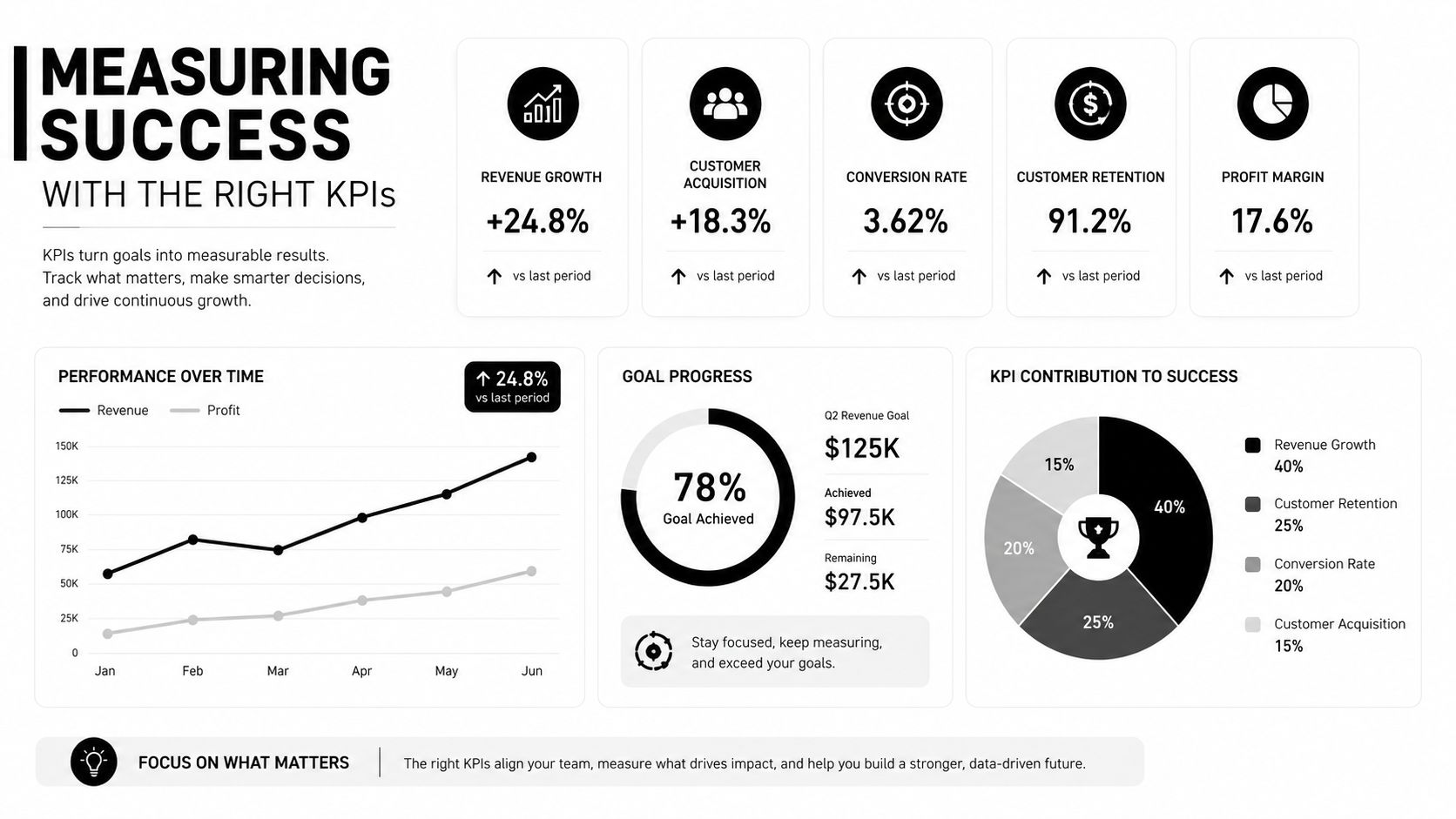
The best KPI set for personal brand builders covers audience quality, content performance, and business outcomes. Audience quality tells you whether the right people showed up and stayed engaged. Content performance tells you whether the event created reach beyond the live room. Business outcomes tell you whether the event contributed to relationships, leads, or future opportunities.
That means looking beyond total registration. You want to know who showed up, how they interacted, and whether they kept engaging afterward. You also want to know which clips, summaries, or follow-up assets extended the life of the event.
A simple scorecard is usually enough if it stays focused. Track the registration-to-attendance relationship, engagement during the session, repurposed content performance, and the downstream responses that matter to your brand. Don't overload the workflow with dashboards you won't use.
Post-event analysis should answer three questions, what resonated, what got ignored, and what needs to change. If one segment generated the most questions, that's a signal. If a long introduction lost the room, that's also a signal. If the replay clips perform better than the live promotion, your distribution strategy needs a second look.
The point of measurement is not to prove perfection. It's to sharpen your point of view and make the next event more useful. Over time, the best hosts build a repeatable loop, audience insight informs the next topic, the next event produces stronger content, and that content keeps building authority.
If you want your events to do more than fill a live room, Legacy Builder can help turn them into a consistent personal brand system. Visit Legacy Builder if you want support turning your ideas, events, and content into a clearer authority-building engine.


You could – but most in-house teams struggle with the nuance of growing on specific platforms.
We partner with in-house teams all the time to help them grow on X, LI, and Email.
Consider us the special forces unit you call in to get the job done without anyone knowing (for a fraction of what you would pay).
Short answer – yes.
Long answer – yes because of our process.
We start with an in-depth interview that gives us the opportunity to learn more about you, your stories, and your vision.
We take that and craft your content then we ship it to you. You are then able to give us the final sign-off (and any adjustments to nail it 100%) before we schedule for posting.
No problem.
We have helped clients for years or for just a season.
All the content we create is yours and yours alone.
If you want to take it over or work on transitioning we will help ensure you are set up for success.
We want this to be a living breathing brand. We will give you best practices for posting and make sure you are set up to win – so post away.
Subscribe to our newsletter and get insights on how to grow your personal brand.
