.svg)
Subscribe to our newsletter and get insights on how to grow your personal brand.
Thank you! Your submission has been received!
Oops! Something went wrong while submitting the form.
.svg)



You're posting consistently, but the needle isn't moving. That usually happens because most advice about audience engagement techniques is built around shallow activity, not durable influence. It tells you to chase likes, ask for comments, and celebrate reach without asking a harder question: did any of that strengthen your brand's position?
Vanity metrics don't build a professional legacy. Relevance does. Trust does. Repeated, meaningful interaction does. If people consume your content and move on, you're renting attention. If they respond, return, remember your perspective, and act on it later, you're building an asset.
That shift matters more now because interactive formats outperform passive ones. One industry synthesis reports that polls, quizzes, and visual storytelling can drive over 50% higher engagement than passive formats, which is why participation-based content has become a core strategic move for modern brands, not a nice extra (interactive engagement findings from Vibe). The implication is simple. Stop treating engagement as applause. Treat it as evidence that your audience is investing attention in you.
The strongest brands don't just publish. They create interaction loops that turn content into conversation, conversation into trust, and trust into opportunity. That's the standard.
People don't remember polished positioning statements. They remember tension, decisions, setbacks, and what you learned when things got difficult. If your content reads like a company bio, you'll attract passive viewers. If it sounds like a real person making real calls under pressure, you'll attract believers.
Start with small stories. Don't open with your biggest trauma or your most dramatic career pivot. Open with a client misunderstanding you fixed, a bad hire you learned from, or a moment when your assumptions failed and your process improved.

Brené Brown built trust by making vulnerability intellectually useful, not merely personal. Gary Vaynerchuk has long documented the work behind the brand, including failures and unglamorous repetition. Satya Nadella's public leadership narrative worked because it tied personal perspective to organizational direction.
Use the same principle in your own brand.
A story without a takeaway is self-expression. A story with a takeaway becomes brand equity.
Practical rule: Share stories that reveal judgment, not just personality.
You also need boundaries. Authentic doesn't mean exposing everything. Keep private what should stay private. Share what strengthens trust, clarifies your values, and helps your audience make better decisions.
One post won't do the job. Strong personal brands build a storyline over time. Your audience should be able to answer three questions after following you for a while: what you believe, what shaped that belief, and why they should trust you now.
That's how storytelling becomes one of the most effective audience engagement techniques. It turns your content from isolated posts into a body of work.
If your content never asks anything of the audience, don't expect loyalty. Broadcast creates exposure. Dialogue creates attachment. The fastest way to deepen engagement is to stop posting like a publisher and start showing up like a host.
Ask better questions. Not “thoughts?” Not “agree?” Ask questions that require interpretation, tradeoffs, or experience. “What part of this process breaks first in your company?” will get better responses than a generic prompt ever will.
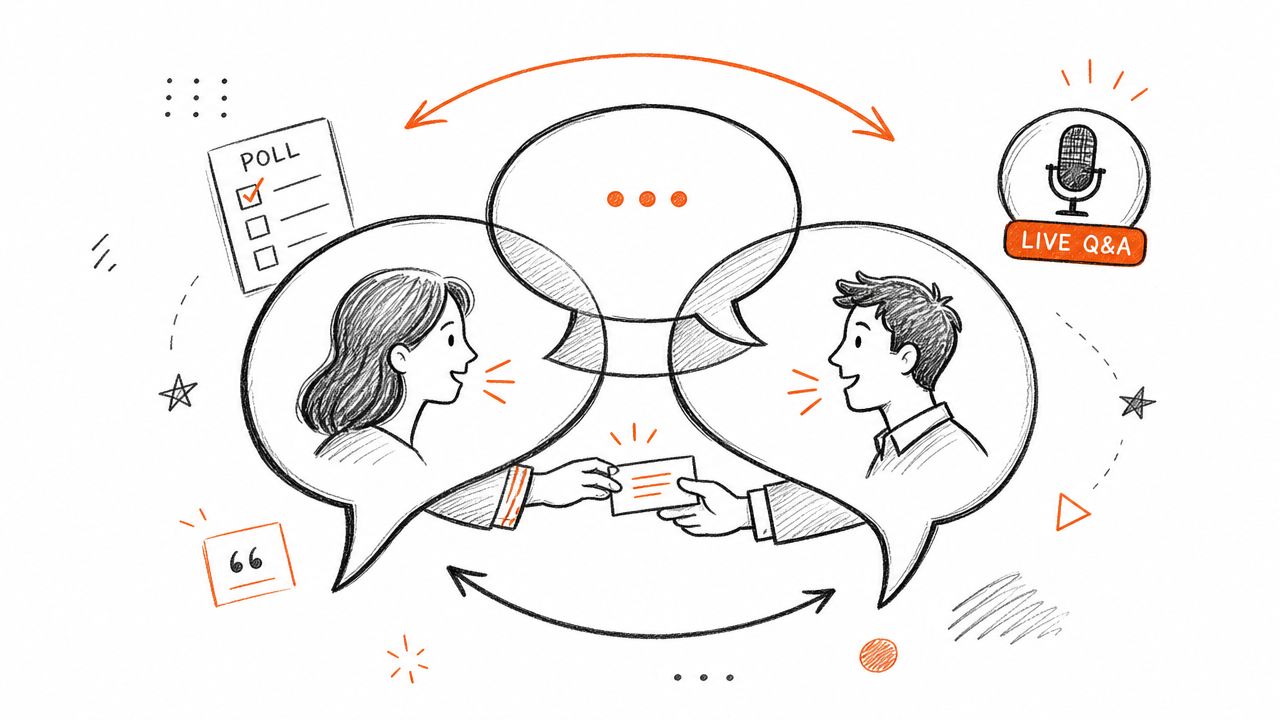
In live settings, don't wait until the end for Q&A. A presentation guide from Duarte recommends interacting with the audience within the first two minutes to establish attention early, using stories, provocative questions, and concrete examples to make the message immediate (Duarte's presentation engagement guidance). That advice applies far beyond the stage. Open your webinar, live stream, or LinkedIn Live with a prompt that gets people involved immediately.
A few practical ways to do it:
If you need structured input, use engaging survey questionnaire templates to gather better audience signals than a vague comment request ever will.
Don't ask for engagement because the algorithm rewards it. Ask for it because your audience has something worth adding.
Strong audience engagement techniques make people feel seen. Respond to comments with substance. Pull audience questions into future posts. Credit contributors by name when their ideas sharpen your thinking. People come back when they know their participation changes the experience.
If every post points back to your offer, people will read your content as sales collateral. That weakens trust fast. Teach first. Build your reputation by making your audience more capable before you ask them to buy anything.
Educational series work because they create continuity. One strong post helps. A sequence of posts that solves a real problem builds expectation and habit. That's how authority compounds.
Ramit Sethi has long used structured teaching to make complex financial topics feel actionable. Neil Patel's educational content built familiarity through repeated frameworks and practical instruction. Loom established thought leadership by teaching people how to communicate better with video, not just by talking about its product.
Use the same playbook.
Many professionals get lazy in their approach. They post “tips.” Tips are forgettable. Systems are memorable. A value-first brand doesn't just answer isolated questions. It gives people a path.
Your best free content should solve part of the problem for real. Don't hide all the substance behind a lead magnet or discovery call. Give people an immediate win, then show them the larger strategic picture they still need help implementing.
Educational audience engagement techniques work because they create an exchange that feels fair. You're not interrupting attention. You're earning it. Over time, your audience starts to associate your name with clarity, not noise.
That association is what turns content into opportunity.
Inconsistent brands don't look exclusive. They look unreliable. If you disappear for weeks, return with random content, then vanish again, you train your audience not to expect anything from you.
Consistency creates familiarity. Familiarity builds trust. Trust makes engagement easier because people already know what kind of value you deliver and where your perspective fits in their world.
Many individuals fail because they set an ambitious cadence they can't maintain. They plan like a media company and execute like a burned-out freelancer. Fix that by choosing a realistic publishing rhythm and defending it.
A workable content calendar should include:
Gary Vaynerchuk's brand has benefited from relentless output, but the key lesson isn't volume alone. It's operational discipline. HubSpot and Morning Brew both show the power of predictable publishing. Their consistency trained audiences to return.
Reliable publishing signals professional seriousness before anyone hires you.
Your audience doesn't need constant content. They need dependable content. If you publish every Tuesday, keep Tuesday sacred. If you send a Friday email, make it part of your brand rhythm.
This is one of the least glamorous audience engagement techniques, and one of the most important. Consistency reduces friction for the audience and for you. It also gives your best ideas enough repetition to stick.
A legacy brand isn't built on bursts of inspiration. It's built on sustained presence.
A large audience can make you look relevant. A connected community makes you relevant. There's a difference. Followers consume. Community members contribute, defend, refer, and stay.
Stop chasing everyone. Build for the people most aligned with your point of view, your operating style, and your ambition. Broad attention is fragile. Niche trust is durable.
The strongest communities are built around a shared standard, not a vague topic. Superhuman created loyalty by making users feel part of an elite product culture. Mighty Networks gives creators a way to organize community around identity and participation, not just posts. Alex Hormozi's audience works because it rallies around a direct, results-focused business philosophy.
You need that same clarity.
The key mistake is making yourself the center of every interaction. If every conversation has to run through you, you haven't built a community. You've built an audience bottleneck.
Introduce people to each other. Highlight collaborations happening inside your circle. Ask members to answer each other's questions before you jump in. Shared identity grows when people realize the room itself is valuable, not just the person who started it.
Community is one of the most powerful audience engagement techniques because it changes the relationship from audience-to-creator into peer network plus trusted guide. That creates stickiness no feed algorithm can match.
If your ideas are strong but your presentation is weak, you'll lose attention before the value lands. Visual communication isn't decoration. It's compression. It helps people understand faster, remember longer, and engage with less effort.
That matters because not every insight deserves a wall of text. Some ideas need a diagram, a whiteboard sketch, a short explainer video, or a simple slide sequence.
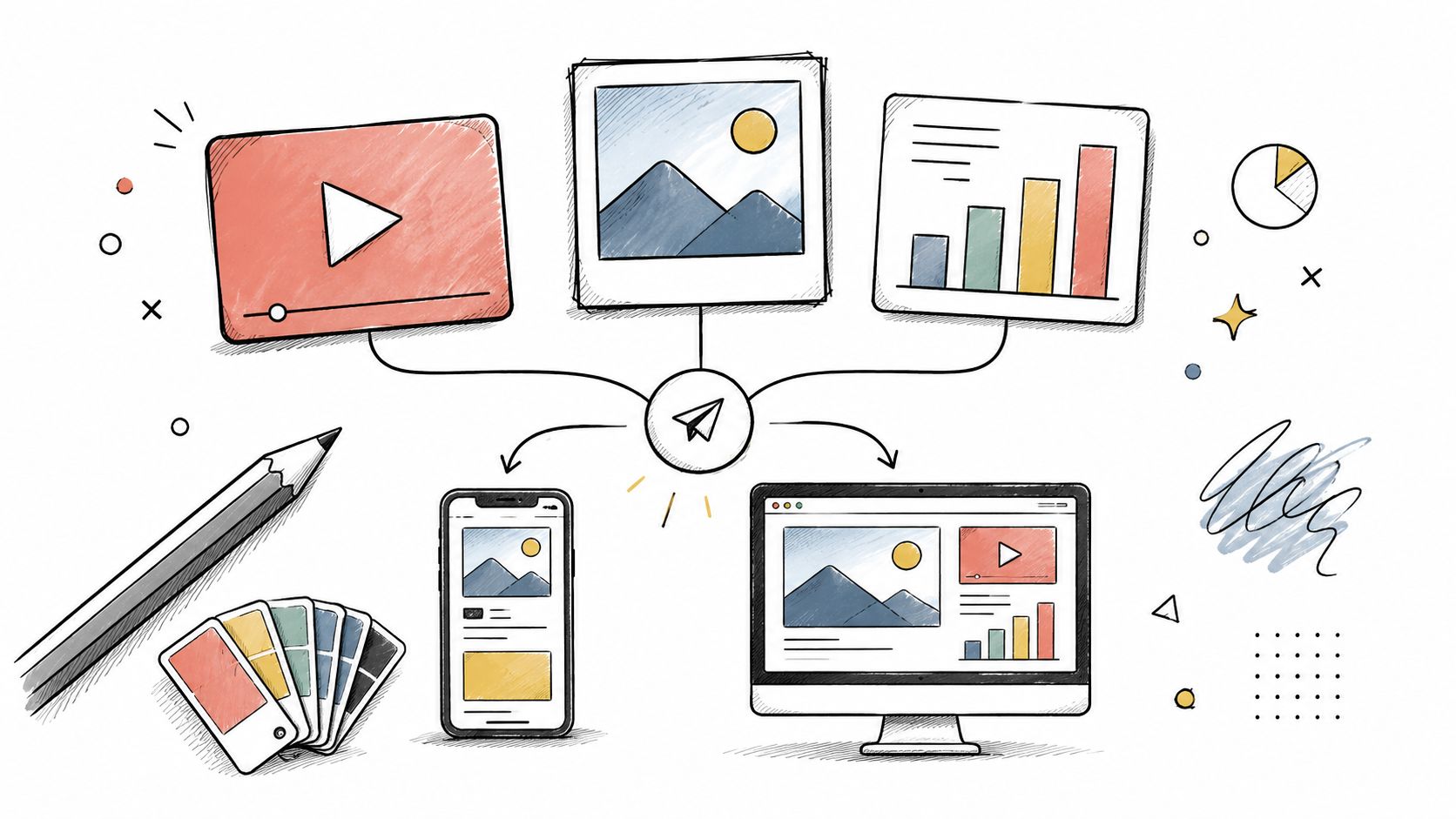
Canva changed the market by making branded visual production more accessible. On LinkedIn, strong carousels often outperform dense text when the topic benefits from step-by-step structure. On YouTube and short-form video platforms, clear visual pacing often determines whether people stay with you long enough to absorb the message.
Use visuals when they do one of three jobs well:
Visuals also create more ways for people to respond. A diagram can trigger debate. A slide can be shared. A short clip can spark discussion.
Here's one example of a video format built for idea delivery and audience retention:
Use multimedia with discipline. One industry guide emphasizes that interaction tools work best when they match audience intent, using short Q&A prompts, emoji reactions, and polls when they clarify complexity or re-energize attention. That's the standard for visual strategy too. Each asset should have a job.
Sloppy visuals tell your audience you haven't done the work. Clean, useful multimedia tells them you respect their time. That's why visual execution belongs on any serious list of audience engagement techniques.
Instinct matters, but instinct alone will trap you in your preferences. Your audience doesn't care which format you enjoy making most. They respond to what helps them, challenges them, and fits how they consume information.
That's why you need a testing habit. Not random experimentation. Controlled testing.
Change the hook, not the hook and the format and the posting time all at once. If you test everything simultaneously, you learn nothing. Strong operators create baselines, isolate variables, and document patterns.
HubSpot's content teams have long treated optimization as an operating discipline. Netflix built product and content experiences around iterative response data. On a smaller scale, you can do the same with your own brand.
A simple framework works:
Field note: If a post performs unusually well, don't celebrate and move on. Break it down and identify exactly what made it work.
Testing isn't just about engagement metrics. It reveals how the market reads your brand. If certain themes consistently pull stronger response, that's not just a content insight. It may be a positioning insight.
This matters even more as AI reshapes engagement infrastructure. One market report estimates the U.S. AI-powered audience engagement heat index market at USD 0.34 billion in 2024, rising to a projected USD 1.41 billion by 2032, with adoption driven by real-time behavior analysis, hyper-personalized content, predictive analytics, and cross-platform orchestration (SNS Insider market projection on AI-powered audience engagement). The takeaway is obvious. Static planning is losing ground to continuous optimization.
The best audience engagement techniques are not fixed routines. They are systems you refine in public.
Thought leadership isn't posting obvious advice with a confident tone. It's taking a clear position, backing it with experience, and saying something useful before everyone else gets comfortable saying it.
If your content could have been written by anyone in your industry, it won't build authority. It will blend in with the rest of the feed.
Peter Drucker became influential because he articulated management principles people could use and debate. Marc Benioff built visibility by tying business leadership to broader views on technology and corporate responsibility. Arianna Huffington broadened her positioning by repeatedly advocating for wellness and performance habits in a way that was tied to leadership, not separate from it.
Do the same in your niche. Pick a handful of issues where your judgment is sharper than the average voice in the market. Then publish your perspective repeatedly enough that people begin to associate your name with that stance.
A few rules help:
If you're building this muscle intentionally, study practical guidance on how to establish yourself as an expert and become a leader.
Not every post needs to be profound. But some pieces should carry weight. Publish essays, talks, interviews, or keynote-style breakdowns that show range and depth. Those are the assets people remember when speaking opportunities, partnerships, or board conversations come up.
Thought leadership is one of the most effective audience engagement techniques because it attracts not just attention, but the right kind of attention. It pulls in people looking for guidance, not entertainment alone.
Creating from scratch for every platform is a waste of strategic energy. It burns time, fragments your message, and usually lowers quality. Smart brand builders create one strong core asset, then reshape it for the platforms where their audience already spends time.
Repurposing isn't duplication. It's translation.
Joe Rogan's long-form conversations generate clips, quotes, platform-native edits, and downstream discussion. MrBeast's media operation has shown how one central concept can be reformatted for multiple channels. Morning Brew turns newsletter thinking into social posts, video ideas, and broader brand touchpoints.
You need a lighter version of that machine.
If you want a system for this, review how to repurpose content and multiply your reach.
Repurposing also strengthens brand recall. Your audience may miss the original article but see the short video. They may skip the video but reply to the newsletter version. Repetition across contexts increases familiarity without requiring endless new ideation.
Cross-platform distribution becomes even more useful when tied to business development. A sharp LinkedIn post can lead someone into your longer email sequence. A podcast clip can create context before a sales conversation. For professionals using social channels for pipeline development, this pairs well with a practical LinkedIn prospecting guide.
Strong audience engagement techniques don't ask each platform to do the whole job. They let each channel play its role inside a larger brand system.
If you don't own a direct line to your audience, you don't control your growth. Social platforms are useful discovery engines, but email is where durable attention compounds. Add collaborations to that and you get both ownership and amplification.
That combination is hard to beat. Email nurtures trust over time. Guest appearances and partnerships put you in front of people who are already inclined to care.
Mark Manson built a loyal readership by pairing essays with a direct subscriber relationship. Tim Ferriss expanded reach through interviews that introduced him to adjacent audiences again and again. ConvertKit helped normalize the idea that creators need an owned list, not just social visibility.
Your approach should be simple and disciplined.
If you need fresh angles, review these email marketing content ideas for 2026.
Don't pitch collaborations as favors to you. Frame them as value for both audiences. A guest article, podcast interview, live discussion, or co-hosted workshop should solve a specific problem for a shared segment.
For teams trying to improve direct response performance, outside expert advice for email marketers can also sharpen execution.
A practical collaboration stack looks like this:
Email and collaboration are elite audience engagement techniques because they move beyond attention capture. They create repeated access, trusted association, and network effects you can build on for years.
| Technique | 🔄 Implementation Complexity | ⚡ Resource Requirements & Speed | 📊 Expected Outcomes | 💡 Ideal Use Cases | ⭐ Key Advantages |
|---|---|---|---|---|---|
| Authentic Storytelling and Personal Narrative Sharing | Medium–High, narrative craft and emotional risk | Low–Medium production cost; time‑intensive to craft authentic arcs | Deep trust, high shareability, long-term loyalty | Founders, personal brands, trust-building campaigns | Builds strong credibility and differentiation |
| Interactive Content and Two‑Way Conversation | High, real‑time moderation and facilitation | High ongoing time commitment; needs live/polling tools | Immediate engagement spikes; direct audience insights | Product feedback, community Q&A, live events | Drives engagement and community participation |
| Strategic Value‑First Content and Educational Series | High, research, structuring curricula | High content creation and research investment; slower ROI | Authority establishment, lead generation, SEO gains | B2B education, lead magnets, thought leadership funnels | Positions creator as trusted expert; durable trust |
| Consistent Posting Schedule and Content Calendars | Medium, planning, scheduling discipline | Moderate tooling and batching; efficient at scale | Improved algorithm visibility, audience habit formation | Brands needing steady audience growth and predictability | Predictable reach and scalable content operations |
| Community Building and Niche Audience Cultivation | High, culture design and active moderation | High ongoing management and community tooling costs | High retention, word‑of‑mouth growth, monetization potential | Memberships, niche product communities, beta cohorts | Creates loyal, high‑value audience independent of algorithms |
| Visual Content Strategy and Multimedia Presentations | Medium–High, design and production standards | High (designers, video equipment, editing) | Higher engagement, retention, and shareability | Visual platforms (TikTok, Instagram, YouTube), product demos | Enhances brand perception and content recall |
| Data‑Driven Content Optimization and A/B Testing | Medium, analytics setup and experiment design | Moderate tools and analyst time; iterative cadence | Measurable performance gains and scalable wins | Performance teams, enterprise content ops, growth experiments | Removes guesswork; improves ROI through evidence |
| Thought Leadership and Expert Positioning | High, research, publishing, reputation work | High time and credibility investment; ongoing learning | Premium positioning, media/speaking opportunities | Executives, consultants, high‑trust B2B offerings | Commands authority, premium pricing, strategic partnerships |
| Cross‑Platform Content Syndication and Repurposing | Medium, workflow, adaptation rules | Moderate tooling (repurposing & scheduling); efficient reuse | Broader reach with reduced net creation effort | Multi‑platform creators, podcast/video long‑form repurposing | Maximizes ROI of core content assets |
| Email Marketing & Collaboration, Guest Features, Network Amplification | Medium, list growth and partnership coordination | Moderate tools and outreach effort; automation boosts speed | High ROI, owned audience, amplified reach via partners | Monetization, launches, partnership-driven audience growth | Owned channel with high conversion and amplification potential |
Mastering audience engagement techniques isn't about becoming louder. It's about becoming harder to ignore for the right reasons. You're not trying to collect reactions. You're trying to build a body of interaction that signals trust, clarity, usefulness, and leadership over time.
That's why the popular advice misses the point. It treats engagement like a short-term spike. Real brand builders treat it like infrastructure. A strong story makes people remember you. Interactive content makes them participate. Educational series make them rely on you. Consistency makes them expect you. Community makes them stay. Data makes your system smarter. Email and collaborations make your reach more durable.
You do not need to implement all ten techniques at once. In fact, that's the wrong move. Pick one that fixes your biggest weakness. If people know you but don't care, start with storytelling. If they read but don't respond, build better interaction loops. If they engage but don't return, tighten your cadence and create a stronger educational sequence. If your audience is trapped inside rented platforms, build your email list and start collaborating with adjacent voices.
Execution matters more than idea count. A mediocre strategy applied consistently will outperform a brilliant strategy you never operationalize. So make this practical. Choose one technique. Put it on the calendar this week. Define the format, the platform, the frequency, and the next action you want from the audience. Then stay with it long enough to learn.
Also remember the bigger goal. You are not just trying to win this month's attention cycle. You are building a professional legacy. That means your engagement system should do more than entertain. It should document your judgment, deepen your relationships, attract aligned opportunities, and make your reputation more transferable across markets, roles, and platforms.
If you want help building that system, a service like Legacy Builder is one relevant option. The company focuses on helping professionals turn their stories, insights, and vision into consistent brand content and strategic distribution. For founders, executives, and experts who know they need to show up but don't want to manage the full machine alone, that kind of support can make execution more consistent.
Start now. One strong move this week beats another month of passive posting. Influence compounds when interaction is intentional.
If you're ready to build a personal brand that turns audience engagement into long-term authority, explore Legacy Builder and see how their team can support your content, positioning, and consistent brand growth.


You could – but most in-house teams struggle with the nuance of growing on specific platforms.
We partner with in-house teams all the time to help them grow on X, LI, and Email.
Consider us the special forces unit you call in to get the job done without anyone knowing (for a fraction of what you would pay).
Short answer – yes.
Long answer – yes because of our process.
We start with an in-depth interview that gives us the opportunity to learn more about you, your stories, and your vision.
We take that and craft your content then we ship it to you. You are then able to give us the final sign-off (and any adjustments to nail it 100%) before we schedule for posting.
No problem.
We have helped clients for years or for just a season.
All the content we create is yours and yours alone.
If you want to take it over or work on transitioning we will help ensure you are set up for success.
We want this to be a living breathing brand. We will give you best practices for posting and make sure you are set up to win – so post away.
Subscribe to our newsletter and get insights on how to grow your personal brand.
