.svg)
Subscribe to our newsletter and get insights on how to grow your personal brand.
Thank you! Your submission has been received!
Oops! Something went wrong while submitting the form.
.svg)


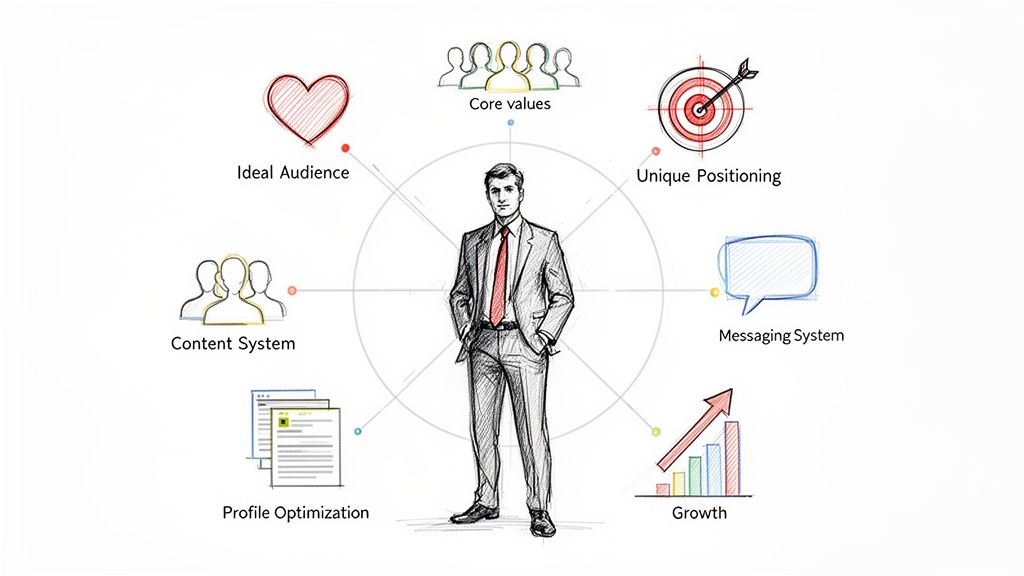
Building a personal brand isn't about just throwing content out there and hoping something sticks. It's about defining your authentic foundation, figuring out who you're talking to, crafting a message that cuts through the noise, and building a content system you can actually maintain.
It all starts with some deep self-reflection to lock down your core values and unique story. This becomes the filter for every single piece of content you create.
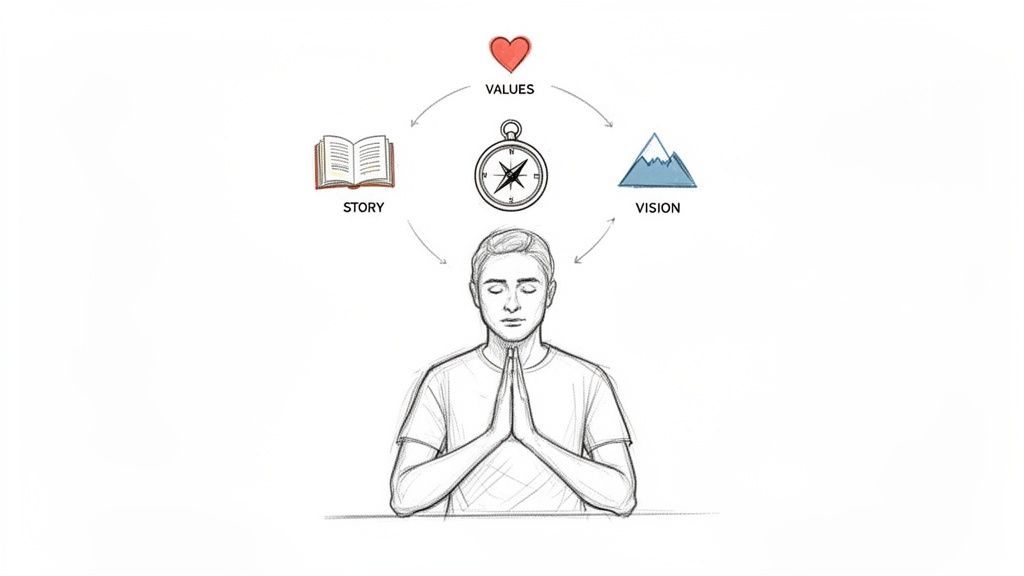
Before you write a single post, design a logo, or even pick a color palette, the real work begins. It’s all internal. You're building a foundation so solid it becomes a compass, guiding every decision you make down the road.
So many people get this backward. They jump straight to the tactics—posting on LinkedIn, launching a website—without ever stopping to figure out the why behind it all.
This first step is completely non-negotiable. It’s the difference between a brand that feels forced and one that connects with people on a genuine level. Authenticity isn't just a buzzword; it's your biggest advantage. Trust in big media is tanking, and people are looking for real, human voices.
In fact, a whopping 86% of consumers say authenticity is a major factor when they decide which brands to support. With all the AI-generated noise out there, a real human story is more valuable than ever.
Your values are the bedrock of your brand. Think of them as the non-negotiable principles that guide your actions and broadcast what you stand for. They're your brand's code of conduct.
To nail yours down, ask yourself some tough questions:
Answering these helps you get way more specific than generic words like "integrity" or "innovation." For example, instead of just "integrity," your value might be "brutal honesty delivered with kindness." See how much more real that feels?
A personal brand is not something you develop once and then you’re set for life. Reassess it regularly and make sure it’s fit for purpose as you learn, grow and progress. Your brand is a living extension of your personal and professional evolution.
Your story is the glue that connects your past experiences to your mission today. It's not a boring timeline of your resume; it's the narrative that explains why you do what you do. It’s what makes you relatable and humanizes your expertise.
Think about the moments that actually shaped you. The unexpected career change, the project that almost broke you but taught you everything, or even the failure that sparked a totally new passion. Those are the moments that make a great brand story.
Weave together your wins, your struggles, and the lessons you've learned. This narrative becomes the emotional hook that pulls people in and builds real trust. Figuring out how to tell this story is critical, and our guide on what brand authenticity truly means can help you sharpen that narrative.
To help you get started, I've put together a simple framework. Use this table to translate your internal values into a clear, external message that defines the core pillars of your brand identity.
This isn't just an exercise; it's the blueprint for everything you'll do next. It ensures every post, comment, and connection is rooted in who you actually are.
Finally, your vision is the future you're working toward, and your mission is how you're going to get there. A clear vision gives your brand a powerful sense of purpose and direction.
This clarity turns your content from just informative to truly inspiring. It rallies a community around a shared goal, turning followers into your biggest advocates. For a deeper dive on getting started, check out this comprehensive LinkedIn guide to personal brand building.
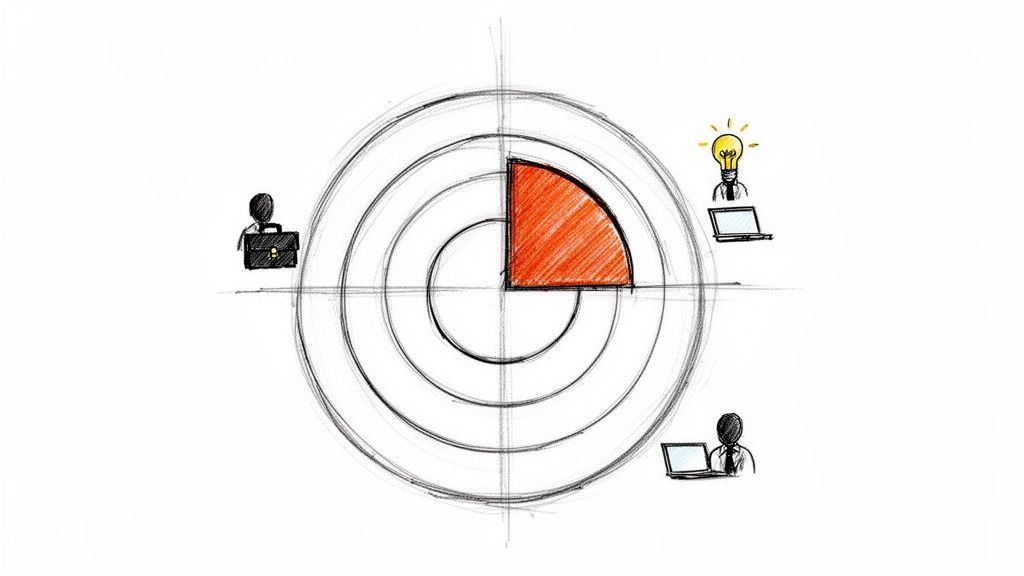
Let’s get one thing straight: a powerful personal brand isn’t for everyone. It’s for a very specific someone.
Trying to be the go-to expert for everybody makes you the go-to for nobody. The real magic happens when you narrow your focus and become indispensable to the right group of people.
Your brand's greatest strength is its specificity. This is where you shift from a fuzzy mission to a sharp message that pulls in the right opportunities and pushes away the wrong ones. It's all about finding that sweet spot where your expertise slams right into an audience's biggest unmet need.
This is how you build a real community, not just a vanity metric follower count. When your content speaks directly to someone’s problems and goals, it forges a connection that generic, bland advice never could.
Before you can make an impact, you have to know who you're talking to—and I mean really know them, way beyond surface-level demographics. You need to create an Ideal Audience Persona, which is just a detailed profile of the one person you're creating every piece of content for.
This isn’t about inventing a fictional character out of thin air. It’s about taking all the data, conversations, and observations you have and boiling them down into a crystal-clear picture of a real person.
Give this persona a name, a job title, a backstory. Suddenly, you’re not shouting into the void anymore. You’re having a one-on-one conversation.
To really bring this person to life, dig into their psychology:
Getting this granular is what makes your content feel personal and hyper-relevant. If you want to go deeper, we've got a full framework in our guide on how to find your target audience for a personal brand.
Your goal is for your ideal audience to read your stuff and think, "Is this person reading my mind?" That’s the feeling that builds trust and authority faster than any other tactic out there.
Okay, so you know exactly who you’re talking to. Now you need to give them a damn good reason to listen to you over everyone else.
Your brand position is your unique turf in the market. It's the clear, simple answer to the question: "Why should I pay attention to you?"
This isn't just about what you do. It's about how you do it, who you do it for, and the unique spin you bring to the table. This is your secret sauce, your unfair advantage, all distilled into a single, powerful idea.
Think about what makes your approach different. Maybe you combine two fields no one else does. Maybe you serve a super-niche industry everyone else ignores. Or maybe your personal journey gives you an empathetic edge that can't be faked.
Your positioning statement is your internal North Star. It’s not a public tagline you splash everywhere, but a private declaration that keeps all your messaging consistent and sharp.
Here's a simple template that just works:
For [Your Ideal Audience] who [Struggle With a Specific Problem], I provide [Your Solution/Expertise]. Unlike [Your Competitors/Alternative], I [Your Unique Differentiator].
Let's put it into practice.
This statement is your anchor. Every post, every bio, and every sales call should ladder back to this core idea. It’s the foundation for a personal brand that doesn't just exist—it stands out and gets noticed.
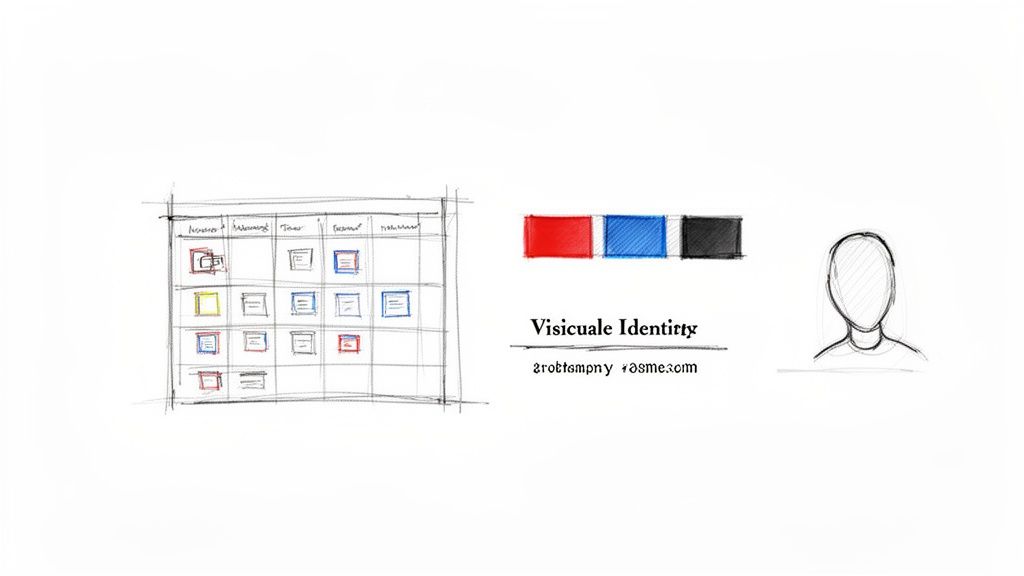
Okay, you've done the deep work. You know your "why" and you have a crystal-clear picture of who you're talking to. Now comes the fun part: building the stuff people actually see and hear.
This is where you translate all that foundational strategy into a consistent voice and a look that people instantly recognize. It’s not just about picking a nice font or a cool color. It’s about creating a cohesive experience that screams you every single time someone comes across your work.
Want to know the secret to never running out of things to say? Create a Message Matrix. This is your command center for all your key talking points, making sure everything you publish is sharp, focused, and on-brand.
Think of it as your brand's cheat sheet. Before you write a post or hop on a podcast, a quick glance at your matrix keeps your core themes front and center. It’s the difference between sounding strategic and sounding scattered.
Here’s what goes in it:
Once you organize your thoughts this way, creating content becomes faster and way more effective. This is how you develop a personal brand with a clear, consistent point of view.
Your brand voice is your personality, just in writing. It’s what makes your content sound like you, not some generic robot. Are you direct and analytical? Empathetic and a bit of a storyteller?
Whatever it is, be consistent. The tone you use in a quick LinkedIn comment should feel like it came from the same person who wrote your in-depth newsletter. That's how you build familiarity and trust.
Your brand voice isn't about being formal or informal; it's about being authentic. The goal is for someone to read your content and feel like they’ve had a real conversation with you, capturing the same energy they’d get in person.
Your message is the heart of your brand, but your visual identity is its face. People are visual, and a consistent look builds recognition and credibility in a split second. You don't need to be a professional designer, but you do need to be intentional.
Just focus on these three things to get started:
Nail these verbal and visual systems, and your personal brand won't just be seen—it'll be remembered. This cohesion is what turns a random professional into a recognized authority.
A powerful personal brand is built on one thing: consistency. It’s the engine that drives trust and recognition, but it’s also where most people crash and burn.
The secret isn’t to work harder. It's about working smarter by building a system. A system turns content creation from a daily grind into a strategic, sustainable process that respects your time and energy. Forget the pressure to constantly dream up new ideas from scratch.
You don't need to be everywhere. In fact, trying to master every platform is a surefire recipe for mediocre content and burnout. A much better approach is to pick one or two primary formats that play to your natural strengths.
Think about how you best communicate your ideas:
When you lean into what you’re good at, creating content stops feeling like a chore. It becomes a genuine extension of your expertise, which is the whole point.
Consistency beats intensity. Every single time.
Posting three times a day for a week and then ghosting your audience for a month does more harm than good. People reward dependability. They want to know they can count on you to show up.
Start small and build from there. A manageable rhythm might look something like this:
This simple schedule gives you a predictable workflow without feeling overwhelming. Once the habit is locked in, you can always ramp things up.
The secret to consistency isn't more discipline; it's a better system. Your content calendar should feel like a supportive framework, not a rigid prison. Build a cadence that gives you energy, not one that drains it.
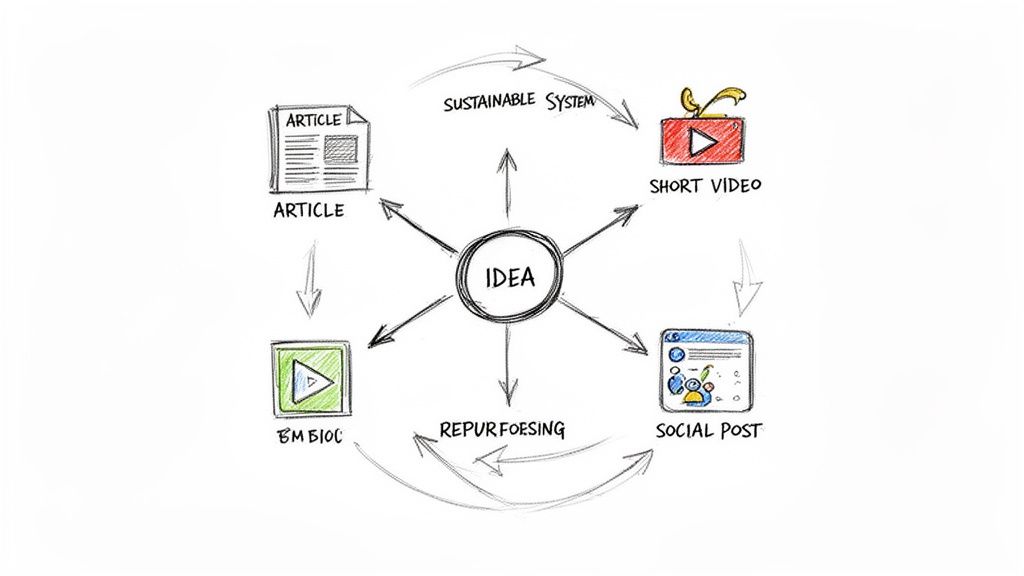
This is the single most powerful tactic for staying consistent without burning out. Repurposing is the art of taking one core idea and slicing it into dozens of smaller content pieces for different platforms.
It’s about working smarter, not harder. You’re maximizing the value of every single idea you have.
Instead of waking up and asking, "What new thing should I post today?" you'll start asking, "How many different ways can I share this one great idea?" For a full breakdown, check out our guide on how to repurpose content effectively.
A simple workflow can transform one big idea into a week's worth of content.
This table shows how one long-form blog post can be broken down into an entire ecosystem of micro-content, each tailored to a specific platform and goal.
See how that works? One core piece of work fuels your content across multiple channels, reaching more people in the formats they prefer. This system replaces the daily stress of creation with a strategic engine that consistently builds your authority and amplifies your reach.
Alright, you've got your content system dialed in. But where does it live? It needs a home—a place where the right people can find you, connect with you, and immediately see the value you bring to the table.
This is where your digital footprint comes into play. It’s way more than just having a few profiles scattered across the internet. It’s about turning those profiles into powerful, optimized hubs that work for you around the clock.
Think of your social profiles, especially LinkedIn, as the digital front door to your professional world. When someone lands on your page, there should be zero guesswork. They need to know instantly who you are, who you help, and why they should stick around. A stale, resume-style profile just won't cut it anymore. It needs to be a living, breathing center for connection and opportunity.
This isn’t just a nice-to-have; it's a must. The numbers don't lie. Research shows 70% of consumers feel more connected to brands when the CEO is active on social media, and a whopping 77% are more likely to buy from them.
On the other side of the coin, 47% of employers might not even give you an interview if they can't find you online. Visibility is the first and most critical hurdle.
A well-oiled profile is your 24/7 salesperson, attracting the right people and screaming your value from the rooftops. The goal is to shift from a passive digital resume to an active, engaging brand hub that pulls people in.
Let's zoom in on LinkedIn, since it's the main playground for professionals. Every single section is a new chance to hammer home your brand message.
Optimization is just the beginning. The real magic happens when you move from being a passive observer to an active, daily participant. This is how you build relationships, showcase your expertise, and stay top-of-mind.
And let's be clear: engagement isn't about spamming comments or blindly connecting with hundreds of people. It’s about adding genuine value to conversations that actually matter.
The most effective personal brands are built on generosity. Instead of asking "What can I get?" start every interaction by asking "What can I give?" Share an insight, offer a helpful resource, or make a thoughtful introduction. This is how you build a network that wants to see you win.
Get into a simple daily routine. Just 15-20 minutes of intentional engagement can work wonders.
Finally, you have to be proactive. Don't just sit back and wait for people to find you. Make a list of key people you want in your orbit—potential clients, collaborators, mentors—and reach out with a personalized connection request.
Please, forget the generic "I'd like to add you to my professional network" message. It’s a dead end. Instead, reference something specific you noticed: a post they wrote, a podcast they were on, or a mutual connection.
Here’s a template that actually works:
"Hi [Name], I really enjoyed your recent article on product-led growth. Your point about user onboarding being the new marketing funnel was spot on. I’m also focused on helping SaaS founders scale, and I'd love to connect and follow your work."
This thoughtful approach proves you've done your homework and respect their perspective, making them far more likely to hit "accept."
To keep your public-facing brand sharp and aligned with your goals, it's smart to regularly consult a comprehensive guide to online privacy and reputation management. By combining a polished profile with daily, authentic interaction, you’ll transform your digital footprint from a simple online listing into a powerful engine for opportunity.
Look, even with the best game plan, things get a little fuzzy when you start building a personal brand. It’s easy to get stuck in the weeds. But knowing the common hurdles and what to expect can keep you moving forward.
Let’s clear up some of the questions I hear most often from founders and professionals. This isn't about finding shortcuts. It's about getting the clarity you need to actually commit and see it through. Building a real brand is a marathon, not a sprint, and these insights will help you set a pace that actually lasts.
Let's be real: building a brand that people recognize doesn't happen overnight.
You can get a solid foundation in place within the first 3 to 6 months if you're consistent. That means locking in your message, cleaning up your profiles, and getting into a rhythm with your content.
But building real authority—the kind that has opportunities landing in your inbox—that usually takes 12 to 18 months of showing up, creating valuable content, and genuinely connecting with people. The goal isn't to hit some imaginary finish line. It's to build a system that keeps working for you as you grow. Slow and steady wins every time.
Absolutely. In fact, some of the strongest personal brands I've seen are built by introverts.
Your brand is about being authentic, not about being the loudest person in the room. Being an introvert is a superpower, not a weakness. Instead of trying to be someone you're not, lean into what you do best.
Many introverts kill it with:
Pick the platforms and formats that don't drain your battery. The best brands are built on who you really are, not some persona you think you need to be.
A personal brand isn't something you build once and then you're set for life. You have to reassess it. Make sure it's still working for you as you learn and grow. Think of it as a living, breathing extension of your journey.
Easy. Jumping straight into posting content without a strategy.
So many people get fired up, create a few posts for social media, and hit publish. But they haven't stopped to figure out their core message, who they're trying to reach, or what makes them different.
This "spray and pray" approach almost always ends in burnout, confusing your audience, and getting zero results.
Another huge mistake? Being way too promotional. A powerful brand is built on giving, not taking. Aim for an 80/20 split: spend 80% of your time teaching, inspiring, or entertaining your audience. Only spend 20% of your time talking about your products or services.
Measuring the ROI of your personal brand is about more than just follower counts. You have to look at the hard numbers and the stuff that's harder to quantify.
The Hard Numbers to Track:
The "Gut-Check" Indicators of Success:
Honestly, those qualitative signs are often the best proof that your brand is gaining real influence.
Ready to stop guessing and start building an authentic personal brand that actually opens doors?
At Legacy Builder, we help you turn your expertise into a high-impact content system that builds your authority—so you can focus on what you do best.
Book a consultation with us today and let's talk about building your legacy.


You could – but most in-house teams struggle with the nuance of growing on specific platforms.
We partner with in-house teams all the time to help them grow on X, LI, and Email.
Consider us the special forces unit you call in to get the job done without anyone knowing (for a fraction of what you would pay).
Short answer – yes.
Long answer – yes because of our process.
We start with an in-depth interview that gives us the opportunity to learn more about you, your stories, and your vision.
We take that and craft your content then we ship it to you. You are then able to give us the final sign-off (and any adjustments to nail it 100%) before we schedule for posting.
No problem.
We have helped clients for years or for just a season.
All the content we create is yours and yours alone.
If you want to take it over or work on transitioning we will help ensure you are set up for success.
We want this to be a living breathing brand. We will give you best practices for posting and make sure you are set up to win – so post away.
Subscribe to our newsletter and get insights on how to grow your personal brand.
