.svg)
Subscribe to our newsletter and get insights on how to grow your personal brand.
Thank you! Your submission has been received!
Oops! Something went wrong while submitting the form.
.svg)


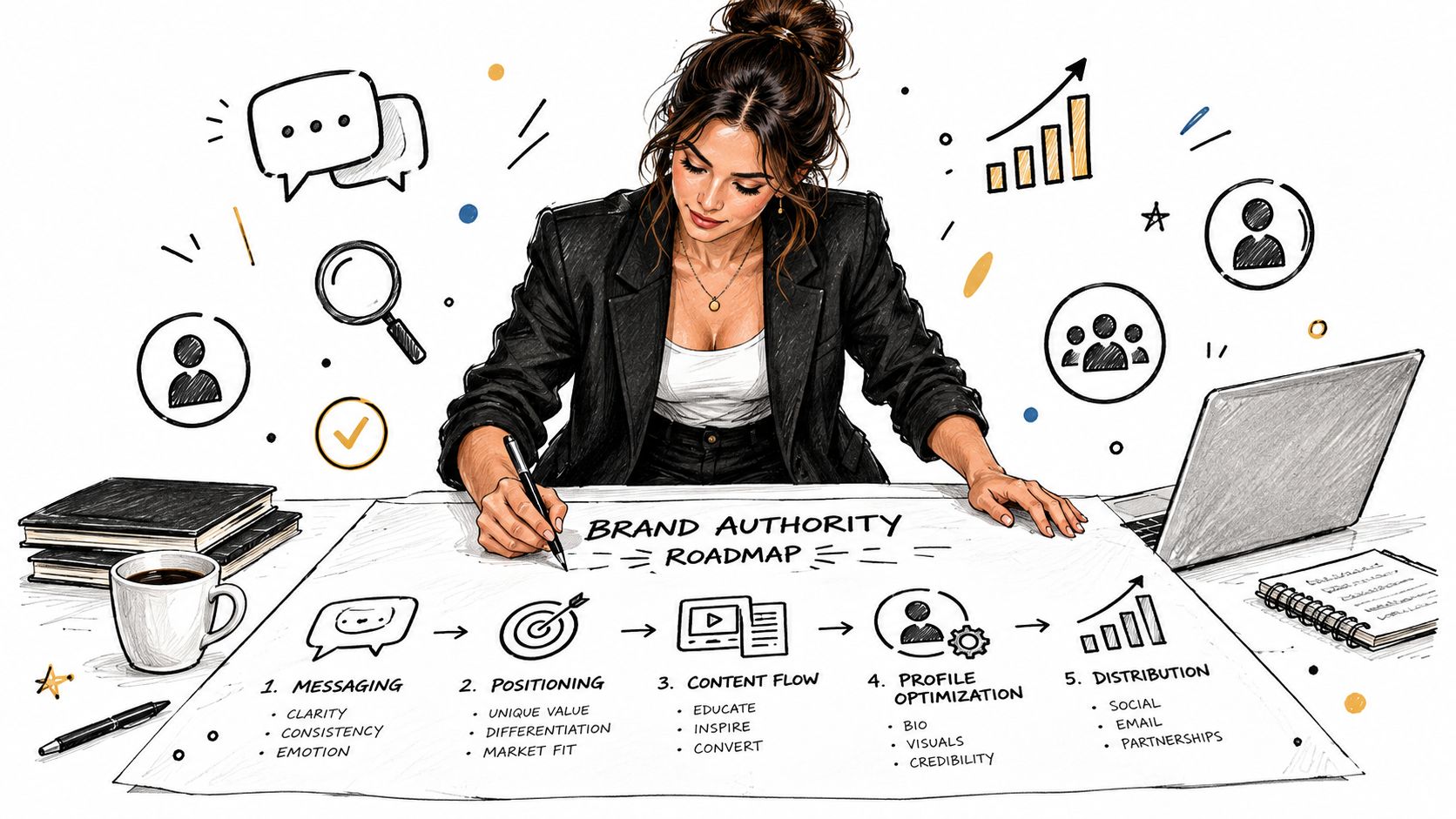
The popular advice about professional services branding is backwards. Most firms start with a logo, color palette, and polished website, then wonder why qualified buyers still don't recognize their expertise. Those assets matter, but they aren't the brand system. In 2026, your brand determines whether buyers, search engines, and AI-driven chat tools can identify what you do, who you help, and why they should trust you.
Professional services buyers can't inspect your service before they buy it. They assess signals: the clarity of your positioning, the specificity of your proof, the visibility of your experts, and the consistency of your claims. A beautiful identity without those signals is decoration. A clear, documented, human brand is commercial infrastructure.
A logo-first strategy assumes buyers discover a firm, visit its website, admire the design, and make contact. That journey is increasingly incomplete. Buyers now ask search engines and AI tools for recommendations, comparisons, explanations, and shortlists. If your expertise is scattered across vague service pages, inconsistent executive bios, and generic articles, those systems have little reliable material to interpret.
That doesn't mean design has become irrelevant. It means design has to support meaning. Your site should make relationships between problems, audiences, services, methods, experts, and evidence obvious to both people and machines.
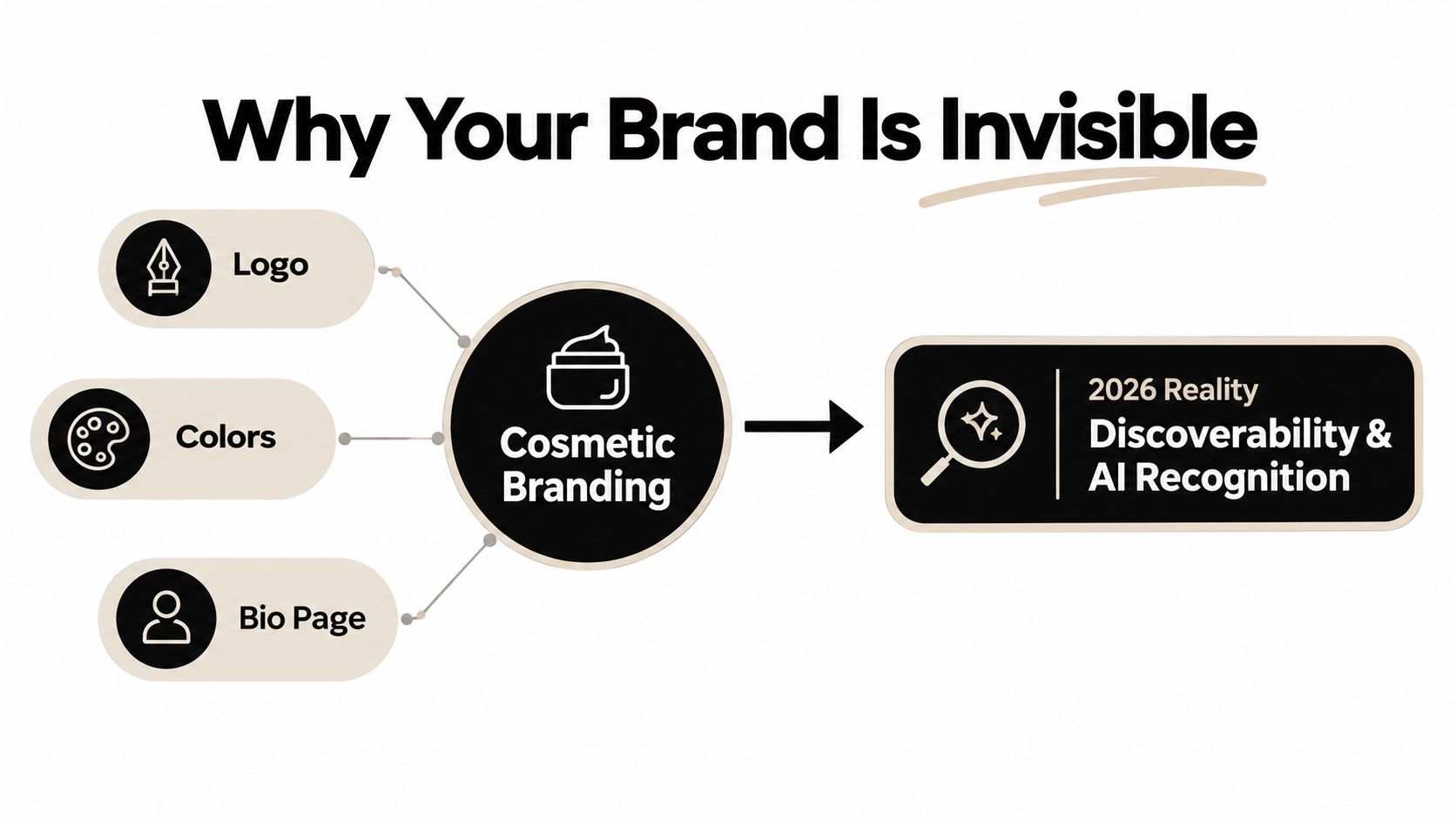
Many firms claim to be “trusted advisors” or “strategic partners.” Those phrases don't tell a buyer what the firm actually solves, for whom, or how its approach differs. They also give an AI system no dependable structure from which to recognize a distinct area of authority.
The current gap in professional services branding is practical. Industry writing argues that discovery increasingly depends on whether expertise is clearly articulated, documented, and consistent enough to be surfaced by AI systems, not only optimized for traditional search. That makes branding a visibility infrastructure problem, as discussed in this analysis of branding for professional services and B2B firms.
Your buyer should be able to answer these questions after reviewing a few pages:
Practical rule: If a stranger can describe your visual identity but can't explain your commercial value, your branding project isn't finished.
Consistency matters because buyers interpret contradictions as risk. A service page may describe a specialist firm, while executive profiles suggest generalists. A homepage may promise transformation, while published content offers only surface-level commentary. Before investing in more campaigns, bring the core brand claims into alignment. Guidance on master branding and advertising together is useful here because promotion performs better when it carries a stable, recognizable point of view.
Positioning isn't a slogan workshop. It's a decision about which buyers you want to be known by, for which problem, under which conditions, and against which alternatives.
Start with evidence from your real business. Review your strongest engagements, best referrals, most profitable work, and conversations that closed quickly. Look for repeated patterns in the buyer's situation, the trigger that created urgency, the expertise they valued, and the reason they chose you over another option.

Use this working sequence:
A useful proposition has a simple structure: We help [specific audience] solve [specific problem] through [distinctive approach], so they can [commercial or professional outcome]. Treat that sentence as a hypothesis, not sacred copy. Revise it until your best clients recognize themselves and your team can use it without explanation.
The firm-versus-expert question requires a deliberate choice. A collective brand scales better when clients need multidisciplinary delivery, continuity, and institutional confidence. An expert-led brand works better when the purchase depends on judgment, reputation, and a specific person's point of view.
You don't have to choose between a firm identity and human visibility. Define the relationship between them:
If positioning still feels vague, use this step-by-step framework for brand positioning strategy to pressure-test your audience, differentiation, and message architecture before commissioning more design.
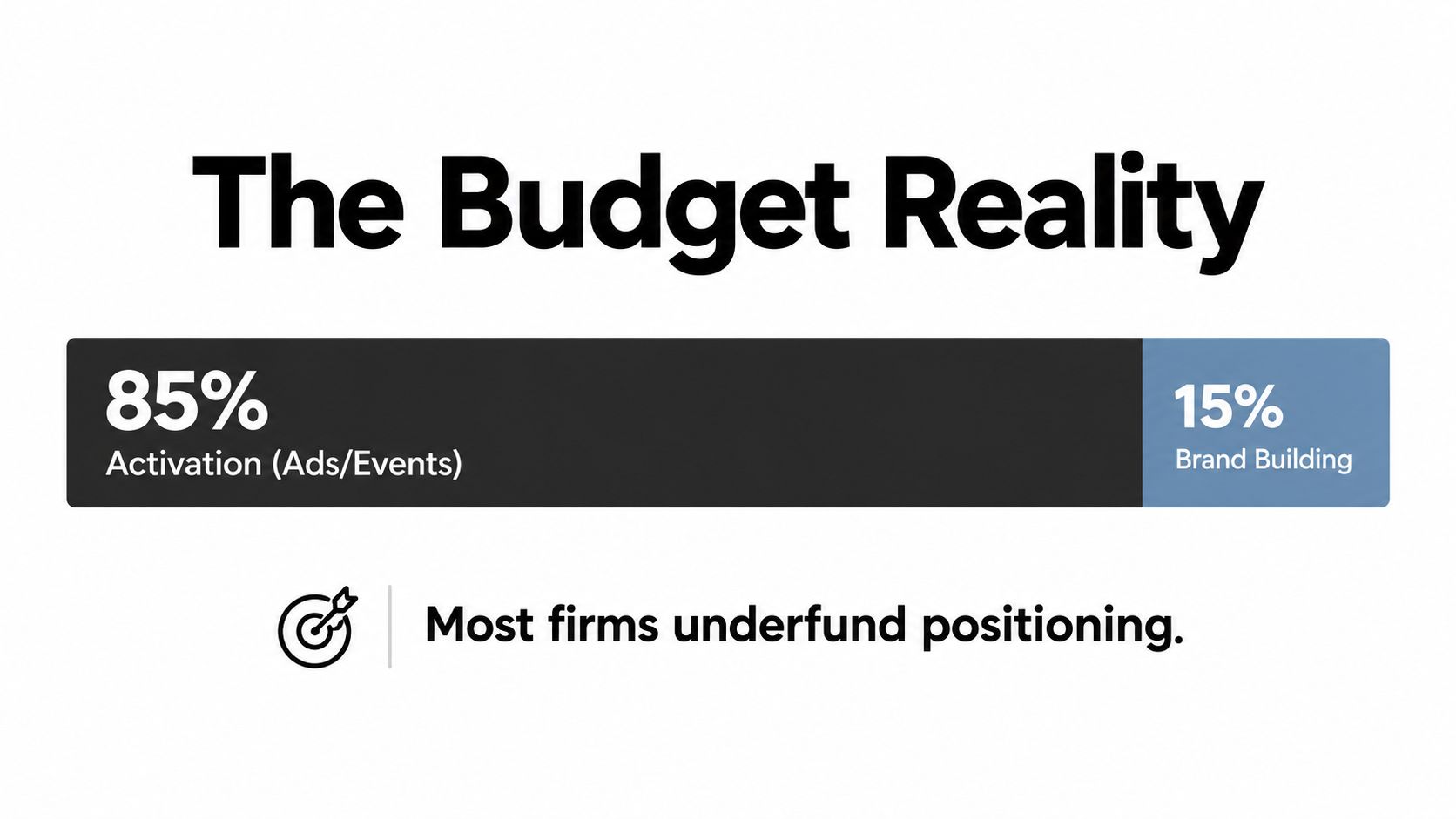
The budget problem is uncomfortable because firms often fund visible activity more readily than foundational clarity. Professional services firms allocate 32% of marketing budgets to brand building and 68% to activation, according to professional services marketing effectiveness data. Activation includes the campaigns, events, and distribution that create immediate activity. Brand building creates the meaning that makes those activities recognizable and credible.
This imbalance doesn't make activation wrong. It makes activation less efficient when the firm hasn't decided what it wants to be known for. Paid promotion can distribute a vague message faster, but it can't turn a generic claim into a differentiated position.
Only 34% of professional services marketers report differentiated positioning, based on the same source. The contrast with stronger performers is substantial. Differentiated positioning reaches roughly 52% to 69% among top performers, compared with 23% to 24% among average performers. Those figures support a clear recommendation: research and message development should precede serious tactical scaling.
| Marketing question | Weak approach | Stronger approach |
|---|---|---|
| Who are we targeting? | Everyone who needs expertise | A defined client profile and buying situation |
| What do we say? | Broad claims about quality | A specific problem, method, and outcome |
| Where do we invest? | Channels selected by habit | Channels matched to buyer behavior |
| What do we measure? | Activity and impressions alone | Visibility, qualified response, and message resonance |
Don't ask for a larger budget before you can show where the current budget is leaking meaning. Audit campaigns, landing pages, event descriptions, sales decks, and executive profiles. Mark every statement that sounds interchangeable with a competitor's. Then identify the missing research, proof, and content required to make the proposition believable.
A practical allocation decision has three parts:
Your finance lead may resist brand investment because it appears less measurable than an event or campaign. Give the work operational outputs: a message hierarchy, revised service pages, expert profiles, proof library, content themes, and a clear brief for every activation channel. Branding becomes easier to defend when it produces assets the sales and delivery teams use.
AI-driven discovery favors clarity over cleverness. It needs enough context to connect a firm to a problem, a service, an audience, and a credible expert. It won't reliably infer your expertise from a poetic headline or a page filled with broad claims.
Start with service pages. Give each important offer its own page, and make the page answer the questions a buyer would ask before a serious conversation: who needs this service, what triggers the need, what the work includes, how the engagement proceeds, what risks it addresses, and which experts deliver it. Use the same service name across your navigation, executive bios, articles, case material, and sales documents.
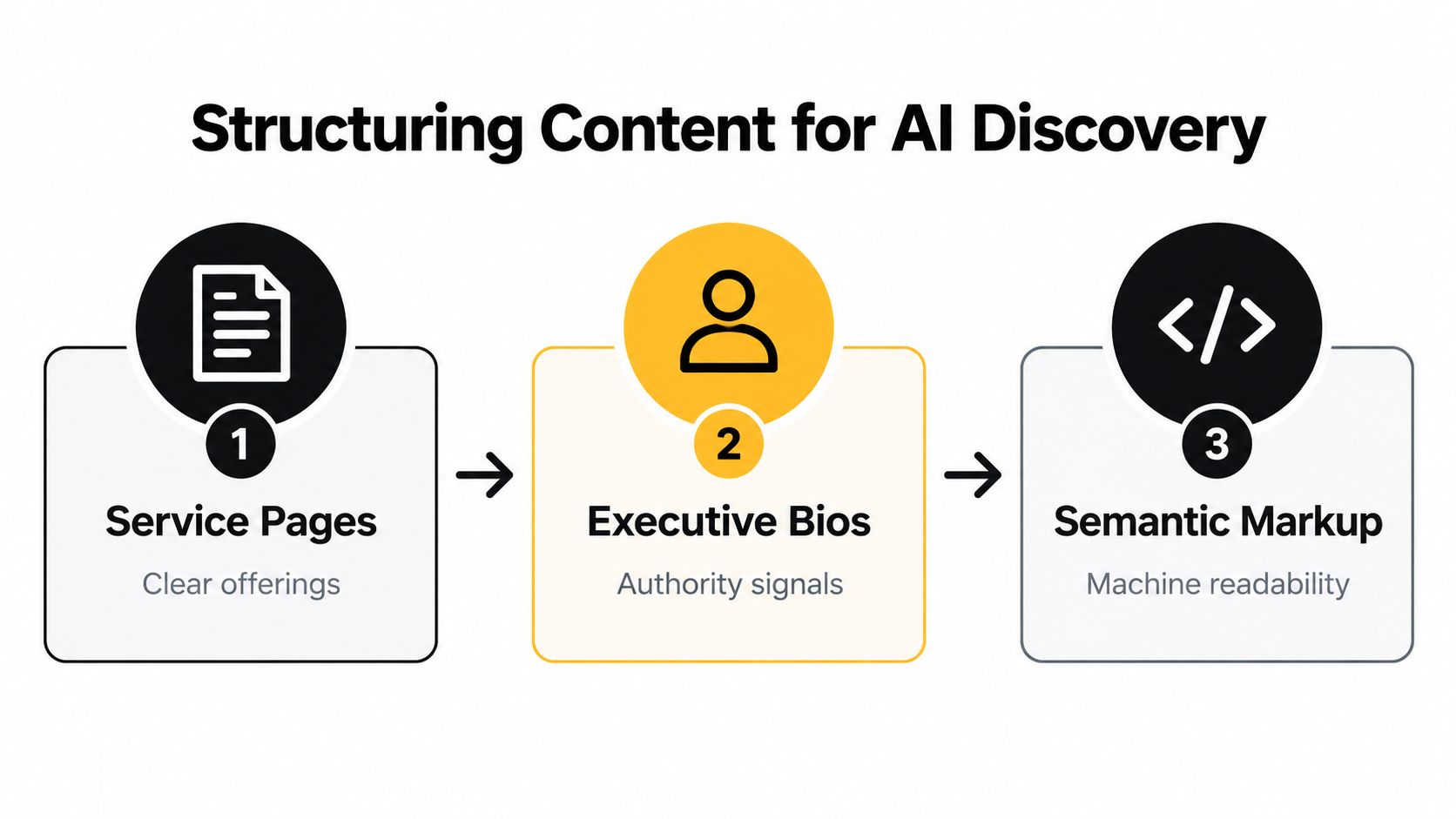
Executive bios should do more than list career history. State the person's role, specialism, client context, methods, relevant experience, and published points of view. Link the bio to the services and topics the person directly supports. If five leaders claim overlapping expertise, clarify their distinct responsibilities rather than repeating the same paragraph.
Thought leadership should also document expertise instead of merely displaying confidence. A strong article names a real client problem, explains the reasoning behind a recommendation, defines relevant terms, identifies trade-offs, and shows where the advice applies or doesn't apply. Use original perspectives, but keep the language precise enough for a reader to summarize accurately.
Use consistent terminology, descriptive headings, internal links, author information, publication dates, and structured data appropriate to each page. Semantic markup can help communicate whether a page represents an organization, person, service, article, or other entity. It won't repair unclear content, but it can reinforce a well-organized system.
Check these elements before publishing:
A lean content program should prioritize pages that influence evaluation: service pages, expert bios, comparison content, practical guides, and proof assets. This guide to content marketing for professional services can help turn expertise into a manageable editorial system.
For a concise visual explanation of the discovery structure, use this video as a supplementary reference:
In many professional services categories, the most valuable brand asset is a recognizable expert. The firm supplies continuity and capability, but the individual makes judgment visible. Buyers want to understand how someone thinks before they trust that person with a consequential problem.
Industry reporting cites research that 92% of professionals are more likely to trust a company when its senior executives are active on social media. It also reports that firms with at least four active executive leaders see 38% higher digital impact, while leader posts generate three times more comments and twice the engagement of company pages. These figures appear in the reporting on executive authority and professional services branding.
The recommendation isn't to turn every partner into a full-time creator. It is to stop treating executive visibility as optional decoration.
Founder-led content can create speed and recognition, but it creates concentration risk. If one founder carries every important conversation, the firm may become dependent on that person's availability and reputation. A collective model spreads authority, but it can also produce bland content if nobody has clear ownership of a point of view.
Use a simple operating model:
Executive content should teach, not perform. A partner explaining a difficult trade-off, correcting a common misconception, or translating a complex change into a practical decision creates stronger authority than a stream of self-congratulation.
Human authority works when the audience can recognize a mind at work, not just a title attached to a logo.
Video can make that thinking more accessible, but production shouldn't overwhelm substance. For practical guidance on using executive-led video in paid distribution, consult Nereo's LinkedIn ad best practices. Keep the firm's identity visible through consistent themes, profile links, service references, and shared proof. For the individual side of the system, this resource on building executive presence online offers a useful reference point.
Consider a fictional advisory firm, Northline Risk Partners. Its website looked polished, but the homepage described the firm as a “trusted strategic partner” for organizations facing complex challenges. Service pages combined unrelated offers, partner bios repeated similar language, and the firm's strongest expertise appeared only in private proposals.
The leadership team began with client and referral interviews. They found that buyers didn't primarily describe Northline as a broad advisory firm. They referred to its ability to help regulated businesses make high-stakes decisions when internal teams lacked a clear path forward.
Northline reorganized its offer around that buying situation. It separated services by decision problem, rewrote each page around triggers and outcomes, and connected every offer to named specialists. Partners chose distinct editorial themes, including decision governance, operational risk, and executive communication.
The content team then converted recurring client questions into practical articles. Each article used consistent terminology, clear authorship, internal links to relevant services, and a short explanation of where the advice applied. The firm also replaced generic bios with evidence-led profiles that connected experience to the firm's revised position.
No invented performance result belongs in this example. The point is the operating change: Northline stopped asking its identity to create authority by appearance and started documenting the expertise that buyers and AI systems could interpret. Its brand revitalization became a coordinated shift across positioning, people, pages, and proof.
Don't begin with a redesign. Begin with an audit that exposes where your brand loses meaning.
Your next branding meeting should end with assigned owners, revised pages, and a publishing schedule. If it ends with a mood board and no decision about what the firm wants to be known for, you haven't started the strategic work.
Legacy Builder helps founders and professional leaders extract their positioning, voice, and content pillars, then turn them into consistent personal-brand content and distribution. If your firm needs human authority to reinforce a clearer professional services brand, visit Legacy Builder and start a strategy conversation.


You could – but most in-house teams struggle with the nuance of growing on specific platforms.
We partner with in-house teams all the time to help them grow on X, LI, and Email.
Consider us the special forces unit you call in to get the job done without anyone knowing (for a fraction of what you would pay).
Short answer – yes.
Long answer – yes because of our process.
We start with an in-depth interview that gives us the opportunity to learn more about you, your stories, and your vision.
We take that and craft your content then we ship it to you. You are then able to give us the final sign-off (and any adjustments to nail it 100%) before we schedule for posting.
No problem.
We have helped clients for years or for just a season.
All the content we create is yours and yours alone.
If you want to take it over or work on transitioning we will help ensure you are set up for success.
We want this to be a living breathing brand. We will give you best practices for posting and make sure you are set up to win – so post away.
Subscribe to our newsletter and get insights on how to grow your personal brand.
