.svg)
Subscribe to our newsletter and get insights on how to grow your personal brand.
Thank you! Your submission has been received!
Oops! Something went wrong while submitting the form.
.svg)


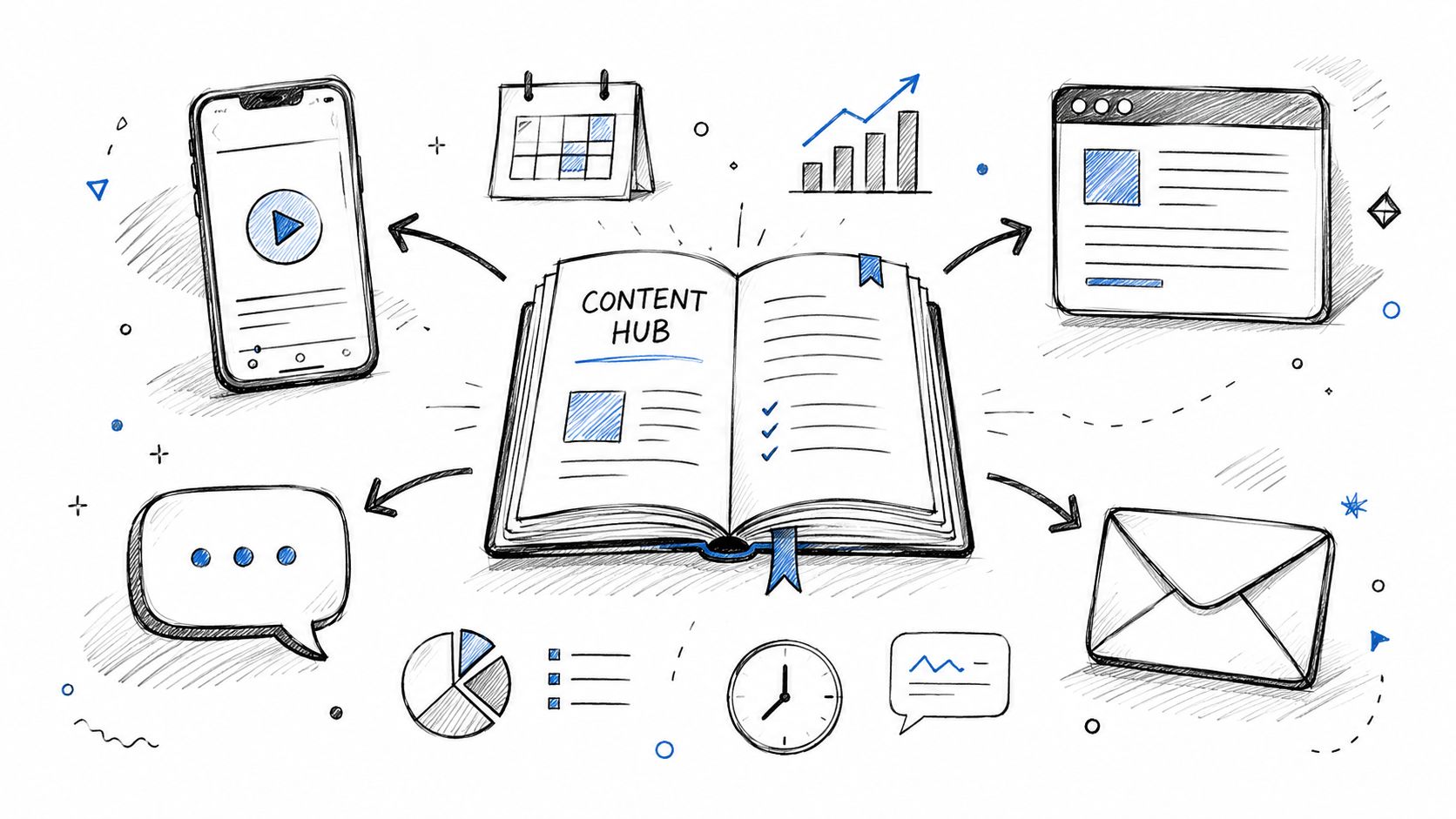
The most popular advice about multi-platform content distribution is also the advice that wastes the most founder time: create one strong post, publish it everywhere, and let the platforms do the work. That approach treats distribution as a syndication task, but platforms don't reward identical behavior. They reward content that fits the way people watch, read, reply, save, and click in that environment.
The hidden cost isn't just weaker reach. It's the hours spent managing posts that were never adapted for their destination. A better system starts with one clear idea, then changes the opening, format, tone, visual treatment, and call to action for each channel. Research on cross-posting reports that identical versions can underperform optimized versions by 30–70% in engagement metrics (SocialEcho's cross-posting workflow). That's why the practical question isn't “How do I post this everywhere?” It's “What does this idea need to become on each platform?”
Identical cross-posting saves drafting time, then spends it on weak retention, awkward replies, and avoidable rework. A dense LinkedIn post does not automatically become a compelling vertical video. A copied thread can read abruptly as an Instagram caption, while a promotional link that fits a newsletter may interrupt a conversation on X.
Each platform gives people a different reason to open the app and uses different signals to decide whether content should travel further. LinkedIn readers often want a useful argument they can absorb and discuss. Short-form video viewers judge the opening almost immediately. X users may respond to a sharp observation, a connected sequence of points, or a timely reply. Identical packaging ignores those expectations and forces the audience to do extra work.
Practical rule: Keep the insight consistent, not the asset.
Platforms reward content shaped for their native context. The first three seconds, aspect ratio, and CTA carry disproportionate weight because they determine whether someone continues, understands the point, or takes the next step. A founder can preserve one core idea while recording a new opening for video, changing a standard presentation into vertical framing, and replacing a link-first CTA with a question or save prompt.
| Platform | Cross-Posted Content | Platform-Adapted Content | What Changes |
|---|---|---|---|
| Same copy and link | Contrarian opening, spaced paragraphs, discussion CTA | Readability and conversation | |
| X | Long caption or copied paragraph | Thread with one insight per post | Pace and reply potential |
| Text-heavy caption | Visual hook, concise caption, save-oriented CTA | Scanability and visual context | |
| Short-form video | Repurposed opening | Re-recorded first seconds, vertical framing, captions | Retention and clarity |
The table does not promise that every adapted post will win. It shows where the work belongs. A strategically correct idea can still stall because the first frame is vague, the sentence arrives too slowly, or the CTA asks for behavior the platform does not encourage.
Identical posting also complicates follow-up. A thoughtful objection may need a different response on LinkedIn than in a short video comment, and a customer question can disappear while the team searches across separate notifications. A shared inbox helps separate publishing from response work. Resources such as Exerta's cross-channel inbox for recovering revenue are useful when missed messages carry a commercial cost.
Use a hub-and-spoke workflow. Write one master idea, then rebuild its delivery for each selected channel. Change the cover or first three seconds, set the correct aspect ratio, adjust the tone, add channel-specific tags, and place the CTA where users expect it. Multi-platform content distribution works when the audience experiences relevance, not repetition.
Adding channels multiplies production, moderation, measurement, and context-switching work without guaranteeing proportional reach. A founder with a B2B offer may gain more from deep expertise on LinkedIn and searchable video on YouTube than from a thin presence everywhere. A consumer creator may prioritize Instagram and short-form video, then use email as the owned destination.
Current usage data supports a diversified but selective approach. In July 2026, Facebook held 73.23% of global social media market share, followed by YouTube at 9.48%, Instagram at 7.13%, and X/Twitter at 5.24% (StatCounter global social media market share). Those figures do not identify your buyers, but they show that attention is spread across several major networks rather than concentrated on one universal channel.
Mobile behavior makes format selection more important. Consumers spend an average of 3 hours and 48 minutes per day on mobile devices. A founder's content must therefore work in a narrow, fast-scrolling environment, even when the source asset began as a desktop article, podcast, or presentation.
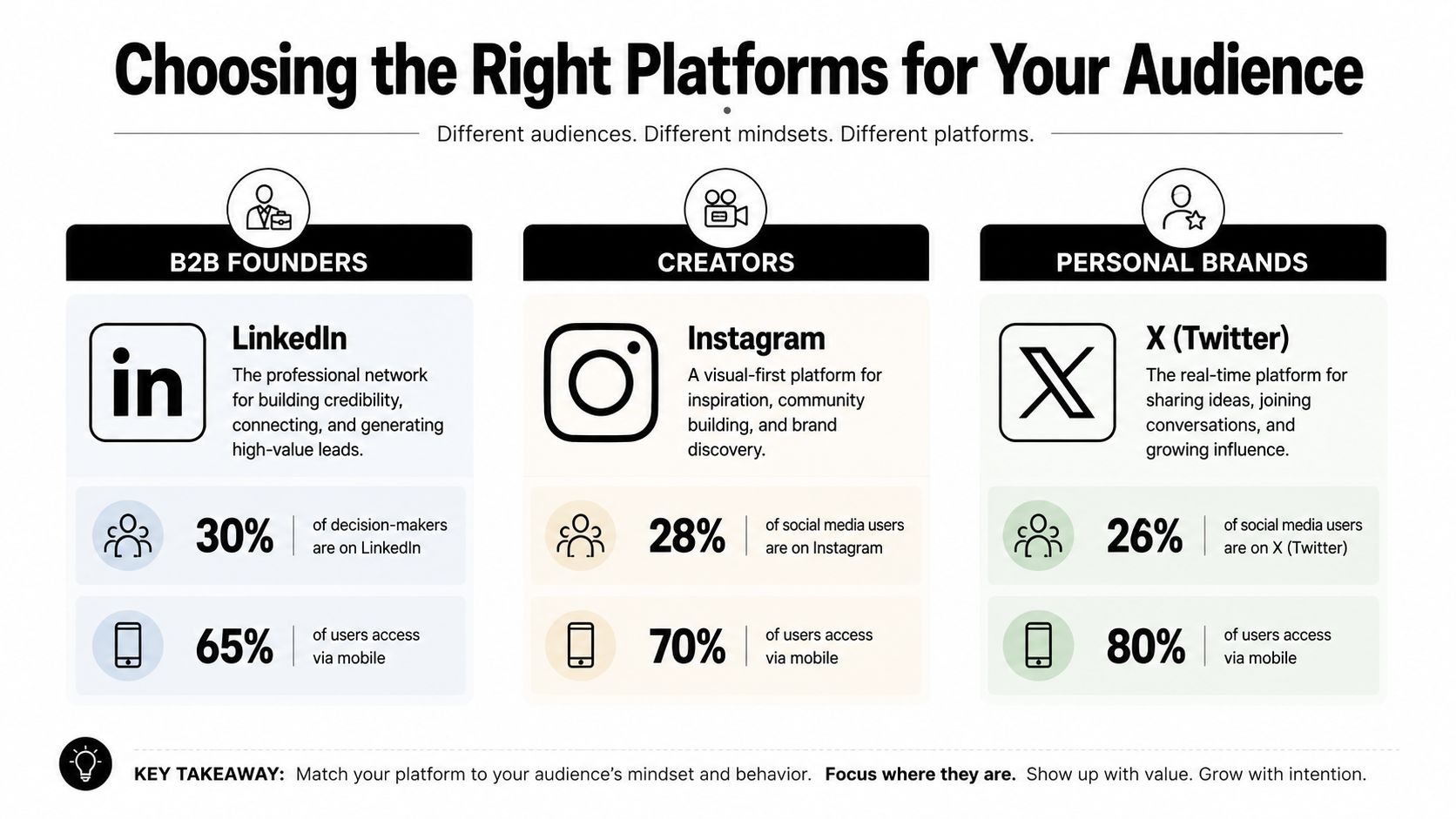
A practical allocation model uses two primary channels for consistent native publishing and two secondary channels for selective repurposing. Match the portfolio to audience intent:
Competitor activity is a weak selection criterion. Start with the behavior your audience already exhibits, then build content that serves it. Review the questions people ask, the formats they share, and the actions that follow engagement. A platform with fewer impressions can still produce more qualified conversations.
Once the portfolio is set, adapt the first three seconds, aspect ratio, and CTA for each channel. Those changes address how people scan, watch, and respond, and can lift engagement by 30–70% when the underlying idea fits the audience. Native publishing tools, schedulers, and custom integrations can support the workflow, but authentication, API permissions, and rate limits create operational friction. Review this guide to handling OAuth and rate limits before building automated publishing into the process.
The hub-and-spoke model gives founders a way to create depth without writing every asset from scratch. The hub is one substantial master asset, such as a newsletter, podcast episode, article, or video. The spokes are independent pieces built from its strongest ideas, each written and designed for a specific channel.
Start by defining the core message in one sentence. Then identify the few ideas that can stand alone without the audience needing the entire master asset. A useful extraction test is: could this point teach, challenge, or clarify something even if the reader never opens the original?
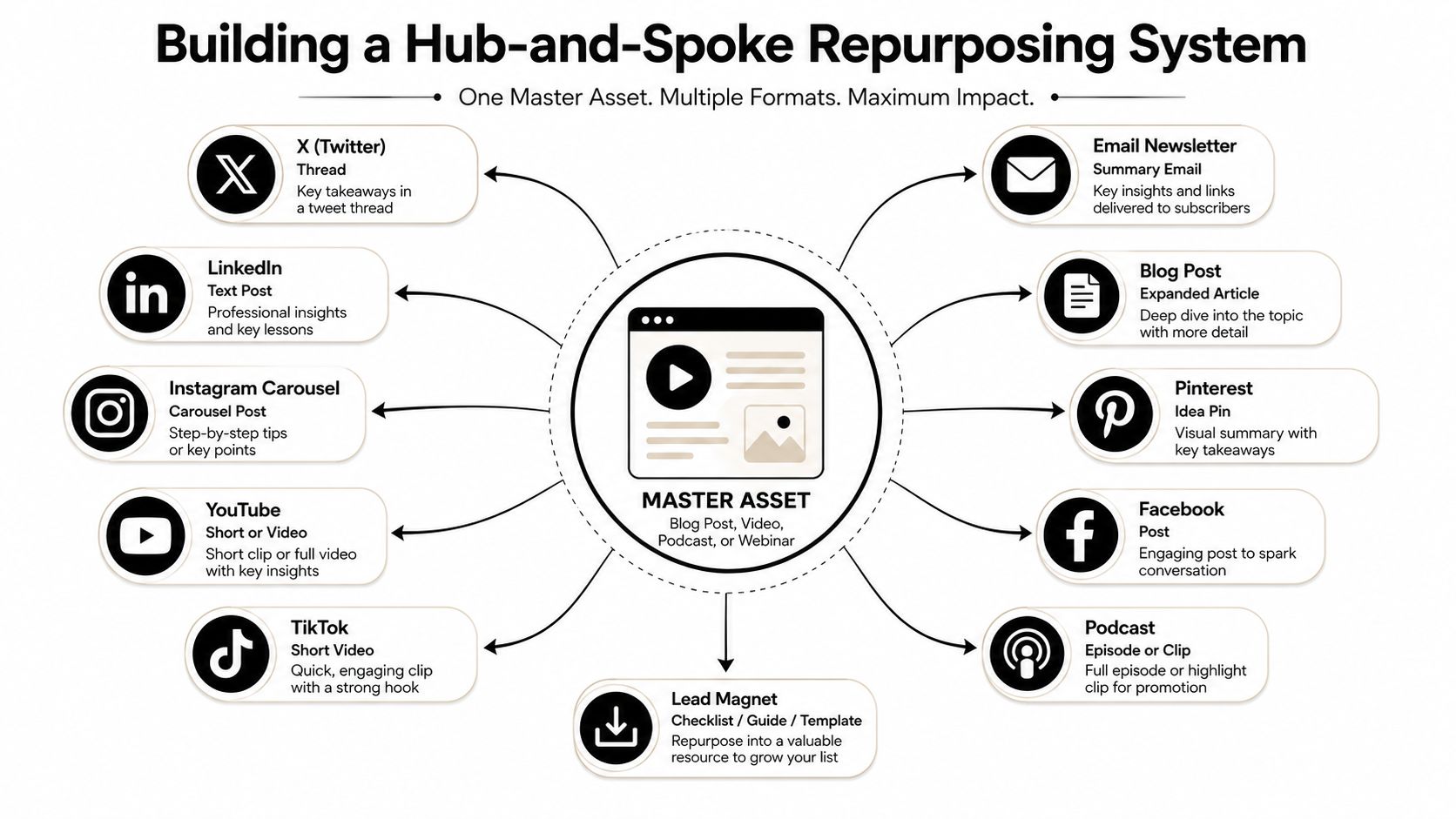
A founder's master idea might become several distinct assets:
The first three seconds or cover deserves special attention because it controls whether the audience sees the rest of the asset. Don't use the same opening everywhere. “Most founders distribute content incorrectly” may work as a text hook, while a video needs a spoken claim paired with an immediate visual cue.
A short brief prevents the repurposing process from becoming random trimming. Record the channel, audience state, format, opening line, main takeaway, visual requirement, CTA, destination URL, and review owner. Store each version beside the master asset so the team can see which idea has been used and which angle remains available.
The master asset supplies the thinking. The spoke supplies the context.
Use platform specifications as constraints, not creative instructions. The exact dimensions, caption limits, and publishing rules change, so verify them inside each platform's current documentation before production. The stable principle is more useful: each version needs its own opening, aspect ratio, rhythm, and CTA placement.
For a deeper framework on turning a single idea into repeatable channel assets, see this content repurposing framework that actually scales.
A final quality check should ask whether the spoke can stand on its own. If it needs the audience to click before it becomes useful, it's probably a teaser rather than a native asset. Teasers have a place, but founders shouldn't mistake them for complete distribution.
Identical cross-posting creates hidden costs. A scheduler may publish everywhere, yet the wrong opening, aspect ratio, rhythm, or CTA can make a strong idea feel irrelevant on each platform. Manual posting across 8–10 channels can consume 15–20 hours per week for one marketer. With templates and editorial rules established first, automation can reduce distribution time by 70–80%. The rules carry the judgment. Without them, automation spreads unfinished thinking faster.
Use three levels of automation. The bottom layer handles repetitive distribution. The middle layer manages prepared assets that still need a personal edit. The top layer remains close to the founder or subject-matter expert.
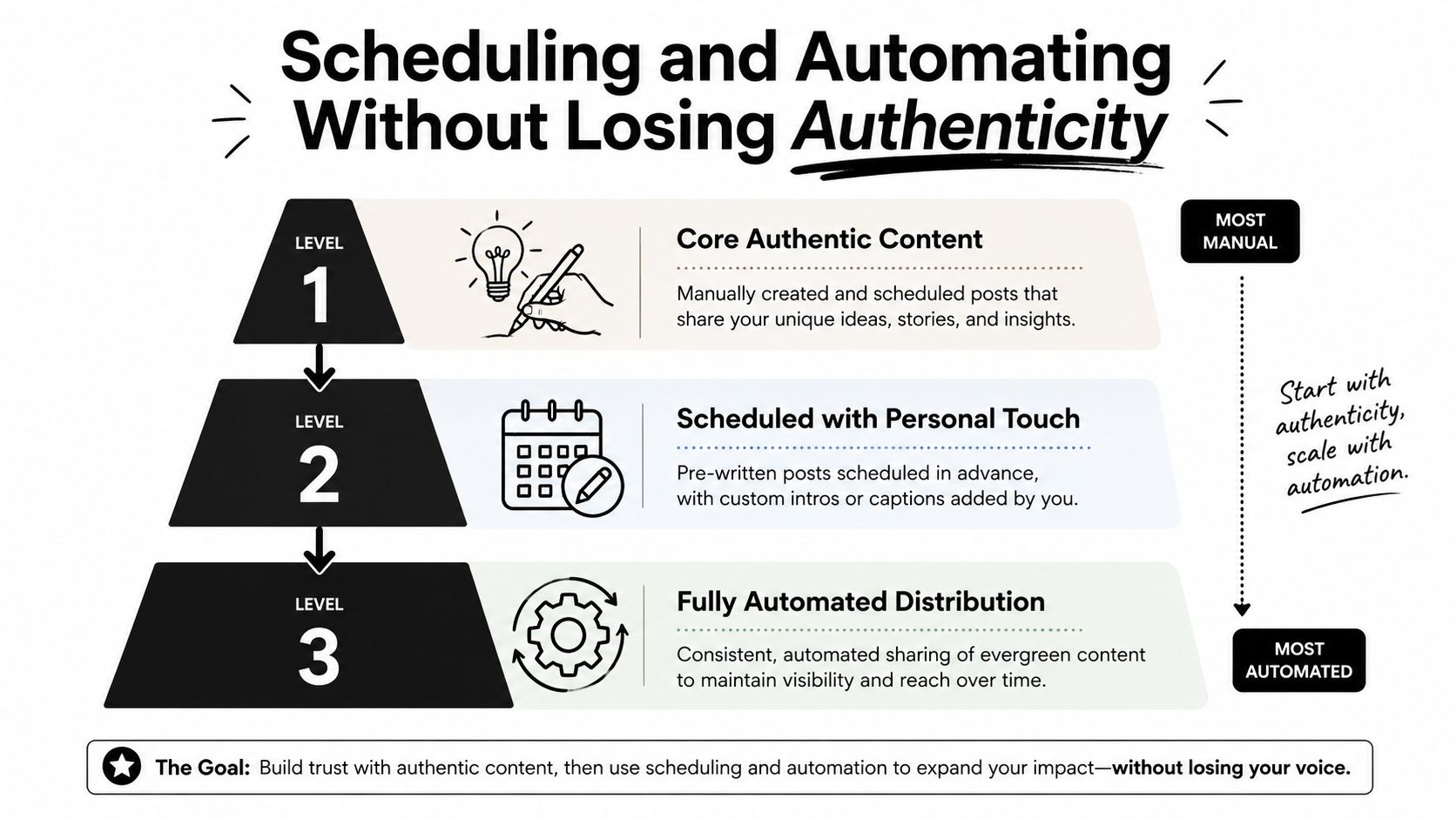
Fully automated tasks include evergreen reshares, publishing reminders, asset status updates, and routine distribution of approved website content. These tasks have clear rules and limited conversational risk.
Human-reviewed tasks include LinkedIn introductions, X threads, carousel captions, and posts connected to a current offer. Someone should check the opening, tone, context, links, and CTA before release.
Manual tasks include replying to comments, handling objections, joining current conversations, and publishing content tied to a live event. A scheduler can place a post on a calendar. It cannot understand a customer's concern well enough to answer responsibly.
A productive batching session starts with the master asset and ends with channel-ready drafts. Write variants together, then schedule them according to each platform's rhythm. Leave deliberate gaps so the founder can respond, share an observation from the day, or join a relevant discussion without crowding the feed.
Native scheduling is often safer for platform-specific features. Buffer, Typefully, and Taplio can centralize queues and approvals. The trade-off is convenience versus control. Third-party tools reduce repetitive work, but may limit native features, complicate media handling, or encourage one-click syndication.
Use the calendar as an editorial control system. Mark evergreen posts, approval requirements, founder response windows, and campaign ties before publishing. A content calendar framework makes those responsibilities visible.
Automation handles distribution speed; the founder still applies judgment before posting.
Distribution metrics show how far content traveled. Business metrics show whether it reached the right people and prompted useful action. A founder who celebrates impressions without reviewing replies, saves, qualified visits, or direct conversations can spend more time increasing visibility while missing demand.
Use three measurement layers. Reach includes impressions and unique views. Engagement includes comments, shares, saves, watch behavior, and meaningful replies. Conversion includes tracked visits, email signups, inquiry forms, and conversations that lead to a commercial next step.
Track the first three seconds, aspect ratio, and CTA as part of each asset's record. A hook that works in a LinkedIn post may need a faster opening in a short video. A square carousel and a vertical clip create different viewing conditions. A CTA asking for a reply also serves a different purpose from one sending people to an email signup. These changes reveal whether adaptation, rather than simple duplication, produced the response.
UTM tracking gives each channel and variant a distinct identity. Use a consistent naming system for source, medium, campaign, and asset variation. The link in a LinkedIn text post should remain distinguishable from the link in a newsletter or video description. Review platform analytics separately first, then bring the relevant fields into a simple scorecard.
| Platform | Reach Metric | Engagement Metric | Conversion Metric | Tracking Tool |
|---|---|---|---|---|
| Impressions and profile views | Comments, dwell signals, shares | Profile visits and tracked clicks | Native analytics and UTM links | |
| X | Impressions and post views | Replies, reposts, bookmarks | Tracked visits and conversations | Native analytics and UTM links |
| Reach and views | Saves, shares, replies | Profile actions and tracked clicks | Insights and UTM links | |
| YouTube | Views and returning viewers | Retention and comments | Description clicks and subscriber actions | YouTube Analytics and UTM links |
| Delivered messages | Replies and clicks | Signups, inquiries, or sales | Email platform and UTM links |
The scorecard should compare variants, not only platforms. If one founder idea becomes a carousel, thread, and clip, record each as a separate asset. Review which version produced the strongest response, most useful conversation, and clearest next action. The hub-and-spoke model becomes measurable here: the hub supplies the idea, while each spoke earns its own evaluation.
Attribution remains incomplete. Someone may see a LinkedIn post, search the founder's name later, read an article, and sign up through email. Use first-party analytics where possible, then add a self-reported question such as “How did you hear about us?” to forms or calls. Treat those answers as directional evidence rather than a complete customer journey.
The marketing ROI calculation framework can help connect distribution effort to business value. Include production time and response time in the review. A channel that generates attention but consumes disproportionate founder availability may not support a sustainable publishing system.
Adapted content generally earns stronger engagement than generic cross-posts, and a hub-and-spoke system can improve reach. Treat those findings as directional, not guaranteed outcomes. Your scorecard should determine which format and platform combination earns another production cycle.
A reliable system needs a cadence that a founder can maintain during a busy week. The schedule below keeps creation, adaptation, publishing, engagement, and analysis separate enough to protect focus, while still allowing insights from one day to improve the next.
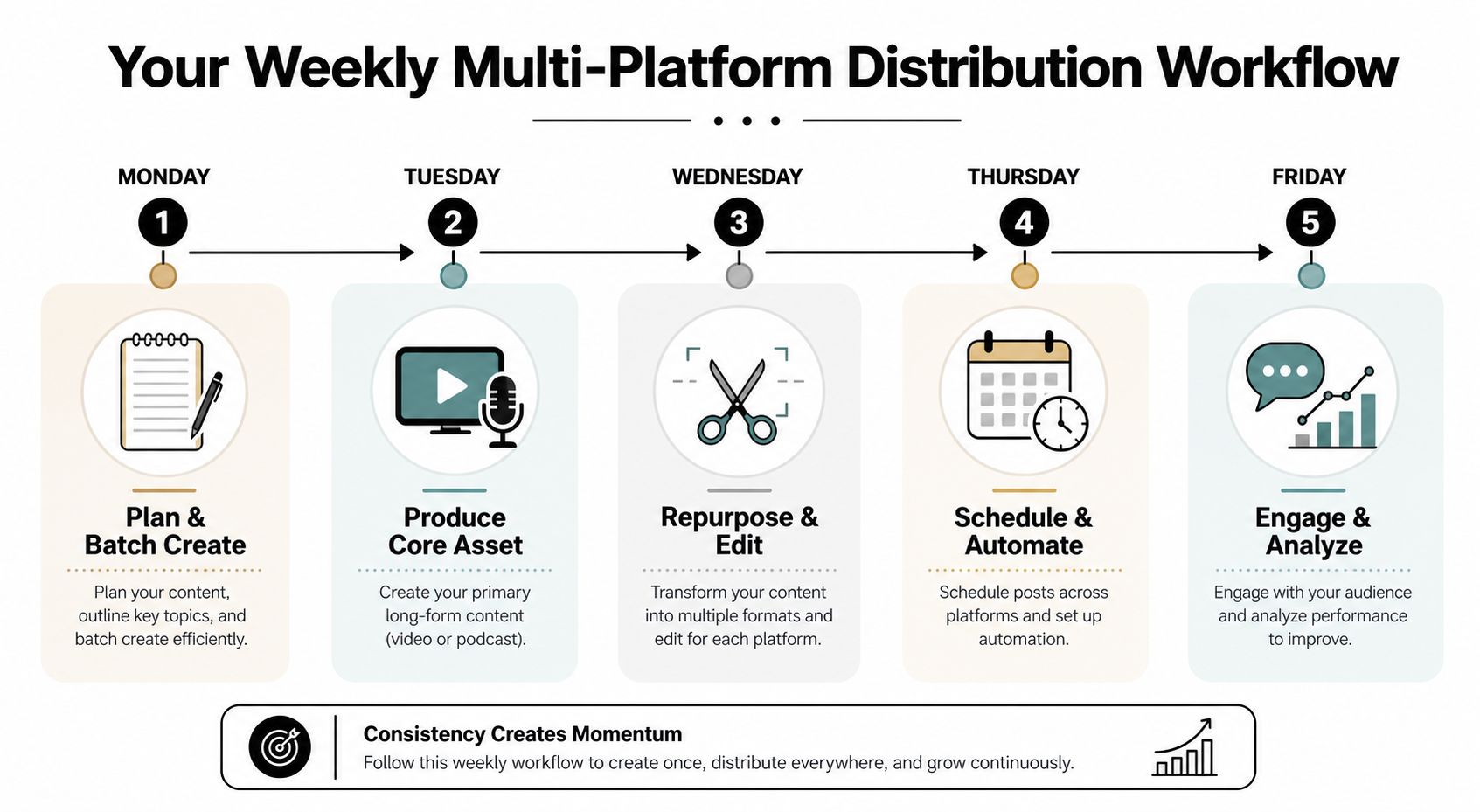
Choose one meaningful question from customers, sales calls, community discussions, or your own point of view. Turn it into the master asset, such as a newsletter, podcast episode, article, or video. Before finishing, mark the strongest claims, examples, objections, and possible openings. Those notes become the raw material for the spokes.
Extract the core ideas and assign each one to a format. Write the LinkedIn version as a professional argument, the X version as a sequence, the short video as a spoken explanation, and the newsletter version as a deeper relationship touchpoint. Don't ask a designer to rescue unclear thinking. Finalize the hook and CTA before polishing the visuals.
Review every draft against a channel checklist. Confirm the first frame or sentence, aspect ratio, captions, tags, destination link, disclosure requirements, and voice. Remove claims that need context but don't receive it in the shorter version. This checkpoint catches the most expensive error, publishing a technically correct asset that makes no sense to its audience.
Queue approved posts using native scheduling or a tool that supports the required formats. Leave space for the founder to respond when the post is live. Replies are not an administrative afterthought. They often contain the objections, language, and questions that should shape the next master asset.
Record reach, meaningful engagement, clicks, signups, and qualitative feedback by variant. Keep winners because they earned another angle, not because they generated a large surface metric. Retire weak versions early when the hook, format, or audience fit is clearly wrong, then document the reason so the team doesn't repeat the same test.
Five mistakes regularly weaken this system:
Once the workflow produces consistent evidence, hand off production in layers. A VA or junior marketer can manage the calendar, asset library, formatting checks, and reporting. The founder should retain ownership of the core viewpoint, sensitive replies, and final approval on posts that represent personal expertise.
Legacy Builder offers personal-brand content planning, repurposing, and distribution across channels such as LinkedIn, X/Twitter, Instagram, YouTube, newsletters, and email, with platform-specific versions and a publishing plan. Visit Legacy Builder to explore how its content strategists, writers, designers, and success managers can turn your ideas into a consistent multi-platform distribution system.


You could – but most in-house teams struggle with the nuance of growing on specific platforms.
We partner with in-house teams all the time to help them grow on X, LI, and Email.
Consider us the special forces unit you call in to get the job done without anyone knowing (for a fraction of what you would pay).
Short answer – yes.
Long answer – yes because of our process.
We start with an in-depth interview that gives us the opportunity to learn more about you, your stories, and your vision.
We take that and craft your content then we ship it to you. You are then able to give us the final sign-off (and any adjustments to nail it 100%) before we schedule for posting.
No problem.
We have helped clients for years or for just a season.
All the content we create is yours and yours alone.
If you want to take it over or work on transitioning we will help ensure you are set up for success.
We want this to be a living breathing brand. We will give you best practices for posting and make sure you are set up to win – so post away.
Subscribe to our newsletter and get insights on how to grow your personal brand.
