.svg)
Subscribe to our newsletter and get insights on how to grow your personal brand.
Thank you! Your submission has been received!
Oops! Something went wrong while submitting the form.
.svg)


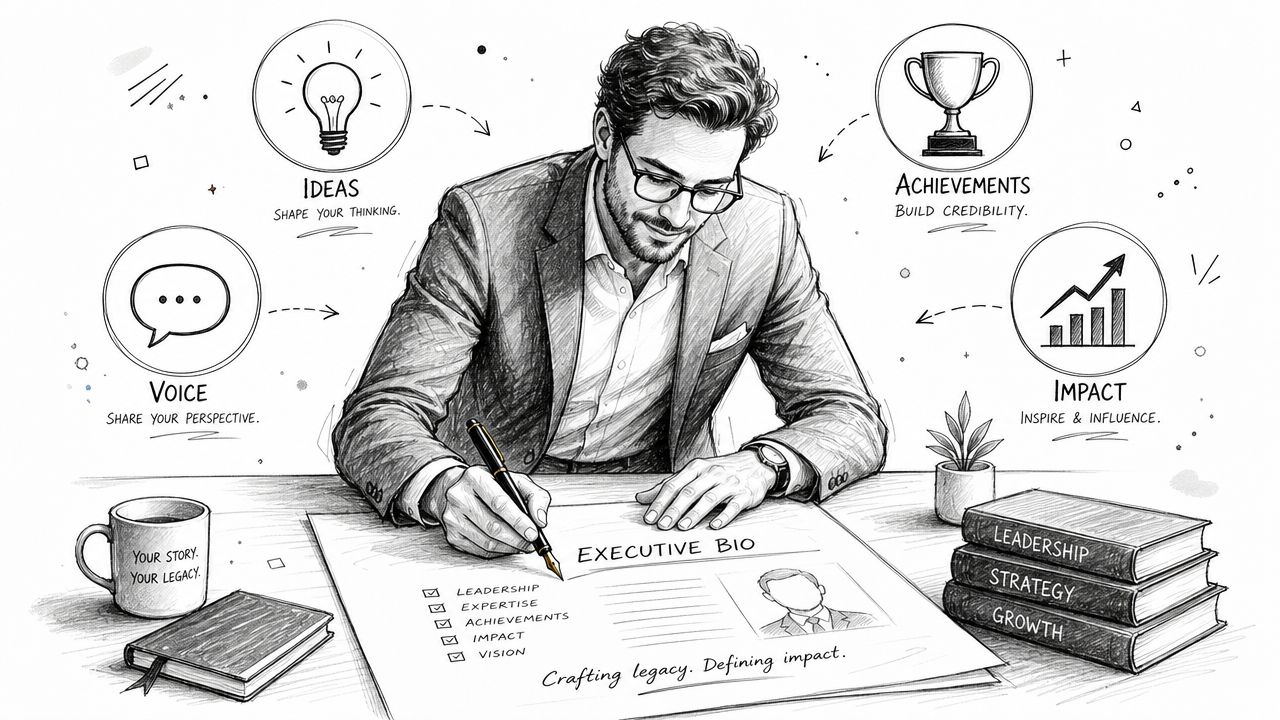
Most advice about executive bios is wrong.
You've probably been told to write a polished third-person summary packed with titles, credentials, and a few safe adjectives like “seasoned,” “results-driven,” and “visionary.” That approach produces the same dead-on-arrival bio everyone else has. It sounds corporate, but it doesn't build trust. It doesn't create intrigue. It doesn't open doors.
If you want to learn how to write executive bio copy that works, stop treating it like a formal obligation. Treat it like a strategic brand asset. A strong bio should help someone understand three things fast: what you're known for, what kind of leader you are, and why your name should stay in the room after the meeting ends.
The executives who get remembered don't write career obituaries. They write narratives with direction. Their bios don't just document the past. They position the future.
Most executive bios fail for one simple reason. They read like watered-down resumes.
That's a mistake. A resume is a screening document. A bio is a positioning document. One proves you're qualified. The other shapes how people talk about you when you're not there.
A stiff bio doesn't make you look more credible. It makes you look interchangeable.
People don't remember a list of responsibilities. They remember a point of view, a leadership signature, and a clear pattern of impact. If your bio opens with your title and then drifts into generic claims about cross-functional excellence, you've wasted the most valuable real estate on the page.
Your bio should work like an advocate. It should help a board recruiter, event organizer, investor, client, or journalist quickly understand your value without digging through your LinkedIn profile, press quotes, and work history.
Your bio should answer, “Why this leader?” before the reader has to ask.
The best bios aren't passive summaries. They actively create opportunities.
They support:
That's why your bio belongs inside a broader branding strategy, not buried in a folder labeled “professional documents.” If you're serious about visibility, read this guide on mastering personal branding for executives to drive influence and growth.
Your bio is one of the few assets that travels without you. It gets forwarded, pasted into conference decks, added to company sites, included in pitch materials, and quoted in introductions.
If it's bland, your brand is bland.
If it's clear, specific, and human, it compounds. People start associating your name with a distinct kind of leadership. That's when a bio stops being admin work and starts becoming an advantage.
Before you write a sentence, decide what the bio needs to do.
Most executives skip this step because they assume one bio should work everywhere. It won't. A bio written for everyone usually impresses no one, because it's too broad to feel relevant.
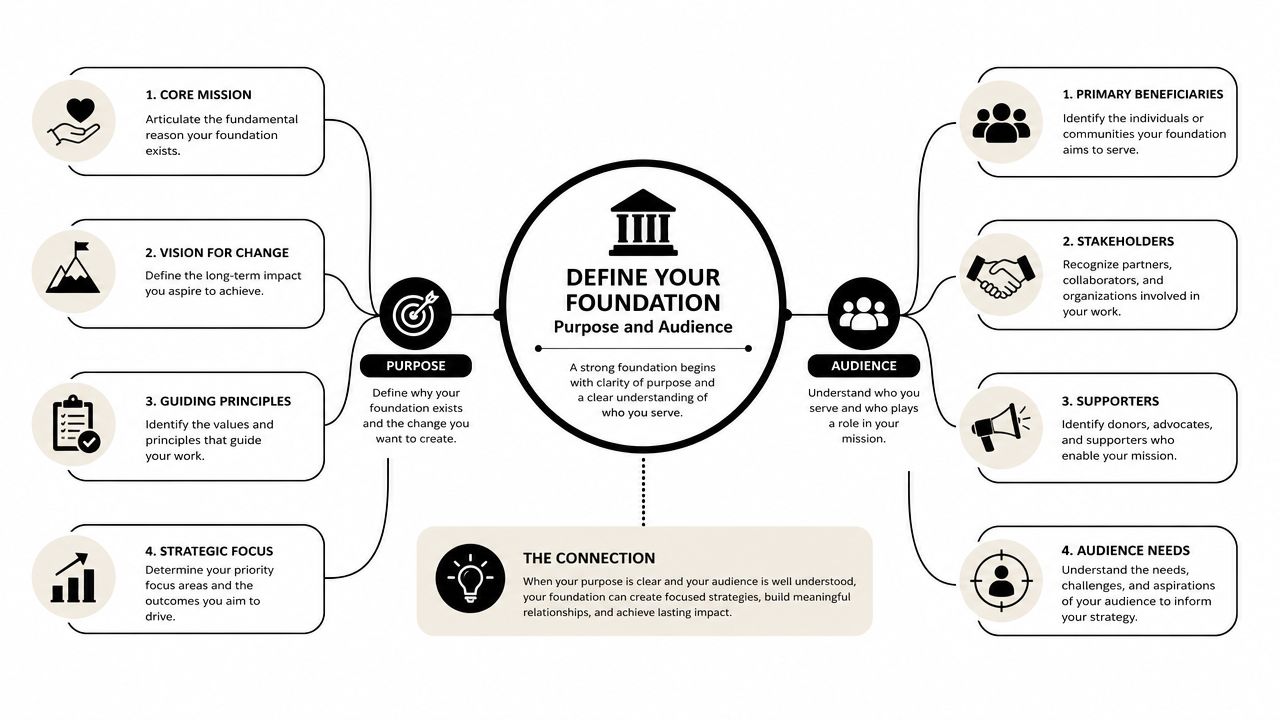
Start with one primary objective. Not five. One.
Maybe your bio needs to help you:
That single choice changes everything. The proof points you include for a board bio won't match the proof points you need for a founder-facing consulting bio. A company turnaround story may matter significantly to one audience and barely matter to another.
Write this sentence before drafting anything:
This bio is designed to help [specific audience] choose me for [specific opportunity].
If you can't finish that sentence clearly, you're not ready to write.
Now narrow the audience.
Don't say “business leaders.” That's lazy. Name the actual decision-maker. Is the reader a private equity partner, search consultant, conference host, prospective enterprise client, or CEO looking for an advisor?
Use this quick filter:
| Audience | What they want to know |
|---|---|
| Hiring committee | Can you lead at the required scale and fit the mandate? |
| Board selector | Do you bring judgment, trust, and strategic range? |
| Event organizer | Will you engage the audience and represent the event well? |
| Prospect or client | Can you solve the problem they actually have? |
Once you know the purpose and audience, your editing gets easier. You stop stuffing in every award, role, and side project.
Keep only material that helps the reader make a decision:
Drop the vanity clutter. Nobody needs your full career timeline in a short bio. Nobody cares that you're “passionate about excellence.” Everyone's allegedly passionate about excellence.
Before drafting, create a short strategy brief for yourself:
That prep work saves hours of rewriting. More important, it keeps your bio aligned with your brand instead of turning into a career scrapbook.
A great executive bio has structure. Not rigid template energy. Structure.
When executives struggle with how to write executive bio content, the problem usually isn't lack of experience. It's lack of architecture. They try to cram a whole career into one page, then wonder why it feels muddy.
A stronger approach is to build the bio in parts.
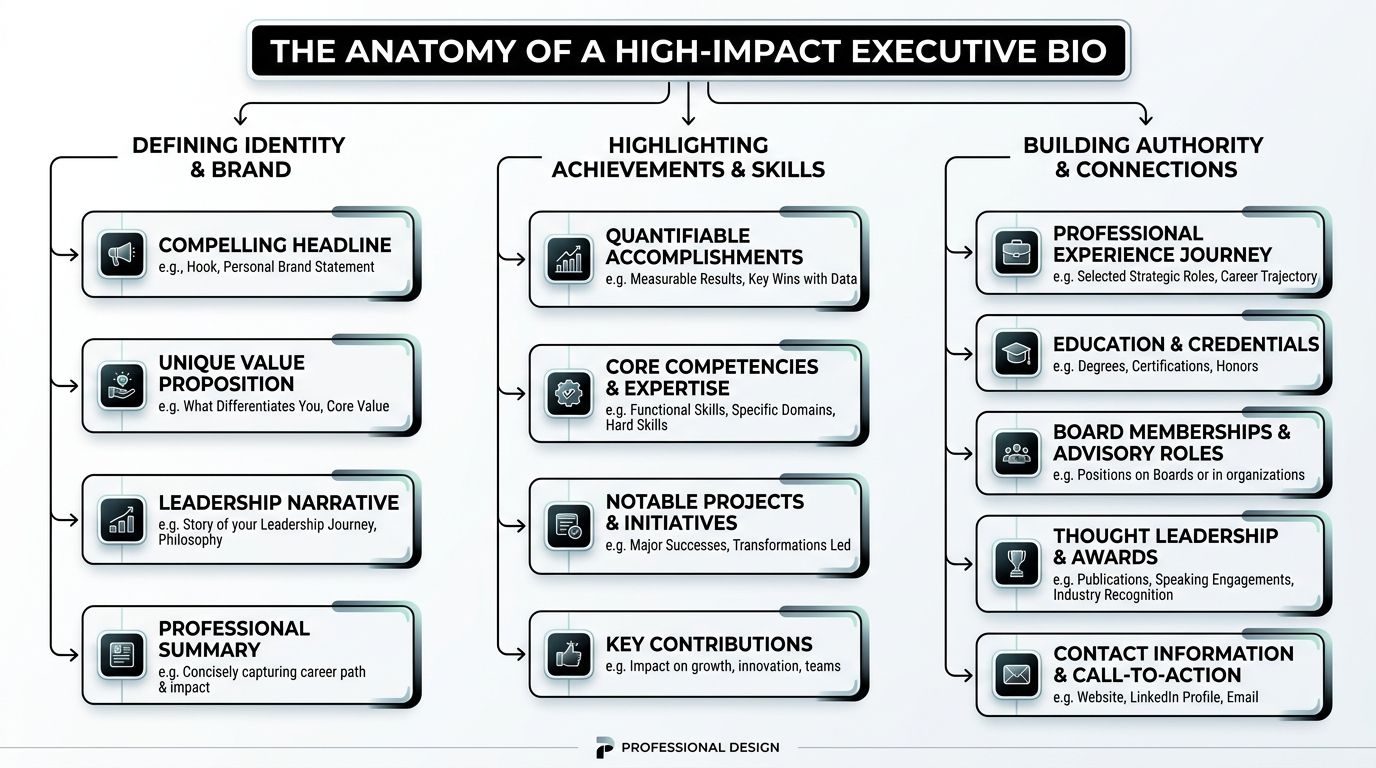
Your opening has one job. Establish identity and relevance fast.
Don't begin with where you were born, where you studied, or a vague statement about being a proven leader. Open with your current role or career lane, your domain, and the kind of value you're known for delivering.
A practical framework from Resumly's executive bio guidance recommends a structured approach that includes a professional snapshot, leadership narrative, value proposition, personal touch, and call to action, while refining for a Flesch-Kincaid readability score of 60+. That's useful because clarity beats grandeur every time.
Most bios often falter at this point. Executives list titles instead of proving consequences.
Use results, scope, and scale. The guidance shared by Chief Marketer on executive biographies is blunt on this point. A compelling bio needs quantifiable detail such as revenue increased, savings achieved, number of people served, team size, budgets managed, and initiatives developed.
That means this:
If you have verified numbers you can stand behind, use them. If you don't, stay qualitative and specific. Never fake precision.
A strong bio also stays tight. According to Forbes on writing a compelling executive bio, executive biographies typically range between 280 and 340 words, organized into five to seven short paragraphs, because anything beyond a page often feels overstuffed.
Here's a useful video if you want another take on tightening the format:
Credentials earn attention. Personality earns memory.
Your bio needs a human signal. Not a rambling personal essay. Just enough to show how you think, what you care about, or what kind of environments you help create.
Include:
Practical rule: If your bio could belong to five other executives in your industry, it isn't finished.
Even outside the executive category, the same principle applies. This breakdown of crafting compelling photographer bios is useful because it shows how strong bios in other fields also blend authority, style, and a distinct point of view instead of dumping credentials on the page.
A polished structure won't save a bio that sounds like it was written by committee.
That's the trap. Executives think “professional” means impersonal. It doesn't. It means controlled, credible, and clear. If your bio strips out your cadence, judgment, and point of view, readers won't feel confidence. They'll feel distance.
A lot of leaders fear sounding too human. They worry authenticity will make them look less serious.
That fear is outdated. Decision-makers want evidence of judgment, not just polish. They want to know how you think under pressure, what kind of standards you bring, and what motivates your leadership beyond title accumulation.
A bio with voice does that. It replaces vague claims with lived texture.
Compare these lines:
The second line sounds like a real person with a real operating style. That's what readers trust.
You don't need a dramatic origin story. You need one or two sharp narrative signals.
A mini-story can be as simple as:
Some of the strongest executive bios include one sentence that explains not just what the leader achieved, but how they tend to create that outcome.
That's the missing layer in most bios. They tell me what happened. They don't tell me how the person operates.
Cut these on sight: visionary, dynamic, results-oriented, transformational, strategic thinker, passionate leader.
Those phrases don't clarify anything. They're placeholders for real substance.
A better move is to identify your natural voice:
If you're unsure what your voice sounds like, study your best interviews, investor updates, internal notes, or LinkedIn posts. Your strongest language is already there. It just needs refining. This guide on how to find your brand voice is useful if your current writing sounds polished but generic.
The goal isn't to sound casual. The goal is to sound unmistakably like you.
One master bio is smart. Using the exact same bio everywhere is not.
Different platforms create different reading behavior. A LinkedIn visitor scans. A company website reader expects polish. An event host needs something easy to read aloud. If you don't adapt your bio, you force the platform to do work it won't do for you.
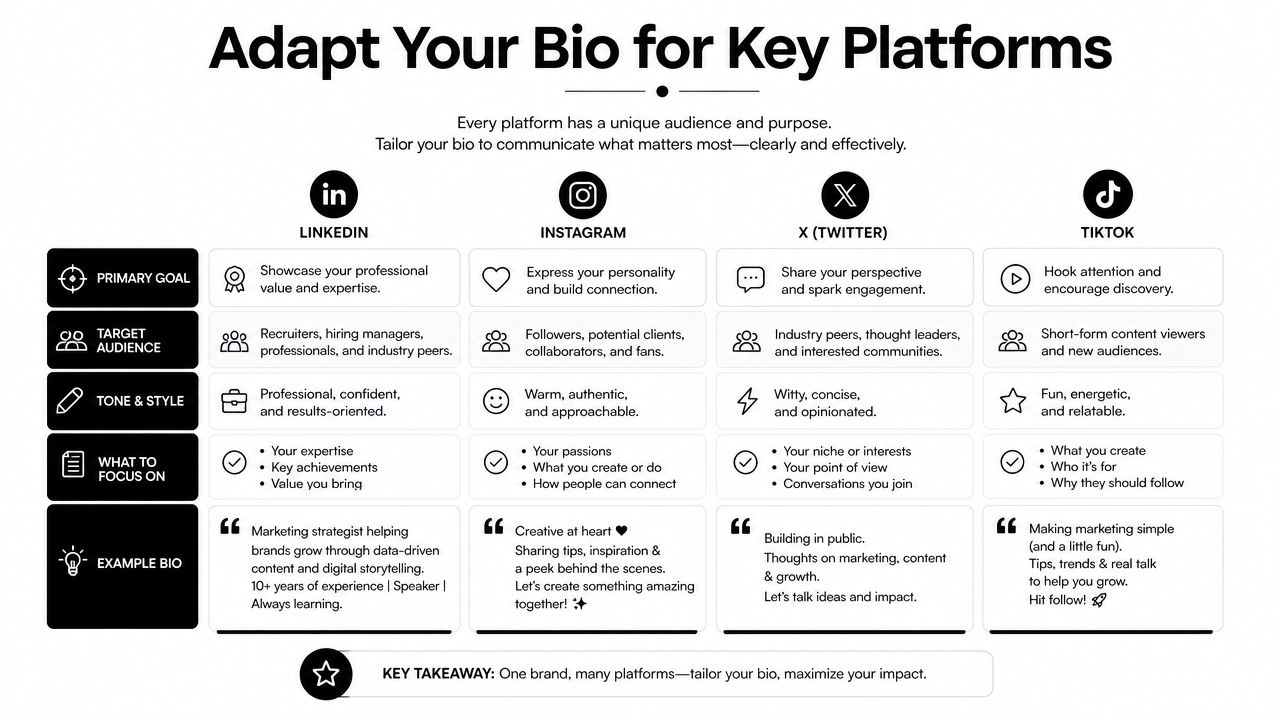
Here's the simplest way to think about it.
| Platform | Best voice | What to emphasize | What to trim |
|---|---|---|---|
| First person, conversational | Point of view, keywords, current focus | Formal filler | |
| Company website | Third person, polished | Credibility, leadership scope, alignment with brand | Personal side notes that feel off-brand |
| Speaker bio | Energetic, concise | Relevance to audience, authority, topic fit | Dense career history |
A weak core sentence might say:
“Jane Smith is a seasoned executive with extensive experience in operations, leadership, and business growth.”
That's generic everywhere.
Now adapt it.
LinkedIn version
I help companies turn operational complexity into focused growth. Across leadership roles in scaling environments, I've built teams, improved execution, and led through change without losing sight of people or performance.
Company website version
Jane Smith is an operations executive known for leading growth-stage organizations through complexity with disciplined execution, team development, and cross-functional alignment.
Speaker bio version
Jane Smith is an operations leader who helps organizations scale without chaos. She speaks on execution, leadership under pressure, and building teams that can grow with the business.
Same person. Different packaging. Better fit.
Platform fit matters because context changes reader expectations. A formal website bio that performs well on a corporate leadership page may feel robotic on LinkedIn. A lively speaker intro may feel too casual in investor materials.
And customization has real consequences. A LinkedIn post on executive biography mistakes notes that failing to customize for specific roles reduces conversion rates by over 40%, and 60% of ineffective bios bury top accomplishments under buzzwords or fail to explain how the executive operates.
That's why your master bio should be the source, not the final product.
If LinkedIn is one of your primary channels, this article on mastering LinkedIn for B2B lead generation is a worthwhile companion because it connects profile language with business development outcomes. For a broader profile overhaul, this guide to standing out on LinkedIn through profile optimization helps sharpen the parts around your bio too.
Most weak bios don't fail because the executive lacks credibility. They fail because the writing hides it.
The final pass matters. Here, you remove the clutter, sharpen the signal, and make the bio easy to trust.
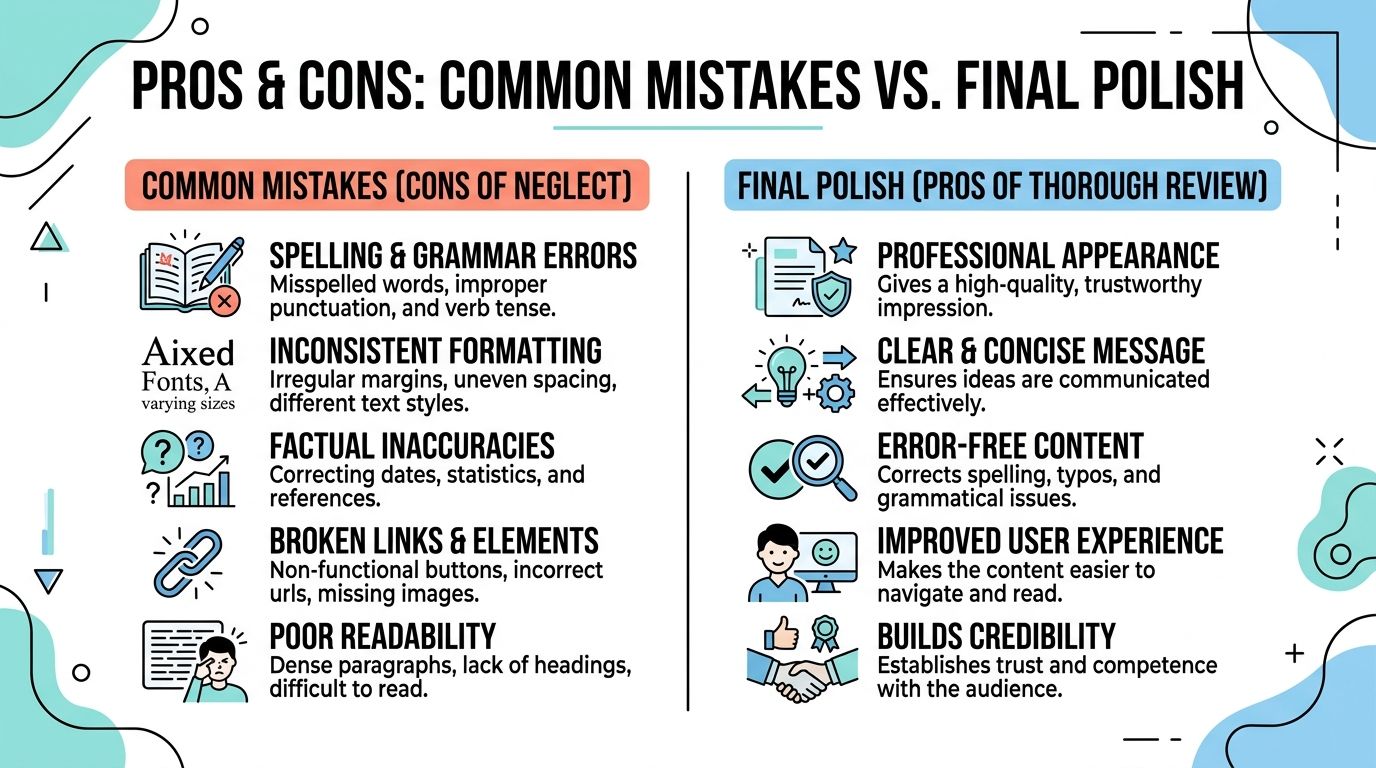
These are the repeat offenders:
The earlier LinkedIn guidance is worth remembering here because it identifies two major problems directly. Failing to customize for role context hurts performance, and 60% of ineffective bios bury accomplishments under buzzwords or skip the “how you operate” narrative.
Use this before you publish or send the bio:
A finished bio should feel easy to read and hard to forget.
Your bio isn't a one-time writing project. It's a living brand asset.
Review it whenever your role changes, your positioning shifts, or your public visibility increases. Add fresh proof. Tighten stale language. Make sure it still reflects the reputation you want to build next, not just the career chapter you already completed.
A great executive bio doesn't just summarize who you've been. It helps the right people see who you are becoming.
If your online presence doesn't match the level of leadership you've built offline, Legacy Builder can help you turn your experience, ideas, and voice into a personal brand that creates real opportunities. They specialize in helping founders, executives, and professionals build authentic visibility through strategic content, profile optimization, and consistent brand storytelling.


You could – but most in-house teams struggle with the nuance of growing on specific platforms.
We partner with in-house teams all the time to help them grow on X, LI, and Email.
Consider us the special forces unit you call in to get the job done without anyone knowing (for a fraction of what you would pay).
Short answer – yes.
Long answer – yes because of our process.
We start with an in-depth interview that gives us the opportunity to learn more about you, your stories, and your vision.
We take that and craft your content then we ship it to you. You are then able to give us the final sign-off (and any adjustments to nail it 100%) before we schedule for posting.
No problem.
We have helped clients for years or for just a season.
All the content we create is yours and yours alone.
If you want to take it over or work on transitioning we will help ensure you are set up for success.
We want this to be a living breathing brand. We will give you best practices for posting and make sure you are set up to win – so post away.
Subscribe to our newsletter and get insights on how to grow your personal brand.
