.svg)
Subscribe to our newsletter and get insights on how to grow your personal brand.
Thank you! Your submission has been received!
Oops! Something went wrong while submitting the form.
.svg)


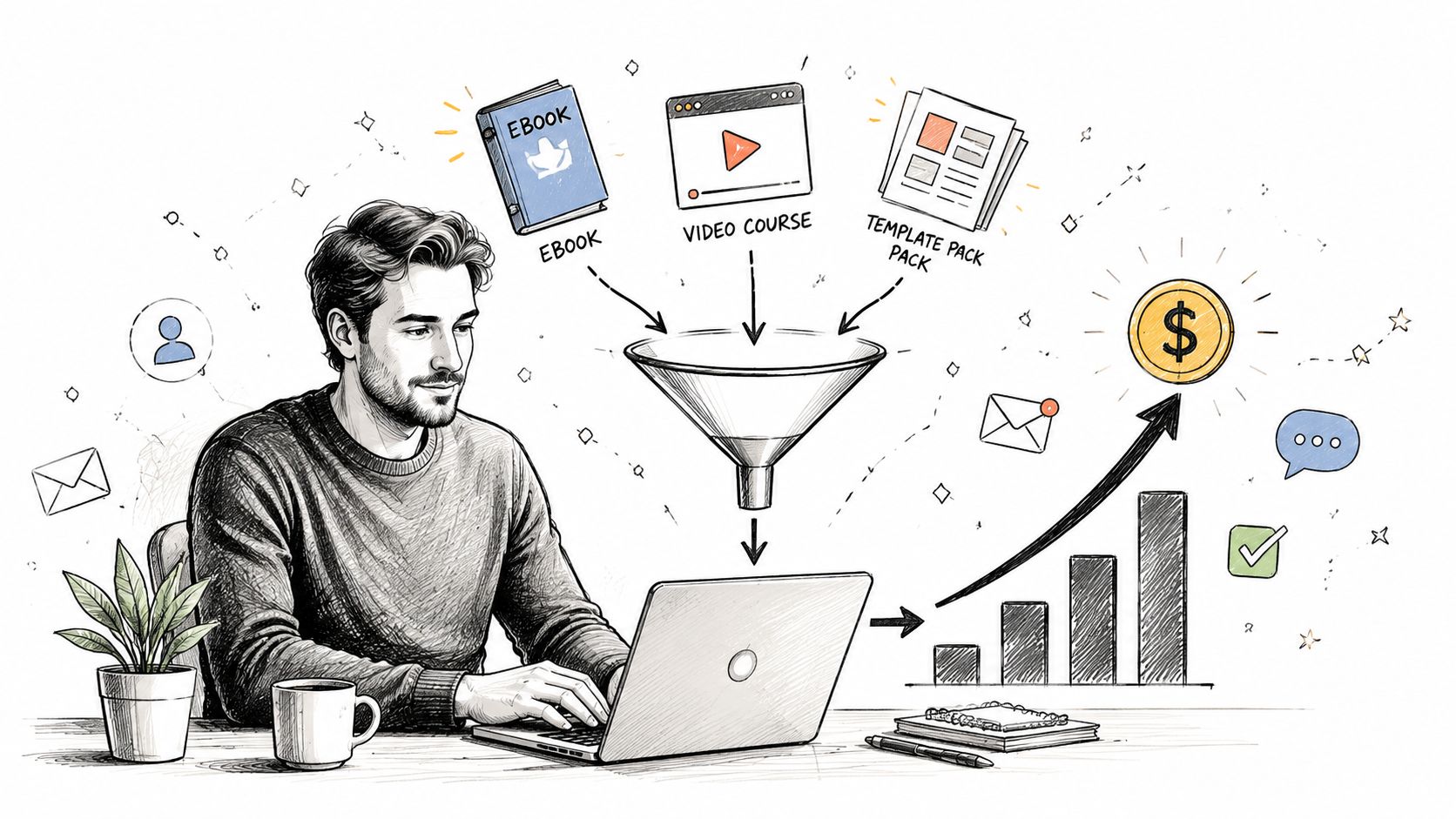
Alex had a problem a lot of smart founders recognize. He could build a useful ebook, sketch a course outline, and write a decent sales page, but every launch felt like a reset button. One week brought a few sales, the next week went silent, and then he was back to chasing attention instead of building a real business.
That cycle is usually a funnel problem, not a product problem. Digital products sell best when the creator builds demand before the pitch, then keeps that demand alive with content, email, and consistent positioning. Salesforce's digital-product guidance points sellers toward a mix of SEO, content marketing, and paid advertising to drive traffic into a sales page, while BigCommerce recommends a broader acquisition stack that includes email marketing, social media, partnerships, affiliate programs, and search optimization (Salesforce on digital product selling). The point is simple, digital products have low marginal delivery cost, so the hard part is getting the right people to care and convert.
The better model is not “make a product and hope.” It's build a content-led funnel around a clear personal brand. That means your free content teaches, your email list nurtures, and your product solves one specific problem with enough clarity that buyers don't need to be convinced twice. For emerging entrepreneurs, that shift matters because it turns your expertise into a repeatable system instead of a one-off launch.
Alex's first mistake was treating digital products like a volume game. He spread his attention across too many platforms, kept changing his message, and still could not explain why anyone should buy from him instead of the next creator with a similar offer. The result was noise, not trust.
The fix was sharper positioning. He stopped sounding like a generic seller and started speaking like a person with a point of view, a track record, and a specific result to deliver. Authentic personal branding matters because buyers are not just purchasing files or lessons, they are buying a promise from someone they believe understands their problem.
A sales page alone rarely carries a digital product. Essential work happens before the pitch, when free content earns attention and email turns that attention into interest. That is the model creators should use if they want repeatable sales instead of one messy spike followed by silence.
Practical rule: if your content does not capture interest and move people toward email, it is entertainment, not a business asset.
Build the path on purpose. Articles, videos, and guides introduce the problem and show that you understand it. Email then handles objections, adds proof, and keeps your offer in front of people until the product feels like the obvious next step. That is how a creator turns content into a steady sales system.
A lot of creators treat brand as logo choices and fonts. That is shallow. Your real brand is the angle you repeat, the audience you speak to, and the transformation you are known for delivering. If you want a digital product business that lasts, your messaging has to sound like a real person with experience, not a marketplace listing.
One-platform focus and intent-driven content are especially useful for beginners. Search-first content and email create a more durable path than trying to stay visible everywhere at once (BigCommerce on selling digital goods). If you want to sell without living on social media, that is the lane to own.
Consistency is a powerful edge. One clear message, one defined audience, one repeatable path to discovery. That combination beats random posting every time.
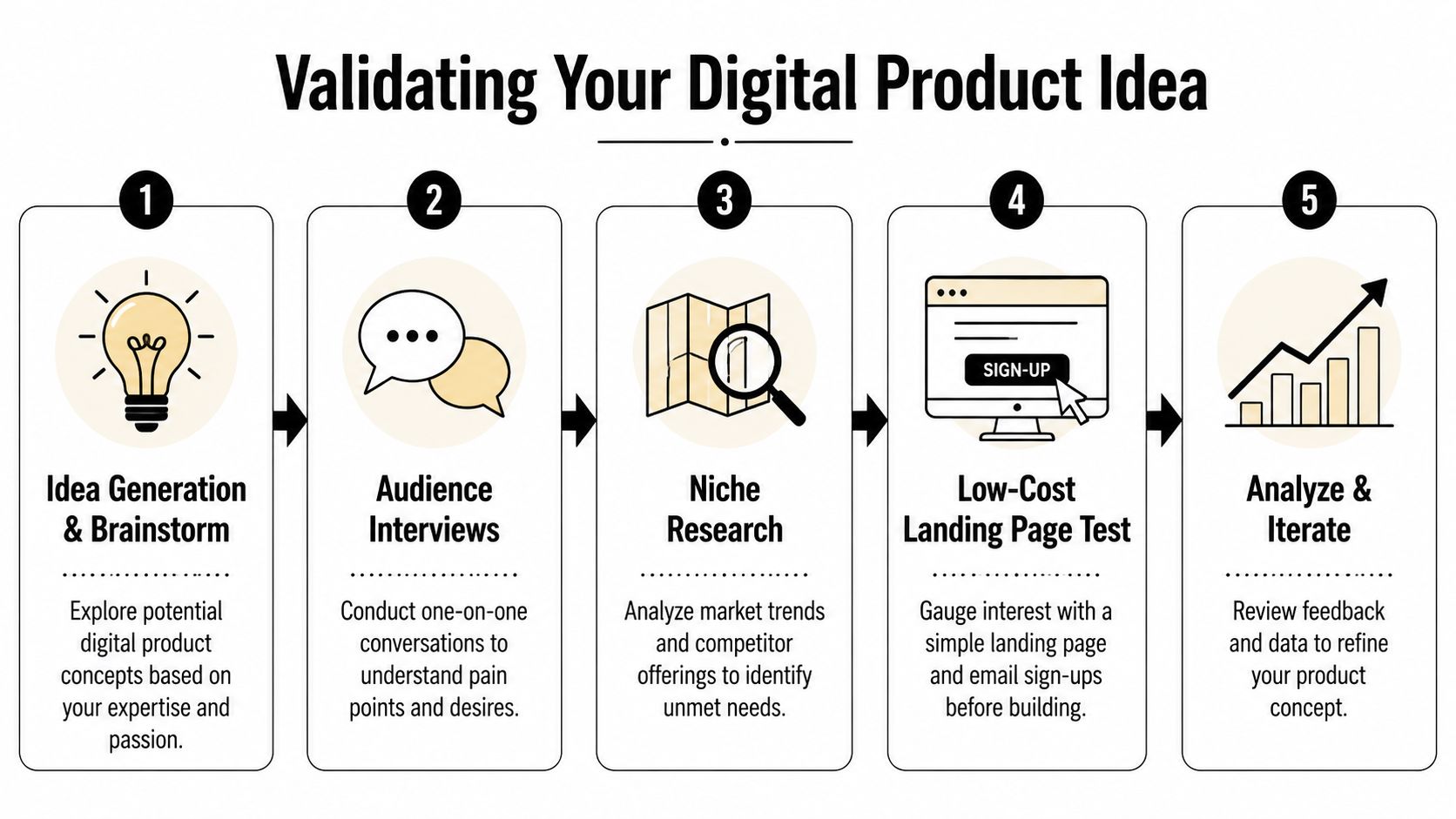
A digital product idea looks good until real buyers react to it. Talk to the people you want to serve before you build a polished offer, because their language tells you what to sell, how to position it, and what they are willing to pay for. A starter persona, a small free version, and a short beta group can sharpen the message fast, which is the kind of groundwork Salesforce describes for small business digital product selling (Salesforce small business selling digital products).
Use blunt questions. Ask what problem they are trying to solve, what they have already tried, what frustrates them, and what would make them trust a new solution. Skip market-research jargon. You want the objections, the exact words they use, and the moments where their current workaround falls apart.
A simple interview script works better than a long survey:
Start with a problem cluster, not a product format. If you begin with “courses” or “templates,” you are already too vague. Look for repeated complaints, search patterns, and review gaps that point to a specific need. The goal is to find a problem people already recognize and feel stuck on.
Independent guidance recommends using forums, Google Trends, and marketplace search data to spot smaller problem clusters and unmet themes before you build the offer (niche research guidance). That is the faster path to a product people remember because it solves a real workflow problem, not a fuzzy promise.
The strongest signals usually show up in the same places again and again. People ask the same question in forums, search the same phrase, or complain about the same missing feature in marketplace reviews. That pattern tells you the current options are too broad, too complicated, or too disconnected from the buyer's day-to-day work.
For persona building, this guide on how to create buyer personas helps tighten the validation process and keep your offer aimed at a real audience.
A landing page can tell you a lot before you spend weeks building the product. BigCommerce-backed guidance says you can run a landing-page test with about $200 to $500 in targeted ads, and treat a conversion rate above 2% as evidence that the idea has demand before full development (landing-page test benchmark). Use that as a reality check, not a vanity metric. If people will not sign up for a waitlist, pre-order, or mini version, a bigger product will not fix the problem.
Your first product idea is only good if strangers show interest before you have polished it.
Keep the first version small and specific. A waitlist, pre-order, or mini-version gives you proof without forcing you to build the full product in the dark. Then use the feedback to refine the promise, remove weak points, and make the next version stronger before you invest more time and money.

The fastest way to weaken a digital product is to make it sound broad. “Help people be more productive” is vague. “Help new consultants organize client work in Notion” points to a real situation, so buyers immediately understand why it matters.
Package the offer around the result, then choose the format that fits the job. An ebook, template pack, workshop, or membership can all work, but only if the structure matches the problem. A template is a strong fit when the buyer wants speed. A course works when the buyer needs structure. A membership makes sense when ongoing support matters more than a one-time lesson.
Your personal brand should show up in the way the offer is framed. That does not mean making it about you. It means using your experience to signal credibility. If your journey led you to a better method, say so through the positioning. If you learned the hard way, the product can offer the shortcut you wish you had earlier.
A clear brand positioning strategy keeps that story from drifting into generic marketing. Use it to define why your offer exists, who it is for, and what edge it has over the rest of the market (what is brand positioning strategy).
A simple alignment check helps:
Stop copying the look and tone of everyone else in your niche. Use your story, your voice, and your opinion about how people should work. A coach who turns an ebook into a membership community is not just adding features, she is shifting from a static asset to a relationship-driven offer.
That difference matters because buyers remember a point of view. If your product could have been made by any competitor, it is too generic. Your edge should come through in the promise, the examples, the language, and the format. A strong offer feels like it was built for one specific kind of buyer with one specific kind of problem, not for a crowd.
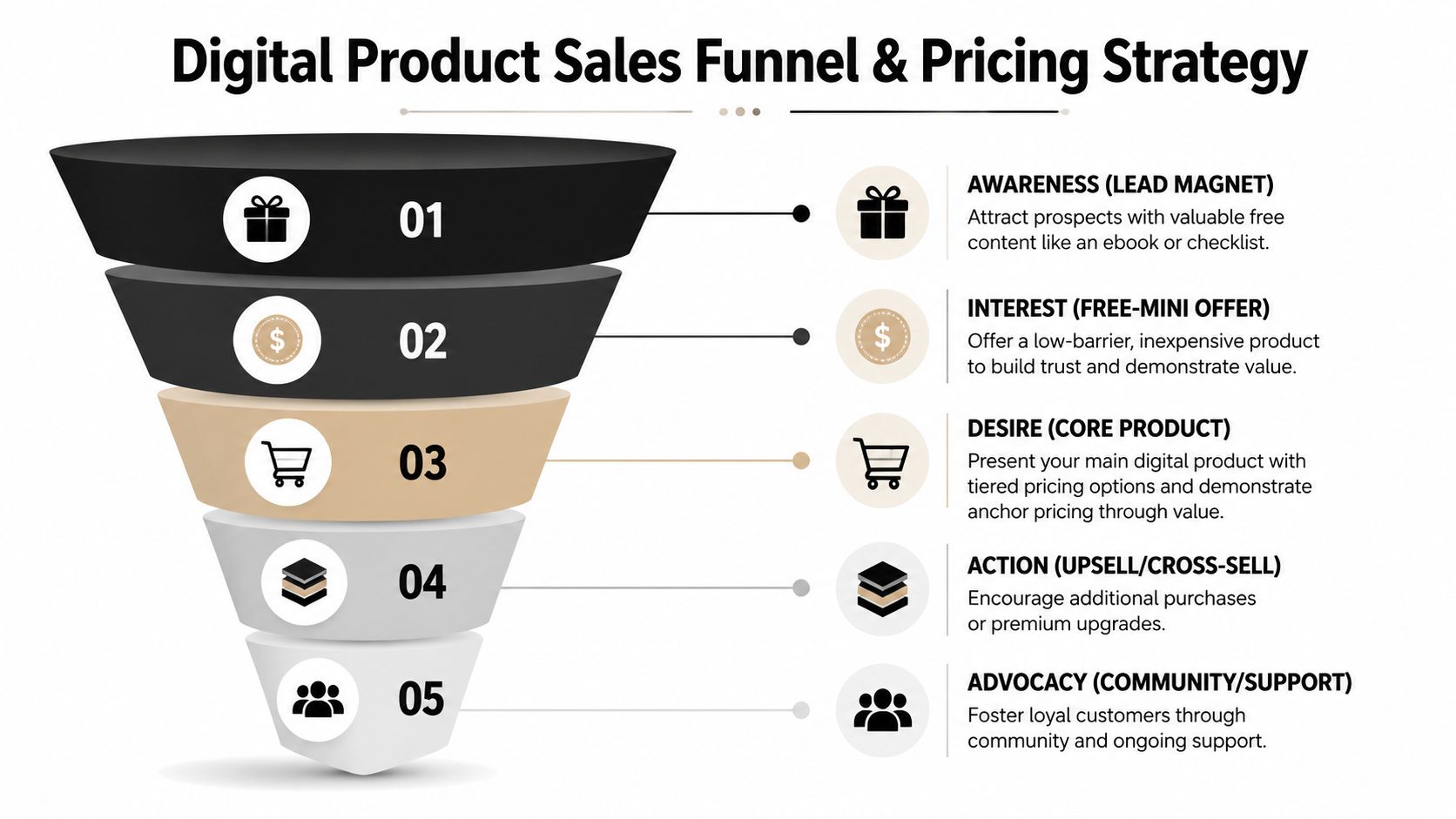
A buyer decides fast whether your price feels credible. If the number looks random, the offer looks random too. Price around the problem you solve, the confidence you project, and the level of transformation the buyer expects.
A tiered structure usually works better than one flat price because it gives people a clear entry point and a clear upgrade path. Start with one core offer. Add a lighter option only if it helps a cautious buyer say yes sooner, or add a deeper option only if it serves buyers who want more support. A free lead magnet, a low-cost starter product, and a core product can work together when each step answers the next question in the buyer's mind.
Use SEO and content marketing to attract the right people, then use email nurturing to move them toward the sale, as outlined in the Salesforce digital products overview. That order matters because content earns attention without pressure, while email gives you repeated contact with the same reader until your positioning starts to feel familiar.
A clean funnel usually looks like this:
The page and checkout should do less talking than you think. Buyers need a clear promise, a believable reason to trust you, and a path that does not make them work for the purchase. If you want a sharper framework for that part of the process, this guide to improve conversion rates fits the funnel work well.
Treat traffic as measurable. Guessing feels busy, but it wastes time. Track which blog posts, emails, and videos produce clicks and purchases, then put more effort behind the channel that proves it can sell.
A practical rule: do not spend on ads until your organic content already shows who buys, what they read, and where they stop.
The strongest funnels also stay aligned with personal brand positioning. A founder who sells a product through clear opinions, useful content, and a recognizable point of view builds trust faster than someone who hides behind generic copy. Keyword-rich titles, clean tags, and a checkout page that matches the promise make it easier for searchers to find the offer and buy it without friction. Weak metadata and vague problem-solution framing kill sales before the first email ever lands.
A launch should read like a planned conversation, not a pile of scattered announcements. Start by talking to likely buyers, then test a small free version or sample offer, and use that feedback to tighten your message before you put real attention behind the launch. That approach matters because launch emails perform better when they come from real buyer reactions, not assumptions.
Open with a short runway. Publish content that names the problem clearly, then move people toward a direct invitation to buy. If you are building around one channel, keep the promise consistent everywhere so readers see the same offer, the same point of view, and the same next step.
A first launch does not need a long, complicated calendar. A two-week sequence is enough if your audience already knows you. Use the first week to teach, prime, and collect replies. Use the second week to handle objections, add proof, and create urgency without sounding needy.
A practical sequence looks like this:
Each piece should have a job. One asset brings in search traffic. Another answers the objections buyers will raise. Another shows the product in action. You do not need a giant campaign, you need repetition with purpose and a reason for every message to exist.
Your personal brand becomes a real sales asset when your content sounds specific, experienced, and useful. A creator with a clear point of view can turn one strong piece into a launch engine because buyers start to trust the thinking before they ever see the checkout page.
Use your content archive to support the launch as well. Update older posts with sharper examples, add a direct CTA, and make sure every piece points to the product or the email list. For a tighter framework on that, how to create content that converts fits naturally beside your launch planning.
The goal is not noise. The goal is an informed audience that already understands why your product exists.
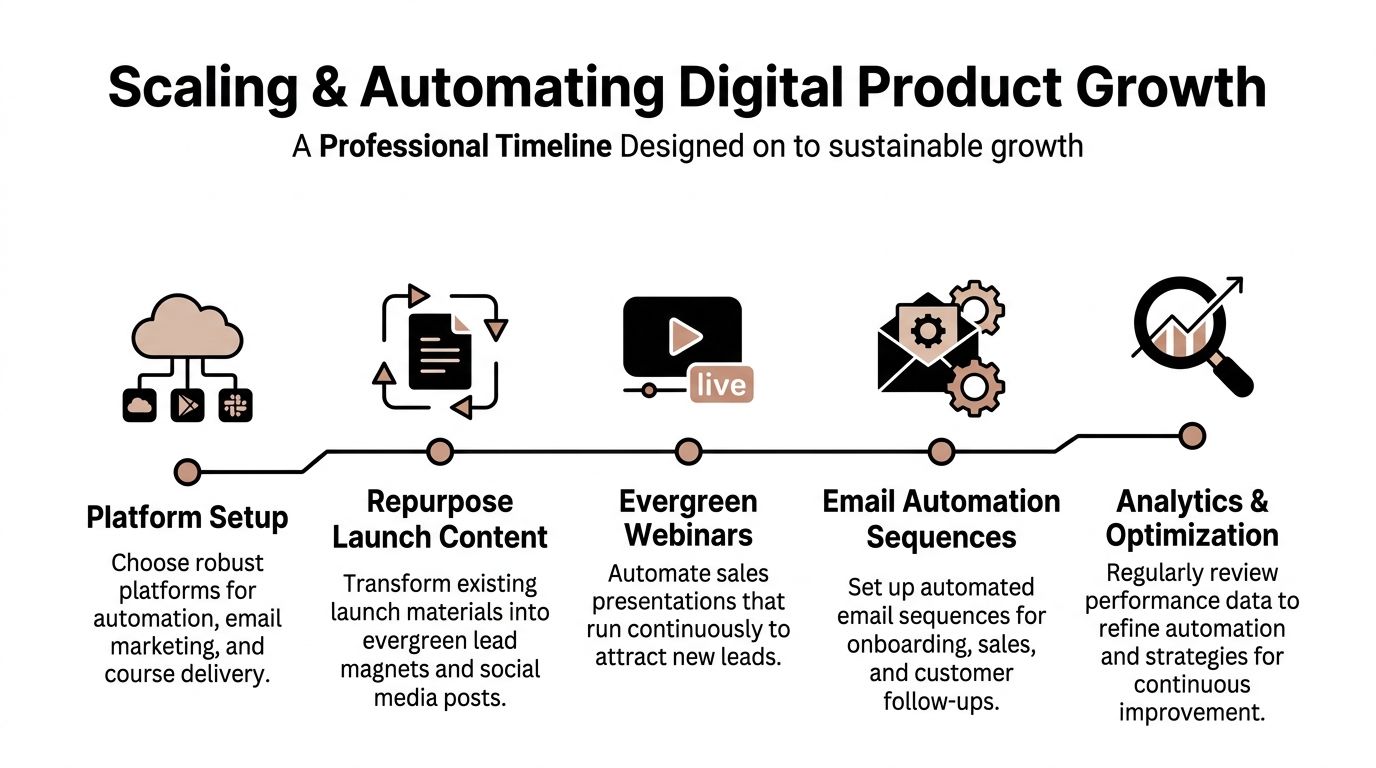
Pick one channel that fits how you naturally create. Search-driven content and email usually give digital products the most stable path to growth because they attract people with intent, not casual scrollers. Splitting attention across multiple social platforms drains time and weakens the message.
Your channel choice should match your strengths. If writing is your edge, build around search and long-form content. If you are stronger on video, use a video-first search channel, then move viewers into your list. Do not choose a platform because it looks busy or popular. Choose the one you can repeat without burning out.
Once sales start coming in, automate the tasks that never change. Delivery emails, onboarding sequences, tag-based follow-up, and upsell triggers should all run without manual work. If a customer takes the same action every time, that action belongs in a system.
If you want practical software support, these tools to automate social media posts can help you repurpose launch content into a lighter publishing cadence without forcing daily platform work.
Keep the system clean:
The common scaling mistake is chasing new traffic while ignoring what happens after the sale. Buyers who feel supported come back, reply to emails, and refer other people. That is where community, support, and regular touchpoints do real work.
You do not need a large team to do this well. You need a clear onboarding flow, thoughtful follow-up, and a product roadmap shaped by what buyers ask for. Growth should make the business easier to run, not messier.
Selling digital products online is not about churning out more files. It's about building a repeatable funnel, a clear personal brand, and a product that solves one problem cleanly enough that people trust you to handle it. If you're still launching into silence, the fix is probably not another product. It's better validation, stronger positioning, and a tighter path from content to email to checkout.
Five moves separate the sellers who stall from the sellers who build momentum.
The sellers who last are the ones who treat digital products like a business, not a content experiment. They validate before building, they market through content instead of panic, and they keep their message grounded in who they are.
A CTA for Legacy Builder.


You could – but most in-house teams struggle with the nuance of growing on specific platforms.
We partner with in-house teams all the time to help them grow on X, LI, and Email.
Consider us the special forces unit you call in to get the job done without anyone knowing (for a fraction of what you would pay).
Short answer – yes.
Long answer – yes because of our process.
We start with an in-depth interview that gives us the opportunity to learn more about you, your stories, and your vision.
We take that and craft your content then we ship it to you. You are then able to give us the final sign-off (and any adjustments to nail it 100%) before we schedule for posting.
No problem.
We have helped clients for years or for just a season.
All the content we create is yours and yours alone.
If you want to take it over or work on transitioning we will help ensure you are set up for success.
We want this to be a living breathing brand. We will give you best practices for posting and make sure you are set up to win – so post away.
Subscribe to our newsletter and get insights on how to grow your personal brand.
