.svg)
Subscribe to our newsletter and get insights on how to grow your personal brand.
Thank you! Your submission has been received!
Oops! Something went wrong while submitting the form.
.svg)


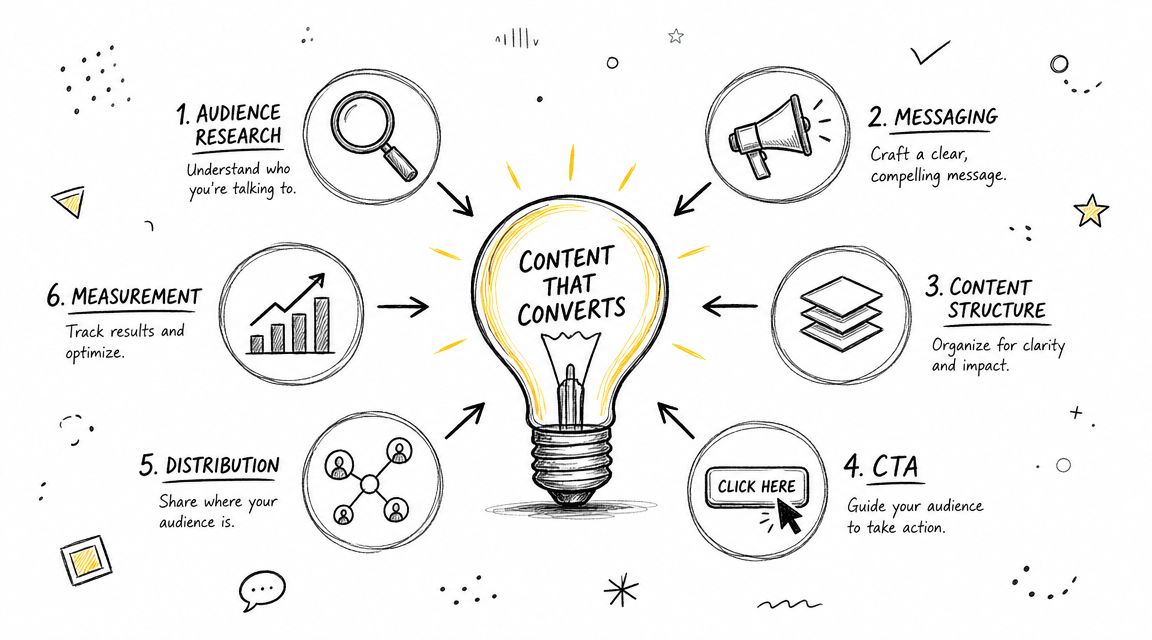
Most advice about how to create content that converts is shallow.
It tells you to tweak button color, test headline variants, and drop a CTA at the bottom like that alone will move revenue. It won't. For a personal brand, conversion rarely happens because one button was clever. It happens because the right person sees a pattern of useful ideas, starts trusting your judgment, and believes you can solve a problem they care about.
That changes the job of content.
You're not publishing isolated posts. You're building a trust system that turns attention into conversations, clients, referrals, and authority. The page matters. The hook matters. The CTA matters. But if the message, offer, audience fit, and distribution system are weak, those tactics don't save you.
Founders who obsess over CTA copy are solving the wrong problem.
Conversion starts earlier. It starts with a clear offer, a defined buyer, and a content system that builds enough trust for someone to act. Personal brands win here because people buy conviction before they buy services. If your content feels disconnected from what you sell, better button copy will not save it.
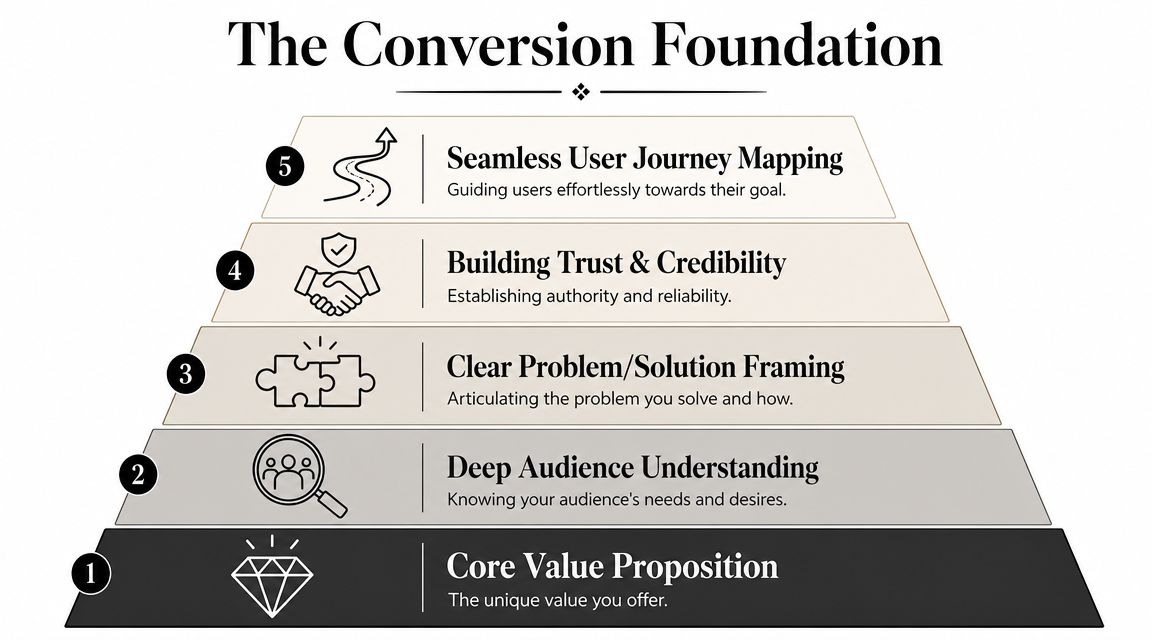
Content needs a job. That job is to move the right buyer toward a real business outcome.
If you sell leadership coaching, your content should make your method, standards, and client fit obvious. If you sell B2B SaaS consulting, your posts should attract operators dealing with expensive growth or retention problems. If you want partnerships, your content should earn trust with the small group of people who can open those doors.
Use a simple filter before you publish:
Founders chase broad appeal because it feels safer. It is not safer. It makes your content forgettable and your offer harder to trust.
Practical rule: If a post cannot reasonably move someone toward your actual offer, cut it from the calendar.
Surface-level audience notes produce surface-level content. Job title, age range, and company size help with targeting. They do very little for conversion.
You need the private version of the problem. What is frustrating them right now? What have they already tried? What are they embarrassed to admit is not working? What internal risk are they trying to avoid? That is where useful content comes from, and useful content is what earns action.
Get that language from places where buyers speak plainly:
If you need a framework for planning strategic content for audience connection, use it to organize your thinking. Do not use it as a replacement for buyer research.
Every piece of content needs one primary action. One.
That action does not have to be a sales call. It can be an email signup, webinar registration, DM reply, profile visit from a target account, or application for your offer. What matters is intent. Content without a defined next step turns into thought leadership theater.
A simple way to tighten this is to decide the goal first, then shape the headline, argument, proof, and CTA around that goal. If you need help with the front end of that process, this guide on writing headlines that attract the right readers is a useful companion.
Consistency matters because trust compounds through repetition. Publishing on a regular cadence gives buyers more chances to see your thinking, assess your judgment, and connect your ideas to the problem they need solved. That is a primary reason content converts for personal brands. The buyer sees enough evidence to believe you are the right person to help.
Write one sentence and keep it visible:
We create content for [specific audience] that helps them solve [specific problem] so they take [primary next step] toward [core offer].
This sentence keeps your content honest. It helps you reject topics that get attention from the wrong people. It also protects your brand from drifting into random commentary that builds impressions but does nothing for revenue.
Authority without personality feels forgettable. Personality without authority feels lightweight. You need both.
Founders often swing too far in one direction. They either sound like a legal memo or like a motivational speaker with no operating experience. Neither converts well. Buyers want a human voice attached to a sharp point of view.
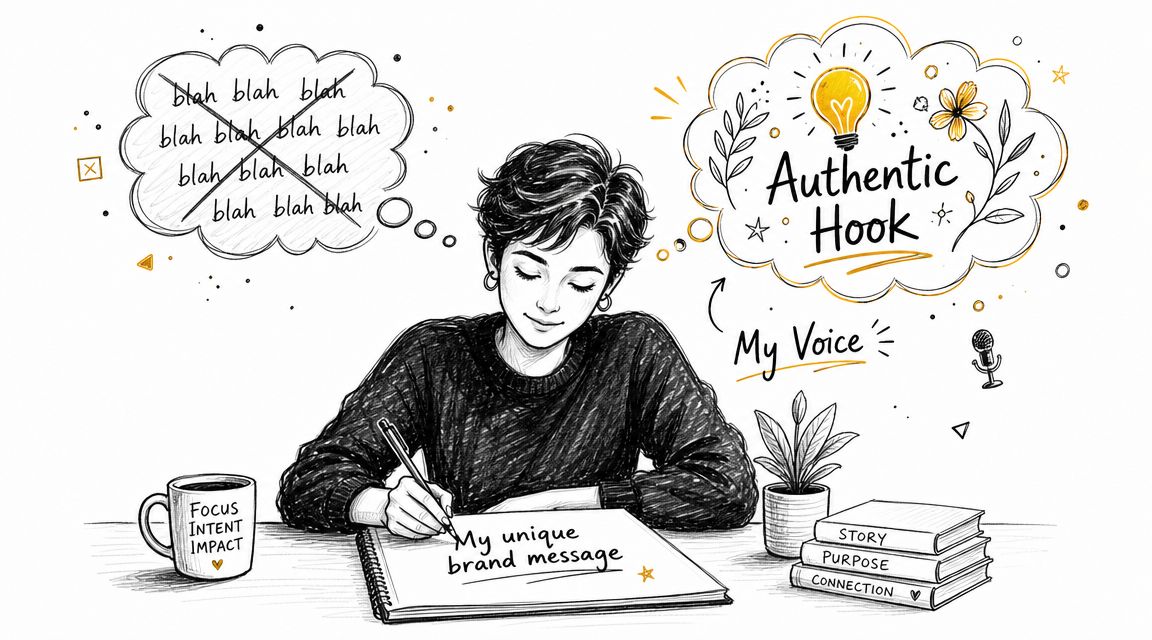
The most effective personal brand content usually sounds like a smart operator speaking clearly, not a committee polishing corporate language.
That matters even more on social platforms. HubSpot's 2025 marketing report found short-form video delivers the highest ROI among content formats, which supports the shift toward creator-style, human-first communication discussed in this analysis of current content trends. For founders planning ahead, the implication for 2026 is straightforward. Less polish can outperform overproduced content when the message is specific and credible.
That doesn't mean rambling into a webcam. It means speaking like a real person with lived conviction.
Your story matters, but your audience doesn't wake up wanting your life story. They want help interpreting a hard problem.
A strong message usually sits inside a tension like this:
| Market belief | Your angle |
|---|---|
| More content solves slow growth | Better message-market fit solves more than volume alone |
| Thought leadership should stay broad | Narrow expertise builds stronger demand |
| Polished content signals authority | Specific, human content often creates more trust |
Your job is to pick a tension you can defend from experience.
Here's a simple angle formula:
Example:
That gives you a voice people can remember.
Hooks aren't clickbait when they lead into truth. They fail when they overpromise or sound borrowed.
Use these hook styles:
For platform-specific ideas that help you create content that engages and converts, study formats that hold attention without flattening your voice.
And if your hooks are weak, fix that separately. This guide on writing compelling headlines for modern audiences is worth reviewing because weak entry points waste strong ideas.
The best hook doesn't sound louder. It sounds truer and more relevant than the noise around it.
You do not need to overshare to be authentic. You need to be specific.
Good vulnerability explains a lesson, a mistake, a realization, or a cost. Bad vulnerability turns content into self-therapy. If the takeaway doesn't help the buyer think better or act better, keep it private.
A clean test:
Authentic conversion content doesn't feel like performance. It feels like earned perspective.
Good content structure doesn't just improve readability. It removes hesitation.
A lot of founders lose conversions because they make the reader work too hard. The idea may be good, but the delivery is dense, indirect, and cluttered. Busy buyers won't fight through that. They skim, decide quickly, and move on.
Here's the difference.
Weak structure: long intro, vague setup, buried point, one CTA at the end.
Stronger structure: strong opening claim, immediate context, scannable proof, clear sections, CTA where intent appears.
That's why guidance on conversion-focused content repeatedly recommends leading with the most important information, using an inverted-pyramid structure, breaking content into short sections, and placing multiple CTAs at decision points, as explained in Storyteq's guide to developing content that converts.
Use formatting as a conversion tool, not decoration.
Dense pages feel expensive to read. Clean pages feel actionable.
Decision check: If someone skims your content for 20 seconds, can they understand the problem, your position, and the next step?
Different content formats support different conversion moments. Don't force every idea into a LinkedIn post or every offer into a blog article.
| Conversion Goal | Primary Content Format | Secondary Content Format |
|---|---|---|
| Book a call | Case-study style article | Short authority video |
| Email signup | Educational guide | LinkedIn carousel |
| Consultation request | Problem-solution post | Landing page |
| Product purchase | Sales page | Demo clip |
| Partnership interest | Founder insight post | Direct email follow-up |
Often, creators go off track. They choose format based on preference, not buyer behavior. If you sell a digital product, a conversion-focused page structure matters far more than a clever caption. This guide for creators selling digital products is useful because it forces you to think about the page experience after the click.
The classic model says value first, CTA last. That's incomplete.
Readers don't all reach conviction at the same point. Some decide early. Some need more proof. Some aren't ready for the main ask but will accept a lower-friction next step.
So structure your content with decision points:
One common mistake is relying on a single end-of-article CTA. That leaves money on the table because many qualified readers never make it that far, or they're ready sooner.
A weak CTA is rarely a wording problem. It's usually a trust problem.
Founders love to blame the last line. They rewrite “Book a call” ten times and wonder why nothing changes. The issue is simpler. The ask arrives before the buyer believes you understand their problem, can solve it, and are worth the next step.
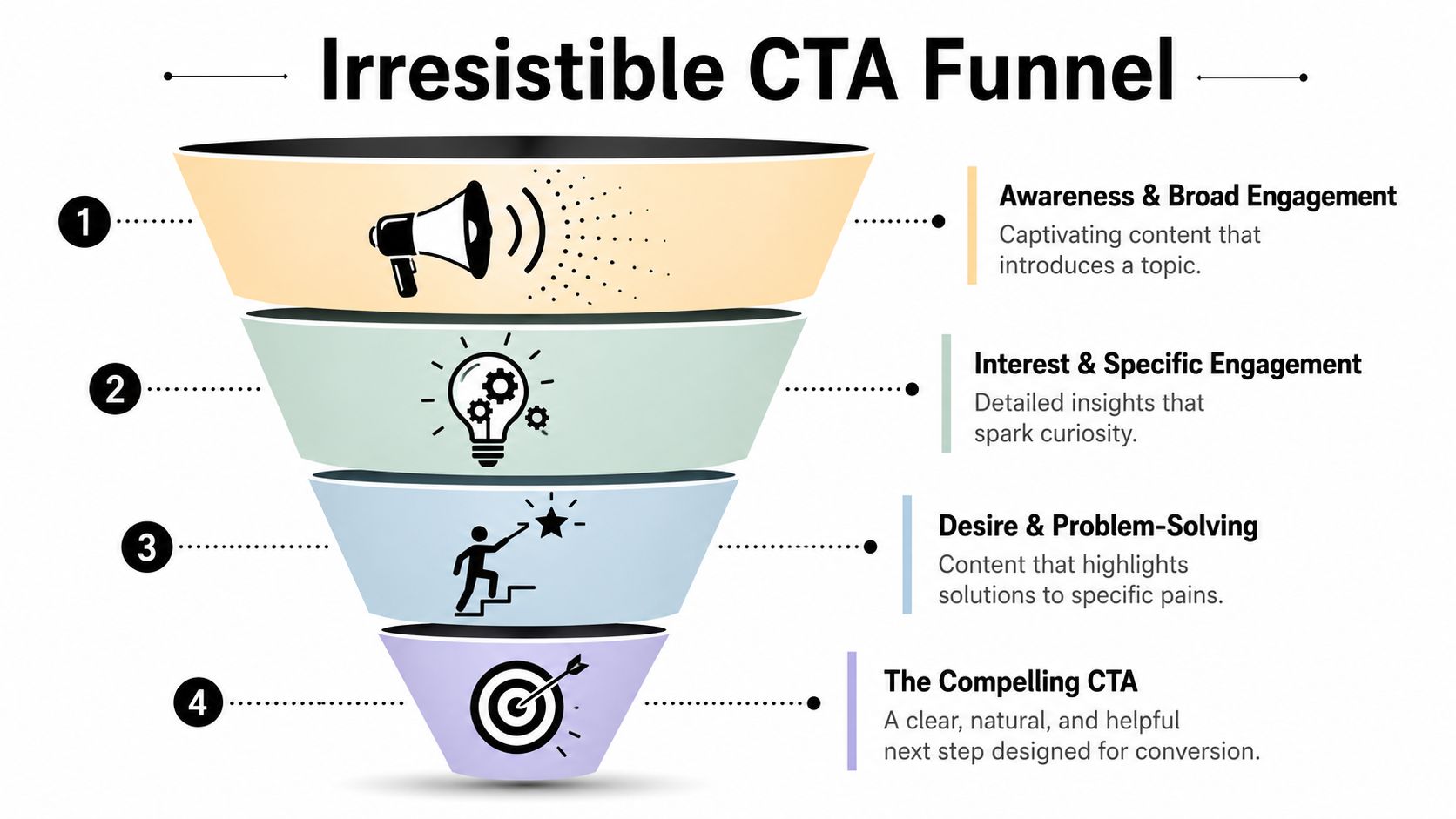
Set one primary conversion goal before you write. Then build the content to move the right reader toward that action. Personal brands convert better when the CTA feels like the natural next step, not a sudden switch from teaching to pitching.
Your CTA structure should include three levels:
Buyers move at different speeds. One person is ready to buy today. Another wants proof. Another is interested but cautious. If your content only offers one hard ask, you lose all three.
If LinkedIn is part of your funnel, pair your CTA with a follow-up system that turns interest into conversations. This LinkedIn lead generation playbook for founders and personal brands is a good model for that handoff.
Bad CTAs sound borrowed. Good CTAs sound specific, calm, and useful.
Skip hype. Skip fake urgency. Skip lines that sound like they were copied from a growth thread. A strong CTA should make the next step feel clear and low-friction.
Examples for posts:
Examples for LinkedIn or X replies:
Short works. Clear works. Human works.
Here's a useful breakdown of CTA flow in video form:
CTA placement follows trust, not layout.
The right moment to ask is usually right after the reader experiences one of four things:
A practical rule: ask right after clarity or relief.
That's how strong personal brands convert. They don't rely on clever copy at the bottom of the page. They build enough trust throughout the content that the CTA feels earned.
“Be everywhere” is bad advice.
It sounds ambitious, but it usually creates diluted content, weak consistency, and zero real market penetration. Founders don't need omnipresence. They need concentration. Your buyers are not evenly distributed across every platform.
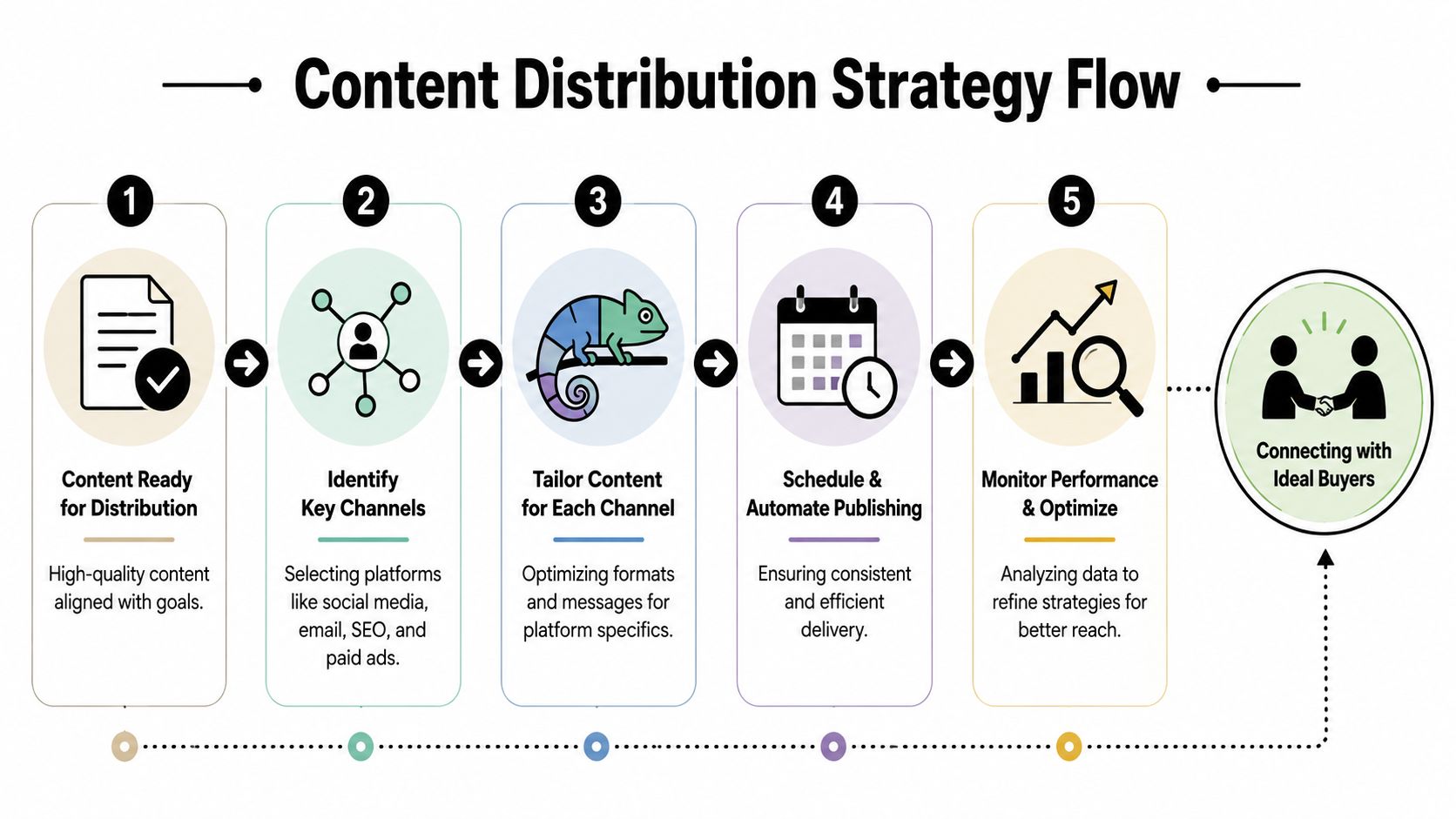
Choose one primary platform where your buyer already pays attention. Then pick one secondary channel that deepens trust.
Examples:
That's enough to build traction if the message is tight and the distribution is intentional.
One strong pillar piece should produce multiple touches.
A practical weekly system looks like this:
Focused repurposing beats constant creation. One idea, distributed well, usually does more than seven rushed posts.
Your content should not only attract strangers. It should also shape the perception of specific people you want in your orbit.
Make a list of buyers, peers, podcast hosts, referral partners, and industry operators worth knowing. Then do the work.
If LinkedIn is part of your channel mix, this proven playbook for generating leads on LinkedIn can help you structure outreach around relationship quality instead of volume.
Focused distribution creates recognition. Repeated recognition creates trust. Trust creates response.
A DM is not a cold pitch container. It's a context channel.
A good DM references a shared topic, recent comment, mutual problem, or relevant asset. A bad DM opens with your offer before trust exists. Content gives you a reason to start warm conversations without sounding transactional.
Simple DM pattern:
That's enough.
Most founders measure content like publishers and expect it to perform like sales. That's the mismatch.
If you judge content by likes, impressions, and follower growth alone, you'll keep rewarding the wrong behavior. Personal brand content should be measured by movement toward trust, conversation, and revenue.
Vanity metrics aren't useless. They're just incomplete.
A post with reach can still matter. But reach without downstream action is weak evidence. You need a stack of metrics that shows whether attention is turning into intent.
Use two buckets:
| Metric type | What to track |
|---|---|
| Leading indicators | Profile visits, CTA clicks, email signups, DM replies, saves, qualified comments |
| Lagging indicators | Discovery calls, applications, opportunities created, referrals, closed business |
Leading indicators show whether your content is pulling the right people in. Lagging indicators show whether the system is producing business outcomes.
Buyers don't convert in a straight line. Google research shows B2B buyers consume multiple content types before shortlisting, which means the smarter question is how your content sequence supports research, evaluation, and trust-building over time, as discussed in this perspective on content that converts across the journey.
That's especially true for personal brands. A buyer might see a short post, then visit your profile, then read a longer article, then join your list, then reply to an email weeks later. If you only credit the last click, you'll misunderstand what's working.
Every month, review your content with these questions:
For a deeper framework, this guide on how to measure content performance for your personal brand gives a practical lens for tying output to brand and business impact.
You do not need a complicated attribution model to improve. Start with a simple monthly sheet:
That last line matters. If you're not documenting what you learned, you're just posting and hoping with better formatting.
The real win isn't a viral post. It's a repeatable system that teaches you what your buyers trust, what they ignore, and what moves them to act.
If you want help building that kind of system, Legacy Builder helps founders and professionals turn their real expertise into consistent content that builds trust, grows authority, and drives meaningful business conversations.


You could – but most in-house teams struggle with the nuance of growing on specific platforms.
We partner with in-house teams all the time to help them grow on X, LI, and Email.
Consider us the special forces unit you call in to get the job done without anyone knowing (for a fraction of what you would pay).
Short answer – yes.
Long answer – yes because of our process.
We start with an in-depth interview that gives us the opportunity to learn more about you, your stories, and your vision.
We take that and craft your content then we ship it to you. You are then able to give us the final sign-off (and any adjustments to nail it 100%) before we schedule for posting.
No problem.
We have helped clients for years or for just a season.
All the content we create is yours and yours alone.
If you want to take it over or work on transitioning we will help ensure you are set up for success.
We want this to be a living breathing brand. We will give you best practices for posting and make sure you are set up to win – so post away.
Subscribe to our newsletter and get insights on how to grow your personal brand.
