.svg)
Subscribe to our newsletter and get insights on how to grow your personal brand.
Thank you! Your submission has been received!
Oops! Something went wrong while submitting the form.
.svg)


You’re probably running a business that already looks digital from the outside. You have a website. You use email. Maybe you post on LinkedIn, send invoices online, and hold meetings on Zoom.
But inside the company, it’s messy.
Leads sit in spreadsheets. Client notes live in random docs. Your team asks the same questions every week. Approvals happen in Slack, text, and your memory. You’re still the human bridge holding the whole thing together. If you stop pushing, things stall.
That’s the point where most founders start talking about “digital transformation.” I don’t love the phrase, because it sounds bigger and more technical than it needs to be. What you need is a business that runs with less friction, gives customers a better experience, and doesn’t strip out your voice in the process.
The danger is real. 87.5% of digital transformation attempts fail, often because companies lack the right IT skills or coordination, while successful efforts can pay off with real upside, including 51% of CEOs reporting revenue increases. Smaller organizations are also 2.7 times more likely to succeed than corporate giants, which should tell you something important: founders can move faster when they stay focused and practical, according to Businessmap’s digital transformation statistics roundup.
That’s why I push a founder’s roadmap, not an IT roadmap.
A founder’s roadmap starts with the business problem. Slow follow-up. Inconsistent delivery. Weak visibility. Manual reporting. Unclear ownership. Then you build systems around those pressure points. You don’t chase every new platform. You don’t buy software to feel modern. You digitize what affects revenue, delivery, and trust.
If you want a useful companion resource that stays grounded in small-business reality, this guide to digital transformation for small business is worth reading alongside this one.
The right way to think about how to digitize your business is simple. Keep the human parts human. Standardize the repeatable parts. Automate the low-value admin. Protect your voice while removing operational drag.
A founder I’d advise in this situation usually says some version of the same thing: “I know we need better systems, but I don’t want the business to feel robotic.”
Good. You shouldn’t want that.
Most businesses don’t fail to digitize because they picked the wrong app. They fail because they confuse software with strategy. They hand the project to operations, marketing, or IT in isolation, and nobody owns the whole customer journey.
Practical rule: Don’t digitize your business to look modern. Digitize it to remove friction for your team and your customers.
That changes your decisions fast.
If your sales process is inconsistent, start there. If clients get a sloppy onboarding experience, fix that next. If your content depends on your mood and spare time, build a repeatable publishing system. The point isn’t to become a “digital company” in some abstract sense. The point is to become easier to buy from, easier to work with, and easier to scale.
Human-first digitization matters even more if your brand is tied to your reputation. Consultants, agency founders, service businesses, executives building a public voice, and traditional firms moving online all face the same risk. The more they automate without intention, the more generic they become.
You don’t need that.
You need a digital operating model that preserves judgment, personality, and trust while removing chaos. That means clear goals first, then the right tools, then process design, then team adoption. In that order.
Most founders start with tools because tools feel concrete. That’s backward.
If you don’t define the result first, your software stack turns into a pile of subscriptions and half-finished setups. You’ll pay for complexity and still rely on manual workarounds.
Only 22% of global firms surveyed by MIT CISR in 2022 had undergone significant digital transformation, and those “future ready” companies achieved higher revenue growth and net margins. MIT also found that a 10% increase in customer value from digital initiatives correlates to 5.9 percentage points higher revenue growth, which is a sharp reminder that the target isn’t technology adoption, but rather customer value and business performance, as reported by MIT Sloan.
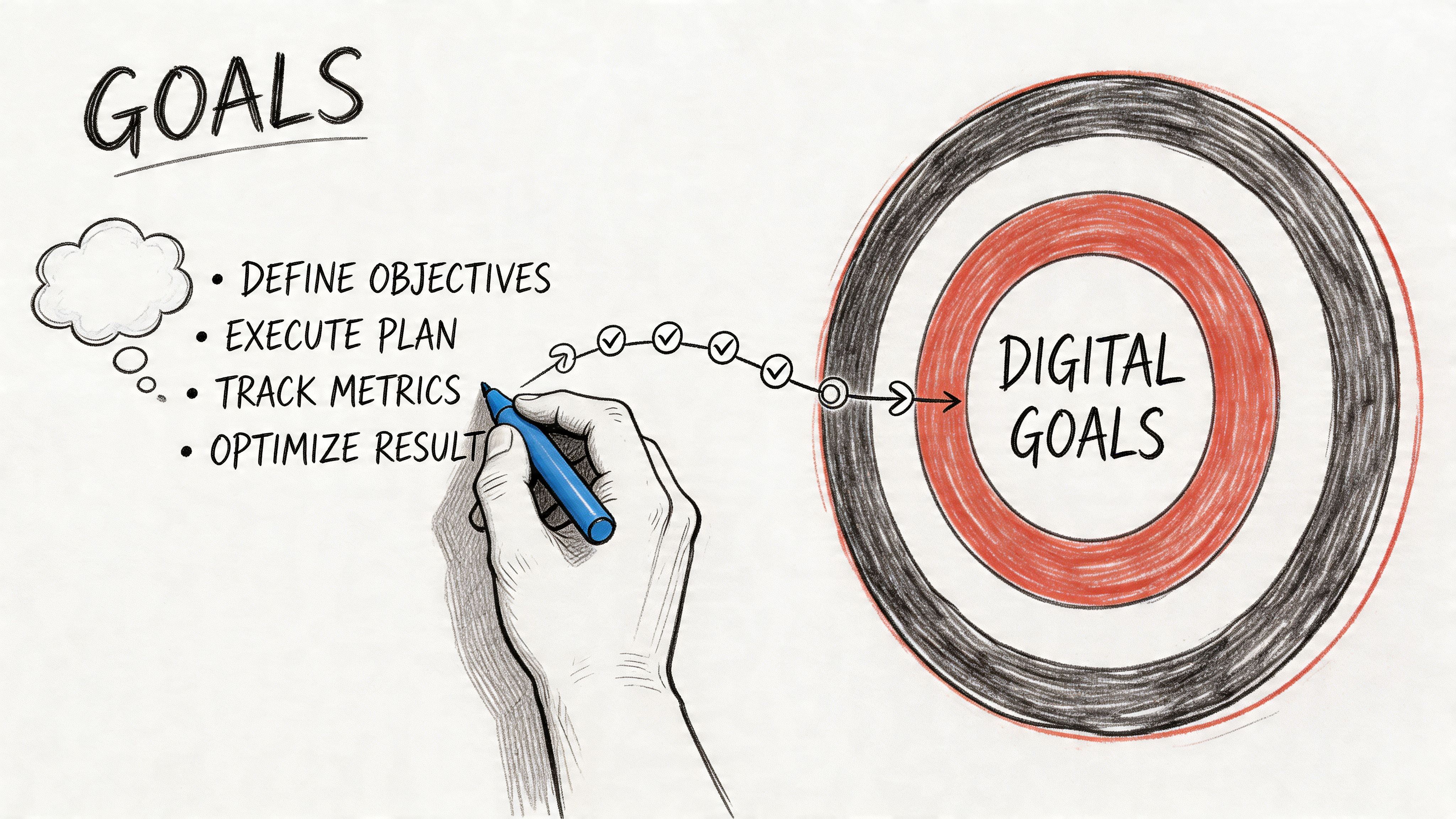
I like a simple maturity check. No jargon. Just answer these questions truthfully.
If you answered “no” or “sort of” to most of those, your issue isn’t a lack of ambition. It’s a lack of operational clarity.
“Implement a CRM” is not a goal.
“Reduce lead leakage and make follow-up consistent” is a goal.
“Use AI for content” is not a goal.
“Turn founder insight into a weekly publishing rhythm without losing voice” is a goal.
I want your digital goals tied to outcomes you can observe. Use language like this:
| Weak goal | Strong goal |
|---|---|
| Upgrade our systems | Create one source of truth for leads, deals, and follow-ups |
| Improve service | Standardize onboarding so every client gets the same kickoff steps |
| Do more content | Build a repeatable content pipeline from idea to draft to publish |
| Be more efficient | Remove duplicate admin across sales, delivery, and reporting |
That forces discipline. It also helps your team understand why change is happening.
Don’t digitize everything at once. That’s how founders create expensive confusion.
Pick one goal in each of these categories:
What directly improves lead flow, conversion, or retention?
A simple example is replacing scattered inquiries with one intake form, one CRM, and one follow-up workflow. Sales gets cleaner fast when every opportunity enters the same system.
What reduces drag in delivery?
This usually means project templates, client onboarding checklists, centralized files, and task ownership. Founders tend to underestimate how much energy disappears into repeated clarification.
What helps you show up consistently without sounding manufactured?
That might be a content calendar, a repurposing workflow, a better approval process, or a structured way to capture your ideas after calls and meetings.
A good digital goal should make your business feel calmer within weeks, not more complicated.
The goal statement should be plain enough that your team can act on it tomorrow.
Use this format:
We are digitizing [process] so that [business outcome] happens more reliably, with [owner] accountable and [success signal] reviewed regularly.
Examples:
That’s what strategy looks like in practice.
Founders often get sidetracked at this point.
They compare features for weeks, watch demos, save “best tools” threads, and convince themselves they’re making progress. They’re not. They’re shopping.
Your tech stack is just the set of tools that runs your business. It should be boring in the best possible way. Reliable. Integrated enough. Easy for real humans to use.
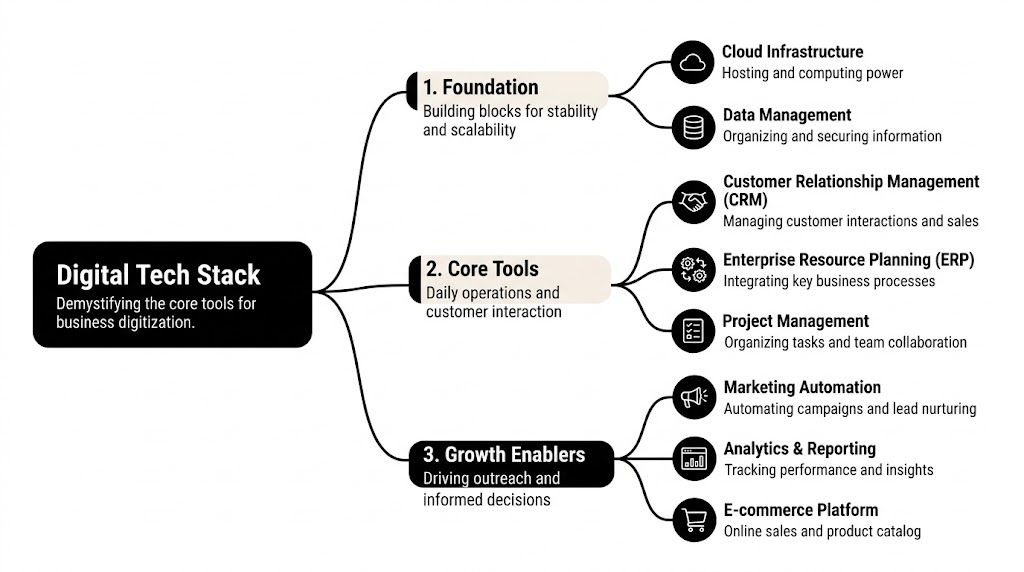
A lot of small businesses overbuy because they feel behind. That’s a mistake. 42% of small businesses report insufficient AI and digital resources, which is exactly why accessible, easy-to-implement tools matter more than flashy complexity, as highlighted in Santander’s piece on digitizing business.
You don’t need fifty tools. You need a few categories covered well.
This is your CRM. HubSpot, Pipedrive, Zoho CRM, Salesforce for larger orgs. Pick one place where leads, deals, notes, follow-ups, and pipeline stages live.
If your sales process still depends on inbox searching, you don’t have a sales system. You have personal memory wearing a business suit.
This is your CMS and publishing environment. WordPress, Webflow, Shopify if commerce is central, or a simpler site builder if speed matters more than customization.
Your site should support the way you sell. If visitors can’t clearly understand what you do, who it’s for, and what to do next, redesigning the homepage matters more than adding another automation.
Work management systems include Asana, ClickUp, Monday.com, Notion, Trello. I don’t care which one you pick nearly as much as I care that every recurring service has a template, an owner, and a due date.
Email, calendar scheduling, internal chat, video calls. Google Workspace or Microsoft 365 usually anchors this. Add Calendly or SavvyCal for scheduling. Keep it simple.
Invoicing, payment collection, contract workflows, document storage. Stripe, QuickBooks, Xero, PandaDoc, DocuSign, Google Drive, Dropbox. Again, fewer is better if they work together.
This is a real tradeoff. Most founders should decide based on operational maturity, not preference.
| Approach | Best for | Strength | Risk |
|---|---|---|---|
| All-in-one platform | Smaller teams, faster setup | Simpler implementation and fewer integrations | May become restrictive later |
| Best-of-breed tools | Specialized teams, more complex workflows | Stronger depth in each function | Higher complexity and maintenance |
An all-in-one stack might look like HubSpot for CRM, email marketing, forms, and basic automation, plus Stripe and a project tool.
A best-of-breed stack might look like Pipedrive for CRM, Webflow for site, ConvertKit for email, Asana for delivery, Calendly for scheduling, Stripe for payments, and Zapier to connect the pieces.
My opinion is straightforward. If you are still building operational discipline, start closer to all-in-one. You need adoption before optimization. A narrower toolset beats a complex stack nobody uses.
Most demos are designed to impress you with edge cases. Ignore that. Evaluate tools against five criteria:
Buy software for the process you want to repeat every week, not for the exception you handle twice a year.
A solid starting point could look like this:
If your business depends heavily on thought leadership, content workflows matter as much as sales workflows. For a curated look at creator-focused systems, this resource on the 12 best tools for content creators in 2026 to build your brand is useful.
One more point. Don’t let your stack erase your identity. Tools should support your way of serving clients, not flatten it. The best setup makes your business feel more personal because it removes the administrative noise that gets in the way.
Most founders don’t need a company-wide overhaul. They need three machines working properly: sales, operations, and customer success.
That’s where your business either compounds or clogs.
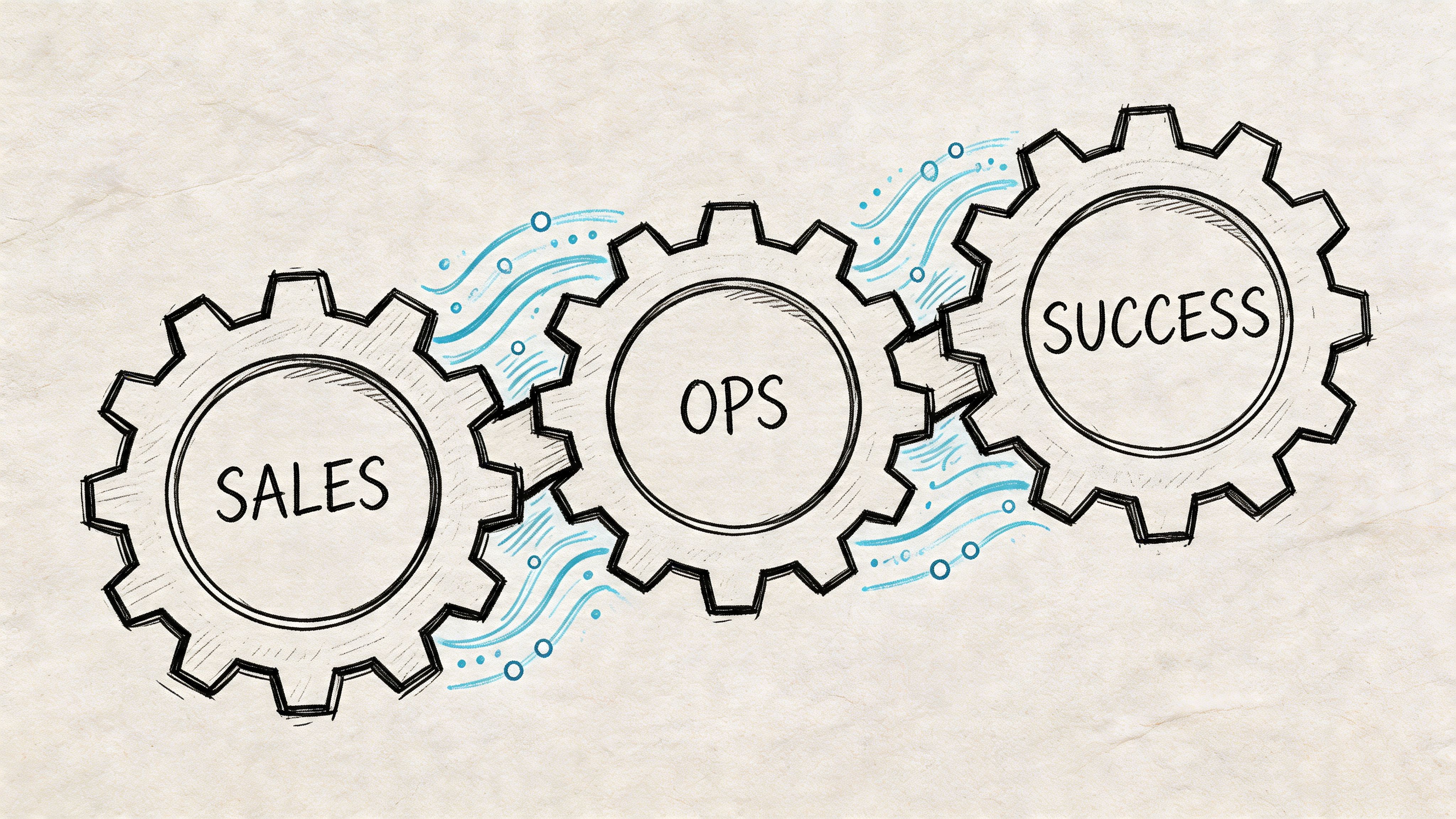
A smart digitization project starts with diagnosis, then a roadmap, then short execution sprints. That agile approach can reduce production delays by up to 30% and more than doubles the odds of success compared with a big-bang overhaul, according to mydiapason’s process digitization guide.
Sales is the easiest place to find avoidable waste.
A founder tells me leads are “slow lately,” and within ten minutes we find the issue. Inquiries arrive through multiple channels. Nobody logs them consistently. Follow-up timing depends on mood. Proposals sit in inboxes. There’s no pipeline visibility.
Digitize sales with a simple structure:
Capture every lead in one place
Website forms, referrals, DMs, and booked calls should all end up in the same CRM.
Create clear pipeline stages
New lead. Qualified. Proposal sent. Negotiation. Closed won. Closed lost. Keep it plain.
Automate follow-up where repetition helps
Confirmation emails, reminders, proposal nudges, and post-call summaries should not require manual effort every time.
Standardize call notes and next steps
If every salesperson or founder writes notes differently, your pipeline becomes unreadable.
A quick win is moving all inquiry handling into one intake form linked to your CRM. That change alone forces cleaner data and faster response habits.
Operations is where founders feel “busy” without feeling in control.
If your delivery relies on someone remembering the next step, you don’t have a process. You have institutional folklore.
Use project management software to turn recurring work into repeatable templates. Every service should have:
A consulting business might template discovery, strategy, draft delivery, review, revision, and final sign-off. A marketing agency might template onboarding, asset collection, campaign setup, reporting, and approval cycles.
You should also digitize admin around delivery.
| Manual habit | Better digital version |
|---|---|
| Chasing files across email | Shared folders with naming conventions |
| Asking who owns what | Task assignments in one project tool |
| Rebuilding project plans each time | Reusable templates |
| Sending invoices manually from memory | Triggered invoicing tied to milestones |
If a task happens more than once, document it. If it happens often, template it. If it’s rules-based, automate it.
A business like Legacy Builder, for example, runs on coordinated handoffs between strategists, writers, designers, and success managers. That kind of model only works when content capture, approvals, publishing, and audience interaction are structured across a clear workflow rather than managed ad hoc.
A lot of small businesses think customer success is only for SaaS. Wrong.
If clients buy from you repeatedly, refer you, renew, or expand, you need a success function whether you call it that or not.
Digitize it with three assets:
Use a shared inbox such as Help Scout, Front, or even a well-structured team email setup if volume is low. Clients should not depend on one employee’s personal inbox.
Document your most common answers. Onboarding steps. Timelines. Deliverables. Revision policy. Access instructions. Reporting definitions. That saves time and reduces inconsistency.
You don’t need enterprise software to do this. You do need a habit of checking in on engagement, blockers, unanswered questions, and renewal risk.
Here’s a useful walkthrough before you redesign workflows more thoroughly:
Don’t launch a giant internal initiative with twelve moving parts.
Run short sprints around one business problem at a time:
That’s how to digitize your business without overwhelming your team. You create visible wins, reduce friction quickly, and build confidence as you go.
A lot of founders digitize operations and then wreck their brand by automating their voice into oblivion.
Don’t do that.
Your digital presence is not a side project anymore. It shapes trust before a sales call, during due diligence, and long after someone first hears your name. If you’re a founder, operator, consultant, executive, or expert-led business, your content is part of the customer experience.
The mistake is treating content like volume production.
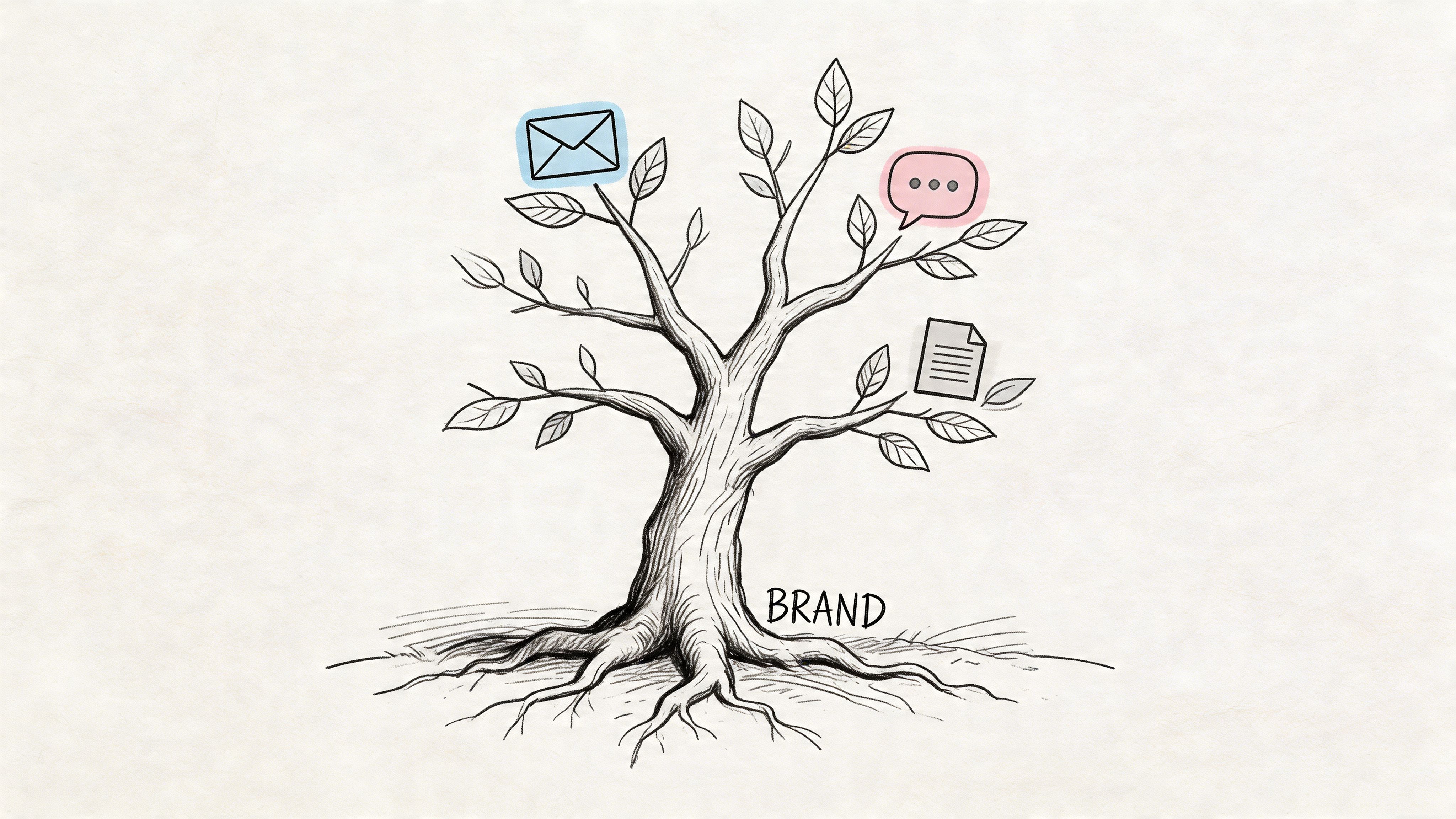
A content engine starts with your real thinking.
Not trend hijacking. Not generic AI sludge. Not copy that sounds like everyone else in your category.
Your strongest content usually comes from four sources:
That gives you content pillars. From there, you need a workflow.
Automation helps. Scheduling tools, editorial calendars, asset libraries, and approval workflows remove friction. They don’t replace taste.
You do not need to be everywhere.
If your buyers live on LinkedIn, go deep there. If you build trust better through long-form email, commit to a newsletter. If your business benefits from search, build articles around real customer intent. If short-form video fits your style, use it. But pick channels based on audience fit and execution capacity, not insecurity.
A practical reference for planning channel mix and consistency is this modern social media and content strategy guide.
This is my strongest opinion in the whole article.
AI is useful for transcription, summarization, repurposing, ideation, first drafts, formatting, metadata, research organization, and workflow support. It is dangerous when founders let it generate their worldview.
Your audience can tell when content has no fingerprints on it.
Use AI to help with:
Do not let it replace:
Authenticity online isn’t about sounding casual. It’s about being recognizably you across every touchpoint.
Founders often create content and call it done. That’s lazy.
Distribution means building a repeatable system for getting your ideas in front of the right people. That includes posting, email, direct outreach, community engagement, profile optimization, and strategic repurposing.
A strong digital content system usually includes:
| Content asset | Distribution move |
|---|---|
| Founder post | Republish themes into email and short video |
| Long-form article | Break into multiple social posts and sales enablement assets |
| Client FAQ answer | Turn into newsletter, sales follow-up, and knowledge base content |
| Webinar or interview | Convert into clips, quote graphics, and blog material |
The founder who wins doesn’t always produce the most content. The founder who wins often has the clearest point of view and the most consistent distribution rhythm.
That’s what preserves the human side while scaling reach.
A digital business runs on trust. If your systems are sloppy, your brand will eventually pay for it.
Most founders delay security and governance because they don’t feel urgent. Then a contractor loses access control, a shared password spreads across the team, sensitive client files sit in the wrong folder, or nobody knows which version of a document is final.
The harder issue is usually adoption. Teams don’t resist new tools because they hate progress. They resist because the rollout is confusing, the reason is vague, and the new system feels like extra work.
According to McKinsey, only 16% of digital transformations achieve and sustain performance improvements, and 70% of broad initiatives fail due to poor planning and resistance to change. Success odds more than double when companies invest in capability building, communication, and the right tools, as summarized in Ergomania’s review of McKinsey’s findings.
You do not need an enterprise security team to act like a serious business.
Start with these essentials:
These are leadership decisions, not just IT tasks.
You don’t need a law degree to improve compliance. You do need clarity.
Know what customer data you collect, where it lives, who can access it, and how long you keep it. Review your forms, contracts, permissions, and storage practices. If you work with external writers, designers, or operators, be explicit about file handling and approvals.
Content-heavy businesses also need governance. Brand voice, publishing permissions, review steps, and source-of-truth documents should be documented. This guide on what content governance is and how to build a powerful brand is a practical starting point.
Here’s what works better than a grand rollout:
Show the team the current friction. Lost context. Slow approvals. Duplicate work. Customer confusion. People support change when they understand the cost of staying the same.
Don’t teach every menu item in the tool. Teach how a lead gets logged, how a project gets launched, how a client request gets handled, and who owns each step.
Every team has a few people who adopt new systems quickly. Use them. Let them test workflows, surface confusion, and help peers adjust.
New software fails when leaders announce it. New software sticks when managers use it in the actual work.
Digitization is not a project you finish. It’s a way of operating.
Once your core systems are in place, tie each one back to the business goals you defined earlier. Measure what matters. Lead response quality. Sales pipeline movement. Onboarding completion. Delivery speed. Client satisfaction signals. Content consistency. Revenue from digital channels.
Then review the results on a rhythm.
Monthly is usually enough for most founders. The point is not to generate dashboards for their own sake. The point is to learn where friction remains, where adoption is weak, and where a process needs redesign instead of more software.
Use a simple loop:
That’s how to digitize your business without losing control of it. You don’t become a tech company. You become a clearer, faster, more resilient version of the company you already meant to build.
And when the business is ready to grow, stronger systems make scaling far less painful. If that’s your next challenge, this guide on how to scale a service business with proven systems is a useful next read.
If you want help turning your expertise, operations, and brand into a digital system that still sounds like you, Legacy Builder works with founders and professionals to translate their ideas into structured content, consistent distribution, and a more scalable digital presence.


You could – but most in-house teams struggle with the nuance of growing on specific platforms.
We partner with in-house teams all the time to help them grow on X, LI, and Email.
Consider us the special forces unit you call in to get the job done without anyone knowing (for a fraction of what you would pay).
Short answer – yes.
Long answer – yes because of our process.
We start with an in-depth interview that gives us the opportunity to learn more about you, your stories, and your vision.
We take that and craft your content then we ship it to you. You are then able to give us the final sign-off (and any adjustments to nail it 100%) before we schedule for posting.
No problem.
We have helped clients for years or for just a season.
All the content we create is yours and yours alone.
If you want to take it over or work on transitioning we will help ensure you are set up for success.
We want this to be a living breathing brand. We will give you best practices for posting and make sure you are set up to win – so post away.
Subscribe to our newsletter and get insights on how to grow your personal brand.
