.svg)
Subscribe to our newsletter and get insights on how to grow your personal brand.
Thank you! Your submission has been received!
Oops! Something went wrong while submitting the form.
.svg)


Most advice about video content is lazy. “Just be consistent.” “Post every day.” “Use AI to scale.” “Keep it short.” None of that is enough, and some of it actively hurts you.
If you're building a personal brand, engaging video content doesn't come from pumping out faceless clips with generic hooks and recycled scripts. It comes from clarity, point of view, and trust. Your audience is not looking for more content. They're looking for a person they believe.
That matters even more now because video is no longer a niche format. By late 2023, around 91% of businesses reported using video marketing, up from 61% in 2016, which means attention is crowded and engagement depends far more on clarity and execution than novelty, according to Siege Media's video marketing statistics roundup. If you want to learn how to create engaging video content, start there. Stop trying to look like a creator. Start trying to sound like someone worth listening to.
The worst way to make video is to open your camera and “see what happens.” That approach creates rambling videos, weak positioning, and content that sounds like everyone else.
The strongest videos are built before filming starts. A practical production workflow begins with defining the goal, the key message, the audience, the format, and your brand voice. Then you storyboard the sequence and create a shot list before recording, because that pre-production step saves time and reduces mistakes during filming and editing, as outlined in Brisbane City Council's video content guide.
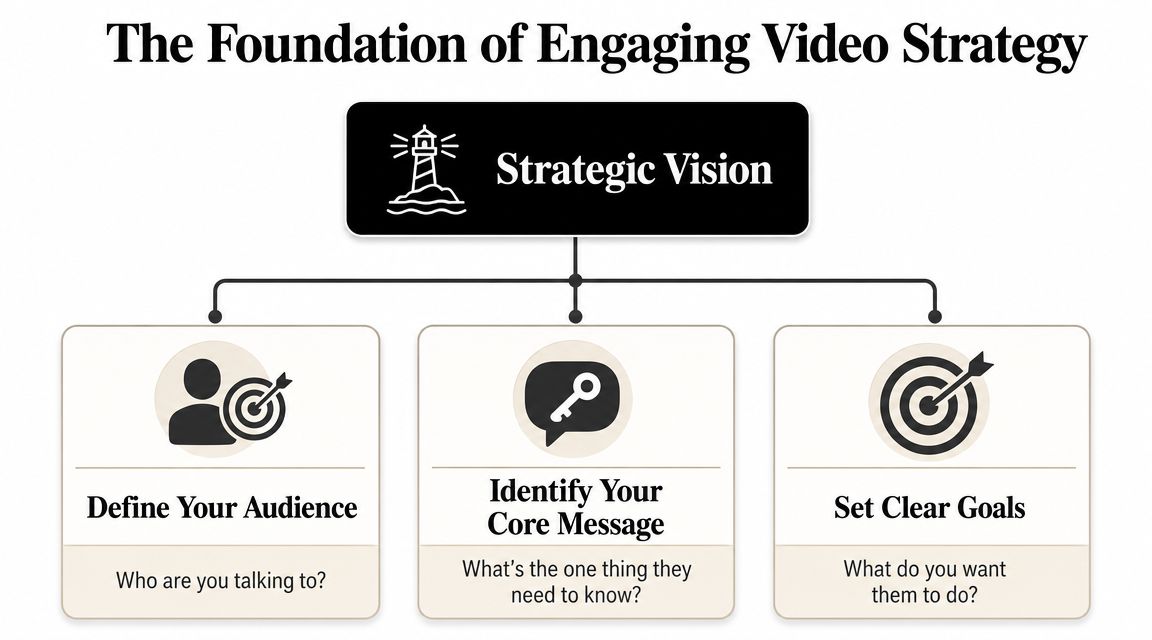
Every video needs one job.
Not three jobs. Not “build awareness, drive leads, tell my story, and sell my service.” One job.
Ask yourself:
If you can't answer that in one sentence, your video is still too vague to shoot.
A founder talking about “leadership lessons” is not a strategy. A founder explaining why first-time managers lose trust when they avoid hard feedback. That's a strategy. One audience. One problem. One clear outcome.
Practical rule: If your viewer can't tell within seconds who the video is for, they'll assume it's not for them.
“Know your audience” is weak advice. You need to know the exact tension your audience is dealing with.
For personal brands, I like this filter: what is your ideal viewer privately frustrated by, professionally embarrassed by, or actively trying to solve? Build from that.
A few examples:
That last point matters. A lot of people asking how to create engaging video content fall into the same trap. They outsource their thinking to trends, templates, and AI prompts. The result looks polished and feels dead. If you want a useful primer on platform execution, this piece on mastering video content for social media is worth reading. Just don't confuse distribution mechanics with brand substance.
Your core message is not the topic. It's the takeaway.
“Personal branding” is a topic. “Your audience trusts specificity more than polish” is a message. One is broad. The other gives the viewer something they can use, repeat, and remember.
Use this quick framework before every video:
That's the difference between content that fills a feed and content that builds a reputation. If you want a sharper sense of how narrative supports business growth, this take on storytelling in business is a useful companion.
Bad hook:
“Hey everyone, in today's video I want to talk about video marketing.”
Good hook:
“You're losing viewers because you're opening with context instead of tension.”
The first one announces a topic. The second one creates a reason to keep watching. That's the difference.
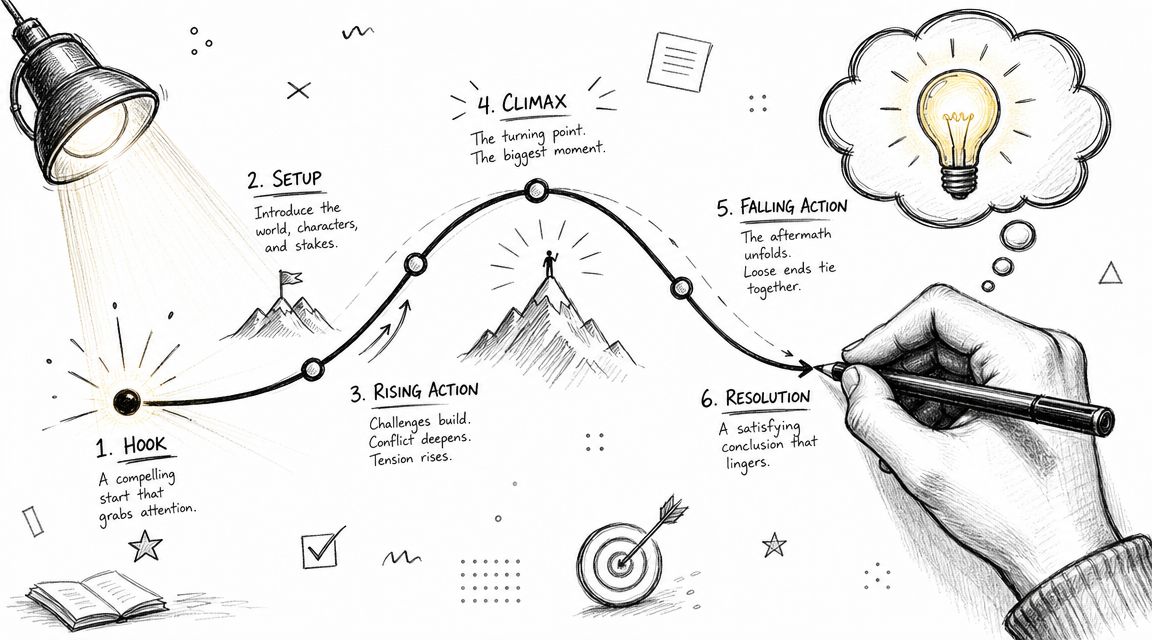
Your opening line should do one of three things fast:
For personal brands, I recommend hook lines that sound like informed pattern recognition, not hype. You're not trying to shock strangers for empty reach. You're trying to signal expertise to the right people.
Use lines like:
Those hooks work because they create tension and imply there's insight coming.
You don't need cinematic storytelling. You need structure.
For business videos, Problem, Agitate, Solve is enough.
Here's what that looks like in practice:
| Stage | What to say |
|---|---|
| Problem | Name the issue the viewer recognizes |
| Agitate | Explain the cost of ignoring it |
| Solve | Give the shift, method, or recommendation |
Example:
You help consultants build a personal brand.
Problem: “Most consultants post advice their peers respect but buyers ignore.”
Agitate: “That happens because the content proves you know your field, but it doesn't prove you understand the buyer's stakes.”
Solve: “Speak to moments of decision, not abstract expertise. Replace broad advice with specific judgment.”
That's a story. Short. Practical. Memorable.
The fastest way to improve a business video is to remove the warm-up and bring the tension forward.
If you want a broader perspective on what gets shared widely, this guide to making videos viral can give you ideas. Just don't optimize for virality at the expense of credibility. Professional audiences don't buy because you went viral. They buy because your content sounds experienced.
The easiest way to make your videos forgettable is to speak in generic lessons. The easiest way to make them engaging is to speak from pattern recognition.
Say:
That creates authority without posturing. If you want to sharpen that style, this guide to telling your story and building an unforgettable brand is a smart reference.
You do not need a studio. You need a setup that doesn't distract from your message.
Creators often blame low engagement on the algorithm when the actual issue is simpler. Their audio is muddy, their framing is awkward, or their background makes the video feel careless. Viewers notice all of that immediately.
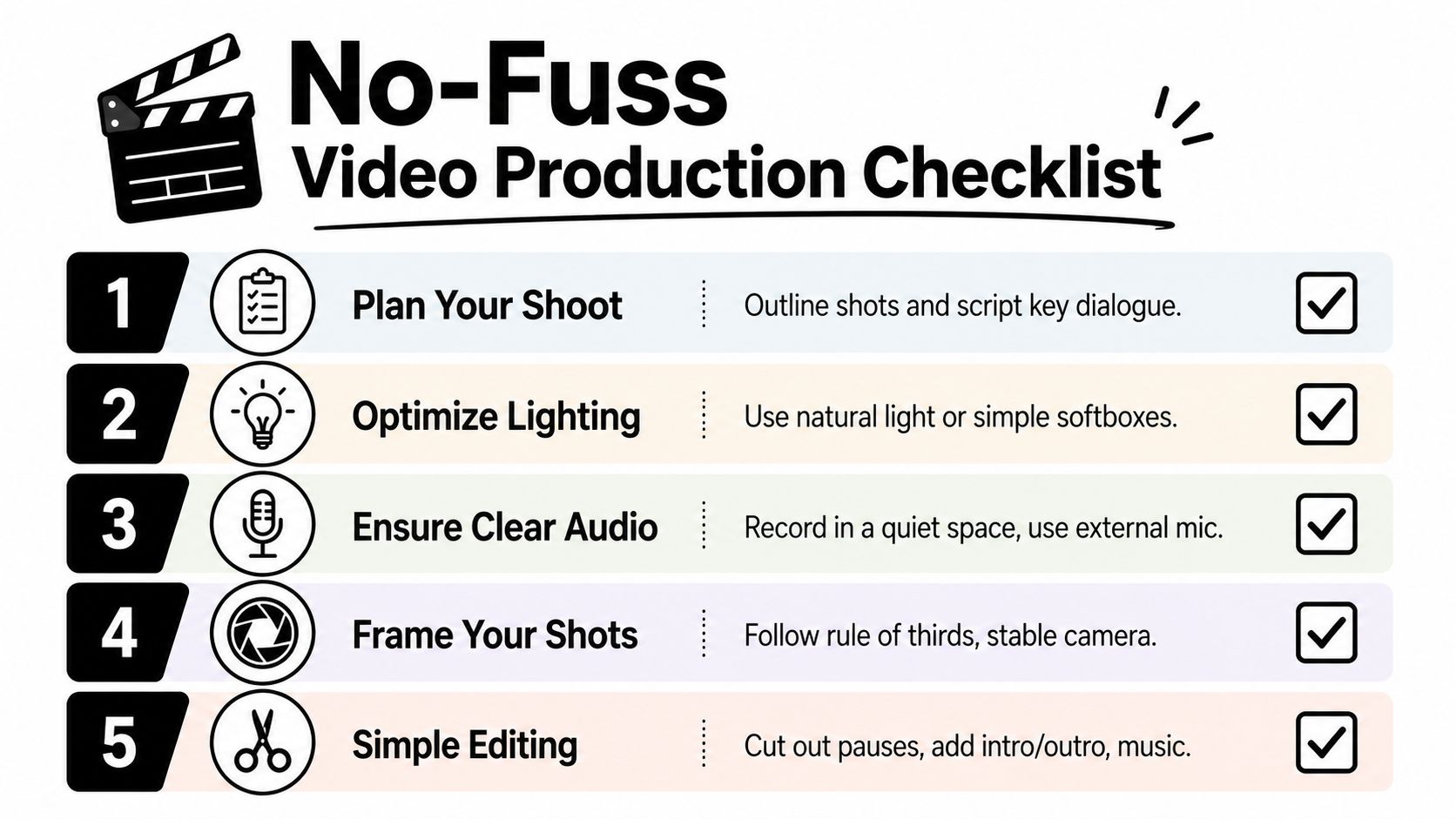
For retention, the technical baseline is straightforward: open with a strong hook, stay focused on one core message, and adapt to platform behavior. Key quality benchmarks include eye-level framing, well-lit faces, clean backgrounds, and at least 1080p capture for phone or Zoom recordings, according to BlinkJar Media's video best practices.
That means your production checklist should focus on the highest-return fixes.
Audio first
If people struggle to hear you, they leave. Record in a quiet room. Turn off fans if possible. Close the door. If you can use an external mic, do it.
Light your face clearly
Face a window or a simple soft light. Don't sit with a bright window behind you unless you know how to expose for it.
Frame like a professional
Put the camera at eye level. Not below your chin. Not balanced on a laptop looking up your nose.
This is the standard I give founders who want to move fast:
A short visual walkthrough can help if you want to refine your setup:
People think filming is the hard part. It isn't. Thinking is the hard part.
Before you record, create:
That one step saves you from bad takes and messy edits later. If you're comparing software, setup gear, and workflow options, this roundup of creator tools is a practical place to start.
A weak edit can ruin a strong idea. A sharp edit can make a simple talking-head video feel authoritative, clear, and easy to follow.
Many view editing as cleanup. That's a mistake. Editing is where you control attention.
Your viewer is making micro-decisions the entire time. Stay or leave. Keep listening or scroll. If your pacing drags, they won't give you the benefit of the doubt.
That means you should cut:
Leave in enough personality to sound human. Remove anything that slows comprehension.
A good business video usually benefits from tighter pauses, cleaner transitions, and visual changes that signal progress. That can be a punch-in, a cut to B-roll, a screen recording, or a text overlay that reinforces the point.
A lot of creators still think captions are a nice add-on. They're not. They're part of the product.
A frequently missed reality is that engaging video is also an accessibility problem. Platform workflows increasingly treat captions and subtitles as baseline production steps because viewing happens across silent autoplay, mobile feeds, and fast-scroll behavior. In those conditions, clarity and text support often beat polished visuals for comprehension and retention, as noted in Solution Tree's guidance on engaging video.
That changes how you should edit.
Non-negotiable: If your video can't be understood with the sound off, it's under-edited for modern platforms.
Use on-screen text for four jobs:
| Use | Why it matters |
|---|---|
| Headline text | Tells viewers why they should care |
| Captions | Preserves comprehension without sound |
| Key phrase emphasis | Directs attention to the important idea |
| CTA text | Makes the next step obvious |
People forgive simple visuals much faster than bad sound. If your recording has hiss, room echo, or background noise, clean that up before you worry about flashy motion graphics.
If you need options, this breakdown of software for crystal-clear audio is useful for comparing cleanup tools.
A clean edit for a personal brand usually looks like this:
That's enough. You do not need cinematic transitions. You need a viewer who makes it to the end and remembers what you said.
Most founders are thinking about videos one post at a time. That's why they burn out.
You need a system, not a streak.
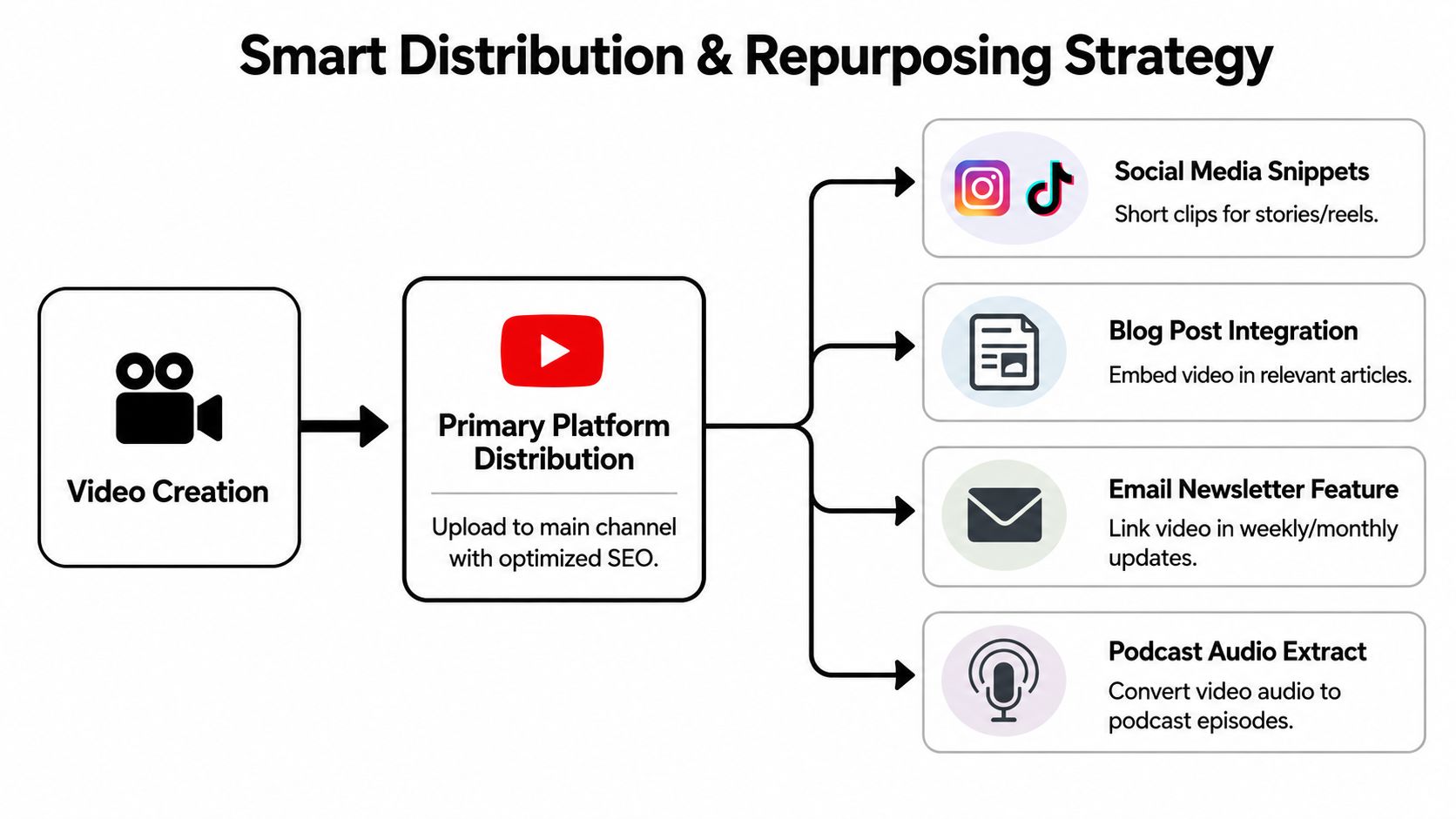
One good core video can fuel an entire week of content if you build it properly. A webinar, tutorial, interview, Q&A, or client breakdown can become short clips, quote graphics, text posts, email content, and follow-up talking points. That's how serious personal brands stay visible without sounding repetitive.
Often, many creators receive poor advice. “Keep it short” is incomplete.
According to Wistia's 2026 data, the shortest videos earn the highest engagement rates, but videos between 30 and 60 minutes see the highest clicks, which shows that strong performance depends on matching format and length to audience intent, not blindly shortening everything, as summarized in Wistia's video marketing statistics.
That tells you something important:
If you're teaching, diagnosing, or walking through a decision, don't force everything into a tiny clip. Use the right container.
A practical repurposing flow looks like this:
Record one substantial piece
A client question breakdown, founder POV, training clip, interview, or tutorial.
Pull short clips from natural moments
Hooks, contrarian lines, strong one-liners, objections, and practical tips.
Turn standout lines into text posts
Some people won't watch. They'll still engage with a sharp written insight.
Use the same idea in email
Introduce the clip with context and a short lesson.
Embed the video in a related article or landing page
Let one idea do more than one job.
Your content should change shape depending on where it lives. Here's a simple operating table.
| Platform | Aspect Ratio | Recommended Length |
|---|---|---|
| LinkedIn feed video | Vertical or square often works well for mobile viewing | Short, insight-led clips for fast consumption |
| Instagram Reels | Vertical | Brief clips built around a strong opening |
| YouTube Shorts | Vertical | Short clips focused on a single takeaway |
| YouTube long-form | Horizontal | Longer educational or trust-building content |
| Webinar replay or training | Horizontal | Longer sessions when depth is the goal |
Notice what's missing: fake precision. You don't need rigid rules. You need alignment between platform, viewer mindset, and the depth of your message.
Repurposing works when each version feels native, not chopped up.
If you want help turning interviews, insights, and founder knowledge into a consistent content engine, Legacy Builder is one option. The service extracts insights, writes in your voice, and handles ongoing publishing for personal brands that need strategic consistency.
Many judge video content by the wrong scoreboard.
They ask, “Did it get views?” or “Did it go viral?” That's lazy thinking. A founder can get attention from the wrong audience all day and still get no business result.
The better question is simpler. Did the video do its job?
For personal brand videos, two signals matter a lot:
These tell you where your content earns attention and where it loses it.
If viewers leave immediately, your hook is weak or misaligned. If they stay through the opening and drop in the middle, your structure probably wandered. If they make it to the end on one type of topic but not another, your audience is telling you what kind of expertise they value from you.
A retention graph is feedback, not judgment.
Use it this way:
| Drop-off moment | Likely problem |
|---|---|
| First few seconds | Hook is vague, slow, or too generic |
| Early middle | You added context before value |
| Midpoint slump | The video repeats itself or loses tension |
| Near the end | CTA arrives too late or the ending drags |
Don't panic over one video. Look for patterns across several.
A few useful questions:
The point of analytics isn't to validate your instincts. It's to correct them.
Don't change everything after every post. That creates chaos.
Change one thing, then observe:
That's how you learn how to create engaging video content. Not through hacks. Through pattern recognition, restraint, and repetition.
The creators who improve fastest are not the most theatrical. They're the most honest about what the audience is telling them.
If you want your videos to sound like you, reflect real expertise, and fit into a consistent personal brand strategy, Legacy Builder helps turn your ideas, stories, and insights into content people remember. It's a practical fit for founders and professionals who want to show up consistently without outsourcing their voice.


You could – but most in-house teams struggle with the nuance of growing on specific platforms.
We partner with in-house teams all the time to help them grow on X, LI, and Email.
Consider us the special forces unit you call in to get the job done without anyone knowing (for a fraction of what you would pay).
Short answer – yes.
Long answer – yes because of our process.
We start with an in-depth interview that gives us the opportunity to learn more about you, your stories, and your vision.
We take that and craft your content then we ship it to you. You are then able to give us the final sign-off (and any adjustments to nail it 100%) before we schedule for posting.
No problem.
We have helped clients for years or for just a season.
All the content we create is yours and yours alone.
If you want to take it over or work on transitioning we will help ensure you are set up for success.
We want this to be a living breathing brand. We will give you best practices for posting and make sure you are set up to win – so post away.
Subscribe to our newsletter and get insights on how to grow your personal brand.
