.svg)
Subscribe to our newsletter and get insights on how to grow your personal brand.
Thank you! Your submission has been received!
Oops! Something went wrong while submitting the form.
.svg)



An executive personal branding coach helps you turn credibility into visibility and visibility into business value. 77% of professionals report that personal branding has positively impacted their career, and the leaders who treat it strategically stop being overlooked and start becoming the obvious choice.
The most popular advice on personal branding is still wrong. It tells executives to post more, chase engagement, and sound “thought leader-ish” online. That’s not branding. That’s performance.
Real executive branding is reputation design. It’s the disciplined work of deciding what you want to be known for, proving it consistently, and making sure the market sees the same leader your best clients, colleagues, and board members already experience in the room. If you’re accomplished but still invisible, the problem usually isn’t your capability. It’s that your market has no clean way to understand your value quickly.
An executive personal branding coach is useful because most leaders are too close to their own story. They know too much, say too much, and publish too little. A coach fixes that. They sharpen your positioning, strip out corporate fog, and build a system that makes your expertise easier to trust, remember, and buy into.
That work matters well beyond LinkedIn. Your name already carries a signal. Search results, interviews, podcast appearances, team communication, investor conversations, and board perception all shape that signal. If you haven’t looked seriously at your digital trail, this guide to Online Reputation Management For Executives is worth reviewing because reputation gaps rarely stay contained to one channel.
If you want a practical companion to this conversation, this breakdown on mastering personal branding for executives to drive influence and growth is also a useful next read.
Most executives hear “personal brand” and think selfies, slogans, and shallow social media tactics. That misunderstanding costs careers.
Executive personal branding is the market’s interpretation of your leadership, judgment, expertise, and values. You already have one. The only question is whether you’re shaping it on purpose or leaving it to random impressions, outdated bios, and inconsistent visibility.
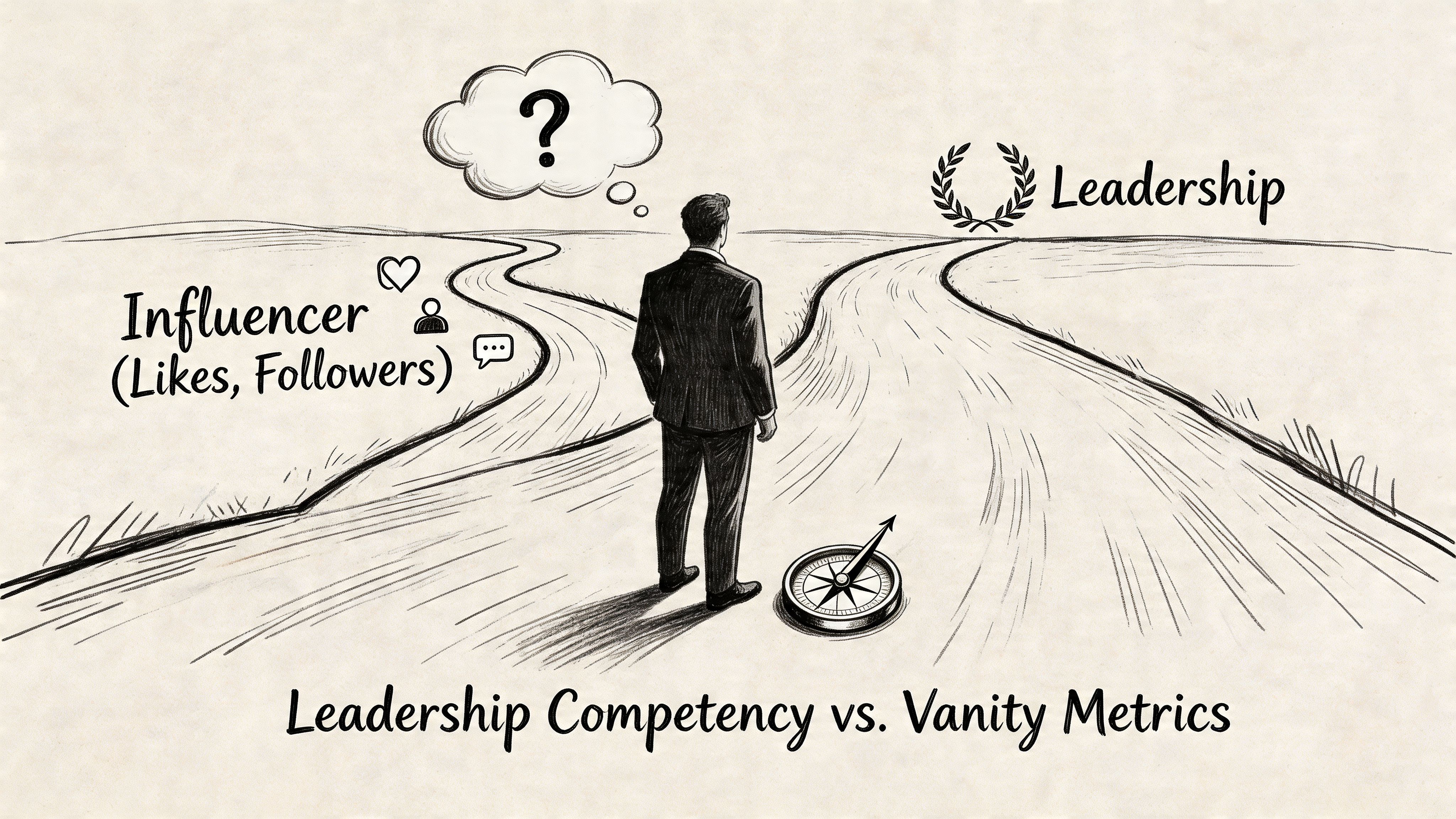
I’ve seen the same pattern over and over. The executive is respected internally, strong in meetings, commercially sharp, and trusted by the people who know them. But outside their immediate circle, they’re barely legible.
Their LinkedIn reads like a resume written by legal. Their public narrative is generic. Their content appears in bursts, then disappears. So the market defaults to simpler signals. Louder competitors get the attention. Less capable peers get the invitations. Recruiters, buyers, and partners choose the leader they can understand in ten seconds.
That’s why branding is not fluff. It’s translation.
When done well, it converts your experience into a clear professional promise. It answers the questions people ask when they encounter your name:
The hard truth is simple. Competence alone doesn’t create influence. Visibility without substance is weak, but substance without visibility is expensive.
77% of professionals report that personal branding has positively impacted their career according to research compiled by Tenet. That matters because career momentum, deal flow, referrals, recruiting advantage, and leadership authority rarely come from being the best-kept secret in your category.
Your brand is not your logo, your headshot, or your follower count. It’s the pattern people remember after you leave the room.
A strong executive brand has three traits.
That last point matters more than most leaders realize. Companies change. Markets shift. Titles expire. A trusted personal brand compounds.
An executive personal branding coach isn’t a posting assistant. They’re not there to “keep your socials active.” If that’s all you need, hire a coordinator.
A real coach works at the identity level first, then the messaging level, then the visibility level. In practice, that means they play three roles.
First, the coach clarifies what you should be known for. That includes your positioning, your decision patterns, your leadership traits, your commercial strengths, and the themes that should anchor your public presence.
Weak branding frequently collapses. Leaders often try to sound broad because they don’t want to be boxed in. The result is a profile that says nothing memorable. A coach narrows the signal so the market can understand it.
They’ll usually pressure test questions like these:
Without those answers, content turns into noise.
Then comes story. Not in the sentimental sense. In the strategic sense.
Your narrative is the clean explanation of who you are, what shaped your perspective, what you believe, and why your leadership matters now. An executive personal branding coach helps you turn scattered experience into a coherent public case.
That also connects directly to gravitas. According to Women’s Leadership Success, gravitas accounts for 67% of executive presence. That’s a useful corrective for leaders who think branding is mainly visual polish. It isn’t. The strongest personal brands project composure, clarity, and grounded confidence under pressure.
Practical rule: If your public brand says “strategic leader” but your communication feels reactive, vague, or overly self-promotional, people won’t believe the positioning.
A good coach makes sure your message matches your behavior. That’s where trust starts.
Only after positioning and narrative are clear should a coach move into visibility. This includes platform choices, content formats, publishing cadence, audience targeting, topic selection, profile optimization, and speaking or media strategy.
Many agencies begin with this. It’s also why many executive brands feel hollow. Amplifying confusion just makes confusion louder.
A coach helps you publish from substance. They turn internal judgment into external assets. That might be short LinkedIn posts, keynote themes, podcast talking points, interview answers, board bio revisions, founder letters, or a better About section on your site. The format matters less than the coherence.
| Service | Primary Goal | Core Deliverable | Best For |
|---|---|---|---|
| Executive personal branding coach | Clarify identity, authority, and business relevance | Positioning, narrative, visibility strategy, content direction | Leaders who want an authentic brand tied to real influence |
| PR agency | Earn media attention and external coverage | Press outreach, placements, media support | Executives with newsworthy announcements or public relations needs |
| Marketing agency | Drive company-level demand and campaigns | Ads, funnels, creative assets, campaign execution | Brands focused on lead generation for products or services |
| Content creator or ghostwriter | Produce content consistently | Posts, articles, scripts, repurposed assets | Leaders who already know their positioning and just need execution help |
You’re paying for judgment. Specifically, someone who can tell the difference between what’s interesting to you and what builds authority with the people you need to influence.
That distinction saves time, protects credibility, and prevents the common executive mistake of being active without becoming known.
Leaders who dismiss personal branding as vanity usually haven’t measured the downstream effects of trust. They treat visibility like a soft metric. That’s a mistake.
A credible executive brand changes how buyers, candidates, partners, and stakeholders interpret the company behind the leader. It reduces friction before the sales conversation starts. It improves the quality of inbound attention. It makes your expertise easier to believe before you ever join the call.
The clearest business benefit is trust. According to EC-PR’s analysis of leadership branding, 82% of consumers are more likely to trust a company when its senior executives maintain an active social media presence.
That number should end the vanity debate. Executive visibility is not just self-promotion. It is a trust mechanism.
If you sell consulting, software, financial services, professional services, recruiting, education, or anything complex, buyers don’t just evaluate the offer. They evaluate the people behind it. Your public presence becomes part of due diligence.
A weak executive brand doesn’t only limit volume. It lowers quality.
When your positioning is vague, you attract vague interest. The wrong podcasts reach out. The wrong partnerships show up. The wrong recruiters make assumptions. The wrong clients expect commodity work. Strong branding filters all of that.
It also affects hiring. Before you assume candidates only care about your company page, spend a few minutes reviewing what employers see when they Google you. The same principle applies in reverse. Top candidates search leaders before they join them.
Here’s where a strong executive brand pays off in practice:
Buyers rarely say, “We chose you because your founder posts online.” They say, “We already trusted your thinking.” That’s the same thing.
Founders often think the company brand should do all the work. It won’t. In crowded categories, the executive brand often becomes the shortcut people use to decide whether the company is credible, modern, and worth paying attention to.
That’s especially true when the market sees little meaningful difference between competitors. If your products sound similar, your leadership signal becomes a deciding factor.
Most leaders delay coaching because they assume the process will be vague, indulgent, or overly creative. A serious engagement isn’t any of those things. It should feel structured, commercial, and useful from the start.
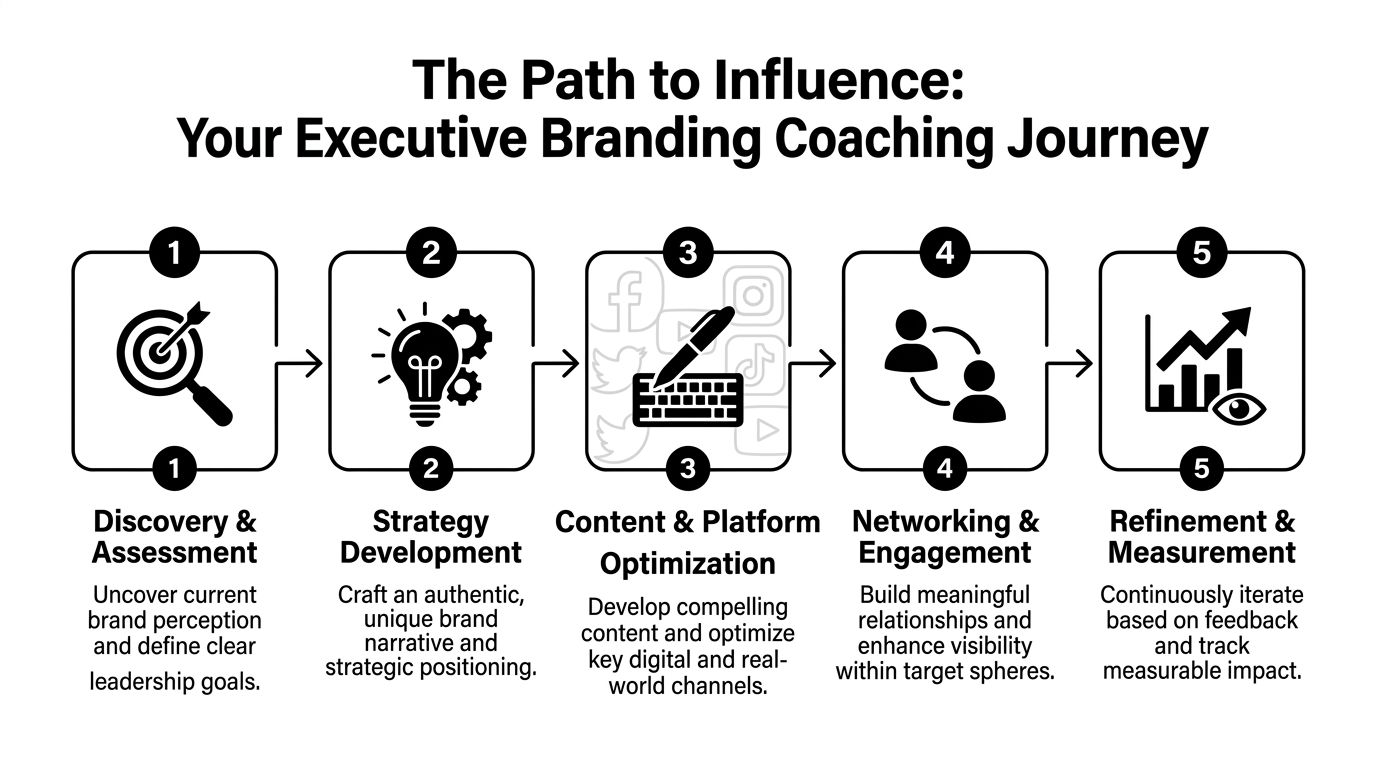
The first phase is diagnosis. Your coach needs to know what people currently think when they encounter your name, where your digital presence helps or hurts, and what outcomes you want.
This stage often includes a profile review, content audit, stakeholder perception review, search result review, speaking material review, and interviews or prompts that uncover how others describe your value. Good coaches also ask what you don’t want to be known for. That’s usually where the sharpest positioning insights emerge.
The goal here is not inspiration. It’s accuracy.
Once the facts are clear, the coach helps you build the brand spine. This usually includes your positioning statement, audience focus, key message themes, proof stories, point of view, and communication standards.
This guide on a modern playbook for personal branding for leaders aligns well with that strategic layer because it treats branding as a long-term leadership asset rather than a content gimmick.
A strong strategy answers five questions cleanly:
Many leaders find relief. Once positioning and narrative are set, content stops feeling like guesswork.
According to Muse Headquarters, defining core brand components like Positioning and Narrative through expert coaching can reduce content creation friction by up to 80%. That makes sense. Most executives don’t struggle because they lack ideas. They struggle because they lack a reliable filter.
A coach turns that filter into an operating system. You know which stories to tell, which themes to repeat, which formats suit your style, and which platforms deserve attention.
Common outputs in this phase include:
If you want extra tactical inspiration, these strategies for building influence offer a useful lens on how presence grows through consistent, intentional touchpoints.
Publishing alone isn’t enough. Your brand grows faster when your ideas travel through relationships.
That means thoughtful commenting, strategic introductions, direct outreach, selective podcast appearances, industry event participation, advisory visibility, and follow-up habits that build memory. A coach should guide where your effort creates the most strategic return.
Don’t confuse activity with relevance. Ten smart interactions with the right people beat a month of generic posting.
The final phase is where serious coaching separates itself from motivational advice. You review what’s working, what’s attracting the wrong attention, what language is resonating, and where opportunity quality is improving.
That might mean refining your topic mix, tightening your bio, adjusting your call to action, improving how you handle comments and DMs, or clarifying a message that still feels too broad. The best executive brands are built through iteration, not one-time reinvention.
Most executive branding advice dies the moment a serious operator asks, “How do I know this is working?” That’s because too many people still measure success with attention metrics alone.
Follower counts can be useful context. They are not proof of business value.
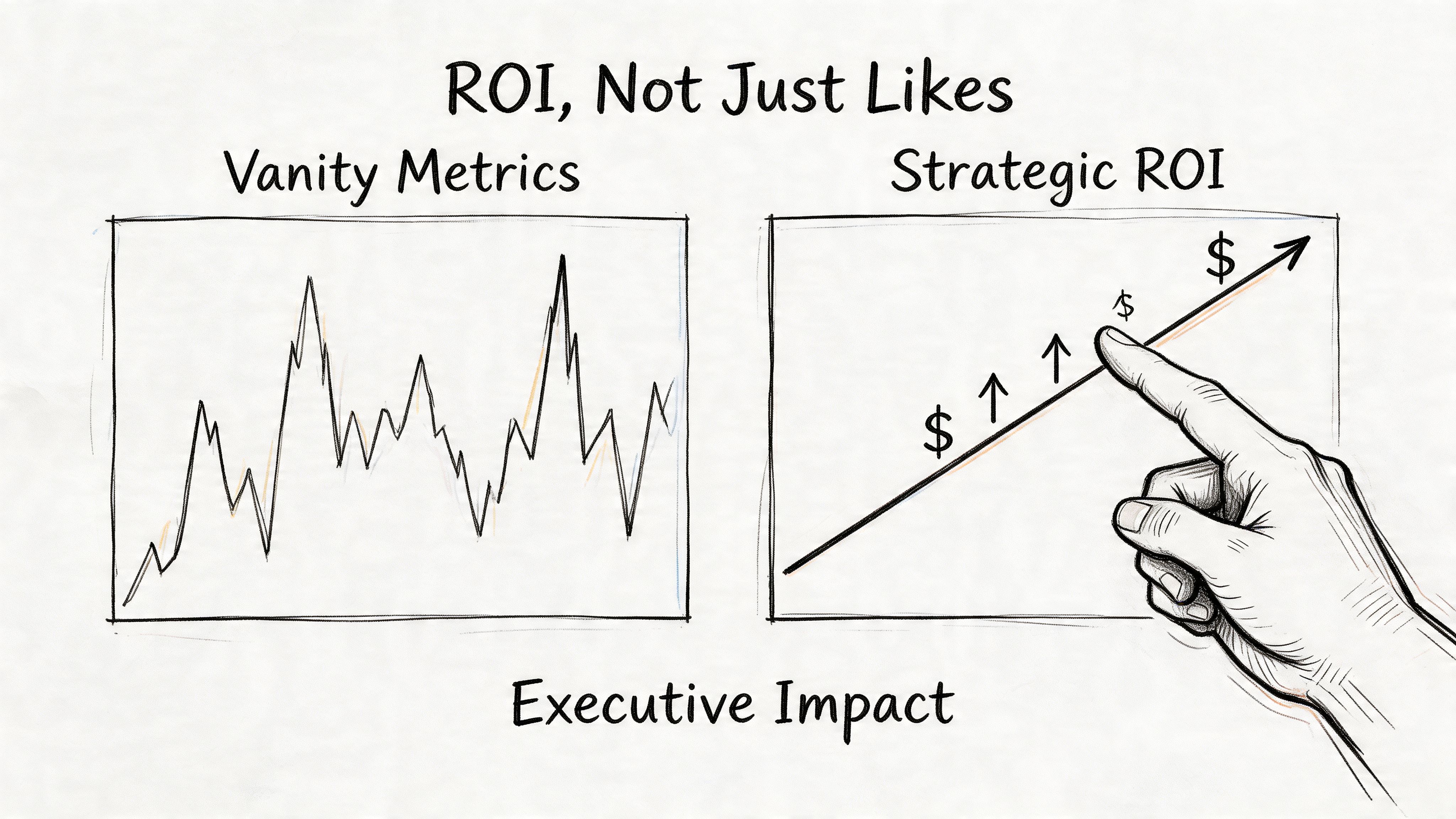
A like doesn’t tell you whether the right buyer saw your idea. A new follower doesn’t tell you whether a stronger candidate applied. A spike in impressions doesn’t tell you whether trust increased.
This is why so many leaders either overvalue branding or dismiss it completely. They track the wrong things.
That blind spot is common. According to Carol Kaemmerer’s executive branding analysis, only 28% of executives track their personal brand’s ROI to revenue, even though branded leaders secure 40% more opportunities. If you want this work to survive budget scrutiny, attach it to real business outcomes.
Use a simple hierarchy. Start with leading indicators, then move to commercial outcomes.
These tell you whether awareness and positioning are strengthening.
These connect the brand to business performance.
If you need a more detailed tracking approach, this guide on how to measure social media ROI for your personal brand gives a practical framework for tying online activity to outcomes that matter.
Keep it lean. You do not need an elaborate attribution model to start.
Track your executive brand monthly using five categories:
| Metric area | What to look for | Why it matters |
|---|---|---|
| Inbound opportunities | Speaking invites, partnership requests, investor interest, sales conversations | Shows whether visibility is attracting relevance |
| Pipeline influence | Deals where your content or profile helped establish trust | Connects brand activity to revenue motion |
| Talent attraction | Candidate mentions of your content, profile, or leadership visibility | Shows recruiting impact |
| Message-market fit | Which themes trigger replies, shares, direct outreach, and conversation | Refines positioning |
| Reputation strength | Search results, brand mentions, and how others describe your authority | Signals whether your market sees you clearly |
A short explainer can help if your team still confuses reach with return.
The most overlooked ROI category is strategic perception. A strong executive brand can influence how the market, investors, candidates, and acquirers interpret the company’s credibility and future potential.
You may not be able to isolate that effect perfectly. That doesn’t make it less real. Smart leaders don’t wait for perfect attribution before investing in trust.
Many individuals hire the wrong coach for one of two reasons. They buy charisma instead of process, or they buy content production instead of strategy.
An executive personal branding coach should help you become clearer, more trusted, and more commercially visible. If all they sell is posting frequency, keep looking.
Start with their own brand. Not because they need to be famous, but because they should be legible. You should understand what they stand for, who they help, and how they think within a few minutes of reviewing their presence.
Then look for these signals:
Use the call to test how they think, not how polished they sound.
Ask questions like:
That fifth question matters more than most buyers realize. According to Blue Links Agency’s roundup of personal branding experts, a key unanswered question in coaching is how to manage brand identity during career pivots, and a 2025 LinkedIn report showed executives lose 45% of engagement within 6 months of a transition without strategic repositioning. If a coach can’t speak intelligently about pivots, they’re not equipped for modern executive careers.
The best coach for a stable operator may be the wrong coach for a founder entering a new market or an executive moving into advisory work.
Some warning signs are obvious. Others are disguised as confidence.
You don’t need a coach who flatters you. You need one who can identify the gap between how you want to be seen and how the market currently reads you, then build the bridge.
That requires honesty, pattern recognition, and commercial judgment. It also requires restraint. The right coach won’t try to turn you into an influencer. They’ll help you become unmistakable.
If you’ve read this far, you already know the issue isn’t whether personal branding matters. It’s whether you’re willing to keep letting other people define your professional story for you.
A strong executive brand is not a side project. It is a career asset, a trust asset, and in many cases a business asset. It affects who finds you, who believes you, who wants to work with you, and how much authority your company inherits from your name.
An executive personal branding coach matters because most accomplished leaders don’t need more ideas. They need sharper positioning, stronger message discipline, better visibility systems, and a way to measure whether any of it is producing meaningful return.
You do not need to become louder. You need to become clearer.
That means saying one thing consistently enough that the right people remember it. It means building a public body of work that proves your judgment. It means treating your reputation with the same seriousness you bring to product, hiring, and strategy. And it means tracking outcomes that matter, such as opportunity quality, pipeline influence, recruiting advantage, and market perception.
If you’re tired of being respected in private and overlooked in public, fix the gap. If your expertise is stronger than your visibility, close the distance. If your company is growing but your personal authority still depends on introductions, build an asset that travels with you.
Legacy is not built by accident. It is built by repetition, clarity, proof, and disciplined visibility.
If you want help turning your expertise into a clear, credible public brand, Legacy Builder is built for that job. Their team helps founders, CEOs, and professionals turn lived experience, hard-earned insight, and authentic voice into strategic content that compounds over time. If you’re done with inconsistency, tired of generic agency output, and ready for a system that builds influence with purpose, book a discovery call with Legacy Builder and start building a brand that outlasts your current title.


You could – but most in-house teams struggle with the nuance of growing on specific platforms.
We partner with in-house teams all the time to help them grow on X, LI, and Email.
Consider us the special forces unit you call in to get the job done without anyone knowing (for a fraction of what you would pay).
Short answer – yes.
Long answer – yes because of our process.
We start with an in-depth interview that gives us the opportunity to learn more about you, your stories, and your vision.
We take that and craft your content then we ship it to you. You are then able to give us the final sign-off (and any adjustments to nail it 100%) before we schedule for posting.
No problem.
We have helped clients for years or for just a season.
All the content we create is yours and yours alone.
If you want to take it over or work on transitioning we will help ensure you are set up for success.
We want this to be a living breathing brand. We will give you best practices for posting and make sure you are set up to win – so post away.
Subscribe to our newsletter and get insights on how to grow your personal brand.
