.svg)
Subscribe to our newsletter and get insights on how to grow your personal brand.
Thank you! Your submission has been received!
Oops! Something went wrong while submitting the form.
.svg)


Most founders ask the wrong question.
They ask whether email or social media is better, then waste months arguing about content formats, posting schedules, and platform hacks. That debate is shallow. It ignores the one distinction that matters if you care about revenue, authority, and long-term advantage.
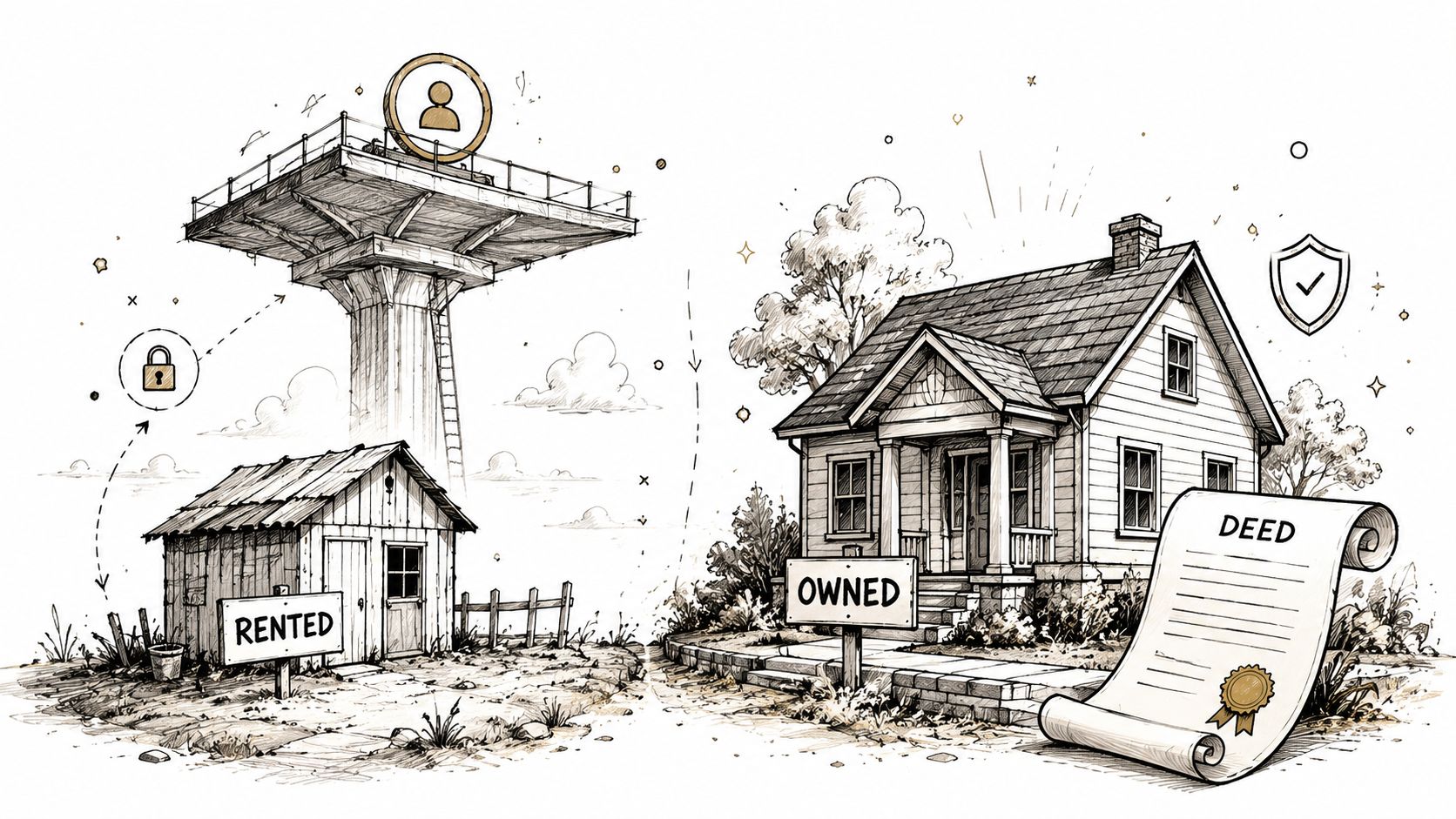
Social media is rented land. Email is an owned asset.
If you build your brand mostly on Instagram, LinkedIn, TikTok, X, or Facebook, you're building on property you don't control. The platform controls distribution, rules, visibility, and access to your audience. If you build an email list, you own a direct relationship with people who asked to hear from you. That's a business asset. One compounds. The other can disappear behind an algorithm update.
That doesn't mean social media is useless. It means you should stop treating it like the final destination. For founders and professionals, social should attract attention. Email should hold attention. Social starts relationships. Email deepens them and converts them.
The usual email vs social media marketing debate sounds smart, but it leads founders into bad strategy.
You don't need to choose a winner in some abstract channel war. You need to decide where discovery happens, where trust gets built, and where conversion becomes predictable. Those are different jobs. It's common practice to shove them into one platform and then wonder why marketing feels unstable.
Social media gives you reach, speed, and public visibility. That's useful. It helps people discover your thinking, your offer, and your personality.
Email does something social rarely does well. It creates a private, direct line between you and the people who opted in to hear from you. That changes the quality of attention you get. It also changes the economics.
A founder who relies only on social is usually chasing visibility. A founder who builds an email list is building infrastructure.
Social media can make you look influential. Email shows you whether you actually are.
That distinction matters more than followers, impressions, or comments. Plenty of founders have a busy feed and a weak pipeline. Their audience engages in public but doesn't buy, book, reply, or refer. Public attention is not the same as owned attention.
If you're serious about your personal brand, stop asking which platform is “best” and start asking a harder question.
What do I still control if a platform cuts my reach tomorrow?
If the answer is “not much,” your brand isn't durable. It's exposed.
Here's the cleaner framework:
Most founders don't have a content problem. They have an asset problem. They've spent years renting access when they should've been building equity.
The risk in social-first marketing isn't theoretical. It's operational.
If your audience lives only on platforms, your access to them is conditional. A platform can change ranking logic, tighten distribution, suspend an account, or shift user behavior. You don't get a vote. You just feel the drop.
The sharpest proof is visibility. Only 6% of Facebook users see a timeline post, while 25% open emails, according to LinkedIn's analysis of email marketing and social dependence. That gap creates a hidden business risk. You can spend years building followers and still reach only a sliver of them when it matters.
For an established company, that volatility is annoying. For an emerging founder, it can wreck momentum. You don't have endless budget to buy back reach every time a platform tightens organic distribution.
Owned assets work differently. An email list doesn't make you immune to bad offers or weak messaging, but it does give you direct access to people who invited you in. That's a key advantage. It also gives you portability. You can change website platforms, offers, design systems, and even business models without losing the list you built.
Founders often treat their list like a side project. That's backward. Your list should sit near the center of your business because it stores demand, trust, and future opportunity in one place.
An owned audience gives you practical advantages:
Practical rule: Build your audience in public, but store your relationships in email.
If you're behind on list building, fix that before you obsess over your next platform strategy. A strong starting point is this guide to email list building strategies for founders and professionals. The platform may introduce you. Your list keeps the relationship alive.
Founders waste time on the wrong comparison. They ask which channel is better, then argue from screenshots, follower counts, or whatever platform they posted on this morning.
The better question is simpler. Which channel helps you get discovered, build trust, and convert attention into revenue without handing your business over to a platform you do not control?
That is the lens that matters for a personal brand. Social is rented land. Email is an owned asset. So judge each channel by the job it does.
| Metric | Email Marketing | Social Media Marketing |
|---|---|---|
| ROI | $36 for every $1 spent, according to EmailTooltester's comparison of email and social media ROI | Lower direct ROI in the same comparison, around $1.80 for every $1 spent |
| Reach and active usage | Broad, habitual use across professional and consumer audiences | Massive top-of-funnel reach, especially for discovery and sharing |
| Attention quality | Higher intent. People open, click, reply, and buy in a private environment | Lower intent. People scroll, sample, and move on fast |
| Visibility | Smaller list, but more dependable delivery if your list hygiene and sender reputation are in order | Bigger potential reach, but platform algorithms control distribution |
| Conversion potential | Strong for booked calls, launches, webinars, and nurture sequences | Stronger earlier in the journey, especially for awareness and audience growth |
| Control | You own the list, segment it, and can move platforms without losing the audience | The platform owns the audience relationship and can reduce reach overnight |
The ROI gap matters because it exposes channel intent. Email tends to convert better because it reaches people who already gave you permission to show up in a more focused space. Social reaches more people, but most of them are not ready to buy when they see you.
I want founders to stop treating these channels as substitutes. They are not. Social gets attention. Email compounds it.
That distinction becomes sharper when you look at behavior beyond ROI. Campaign Monitor's email benchmarks show that email performance can be measured through opens, clicks, and downstream actions with much more precision than public social engagement. HubSpot's State of Marketing reporting also keeps landing on the same practical truth. Social is a strong awareness and distribution channel, while email remains one of the more reliable channels for nurturing and conversion.
If you sell expertise, advisory services, coaching, consulting, or high-trust offers, that should settle the debate. Use social to earn attention. Use email to close distance.
A founder does not need twenty dashboards. You need a few metrics tied to business outcomes.
For social, track reach, profile visits, saves, shares, inbound DMs, and qualified traffic. If your content gets engagement but no movement toward conversations or site visits, the platform is giving you vanity, not momentum. This guide on how to measure social media ROI for your personal brand will help you separate the two.
For email, track subscriber growth, click rate, reply rate, booked calls, sales, and list segments that keep producing opportunities over time. If you want that channel to scale without turning into manual chaos, study strong email marketing automation strategies and build systems that follow up for you.
Public engagement is noisy. Private response is where demand shows up.
Put social in charge of discovery. Put email in charge of relationship depth, conversion, and retention.
If you reverse that, you create friction on both sides. You ask social to do a sales page's job. You ask email to find strangers who have never heard of you. Founders who build influence for the long term do something smarter. They publish on rented land, then move serious attention onto owned assets as fast as possible.
Founders waste time here because they treat audience growth like one job. It is two jobs with two different outcomes.
Social helps strangers notice you. Email helps serious people stay with you. If you build both channels the same way, you get inflated follower counts on one side and a dead list on the other.
Social is rented land. Act like it.
Your goal is not to collect passive followers. Your goal is to publish ideas that spread, earn attention from the right people, and give them a reason to leave the platform. That means short opinion posts on LinkedIn, native video for Reels or Shorts, sharp clips from interviews, direct responses to client objections, and clear takes on bad industry advice. Safe content gets skimmed. Strong positioning gets remembered.
If you sell to younger buyers, social often creates the first buying impulse. If you sell consulting, services, high-trust B2B offers, or anything tied to expertise, social still matters, but mainly as the top of the funnel. Use it to start the relationship, not to carry the whole sale.
A social profile that grows the right audience usually does four things:
If you want a practical system for turning one idea into multiple social posts without diluting your message, study this guide on how to repurpose content and multiply your reach.
Email is an owned asset. Treat it like one.
People do not hand over their inbox because you posted "subscribe for updates." They subscribe because they expect a clear return. Give them something specific and immediately useful. A checklist. A template. A private memo. A short training. A teardown. The offer should solve one problem fast and prove your thinking is worth more attention.
Then earn the subscription.
Your welcome sequence should do three things well. Set expectations, establish authority, and move the subscriber toward a simple next action. That action might be reading your best article, replying to a question, booking a call, or consuming a short case study. Systems are paramount here. Strong email marketing automation strategies let you follow up consistently without turning your list into a manual chore.
One rule I give every founder: never ask people to join your newsletter. Ask them to get a specific outcome.
That shift changes everything. A vague newsletter attracts weak intent. A focused email promise attracts people who are more likely to read, reply, buy, and stay.
Most founders don't need more ideas. They need a system that prevents waste.
The best one I know is the pillar and spoke model. You create one substantial piece of thinking, then repurpose it across channels without turning your message into mush.

Your pillar can be a long-form blog post, a podcast episode, a recorded client lesson, a webinar, or a YouTube video. It should contain one clear argument, a few supporting points, and at least one example or story.
For this topic, your pillar might be a video explaining why founders shouldn't build only on rented platforms. From that one asset, you can extract a week or two of useful content.
A simple workflow looks like this:
The process works because each format does a different job. Social snippets spark interest. Email deepens the message. Your site or landing page captures intent.
A quick visual explanation helps if your team needs to implement this consistently.
When founders get lazy, they copy the same wording across every platform, then wonder why engagement fades.
Adapt the angle instead. A LinkedIn post can present a sharp business claim. An email can tell the story behind that claim. A short video can show the emotion or urgency. Same core idea. Different entry point.
If you want a tighter system for this, review this guide on how to repurpose content and multiply your reach. It helps turn one thoughtful idea into a full publishing cadence without burning out your team.
Neither channel is free. One just hides the cost better.
Social media looks cheap because the account itself doesn't cost much to open. But the primary expense shows up in hours. Content creation, editing, design, trend-chasing, replies, community management, and the pressure to keep posting all eat time. If organic reach weakens, many founders start buying ads just to recover attention they thought they'd already earned.
A social-first strategy asks for constant production. Not occasional effort. Constant production.
You need ideas that fit each platform, visuals people will stop for, and enough consistency to stay visible. If you're a founder doing that yourself, you're spending executive time on distribution mechanics. If you hire help, you're paying for strategy, editing, copy, design, and channel management.
Social is worth the investment when you need market visibility. It becomes expensive when you expect it to handle nurturing and conversion by itself.
Email has software costs and setup work. You need an email service provider, clean forms, a welcome sequence, and someone who can write well. But after that, email usually becomes more efficient because automation handles repetitive work.
A strong sequence can welcome new subscribers, educate them, point them to core offers, and revive dormant interest without demanding daily manual effort. That's a better use of founder time.
A practical budget mindset looks like this:
The key budget question isn't “Which channel is cheaper?” It's “Which channel generates enduring benefit from the effort I invest?”
Founders waste time on the wrong fight.
Email vs social is not a real strategy question. The useful question is how you turn attention from rented land into an owned asset you can reach without asking an algorithm for permission. Social gets you discovered. Email gives you continuity, trust, and conversion.
That is the system.

Here is the version I recommend:
The handoff between social and email is where founders lose momentum. They post strong content, then ask people to "follow everywhere" or click a row of social icons with no clear payoff. That is lazy positioning. Give each channel a job, then explain the benefit of joining it.
Tell people what they will get on each channel. “See behind-the-scenes product decisions on LinkedIn” converts better than a generic follow request.
A launch makes this easy to see.
Start on social with the problem, your point of view, and a few proof points that show you understand the stakes. Send interested people to a waitlist, lead magnet, or newsletter tied to that problem. Then use email to make the full case. Share the deeper story, address objections, present the offer, and follow up until the right people decide.
Social starts the relationship. Email develops it.
That is the model I recommend every time because it builds more than engagement. It builds distribution you control, a list you can use next quarter, and authority that does not disappear when a platform changes the rules.
If you're building a personal brand and you're tired of inconsistent posting, shallow engagement, and marketing that never turns into business, Legacy Builder can help you turn your ideas into a real content engine. They specialize in helping founders and professionals turn their expertise into strategic content, audience growth, and long-term brand authority without sounding generic or outsourced.


You could – but most in-house teams struggle with the nuance of growing on specific platforms.
We partner with in-house teams all the time to help them grow on X, LI, and Email.
Consider us the special forces unit you call in to get the job done without anyone knowing (for a fraction of what you would pay).
Short answer – yes.
Long answer – yes because of our process.
We start with an in-depth interview that gives us the opportunity to learn more about you, your stories, and your vision.
We take that and craft your content then we ship it to you. You are then able to give us the final sign-off (and any adjustments to nail it 100%) before we schedule for posting.
No problem.
We have helped clients for years or for just a season.
All the content we create is yours and yours alone.
If you want to take it over or work on transitioning we will help ensure you are set up for success.
We want this to be a living breathing brand. We will give you best practices for posting and make sure you are set up to win – so post away.
Subscribe to our newsletter and get insights on how to grow your personal brand.
