10 Proven Email List Building Strategies for 2026

Written by

10 Proven Email List Building Strategies for 2026

In an era of fleeting social media trends and algorithm shifts, your email list remains your most valuable asset. It's the one channel you truly own, a direct line to your most engaged followers, clients, and partners. For professionals and entrepreneurs focused on building a durable personal brand, a robust email list isn't just a marketing tool; it's the foundation of a lasting business.

Growing that list, however, requires more than just a 'subscribe' button on your website. It demands a thoughtful, multi-faceted approach that integrates directly with your content and audience interactions. To truly grasp the foundational importance of this direct connection, you can dive deeper into a modern guide on effective email list building: Building email list: A Modern Guide to Growth. This process is about building relationships at scale, not just collecting contacts.

This guide will unpack 10 powerful email list building strategies, providing you with actionable blueprints, real-world examples, and the specific tactics needed to transform casual observers into a thriving community. You will learn how to implement:

  • Lead magnets and content upgrades that offer immediate value.
  • Strategic partnerships that introduce your brand to new, relevant audiences.
  • Content funnels that guide readers from discovery to subscription.
  • Interactive tools and assessments that capture qualified leads.

Whether you're starting from scratch or looking to accelerate your growth, these proven methods will help you build an audience that is not only large but deeply connected to your message and mission. Let's explore the strategies that will define audience growth for years to come.

1. Lead Magnets & Content Upgrades

One of the most foundational and effective email list building strategies involves a direct value exchange: you offer a potent, high-value resource in return for an email address. This resource, known as a lead magnet, acts as a powerful incentive, converting passive visitors into active subscribers. These aren't just any freebies; they are specific solutions designed to solve a pressing problem for your target audience.

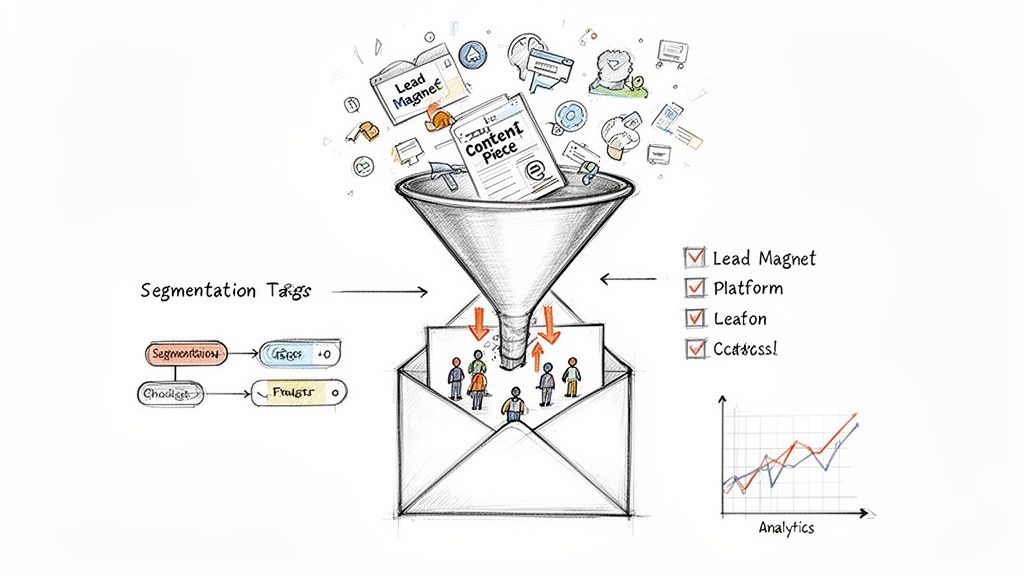
A sketch shows a PDF document in a folder with a 'Free' tag, pointing to an email.

A hyper-focused variation is the content upgrade. Instead of a site-wide offer, a content upgrade is a bonus resource directly related to a specific piece of content, like a blog post or video. If you write an article about "10 Time-Saving Productivity Hacks," a content upgrade could be a printable daily planner template or a checklist version of the hacks. Because the reader is already engaged with the topic, the offer is exceptionally relevant and converts at a high rate.

How to Implement This Strategy

  • Identify a Core Problem: Pinpoint a specific, recurring challenge your audience faces that you can solve with a downloadable resource. This could be a technical checklist for a software setup, a template for a client proposal, or a guide to navigating a complex process.
  • Create Your Resource: Design a professional, visually appealing PDF, spreadsheet, or video. Brands like HubSpot do this well with their extensive library of marketing templates and guides. The goal is to provide immediate, tangible value that reinforces your expertise.
  • Optimize for Conversion: To maximize the effectiveness of your lead magnets, ensure you're using optimized forms. For a deep dive on this, check out this playbook on high-converting lead capture forms to make the sign-up process frictionless.
  • Segment Upon Delivery: When a user signs up, deliver the lead magnet instantly. Use this opportunity to tag them based on the resource they downloaded. This initial action is a perfect starting point to learn more about segmenting your audience for more personalized communication down the line.

2. Webinar Funnel Strategy

Another powerful method for growing your email list is hosting educational webinars. This strategy positions you as a thought leader by offering deep-dive training on a specific topic. In exchange for your expertise, attendees provide their email addresses, creating a direct line for communication and a list of highly interested prospects.
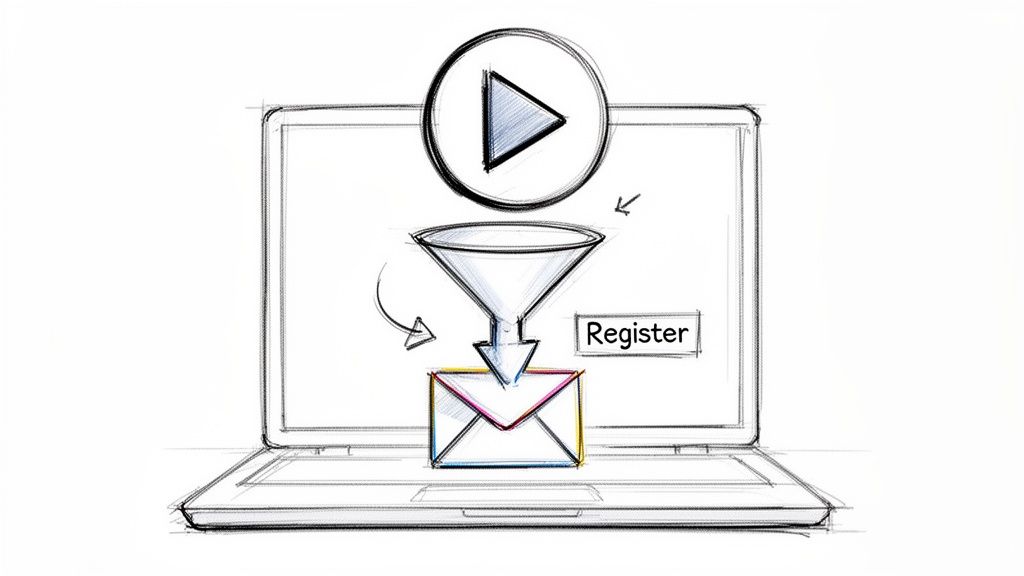
Sketch of a laptop illustrating a video leading through a funnel to email registration and list building.

A webinar funnel goes beyond a simple sign-up; it's an event-driven system. It builds anticipation before the event, delivers significant value during the live session, and follows up afterward to nurture the relationship. This approach is particularly effective for B2B professionals and coaches who need to establish credibility and trust before making a sales offer. Amy Porterfield, for instance, has famously used her signature webinar formula to launch digital courses, building a massive and engaged email list in the process.

How to Implement This Strategy

  • Choose a Compelling Topic: Select a specific problem your audience desperately wants to solve. The topic should be narrow enough to cover in-depth within 60-90 minutes but valuable enough to warrant an email registration. Your goal is to deliver an exceptional, self-contained solution.
  • Build Anticipation: Create a pre-webinar email sequence to remind registrants about the event and build excitement. Share sneak peeks of the content, introduce yourself, and explain the key takeaways they will gain. This simple step can dramatically increase your live attendance rate.
  • Deliver Exceptional Value: During the webinar, focus on over-delivering on the promise you made. Use professional slides and a clear presentation style to reinforce your brand and expertise. The core of this email list building strategy is providing so much value for free that attendees are eager to hear what's next.
  • Follow Up Strategically: After the webinar, send follow-up emails to both attendees and those who registered but didn't show up. Share the recording with everyone and include a clear call-to-action that guides them to your product or service. This nurtures the new leads and can convert attendees into customers.

3. Strategic Partnership & Cross-Promotion

One of the most powerful email list building strategies involves tapping into existing, engaged communities. Instead of building an audience from scratch, you collaborate with complementary creators or brands to introduce your work to a new, relevant group of people. This approach relies on trust and shared value, creating a win-win scenario for you, your partner, and both audiences.

This can take many forms, from co-hosting a webinar to a simple email list swap. For example, Russell Brunson and Tony Robbins have collaborated on major webinars, combining their massive audiences for a single event. On a smaller scale, podcast hosts like Pat Flynn of Smart Passive Income frequently interview guests who offer a valuable free resource to listeners, directing traffic and new subscribers back to the guest's email list. The key is that the collaboration provides genuine value and feels authentic to your personal brand.

How to Implement This Strategy

  • Identify Aligned Partners: Look for professionals whose audience overlaps with your ideal customer but who are not direct competitors. If you teach graphic design, a good partner might be a copywriter or a web developer.
  • Propose a Clear Win-Win: Approach potential partners with a specific, mutually beneficial idea. This could be a joint webinar where you both capture leads, a content swap where you each write a guest post, or a co-created lead magnet you promote together.
  • Create Premium, Collaborative Content: The offer must be compelling enough to warrant the cross-promotion. A joint workshop, an exclusive interview series, or a comprehensive guide co-authored by both experts provides immense value and a strong incentive to subscribe.
  • Track and Reciprocate: Monitor the performance of your collaboration to see what works. Most importantly, build a long-term relationship. Reciprocate generously and maintain open communication to foster goodwill for future partnerships. This turns a one-off promotion into a sustainable growth channel.

4. Content Marketing with Email Opt-Ins

Sustainable list growth is built on a foundation of value, and content marketing is the engine that creates and distributes that value. This strategy involves producing high-quality, SEO-optimized content like blog posts, videos, or podcasts that attract an organic audience. Instead of a direct "ask," you embed email signup opportunities naturally within this valuable content, converting engaged consumers into loyal subscribers.

This method focuses on inbound attraction rather than outbound interruption. When someone finds your 2,000-word guide on a specific problem they're facing, you’ve already established authority and trust. A contextual call-to-action, such as an invitation to receive more insights on that topic, feels like a natural next step. Industry leaders like Neil Patel and platforms like HubSpot have built empires using this exact approach, demonstrating its power for long-term audience building.

How to Implement This Strategy

  • Create Pillar Content: Identify core problems your audience researches and develop comprehensive "pillar" posts or videos that cover these subjects in great detail. These become your central assets for attracting search traffic.
  • Optimize for Search Intent: Write headlines and content that directly answer the questions your audience is typing into search engines. This is a crucial step for ensuring your value finds the right people.
  • Embed Contextual Opt-Ins: Instead of one generic signup form, place multiple relevant offers throughout your content. For a post about productivity, offer a "Productivity Cheatsheet." For a video on financial planning, invite viewers to a "5-Day Savings Challenge."
  • Build a Content Ecosystem: Use internal linking to guide readers from one piece of content to another, keeping them engaged and increasing the chances of a subscription. Once they subscribe, ensure your follow-up communication is just as valuable by learning how to write email newsletters that people actually read and appreciate.

5. Email Sequence Referral Programs

One of the most powerful email list building strategies turns your existing subscribers into a dedicated growth engine. This method involves creating automated email sequences that encourage subscribers to refer friends in exchange for compelling rewards. It transforms passive readers into active brand advocates, sparking organic, word-of-mouth growth directly within your email ecosystem.

The core principle is automated advocacy. Instead of just hoping for referrals, you build a structured email referral program that systemizes the process. Famously, Dropbox used this model to grow its user base by millions in just over a year. The strategy works because a recommendation from a trusted friend is far more persuasive than any advertisement. By rewarding both the referrer and the new subscriber, you create a win-win-win scenario.

How to Implement This Strategy

  • Offer Compelling Incentives: The reward must be valuable enough to motivate action. This could range from exclusive content and early access to discounts, free months of a service, or even tiered rewards that get better with more referrals. Substack and ConvertKit both do this well by offering benefits to creators who bring in new subscribers.
  • Make Sharing Effortless: The referral process must be frictionless. Provide a unique referral link directly in your emails and include pre-written, one-click sharing options for social media or direct email. The easier it is to share, the more likely your subscribers will do it.
  • Time Your Ask Strategically: Don't ask for a referral immediately. Trigger your referral request email after a subscriber has experienced a clear moment of value, such as after they've completed an onboarding sequence, downloaded a popular resource, or left positive feedback. Personalize the request based on their activity for a greater impact.
  • Automate and Track Everything: Use your email service provider to build an automated sequence for the referral program. Track who refers whom and ensure rewards are delivered instantly upon a successful sign-up. A clear, automated system builds trust and keeps your advocates engaged, making this a reliable channel for list growth.

6. Podcast & Audio Content Strategy

Audio content, particularly podcasting, offers a uniquely intimate way to build an audience and convert listeners into loyal subscribers. This approach centers on creating valuable audio episodes that establish deep connections, then strategically guiding those listeners to your email list through show notes, verbal calls-to-action, and exclusive content. It's one of the most powerful email list building strategies for fostering trust at scale.

Unlike written content, the human voice creates a personal bond, making listeners feel like they know you. Shows like Amy Porterfield's Online Marketing Made Easy and Pat Flynn's Smart Passive Income Podcast have perfected this model. They deliver immense value in each episode and consistently mention specific, relevant resources that require an email address to access. This turns passive listening into active engagement.

How to Implement This Strategy

  • Define Your Niche and Angle: Choose a specific topic where you have deep expertise. Your podcast shouldn't be for everyone; it should be for a dedicated audience. A focused niche makes your content more valuable and your calls-to-action more effective.
  • Create Value-Packed Episodes: Each episode should solve a problem, offer a new perspective, or tell a compelling story. Your goal is for listeners to finish an episode feeling smarter and more capable, reinforcing your authority on the subject.
  • Embed Clear Calls-to-Action: Mention your email list and lead magnets verbally during the intro, outro, and even mid-episode. Say the URL clearly and make it easy to remember. For example, "For a complete checklist on this topic, go to mywebsite.com/checklist."
  • Optimize Your Show Notes: Your episode description and show notes are prime real estate. Fill them with detailed summaries, key takeaways, and direct links to your signup forms and lead magnets. Platforms like Transistor.fm make it simple to publish rich, optimized show notes that drive traffic and conversions.
  • Offer Listener-Only Bonuses: Create content exclusively for your podcast audience, such as downloadable worksheets, full episode transcripts, or bonus Q&A sessions. This rewards their loyalty and gives them a compelling reason to subscribe.

7. Community Building & Membership Exclusivity

One of the most powerful email list building strategies moves beyond simple transactions to foster a sense of belonging. This approach involves creating an exclusive community-a private space on platforms like Slack, Discord, or dedicated software-where access is granted in exchange for an email address. This method builds a list of highly qualified, engaged individuals who are invested in your brand's mission from the start.
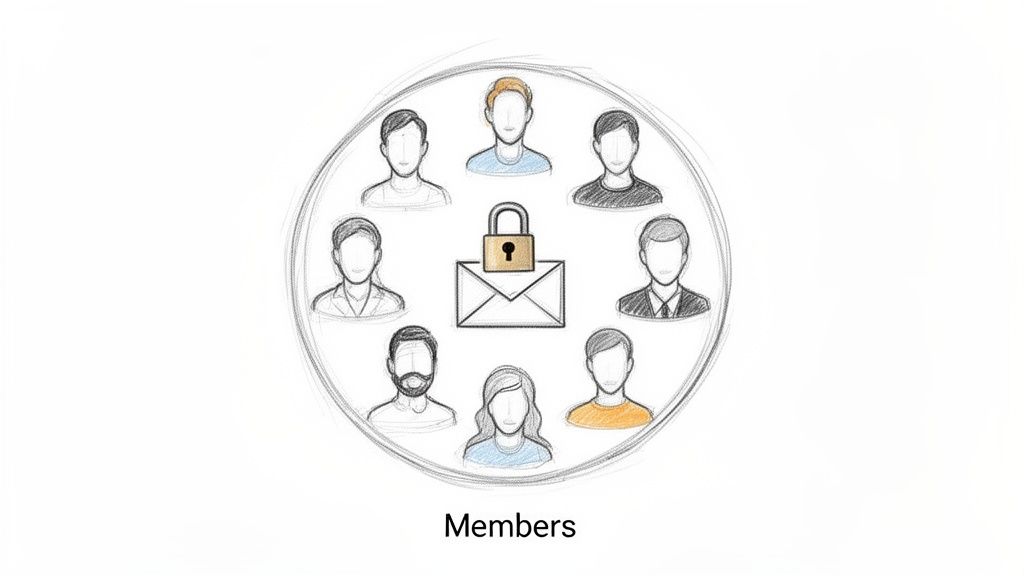
Pencil sketch of diverse members surrounding a locked email, representing secure communication or private group access.

This strategy works because it taps into the basic human need for connection and exclusivity. By making email the key to the door, you're not just getting a subscriber; you're welcoming a committed member. These communities, exemplified by Pat Flynn's SPI Community or groups built on platforms like Mighty Networks, provide value through networking, direct support, and exclusive content, making the email signup feel like a worthwhile investment in personal or professional growth.

How to Implement This Strategy

  • Define Your Community's Mission: Start with a clear purpose that aligns with your brand. Is it a support group for users of your software? A networking hub for professionals in your niche? A space for fans to connect over shared interests? Clarity here is critical.
  • Choose the Right Platform: Select a home for your community. Facebook Groups are accessible, Slack and Discord are excellent for real-time chat, and dedicated platforms like Mighty Networks or Circle offer more robust features for courses and events.
  • Establish Clear Guidelines: Create and enforce a code of conduct to cultivate a positive and safe culture. This prevents spam and ensures conversations remain productive, protecting the value of the space for all members.
  • Drive Engagement Actively: A community's value dies without activity. Host regular live events, Q&A sessions, or expert interviews. Feature member success stories and facilitate peer-to-peer connections to make the group an indispensable resource for its members.

8. LinkedIn & Social Media Lead Generation

Your social media channels are more than just broadcast platforms; they are powerful engines for community building and lead generation. This strategy moves beyond simply posting content and focuses on turning engaged followers on platforms like LinkedIn, Instagram, or Twitter into dedicated email subscribers. The goal is to use these channels as the top of your funnel, warming up an audience with valuable insights before guiding them to a more direct relationship via email.

This method works because you meet your audience where they already spend their time. By providing platform-native value, you build the trust and authority necessary for someone to take the next step. Personalities like Gary Vaynerchuk and Russell Brunson have perfected this, distributing a high volume of valuable content across platforms to attract followers and then using clear calls-to-action to funnel their most engaged audience members onto their email lists. For B2B companies, LinkedIn offers a particularly direct path with its native lead generation forms, making the signup process almost frictionless.

How to Implement This Strategy

  • Focus and Be Platform-Specific: Don't try to be everywhere at once. Choose one or two platforms where your target audience is most active and develop a content strategy specific to each one. What works on LinkedIn (professional insights, case studies) is different from what works on Instagram (visual storytelling, Reels).
  • Provide Value Before Asking: Your primary focus should be on posting insightful, helpful, and authentic content that solves problems or shares your journey. Give first, and build a reputation for generosity. This makes your eventual ask for an email signup feel like a natural next step, not a sales pitch.
  • Create Clear Pathways: Optimize your social media profiles. Your bio is prime real estate. Include a clear, compelling call-to-action that directs people to your email signup or a specific lead magnet. Make it obvious what a visitor should do next if they want more from you.
  • Engage Genuinely and Strategically: This is a key part of many email list building strategies, but it's essential on social media. Spend time engaging with others' content, building relationships, and participating in conversations. For a deeper look at building your presence effectively, especially on professional networks, explore this practical growth guide for gaining followers on LinkedIn.

9. Interactive Content & Assessments

Moving beyond passive consumption, this email list building strategy transforms your audience from viewers into active participants. Interactive content like quizzes, calculators, and assessments captures an email address by offering personalized insights and immediate value. Instead of just reading, users engage directly with your brand to discover something about themselves or a solution to their problem.
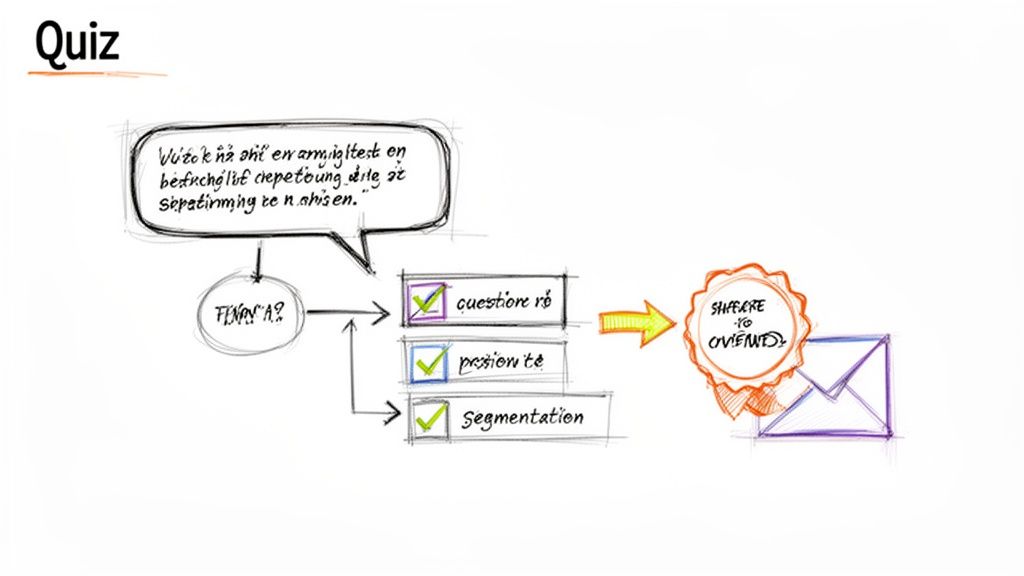
A hand-drawn diagram illustrating a quiz process leading to audience segmentation and email sharing.

These tools consistently outperform static content in conversions because they create a curiosity loop. Think of BuzzFeed's viral personality quizzes or professional tools like HubSpot's marketing grader. The user gets a custom-tailored result, and you get a new subscriber who has already revealed their specific needs, interests, or pain points. This creates a perfect opportunity for targeted follow-up communication.

How to Implement This Strategy

  • Design a Purpose-Driven Quiz: Build an assessment directly related to your core service or product. A financial advisor could create a "What's Your Retirement Readiness Score?" quiz, while a personal stylist might design a "Discover Your Signature Style" assessment.
  • Offer Genuine Value: The results are the payoff. Ensure they provide genuinely useful recommendations, insights, or a clear next step. Vague or generic results will break trust and lead to quick unsubscribes.
  • Make Sharing Effortless: Integrate social sharing buttons on the results page. Quizzes that reveal something positive or interesting about a person have a high likelihood of being shared, creating a viral loop for lead generation. Platforms like Outgrow or Typeform are designed to build and manage this type of interactive content.
  • Segment Based on Results: This is the most potent aspect of the strategy. Tag subscribers based on their answers or final result. If someone scores "Beginner" on your SEO quiz, you can add them to an email sequence that delivers foundational SEO tips, positioning your advanced course as the next logical step.

10. Paid Advertising & Conversion Optimization Funnels

While organic growth is crucial, paid advertising provides a direct, scalable, and predictable method for building your email list. This strategy involves using platforms like Google Ads, Facebook/Instagram Ads, or LinkedIn Ads to send targeted traffic to a dedicated landing page. The entire process, from ad click to email signup, is a conversion-optimized funnel designed for one specific outcome: acquiring a new subscriber.

This approach transforms list building from a passive activity into an active system with measurable ROI. By investing in paid reach, you bypass the slow burn of organic discovery and put your offer directly in front of a highly relevant audience. Brands like ClickFunnels and Digital Marketer have built empires on this model, demonstrating that with the right funnel, you can systematically acquire subscribers and customers at a profitable rate.

How to Implement This Strategy

  • Match Ad to Landing Page: The most critical element is message consistency. Your ad's headline, copy, and visuals must align perfectly with what the visitor sees on the landing page. Any disconnect creates friction and causes visitors to bounce.
  • Build a Single-Goal Landing Page: Your landing page should have one job: get the email signup. Remove all navigation, sidebars, and external links. The only clickable element should be the call-to-action (CTA) button for your form.
  • Systematically A/B Test: Don’t guess what works. Continuously test one variable at a time, such as your headline, CTA button color, primary image, or the offer itself. Small tweaks can lead to significant increases in conversion rates over time.
  • Implement Pixel Tracking: Install tracking pixels (like the Meta Pixel or Google Ads tag) on your landing page and thank-you page. This allows you to track conversions accurately, build retargeting audiences of non-converters, and optimize your ad spend based on performance data. This is one of the most vital email list building strategies for predictable growth.

Top 10 Email List‑Building Strategies Comparison

Strategy🔄 Implementation Complexity⚡ Resource Requirements📊 Expected Outcomes💡 Ideal Use Cases⭐ Key Advantages
Lead Magnets & Content UpgradesLow–Medium: create gated assets and landing pagesModerate: content creation, design, email platformHigh: strong conversion rates and qualified leadsProfessionals, personal brands, niche educatorsHigh conversion; reusable across channels
Webinar Funnel StrategyHigh: event planning, promotion, live deliveryHigh: time, presentation assets, webinar techHigh-quality leads and authority; variable attendanceB2B, coaches, consultants, product launchesDeep engagement; excellent for conversions
Strategic Partnership & Cross-PromotionMedium: coordination and agreement managementLow–Medium: outreach, co-created assetsRapid reach expansion; dependent on partner qualityGrowth via complementary audiences, launchesLow acquisition cost; credibility via association
Content Marketing with Email Opt-InsMedium–High: consistent SEO and content planningModerate–High: writing, SEO, distributionLong-term sustainable organic growth (slow start)Thought leaders, long-term brand builders, inbound focusEvergreen traffic; strong authority building
Email Sequence Referral ProgramsMedium: setup of tracking and automated flowsModerate: incentives, referral tech, monitoringViral growth potential; requires initial baseSaaS, digital products, satisfied customer basesLow CAC potential; high-quality referred subscribers
Podcast & Audio Content StrategyMedium–High: content planning, recording, editingModerate–High: equipment, production time, distributionDeep audience loyalty over time; repurposing valueThought leaders, founders, intimacy-driven brandsStrong listener engagement; repurposeable media
Community Building & Membership ExclusivityHigh: moderation, value delivery, retention systemsHigh: community managers, content, platform costsVery high engagement and retention; revenue potentialMemberships, premium coaching, long-term supportHighest loyalty and feedback; monetizable community
LinkedIn & Social Media Lead GenerationLow–Medium: platform strategy and consistencyLow–Moderate: content creation, possible ad spendVariable; fast awareness, inconsistent conversionB2B, entrepreneurs, visible personal brandsReach where audience already is; native lead tools
Interactive Content & AssessmentsHigh: design, development, personalization logicHigh: dev/design, analytics, maintenanceVery high conversion and segmentation; viral potentialSaaS, coaches, conversion-focused campaignsPersonalized follow-up; strong shareability
Paid Advertising & Conversion Optimization FunnelsMedium–High: targeting + CRO expertiseHigh: ad spend, landing pages, analyticsFast, scalable list growth with measurable ROIScaling acquisition, launches, tested offersPredictable, controllable growth; rapid results

From Strategy to Legacy: Building Your Email Ecosystem

We've explored a wide array of powerful email list building strategies, from foundational lead magnets to advanced webinar funnels. Each tactic, whether it's an interactive quiz, a strategic partnership, or a well-placed opt-in on your blog, represents a potential gateway for a new relationship. But the true art of list building isn't about collecting contacts; it's about building an interconnected ecosystem where your brand, your audience, and your message can flourish.

Thinking of these strategies as isolated tools misses the point. The goal is to create a compounding effect. Your high-value content marketing efforts feed directly into your lead magnet downloads. Those new subscribers are then nurtured through an automated sequence that might invite them to an exclusive webinar, which in turn fuels more sign-ups. Your podcast becomes a discovery engine, your LinkedIn profile a direct line to industry peers, and your referral program a self-perpetuating growth machine. This is how you move from simply gathering emails to constructing a durable asset for your personal brand or business.

Your Actionable Path Forward

The sheer volume of options can feel paralyzing. To avoid this, focus on a phased approach. Don't try to implement all ten strategies at once. Instead, create a realistic roadmap based on your current resources and audience.

  1. Build Your Foundation (Weeks 1-4):

    • Action: Choose ONE core lead magnet to create. Make it incredibly valuable, specific, and directly related to your audience's biggest pain point. A simple checklist, a detailed template, or a short video course works perfectly.
    • Action: Integrate opt-in forms for this lead magnet across your highest-traffic assets. This could be your website's homepage, popular blog posts, or your social media bios.
  2. Amplify and Engage (Weeks 5-12):

    • Action: Select ONE distribution channel to focus on. If you're a writer, double down on content marketing with clear calls to action. If you're a speaker, explore a podcast or webinar strategy. If you're a connector, prioritize LinkedIn lead generation and strategic partnerships.
    • Action: Set up a simple, automated welcome sequence. This small step makes a huge difference in subscriber retention and sets the tone for your relationship from day one.
  3. Scale and Optimize (Month 4 and Beyond):

    • Action: Once you have a steady flow of new subscribers, introduce a more advanced tactic. This is the time to experiment with a paid advertising funnel, an email-based referral program, or a more complex community-building initiative.
    • Action: Review your key performance indicators (KPIs) monthly. What’s your subscriber growth rate? Which lead magnet has the highest conversion rate? Use this data, not guesswork, to refine your approach.
  4. The most successful email list building strategies are not about finding a single "magic bullet." They are about patiently layering simple, effective systems on top of one another to create an engine of sustainable growth.

    Mastering these concepts is about more than growing a number on a dashboard. It’s about creating a direct, authentic line of communication with the people who matter most to your professional journey. It’s a platform for sharing your story, delivering immense value, and building a community around your expertise. Each new subscriber is an individual who has raised their hand and expressed interest in what you have to say. That is a powerful opportunity, and with the right systems, you can turn that opportunity into a lasting legacy.


    Transforming these strategies from a list in an article into a fully managed growth system is where many busy professionals need support. That’s why we created Legacy Builder. We take your unique expertise and handle the entire process for you, from content creation and distribution to implementing the very email list building strategies detailed here, so you can focus on what you do best. Learn how Legacy Builder can build your brand's ecosystem for you.

Logo

We’re ready to turn you into an authority today. Are you?

Became a Leader

Common Questions

Why shouldn’t I just hire an in-house team?

You could – but most in-house teams struggle with the nuance of growing on specific platforms.


We partner with in-house teams all the time to help them grow on X, LI, and Email.

Consider us the special forces unit you call in to get the job done without anyone knowing (for a fraction of what you would pay).

Can you really match my voice?

Short answer – yes.

Long answer – yes because of our process.

We start with an in-depth interview that gives us the opportunity to learn more about you, your stories, and your vision.

We take that and craft your content then we ship it to you. You are then able to give us the final sign-off (and any adjustments to nail it 100%) before we schedule for posting.

What if I eventually want to take it over?

No problem.

We have helped clients for years or for just a season.

All the content we create is yours and yours alone.

If you want to take it over or work on transitioning we will help ensure you are set up for success.


What if I want to post myself (on top of what Legacy Builder does)?

We want this to be a living breathing brand. We will give you best practices for posting and make sure you are set up to win – so post away.