.svg)
Subscribe to our newsletter and get insights on how to grow your personal brand.
Thank you! Your submission has been received!
Oops! Something went wrong while submitting the form.
.svg)


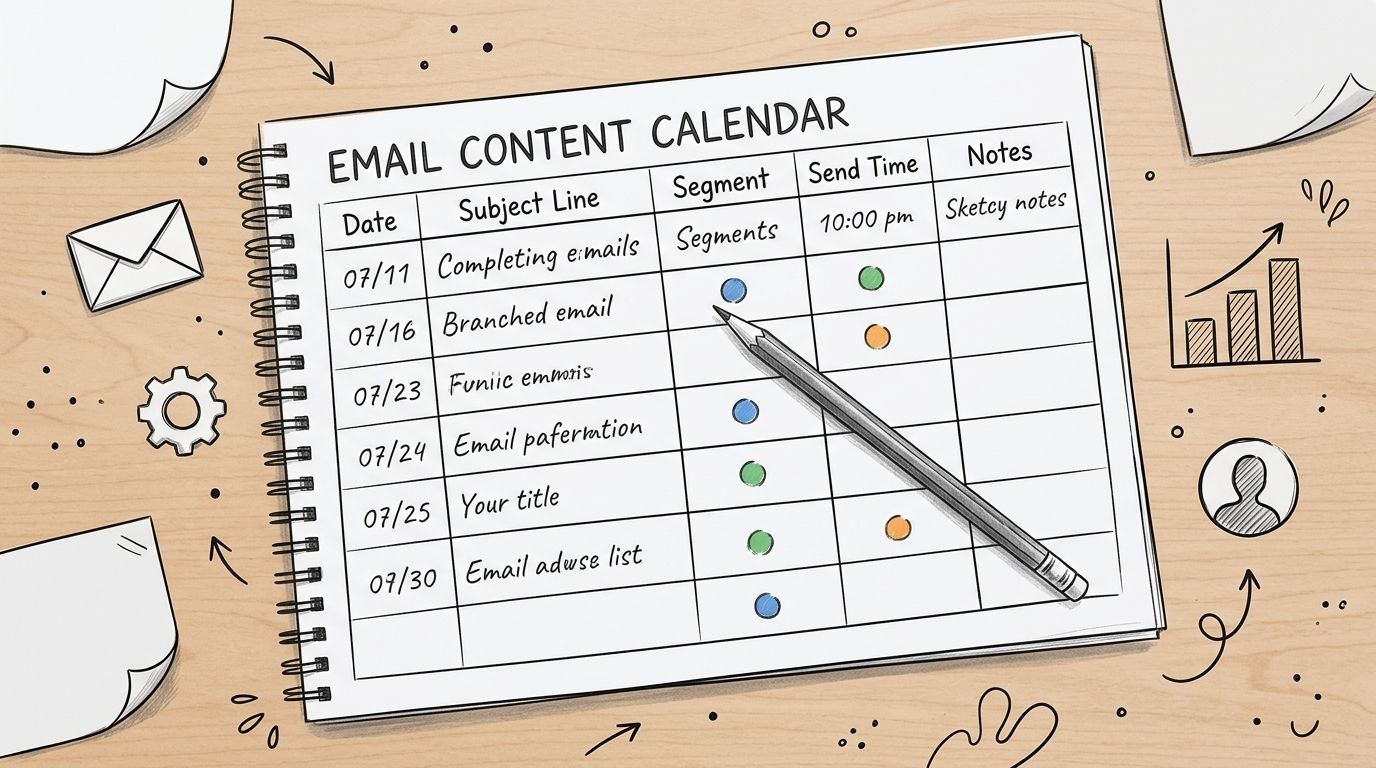
Somewhere in your drafts folder, there's probably an email you meant to send last week.
It has a decent opening, a half-finished subject line, and no clear send date. Then a client call runs long, a product issue pops up, or content suddenly feels harder than it should. Two weeks later, you either rush out something promotional or go quiet again.
That pattern is common among founders and operators who have real expertise but no system for turning it into consistent communication. Email becomes reactive. You send when you remember, when you have something to sell, or when guilt catches up with you.
The fix usually isn't “work harder on email.” It's building an email content calendar template that carries the strategic load for you. A good calendar doesn't just tell you what to send on Thursday. It helps you decide what your audience should hear from you over time, what story you're reinforcing, and how each message supports the reputation you want to build.
On Monday, a founder opens a draft, stares at the cursor, and closes the tab. On Thursday, the same founder sends a hurried promo because the week is gone and something has to go out. That cycle has less to do with writing skill than with the absence of a plan that connects each email to a bigger story.
I've seen this pattern across early-stage SaaS teams, consultants, and operators building a reputation alongside a business. They do have ideas. What they lack is a place to decide, in advance, which ideas deserve repetition, which stories build trust, and how those messages should unfold over time.
Without a calendar, every send asks you to solve the same strategic questions again.
What do I want to be known for? How personal should this be? Does this email teach, sell, or strengthen trust? Which part of my experience matters to the reader?
That constant restarting drains energy. It also strips your email program of continuity. Subscribers may get updates, but they do not get a clear sense of your judgment, your values, or the thread that ties your work together.
Email gives founders something rare. A direct line to people who chose to hear from you.
Used well, that line does more than announce launches or promote offers. It lets you shape a body of work in public. Readers start to recognize your standards, your perspective, and the lessons you return to because they matter. Miss too many sends, and that recognition never fully forms.
The cost is easy to miss. A sporadic email habit trains your audience to treat each message as isolated. They may read one issue and forget it by the next because nothing is building on what came before. You lose momentum, but you also lose narrative. For founders who want email to support personal brand, authority, and long-term legacy, narrative is the asset.
Your audience does not need more disconnected updates. They need repeated exposure to how you think.
A useful email content calendar template changes the job. Instead of filling a blank space every week, you map a sequence of messages that makes your expertise easier to remember. You decide which stories support your reputation, which lessons deserve a second angle, and where promotion fits without overwhelming the relationship.
A strong calendar connects daily execution to long-term identity. It turns lived experience into planned communication, so product updates, client lessons, contrarian takes, and personal turning points all support the same larger narrative.
That shift shows up in practical ways:
Founders who stay consistent with email usually are not working with more free time. They have a planning system that protects the story they want their market to remember.
A founder sits down to plan next quarter's emails and opens a tidy spreadsheet. Dates are mapped. Subject line ideas fill the rows. Nothing in the sheet explains what the market should remember about that founder six months from now.
That gap is the problem.
Plenty of calendar templates handle publishing mechanics well. Very few help founders turn a bigger vision into a repeatable body of email content that builds authority, trust, and long-term reputation.
An email content calendar template without narrative intent is just an organized backlog.
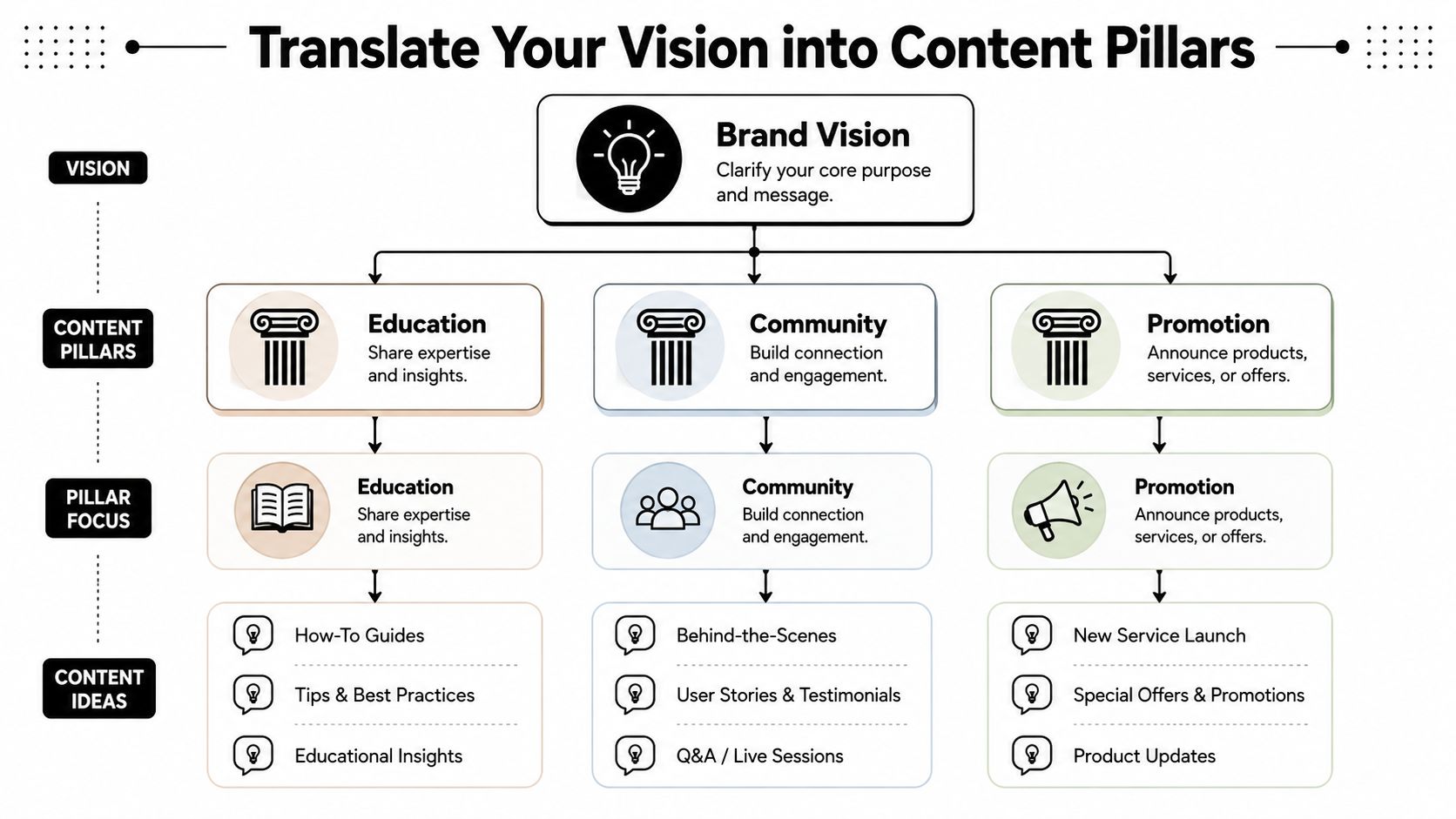
Strong email pillars begin with convictions, not categories.
A SaaS founder's audience will not remember every product note or weekly tip. They remember the standards behind the decisions. How you define good growth. What you refuse to compromise on. Which mistakes forced you to change. Those ideas give your emails a center of gravity.
Broad labels like “industry news” or “tips” do not do that work. They describe formats or subject areas. They do not express a viewpoint.
A useful pillar connects three parts:
| Element | What it answers | Example |
|---|---|---|
| Belief | What do you stand for? | Sustainable growth beats vanity metrics |
| Audience relevance | Why should people care? | Buyers need practical signals, not hype |
| Content expression | What can you send? | Breakdowns, stories, mistakes, frameworks |
That last column matters more than it looks. A pillar is only useful if it produces emails you can write without forcing the angle every week.
Three to five pillars is enough for most founders and operators. Fewer than that can make the newsletter feel repetitive. More than that usually turns the plan into a filing cabinet of half-used themes.
A practical set often includes:
The trade-off is clarity versus coverage. Founders often want a pillar for every topic they could discuss. That creates overlap and weakens recall. Sharper pillars make planning easier because each one carries a distinct promise.
“Education” is still too broad for a strong personal brand. “Lessons from rebuilding our onboarding after we lost customer trust” is sharper. “Thoughts on SaaS” is not a pillar. It is a placeholder.
Practical rule: If a pillar could describe any founder in your category, it is too generic.
If you need help shaping those themes into something usable, this guide on how to create a content calendar that actually works is a good companion to the process.
Most templates miss this part.
A founder's best emails do more than fill a weekly slot. They prepare the audience for a shift in the business and make that shift feel earned. If the next quarter includes a new offer, a repositioning move, a hiring push, or a stronger point of view, the calendar should map the narrative progression behind it.
That means planning story milestones alongside topics.
For example:
This is how founders turn email into more than campaign management. The calendar becomes a framework for carrying personal story, earned lessons, and long-term legacy into a tactical publishing plan.
If you want another model for organizing those pieces, the ultimate email marketing planner shows how to structure campaign planning without losing sight of strategic intent.
When founders say they have run out of ideas, the issue is usually weaker than it sounds. They do not lack material. They lack a system for deciding which material deserves repetition.
Clear pillars solve that. They give each email a role. One send can teach. Another can document a hard decision. A third can challenge a bad industry habit. Over time, readers stop seeing isolated newsletters and start seeing a consistent body of thought.
That is the payoff. Your calendar stops being a content chore and starts acting like a record of what you believe, what you have learned, and what you want to be known for.
A founder gets to Friday, knows an email should go out on Tuesday, and still has three basic questions hanging in the air. What is this email trying to do? Who needs to weigh in? Where does it fit in the bigger story we are telling over the quarter?
That is the moment a template earns its keep.
Once your pillars are defined, the calendar has to do more than hold dates. It needs to connect message, ownership, timing, and narrative context in one place so the team can make decisions quickly. If the template is too thin, strategy disappears. If it is too crowded, nobody updates it.
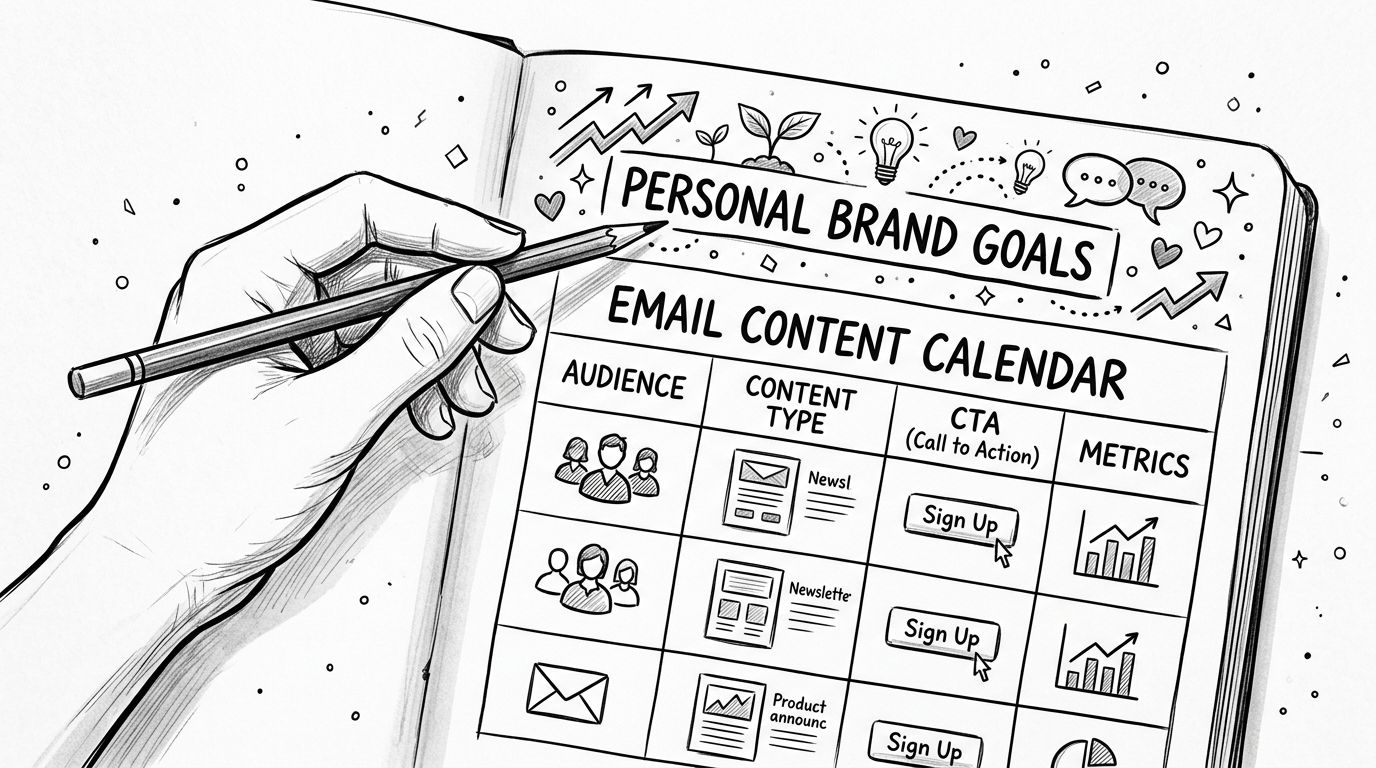
A useful email content calendar template needs five core fields: campaign name, send date and time, goal metric, target segment, and status workflow. That structure lines up well with MailerLite's email marketing calendar guidance because each field forces a decision before the draft starts drifting.
Here is the practical value of each one:
| Field | Why it matters | What weak execution looks like |
|---|---|---|
| Campaign name | Gives each email a clear identity | Vague labels like “newsletter 4” |
| Send date and time | Prevents fuzzy scheduling and last-minute prep | A date with no send window |
| Goal metric | Connects the email to a business outcome | Sending because “we should email more” |
| Target segment | Keeps the message relevant to the reader | No audience distinction |
| Status workflow | Shows what is blocked and what is ready | Hidden delays and rushed approvals |
Those fields handle execution. They do not yet capture meaning.
If the goal is personal brand email, the template should also track how each send contributes to the founder's long-term body of work. Readers do not experience your emails as isolated campaigns. They experience them as repeated proof of what you believe, how you make decisions, and what you want to be known for.
That is why I add a second layer:
The owner field matters more than teams expect. In practice, missing ownership creates soft delays. The draft sits in a doc, feedback arrives late, and the founder ends up rescuing the send at the last minute.
If nobody owns an email, the founder owns it by default. That is how email turns into a weekly bottleneck.
Teams plan in different ways across the month. A broad monthly view helps with visibility. A tighter launch-week view helps with approvals, dependencies, and timing. Your template should support both without forcing duplicate work.
That is why simple tools often win. Notion, Airtable, Google Sheets, and ClickUp can all work if the fields are clear and the team will keep them updated. The best setup is the one people trust enough to use as the single source of truth.
If you want another reference point while shaping your own workflow, this ultimate email marketing planner is useful for seeing how broader planning elements fit together across campaigns.
For most founder-led brands, this structure is enough:
The last field is easy to overlook, but it is one of the most valuable. Post-send notes give the calendar memory. You can track which angles earned replies, which stories drove clicks, and which promises fell flat. Over time, the template becomes more than an operations sheet. It becomes a record of how your reputation is being built, one email at a time.
For a deeper framework on turning this into a repeatable publishing system, this guide on building a content calendar that works in practice is worth reviewing alongside your template build.
The strongest templates reduce avoidable confusion.
They use a short status flow such as Draft, Review, Scheduled, Sent. They keep strategy and execution in the same view. They make audience, owner, and goal visible at a glance. They also leave enough room for judgment, because founder email is rarely a clean assembly line.
Weak templates fail for predictable reasons. They split planning across too many docs. They track publish dates but not send times. They use generic topic labels with no link to a pillar or story arc. Or they become so elaborate that updating the calendar feels like a second job.
A good template should make the right decisions easier. It should also help founders map what they care about, what they have learned, and what they want their name to stand for into a practical email plan the team can run every week.
A founder starts strong in January, sends four emails in two weeks, disappears for a month, then wonders why replies slow down and launches feel cold. The problem is rarely effort. It is usually rhythm.
Good cadence creates familiarity. Readers know your name will show up with a point of view, a useful lesson, or a clear invitation. That consistency is how email stops being a task and starts becoming part of your reputation.
Set a pace you can sustain with quality.
A founder who commits to three emails a week without the time, stories, or editorial support to back it up will burn out fast. A founder who sends once a month often leaves too much space between touchpoints to build trust, unless each email carries real depth and a distinct perspective.
Weekly is a strong default for many founder-led brands. It keeps your ideas in circulation and gives you enough volume to shape a recognizable narrative over time. Bi-weekly works well when emails are more essay-driven or the founder is balancing a heavy operating role. Daily can work, but only when the format is tight, repeatable, and built for speed.
Send time matters too. If you need a starting point, review this guide on when to send your email campaigns, then test against your own list behavior instead of copying a broad rule.
A strong calendar makes imbalance obvious before you hit send.
Use a simple visual system to mark each email by type so you can scan the month in seconds. You do not need a complicated taxonomy. You need enough clarity to catch the common mistakes: too many sales emails in a row, too much teaching with no invitation, or too many disconnected topics that weaken your broader narrative.
A practical color system looks like this:
This matters for more than variety. Founders are not only filling slots on a calendar. They are teaching the market what their name stands for. The mix should reflect that. If you want to be known for sharp thinking, operational honesty, or a distinct philosophy, your content mix has to reinforce those traits repeatedly.
The best months do not feel random. They build.
One reliable structure is to open with a practical lesson from recent work. Follow with a more personal note that reveals how you think, what you have learned, or what changed your mind. Then run a promotional email that connects your offer to the ideas you have already introduced. Close with a response email, reflection, or objection-handling piece that keeps the conversation going.
That sequence works because it mirrors how trust develops. Readers get usefulness first, then context, then an invitation.
For founders, the calendar becomes more than a publishing tool. It becomes a way to translate long-term reputation into weekly sends. One month might reinforce your operating principles. Another might document a transition in your business, your leadership, or the mission you want attached to your work five years from now. Over time, the audience does not just remember isolated emails. They remember the pattern of thought behind them.
If you need more formats that fit this kind of rhythm, this list of email marketing content ideas for 2026 is a useful source of prompts without pushing you into generic campaigns.
Cadence is frequency, but it is also memory. The right mix helps people recognize your voice, trust your judgment, and see a consistent story taking shape over time.
A founder sends one thoughtful email to the full list and gets a mixed response. Long-time readers reply right away. New subscribers stay quiet. A prospect clicks the offer but misses the context that would have made it persuasive. The problem usually is not the writing. The problem is that one message is carrying too many jobs.
Segmentation fixes that by giving each email a clear audience and a clear role in your larger narrative. Your calendar should show both. If you want your emails to build a reputation over years, not just fill this month's schedule, each segment needs its own path into your ideas, your method, and the story you want attached to your name.
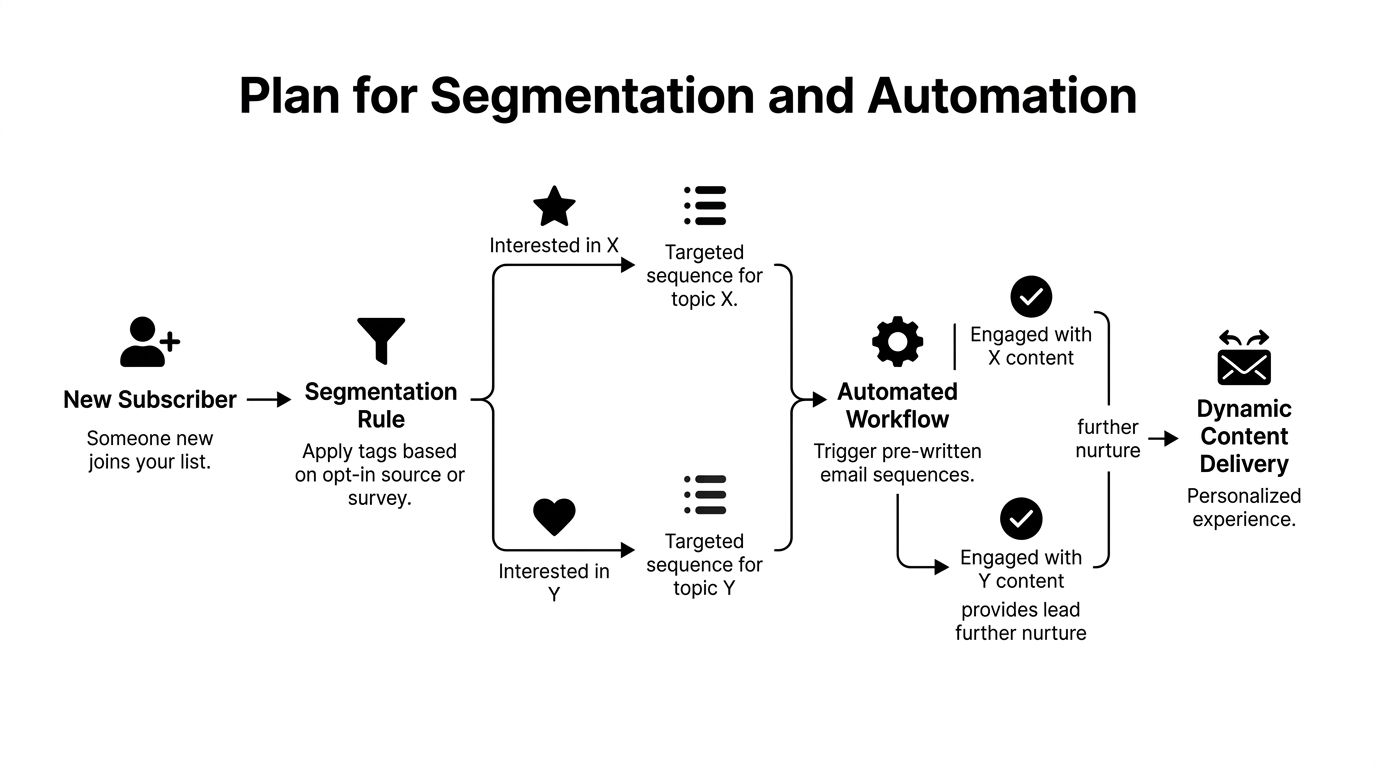
If segmentation lives only inside your email platform, it gets treated as a last-minute setting. Put it in the calendar instead. Add a target segment column and require an entry before any draft is considered ready.
For founder-led brands, a few segments usually cover the differences that matter:
The point is not to create endless micro-segments. The point is to match the message to the relationship stage. A founder's personal story lands very differently depending on whether the reader is meeting you for the first time or already sees you as a trusted guide.
Automation should introduce your worldview with intention. For many founder brands, a short welcome sequence is enough to do that well.
Start with a welcome email that sets expectations. Tell subscribers what kind of ideas you send, how often you write, and why your perspective is different.
Then send an email that teaches one principle you want to be known for. Your long-term narrative starts to take shape with this communication. A founder who wants to be remembered for disciplined growth, category insight, or a distinct leadership philosophy should make that visible early.
The third email should direct the reader toward the next step. That might be your best article, a reply prompt, a case study, or a service page. If you want a stronger framework for planning those audience paths, this guide on how to segment email lists for higher engagement is a useful reference.
Behavior-based automation can extend this structure without making your system complicated. A click on a case study can trigger proof-focused follow-up. A long-time reader who has never inquired might get a softer invitation. These examples of revenue-driven triggered email campaigns are useful because they show how triggers can support revenue goals without turning every email into a hard sell.
Subject lines and preheaders shape the promise of the email. They should be planned with the same care as the body copy, especially once different segments are hearing different versions of your story.
New subscribers often respond to clarity and orientation. Warm prospects usually respond to specificity, stakes, or a direct business outcome. Engaged readers may open because the subject line signals a fresh perspective from someone they already trust. Same founder. Different framing.
Add two planning fields to your template so this work happens before send day:
| Segment | Subject line angle | Preheader angle | |
|---|---|---|---|
| Welcome 1 | New subscriber | Orientation | What you'll receive |
| Welcome 2 | Engaged new reader | Insight | Why this approach works |
| Welcome 3 | High-intent lead | Invitation | Next best step |
That small addition improves more than open rates. It forces you to clarify what each segment needs to hear next, which keeps your automation aligned with the reputation you are building.
A short visual walkthrough can also help if you're setting this up for the first time.
Automation works best when it feels considered. Subscribers should experience a steady progression of trust, relevance, and recognition, not a pile of disconnected sends.
A founder sends a thoughtful email on Tuesday, gets strong replies, then moves on to the next deadline by Wednesday. Two weeks later, the insight is buried in the platform, the language is forgotten, and a proven idea never gets used again.
Your calendar should prevent that.
A strong email content calendar template does more than schedule sends. It gives you a working record of what story you told, which audience heard it, what response it created, and which ideas deserve a longer life. For founders building a personal brand, that matters. The emails that earn trust often contain the raw material for your broader reputation.
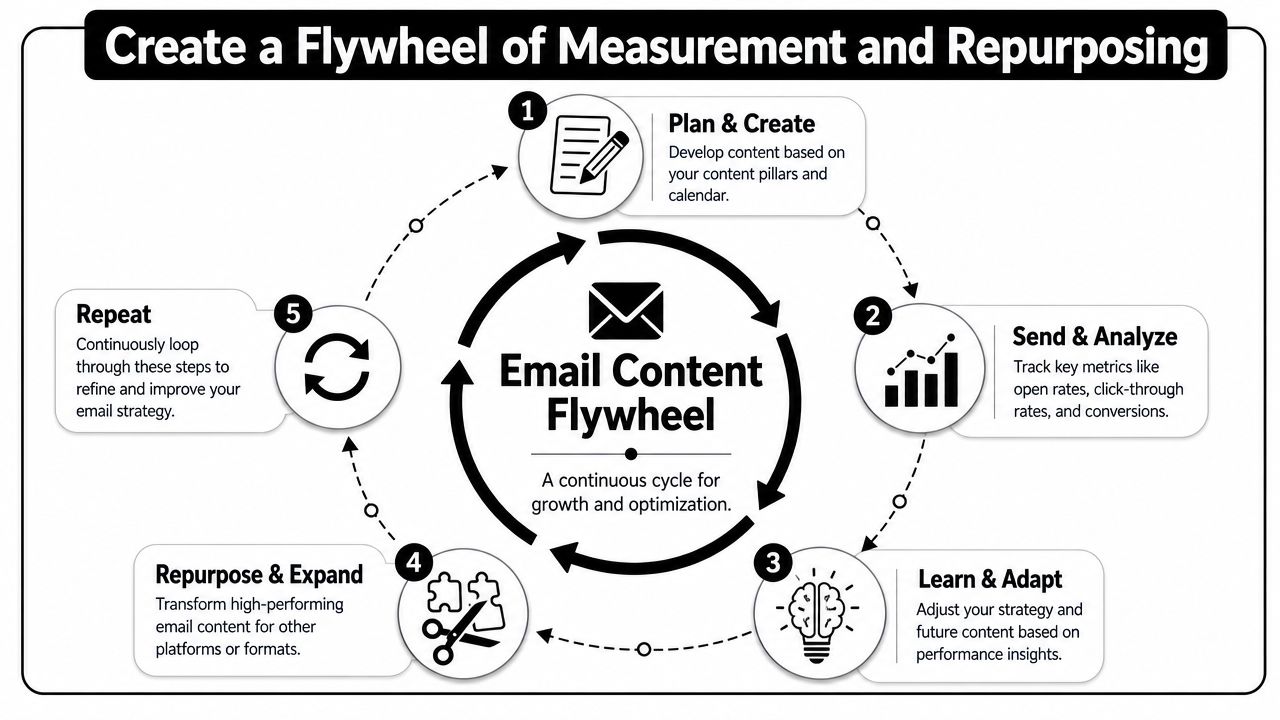
Keep post-send analysis in the same place you planned the email. That simple choice improves judgment over time because context stays attached to performance.
Add a few columns after each send:
This does not require a polished dashboard. It requires consistency. Capture the result while the email is still fresh, then write one or two plain-English observations about what happened. A high click rate with no replies means something different from a lower open rate and five thoughtful responses from ideal buyers.
The goal is to identify what deserves reuse, expansion, or refinement.
A visual calendar makes pattern recognition faster because strong and weak sends are easier to compare across weeks, campaigns, and content pillars. You can scan a month and see whether founder-story emails produce more replies, whether educational breakdowns drive more clicks, or whether one recurring theme keeps attracting the right kind of prospect.
That matters more than chasing isolated wins.
One email performing well could be luck, timing, or a strong subject line. Three emails around the same belief, lesson, or founder experience point to something more durable. That is how you separate random engagement from narrative traction.
The best emails should keep working after send day.
When an email performs well, assign its next use inside the calendar right away:
The calendar becomes more than an editorial tool; it becomes a system for compounding your perspective. One email can reinforce your authority in the inbox, then show up again in public channels with a different format and the same core message.
That repetition is not lazy. It is how a founder builds a recognizable point of view.
Over time, the cycle gets stronger. You plan with intention, send with a clear narrative, review what resonated, and reuse the strongest ideas across channels. New audiences discover your thinking elsewhere and join the list already familiar with your voice. That is how email starts supporting legacy, not just weekly promotion.
If your email still feels inconsistent, scattered, or disconnected from the story you want to build, Legacy Builder helps founders and professionals turn their ideas, insights, and personal narrative into a content system that grows trust over time.


You could – but most in-house teams struggle with the nuance of growing on specific platforms.
We partner with in-house teams all the time to help them grow on X, LI, and Email.
Consider us the special forces unit you call in to get the job done without anyone knowing (for a fraction of what you would pay).
Short answer – yes.
Long answer – yes because of our process.
We start with an in-depth interview that gives us the opportunity to learn more about you, your stories, and your vision.
We take that and craft your content then we ship it to you. You are then able to give us the final sign-off (and any adjustments to nail it 100%) before we schedule for posting.
No problem.
We have helped clients for years or for just a season.
All the content we create is yours and yours alone.
If you want to take it over or work on transitioning we will help ensure you are set up for success.
We want this to be a living breathing brand. We will give you best practices for posting and make sure you are set up to win – so post away.
Subscribe to our newsletter and get insights on how to grow your personal brand.
