.svg)
Subscribe to our newsletter and get insights on how to grow your personal brand.
Thank you! Your submission has been received!
Oops! Something went wrong while submitting the form.
.svg)


Let’s talk about your email list. Segmenting it just means breaking down your subscribers into smaller, more focused groups. Instead of blasting the same message to everyone, you can send highly relevant emails based on who they are, what they've done, or where they are in their journey with you. It’s a game-changer.
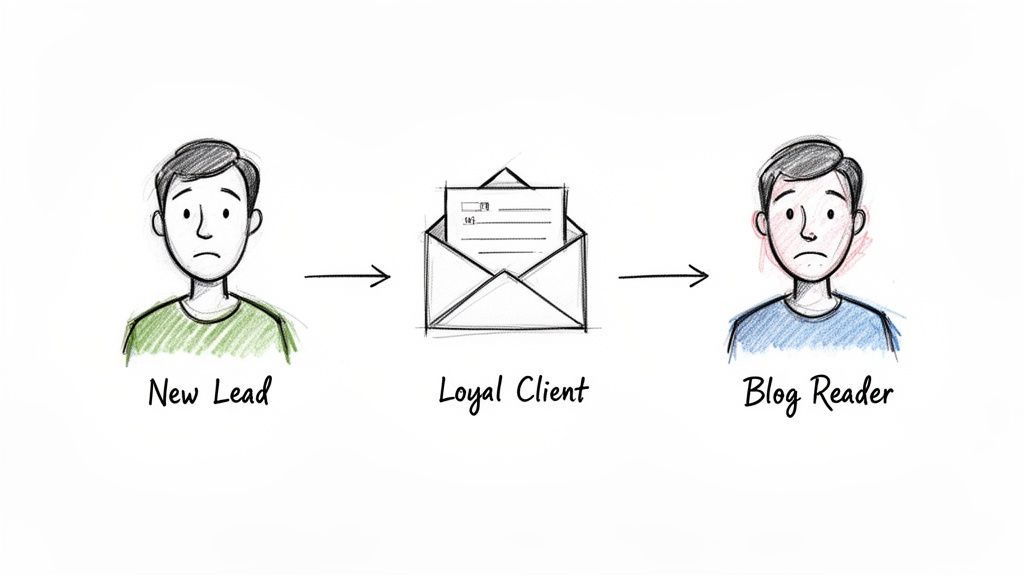
Think about it. You've got a brand-new lead, a loyal client you've worked with for years, and a casual blog reader on your list. Sending them all the same exact message? It just feels lazy and impersonal. And it is. This is probably the most common mistake I see, and it actively kills the authentic connection you're trying to build.
Every generic newsletter you send is a missed opportunity. That new lead needs the basics, the loyal client wants exclusive insights or early access, and the blog reader is just looking for your latest article. When they all get the same thing, it sends a clear message: you don't really know who they are.
This isn't just about making people feel good; it has a real impact on your growth. When your emails are irrelevant, subscribers don't just delete them—they start tuning out your entire brand. Before you know it, your engagement tanks, unsubscribe rates creep up, and you've lost the chance to build a real relationship.
I see it all the time. An entrepreneur sends a weekly "company update" newsletter. The new subscriber who just downloaded a guide on "Starting a Business" couldn't care less. They're looking for tactical advice. Meanwhile, a long-term client might have actually been interested in an advanced workshop you mentioned in passing. When both get the same generic email, neither feels seen or understood.
Key Takeaway: Unsegmented emails treat your audience like a faceless crowd. You're ignoring the unique needs and relationships of each person, which slowly erodes trust and makes your personal brand feel more like a faceless corporation.
The numbers don't lie. Segmented campaigns regularly see 30% higher open rates and 50% more click-throughs compared to those generic blasts. It’s no surprise that marketers who get this right see superior results from email segmentation. Especially when you consider that 74% of consumers say they hate getting irrelevant emails.
Getting good at email segmentation is about a fundamental shift in how you communicate. You're moving away from shouting at everyone with a megaphone and starting real conversations with the right people at the right time.
This is the bedrock of a strong personal brand. It's about showing you're listening. For more on this, check out our guide on what is brand authenticity and why it matters.
This guide will walk you through turning those generic broadcasts into targeted, brand-building conversations that your audience actually wants to be a part of.
Before you create a single tag or filter, you have to know your "why."
Jumping straight into segmentation without a clear purpose is like driving without a destination. Sure, you'll be busy, but you won't actually get anywhere. The most effective email segmentation strategies always start by tying directly back to the goals of your personal brand.
What are you actually trying to accomplish? Your answer to that question will shape everything that follows. You can't send the right message if you don't know what you want that message to do.
Your goal could be anything from driving sales for a new course to just building a more tight-knit community. The key is to be specific. A fuzzy goal like "increase engagement" is almost impossible to act on. Get concrete.
Think about the main drivers for your personal brand right now. Are you pushing for growth? Focused on monetization? Or are you trying to build a strong community? Your segmentation goals need to be a direct reflection of what matters most.
Here are a few common goals and how they translate into a segmentation strategy:
Nailing down a clear objective is step one. It makes sure every segment you build actually has a job to do and pushes your brand forward.
Once your goals are set, you need to know who you’re talking to. And no, you don't need a ten-page dossier for every persona, especially when you're just getting started. Simple, action-oriented personas are way more effective.
Think of them as quick character sketches of the different types of people on your list. Giving them a name makes them feel real and keeps their specific needs front and center. For a much deeper dive, our guide on how to find your target audience for a personal brand lays out the whole framework.
Pro Tip: Just start with two or three core personas. You can always get more granular later. Trying to build for every possible audience at once is a classic recipe for analysis paralysis.
Here are a few examples that work well for a personal brand:
By defining these simple personas, you can start to see the different conversations you need to be having. The email you send to "The Curious Newcomer" is going to be completely different from the one for "The Seasoned Collaborator."
This is the whole point of smart segmentation. You stop blasting emails and start building relationships.
Let's be honest: what someone does tells you a heck of a lot more than who they are. While knowing your audience's demographics is useful, tracking their actions—or even their inaction—is where the real magic happens. This is the heart of behavioral segmentation, and it's how you stop broadcasting and start having real conversations.
Actions speak louder than survey responses. By watching how people interact with your brand, you move beyond guesswork and start making decisions based on cold, hard evidence. Are they clicking every link you send, or have they gone completely silent? This is the data that truly matters.
This approach lets you react to your audience in near real-time. You're not just sending another email; you're responding to their specific journey with your brand, step by step.
Your easiest and most powerful starting point for behavioral segments is email engagement itself. This data is sitting right there in your email marketing platform, giving you a crystal-clear snapshot of who’s leaning in and who has tuned out.
You can start by creating a few fundamental groups:
Building these basic segments is a foundational win-win. You protect your sender reputation by not constantly emailing an inactive list, and you get to reward your most loyal followers with special attention.
Beyond email opens, a subscriber's activity on your website is a goldmine. When you connect your email platform to your site, you can see which pages they visit, what content they read, and what products they check out. This is where your segmentation gets razor-sharp.
Imagine a subscriber visits your primary services page three times in one week. That’s not a coincidence; it's a massive signal of high intent. Dropping this person into a "High-Interest Services" segment lets you send a targeted follow-up with a relevant case study or a gentle nudge toward a discovery call.
A person's digital body language tells you exactly what they're thinking. A visit to your pricing page is like them leaning in and asking, "So, how much is it?" Ignoring that signal is a massive missed opportunity.
The same logic applies to purchase history. Separating first-time buyers from repeat clients is one of the most profitable moves you can make.
To help you get started, here's a simple breakdown of the most common and effective ways to segment your email list.
Each of these pillars gives you a different lens through which to view your audience, but the behavioral layer is often where the most impactful opportunities lie.
The real power move is combining these data points. For example, you could create a hyper-targeted segment for subscribers who have clicked on a link about your coaching program and visited your coaching services page in the last 30 days.
Sending this small, focused group a personal invitation to a Q&A session about your coaching is infinitely more effective than blasting the same offer to your entire list. It feels relevant and timely because it is.
The proof is in the numbers. Studies show that using behavioral segmentation can boost open rates by 14.32% and increase click-throughs by a staggering 100% compared to non-segmented campaigns. With 90% of marketers globally prioritizing segmentation, it's clear this is where the industry is headed—because it’s what audiences want. You can discover more insights about email segmentation growth and see the data for yourself.
Start small. Pick one or two key behaviors to track, like clicking a specific link in a newsletter or downloading a particular guide. From there, you can build a segment and a simple, automated follow-up. This single action will immediately make your email marketing smarter and more connected to what your audience truly wants from you.
Okay, let's get into the nitty-gritty. Moving from a high-level plan to actually setting this stuff up is where the magic happens. The whole point is to stop babysitting your list and build a smart, automated system that does the heavy lifting for you.
This is where tags and workflows become your two best friends. They turn subscriber actions into perfectly timed, relevant messages without you lifting a finger.
Think of tags as intelligent sticky notes you attach to your subscribers. Every time someone takes an action that matters—like downloading a specific guide, clicking a link about your upcoming workshop, or even just visiting your services page—your system automatically slaps a tag on them.
This simple act builds a rich, evolving profile for every single person on your list. It’s all based on what they actually do, not what you guess they might want.
This flips segmentation from a static, one-time chore into a dynamic, ever-learning process.
The whole concept is pretty straightforward when you break it down. You track what people do, group them together, and send them stuff they'll actually care about.
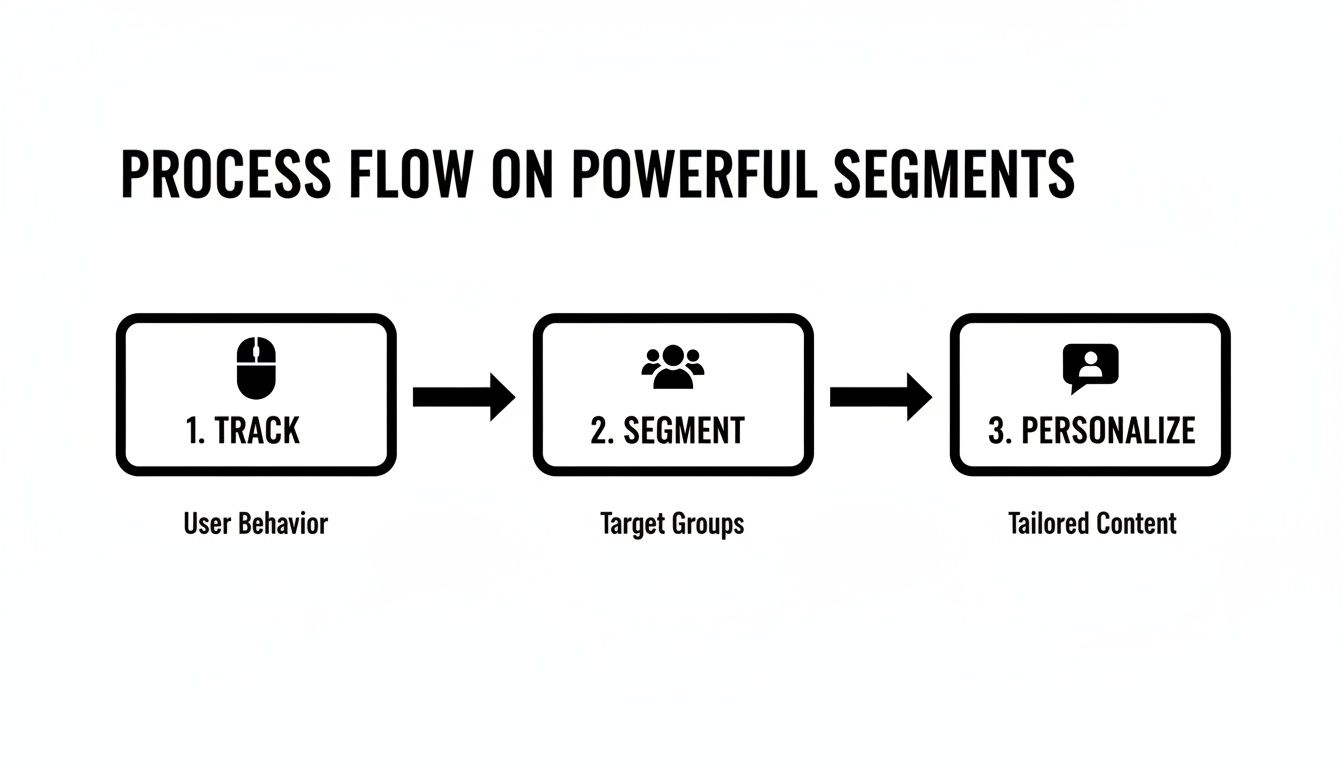
Before you go wild creating tags, you need a system. Trust me, a messy, inconsistent tagging setup is almost as useless as having no tags at all. The key is a clear, predictable naming convention so you (and your team) always know what each tag means.
For anyone serious about automation, it's also worth understanding the key differences between segmentation and tagging—they're related, but not the same thing.
A simple prefix-based system works wonders. Here’s a structure I use:
Status_ActiveSubscriberStatus_ClientStatus_InactiveInterest_CoachingInterest_WorkshopInterest_BrandingAction_Downloaded_ChecklistAction_Attended_WebinarPro Tip: Keep your tags descriptive but concise. A tag like
Action_Downloaded_TheUltimatePersonalBrandingChecklist_2024is a nightmare to manage.Action_Downloaded_Checklistis clean and much easier to build rules around.
With a logical system in place, building segments becomes a breeze. For example, you could create a segment of everyone with the Interest_Coaching tag who does not have the Status_Client tag. Boom—that’s your prime audience for a targeted coaching promotion.
Tags are the triggers; workflows are the automated plays that run in the background. A workflow (sometimes called an automation or sequence) is just a series of emails sent automatically when a subscriber gets a specific tag.
This is how you deliver personalization at scale.
Let's walk through a real-world scenario. A new visitor hits your website and signs up for your "Personal Branding Starter Kit." Here’s what happens next:
Action_Downloaded_StarterKit.This entire sequence runs on autopilot. It nurtures the new lead with valuable content, builds trust, and guides them deeper into your world—all kicked off by a single tag.
Once you get the hang of the basics, you can build out more sophisticated workflows that respond to all sorts of behaviors.
Status_Inactive. This tag triggers a "win-back" sequence with a punchy subject line like "Is this goodbye?" or a special offer to get their attention again.Status_Client. This can kick off a tailored onboarding sequence with resources, next steps, and content that makes them feel great about their decision.Interest_Speaking. This adds them to a long-term nurture sequence that periodically sends them case studies, testimonials, and tips related to public speaking.These automated systems make sure every interaction feels relevant and timely. You’re no longer just blasting emails; you’re creating personalized journeys for every subscriber, building a stronger brand with every automated step.
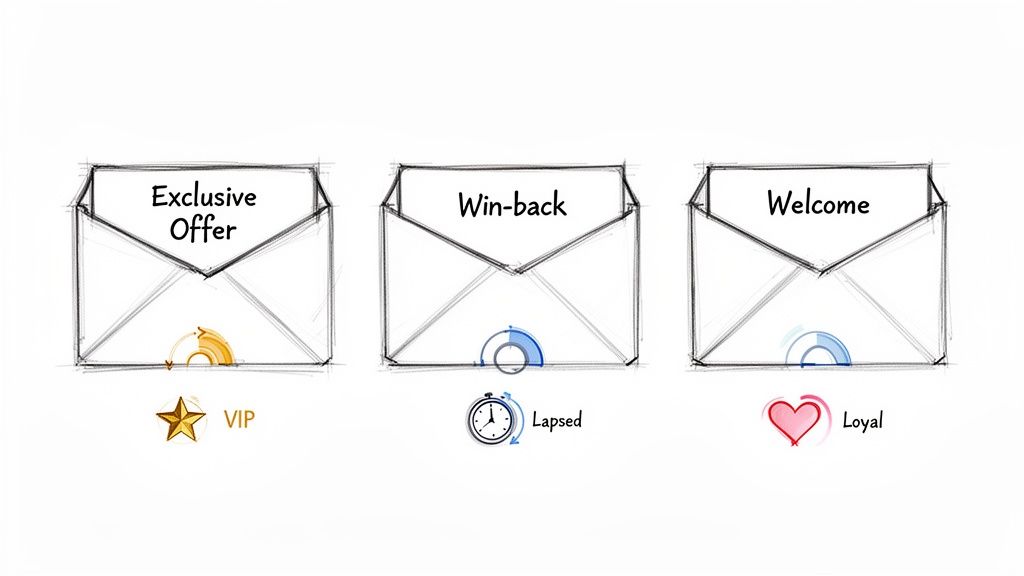
Alright, you've done the foundational work. Your segments are defined and the automations are ready to tag people as they come in. Now for the fun part—turning all that data into emails that don't just land, but connect.
This is where you shift from a one-to-many megaphone approach to a series of one-to-one conversations. The message you send a brand-new lead should feel entirely different from what you'd send a loyal, long-time client. It’s about meeting people where they are.
This isn't just about making subscribers feel good, either. It directly impacts your business. Personalized calls-to-action convert two times better than generic ones. It's no wonder that a massive 51% of marketers see segmentation as their number one tactic for growth.
Your subject line is the gatekeeper. If it doesn’t grab them, the brilliant email you wrote inside doesn't matter. Segmentation is your secret weapon for writing subject lines that feel relevant and urgent.
Don't forget the preview text—it’s your wingman. Use that tiny snippet of text to build on the curiosity of your subject line and give them another reason to click. For more ideas, check out our guide on 10 powerful email subject line examples.
Once you've earned the open, the content has to deliver on that personalized promise. This is where you adjust your tone, the problems you talk about, and the solutions you offer.
Let's say you have a segment of "Aspiring Entrepreneurs" who grabbed your business plan checklist. The emails you send them should be encouraging and packed with actionable advice. You'd use language that hits home for them, talking about challenges like "landing your first client" or "pushing past self-doubt."
Contrast that with a segment of "Seasoned CEOs" who have followed you for years. Your tone can be more peer-to-peer, sharing high-level strategic insights or inviting them to an exclusive roundtable. Sending them beginner tips would feel completely out of touch.
Key Takeaway: You want the subscriber to think, "This feels like it was written just for me." That feeling comes from seeing their own challenges, interests, and history with you reflected in the email.
Every email should have a point, a clear next step—your Call-to-Action (CTA). Generic CTAs like "Click Here" are lazy. Segmentation lets you create an "ask" that makes perfect sense for where that person is in their relationship with you.
By aligning every piece of your email—from subject line to CTA—with the specific context of each segment, you stop broadcasting and start building real relationships.
Alright, let's talk about the details. It's easy to get excited about the big picture of segmentation, but then get stuck on the "how" when you're actually in your email platform. This is totally normal.
Don't let the small questions stop you from making progress. Here are some straight-up answers to the hurdles I see founders run into all the time.
Think of this as your quick-start guide to getting unstuck. The aim isn't to build a perfect, complex system overnight. It's about getting started and building momentum. Let's clear these up so you can get back to what matters: connecting with your audience.
It's tempting to want to slice and dice your audience in a million different ways right from the get-go. Resist that urge. You’ll just get tangled up in the setup and never actually send an email.
The key is to start with just two or three high-impact segments. Seriously. This lets you learn the ropes and see some quick wins without overcomplicating everything.
A dead-simple place to start is with engagement. Your email tool already has this data, and it tells you who your real fans are.
Another smart first move is to segment by how they joined your list. Someone who downloaded a lead magnet about "scaling content" has a different intent than someone who just filled out your general "contact us" form. Segmenting them lets you tailor that critical first impression.
The goal is momentum, not immediate perfection. You can always get more granular later as you get more data and more comfortable with your tools.
This one trips a lot of people up, but it’s pretty straightforward once you get the concept. Think of it like this: tags are the sticky notes you put on individual files, and segments are the smart folders that automatically group those files based on the sticky notes.
A tag is a specific label you apply to a contact. It marks a single action or attribute.
Attended_WebinarClicked_Pricing_PageInterest_CoachingA segment, on the other hand, is the dynamic audience you build using those tags (and other data). It's a saved search that's always up to date.
For example, you could create a segment for everyone who has the Attended_Webinar tag but does not have the Became_Client tag. Boom. You've just created a perfect, warm audience for a follow-up offer. Tags are the building blocks; segments are what you build with them.
This is not a "set it and forget it" play. Your audience is always changing, and your segmentation needs to keep up. Plan to get in there and do some list maintenance at least once a quarter.
This isn't just busywork. It serves a couple of critical functions. First, you need to clean your list by removing bounced emails and subscribers who completely ignore your re-engagement campaigns. This is non-negotiable for keeping your deliverability high with email providers like Gmail.
Second, that quarterly review is your chance to gut-check your strategy.
Consistent upkeep is what separates a decent segmentation strategy from a great one. It keeps your data sharp, your deliverability strong, and your messages hitting the mark month after month.
At Legacy Builder, we turn your expertise into high-impact content that builds authentic connections. If you're ready to stop worrying about content and start building your legacy, we can help. Learn more about our services and see how we can elevate your personal brand.


You could – but most in-house teams struggle with the nuance of growing on specific platforms.
We partner with in-house teams all the time to help them grow on X, LI, and Email.
Consider us the special forces unit you call in to get the job done without anyone knowing (for a fraction of what you would pay).
Short answer – yes.
Long answer – yes because of our process.
We start with an in-depth interview that gives us the opportunity to learn more about you, your stories, and your vision.
We take that and craft your content then we ship it to you. You are then able to give us the final sign-off (and any adjustments to nail it 100%) before we schedule for posting.
No problem.
We have helped clients for years or for just a season.
All the content we create is yours and yours alone.
If you want to take it over or work on transitioning we will help ensure you are set up for success.
We want this to be a living breathing brand. We will give you best practices for posting and make sure you are set up to win – so post away.
Subscribe to our newsletter and get insights on how to grow your personal brand.
