.svg)
Subscribe to our newsletter and get insights on how to grow your personal brand.
Thank you! Your submission has been received!
Oops! Something went wrong while submitting the form.
.svg)


Most advice about digital marketing gets luxury wrong.
It tells you to post more, reach more people, chase trends faster, and optimize every channel for visibility. That works if you're selling convenience. It weakens your position if you're building prestige. Luxury doesn't win by being everywhere. It wins by being wanted.
That applies to companies and people. If you're a founder, CEO, investor, advisor, or specialist, your personal brand shouldn't behave like a discount retailer with a content calendar. It should behave like a house brand with standards. The point isn't to become familiar to everyone. The point is to become unmistakable to the right few.
The idea that digital and exclusivity can't coexist is lazy thinking. Digital doesn't automatically mean mass-market. It means distribution, data, and direct access. What matters is how you use them.
Luxury brands have already settled this argument. Online luxury sales are projected to reach $136 billion by 2025, and just under one-third of all personal luxury sales are expected to happen online, according to Luxury Abode's overview of luxury digital marketing. The same source notes that about 6 in 10 affluent consumers aged 18 to 39 follow luxury brands on social media, compared with 4 in 10 among those aged 40 and above. That's not a side channel. That's where modern luxury attention lives.
For personal brands, the lesson is blunt. If high-value people are evaluating prestige online, your digital presence is already part of your positioning whether you manage it well or not. Your LinkedIn profile, website, podcast appearances, interview clips, newsletters, and search results form a public showroom. Most professionals leave that showroom messy, generic, and overexposed.
Luxury used to rely on private rooms, glossy magazines, and physical scarcity. Today, perception starts much earlier. Someone sees your name in a founder roundtable, checks your profile, scans your site, reads your last three posts, and decides whether you're premium or forgettable.
That doesn't mean you should publish constantly. It means every digital touchpoint needs intention.
A useful reference point is SleekPost's guide to 2026 trends, not because you need to adopt every tactic, but because it shows how fast digital behavior keeps shifting. The wrong response is panic. The right response is selectivity.
Corporate luxury brands build mystique through curation, consistency, and controlled access. You can do the same as an individual.
Use digital to:
Practical rule: If your digital presence makes you look available to everyone, it won't make you desirable to anyone exceptional.
Digital marketing for luxury brands isn't about turning a premium identity into mass content. It's about turning selective expertise into visible authority. That's the same job a serious personal brand has now.
Luxury isn't expensive marketing. It's disciplined positioning.
A lot of professionals mistake luxury for polished visuals, premium pricing, and a tasteful logo. That's surface-level thinking. Real luxury comes from five deeper signals: scarcity, craft, story, service, and emotional resonance. When one is missing, the whole brand feels thinner.
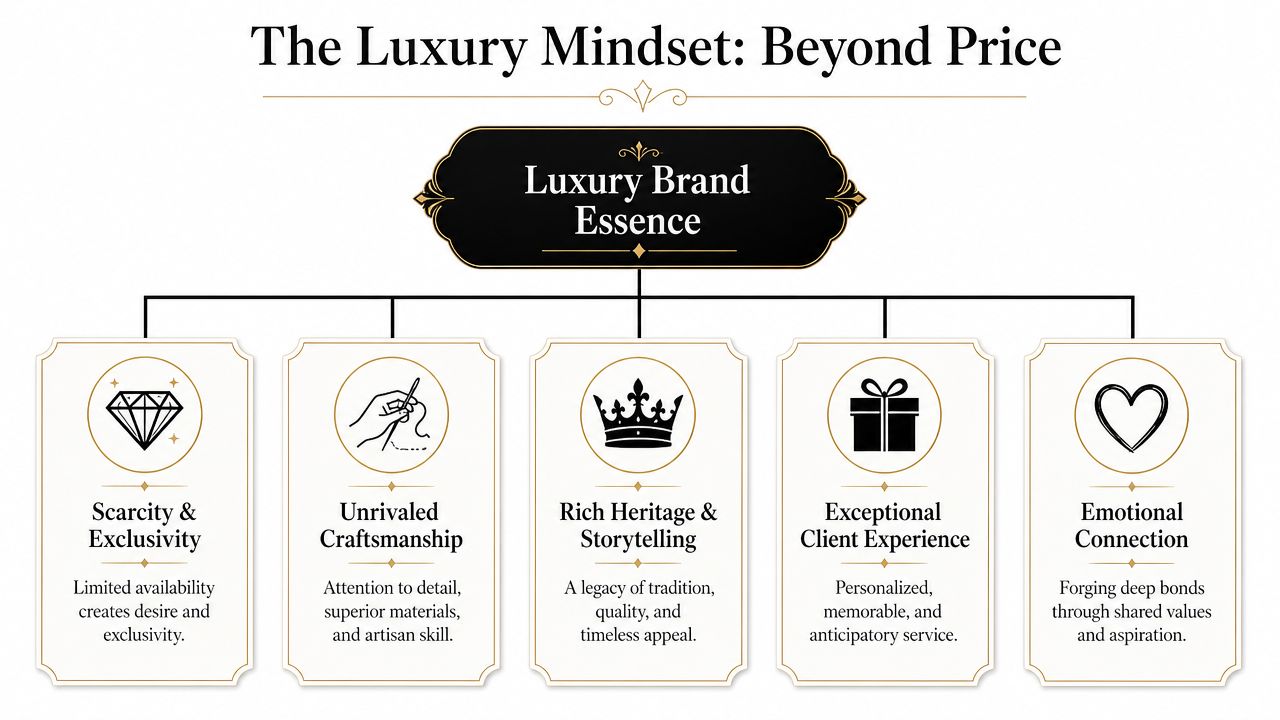
A Michelin-starred chef and a fast-food chain both use kitchens, ingredients, staff, and menus. The difference isn't the existence of tools. It's the standard behind every decision.
The chef curates. The chain scales.
The chef refines. The chain optimizes for throughput.
The chef protects the experience. The chain removes friction for everyone.
Digital works the same way. Instagram, LinkedIn, email, video, SEO, and a website are just tools. Luxury thinking changes the intent behind them.
This is what that looks like for a personal brand:
| Luxury mindset | Mass-market mindset |
|---|---|
| Curate access | Maximize attention |
| Publish selectively | Publish constantly |
| Build symbolic value | Push immediate conversion |
| Protect brand distance | Chase relatability at all costs |
| Prioritize depth | Prioritize reach |
If you want a high-value personal brand, stop asking how to be more visible. Ask how to become more sought-after.
People don't consciously score your brand on a checklist, but they feel these factors quickly.
Luxury branding starts when you stop performing expertise and start packaging standards.
A luxury personal brand doesn't post random advice, comment on every trend, or dilute itself with broad messaging. It chooses a lane, refines the language, and leaves room for intrigue.
That means saying no more often:
People don't pay premium rates for access to someone who behaves like they're fighting for relevance. They pay for confidence, discernment, and a distinct point of view.
Luxury positioning begins with exclusion. If you won't define who you're not for, the market will decide you're for everyone. That's fatal.
Most personal brands try to sound flexible, approachable, and broadly useful. They write for a foggy audience called "founders and professionals" and then wonder why nobody feels specifically addressed. Elite positioning doesn't come from inclusion. It comes from a filter.
Before you define the ideal audience, define the people you don't want.
That anti-persona might include:
This isn't arrogance. It's strategy.
McKinsey reports that the luxury industry's economic profit nearly tripled from 2019 to 2024, while also arguing that brands now need to invest in tech, AI, and data capabilities to personalize engagement and gain better insight into client journeys, as outlined in McKinsey's state of luxury analysis. The message is clear. Strong brands don't guess. They identify who matters and build around them.
For an individual, "target audience" is too loose. Build a Dream 100 instead. That's the shortlist of people and organizations whose attention would materially change your business or career.
Your list might include:
Track names, firms, themes they care about, where they publish, what they signal publicly, and what kind of content they engage with. Through these actions, digital marketing for luxury brands becomes useful for personal branding. You stop broadcasting and start curating touchpoints for people who matter.
For sharper language around positioning, study these brand positioning statement examples and templates. Use them to tighten who you serve, what category you own, and why your expertise carries a premium.
You don't need a literal gate. You need a system of cues that qualifies the right audience and repels the wrong one.
Use:
The strongest personal brands don't just attract aligned people. They make misaligned people self-select out.
That's the digital velvet rope. It protects your time, sharpens your market position, and raises the perceived value of every interaction.
Most content looks disposable because it is. It exists to fill a schedule, feed an algorithm, or imitate what's already working for someone else. Luxury content does the opposite. It compounds.
If you're building a premium personal brand, every published asset should increase perceived depth. It should make people think, "This person operates at a different level." That doesn't require theatrical branding. It requires editorial discipline.
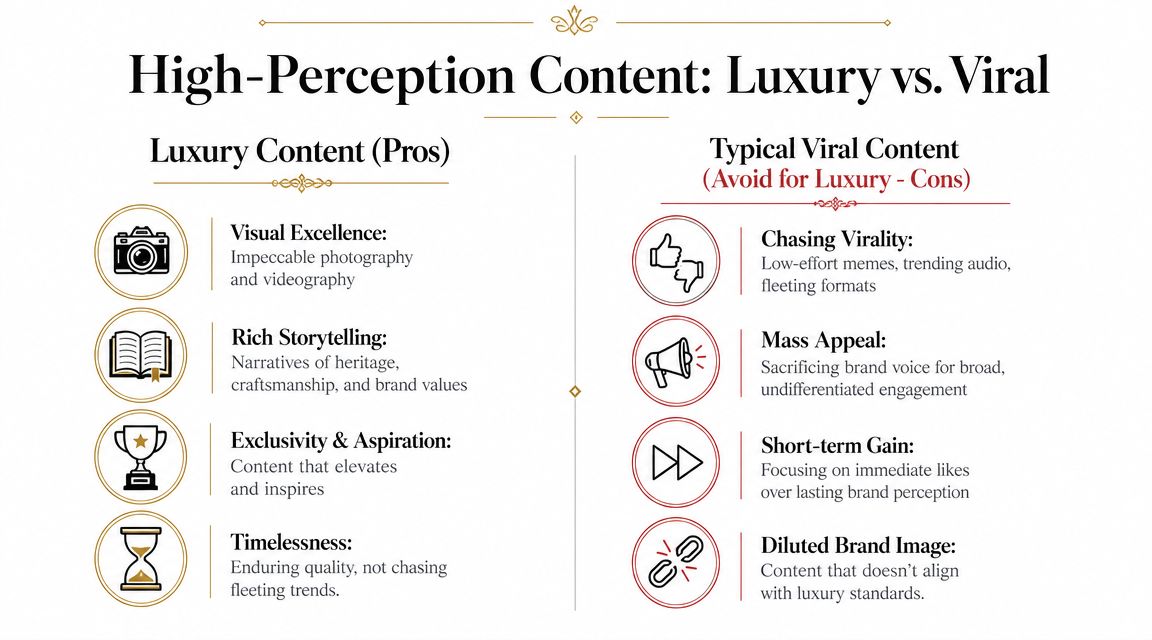
Low-perception content has obvious traits. It mimics trending hooks, overuses reaction posts, rides borrowed outrage, and says little beyond what everyone already knows. It may generate activity, but it doesn't build authority.
High-perception content feels considered. It reads like it came from someone with standards, pattern recognition, and lived experience.
A useful test is simple:
| If this content disappeared tomorrow | What would happen |
|---|---|
| Nothing changes | It was filler |
| People lose a useful point of view | It had brand value |
| A target client would miss your expertise | It was strategic |
Luxury brands don't flood channels with noise because noise lowers symbolic value. Your personal brand should follow the same rule.
You don't need endless formats. You need a small set of repeatable assets that signal seriousness.
If you're building video assets without wanting to overexpose your face in every clip, AI video editing for luxury content can help you package a more cinematic, controlled presentation style. That's useful when your brand should feel curated rather than endlessly casual.
Premium content doesn't sound louder. It sounds clearer.
That means:
A strong editorial system starts with voice. If yours is still vague, salesy, or overexplaining, refine it before you scale distribution. This guide on what brand voice is and how to build one that connects is useful for tightening tone, vocabulary, rhythm, and consistency.
Editorial standard: Publish fewer pieces, but make each one sturdy enough to be quoted, shared privately, or revisited later.
Avoid content habits that flatten your positioning:
The best digital marketing for luxury brands doesn't chase attention spikes. It builds a body of work people associate with discernment. Personal brands should do the same. Create content that ages well and makes your name heavier over time.
A common approach involves using every channel the same way. They post the same idea in different formats, blast the same newsletter to everyone, and call it omnichannel. That's not strategy. That's duplication.
Luxury channel strategy is more selective. Each channel has a role. Each audience segment gets a different experience. The job isn't to be active everywhere. It's to create a feeling of controlled access wherever you do show up.
LinkedIn and Instagram are the two biggest opportunities for a premium personal brand, but only if you treat them like display environments.
LinkedIn should carry:
Instagram should carry:
Don't use social as a diary. Use it as controlled perception design.
A quick comparison helps:
| Channel | Wrong use | Better luxury use |
|---|---|---|
| Daily generic tips | Occasional high-conviction insight | |
| Constant personal updates | Curated world-building | |
| X or Threads | Reactive commentary | Selective thought fragments |
| YouTube or podcast | Endless volume | Signature long-form authority pieces |
Most newsletters feel like bulk mail. Luxury email should feel like a private note.
That means segmenting by relationship type and relevance. Your warm prospects shouldn't get the same message as peers, event contacts, or former clients. You don't need a giant automation stack to do this well. Even a simple system inside Mailchimp, ConvertKit, Kit, HubSpot, or a spreadsheet-backed manual workflow can support a more selective cadence.
Use email for:
Write like you're corresponding, not broadcasting. The inbox is one of the few digital spaces where intimacy still feels natural.
Most SEO advice is built for volume. That's wrong for premium positioning.
A luxury-minded SEO strategy goes after high-intent search behavior. Instead of trying to rank for broad vanity terms, create pages and articles that match detailed, problem-aware queries. If you advise founders, write for the moments when a serious buyer is evaluating a specific issue, standard, or decision.
Good targets include:
A premium website should also control what appears when someone searches your name. Your homepage, about page, media page, flagship essays, and interview appearances should work together like a brand estate.
Not every collaboration helps you. Some lower your positioning.
Choose partners the same way luxury brands choose retail environments. If the surrounding context is weak, your perceived value drops with it. Collaborate with people who have audience quality, editorial standards, and taste that match your own.
Good collaborations include:
Paid shout-outs and random influencer mentions usually feel transactional. Prestige transfers better through context, not hype.
Luxury isn't just communication. It's treatment.
A premium personal brand fails the moment someone moves from admiring your content to interacting with your process and finds delay, confusion, generic replies, or obvious automation. High-touch digital experience is where perception gets confirmed or destroyed.
A major shift in digital marketing for luxury brands is the use of AI-powered personalization and deep-learning advertising to recreate a consultative, high-touch experience online. Industry guidance summarized by RTB House's analysis of luxury digital strategy notes that AI can time messages, recommendations, and shopping journeys around subtle behavioral cues so brands can maintain exclusivity at scale. For a personal brand, the lesson is practical. Use technology to make attention feel bespoke.
To visualize that process, this framework is useful:
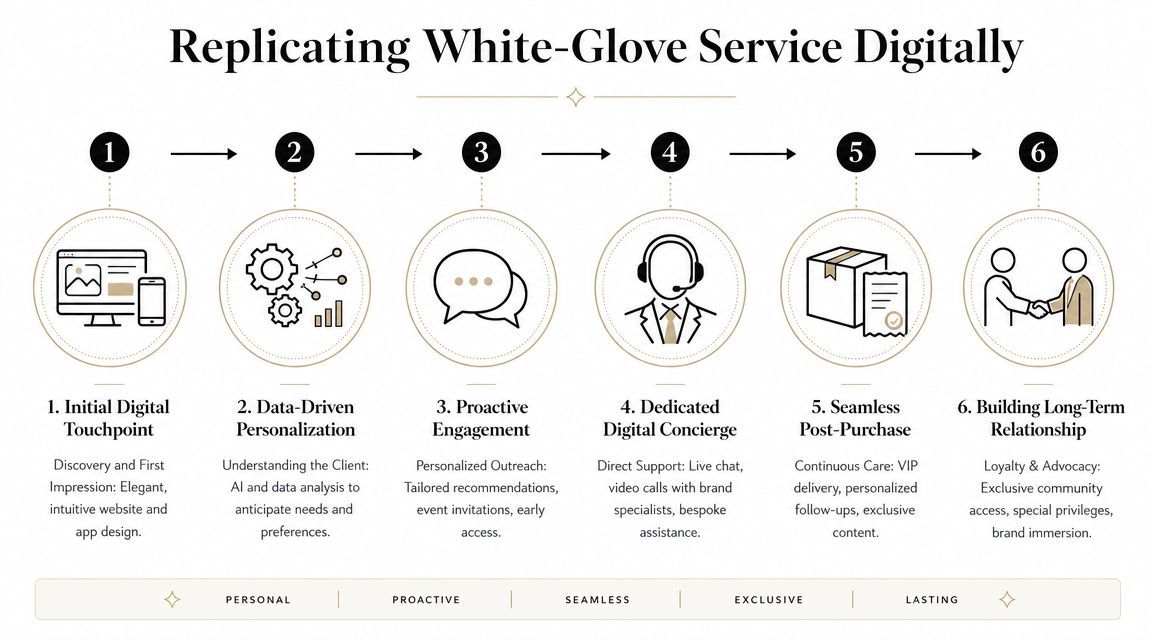
Luxury boutiques remember preferences, timing, prior purchases, and personal context. You need a digital version of that.
Use a personal CRM in Notion, Airtable, HubSpot, Clay, or even a well-structured spreadsheet. Track:
This isn't bureaucratic. It's respectful. People can feel when you've paid attention.
Automation becomes cheap when it replaces judgment. Use it to support timing and relevance instead.
Good uses:
Bad uses:
A short video can help anchor the principle of luxury-style digital experience in a more visual way.
The right digital system makes people feel remembered. The wrong one makes them feel processed.
You don't need a team of ten to create white-glove treatment. You need a few deliberate touchpoints.
Create a concise inquiry form that filters for fit. Send a personalized pre-call note. Share a short private resource based on the person's context. Follow up with recommendations that reflect the exact discussion, not a recycled sales deck.
That level of care stands out because most digital interactions feel generic. Premium brands win when the experience after the click feels even better than the content before it.
Most professionals measure premium branding with mass-market metrics, then wonder why the numbers feel disconnected from real opportunity.
Follower count, likes, reach, and traffic volume can be useful diagnostics. They are poor definitions of success for a high-value brand. Measuring luxury by those metrics is like judging a fine-dining restaurant by foot traffic instead of reservations, repeat guests, and private bookings.
The more exclusive your positioning becomes, the more dangerous vanity metrics get. They tempt you to broaden your message, lower your standards, and publish for engagement instead of relevance.
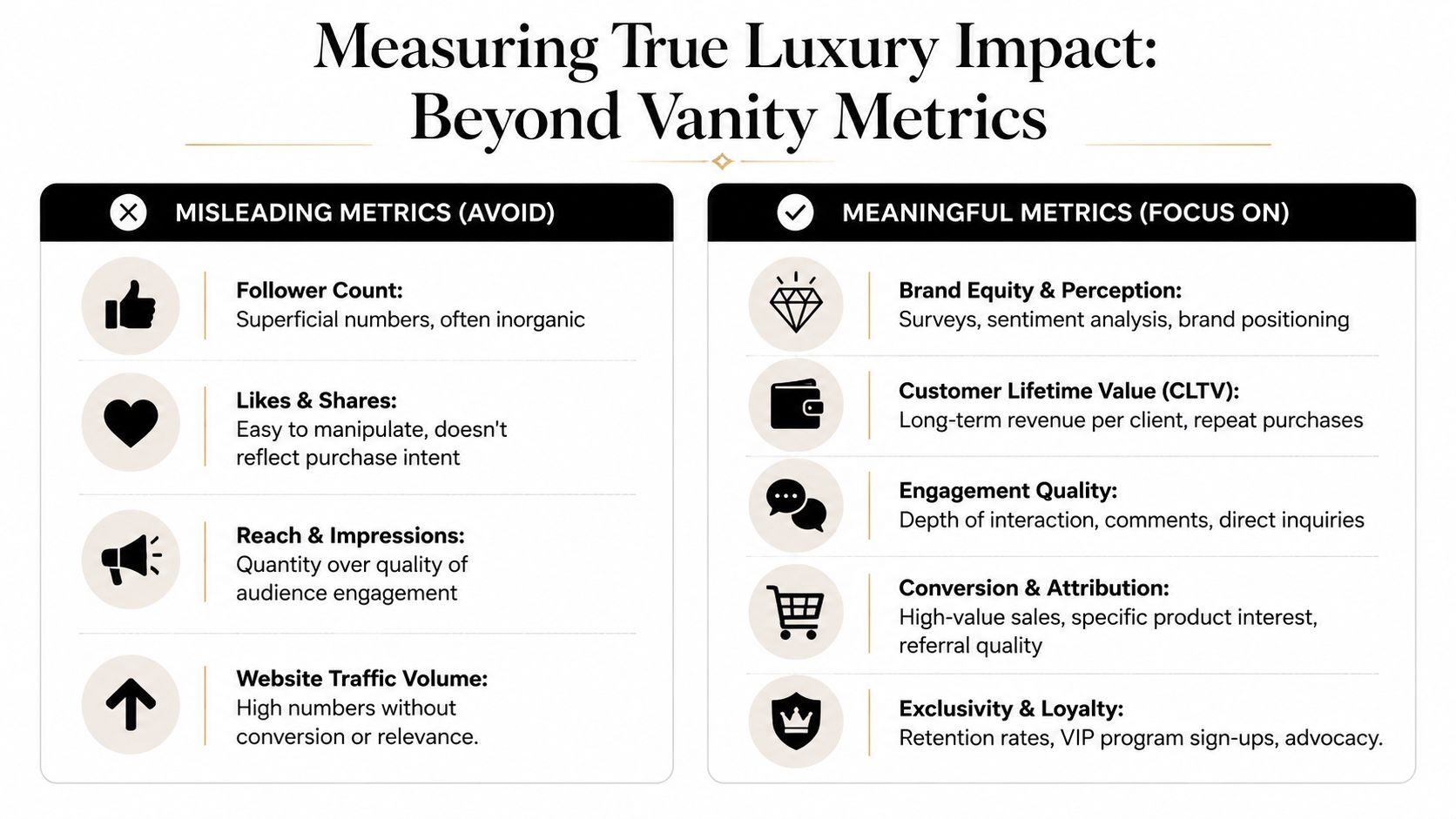
Effective luxury marketing is built around first-party data and high-intent attribution, and brands should optimize for customer lifetime value, cost per qualified acquisition, and lead quality rather than vanity metrics, according to iVirtual's guide to digital marketing for luxury brands. That principle maps directly to personal brands.
If you're serious about premium positioning, track the signals below.
A simple scorecard beats a bloated analytics dashboard. Here's a practical version:
| Metric | What to ask |
|---|---|
| Qualified inquiries | Did this month bring the right kinds of conversations? |
| Dream 100 engagement | Did target accounts reply, follow, refer, or engage directly? |
| Conversion quality | Did prospects arrive informed and aligned? |
| Retention and expansion | Are clients staying, returning, or deepening the relationship? |
| Brand perception | Do people describe you with the words you want to own? |
If you need a broader framework for tracking perception alongside growth, this guide on how to measure brand awareness and fuel your growth is a useful complement.
Stop celebrating metrics that don't improve positioning or revenue.
That includes:
Better question: Did this content increase trust with the specific people I want to attract?
That question will save you from months of busywork.
High-value decisions rarely happen in one click. A person may read an article, watch a clip, hear you on a podcast, visit your site weeks later, and only then make contact. That's why first-party tracking matters. You need to capture the specific ways serious prospects move through your ecosystem.
Use intake forms, CRM notes, tagged links, newsletter replies, and conversation records to understand the path. The cleaner your attribution, the less likely you are to overinvest in noisy channels and underinvest in the touchpoints that discreetly close trust.
Digital marketing for luxury brands works best when it respects the buying journey. Personal brands should measure the same way. Not by who noticed you once, but by who moved closer, stayed longer, and attached more value to your name.
If you're building a premium personal brand and want expert help turning your story, standards, and expertise into a sharper digital presence, Legacy Builder can help you create the kind of content ecosystem that attracts the right opportunities without diluting your positioning.


You could – but most in-house teams struggle with the nuance of growing on specific platforms.
We partner with in-house teams all the time to help them grow on X, LI, and Email.
Consider us the special forces unit you call in to get the job done without anyone knowing (for a fraction of what you would pay).
Short answer – yes.
Long answer – yes because of our process.
We start with an in-depth interview that gives us the opportunity to learn more about you, your stories, and your vision.
We take that and craft your content then we ship it to you. You are then able to give us the final sign-off (and any adjustments to nail it 100%) before we schedule for posting.
No problem.
We have helped clients for years or for just a season.
All the content we create is yours and yours alone.
If you want to take it over or work on transitioning we will help ensure you are set up for success.
We want this to be a living breathing brand. We will give you best practices for posting and make sure you are set up to win – so post away.
Subscribe to our newsletter and get insights on how to grow your personal brand.
