.svg)
Subscribe to our newsletter and get insights on how to grow your personal brand.
Thank you! Your submission has been received!
Oops! Something went wrong while submitting the form.
.svg)


In a saturated market, a powerful brand positioning statement is your most critical asset. It is the internal North Star that guides every piece of content, every strategic decision, and every customer interaction. This single, concise declaration defines who you are, who you serve, and why your brand matters in a way no other can. Without one, you risk becoming part of the noise, your message lost in a sea of competitors.
This guide moves beyond generic advice to provide a strategic look at brand positioning statement examples from both iconic companies and influential personal brands. We will dissect eight distinct types of positioning statements, from those built on an undeniable value proposition to those that forge a deep emotional connection. Understanding this internal compass is also a critical first step if you're exploring how to rebrand a company successfully, as a clear new position is the foundation of any effective brand evolution.
For each example, you will find:
By the end, you'll have a clear roadmap to articulate your unique value, captivate your ideal audience, and build a brand that not only gets noticed but commands influence. Let’s dive in and find the perfect positioning model to build your legacy.
The Value Proposition Positioning Statement is a foundational approach that directly answers the most critical question a potential customer has: "What’s in it for me?" It focuses on clearly articulating the unique, tangible value a brand delivers to a specific target audience. This method, popularized by strategic thinkers like Geoffrey Moore, cuts through market noise by centering the brand's message on solving a specific problem and delivering a distinct benefit.
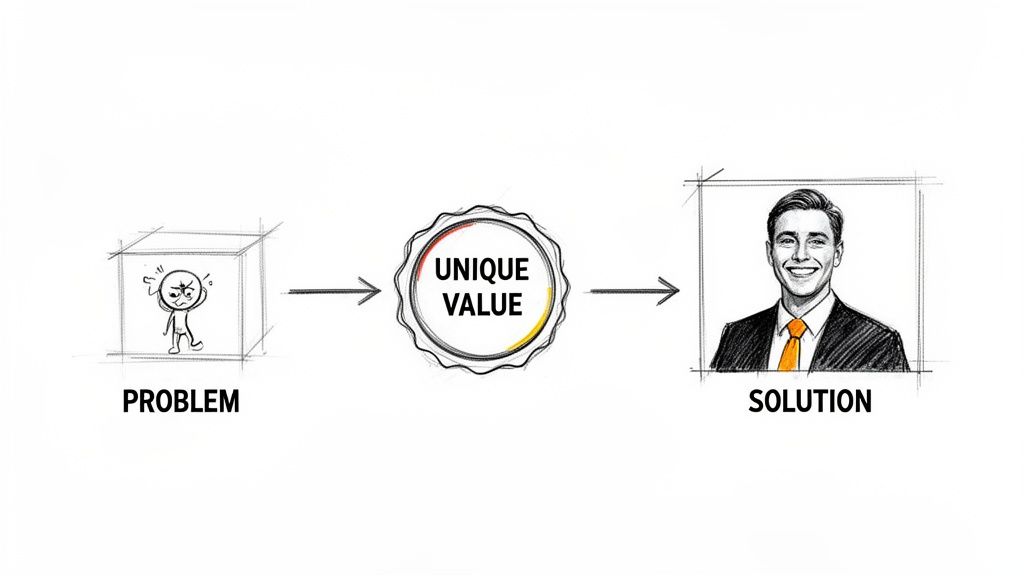
This statement isn't just a slogan; it’s a strategic commitment. It forces a brand to define its core contribution and differentiate itself from competitors based on outcomes, not just features.
This structure ensures your messaging remains customer-centric, moving from abstract ideas to concrete results. It’s about making an undeniable promise of value.
Slack: "Where work happens." This brilliantly simple statement targets teams overwhelmed by chaotic communication. It promises a centralized, organized solution to workplace collaboration, a clear value proposition for any modern business.
Dollar Shave Club: "Our blades are f***ing great." This targets customers tired of overpriced, overcomplicated razors. The value is simple: high-quality blades at a fair price, delivered with a no-nonsense, authentic attitude.
Legacy Builder Application: "Transform your story into an influential brand that opens doors." This targets professionals who feel their expertise is undervalued. The value is transforming their personal narrative into tangible career opportunities and influence.
To effectively communicate your brand's core value proposition in a concise format, consider the principles of writing a compelling book blurb. Just like a blurb must grab attention and convey a story's essence quickly, your value proposition must deliver its core promise instantly.
The Emotional Connection Positioning Statement moves beyond functional benefits to tap into the core identity, values, and aspirations of its audience. Instead of answering "What's in it for me?" it answers, "Who can this help me become?" This approach, championed by thinkers like Simon Sinek and Brené Brown, forges a deep, resilient bond by aligning the brand with the customer's sense of self and their deepest motivations.
This statement is less about what a product does and more about what it represents. It builds a tribe around a shared belief system, transforming customers into advocates. For brands built on influence and legacy, this is the cornerstone of their positioning.
This framework shifts the focus from a transactional relationship to a transformational one, making the brand an integral part of the customer's personal journey.
Nike: "Just Do It." This statement isn't about shoes; it’s about overcoming internal barriers. It targets the inner athlete in everyone, connecting with the universal desire for empowerment and personal achievement.
Apple: "Think Different." This famously targeted creative rebels and innovators who felt constrained by the status quo. Apple became a symbol of individuality and creative genius, an emotional identity its users were proud to adopt.
Legacy Builder Application: "Build the influential legacy you deserve." This connects directly to the aspiration of professionals who want their expertise to make a lasting impact. The emotional driver is the desire for recognition and the satisfaction of creating a meaningful legacy.
To create this connection, your brand's narrative must be as compelling as its products. Understanding how to tell a great story is crucial for building a brand that resonates on an emotional level.
The Category Leadership Positioning Statement asserts a brand's dominance and authority within a specific market niche. It’s an assertive approach, popularized by thought leaders like Al Ries and Jack Trout, that aims to make the brand synonymous with the category itself. This strategy goes beyond just being a participant in a market; it positions the brand as the definitive, go-to standard that all others are measured against.
This statement is a declaration of excellence and market ownership. It tells potential customers that choosing your brand means choosing the best, the most trusted, or the most innovative option available. It's built on a foundation of proof, reputation, and a relentless drive to set the industry benchmark.
This structure works by appealing to the customer's desire to minimize risk and make a safe, smart choice. Leadership implies trust, quality, and a proven track record.
HubSpot: "The #1 platform for customer relationship management." This statement is a direct and powerful claim to leadership. It targets businesses looking for a comprehensive, industry-leading CRM and uses its market position as the primary differentiator.
Mailchimp: "The leading email marketing platform." Before its acquisition, Mailchimp established itself as the default choice for small businesses entering email marketing. This claim targets entrepreneurs and marketers who want an accessible yet powerful tool that is trusted by millions.
Legacy Builder Application: "The leading personal brand transformation specialist for professionals." This positions the service as the premier expert for professionals serious about elevating their influence. It targets high-achievers who want to work with the best to achieve tangible career outcomes.
The Audience-Centric Segmentation Positioning Statement challenges the one-size-fits-all approach. Instead of a single, universal message, this strategy involves crafting distinct positioning statements for each key customer segment. It’s rooted in the understanding that different audiences have unique needs, motivations, and pain points, requiring tailored messaging for maximum impact.
This method, championed by strategic minds like Peter Drucker, acknowledges that a single product often serves multiple markets. By segmenting, a brand can speak directly to the specific context of each group, making its value proposition feel more personal, relevant, and compelling.
This structure allows a brand to maintain a consistent core identity while adapting its messaging to connect deeply with diverse customer bases. It moves from broad appeal to targeted relevance.
Microsoft: Microsoft positions its cloud platform, Azure, differently for a Fortune 500 CIO (focusing on security, compliance, and scale) than for a startup developer (focusing on speed, agility, and cost-effective tools).
Adobe: The company presents its Creative Cloud to graphic designers by emphasizing artistic tools and collaboration, while positioning its Experience Cloud to marketing executives by focusing on data analytics, personalization, and ROI.
Legacy Builder Application: The service is positioned "For CEOs seeking to build industry-wide thought leadership" by emphasizing influence and legacy, but "For founders needing rapid audience growth" by highlighting lead generation and market traction. Same core service, different value emphasis.
The Story-Based Positioning Statement connects with audiences on an emotional level by framing the brand within a compelling narrative. Instead of leading with features or benefits, this approach positions the brand through powerful origin stories, customer transformations, or a mission-driven purpose. Popularized by frameworks like Donald Miller's StoryBrand, this method makes a brand memorable, shareable, and deeply resonant.
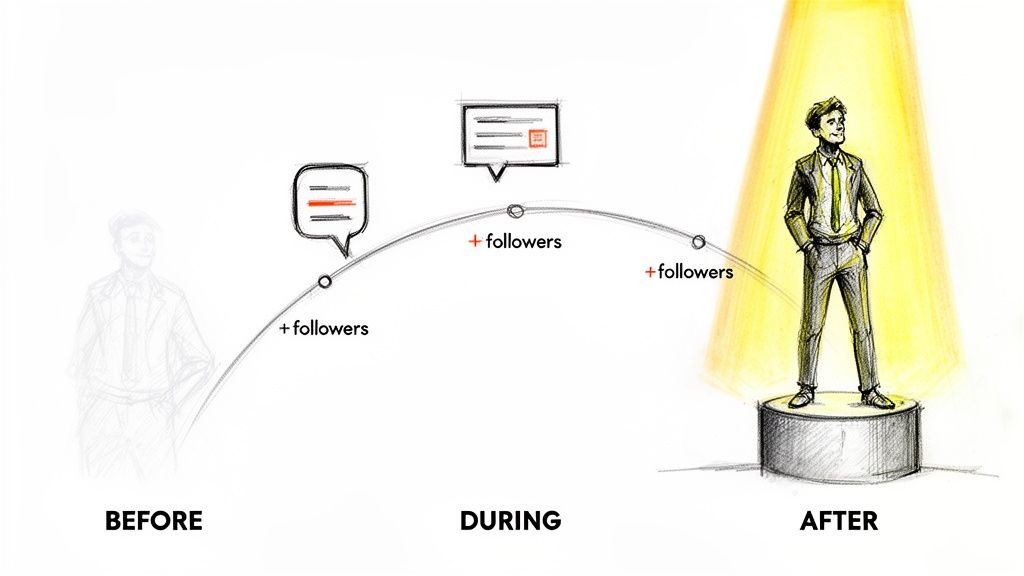
This statement isn't just about telling a good tale; it’s a strategic tool for building a loyal community. It positions the customer as the hero of the story and the brand as the trusted guide, creating a powerful psychological connection.
This structure shifts the focus from "what we sell" to "the success we help you achieve," making your brand an integral part of the customer's personal narrative. It's a key reason why so many brand positioning statement examples that focus on community and loyalty are rooted in story.
TOMS Shoes: "One for One." The entire brand is positioned around a simple, powerful story: buy a pair of shoes, and we give a pair to a child in need. This narrative of social good became their defining market position.
Warby Parker: Positioned against an "evil" industry, their founder story of making stylish eyewear affordable and accessible resonates with customers who feel exploited by high prices.
Legacy Builder Application: "Stories of professionals who transformed from unknown to influential." This positions the brand through client success narratives, showing a repeatable journey from obscurity to industry authority using a strategic content framework.
The Differentiation-Based Positioning Statement carves out a unique space in a crowded market by directly answering the question: "Why should I choose you over everyone else?" This approach, championed by marketing legends Al Ries and Jack Trout, hinges on identifying and amplifying what makes a brand fundamentally different and superior in a way that matters to a specific audience. It's about owning a distinct attribute in the customer's mind.
This statement is a declaration of uniqueness. It moves beyond simply stating a benefit and instead frames that benefit in the context of the competitive landscape, making the brand the only logical choice for customers who value that specific point of difference.
This structure forces a brand to be brutally honest about its place in the market and to build its entire identity around a defensible, meaningful distinction.
FedEx: "When it absolutely, positively has to be there overnight." This classic example doesn't just promise delivery; it promises unmatched reliability and speed. It created a new category of overnight shipping and owned it completely, differentiating itself from the slower postal service.
Southwest Airlines: "The low-fare airline." While others focused on luxury or extensive routes, Southwest differentiated itself on price and friendly, no-frills service. This clear positioning attracted a massive, loyal customer base that valued affordability over amenities.
Legacy Builder Application: "The only personal brand service with an integrated team of content strategists, writers, and success managers." This targets professionals who want cohesive, high-touch support. The differentiator is the fully integrated team model, contrasting with disjointed freelancers or generic agencies.
The Transformation-Based Positioning Statement shifts the focus from the product's features to the customer's personal journey. It answers the aspirational question: "Who will I become?" This approach, popularized by personal development leaders like Tony Robbins and Brendon Burchard, frames the brand as a catalyst for a profound change, moving a customer from a challenging "before" state to a desirable "after" state.
This statement is not about what the brand does; it's about the evolution the customer experiences. It taps into deep-seated human desires for growth, improvement, and success, making it an incredibly powerful strategy for services, coaching, and educational products where the outcome is a better version of the customer.
This framework creates a compelling narrative that resonates emotionally, building a brand that stands for more than just a transaction. It represents a partnership in the customer's personal or professional growth.
Peloton: This brand doesn't just sell exercise bikes; it sells the transformation from a sedentary lifestyle to becoming a fit, confident member of a vibrant community. The "after" state is one of empowerment and belonging.
MasterClass: The promise isn't just online courses. It's the journey from a curious novice to a skilled practitioner by learning directly from the world's best. The transformation is one of skill acquisition and mastery.
Legacy Builder Application: The focus is on the profound shift from an invisible professional to a recognized thought leader. The brand facilitates a journey where expertise is converted into tangible influence, authority, and new opportunities.
The Trust and Authority Positioning Statement builds a brand’s foundation on expertise, credibility, and proven results. It directly answers the customer's question: "Why should I trust you to solve my problem?" This approach, influenced by principles from thought leaders like Robert Cialdini, establishes the brand as the definitive, reliable expert in its field, which is critical for high-stakes decisions and service-based industries.
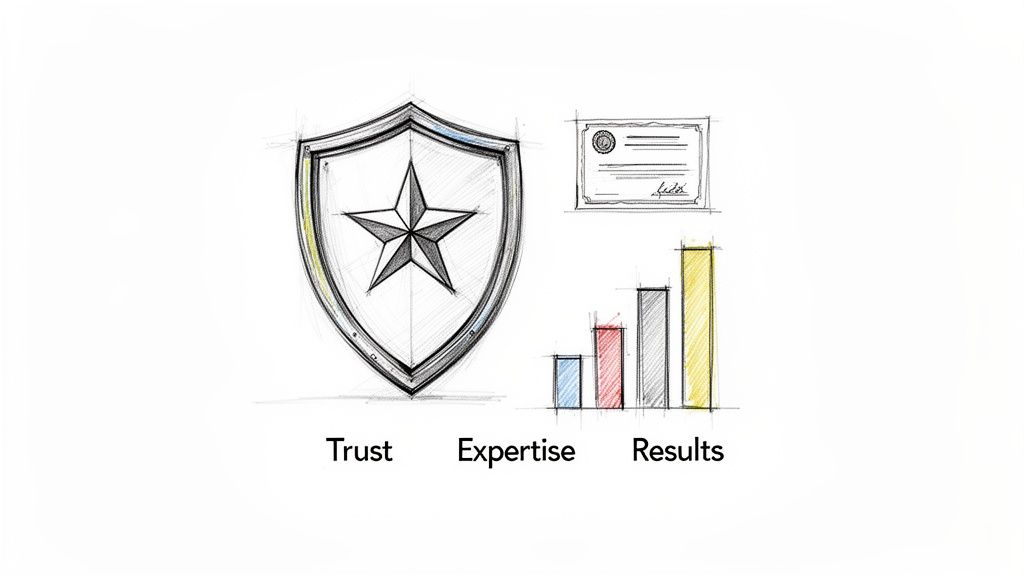
This statement is less about features and more about credentials. It shifts the focus from what the product does to who the brand is, leveraging expertise and past success to create a powerful moat against competitors who lack the same track record.
This framework is designed to build confidence and reduce perceived risk for the customer, making your brand the safest and most logical choice.
McKinsey & Company: "The trusted advisor to the world's leading businesses, governments, and institutions." This statement targets top-tier organizations and positions McKinsey not as a mere consultant, but as an indispensable partner backed by a legacy of authority.
Mayo Clinic: "The world leader in serious and complex medical care." This positions them as the ultimate authority for patients facing critical health challenges, making expertise the central promise.
Legacy Builder Application: "Trusted by 500+ professionals to transform their brands, featuring average follower growth of 400% and an 85% client satisfaction rate." This targets aspiring leaders by using specific data (500+ clients, 400% growth) as undeniable proof of authority and effective results.
We've explored a powerful spectrum of brand positioning statement examples, from the value-driven precision of Slack to the emotional resonance of Dove. We've deconstructed how category leaders like Salesforce claim their territory and how audience-centric brands like Stitch Fix build loyalty by speaking directly to a specific need. Each example, template, and strategic breakdown serves a single, crucial purpose: to provide you with the tools to carve out a distinct, memorable, and defensible space in the minds of your audience.
The journey doesn't end with a perfectly crafted sentence stored in a brand guide. A positioning statement is not a static artifact; it is a strategic compass. It's the DNA that should be present in every email you send, every social media post you publish, every sales call you make, and every product feature you develop. Its true power is unleashed only through consistent and relentless activation.
As you move forward, remember the core principles that connect all the powerful brand positioning statement examples we analyzed:
Having a statement is step one. Activating it across your entire brand ecosystem is where the real work begins. Here is your go-to-market checklist to bring your positioning to life:
Mastering your brand's position is the single most powerful lever you can pull to achieve sustainable growth. It transforms your marketing from a series of disconnected tactics into a unified, strategic force. It gives you the clarity to say "no" to opportunities that don't fit and the confidence to invest deeply in those that do. By internalizing these brand positioning statement examples and their underlying strategies, you are no longer just competing; you are defining the terms of the competition.
You have the framework and the inspiration to define your brand's unique place in the world. But turning that powerful statement into consistent, high-impact content that builds a legacy is a challenge that requires dedicated expertise and execution. At Legacy Builder, we bridge that gap, transforming your vision into a living, breathing brand that connects with your audience every single day.


You could – but most in-house teams struggle with the nuance of growing on specific platforms.
We partner with in-house teams all the time to help them grow on X, LI, and Email.
Consider us the special forces unit you call in to get the job done without anyone knowing (for a fraction of what you would pay).
Short answer – yes.
Long answer – yes because of our process.
We start with an in-depth interview that gives us the opportunity to learn more about you, your stories, and your vision.
We take that and craft your content then we ship it to you. You are then able to give us the final sign-off (and any adjustments to nail it 100%) before we schedule for posting.
No problem.
We have helped clients for years or for just a season.
All the content we create is yours and yours alone.
If you want to take it over or work on transitioning we will help ensure you are set up for success.
We want this to be a living breathing brand. We will give you best practices for posting and make sure you are set up to win – so post away.
Subscribe to our newsletter and get insights on how to grow your personal brand.
