.svg)
Subscribe to our newsletter and get insights on how to grow your personal brand.
Thank you! Your submission has been received!
Oops! Something went wrong while submitting the form.
.svg)


Before you write a single post or optimize your LinkedIn profile, we have to do the real work. The most critical part happens internally.
A powerful personal brand isn’t built on trendy tactics or a slick logo; it's constructed on the bedrock of an authentic story. Without it, your content will feel aimless, your networking will seem forced, and your audience will sense the disconnect.
Think of it like building a house. You wouldn't pick out paint colors before pouring the foundation. Your story is that foundation—it dictates the entire structure of your brand.

Let's be honest, generic mission statements like "I help businesses grow" are completely forgettable. They’re corporate jargon, lacking the human element that actually connects with people. The goal here is to dig deeper.
We need to articulate the experiences, skills, and passions that make up your unique worldview. This isn't just some fluffy branding exercise; it's a process of self-discovery that gives your work real meaning.
Your story is the answer to questions like:
Answering these questions transforms your brand from a sterile resume into a compelling narrative. It’s the difference between being a "marketing consultant" and being "the marketing consultant who learned the power of community by helping their family's small shop survive a downturn." See the difference?
In a world drowning in content, authenticity is your single greatest asset. It’s not just a buzzword. By 2026, a staggering 81% of consumers will demand trust before they even consider buying from you. A genuine personal brand is the ultimate differentiator.
This is especially true now, with AI pumping out more and more content. Human stories have become more valuable than ever. We know that strong visuals craft 55% of first impressions, and 77% of consumers prefer brands they actually follow on social media. This all points to one thing: you have to humanize your digital footprint.
Your uniqueness doesn't come from saying something nobody has ever said before. It comes from your unique combination of experiences, perspective, and voice. Start by documenting your journey, and you'll find your brand.
This is exactly why we see CEOs and founders gaining massive traction by sharing raw, behind-the-scenes stories. They’re not just broadcasting achievements; they're sharing the journey, building familiarity and trust along the way. If you want to dive deeper into this, you can learn how to build your brand storytelling framework that wins hearts and see just how effective this approach can be.
To start uncovering your story, you need a structured way to think through its core components. This isn't about writing a novel; it's about identifying the key themes that will guide every piece of content you create and every conversation you have.
This framework is designed to help you pinpoint the elements that make you memorable.
Use the table below to start the process. Be honest and get specific. This is for you, so don't hold back.
Once you’ve worked through these questions, you'll have the raw materials for a brand story that’s not just compelling, but 100% you. This is the foundation we’ll build everything else on.
Your story is the engine, but without a clear destination, you're just burning fuel. I see it all the time: people pour their hearts into building a personal brand, trying to be everything to everyone.
But that just waters down your message until it means nothing to anyone.
The real power is in getting specific. Your brand isn't for everybody, and that's actually your biggest advantage. When you lock in on a niche audience, your content stops being a generic broadcast and turns into a direct, personal conversation.
Knowing your audience's age or job title is table stakes. It's a starting point, but it barely scratches the surface. The real connection happens when you understand what keeps them up at night.
We're talking about their inner world—the beliefs, goals, and frustrations that actually drive their decisions.
To get there, you need to be able to answer questions like:
When you get these deeper motivations, you can create content that makes them feel seen. That’s how you stop chasing followers and start attracting genuine advocates for your brand.
A persona isn't just some made-up character. Think of it as a composite sketch of your ideal follower, client, or collaborator. This becomes your North Star, making sure every single thing you create is aimed squarely at the person you want to help. It’s what keeps your message sharp and relevant.
Let's make this real. Imagine a cybersecurity consultant trying to build her brand. The rookie move is to target "all tech companies." The pro gets specific.
Her ideal audience member is "Maria," a 38-year-old non-technical founder of a Series A startup with 50 employees. Maria is drowning in compliance rules, fears a data breach will tank her company's reputation, but can't afford a full-time CISO. She reads tech newsletters and listens to startup podcasts on her commute.
See the difference? Now the consultant knows exactly what to talk about. She can create content like "The Top 3 Security Traps for Startups Under 100 Employees" or "How to Bake Security into Your Culture on a Bootstrapped Budget." Every post speaks directly to Maria's world. It's infinitely more powerful than generic advice on "cybersecurity best practices."
Once you've got your persona dialed in, you have to find out where they live online. Your audience isn't spread evenly across the internet; they have their go-to spots for information and community.
Actionable Research Tactics:
This isn't a one-and-done task. It's a constant process of listening. The more you immerse yourself in your audience's world, the easier it becomes to create content that actually helps them. That deep understanding is what connects your story to the community you're meant to lead.
You've nailed down your story and who you're talking to. What's next? Building the engine that actually gets your brand out there, day after day.
Let’s be real: random bursts of inspiration don't build a brand. You need a repeatable system that ends that daily "what the hell do I post today?" panic. That's what a sustainable content strategy is all about. It’s not about just creating more content—it’s about creating the right content with a rhythm you can actually stick to without burning out.
Instead of chasing every shiny new trend, you need to anchor your content in 3-5 core content pillars. Think of these as the main topics you want to own. The sweet spot for these pillars is right where your authentic story crashes into your audience's biggest problems.
For example, a SaaS founder targeting early-stage startups might land on these:
These pillars are your guardrails. Every single thing you create should tie back to one of them. This keeps your message tight, focused, and constantly reinforcing why you're the person to listen to on these specific topics.
Focusing on just a few core themes trains your audience. They learn what to expect from you, and that consistency is how you build trust and authority.
This all starts with deeply understanding your audience—moving from basic demographics to what really makes them tick. That's how you build a persona you can actually talk to.
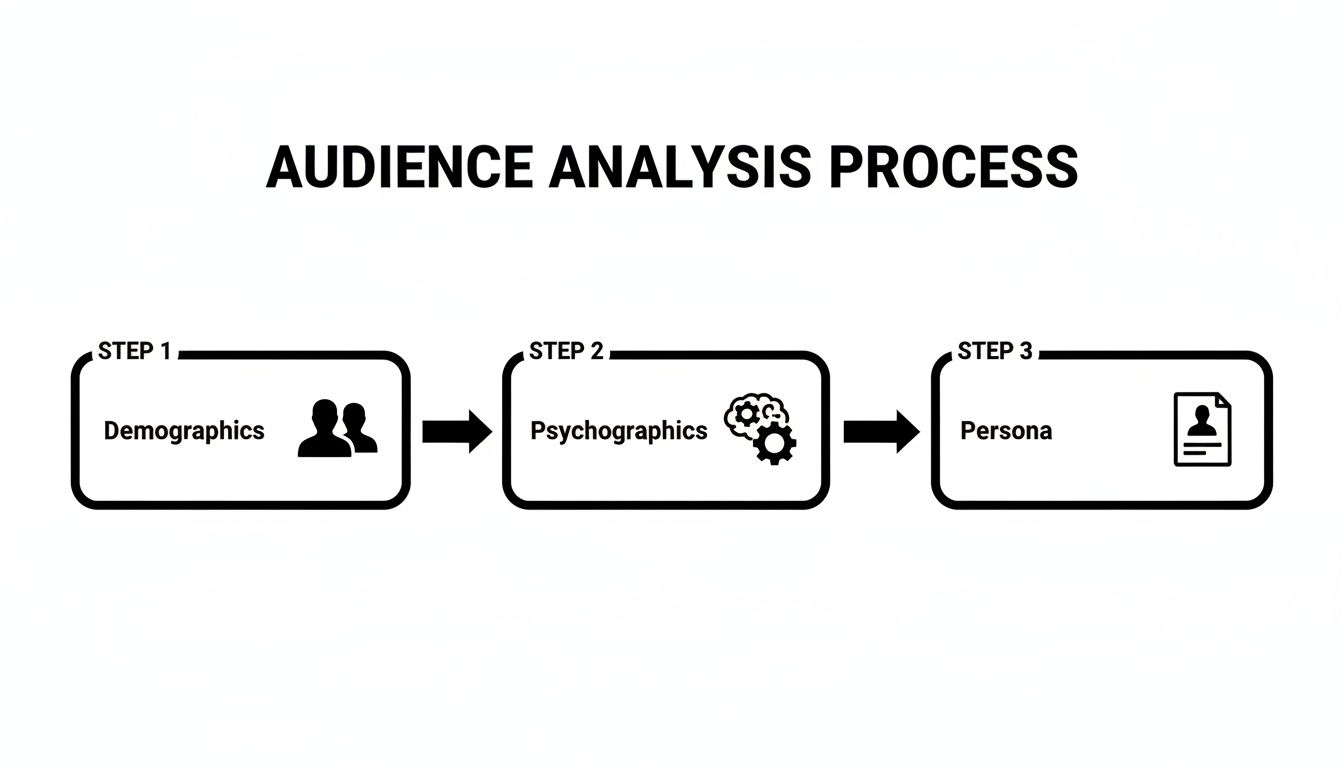
If your content pillars don't connect on a human level, they're just empty categories.
Okay, your pillars are set. Now, how are you going to talk about them? Not every idea is meant to be a 2,000-word article. Switching up your formats keeps things fresh and helps you connect with different people in your audience.
Try thinking about a mix like this:
You don't have to be a master of all of them on day one. Pick one or two formats that feel natural to you and fit where your audience hangs out. Once you get in a groove, you can dive deeper into how to create a content strategy that builds your brand and start adding more to the mix.
Here's the secret weapon for staying consistent without losing your mind: stop trying to come up with a brilliant new idea every single day. The real pros take one great idea and spin it out across multiple formats. It maximizes your effort and hammers your message home.
Here’s what that looks like in the real world:
Just like that, one solid piece of work becomes a full week's worth of content. This system flips content creation from a daily grind into a smart, strategic process.
And it works. Personal shares on social media crush company posts by an incredible 561%. That number tells you everything you need to know: your individual voice is your single greatest asset. As old-school signals of credibility die off, your authentic perspective, shared consistently, is what builds the trust that corporate logos can't buy.

Your content strategy is the fuel, but your online profiles are the vehicle. It's a hard truth, but even the best content will fall flat if the profiles pushing it are sloppy or confusing.
Think of it this way: every profile you own, from LinkedIn to X, is a digital front door. You’ve got maybe three seconds to make an impression that pulls people in. Screw that up, and they're gone.
This isn’t just about looking good online; it’s a critical piece of how you develop your personal brand into an asset that actually gets you paid. The market for this is exploding. The personal branding services market was valued at USD 613 million and is on track to hit USD 1,156 million by 2034. That's not just a random number—it's a signal that in a noisy world, a polished digital presence is your unfair advantage.
Before anyone reads a single word you've written, they see your face. Your headshot is your digital handshake. It has to say "I'm a pro, but you can talk to me" in a single glance.
Don't make these rookie mistakes:
Shell out the cash for a professional headshot. Seriously. It’s a tiny investment for a huge credibility boost. Your banner image is just as crucial. Use that prime real estate to show what you're about. It could be a simple graphic with your tagline, a shot of you speaking on stage, or a clean design that screams "I know my industry."
Your headline and bio are your 24/7 sales team. They need to be sharp, compelling, and tuned into what people are searching for.
On LinkedIn, your headline is everything.
Don't just put "Marketing Manager." That's a massive waste of an opportunity. Frame what you do around the problem you solve. Instead of "Marketing Manager," try something like, "I Help SaaS Startups Build Pipeline with Content That Actually Converts." One is a job title; the other is a solution. Want to dig deeper into the basics? There's a solid guide on how to build your online presence that covers these fundamentals.
Your bio is your brand's story, condensed.
Structure it to hook people fast.
Your bio isn't a resume summary. It’s a promise. It needs to answer one question in under 10 seconds: "Why should I follow you?"
Start with a punchy line about who you help and how. Then, hit them with a few quick bullet points on your expertise or big wins. Finish strong with a clear call-to-action (CTA). Tell them what to do next—connect with you, grab your newsletter, or check out your work. If you want to centralize all this, looking into the best personal branding websites can give you ideas for creating a powerful hub for your brand.
While the principles are the same, the execution differs slightly between platforms. Here’s a quick-and-dirty checklist to make sure your two main professional profiles are dialed in.
These small tweaks aren't just for show. They're strategic moves to turn your digital storefront from a passive resume into an active machine that builds your authority and brings opportunities to you. Get them right, and you'll see a massive difference.
Putting out killer content is a great start, but it's only half the battle. If you just post and ghost, you’re missing the entire point. A personal brand isn’t built by shouting into an empty room; it’s forged in the back-and-forth of real conversations. This is how your static profile becomes a living, breathing hub for connection.
This isn’t about chasing vanity metrics. Forget the likes for a second. We're talking about building genuine relationships, one thoughtful comment and DM at a time. This is where you graduate from being just another voice online to becoming a trusted peer and a recognized authority in your space.
Want to become irrelevant fast? Make everything about you. The most successful personal brands I've seen all operate on one powerful principle: give value first. Before you even think about asking for a sale, a follow, or a connection, you have to generously contribute to the conversations already happening.
This means actively seeking out discussions under your content pillars and dropping your unique perspective. Don't just leave a generic "Great post!" and bounce. Build on the original idea, ask a sharp follow-up question, or share a quick personal story that adds another layer to the conversation.
Engagement is the currency of community. When you invest your time and insights into other people's content, you're not just building visibility; you're building relational equity that pays dividends in trust and reciprocity.
This approach completely flips the script from self-promotion to community-building. People remember those who made them feel heard and seen.
Look, you don't need to spend hours a day on this to make an impact. Consistency will always beat intensity. A focused, 10-minute daily routine is more than enough to stay visible and build momentum, even on your craziest days.
Here’s a practical framework you can steal, starting tomorrow:
This simple, repeatable process ensures you’re an active participant in your community every single day. It’s a small investment that compounds into massive network growth over time. As you develop your personal brand, this daily habit is completely non-negotiable.
As your network grows, you’ll naturally want to connect with influential people more directly. This is where so many professionals stumble, sending out those generic, copy-paste connection requests that get ignored instantly. Real, authentic outreach requires personalization and a clear reason why you're reaching out.
Do your homework before you hit send. Understand what they do, reference a specific piece of their content you genuinely enjoyed, and be crystal clear about why you want to connect. The goal is to start a conversation, not make a demand.
To really dial this in and make sure your messages land, checking out some actionable cold email tips can make a huge difference in how your outreach is received. A well-crafted message shows you respect their time and immediately separates you from the noise.
Think about these different approaches for building connections:
Authentic engagement is your long game for growth. It’s how you build a powerful network of advocates, collaborators, and clients who are invested in your success because you first invested in theirs.
When you decide to get serious about building your personal brand, a million questions probably start swirling around in your head. It’s a mix of excitement and a whole lot of "am I doing this right?" I get it. Let's tackle the big questions I hear all the time so you can move forward with some clarity.
This is always the first question, and I'll be straight with you: this is a marathon, not a sprint. Anyone who tells you otherwise is selling you a fantasy. Building a brand that people know, like, and trust is about laying one brick perfectly, every single day.
Realistically, you can expect to see the first signs of life—like more profile views or people actually sending you connection requests—within 3-6 months of daily, consistent effort. But if we're talking about building a real asset, a brand that pulls in opportunities while you sleep? That usually takes 1-2 years of showing up and delivering value.
The game isn't about intensity; it's about consistency. Trust and authority aren't built overnight.
This one's a classic. It’s the voice of imposter syndrome whispering that everything has already been said. Good news: that voice is dead wrong.
Your unique angle isn't about some earth-shattering new idea no one's ever heard of. It’s you. It's your specific blend of experiences, your point of view, and the way you connect the dots. Think of it like this: ten chefs can get the same recipe for a steak, but each one will turn out a completely different dish. Your content is no different.
Just start by documenting what you're learning. Share the hard-won lessons from your screw-ups. Explain a complicated idea in a way that finally makes sense.
Your perspective is your greatest differentiator. How you learned what you know is often more valuable and engaging to an audience than just the raw information itself.
This is exactly why we start with your narrative first. Your story is the one thing nobody else can copy.
So many people get this twisted. They think "authenticity" means sharing their deepest, darkest secrets or forgetting all professional courtesy. That couldn't be further from the truth. The two aren't at odds—they're what make a brand powerful.
Here’s a simple way to think about it:
You can be completely authentic by sharing a tough career obstacle you navigated, admitting you don't have all the answers, or just letting your personality come through in your writing. The best brands feel like real people—people you could grab a coffee with who also happen to be total pros in their field. It's not about having no filter; it's about having the right filter.
Yes. A thousand times, yes. In fact, some of the most magnetic brands out there are run by introverts.
Building a brand doesn’t mean you have to become a keynote speaker or do daily live videos. It's about finding the right channel to share your value, and doing it in a way that doesn't drain your soul.
For many introverts, writing is their superpower. You get to control the entire narrative, refine every word, and share your thoughts on your own terms. Lean into what feels good for you:
The goal is to share what you know. The delivery method is completely up to you, which makes this the perfect game for introverts and extroverts alike.
At Legacy Builder, we help pros just like you cut through the noise, answer these tough questions, and build a brand that’s not only effective but feels like you. We take your expertise and turn it into high-impact daily content, freeing you up to do what you do best.
If you’re ready to stop second-guessing and start building, see how Legacy Builder can craft your legacy online.


You could – but most in-house teams struggle with the nuance of growing on specific platforms.
We partner with in-house teams all the time to help them grow on X, LI, and Email.
Consider us the special forces unit you call in to get the job done without anyone knowing (for a fraction of what you would pay).
Short answer – yes.
Long answer – yes because of our process.
We start with an in-depth interview that gives us the opportunity to learn more about you, your stories, and your vision.
We take that and craft your content then we ship it to you. You are then able to give us the final sign-off (and any adjustments to nail it 100%) before we schedule for posting.
No problem.
We have helped clients for years or for just a season.
All the content we create is yours and yours alone.
If you want to take it over or work on transitioning we will help ensure you are set up for success.
We want this to be a living breathing brand. We will give you best practices for posting and make sure you are set up to win – so post away.
Subscribe to our newsletter and get insights on how to grow your personal brand.
