.svg)
Subscribe to our newsletter and get insights on how to grow your personal brand.
Thank you! Your submission has been received!
Oops! Something went wrong while submitting the form.
.svg)


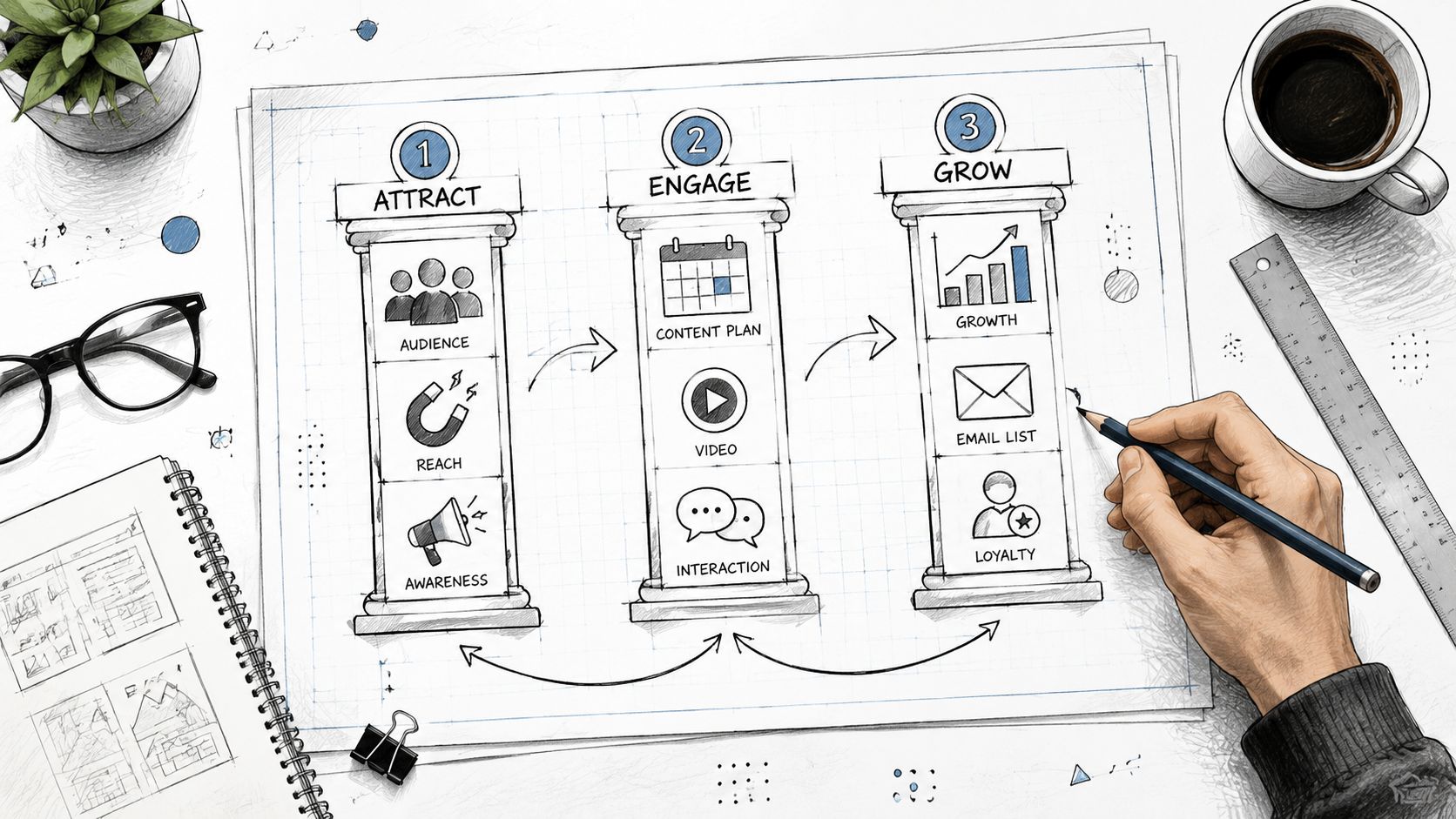
You're probably doing what most founders do at first. You post when you have a spare hour, pick topics based on whatever's top of mind, and hope consistency alone will eventually pay off.
It usually doesn't.
Random posting creates random results. One post gets decent engagement, the next disappears, your website says one thing, your LinkedIn says another, and your audience never gets a clear picture of what you stand for. You're working, but you're not building an asset.
A real content strategy for the web fixes that. It turns content from a draining side task into a system that compounds. Instead of asking, “What should I post today?” you know what themes matter, who you're speaking to, where each piece belongs, and what action you want it to drive.
That's the shift. Less guessing. More effectiveness.
A founder I'd recognize instantly, because I've seen this pattern a hundred times, usually starts the same way. They write a thoughtful LinkedIn post on Monday, skip two weeks, record a short video on a whim, then publish a blog post that sounds polished but doesn't connect to anything else. Every piece exists alone.
Nothing is technically wrong with the content. The problem is that there's no system holding it together.
You know the signs:
That's why smart founders still feel invisible online. They're creating content, but they're not creating momentum.
Practical rule: If your audience can't predict what you'll be useful for, your brand still feels accidental.
Once you build a real system, your content starts doing a different job. It stops being a public journal and starts becoming infrastructure for your business.
You publish with intent. You repeat core ideas enough to be remembered. Your website, profile, newsletter, and social posts begin reinforcing the same positioning. People don't just see content. They understand your point of view.
If you want sharper execution on short-form channels, this guide to viral social media is useful, but don't make the common mistake of chasing virality before you've built strategic clarity. Reach without positioning is noise at scale.
The founders who win online aren't always the loudest. They're the clearest. They know what they want to be known for, and they build around that on purpose.
Hearing “content strategy” often leads to thinking of a content calendar.
That's too small.
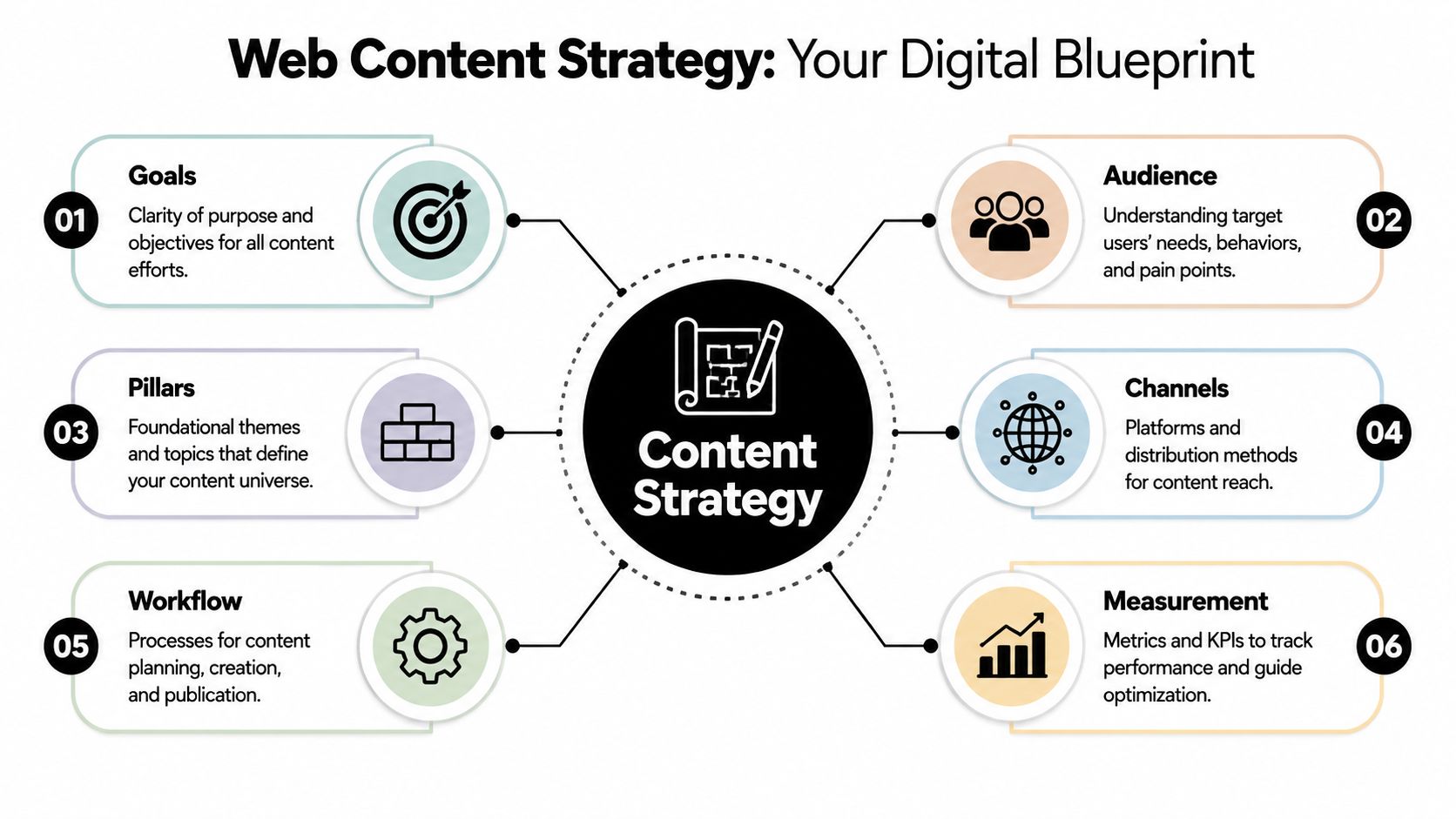
A content strategy for the web is the blueprint behind your digital presence. It decides what content you create, who it serves, how it gets delivered, and how it stays useful over time. Without that blueprint, you're just publishing disconnected assets and calling it marketing.
Here's the clean distinction.
| Approach | What it does |
|---|---|
| Content calendar | Schedules what gets published |
| Topic list | Gives you ideas to talk about |
| Content strategy | Defines why content exists, who it serves, how it works, and how it gets managed |
A calendar is execution. Strategy is the thinking that makes execution worth doing.
That includes:
If you only focus on creation, you're doing content production, not strategy.
This isn't some fluffy marketing phrase invented by agencies. Content strategy officially emerged as a distinct professional discipline in 2009 following the publication of Kristina Halvorson's seminal book Content Strategy for the Web, which marked a shift from casual web publishing to a rigorous, user-centered business function built around integrated, goal-driven choices across the content lifecycle, as noted in the Pearson preview of Halvorson's book.
That matters because founders still treat content like an afterthought. They design the site, launch the offer, set up the profile, and only then ask, “What should we say?”
That's backwards.
Great brands don't bolt content on at the end. They use content to shape how the brand is understood from the start.
If your focus is narrower and channel-specific, this breakdown of content strategy for social media is worth reviewing. But social strategy sits inside the larger web strategy. It doesn't replace it.
Your website, your profile, your articles, your email, your short-form posts. They all need one operating logic. If they don't, your audience feels the disconnect even when they can't name it.
Most founders make audience research too abstract. They invent a persona with a job title, a rough age range, and a few generic pain points, then wonder why the content still feels bland.
You don't need a fake persona. You need a sharp picture of real people you want to attract.
Build a Dream 100 list. Not for outreach first. For clarity.
This list should include ideal clients, referral partners, peers, podcast hosts, newsletter writers, and creators your audience already trusts. Study what they talk about, what language they use, what questions keep showing up, and where confusion still exists.
Ask better questions:
If you need help tightening that profile, this guide on how to create buyer personas for founders is a practical starting point.
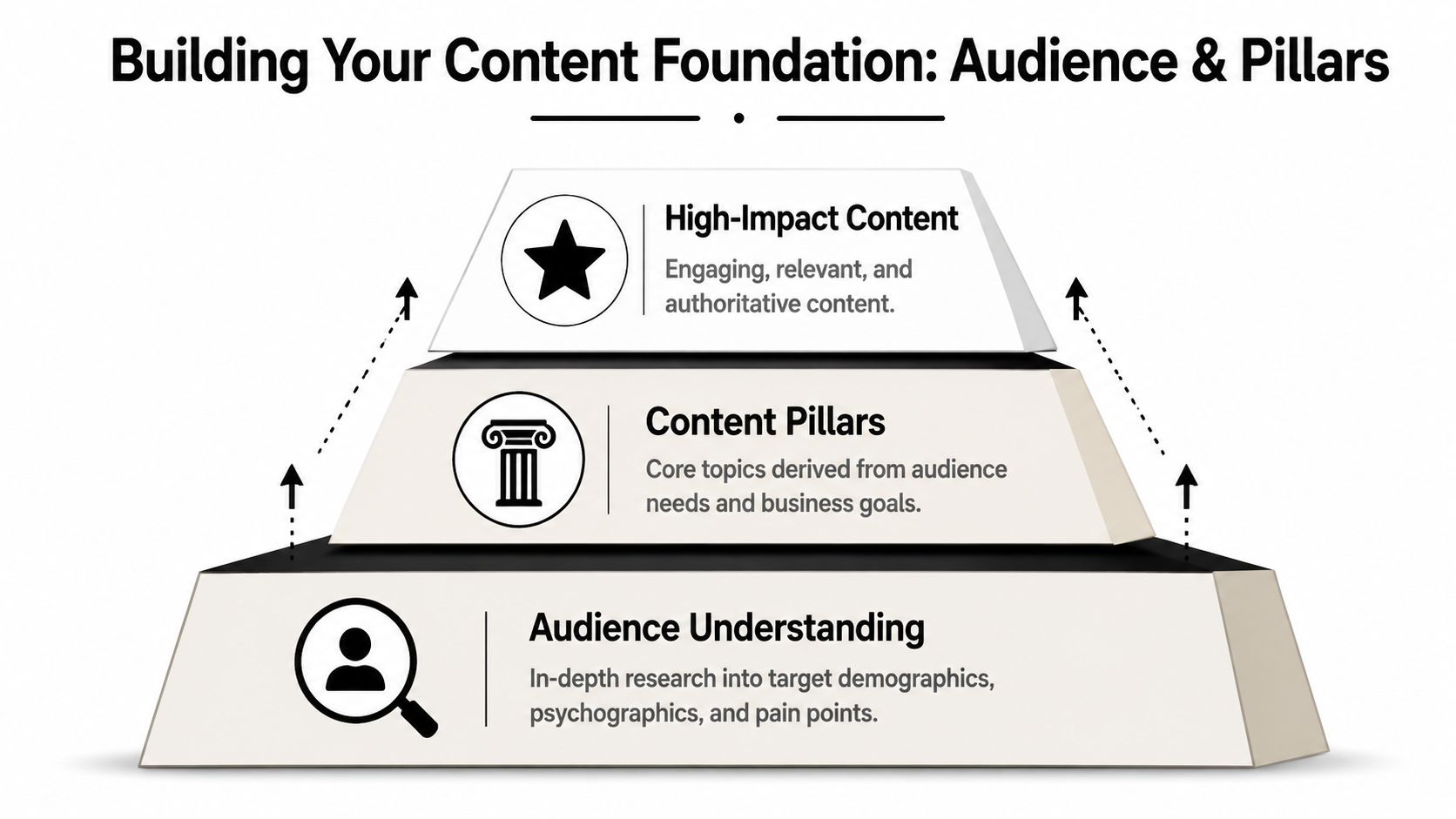
Once your audience is clear, choose your pillars. Not ten. Not seven. Three to five is the right range. According to Siteimprove's framework, strategists select three to five core pillar themes aligned with business objectives and audience interests so the messaging framework can support voice, tone, and SEO across the entire ecosystem, as outlined in this content strategy framework.
That range forces discipline.
Your pillars should sit at the intersection of three things:
Here's a simple way to pressure-test a pillar.
| Good pillar | Weak pillar |
|---|---|
| Solves recurring audience problems | Exists only because you find it interesting |
| Connects to your offer or expertise | Attracts attention but no qualified trust |
| Can generate many content angles | Produces a few posts, then dries up |
For a B2B founder or professional brand, your pillars often look something like this:
Industry insight
Your view on the market, trends, buyer behavior, and what's changing.
Method or framework
How you solve problems. Your process, philosophy, and decision criteria.
Proof and experience
Stories from work, lessons learned, mistakes corrected, observations from the field.
Personal leadership
What you believe about building, leading, hiring, selling, or thinking.
You don't need to use those labels. You need pillars that let your audience say, “I know exactly what this person is about.”
This short video can help you think through the audience-to-message connection in a more practical way:
Your content gets stronger when your audience can recognize the category of value before they even finish the post.
A founder who talks about marketing, leadership, productivity, AI, startup life, branding, fundraising, hiring, mindset, and wellness doesn't look versatile. They look unfocused.
Pick fewer lanes and go deeper.
That's how authority works online. Not by saying everything. By becoming unusually clear on the few things you want to own.
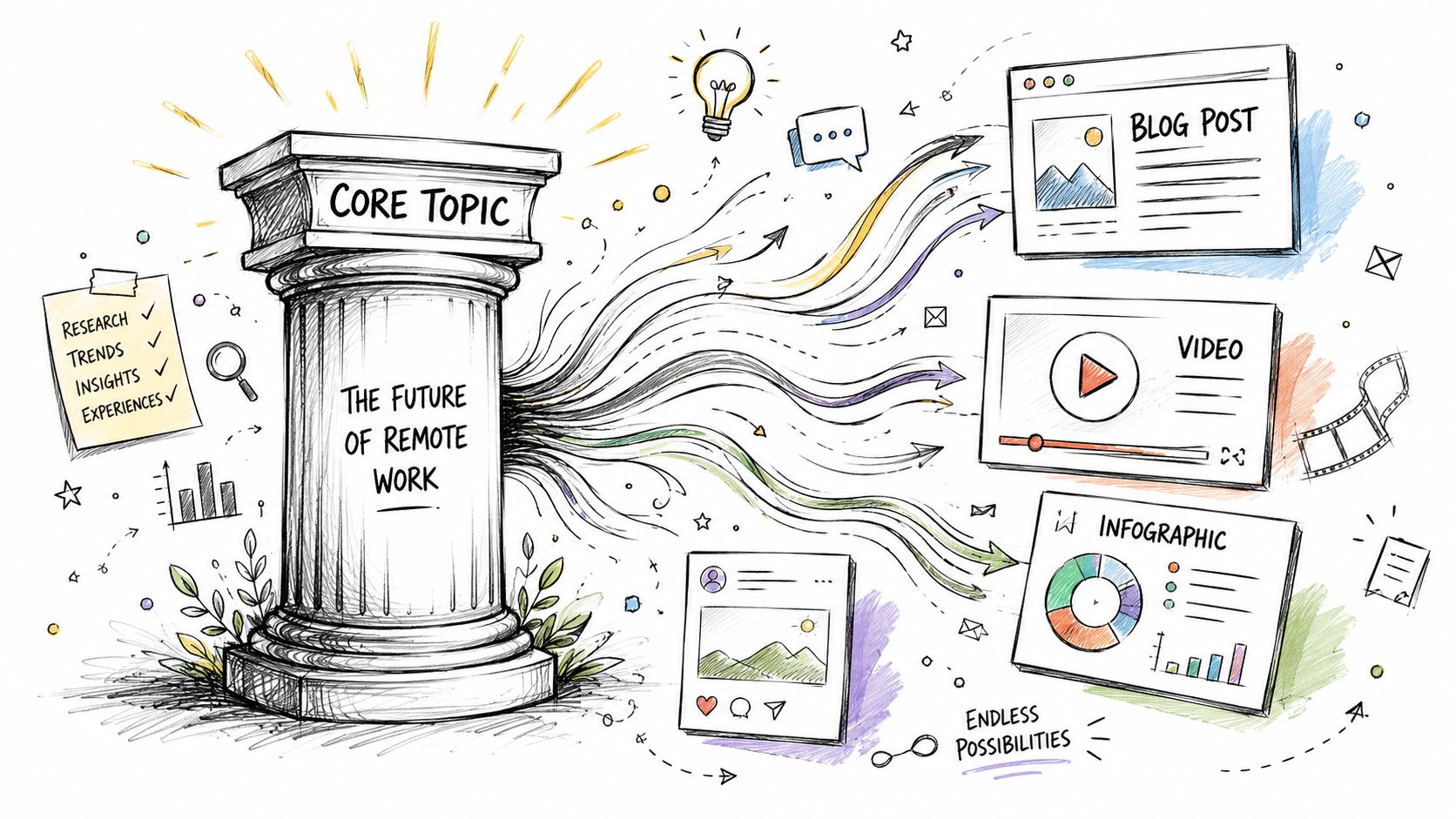
Once your pillars are set, content creation gets easier. Not effortless, but easier. You're no longer staring at a blank page asking what to say. You're translating known themes into useful formats.
That's the job.
Founders often think they need to become creators. They don't. They need to become better at extracting content from the work they already do.
Your best source material usually lives in places you overlook:
That material is better than generic trend commentary because competitors can't copy your lived perspective.
Take one pillar, say positioning. You can build a month of content from it without repeating yourself if you use different angles.
Try this mix:
Same pillar. Different entry points.
Founder rule: Don't ask, “What should I post?” Ask, “What does my audience still misunderstand about this pillar?”
Not every idea belongs in the same wrapper.
| Idea type | Best-fit format |
|---|---|
| Strong opinion | LinkedIn post or X thread |
| Step-by-step lesson | Carousel, article, or newsletter |
| Personal lesson | Founder story post or short video |
| Nuanced explanation | Blog post or email |
| Fast credibility builder | Short clip, quote graphic, or comment strategy |
A lot of founders force everything into one format because it feels efficient. That weakens the message. Let the idea decide the format.
If you need a systematic way to extend one strong idea into many assets, this developer's guide to content repurposing is useful for thinking through adaptation across formats.
Clean writing matters. Clear hooks matter. But your voice matters more.
Your audience follows a personal brand because they want your judgment, not generic correctness. If every post sounds like it came from a committee, your content may be technically fine and strategically dead.
A simple creation workflow works better than perfectionism:
If you want outside support, tools and services can help at different stages. A writing assistant can sharpen drafts. A scheduler can handle distribution. A structured service like Legacy Builder can extract your voice, positioning, and content pillars from conversation and turn them into a repeatable publishing system.
The point isn't to outsource your brain. It's to stop wasting it on avoidable friction.
Most founders resist calendars because they think structure will kill authenticity.
The opposite is true.
A simple editorial calendar protects your best thinking from chaos. It removes the daily decision fatigue that causes inconsistency, and it gives you a working engine instead of a pile of unfinished ideas.
You do not need a giant marketing ops board with approval chains and color-coded complexity. You need something you'll use.
These are the only fields most personal brands need:
That's enough to plan, ship, and track.
Here's a clean version you can copy.
| Date | Pillar | Hook / Topic Idea | Format | Platform(s) | Status |
|---|---|---|---|---|---|
| Monday | Positioning | Why most founder brands sound interchangeable | LinkedIn post | Draft | |
| Wednesday | Process | My framework for turning client calls into content | Short video | LinkedIn, Instagram | Idea |
| Friday | Personal leadership | The decision that saved me from content burnout | Newsletter | Email, website | Scheduled |
The right cadence is the one you can maintain without resentment.
For many founders, a realistic baseline looks like this:
That's enough to build signal if the strategy is tight.
A content engine doesn't need to be loud. It needs to be consistent, recognizable, and useful.
Your calendar should answer four questions fast:
If it can't do that, it's too messy.
For a more detailed walkthrough of setup and maintenance, this guide on how to create a content calendar that actually works is worth bookmarking.
The calendar is not the strategy. But it's where strategy becomes visible. If your strategy is sound, your calendar will look focused. If your strategy is fuzzy, your calendar will expose it immediately.
Posting content is not distribution.
A lot of founders still act like publishing is the finish line. It isn't. It's the starting gun. If you hit publish and disappear, don't act surprised when your reach stalls and your audience forgets you exist.
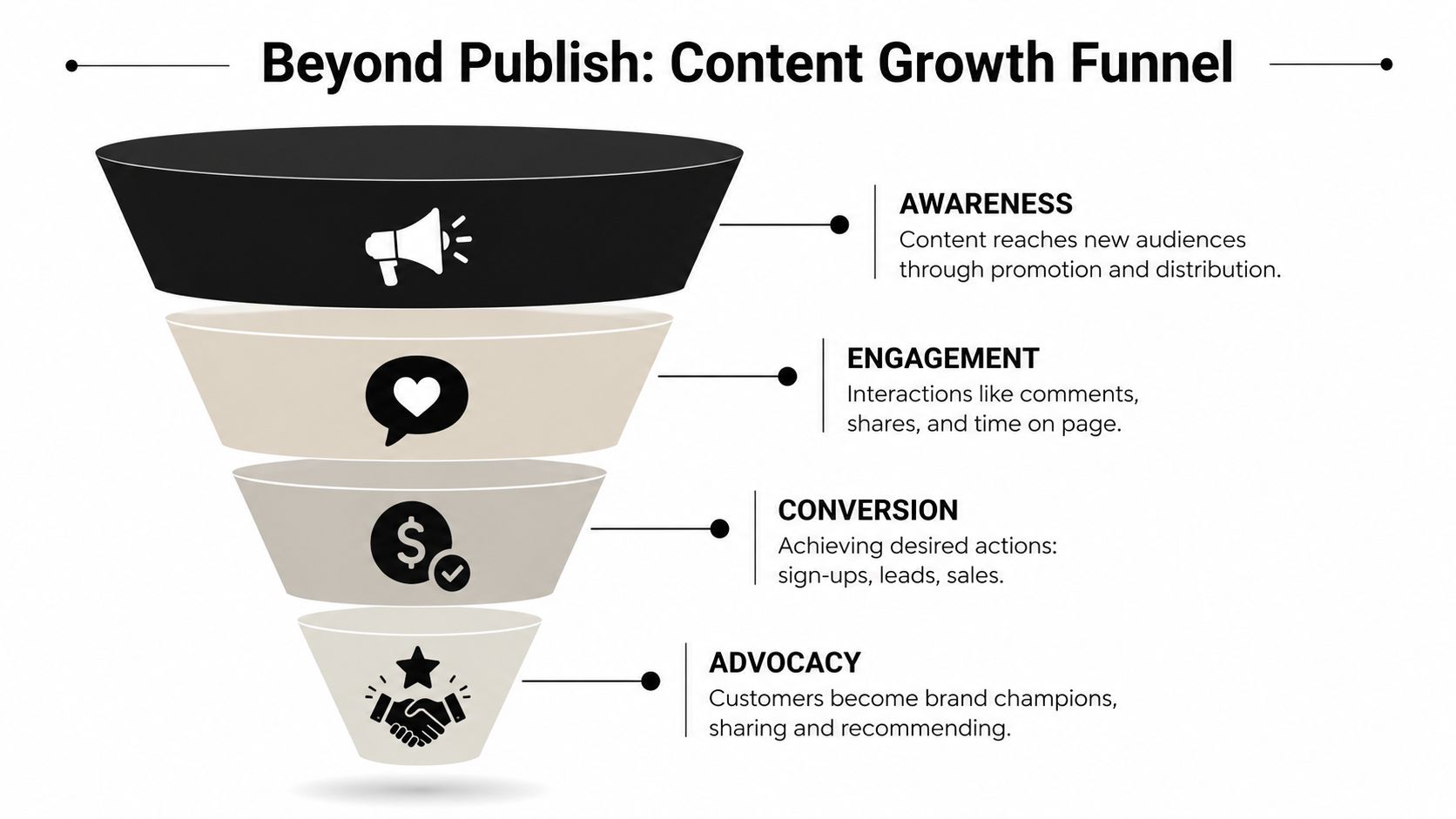
The passive model looks like this. Publish. Check likes. Move on.
That model fails because attention online is crowded, and because trust usually forms through repeated contact. Your audience often needs to see your ideas in different places, in different formats, and in active conversation before they remember you.
The better model is simple:
Most personal brands leave money on the table by posting publicly but never building private relationships.
Your Dream 100 list should shape your engagement habits. Comment on their posts with substance. Share relevant ideas without trying to impress. Send direct messages when you have a real reason to start a conversation, not a templated pitch.
Good outreach sounds like a peer. Bad outreach sounds like automation.
Here's what to prioritize each week:
| Activity | Why it matters |
|---|---|
| Thoughtful comments | Puts your thinking in front of aligned audiences |
| Direct messages with context | Builds real relationships faster than public posting alone |
| Sharing others' work with your angle | Signals taste and creates association |
| Repurposing top-performing ideas | Extends useful content instead of starting from zero |
A strong repurposing workflow matters even more than most founders realize. If you want a practical framework, this guide on content repurposing for maximum impact lays out the mechanics clearly.
There's another reason distribution matters. Audience decay.
A recent EBU Academy source notes that 54% of content teams lack strategies to re-engage audiences who shift channels, leading to a 30 to 40% annual loss in content relevance, a problem especially damaging for trust-based personal brands, according to this piece on creating content strategies for underserved audiences.
That's the danger of building your brand as if audience behavior will stay fixed. It won't.
If your audience shifts from blogs to short video, or from one platform to another, your strategy has to move with them without losing your core message.
Repurposing doesn't mean copying the same post everywhere.
Do this instead:
That's how one idea becomes a presence.
The founders who grow steadily online don't rely on luck. They build a distribution habit that keeps their message in motion.
If you only track likes and follower counts, you'll make bad decisions.
Vanity metrics are easy to watch and easy to misread. A post can perform well publicly and do nothing for your business. Another post can look quiet and still bring in the right conversation, the right referral, or the right client.
That's why conscious measurement and monitoring matters. Nielsen Norman Group emphasizes that successful content strategy uses content-strategy statements to define what content should achieve, along with web analytics and other KPIs to keep it aligned with business goals, as explained in this guide to content strategy measurement and monitoring.
For a founder-led brand, the strongest signals are usually:
Don't rewrite your strategy because one post flopped.
Review your content monthly. Look for pattern-level signals. Which pillars attract the right audience? Which formats create deeper response? Which topics bring low-quality attention that doesn't convert into trust?
That's how a content strategy for the web becomes a long-term asset. You measure, refine, and keep the core message steady while the tactics evolve.
If you want help turning your ideas into a real personal brand system, Legacy Builder works with founders and professionals to clarify positioning, extract authentic voice, define content pillars, and build a publishing rhythm that supports growth without turning content into another full-time job.


You could – but most in-house teams struggle with the nuance of growing on specific platforms.
We partner with in-house teams all the time to help them grow on X, LI, and Email.
Consider us the special forces unit you call in to get the job done without anyone knowing (for a fraction of what you would pay).
Short answer – yes.
Long answer – yes because of our process.
We start with an in-depth interview that gives us the opportunity to learn more about you, your stories, and your vision.
We take that and craft your content then we ship it to you. You are then able to give us the final sign-off (and any adjustments to nail it 100%) before we schedule for posting.
No problem.
We have helped clients for years or for just a season.
All the content we create is yours and yours alone.
If you want to take it over or work on transitioning we will help ensure you are set up for success.
We want this to be a living breathing brand. We will give you best practices for posting and make sure you are set up to win – so post away.
Subscribe to our newsletter and get insights on how to grow your personal brand.
