.svg)
Subscribe to our newsletter and get insights on how to grow your personal brand.
Thank you! Your submission has been received!
Oops! Something went wrong while submitting the form.
.svg)


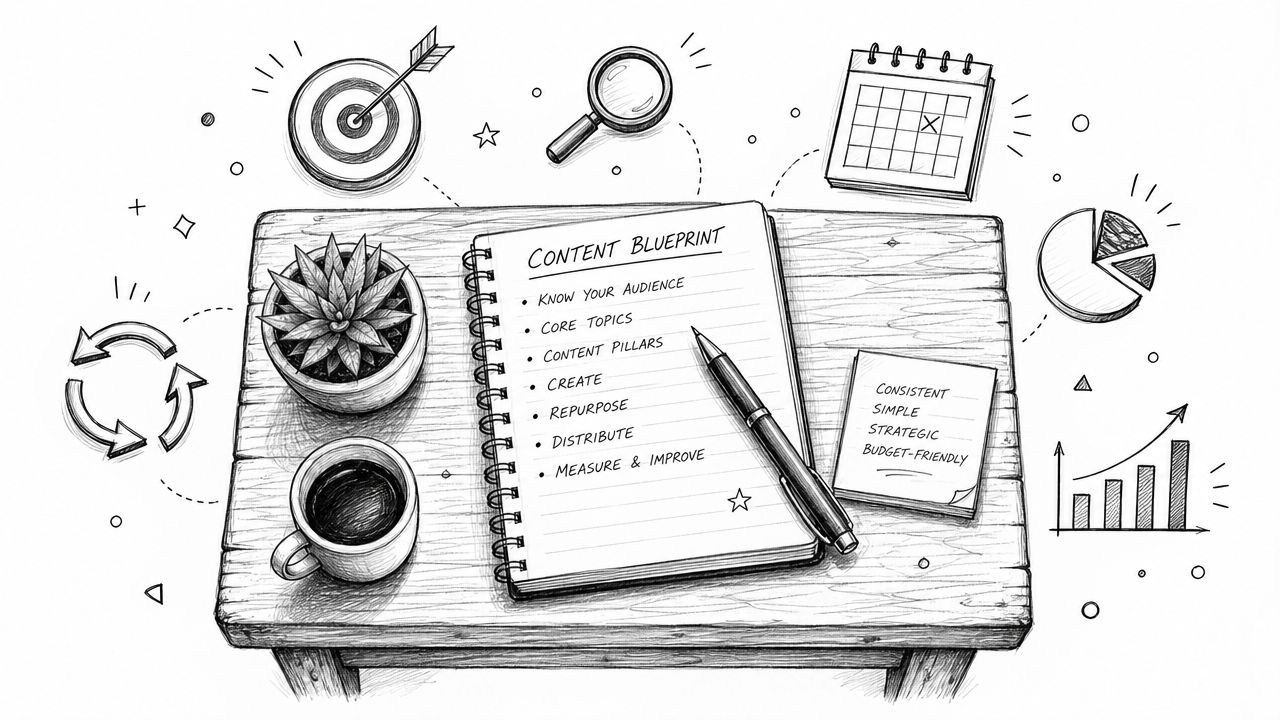
Most advice about content strategy for small business is built for teams you don't have, budgets you don't have, and time you definitely don't have.
You don't need a bloated strategy deck, six channels, and a publishing schedule that collapses by week two. You need a minimum viable content strategy you can run while doing sales, client work, hiring, and everything else that lands on a founder's desk.
That means fewer moving parts. Fewer formats. Fewer channels. More discipline.
The businesses that get traction with content usually aren't the ones producing the most. They're the ones that stop posting randomly and start operating from a simple documented plan. That shift matters even more now, because the space is getting crowded fast.
Most small-business content strategies fail for one simple reason. They were never designed for a small business.
They're borrowed from enterprise marketing. They assume a specialist team, a designer on standby, a video editor, a strategist, and enough spare time to hold meetings about meetings. That's nonsense for a founder who also handles delivery, sales, admin, and customer problems before lunch.
A real content strategy for small business should fit on a page. If it can't, it's probably too complicated to survive contact with real life.
Small businesses rarely fail because they “run out of ideas.” They fail because content becomes reactive.
One week you post a tip on LinkedIn. The next week you publish a blog no one promotes. Then someone says you should start a newsletter, launch a podcast, and post daily short-form video. Soon you've built a content machine that only works if you ignore the rest of your business.
That's why random acts of marketing are so common. The industry keeps growing, but planning still lags. Salesgenie says the global content marketing industry is projected to grow by 33% by 2026, while only 47% of B2B marketers have a documented content marketing strategy according to Salesgenie's content marketing statistics.
That gap is your opportunity.
You need a lean system that answers a few basic questions:
Practical rule: If your strategy requires heroic effort to maintain, it isn't a strategy. It's a short-term burst of enthusiasm.
The point of a strategy isn't to impress anyone. It's to stop wasting effort.
If your content isn't tied to a business goal, it's a hobby.
That sounds harsh, but it's true. A founder can burn months creating “valuable content” that never leads to inquiries, sales conversations, sign-ups, or trust with the right buyers. The fix is simple. Decide what the business needs first, then make content serve that need.
Salesforce frames modern strategy around four steps: define the audience, set goals, choose formats, and track results, and it specifically advises small businesses to tailor goals to budget and manpower constraints in its small-business content marketing guide.
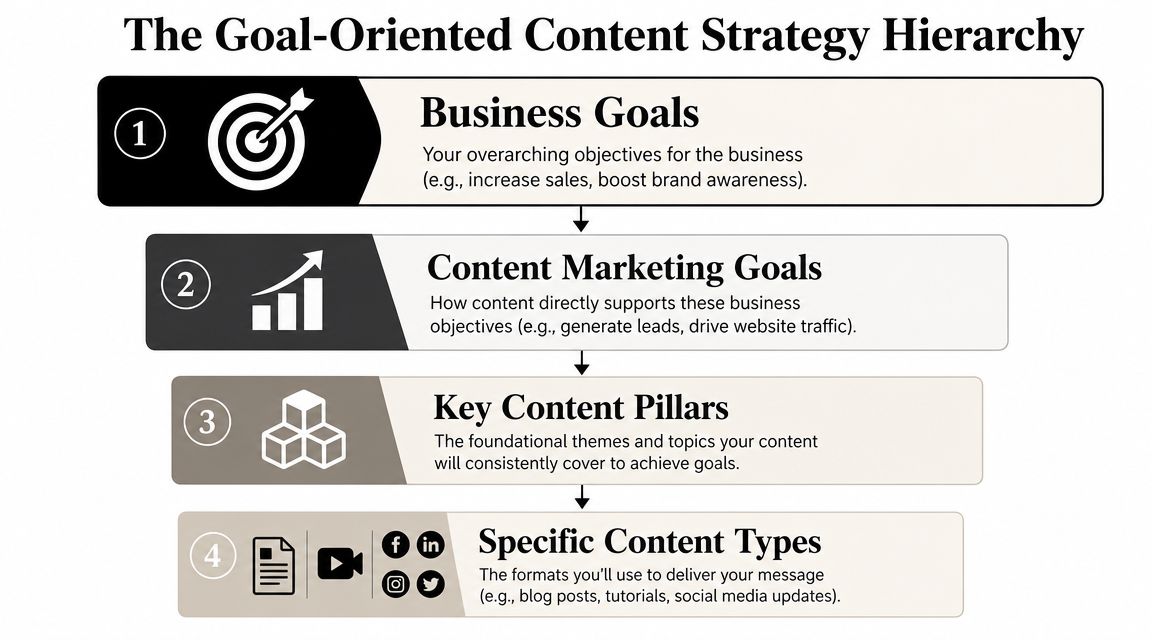
A lot of founders start with this question: “What should I post?”
Wrong question.
Start here instead:
What result matters most right now?
Maybe you need more qualified leads. Maybe you need trust-building before a longer sales cycle. Maybe you need an email list because social reach is unreliable.
What buyer action would prove content is working?
A booked consultation. A contact form submission. A newsletter sign-up. A reply to an email.
What content can realistically influence that action?
Educational articles, founder commentary, customer FAQs, short videos, email sequences, or case-based explainers.
If you want sharper positioning before you map those goals, it helps to learn brand strategy with Bulby. Content works better when the underlying message is clear.
You don't need a bloated persona template. You need one paragraph.
Write this:
| Question | What to define |
|---|---|
| Who are they? | Role, business type, stage, or problem context |
| What are they trying to achieve? | The outcome they want |
| What frustrates them? | Delays, confusion, risk, wasted spend, slow growth |
| What makes them hesitate? | Skepticism, lack of time, budget, uncertainty |
| What would help them trust you? | Proof of expertise, clarity, consistency, founder perspective |
Example:
We help service-based founders who know they should publish online but keep falling into inconsistency. They want visibility and trust, but they don't want to spend all week making content. They're skeptical of agencies that sound polished but generic. They trust clear thinking, practical examples, and content that sounds like a real operator.
That's enough to guide your decisions.
Don't stuff your strategy with every possible objective. Choose one priority.
A simple model:
Content should answer a business need. If a post doesn't support that need, cut it.
At this stage, most content strategies for small business get stronger fast. Not because the ideas improve overnight, but because the waste drops.
Once your goals are clear, you need to decide what you'll talk about repeatedly.
Many founders get stuck, thinking content needs endless novelty. It doesn't. It needs structured repetition. Your audience doesn't follow your business every day, and they don't remember every post. Repeating the right themes is a feature, not a flaw.
The cleanest way to do this is with content pillars. Think of them as the recurring themes your business can speak about with authority. For most small businesses, 3 to 4 pillars is enough.
Guidance for small businesses consistently points to that structure. One practical workflow recommends defining 3–4 recurring brand pillars tied to goals and focusing on one or two core content formats so execution stays realistic, as summarized in this small-business content strategy guide.
A strong pillar sits at the overlap of three things:
Bad pillars are too broad. “Marketing” is too broad. “Leadership” is too broad.
Better pillars are specific and useful:
Open a blank doc and answer these prompts without overthinking them.
List the questions buyers ask before they hire you.
Some will be obvious:
Those questions often become your first pillar.
Now list what you know from doing the work.
Not generic internet knowledge. Real operational knowledge. Things you've seen fail. Patterns you've noticed. Trade-offs you help clients manage. Lessons from fixing messy situations.
That becomes another pillar.
Every strong brand has opinions. If you don't state them, your content turns bland.
Ask:
That usually becomes your authority pillar.
Different businesses should structure pillars differently.
| Business type | Sample pillars |
|---|---|
| Service business | client education, process transparency, objections and FAQs, local or niche expertise |
| SaaS company | use cases, workflow education, category insights, customer success lessons |
| Personal brand | founder perspective, practical how-to content, audience mistakes, behind-the-scenes operating lessons |
Your pillars should feel like chapters in the same book. Different topics, same worldview.
Here's the test. If a pillar doesn't help you come up with post ideas quickly, it's too vague.
A good pillar should generate:
For founders building a personal brand, this is also where having outside help can save time. Legacy Builder is one option that extracts a client's positioning, voice, and content pillars through a structured conversation and then turns that into a repeatable content system. That's useful if you know your expertise but struggle to package it.
If you want a default setup, use this:
Teach
Explain what your audience needs to understand.
Prove
Show how you think, work, or solve problems.
Differentiate
Challenge weak assumptions in your market.
Convert
Handle objections and guide next steps.
That's enough to fuel months of focused content without daily panic.
A content calendar should reduce stress, not create it.
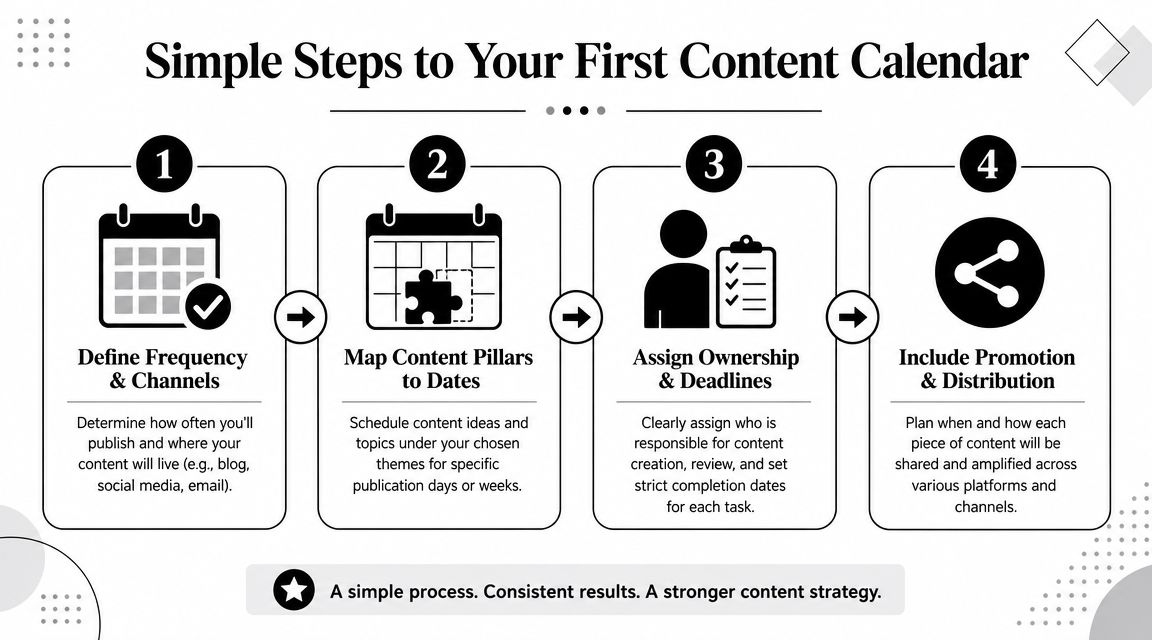
If your calendar has too many channels, too many deadlines, and too many content types, it won't last. A small business doesn't need a publishing empire. It needs a schedule that can survive a busy week, a client emergency, and the founder getting pulled into everything.
Start simple. One primary channel. One supporting channel. One repeatable production rhythm.
A practical way to think about channel choice is this: pick the one or two content assets that can be reused across multiple channels with the least marginal effort, instead of trying to be everywhere at once. That prioritization problem is often missing from mainstream advice, and the U.S. Chamber's guidance on developing a small business content strategy points in that direction by warning businesses not to spread themselves too thin.
Most small businesses should build around one of these:
Don't choose based on trend pressure. Choose based on three filters.
| Filter | Question |
|---|---|
| Audience fit | Where does your buyer already pay attention? |
| Production fit | What can you make without draining the team? |
| Repurposing fit | What format can branch into other formats easily? |
For many founders, a short article or recorded talking-point video is the best “source asset” because it can be turned into email and social content later.
You do not need software overload. A spreadsheet, Notion board, or Airtable table is enough.
Use these columns:
If you want a deeper walkthrough, this guide on how to create a content calendar that actually works is worth reviewing before you build your first version.
Here's a basic weekly rhythm that works for a lot of solo operators:
| Day | Activity |
|---|---|
| Monday | Draft core piece |
| Tuesday | Edit and prepare supporting assets |
| Wednesday | Publish core piece |
| Thursday | Repurpose into short posts or email |
| Friday | Review response and capture ideas |
The biggest calendar mistake is optimism.
Founders build schedules based on a fantasy version of next month. Then real work hits, the calendar slips, and the whole thing gets abandoned. A lighter schedule published consistently beats an ambitious one that dies.
One solid piece every week or every other week is enough if it's tied to a clear goal and distributed properly.
This video is a useful companion if you want a simple visual explanation of that planning mindset.
For a solo founder, I'd start here:
One core weekly asset
A blog post, founder memo, recorded video, or email.
Two supporting posts
Pull one idea from the core asset and reshape it for social.
One conversion touchpoint
Invite people to book a call, reply, subscribe, or request more info.
That's enough structure to create momentum without creating drag.
If you create one piece of content and publish it once, you're doing too much work for too little return.
Small businesses don't win by producing endless new material. They win by turning one strong idea into multiple useful assets. That's how they make the most of it. One trunk, many branches.
This is the habit that separates founders who stay visible from founders who disappear every time business gets busy.
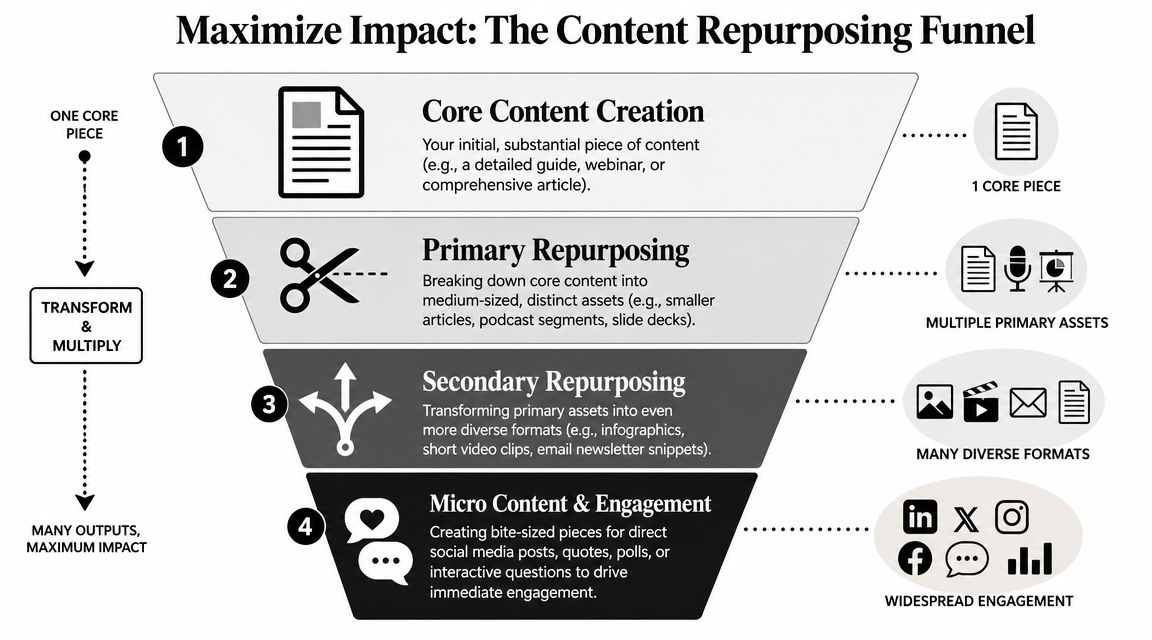
A source asset is your main piece. It might be:
From that one asset, you can create a lot without sounding repetitive, because each version serves a different context.
For example, one article about a common buyer mistake can become:
Here's the simple version.
Create one substantial asset around a core topic. It should teach, clarify, or challenge something important to your audience.
Good examples:
Then break it down into smaller pieces.
Repurposing isn't recycling leftovers. It's packaging the same insight for different moments of attention.
The danger is turning repurposing into another bloated workflow. Don't do that.
Use a checklist:
| From your source asset | Repurpose into |
|---|---|
| Headline | email subject line or hook |
| Main argument | LinkedIn post or founder take |
| Subheads | short-form post series |
| Bullet points | carousel slides |
| Examples | short videos or sales enablement content |
| FAQ section | nurture emails or website copy |
If you want help systematizing that workflow, it can be useful to streamline content with AI tools that assist with reformatting drafts, extracting highlights, and creating variant formats faster. Just keep a human hand on the final output so it still sounds like you.
For a more detailed walkthrough of the method itself, Legacy Builder's article on what is content repurposing and how to use it for maximum impact lays out the mechanics clearly.
Some content isn't worth multiplying.
Skip repurposing if the original piece is:
Repurpose your strongest thinking, not just your latest post.
That's the point. A good content strategy for small business doesn't ask you to create more from scratch. It asks you to get more value from what you already know.
Most founders either measure nothing or measure the wrong things.
They track reach, impressions, likes, and random spikes in traffic. Those numbers can be useful context, but they don't tell you whether content is helping the business. You need a tighter feedback loop than that.
The better approach is simple. Match your metrics to the goal you chose earlier, then review them consistently.
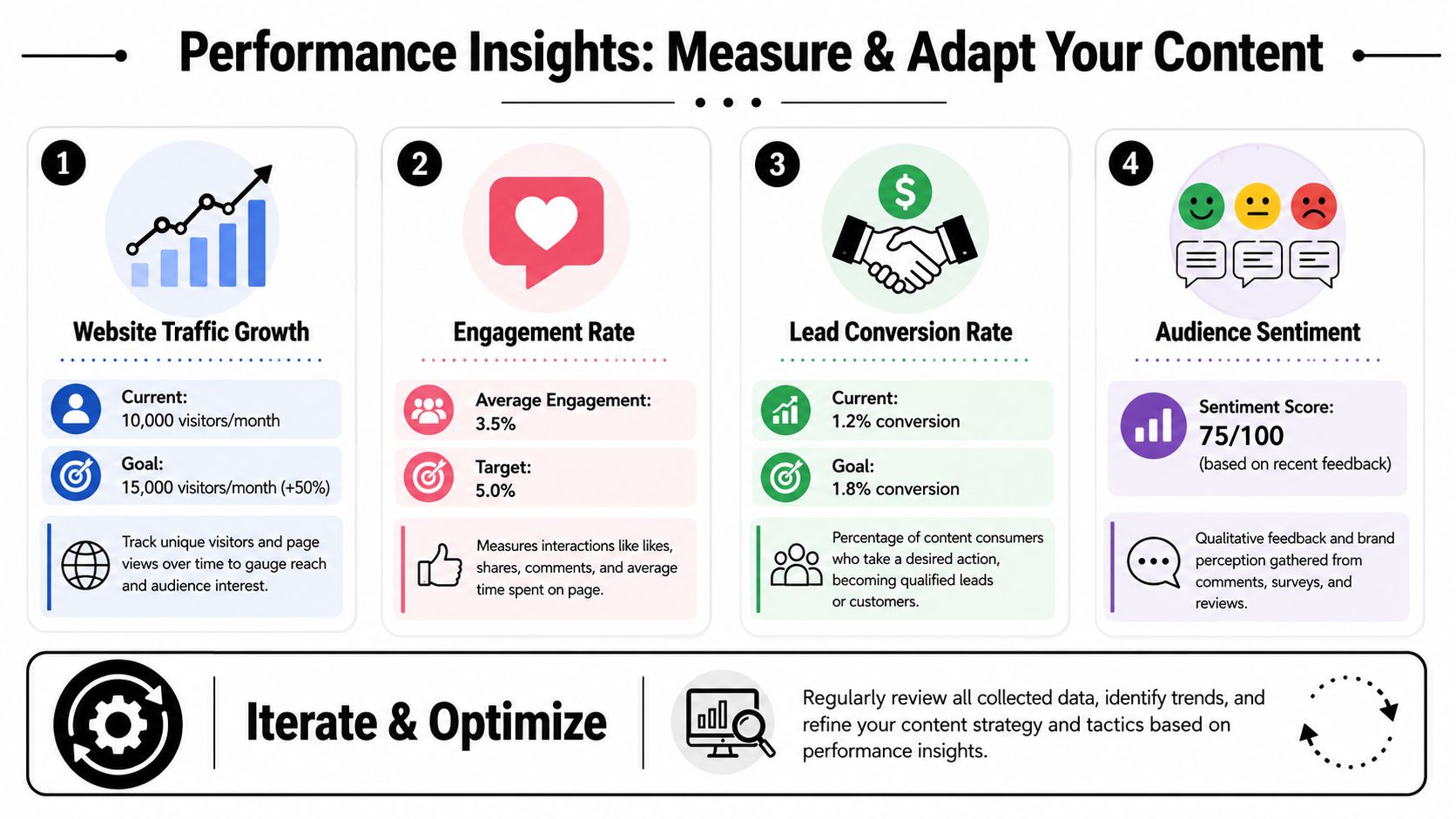
If your goal is leads, ask:
If your goal is nurture, ask:
If your goal is authority, ask:
You don't need a giant dashboard. You need a short monthly review.
Review rule: Keep the metrics that change decisions. Ignore the ones that only decorate reports.
For personal brands and founder-led businesses, this matters even more because trust often builds gradually before it shows up in revenue. A focused guide on how to measure content performance for your personal brand can help you set up that review process without overcomplicating it.
Search and social discovery are changing. Users are increasingly getting summaries before they ever click a link.
That means your job isn't just to rank. It's to create content that earns trust, stays memorable, and gives people a reason to come directly to you. SCORE notes that Google's AI Overviews are changing discovery behavior, and that 75% of small businesses use AI. The challenge now is building content that drives trust and conversion even when clicks are less predictable, as discussed in SCORE's piece on content marketing fundamentals for small businesses.
So what should you do?
The future-proof move isn't pumping out more content. It's building a body of work that sounds like it could only come from you.
If you want help turning your expertise into a content system you can sustain, Legacy Builder helps founders and professionals clarify their voice, define content pillars, and turn scattered ideas into consistent brand-building content.


You could – but most in-house teams struggle with the nuance of growing on specific platforms.
We partner with in-house teams all the time to help them grow on X, LI, and Email.
Consider us the special forces unit you call in to get the job done without anyone knowing (for a fraction of what you would pay).
Short answer – yes.
Long answer – yes because of our process.
We start with an in-depth interview that gives us the opportunity to learn more about you, your stories, and your vision.
We take that and craft your content then we ship it to you. You are then able to give us the final sign-off (and any adjustments to nail it 100%) before we schedule for posting.
No problem.
We have helped clients for years or for just a season.
All the content we create is yours and yours alone.
If you want to take it over or work on transitioning we will help ensure you are set up for success.
We want this to be a living breathing brand. We will give you best practices for posting and make sure you are set up to win – so post away.
Subscribe to our newsletter and get insights on how to grow your personal brand.
