.svg)
Subscribe to our newsletter and get insights on how to grow your personal brand.
Thank you! Your submission has been received!
Oops! Something went wrong while submitting the form.
.svg)


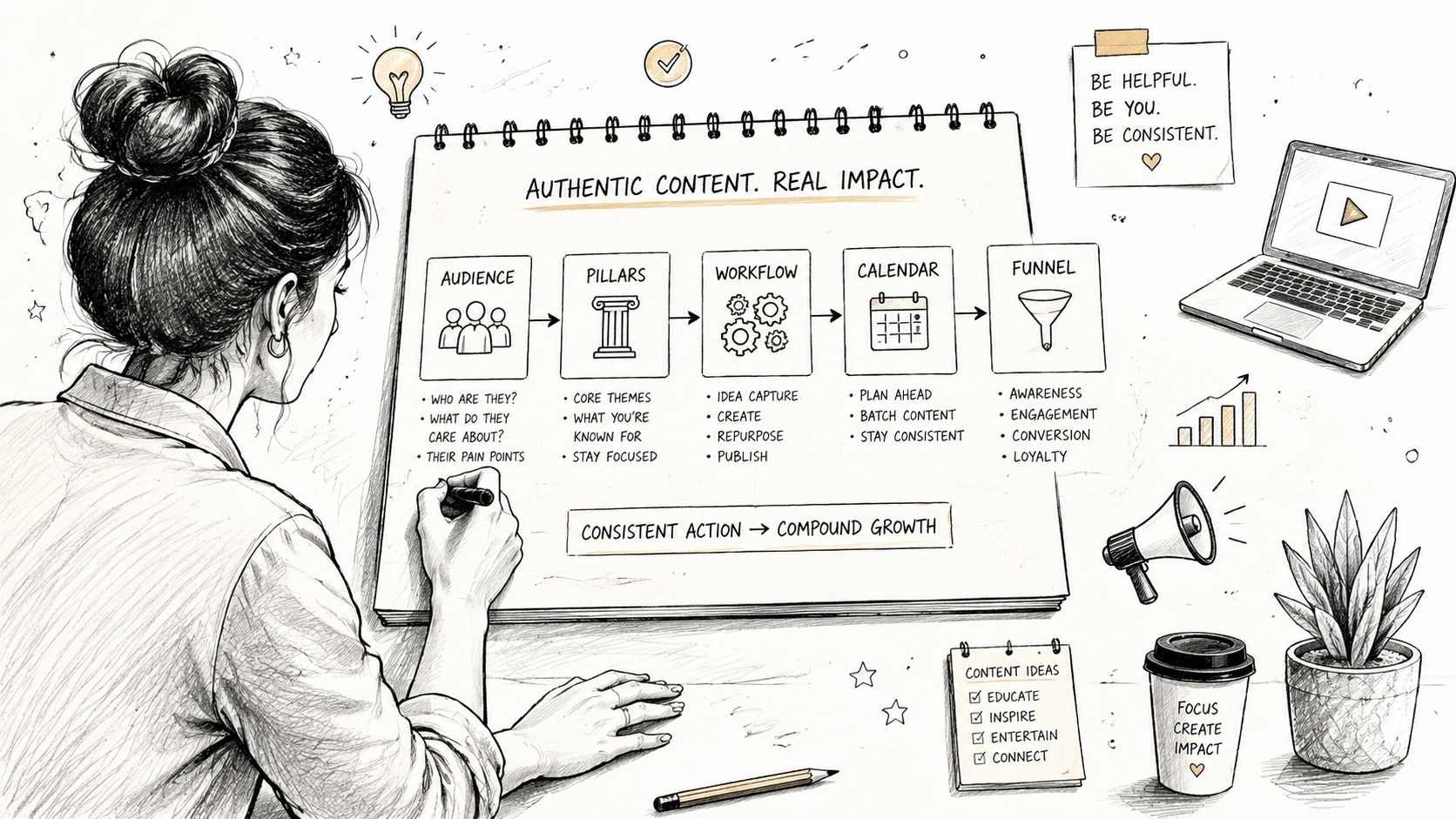
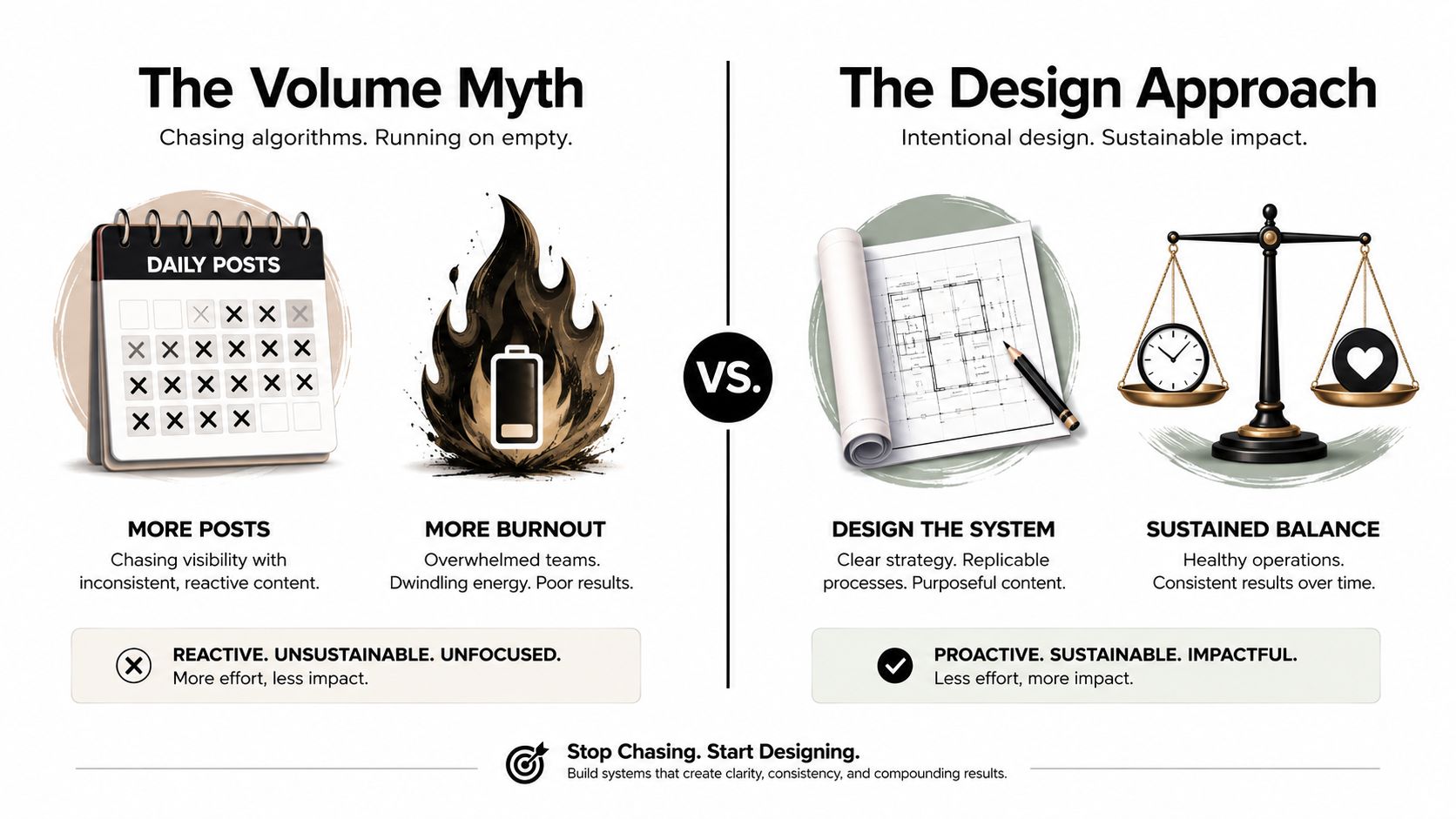
Most advice about content creation for entrepreneurs starts with the wrong instruction: post more. Daily publishing sounds disciplined, but it often turns one founder into a strategist, writer, editor, designer, videographer, community manager, and distributor, all without a production system to support those roles.
That workload doesn't become scalable because the calendar is full. It becomes harder to sustain. The practical advantage comes from designing content so each strong idea can build authority, answer buyer questions, support sales, and create a path to a measurable business result.
The creator economy already reflects this operational reality. Research from The Tilt reports that content creators average 4,000 followers, use four channels to reach audiences, and typically need an 18-month runway before the business fully supports them. The same research reports average startup spending of $10.7K, with 66% relying on savings and creators taking about five months to earn their first dollar. Content is a business model, but it's rarely a quick one.
Publishing volume is easy to measure, which is why entrepreneurs obsess over it. A founder can count posts, videos, emails, and impressions without asking whether those assets attract the right buyer or make the business easier to sell.
The problem isn't a lack of ideas. Most founders have more raw material than they can use. Customer objections, failed experiments, product decisions, sales calls, onboarding questions, and industry opinions are all potential content. The bottleneck is turning those inputs into a repeatable operating system.
A useful content asset should perform more than one job. A founder's detailed article might rank in search, become a LinkedIn post, give a salesperson a useful follow-up resource, and lead readers toward a diagnostic or consultation. A short opinion post may build recognition, but it carries less weight if it can't connect to a broader commercial system.
Practical rule: If an asset serves only the publishing calendar, question whether it deserves production time.
This doesn't mean every post needs a sales pitch. It means every recurring format should have a clear role. Some content earns attention. Some establishes expertise. Some handles objections. Some captures demand. A healthy mix makes the business less dependent on any single post performing well.
Entrepreneur-led content has a special constraint: the founder often remains the source of judgment, experience, and voice. Outsourcing every decision creates generic material, but keeping every production task creates exhaustion. The answer is to separate high-context work from repeatable work.
The founder should usually own positioning, original insight, sensitive opinions, and final approval. Someone else, or a documented process, can handle transcription, formatting, clipping, scheduling, thumbnail preparation, internal linking, and analytics collection.
That division is more durable than a heroic publishing sprint. The wider content marketing market reinforces the shift. Semrush reports that nearly 80% of small business owners and marketers write content themselves, while the same research ecosystem cites 91% of B2B marketers using content marketing and 72% of content marketers using AI tools. Content is now an operating function, but many small teams still carry it manually.
The test is straightforward. Remove low-value tasks first, preserve the founder's perspective, and build a workflow that still functions during a busy client week. Sustainable content creation isn't about producing less carelessly. It's about making each idea travel further.
A broad audience creates broad language. “Entrepreneurs,” “business owners,” and “marketing professionals” are categories, not useful editorial targets. Strong content starts with a smaller group whose problems, buying context, and expectations match the business you operate.
Define a minimum viable audience by answering four questions:
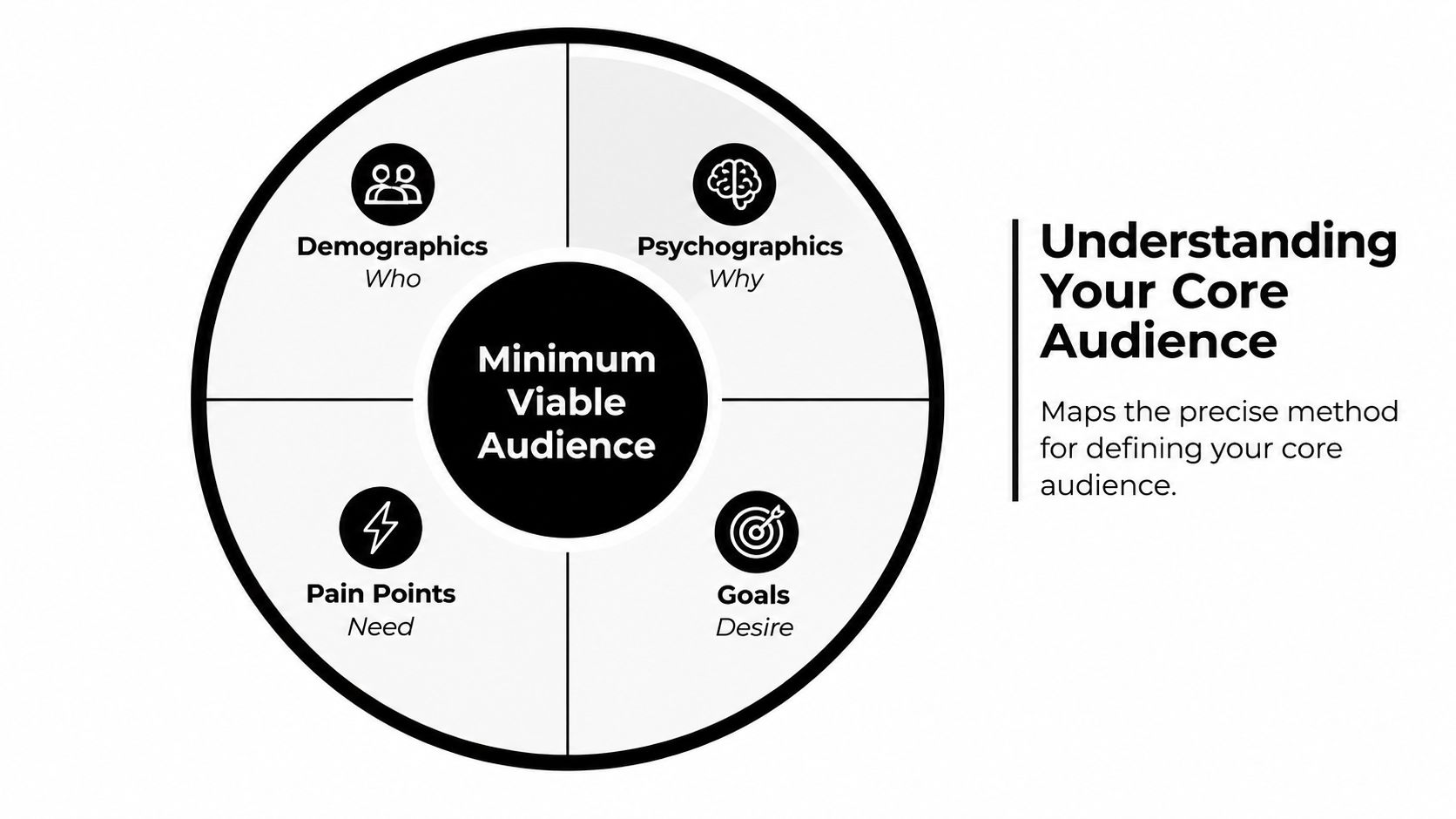
A one-page profile should include actual language from sales calls, support tickets, community discussions, and customer interviews. Note the phrases people use to describe the problem, the alternatives they've tried, what makes them hesitate, and what evidence they need before buying.
A B2B SaaS founder might target operations leaders at growing service businesses who understand the cost of disconnected tools but lack the time to rebuild their process. An agency owner may target established founders who have a clear offer but need a reliable founder-led distribution engine. A coach may focus on specialists with proven expertise who struggle to turn private knowledge into a public point of view.
Those audiences may overlap demographically, but their content needs differ. The SaaS buyer wants implementation clarity. The agency prospect wants evidence of judgment and delivery. The coach's audience may need confidence, language, and a path from expertise to action.
Choose three or four content pillars, then connect each one to a business objective and a stage of the customer journey. A practical set might include:
Use the guide to content pillars for X creators when you need to translate a broad expertise area into repeatable social themes. For a deeper explanation of how pillars support authority, see this content pillars guide for authority growth.
Then audit your ideas. Put every existing topic into a pillar, mark the customer journey stage it serves, and identify gaps. If ten ideas all explain the problem but none help someone evaluate, implement, or buy, the issue isn't creativity. Your system is overinvested in awareness.
A final litmus test keeps the calendar clean: if an idea doesn't fit a pillar and serve a business purpose, it's probably a distraction. Interesting isn't the same as useful.
A founder-led workflow should make the next action obvious. The system below separates thinking from production, which reduces context switching and prevents the founder from rebuilding the process every time content is due.
Ideas should come from operations, not from staring at a blank document. Create one inbox in Notion, a notes app, or a shared project board. Add voice memos after client calls, questions from prospects, phrases customers repeat, and strong opinions that emerge during delivery.
Tag each idea with its pillar, audience problem, format, and commercial role. Don't polish it during capture. A rough note such as “buyers confuse automation with delegation” is enough to preserve the insight for a later writing block.
Use a source asset as the center of a one-to-five repurposing engine. One long-form article, interview, podcast conversation, or client-call insight can become:
The derivatives shouldn't repeat the source word for word. Each one should answer a different question for a different stage of attention. The article explains the complete model, the short post creates curiosity, the video demonstrates one decision, and the checklist helps the reader act.
For a broader treatment of this operating method, use this content batching workflow guide.
Reserve separate blocks for outlining, drafting, editing, and scheduling. A founder who writes, checks analytics, answers messages, and edits video in the same session pays a hidden switching cost each time the task changes.
A lightweight editorial check is enough for most assets:
Use Buffer or Typefully for scheduling, a consistent folder structure for approved assets, and a brief naming convention that makes files searchable. Freelancers should receive a brief with the audience, pillar, desired action, source material, and essential voice notes. Approval should focus on accuracy and positioning, not endless line edits.
This video offers a useful visual reference for structuring a production system:
The system matters more than the publishing target. A workflow that produces fewer, stronger assets every week will outperform an ambitious calendar that collapses whenever the founder's core business demands attention.
Channel choice should follow commercial relevance and operational capacity, not platform popularity. Ask where potential buyers, referrers, and purchase influencers already spend time. Then match the channel to the format that communicates the founder's strongest advantage without taking attention away from delivery.
Raw engagement rates are not comparable across platforms. PostEverywhere's benchmark report places median engagement at 4.7% for LinkedIn page-level posts, compared with 0.48% for Instagram and 0.15% for Facebook. It also reports 3.70% for TikTok and 5.91% for YouTube Shorts. The report defines a good LinkedIn page benchmark as 5.5% or higher, while Instagram's good benchmark is 1.0% or higher. These figures provide context, not a reason to publish everywhere.
| Platform | Avg. Organic Reach % | Best Content Format | Typical CTR | Audience Intent |
|---|---|---|---|---|
| Not provided in verified data | Thought leadership and native professional content | Not provided in verified data | Professional evaluation and trust | |
| Not provided in verified data | Short-form visual content | Not provided in verified data | Discovery and identity | |
| Not provided in verified data | Community and discussion content | Not provided in verified data | Familiarity and conversation | |
| TikTok | Not provided in verified data | Native short video | Not provided in verified data | Fast discovery and entertainment |
| YouTube Shorts | Not provided in verified data | Expert short video | Not provided in verified data | Discovery and topic interest |
Choose two primary channels and one experimental channel only after reviewing your own evidence. This approach is consistent with a practical multi-channel marketing guide for entrepreneurs, provided each channel has a defined job. A B2B founder might use LinkedIn for detailed points of view and short video to extend those ideas to a discovery-focused audience. A visual consumer business might use Instagram to present the brand experience while using email for a more controlled relationship.
Channel ownership also affects workload. If the founder is still the writer, strategist, editor, and distributor, each additional platform adds production and review demands. Reuse one strong insight across formats, but adapt the opening, length, and call to action rather than copying the same post everywhere.
Do not fill the table with assumed reach or click-through rates. Track impressions, meaningful comments, profile visits, link clicks, email signups, qualified conversations, and revenue influence. Engagement benchmarks help compare similar activity, but they cannot establish whether the audience is commercially relevant.
Review channels quarterly. Keep one when it creates qualified attention or reusable learning. Reduce effort when it generates activity without business movement. Add an experiment only when you can state the audience, the test, and the evidence that would justify continuing.
A content program needs a destination. Without one, educational posts may build recognition while leaving the business unable to identify interested readers or follow up with them.
Build a ladder with a clear progression:
The lead magnet should be the natural next step from the content, not a generic PDF placed under every article. A SaaS founder might offer a workflow audit template after explaining process fragmentation. An agency owner could provide a founder-content brief after discussing inconsistent positioning. A coach might create a diagnostic worksheet that helps prospects identify the gap they've been describing.
The benchmark data supports this ladder. Benchmarketing's content benchmarks reports an educational article lead rate of 0.8% at the median and 1.7% at the top quartile. For a guide or gated asset, it reports a 3.4% median signup rate and 6.2% at the top quartile. These figures indicate why awareness content should route interested readers toward a more deliberate capture experience.
Give every campaign a source label and track the sequence from content exposure to landing-page visit, signup, sales conversation, and closed business. A simple spreadsheet can record the asset, channel, pillar, call to action, leads, qualified leads, and influenced opportunities. As the system matures, connect those fields to your CRM.
Don't judge a lead magnet solely by signup volume. A smaller list of people who match your audience and respond to relevant follow-up is more valuable than a large list with no commercial fit. Review the quality of replies, booked conversations, sales objections, and eventual purchases.
For a more detailed measurement framework, use this guide to proving content ROI, then apply the same discipline to your own reporting with this resource on calculating marketing ROI.
A content system becomes manageable when implementation happens in stages. The first phase should create clarity, the second should improve throughput, and the third should remove waste.
Define the minimum viable audience, document the core problems, and choose three or four pillars. Audit existing content, select one primary source format, and create the capture inbox. Finish the month with a small approved batch and one relevant conversion asset.
Track impressions, engagement quality, profile actions, and early email interest. Don't use this phase to expand across every platform. Your task is to establish a reliable source of ideas and a recognizable point of view.
Turn each source asset into several channel-native derivatives. Add scheduling, create reusable briefs, and assign repeatable production work to a contractor or team member where appropriate. Publish consistently enough to compare formats, not so aggressively that the system depends on overtime.
Introduce a simple nurture path for people who download the asset or reply to a post. Watch email signups, qualified responses, and conversations that reveal stronger or weaker audience fit.
Review which pillars attract qualified attention, which formats create useful engagement, and which calls to action lead to meaningful business activity. Cut formats that consume disproportionate effort without producing learning or pipeline. Improve the strongest source asset before adding another channel.
Score the operation across five areas: audience clarity, pillar discipline, capture quality, production repeatability, and revenue attribution. A low score identifies the next operational lever. If the content is strong but production is fragile, document and delegate. If attention is healthy but leads are weak, improve the offer and conversion path. If leads arrive but sales stall, create content that answers purchase objections.
The long game rewards a system that can survive the founder's real workload. Build the workflow first, then let publishing volume follow capacity.
Legacy Builder helps founders turn their insights, interviews, and positioning into consistent founder-led content, including written posts, newsletters, and short-form video workflows. If you need a content operation that preserves your voice while reducing the production burden, visit Legacy Builder to explore a structured approach.


You could – but most in-house teams struggle with the nuance of growing on specific platforms.
We partner with in-house teams all the time to help them grow on X, LI, and Email.
Consider us the special forces unit you call in to get the job done without anyone knowing (for a fraction of what you would pay).
Short answer – yes.
Long answer – yes because of our process.
We start with an in-depth interview that gives us the opportunity to learn more about you, your stories, and your vision.
We take that and craft your content then we ship it to you. You are then able to give us the final sign-off (and any adjustments to nail it 100%) before we schedule for posting.
No problem.
We have helped clients for years or for just a season.
All the content we create is yours and yours alone.
If you want to take it over or work on transitioning we will help ensure you are set up for success.
We want this to be a living breathing brand. We will give you best practices for posting and make sure you are set up to win – so post away.
Subscribe to our newsletter and get insights on how to grow your personal brand.
