.svg)
Subscribe to our newsletter and get insights on how to grow your personal brand.
Thank you! Your submission has been received!
Oops! Something went wrong while submitting the form.
.svg)


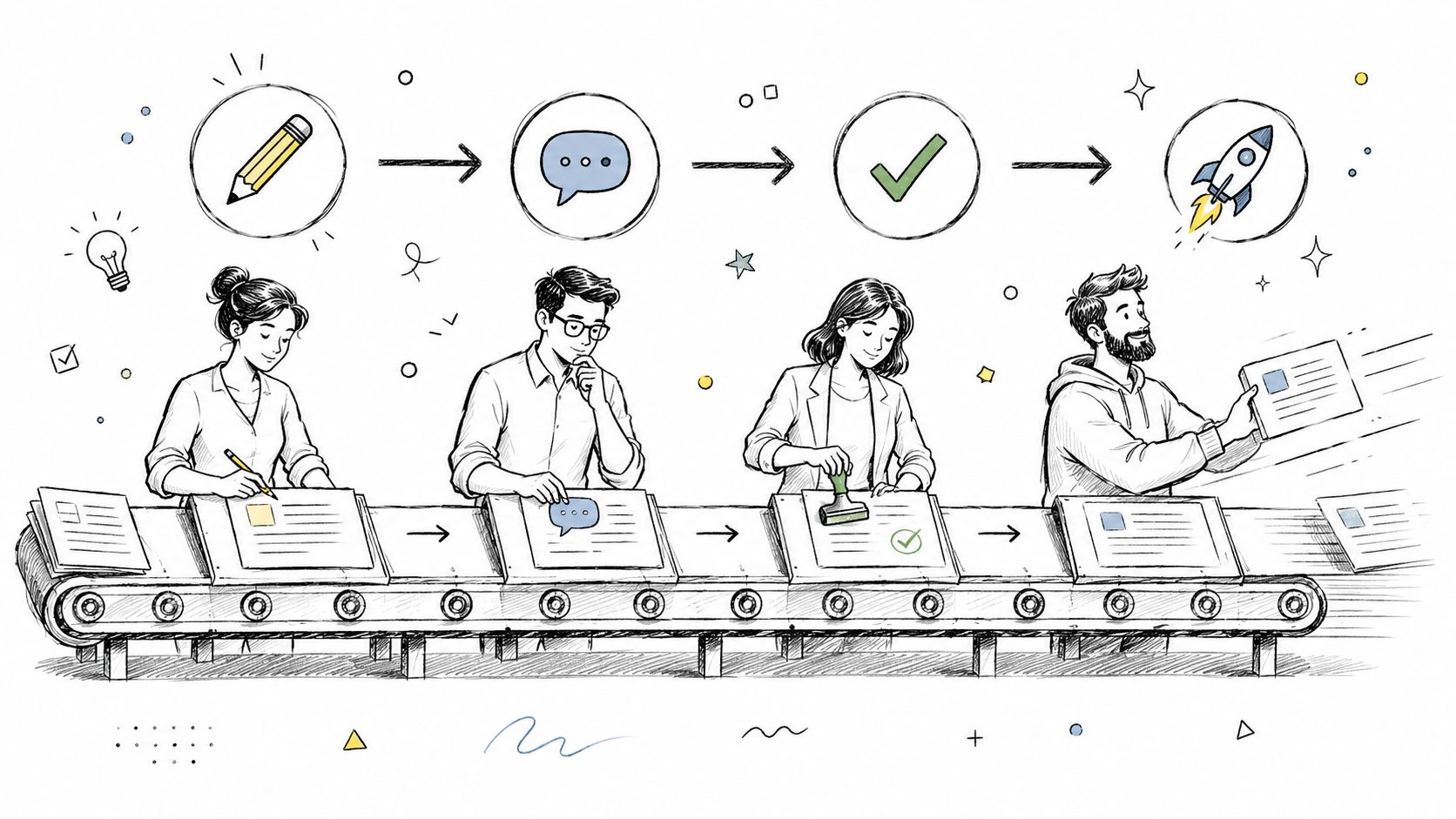
You've got the draft open, the post is timely, and one reviewer still hasn't answered. Meanwhile the window to publish has already passed, and the piece that should've built momentum is now sitting in a half-finished thread of comments, edits, and “quick thoughts” that aren't quick at all. That's the hidden tax of weak content approval workflows, they don't just slow publishing, they drain relevance, energy, and consistency from personal brands and small teams.
For founders, creators, and solo operators, that delay feels minor until it becomes the norm. A one-day hold turns into a missed trend, a stale opinion, or a post that never gets published because nobody knows who owns the final call.
A founder writes a sharp LinkedIn post after an industry event, sends it to a part-time editor, then waits while a compliance-minded partner leaves vague notes in a Google Doc, a Slack thread, and an email chain. Three days later, the post has changed shape, the original angle is gone, and nobody is sure which version is ready. That's not a content problem, it's a workflow problem.
The most common bottleneck is unclear ownership. When every reviewer feels entitled to comment, nobody is clearly responsible for the decision. The result is a review chain that behaves like a group chat, not an approval system.
Practical rule: if a reviewer can block publish, that role needs to be named, scoped, and limited.
Scattered feedback makes the slowdown worse. One person wants tone softened, another wants proof added, and a third wants the CTA rewritten, but each note lives in a different place. By the time the writer reconciles the conflict, version drift has already set in.
The fastest way to diagnose your own bottleneck is to trace where work stalls. Is it waiting on the first reviewer, bouncing between people who shouldn't be involved, or getting reopened after it should've been locked? If you need a clean reference for what this looks like in practice, the guide on avoid bottlenecks in content approval is a useful companion because it focuses on the same failure points teams hit when reviews become ad hoc.
For personal brands, the cost is bigger than a missed publish slot. Inconsistent approvals make the brand voice wobble, and every wobble invites more review because nobody trusts the process yet. That's why structured approvals aren't bureaucracy, they're the infrastructure that keeps a visible voice steady without making it bland.
A content approval workflow is basically an assembly line with quality checkpoints. The draft enters one state, moves through named reviewers, and only leaves when the right feedback has been resolved and the final approver signs off. Microsoft's approval-flow documentation shows the operational pattern clearly, content is routed for approval, approvers are notified, and publication happens only after approval, so the approval state itself becomes the publish gate.
The parts that matter are simple, but they have to be explicit:
The benchmark data backs up how normal this complexity is. A 2026 summary found that 74% of content requires multiple stakeholder approvals, the average approval chain includes 4.2 people, and workflows average 2.9 approval rounds per asset, with a 3.7-day approval cycle (workflow research on content approval). That isn't a sign of broken teams, it's a sign that content approval is usually a multi-stage governance process.
Practical rule: if a stage doesn't have a clear entry condition and exit condition, it isn't a stage yet. It's just a delay.
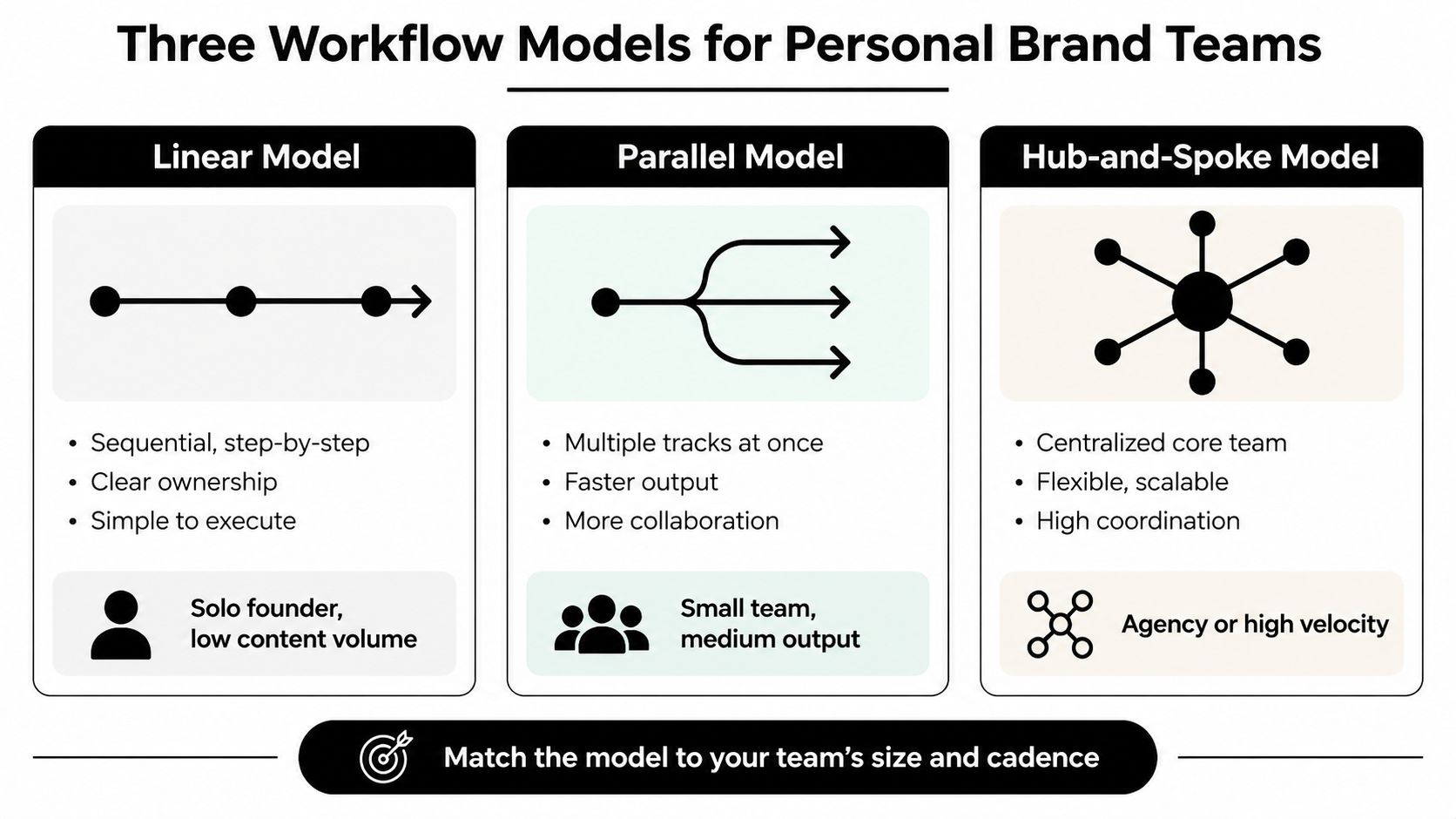
Not every approval system needs the same shape. A solo founder posting daily on LinkedIn should not build the same process as a thought leadership team managing regulated content. The right model matches the amount of risk, the number of hands involved, and how often content needs to move.
The Linear Model fits a solo operator or one editor working directly with a founder. Draft moves to review, review moves to publish, and there's one named approver at the end. That setup works well when the content is fast-moving and the brand voice matters more than layered sign-off.
The Tiered Model suits a small team with a strategist, editor, and one specialist reviewer. Creative direction happens first, then subject matter validation, then compliance or brand review if needed. This keeps technical reviewers from wasting time on rough drafts that should've been tightened earlier.
The Parallel Model is the right choice when the asset has several dimensions that can be checked at the same time. Editorial, legal, and design can review in parallel, then converge at a final approval gate. That structure works best when the team needs speed without collapsing specialized checks into one vague “feedback” pass.
The mistake I see most often is over-engineering. A solo CEO doesn't need five approvers and three sign-off rounds for a post that's meant to be timely. The opposite mistake is more damaging, though, under-structuring a high-stakes piece until compliance, accuracy, and brand voice all collide at the end.
If you're choosing a model, start with cadence. Daily LinkedIn content usually needs the lightest possible path. Thought leadership essays, launch announcements, and content with claims or regulatory exposure need more layers, but each layer should have a narrow purpose, not a generic “review” badge.
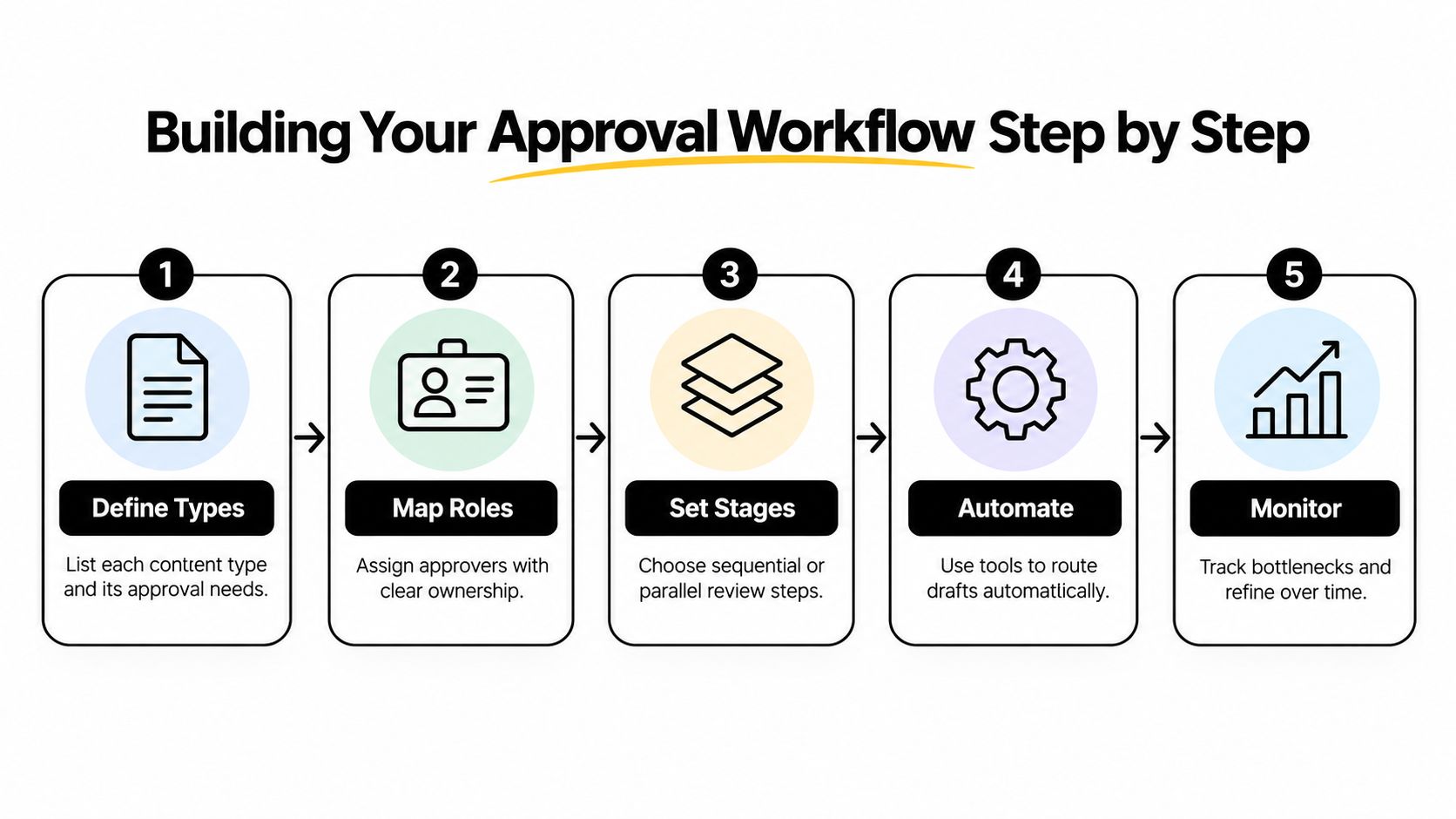
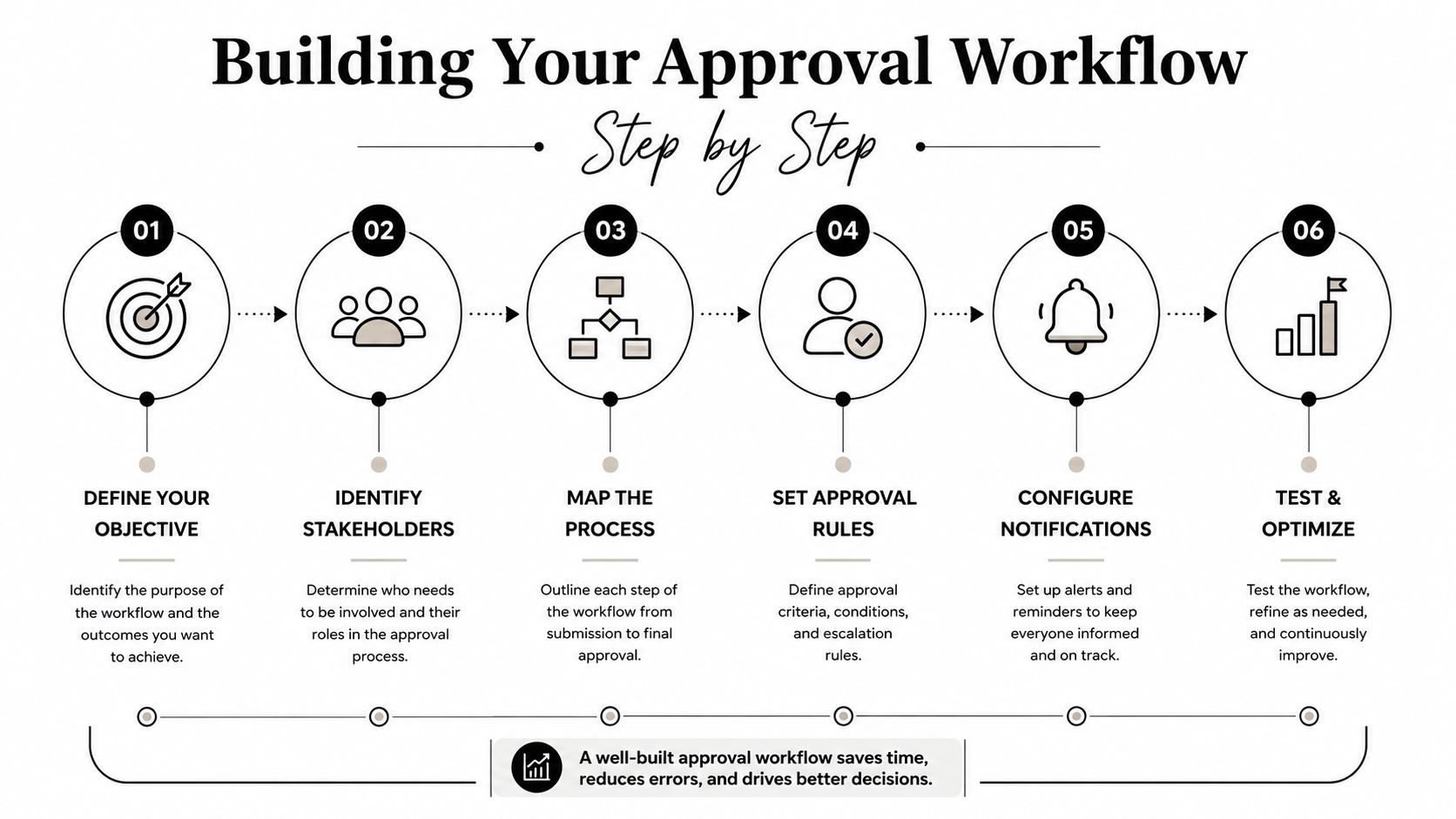
A good workflow starts with content types, not software. A social post, a podcast script, a product one-pager, and a research-heavy article don't need the same approvals, because they don't carry the same risk or editing burden. The fastest teams define those differences first, then build the process around them.
The next move is to make every stage deterministic. Entry criteria answer what must be true before work starts, and exit criteria answer what must be resolved before the piece advances. That structure turns approval from a loose review chain into a control system, because no stage begins with incomplete inputs and no stage ends with unresolved must-fix feedback.
A useful way to think about it is this, if a reviewer can't say what they're checking for, the stage is too broad.
For personal brands, one of the best practical changes is assigning a clear SLA to each role. An editor can review a LinkedIn draft within a set window, while compliance only steps in when a post mentions a claim or sensitive topic. That keeps the workflow fast for ordinary content and strict where it matters.
Feedback also needs a single home. The moment comments spread across email, Slack, and docs, someone has to translate them back into one usable draft, and that's where time disappears. If you work with video, the Auralume AI production tips piece is a good reminder that the same logic applies when production gets more complex, because routing and review discipline matter as much as creation speed.
The final publish gate should be firm. Once required feedback is resolved and the named approver signs off, the piece moves. That sounds basic, but it's the difference between a reliable publishing rhythm and a team that keeps re-litigating finished work.
Internal planning also helps. A living editorial system, like the one described in this content calendar guide, keeps approvals tied to timing instead of floating free from the publishing schedule.
The best tool is the one that matches the workflow you've already designed. The wrong tool creates extra handoffs, more notifications, and a false sense of order. For most personal brand teams, the problem isn't software scarcity, it's trying to buy a fix for unclear ownership.
| Tier | Best For | Key Strength | Typical Cost |
|---|---|---|---|
| Lightweight stack | Solo operators, freelancers, small creator brands | Fast setup, simple status tracking, low friction | Low or included in existing workspaces |
| Mid-tier platform | Small teams with recurring review cycles | Approval automations, task assignments, reminders | Moderate subscription cost |
| Enterprise system | Regulated teams, agencies, high-volume operations | Role-based routing, version control, audit trails | Higher subscription and admin overhead |
Lightweight systems, like Notion, Trello, or shared docs with status columns, usually win for personal brands because they're easy to adopt. A well-built Trello board with clear card states and one reviewer per lane often beats a fancier system nobody checks consistently. Mid-tier tools like Asana, Monday.com, or ClickUp become useful when SLA tracking and automation start to matter.
Enterprise-grade systems make sense when approvals need audit trails or strict role-based routing. That's where version control, permissions, and a clear history of who approved what become operational necessities rather than nice-to-haves. For a broader platform comparison, the content management systems comparison can help teams separate publishing needs from approval needs.
If you're connecting tools, wire approvals into the place where publication happens. Approved content should queue automatically for scheduling or publishing, not get copied into yet another system by hand. That handoff is where a surprising amount of delay hides.
The trap to avoid is tool-hopping. Teams swap platforms because they hate the delay, but the delay usually comes from weak routing, vague sign-off rules, or scattered feedback. Fix the process first, then let the tool reinforce it.
Many teams stop measuring once the piece is approved. That's a mistake, because approval speed matters, but so does whether the workflow is improving the content that gets published. Governance should tell you where the process is healthy, where it's wasting time, and where it's creating avoidable revision loops.
A small set of metrics is enough to start. Track approval cycle time, revision rounds, reviewer load, and the points where content consistently stalls. You do not need a giant reporting layer to do that, just a repeatable way to log when drafts enter review, when comments are resolved, and when final approval happens.
The often-missed layer is post-publication feedback. If a piece clears approval but underperforms or triggers repeated corrections after publish, the workflow itself may be wrong. Maybe the brief was too vague, maybe the wrong reviewer was involved, or maybe the approval criteria are catching the wrong things and missing the actual risks.
Approval is not the finish line. It's the point where the workflow proves whether it can learn.
The best improvement habit is a monthly review of patterns, not one-off reactions to frustration. If one reviewer routinely slows everything down without adding visible value, the routing may need to change. If a content type keeps passing review and still misses the mark, the entry criteria or brief quality probably need adjustment.
The governance angle is broader than process hygiene. It's how a team protects brand trust while avoiding unnecessary drag. The guide on what is content governance is useful here because approval only works when it's part of a wider operating model, not a standalone checklist.
The biggest change is treating each approval cycle as input for the next one. That feedback loop keeps the workflow honest, and it prevents teams from polishing a process that doesn't improve outcomes.
A solo CEO I worked with used to spend days waiting on LinkedIn approvals because every post went to three people. The fix was simple, one editor, one final approver, and a hard rule that editorial review happened within a short window. That change didn't just speed up publishing, it made the founder more consistent because the post stopped aging while waiting for consensus.
A SaaS founder with a small team needed a different structure. Strategic review stayed with the marketing lead, while compliance only checked posts that mentioned claims or customer outcomes, which cut out a lot of unnecessary back-and-forth. The team also stopped sending review notes through email, and that alone made revisions cleaner because each comment sat next to the line it affected.
The most interesting shift came from a thought leadership team publishing long-form assets with AI drafting in the mix. The benchmark data is clear here, teams using agentic approval workflows had a 1.8-day approval cycle compared with 4.7 days for manual routing, a 2.6× speed advantage that changes publishing cadence in a real way (content operations benchmark). In that setup, AI didn't replace review, it made the draft faster to route through a workflow that already had clear roles and gates.
The pattern across all three cases is the same. Approval gets faster when the team narrows who can block, centralizes feedback, and defines what “done” means. Approval gets slower when everyone can comment, no one owns the decision, and the draft keeps wandering through extra hands.
Legacy Builder helps founders and professionals turn their message into a consistent publishing system, which is exactly what breaks when approvals are chaotic. If you want a content operation that protects voice without choking speed, visit Legacy Builder and see how a clearer workflow can support stronger personal brand growth.


You could – but most in-house teams struggle with the nuance of growing on specific platforms.
We partner with in-house teams all the time to help them grow on X, LI, and Email.
Consider us the special forces unit you call in to get the job done without anyone knowing (for a fraction of what you would pay).
Short answer – yes.
Long answer – yes because of our process.
We start with an in-depth interview that gives us the opportunity to learn more about you, your stories, and your vision.
We take that and craft your content then we ship it to you. You are then able to give us the final sign-off (and any adjustments to nail it 100%) before we schedule for posting.
No problem.
We have helped clients for years or for just a season.
All the content we create is yours and yours alone.
If you want to take it over or work on transitioning we will help ensure you are set up for success.
We want this to be a living breathing brand. We will give you best practices for posting and make sure you are set up to win – so post away.
Subscribe to our newsletter and get insights on how to grow your personal brand.
