.svg)
Subscribe to our newsletter and get insights on how to grow your personal brand.
Thank you! Your submission has been received!
Oops! Something went wrong while submitting the form.
.svg)


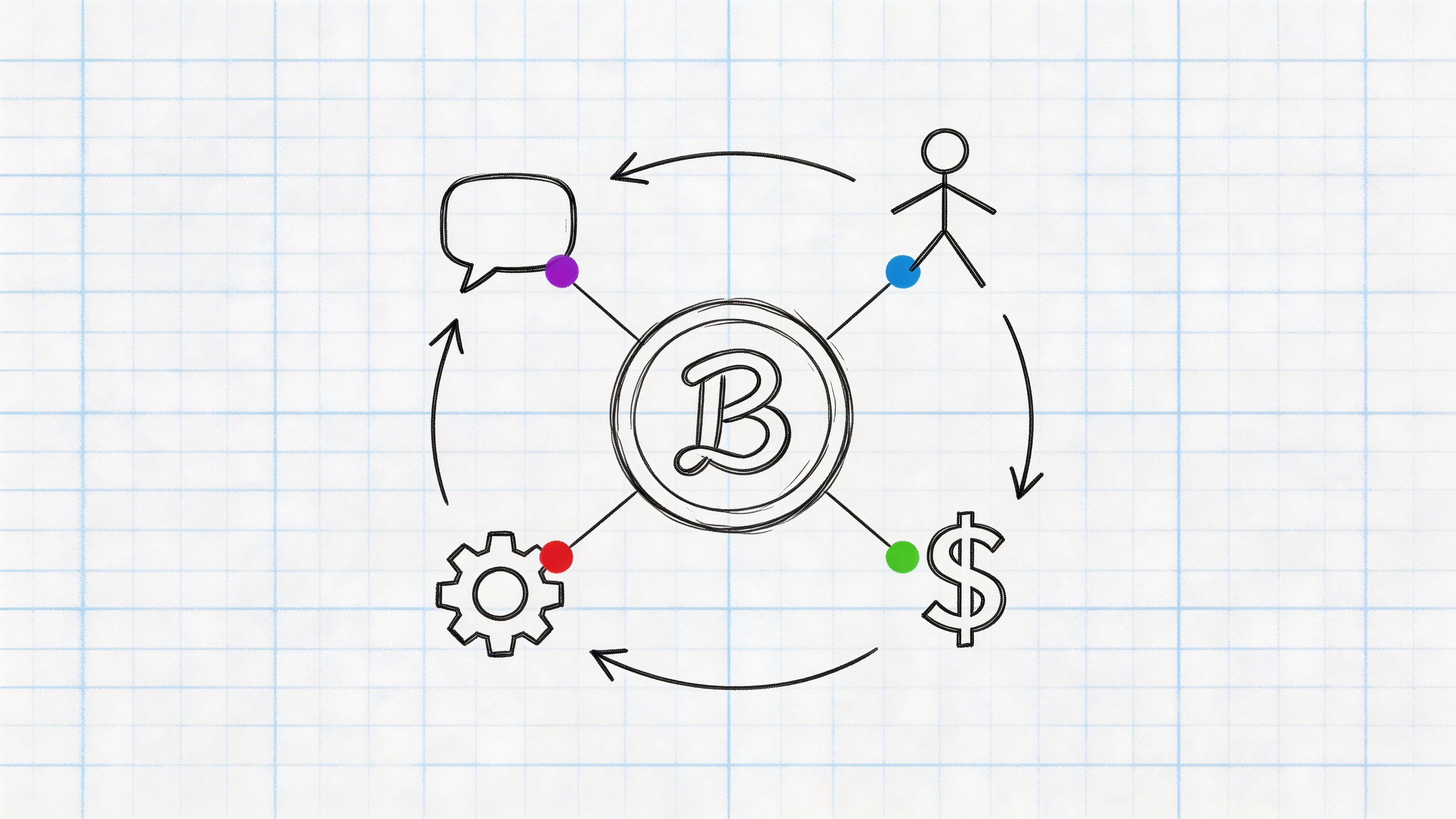
Most advice on how to build a community around your brand is built for people whose job is community. That’s why it falls apart for founders, CEOs, consultants, and operators with a real calendar.
You don’t need to be online all day. You need a system that makes people feel seen, gives them a reason to participate, and turns your audience into a network that strengthens your brand when you’re not in the room.
That’s the part most “post more” advice misses. More posting without a structure just creates noise, burnout, and a feed full of disconnected thoughts. A real community is different. It compounds trust, sharpens your message, and gives your brand staying power.
The worst advice in this space is still the most common. “Just show up more.” “Post every day.” “Reply to everything.” That advice ignores how most leaders work.
Busy professionals already know they should be visible. The problem isn’t awareness. The problem is consistency. Recent 2025 surveys indicate 67% of professionals cite content inconsistency as the top barrier to audience engagement, yet only 12% use specialized services, and self-managed communities see 40% lower retention according to Eagle Eye’s writeup on brand community strategies.
That tells you something important. The issue isn’t effort alone. The issue is trying to run community as an improvisation.
If your entire plan is “be active,” your community will always depend on your energy level. That’s fragile. The week you get buried in meetings, travel, hiring, launches, or client work, momentum drops.
A founder doesn’t need more random output. A founder needs:
Without those pieces, you’re not building a community. You’re babysitting a content stream.
Practical rule: If your community dies the moment you stop posting for a few days, you never had a community. You had attention rented from an algorithm.
Leaders who get this right stop treating community like a marketing chore. They treat it like a strategic asset.
A real brand community does three things that a follower count can’t do:
That last point matters most. Audiences watch. Communities participate. When members start answering each other’s questions, sharing your ideas in their own words, and bringing others in, your brand gains influence.
That’s the shift. Stop asking, “How do I post more?” Start asking, “How do I build something useful enough that people want to return, contribute, and identify with it?”
A community without purpose becomes a graveyard of announcements, shallow comments, and forgotten threads. If you want people to stay, your brand needs to stand for more than your latest offer.
According to Harvard Business School Online’s discussion of brand community, 66% of companies report that their brand communities significantly boost customer retention. The reason is simple. Strong communities turn passive buyers into advocates through co-creation and shared purpose.
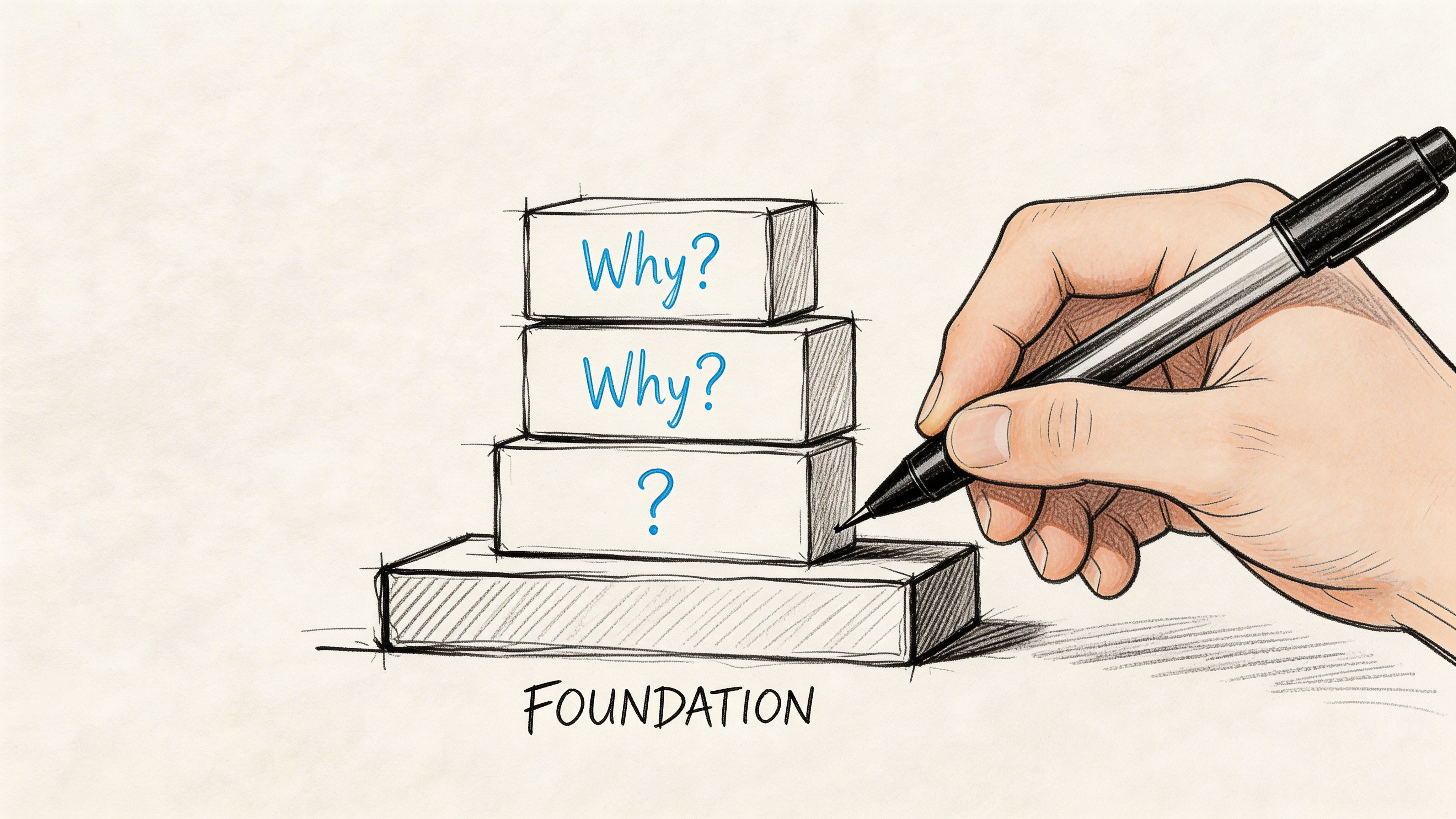
Most leaders define their community too loosely. They say things like:
That’s not a community purpose. That’s a demographic label.
People don’t join because of a label. They join because they want movement. They want help becoming someone, solving something, or belonging somewhere.
A better purpose sounds like this:
Notice what changed. The focus is on the shift members want, not just who they are.
If you need help sharpening that core idea, this guide on what is community building and why it matters for creators is a useful companion because it frames community as an intentional relationship structure, not just an audience container.
You do not need a polished manifesto. You need one sentence that acts like a filter.
Use this format:
This community exists to help [specific people] achieve [specific transformation] through [specific type of interaction].
Examples:
If your statement feels vague, it is vague. Tighten it until it excludes the wrong people.
For founders who haven’t clarified their own values yet, using a resource like this personal mission statement template to define your purpose and values can make the community direction much easier to nail down.
A strong community feels welcoming, but it doesn’t feel for everyone. That distinction matters.
Use a simple member profile with four parts:
| Focus area | What to define |
|---|---|
| Role | Founder, executive, consultant, creative lead, specialist |
| Stage | New to visibility, growing authority, established but inconsistent |
| Pain | Low engagement, unclear message, weak positioning, no feedback loop |
| Desired identity | Trusted expert, category voice, respected operator, industry connector |
This keeps you from creating generic content for an imaginary mass audience.
Inclusivity isn’t a side initiative. It’s a growth decision. Breef’s article on building a brand community that engages cites Matthew Tsang’s 2025 insights showing underserved communities represent 45% of global digital audiences yet receive only 18% of brand community investments. The same source notes inclusive campaigns have boosted loyalty 3x in major markets.
That means many brands are leaving trust on the table because they build for the obvious audience, not the full one.
Ask yourself:
A community built around shared purpose is stronger than one built around sameness.
Write a short set of participation principles early. Not legal jargon. Human rules. Respect the room. Challenge ideas, not people. Share experience without posturing. Make space for different paths to success.
That’s how you build a place people want to return to.
Most founders choose a platform for the wrong reason. They pick the app they use most, the one everyone talks about, or the one with the biggest reach. That’s lazy strategy.
Pick the platform that fits your audience’s behavior, your bandwidth, and the kind of conversation you want to create.

Here’s the clean comparison.
| Platform type | Best use | Strength | Weakness |
|---|---|---|---|
| Professional visibility and discovery | Easy reach, strong business context | Conversation gets fragmented | |
| X or Threads | Fast idea testing and public dialogue | Speed and immediacy | Hard to organize depth |
| Facebook or Slack groups | Ongoing member interaction | Familiar group mechanics | Can become noisy fast |
| Circle, Discord, private forum | Deeper owned community | Better structure and continuity | Harder to seed early momentum |
| Email newsletter plus replies | Quiet, high-quality conversation | Direct and durable | Less visible publicly |
If you’re a busy leader, start with one public stage and one private layer.
For many founders and CEOs, that means:
Don’t launch five places at once. Split attention kills trust.
A platform is right if it passes four tests:
Your people have to already spend time there. Don’t force senior executives into a platform they hate. Don’t build for founders in a space where only casual browsers show up.
Do you want quick reactions, longer reflections, threaded discussion, live Q&A, or direct replies? The platform should support the behavior you want, not fight it.
If you can’t shape the environment, you can’t protect the culture. You need tools to approve, organize, pin, guide, and remove when needed.
If maintaining the platform adds another job to your week, you picked wrong. Efficiency matters more than novelty.
Choose the platform you can run well, not the platform that looks impressive in a strategy deck.
Social platforms give you reach. Owned spaces give you continuity.
On rented land, the algorithm decides who sees your work. On owned land, you control the experience. That doesn’t mean you should abandon social. It means you should use social to attract and owned space to deepen.
A practical setup looks like this:
That model is much easier to sustain than trying to force all community interaction into a public feed.
Once the platform is clear, your content needs guardrails. Not rigid scripts. Guardrails.
Content pillars are the recurring themes your community gathers around. They should come directly from your purpose. If your purpose is helping founders become trusted communicators, your pillars might be:
Teach positioning, messaging, storytelling, and decision-making. Here, frameworks, lessons, and myth-busting thrive.
Share how you think through pressure, trade-offs, team dynamics, mistakes, and pivots. Leaders build trust when they reveal process, not just conclusions.
Feature member insights, questions, case reflections, or patterns you’re hearing repeatedly. This trains the community to contribute, not lurk.
Interpret what’s changing in your market and what it means for your audience. Your job isn’t just to react. It’s to help members make sense of what they’re seeing.
Talk about what you believe, what you reject, and how you operate. This is how people decide whether they belong.
Not every pillar needs equal weight. Some are educational. Some are conversational. Some are cultural.
Run each pillar through these questions:
If a pillar only produces content but not conversation, it’s too narrow or too performative.
For a more practical workflow once your pillars are set, this guide on how to create a content plan for your personal brand helps turn broad themes into a clear publishing rhythm.
Most communities don’t fail because people aren’t interested. They fail because the host keeps broadcasting instead of facilitating.
Engagement starts when members feel their input matters, not when the brand posts another polished monologue.

Mailchimp’s brand community resource recommends aiming for a 25% interaction rate benchmark. It also warns that prioritizing growth over engagement can cause 60-70% churn in new communities. That’s why busy leaders should stop obsessing over joining more platforms and start creating better prompts inside one focused environment.
“Thoughts?” is not a community strategy.
Weak prompts get weak responses because they ask for effort without offering direction. Good prompts lower the friction to participate while still inviting substance.
Use prompts that do one of these jobs:
Here are formats that work.
This works because it’s fast and specific.
Examples:
This gets people talking without forcing polished answers.
Ask:
This is excellent for professional audiences because it invites nuance.
Examples:
If you want comments, ask for opinions. If you want community, ask for experience.
A lot of founders make the same mistake. They try to prove value by doing all the talking themselves.
Don’t. Launch interaction by getting members to contribute stories, examples, lessons, and questions. User-generated content builds trust because peers often persuade better than brand messaging alone. That’s one reason the Mailchimp guidance emphasizes UGC prompts as a practical way to improve trust and participation.
A few easy UGC starters:
Busy leaders need repeatability. The easiest way to sustain engagement is to install simple rituals members can anticipate.
Try a weekly cadence like this:
| Day | Community action |
|---|---|
| Monday | Post a focused discussion prompt |
| Wednesday | Highlight a member insight or answer a recurring question |
| Friday | Ask for wins, lessons, or reflections from the week |
That’s enough. You do not need a hyperactive content calendar.
A few monthly rituals help too:
These routines reduce decision fatigue for you and create familiarity for members.
Most communities waste the first interaction. Someone joins, nobody notices, and they disappear.
Use a short welcome script that makes contribution easy:
Welcome. Tell us what you’re building, what you want to be known for, and one challenge you’re working through right now.
That works because it gives structure. It also signals that this is a place for thoughtful participation, not passive scrolling.
To connect members to each other, try this line when introducing someone:
You two are solving adjacent problems from different angles. I’d love to hear how each of you approaches it.
That simple handoff can start better conversations than another top-down post from you.
Community moderation is not about policing tone into blandness. It’s about protecting usefulness.
Remove things that damage the room:
Keep the standard visible. Reward thoughtful members. Thank people who ask sharp questions. Pull strong comments into future posts.
If you want extra tactical ideas for post formats that spark response in public channels, this resource on how to increase social media engagement is worth skimming and adapting to a more community-driven approach.
A practical walkthrough can help here too.
This matters more than commonly acknowledged. If your engagement process requires you to respond manually to every thread, you’ve built a dependency loop.
Use a lighter operating model:
You are not trying to become your community’s full-time entertainer. You are trying to create a room where valuable conversations continue with or without your constant presence.
The strongest communities don’t grow because the founder keeps shouting louder. They grow because each interaction creates more reasons for other people to join, contribute, and stay.
That’s the logic behind the community flywheel.
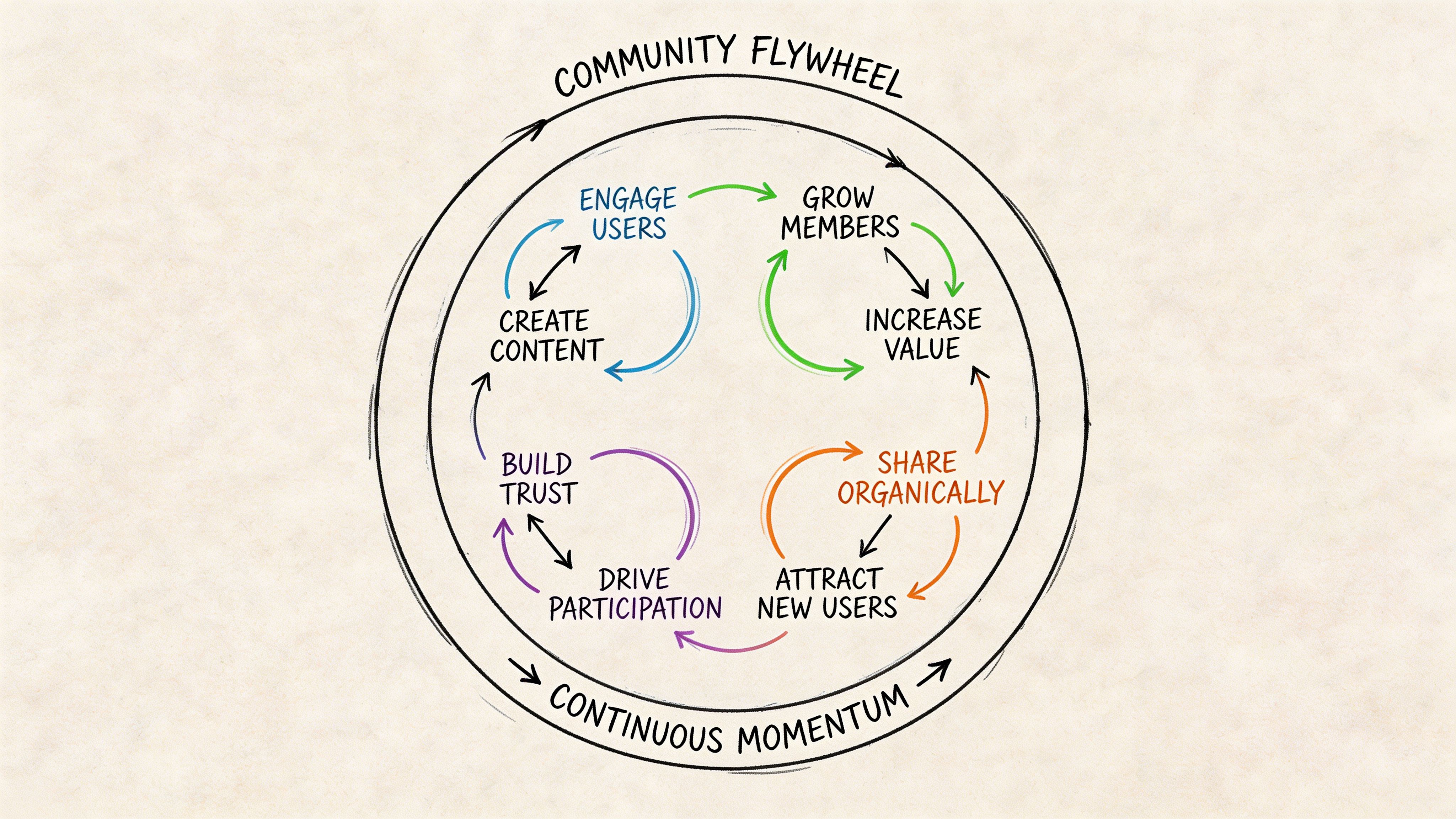
According to McKinsey’s analysis of the community flywheel, brands using this model see over 75% of brand-related content become user-generated and influencer engagement rates exceed 2%. The broader point matters more than the numbers. When people feel ownership, they create momentum for you.
A working flywheel looks like this:
Then the cycle repeats.
This is different from a funnel mindset. A funnel pushes people through stages. A flywheel compounds because each satisfied member increases the value of the whole system.
If you want community growth, stop acting like all value has to come from you.
Members should help shape:
That means you need simple mechanisms for contribution.
Rituals create rhythm and public proof. A few that work well:
These are lightweight to run and powerful to share. They also give lurkers a model for how to participate.
Communities grow faster when members can see what “good participation” looks like.
Every community has a handful of people who show up early, answer generously, and raise the standard. Protect them. Reward them. Give them room.
You don’t need a formal ambassador program on day one. Start smaller:
Supermembers are force multipliers. They make the space feel alive without you needing to carry every exchange.
User-generated content is not a nice bonus. It’s one of the cleanest signs that a community is real.
For leaders building a personal brand, UGC can look like:
Make that easier by giving members things to react to and reuse:
The easier you make it for people to participate in public, the more your community becomes discoverable without added effort from you.
One of the smartest parts of the flywheel model is operational. If people are engaged but the next step is clunky, momentum dies.
Your join process, email sign-up, group access, and event registration should feel easy. So should finding past discussions, key resources, and featured posts.
If members have to work hard to participate, many won’t.
That’s why strong community growth is never just content plus vibes. It’s content, interaction, and clean systems working together.
If you measure community by member count alone, you’ll make bad decisions.
A bigger room with weaker interaction is not progress. It’s clutter.
You don’t need a fancy analytics stack. A spreadsheet or Notion dashboard is enough if it tracks the right things.
Focus on signals that tell you whether the community is healthy, useful, and commercially relevant.
These show whether the room is alive:
These show whether the community influences the business:
Track both. Leading indicators tell you what’s happening now. Lagging indicators show whether the effort is paying off in real brand and business terms.
Founders often overcomplicate analytics and then stop checking them entirely.
A better method is one short review each week. Ask:
Those answers are more useful than vanity metrics.
A healthy community leaves evidence in language. Members tell you what they care about, what they fear, what they resist, and what they want next.
That language is gold. Don’t waste it.
This is how busy leaders maximize impact.
Your community already gives you raw material for:
Turn one strong discussion into multiple assets.
| Community input | Repurposed asset |
|---|---|
| Repeated question | LinkedIn post or newsletter issue |
| Thoughtful member reply | Carousel, quote graphic, or discussion recap |
| Common challenge | Blog post or webinar topic |
| Member success story | Case-style narrative or sales enablement content |
| AMA transcript | FAQ, article, or short-form clips |
This does two things at once. It saves time, and it makes your content feel grounded in real conversations instead of generic thought leadership.
If you want a cleaner system for turning one idea into many formats, this guide on how to repurpose content and multiply your reach is a strong reference point.
Make this automatic.
After each meaningful community interaction, capture:
Store those in a running document. Over time, that document becomes your best content bank and your clearest source of market intelligence.
You don’t need more ideas. Your community is already giving them to you.
A follower can scroll past you tomorrow. A real community stays connected to what you stand for.
That’s why this matters. Building a community around your brand is not another marketing tactic to squeeze into the quarter. It’s one of the few assets that grows in value as trust deepens.
The leaders who win here don’t try to be everywhere. They get deliberate. They define a purpose sharp enough to gather the right people. They choose a platform they can sustain. They create recurring conversations instead of random content bursts. They install growth loops so members help carry the message. And they measure whether the room is producing insight, trust, and opportunity.
That’s a better model for a busy founder than trying to become a full-time creator.
You do not need a louder brand. You need a more participatory one.
You also don’t need a huge community to start. A small group of aligned people who talk, share, return, and contribute is far more valuable than a large silent audience. That smaller group will teach you what resonates, what your market needs, and what kind of brand people want to attach themselves to.
The most durable personal brands are not built on visibility alone. They’re built on relationships with structure around them.
So if you’ve been treating community like “one more thing” on the marketing list, change the frame. This is not extra work for the sake of optics. This is how you build trust at scale without becoming a content machine.
Your ideas matter more when other people carry them forward.
Your brand becomes stronger when people feel part of it.
And your legacy starts taking shape the moment your audience stops being an audience and starts becoming a community.
If you're a founder, CEO, or expert who wants that kind of community without turning it into another full-time job, Legacy Builder helps you systemize the process. They work with professionals who want authentic visibility, consistent content, and real audience engagement without sounding manufactured. If your brand has substance but your execution has been inconsistent, they can help you turn your story, expertise, and point of view into a community people want to join.


You could – but most in-house teams struggle with the nuance of growing on specific platforms.
We partner with in-house teams all the time to help them grow on X, LI, and Email.
Consider us the special forces unit you call in to get the job done without anyone knowing (for a fraction of what you would pay).
Short answer – yes.
Long answer – yes because of our process.
We start with an in-depth interview that gives us the opportunity to learn more about you, your stories, and your vision.
We take that and craft your content then we ship it to you. You are then able to give us the final sign-off (and any adjustments to nail it 100%) before we schedule for posting.
No problem.
We have helped clients for years or for just a season.
All the content we create is yours and yours alone.
If you want to take it over or work on transitioning we will help ensure you are set up for success.
We want this to be a living breathing brand. We will give you best practices for posting and make sure you are set up to win – so post away.
Subscribe to our newsletter and get insights on how to grow your personal brand.
