.svg)
Subscribe to our newsletter and get insights on how to grow your personal brand.
Thank you! Your submission has been received!
Oops! Something went wrong while submitting the form.
.svg)


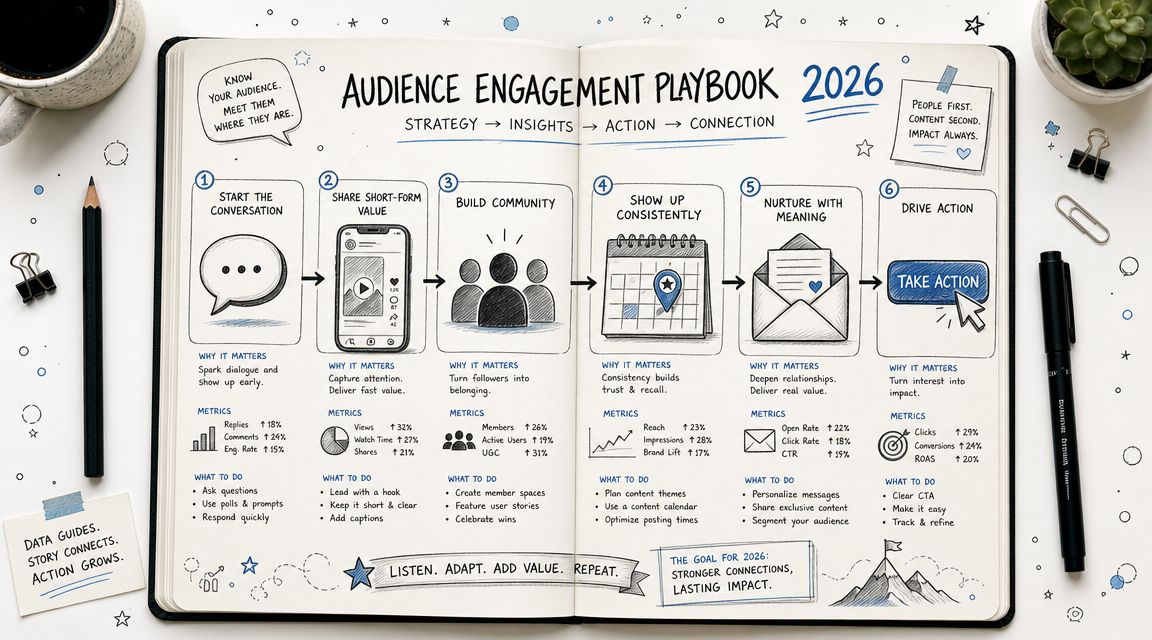
Audience engagement advice is full of bad incentives. It pushes ambitious professionals to chase visible activity instead of building real authority. More posts, more polls, more comments can create motion, but motion is not an asset.
What matters is whether people remember you, trust you, return to your work, and act on what you say. That is the standard. Surface reactions have value, but they are weak on their own. The stronger signals are repeated attention, direct replies, shares, site visits, subscriptions, referrals, and buying intent. If your strategy is built around quick spikes, you are not building influence. You are borrowing attention from an algorithm.
Ambitious professionals in 2026 must make a critical shift in perspective. Treat engagement as infrastructure for a long-term personal brand, not as a collection of tricks for social reach. Your content should compound. It should deepen trust, sharpen your reputation, and create a body of work people can point to later. For professionals refining that foundation, these personal narrative writing examples for brand building are a smart place to study how memorable brands are formed.
The audience engagement examples below matter because each one helps you create something durable. A trusted voice. A loyal community. A distribution system you control. While short-form video can play a role, and there are ways to boost your TikTok presence, it should sit inside a wider strategy built to outlast any single platform.
The fastest way to become forgettable is to sound polished and empty. People don't attach themselves to perfection. They attach themselves to a point of view, a lived experience, and a story they can see themselves inside.
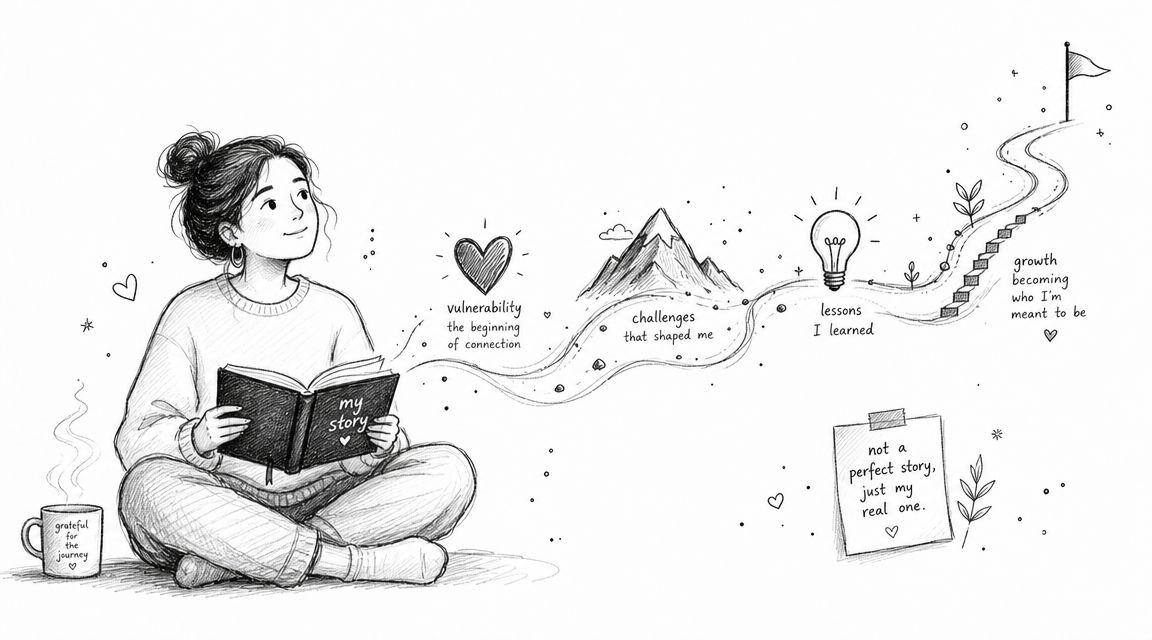
If you're building a personal brand, your history is not background information. It's strategic material. Your failures, pivots, values, and hard-earned lessons are what make your ideas believable. That's why leaders like Oprah, Brené Brown, Gary Vaynerchuk, and Satya Nadella remain culturally relevant. They don't just share expertise. They share context.
Start with the moments that changed how you think. The job you left. The mistake that cost you. The belief you had to unlearn. Then connect that moment to a lesson your audience can use right now.
A strong narrative does three things:
For sharper story structure, study these personal narrative writing examples for brand building.
Practical rule: Don't share personal stories for catharsis. Share them to create clarity for the audience.
It's common practice to wait until one has “made it” to tell the story. That's backwards. Document the journey while it's happening. Share the messy middle, not just the polished ending.
A good example of the tone this requires is here:
If your audience only hears polished monologues, they learn your message. They do not learn how you think under pressure. Live interaction fixes that.
Q&A sessions, webinars, live streams, and audio rooms give people direct access to your judgment. That matters more than reach. Anyone can schedule posts. Fewer people can answer sharp questions in real time, stay clear, and make the audience feel included. That is how credibility turns into trust, and trust turns into a reputation that lasts.
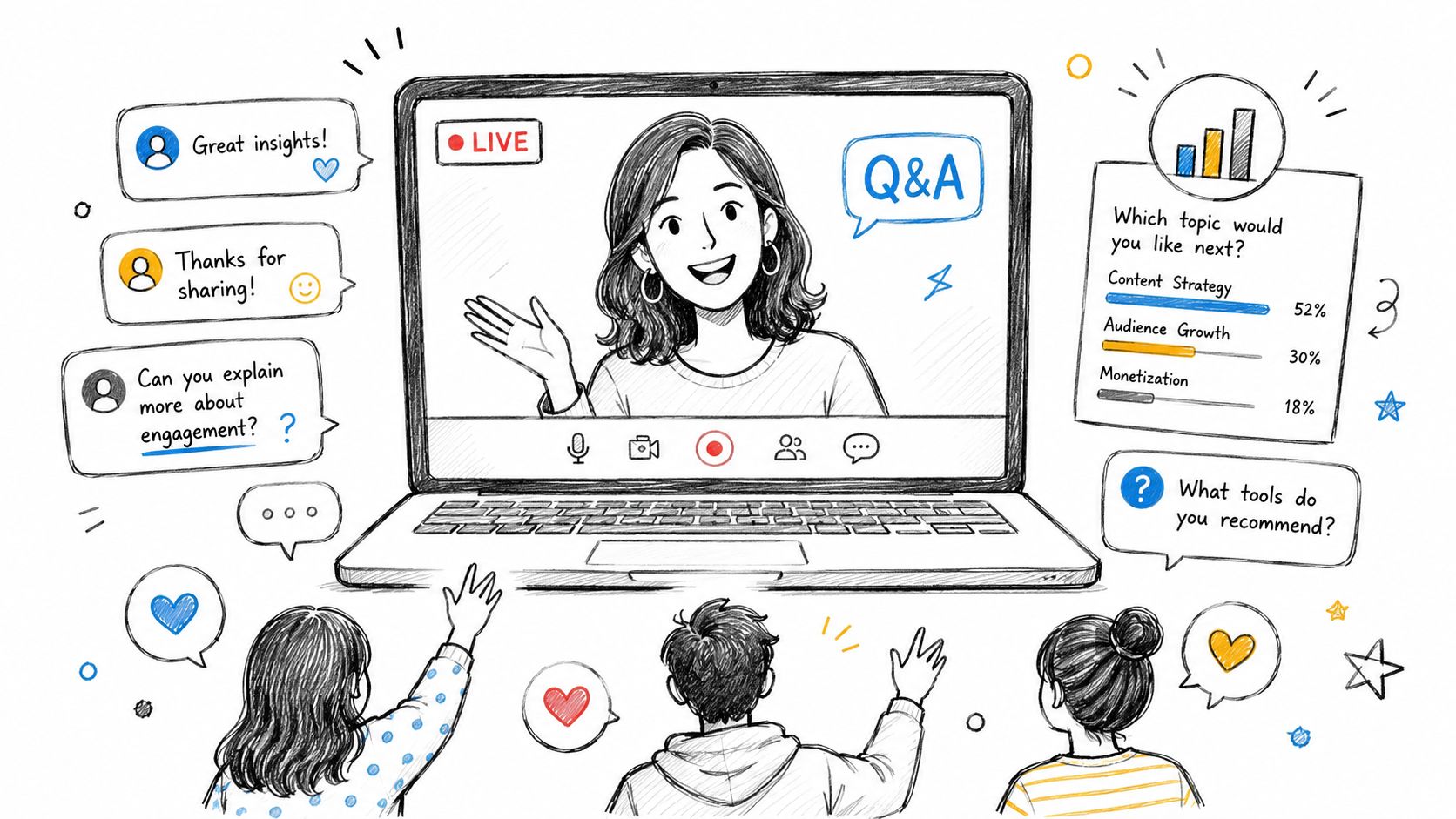
Use live formats because they create proof. Your audience can watch how you handle uncertainty, disagreement, and nuance. That public process builds a stronger personal brand asset than another polished carousel ever will.
Treat live engagement like a flagship series, not a random appearance.
Live sessions also sharpen your strategy. The questions people ask reveal what they want, what they misunderstand, and which phrases they already use to describe the problem. That is audience research you can use immediately in your offers, content, and positioning.
If your business includes teaching, coaching, or cohort-based programs, live interaction carries even more weight. Review Zanfia for boosting course engagement for practical ways to keep participation high after the first session.
Every strong live question gives you three assets: a content idea, a positioning clue, and a trust-building moment.
If all your content points back to your offer, people will feel managed. If your content solves real problems before the sale, people will start to trust your judgment.
That's why value-first content remains one of the strongest audience engagement examples for experts, founders, operators, and creators. Think HubSpot's educational library, Neil Patel's guides, Moz's explainers, Seth Godin's daily insights, and Paul Graham's essays. Each one builds authority by helping first.
A smart content strategy starts with cornerstone resources. One clear guide. One framework. One teaching series. One durable point of view that your audience can return to and share.
The strongest educational content usually does this:
If you want a better process for this, read how to create engaging content that resonates with audiences. If education is part of your business model, you can also look at Zanfia for boosting course engagement to improve the learner experience after attention turns into enrollment.
A lot of professionals hold back their best thinking because they're afraid of giving away too much. That's a weak strategy. Give away the diagnosis, the framework, and the principles. Keep the implementation depth, personalization, and accountability inside the paid offer.
An audience listens. A community talks to each other.
That difference is everything. Once people begin connecting around your ideas, your brand stops depending entirely on your next post. It becomes a place, not just a profile.
Create a dedicated environment where your best people can gather. That might be a Slack group, Discord server, WhatsApp circle, private LinkedIn group, Mighty Network, or membership hub. The platform matters less than the structure.
What matters:
If you want a repeatable framework, use this blueprint for building a community around your brand.
One of the most useful audience engagement examples here comes from post-event design. Good engagement doesn't end when the webinar, launch, or livestream ends. Guidance on engagement strategy increasingly points to follow-up loops like audience-chosen next topics, sentiment checks, open Q&A, testimonials, and user-generated content as ways to continue the conversation after the moment passes (Vibe's audience engagement strategies).
That's how community turns into a legacy asset. You stop creating isolated spikes of attention and start building an environment where people return, contribute, and deepen their relationship with your work.
Borrowed trust is one of the fastest accelerators in personal branding. The wrong collaboration dilutes your positioning. The right one expands it.
When you co-create with someone whose audience overlaps in values but not in identical offerings, you gain reach and relevance at the same time. Podcast interviews, joint workshops, co-authored posts, livestream conversations, panel discussions, and roundtables all work. Tim Ferriss built much of his influence by interviewing exceptional performers. Naval Ravikant amplified his ideas through conversations as much as standalone posts.
Many choose collaborators based on audience size. That's lazy. Choose based on alignment.
Ask:
A strong collaboration has a clear promise. “We're going live together” is weak. “We're breaking down how founders turn one customer insight into a month of content” is stronger because it gives people a reason to show up.
The best collaborations also create second-order assets. One conversation can produce clips, quotes, newsletter commentary, follow-up debates, and future invitations. That's why collaboration isn't just a growth tactic. It's reputation transfer.
Collaborate to increase authority, not to borrow noise.
A great idea posted once is not a strategy. It's a missed opportunity.
The strongest personal brands don't rely on one channel. They build a distribution system. A core insight starts as a podcast segment, becomes a LinkedIn post, gets clipped for short-form video, expands into an email, and lives on the website as a searchable article. Gary Vaynerchuk popularized this operating style, but plenty of modern creators and founders use the same principle.
Consistency doesn't mean copying the same post everywhere. It means expressing the same core idea in ways each platform rewards.
Use this model:
As digital platforms matured, measurement evolved beyond simple views. Guidance on audience measurement now emphasizes interaction metrics, time-spent, conversion signals, bounce rate, average session duration, returning versus new visitors, page views, and content interactions like video clicks and downloads (Arena's audience engagement metrics guide). That shift matters because distribution isn't just about reach. It's about whether people stay, return, and take action.
You don't need to be everywhere. You need to be present where your audience already pays attention, then make it easy for them to follow your thinking across channels.
Many individuals comment on the market. A smaller group interprets it. The rarest group generates insight the market starts repeating.
That's the lane you want.
Original research, surveys, audience analysis, and structured observations give you a defensible position. They move you from “content creator” to “source.” If you're a consultant, founder, operator, or executive, that shift is one of the most valuable audience engagement examples you can apply because it creates authority that competitors can't copy with tone alone.
Audiense's case studies show what happens when engagement is built on psychographic segmentation instead of broad demographics. In one example, Behavioural Economy profiled motivations, interests, and digital behaviors for the Bayerische Staatsoper, then used customized programmatic campaigns through StackAdapt to reach new audiences in the UK and France, generating a 200% ROI during the 150th anniversary Opernfestspiele.
The point isn't that you need a giant media budget. The point is that better audience understanding creates better message-to-market fit.
If you want to do this at a personal brand level:
Thought leadership isn't self-appointed. People grant it when your insights help them make better decisions.
If your audience never adds to the conversation, your brand is still too one-sided.
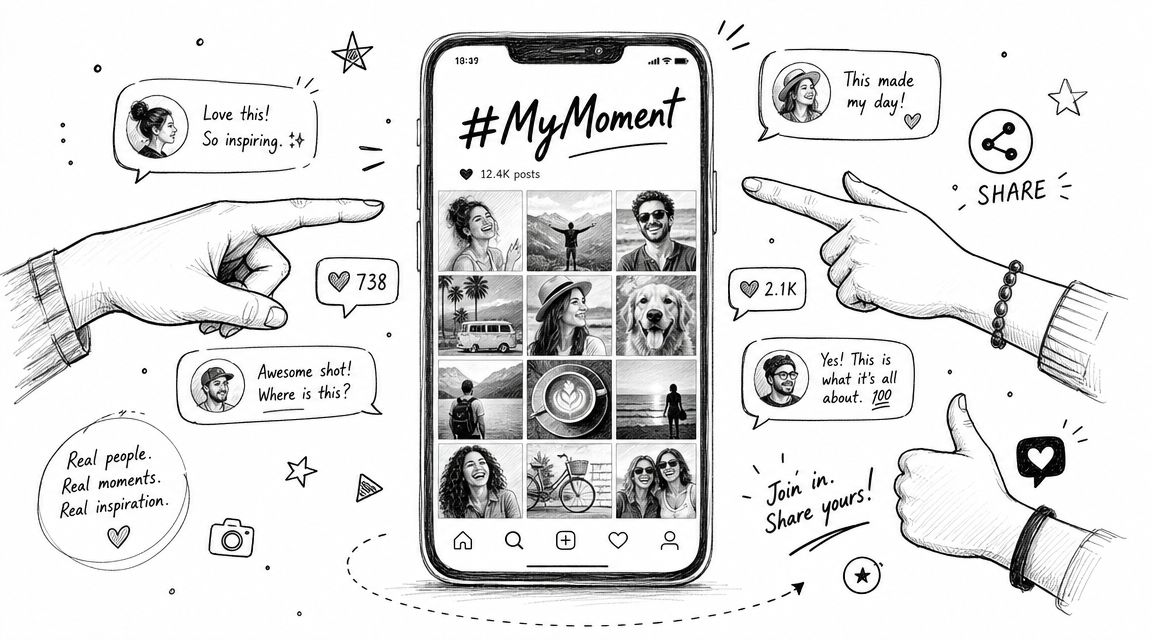
User-generated content changes that. Reviews, testimonials, challenge entries, customer stories, quote reposts, stitched videos, before-and-after examples, and community spotlights all turn passive followers into active participants. That matters because participation creates ownership. And ownership builds loyalty.
Most brands fail here because they ask for too much. “Share your journey” is vague. “Post one lesson you learned from this week's workshop and tag me” is usable.
A stronger UGC system includes:
A strong real-world example comes from MarketingSherpa. A not-for-profit theater stopped centering paid campaigns on individual shows and used Facebook Page Like ads to build brand affinity instead. The result was a 577% year-over-year increase in social media following, including 860 new Facebook Page likes in 2022. They supported that acquisition with more granular organic content such as behind-the-scenes progress photos and building updates, which helped deepen retention after the initial follow.
That's the lesson. UGC and participation work best when they're part of an ecosystem. You earn attention, then you give people a role in the brand story.
Social platforms are borrowed land. Email is owned territory.
If you care about long-term influence, build your list early. Not when your reach drops. Not when a launch is coming. Early. A newsletter gives you a direct relationship with your audience, without an algorithm standing between your thinking and their attention.
Writers and founders like Tim Ferriss, Seth Godin, Paul Graham, Tiago Forte, and Amy Porterfield understand this well. Their emails don't just distribute content. They shape audience expectation. People know what kind of thinking they'll receive and why it's worth opening.
A good newsletter doesn't recycle your feed. It adds depth, curation, and intimacy.
Focus on three things:
One overlooked part of email engagement is accessibility. For many audiences, especially disabled and multilingual users, engagement improves when you reduce friction with simpler language, accessible design, pre-event materials, interpretable formats, and communication that's easier to process (guidance on accessible audience engagement). That applies to newsletters too. If people can't comfortably consume what you send, they won't stay connected long enough to trust you.
Email is where a personal brand becomes a durable business asset. It's where attention turns into relationship, and relationship turns into opportunity.
People should recognize your work before they read your name.
That's the job of visual branding. Consistent color use, typography, layout, imagery, thumbnails, slide design, and editing style create instant familiarity. Gary Vaynerchuk, Alex Hormozi, Mel Robbins, Brené Brown, and Naval Ravikant all have visual patterns that make their content easier to identify in crowded feeds.
You don't need a complicated brand system. You need a coherent one.
Keep it tight:
This also connects back to how engagement is defined. Surface-level actions matter less than whether your audience develops a recognizable relationship with your work over time. Visual identity supports that by lowering the cognitive effort required to notice, remember, and return to your content.
If you want inspiration for stylized visuals, tools now make it easier to create unique Gorillaz-style images. Just don't confuse novelty with brand strategy. Distinctive visuals work when they reinforce your positioning, not when they distract from it.
| Tactic | Implementation 🔄 | Resources ⚡ | Expected Outcomes 📊 | Ideal Use Cases 💡 | Key Advantages ⭐ |
|---|---|---|---|---|---|
| Authentic Storytelling & Personal Narratives | Medium–High: requires reflection, editing, careful boundary setting | Low–Moderate: time, recording/writing support | Deep trust, memorability, stronger emotional bonds | Founders, leaders, legacy-focused professionals | Builds unique, hard-to-replicate connection with audience |
| Interactive Q&A Sessions & Live Streams | Medium: scheduling, moderation and live management | Moderate: streaming tools, moderator, regular time commitment | Immediate feedback, engagement spikes, community growth | Product launches, audience-building, real-time education | High immediacy and perceived accessibility |
| Value‑First Content & Educational Resources | High: research, curriculum design, quality production | High: expert time, production, design and distribution tools | Authority, organic growth, long-term evergreen traffic | Coaches, consultants, SaaS lead generation, educators | Establishes credibility and drives sustained organic leads |
| Community Building & Exclusive Groups | High: moderation, culture design, ongoing facilitation | Moderate–High: community manager, platform costs, events | Member retention, advocacy, referral network | Membership businesses, coaches, course creators | Creates stickiness and network effects that sustain growth |
| Strategic Collaboration & Co‑Creation | Medium: partner identification, negotiation, coordination | Low–Moderate: outreach time, shared production resources | Rapid reach expansion and credibility via association | Emerging pros, niche experts seeking new audiences | Exponentially expands reach with shared effort |
| Consistent Multi‑Platform Content Distribution | High: planning, adaptation, scheduling across platforms | High: content creation volume, scheduling tools, analytics | Broader visibility, algorithmic favor, repeat impressions | Creators aiming for scale and consistent presence | Maximizes ROI by repurposing hero content across channels |
| Data‑Driven Insights & Thought Leadership | High: research design, data collection and analysis | High: survey tools, analysts, promotion budget | Media coverage, speaking gigs, differentiated positioning | Industry leaders, consultants, executives | Unique, evidence-based authority that attracts press and partners |
| User‑Generated Content & Community Participation | Medium: campaign design, incentives, moderation | Low–Moderate: incentive costs, curation time | Authentic social proof, increased conversions, fresh content | Consumer brands, lifestyle creators, community-driven products | Scales authentic content and builds trust via peers |
| Email Marketing & Newsletter Building | Medium: list building, segmentation, content cadence | Moderate: ESP platform, copywriting, automation setup | High ROI, direct owned audience, consistent conversions | Any professional needing direct, reliable communication | Owned channel with personalized reach and measurable ROI |
| Visual Branding & Consistent Aesthetic | Medium: brand system creation and governance | Moderate: designer, templates, asset library | Instant recognizability, perceived professionalism | Professionals wanting distinct and cohesive presence | Enhances recall and perceived authority across all touchpoints |
Most professionals approach audience engagement backwards. They look for tactics that increase visible activity, then hope that activity eventually turns into authority. That's why they end up with busy channels and weak positioning.
The smarter approach is to build engagement as a byproduct of a strong brand system. Tell better stories. Teach with clarity. Show up live. Build community. Create reusable assets. Distribute consistently. Develop original insight. Invite participation. Own your audience through email. Make your content visually recognizable. These aren't separate tricks. They're compounding brand infrastructure.
That's also how to interpret audience engagement examples correctly. Don't ask, “Will this get more likes?” Ask, “Will this create stronger trust, better recall, repeat attention, and deeper action?” Those are different standards. They lead to different content decisions.
If you apply only one or two of these ideas, you'll improve. If you stack them and run them with discipline, you'll build something far more valuable than engagement spikes. You'll build a reputation that travels across platforms, rooms, referrals, and opportunities. That's what a personal legacy looks like in digital form. Not constant posting. Consistent proof.
Start simple. Pick one storytelling format you can sustain. Launch one recurring Q&A. Build one strong lead magnet. Open one place for community. Turn one core idea into a multi-platform distribution engine. Then keep going. Momentum in personal branding rarely comes from reinvention. It comes from repetition with precision.
A lot of people know what they should be doing. Very few have a system to do it well, consistently, and in a way that still sounds like them. That's where execution breaks down. Content gets delayed. Messaging gets diluted. Platforms fragment the brand. Engagement becomes reactive instead of strategic.
Legacy Builder solves that problem by turning your expertise, story, and vision into an integrated content engine. The objective isn't to make you look active online. It's to make you unmistakable. When your audience can recognize your voice, trust your perspective, and repeatedly find value in your content, engagement stops being something you chase. It becomes evidence that your brand is working.
If you're ready to build a personal brand that creates trust, authority, and long-term opportunity, Legacy Builder gives you the strategy, content, and execution to make it happen consistently.


You could – but most in-house teams struggle with the nuance of growing on specific platforms.
We partner with in-house teams all the time to help them grow on X, LI, and Email.
Consider us the special forces unit you call in to get the job done without anyone knowing (for a fraction of what you would pay).
Short answer – yes.
Long answer – yes because of our process.
We start with an in-depth interview that gives us the opportunity to learn more about you, your stories, and your vision.
We take that and craft your content then we ship it to you. You are then able to give us the final sign-off (and any adjustments to nail it 100%) before we schedule for posting.
No problem.
We have helped clients for years or for just a season.
All the content we create is yours and yours alone.
If you want to take it over or work on transitioning we will help ensure you are set up for success.
We want this to be a living breathing brand. We will give you best practices for posting and make sure you are set up to win – so post away.
Subscribe to our newsletter and get insights on how to grow your personal brand.
