
Subscribe to our newsletter and get insights on how to grow your personal brand.
Thank you! Your submission has been received!
Oops! Something went wrong while submitting the form.


The strongest thought leadership programs mix original research, long-form essays, newsletters, podcasts, short posts, talks, frameworks, books, and video, because each format serves a different stage of trust and distribution. Short posts dominate the habit, with 92% of B2B marketers using them, yet only 43% rate them most effective, while video leads that effectiveness ranking at 58%.
Consistent posting is not thought leadership. A steady feed can make your name familiar and still leave a buyer unsure how you think. The format decides whether an idea builds credibility, earns reach, or moves someone toward a conversation.
Most advice stops at "post every day." That treats these types of thought leadership content as a pile of interchangeable outputs. They aren't. A report makes you the source. An essay shows your reasoning. A newsletter holds the relationship when the feed moves on. Ignore the urge to launch all nine at once.
Use the nine formats below as a mix, not a checklist. Match each one to the stage of authority you still need, then push one strong idea through the channels that can carry it.
Anyone can quote someone else's survey. Publishing your own data is what turns a commentator into a source.
A survey, a benchmark, or a clean cut of customer data gives the market a fact it cannot find in a recap post. Journalists cite it. Analysts reference it. Buyers forward it to their boss. Each citation builds authority that an opinion post never earns.

As noted earlier, benchmarks from the Content Marketing Institute show marketing teams publish far more e-books and white papers than original research reports. That gap is the opening. Fewer teams do the hard asset, so the ones with a real method keep getting cited long after publication.
Fieldwork is slow, and a cute sample will get challenged in the comments. Date the file. An undated "industry report" reads like a brochure.
Practical rule: If you can't explain the method in two sentences, don't publish the statistic.
Jeff Bezos's shareholder letters worked because they argued one operating belief at length, not because they were long. Ben Thompson's Stratechery essays do the same job for strategy readers: one thesis, a personal voice, and enough evidence that a busy executive will forward the piece.
That depth is the second stage of authority. Short posts test a line. An essay shows how you reason when the answer isn't tidy. Founder letters, sent on a fixed cycle to customers, employees, or investors, do it with names and trade-offs attached.
Edelman and LinkedIn's 2024 study found that 73% of decision-makers trusted thought leadership more than product sheets for judging capability, and 80% preferred work that included third-party evidence. Quality is still thin: 30% called what they read mediocre, and only 13% called it very good or excellent. A careful essay can sit in that smaller group.
State the mainstream view fairly, then show the operating constraint that qualifies it. Novelty without a decision framework is just a hot take.
Publish on your site first, then pitch a cut to a trade publication. Pull two quotable lines for social. Don't turn the letter into a product tour, or stakeholders will feel the pitch under the prose.
A newsletter is the owned-audience stage. LinkedIn can bury a post by Thursday. A list you earned still opens on your schedule, which is why operators like Lenny Rachitsky built a business on a recurring brief instead of rented reach.
Ship on a fixed day. Keep the sections stable so subscribers know where the analysis sits and where the curated links sit. Early growth is slow, and inbox competition is ugly. That's the trade. You also stop begging an algorithm for the same people every week.
What works is a point of view plus one useful artifact, not a roundup of everything you read.
Turn each issue into two short posts and one chart. Don't paste the whole email into social. The inbox version should feel like the full meal.
If the list is cold, a short welcome series does more than another lead magnet. These email sequence templates for personal brands show how to move a new subscriber from "who is this" to a real conversation.

Audio is the intimacy stage. A buyer can hear how you handle a half-formed answer, which text often sands down. A weekly show, guest or solo, also puts you in rooms with people who already have an audience.
The production tax is the part founders underestimate. Booking, recording, editing, and show notes will eat a day if you don't have a system. A tight podcast production workflow guide is worth more than a prettier microphone.
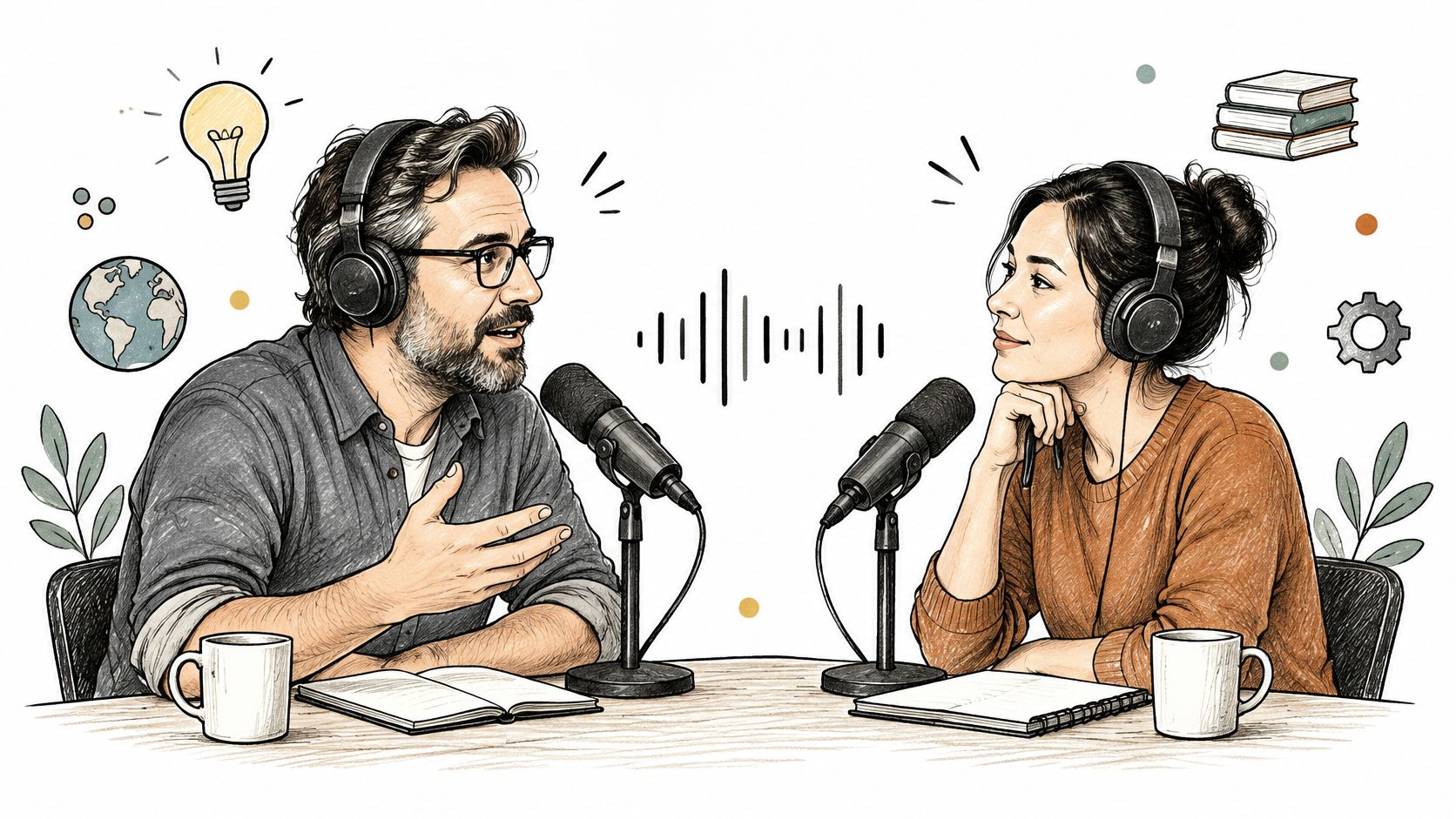
Distribution is where most shows die after the interview high.
Year one is usually quiet. Direct revenue is hard to attribute. The compounding asset is the network plus a library you can quote in sales calls. Skip the show if you won't record for a year.
Short posts are the testing stage. A 150-word LinkedIn note or a sharp line on X can show within a day whether a point of view earns replies from operators or only polite likes from peers.
The mistake is treating a feed post as the flagship. Use it to probe a hypothesis: pricing, hiring, a launch trade-off, a belief your buyers keep repeating. When a thread pulls real questions, move the winner into an essay, a talk, or a video.
Open with the lesson. Put the resume later if it matters. Use one specific story: a failed rollout, a pricing argument you lost, a constraint legal or finance raised. Ask for disagreement. Generic journey posts get scrolled because they could belong to anyone.
This guide to building a personal brand on LinkedIn covers the operating layer: profile, cadence, and comment follow-up. Cadence matters. Shelf life matters more. A feed forgets you by Friday, and a platform change can cut reach without warning, so keep the source asset somewhere you own.
A talk is the public-proof stage. Ten or twenty focused minutes on one idea, or a longer conference keynote, forces you to earn the room. Recorded, that performance keeps working after the travel receipt is filed.
Edelman and LinkedIn's 2025 study surveyed 1,934 executives and found that hidden buyers, the finance, legal, and operations people who rarely take the sales call, judge thought leadership much like the visible buyer. They want a perspective that informs or challenges them. A stage is one of the few places you can do that without a product slide in the first minute.
What lands is a story, one piece of evidence, and a phrase people can repeat in the hallway. What fails is a 40-slide tour of your framework with no stakes.
Getting onto a respected stage is competitive, and a flat delivery wastes the invitation. Rehearse out loud. Then cut the recording into a short clip, a transcript essay, and a workshop module. The talk is the asset. The conference is only the first distribution hit.
A named model is the reuse stage. April Dunford's positioning work sticks because people can teach the steps without her in the room. A matrix, a cycle, or a short sequence does that. A clever acronym that doesn't change a decision doesn't.
Build it from scars, not from a branding workshop. The useful ones come from a repeated failure: a rollout that breaks at the same step, a deal that dies in the same meeting.
Social loves a clean visual, so the diagram should travel as a carousel and as a slide. The risk is fossilizing it. Markets move. Update the model, or you'll defend a diagram that your own clients have outgrown. Branding dressed up as a method gets spotted fast by operators.
A book is the long-asset stage. It won't replace a pipeline this quarter. It does change the room when you walk into a podcast, a board offsite, or a procurement packet. Gabriel Weinberg's Traction and April Dunford's Obviously Awesome still get handed to teams because each book is one argument with stories and steps, not a scrapbook of posts.
Ghostwriting is a legitimate path if the ideas and the voice stay yours. A writer can structure chapters from interviews. You still have to supply the cases, kill the lines that sound like a committee, and read every page aloud. If the book could have been written about any CEO, it will sell like one.
Traditional deals are slow and selective. Self-publishing is faster and lonelier. Either way, plan the companion pieces before the manuscript locks: a talk, a worksheet, a short course. Sales of the book itself rarely pay back the year you spent. The return is speaking, inbound trust, and a reference your team can send.
Start smaller if a full manuscript is fantasy this year. A free ebook creation workflow can turn one chapter's worth of thinking into a lead asset while the larger book is still a pile of interviews.
Camera-shy founders treat video as optional. Their buyers are already bingeing someone else's channel. Video is the presence stage: it puts a face and a voice behind the argument, and in the B2B research cited earlier, half of the organizations producing it called video their best-performing format, with 61% of B2B marketers planning to raise video investment in 2025.
Skip the studio.
Build one repeatable episode instead: a single question, a single face, one piece of visual proof. Record once, then slice. The full cut lives on YouTube, where search keeps it working long after publish day. Thirty-second clips feed LinkedIn. The audio track becomes a podcast episode. The transcript turns into a newsletter issue. One taping session should produce a week of presence across the other formats.
Titles, thumbnails, and descriptions do the distribution work your charisma will not. A data-driven video strategy for creators tells you which ideas earn a full episode and which stay as clips. Pair that with a YouTube channel strategy built to drive leads and authority so the channel earns its keep as a pipeline asset.
Two failure modes kill channels: polish with no point, and a point with no publishing rhythm. Hate the camera? Borrow a host and stay on as the expert guest. If you cannot show up for months at a stretch, do not announce a series.
| Format | 🔄 Implementation Complexity & Resources | ⚡ Production Speed | 📊 Expected Outcomes | ⭐ Key Advantages | 💡 Ideal Use Cases |
|---|---|---|---|---|---|
| Original Research and Industry Reports | High; requires data collection, analysis, and budget | Slow; research and validation take time | Backlinks, media citations, qualified leads, lasting authority | Provides original, citable evidence | B2B and SaaS leaders seeking recognition as a data source |
| Long-Form Essays and Founder Letters | Medium–high; needs strong writing and focused executive time | Slow; typically developed and published occasionally | Deeper trust, thought leadership, and stakeholder transparency | Communicates a distinctive point of view | Leaders building credibility with customers, employees, or investors |
| Email Newsletters | Medium; requires a mailing platform and consistent editorial effort | Moderate; recurring production | Direct audience growth, engagement, and conversions | Builds an owned audience independent of social algorithms | Marketers and founders cultivating a niche audience |
| Podcasts and Interview Series | High; requires recording, editing, scheduling, and distribution | Slow; episodes need ongoing production | Audience reach, relationships, and sustained engagement | Combines personal connection with guest expertise | Leaders who enjoy conversation and want to expand their network |
| Short-Form Social Posts and LinkedIn Commentary | Low; requires ideas, writing, and regular engagement | Fast; posts are quick to create | Frequent visibility, professional recognition, and rapid feedback | Low cost and easy to test ideas | Professionals building a personal brand or expanding their network |
| Keynote Speeches and TED-Style Talks | High; requires preparation, rehearsal, and often travel | Slow; talk development and stage access take time | Visibility, speaking opportunities, and memorable ideas | Strong credibility on respected stages | Senior leaders seeking industry authority and speaking invitations |
| Proprietary Frameworks and Named Models | Medium–high; requires testing and clear visual design | Moderate; development takes time, reuse is efficient | Recognition, adoption, and potential product or workshop opportunities | Makes expertise memorable and actionable | Consultants, coaches, and founders packaging a repeatable method |
| Books and Ghostwritten Thought Leadership Books | Very high; requires substantial research, writing, editing, and publishing | Very slow; often takes months or years | Long-term authority, media attention, and speaking leads | Durable asset that can support multiple offerings | Leaders and consultants seeking broad, lasting professional reach |
| Video Series and YouTube Channels | High; requires filming, editing, and publishing workflows | Moderate–slow; recurring production is resource-intensive | Search discovery, audience trust, and reusable content | Demonstrates expertise and personality visually | Creators and professionals explaining processes or building searchable reach |
Authority doesn't come from touching every format. It comes from two or three you can sustain, aimed at the trust you don't have yet, then reused until the idea is hard to miss.
Edelman and LinkedIn's impact research shows the stakes of that mix. 52% of decision-makers and 54% of C-suite executives spend at least an hour a week on thought leadership, and 75% said a single piece pushed them to research a product or service they didn't already know. The same body of work found that 90% were moderately or very likely to be more receptive to outreach from organizations that publish high-quality thinking on a consistent basis. Buyers are already spending the time. Most of what they find still isn't good enough to change a short list.
Pick one flagship. If your edge is evidence, lead with a report or a named framework. If your edge is judgment, lead with an essay or a founder letter. If your edge is presence, lead with video or a talk. Then pick one distribution channel you actually control or can show up on weekly: the email list, YouTube, or LinkedIn. Not all three at full volume.
Pick one repurposing habit and put it on the calendar. Every flagship asset becomes one chart or clip, one short post that states the argument, and one paragraph in the newsletter. That's the engine. New ideas stay rare. Distribution stays boring.
Legacy Builder fits when the constraint is production, not opinions. The work starts from a founder's interviews and point of view, then turns into posts, visuals, short video, and newsletters without sanding off the person behind them. You still choose the flagship. A team handles the cadence so the ideas don't die in a drafts folder.
Legacy Builder turns a founder's interviews, opinions, and proof into channel-ready thought leadership, from LinkedIn and X posts to visuals, short video, and newsletters. If these formats are the right mix but the weekly production isn't, start with the stories you already have. Visit Legacy Builder and put a real publishing rhythm behind the authority you're trying to earn.


You could – but most in-house teams struggle with the nuance of growing on specific platforms.
We partner with in-house teams all the time to help them grow on X, LI, and Email.
Consider us the special forces unit you call in to get the job done without anyone knowing (for a fraction of what you would pay).
Short answer – yes.
Long answer – yes because of our process.
We start with an in-depth interview that gives us the opportunity to learn more about you, your stories, and your vision.
We take that and craft your content then we ship it to you. You are then able to give us the final sign-off (and any adjustments to nail it 100%) before we schedule for posting.
No problem.
We have helped clients for years or for just a season.
All the content we create is yours and yours alone.
If you want to take it over or work on transitioning we will help ensure you are set up for success.
We want this to be a living breathing brand. We will give you best practices for posting and make sure you are set up to win – so post away.
Subscribe to our newsletter and get insights on how to grow your personal brand.
