.svg)
Subscribe to our newsletter and get insights on how to grow your personal brand.
Thank you! Your submission has been received!
Oops! Something went wrong while submitting the form.
.svg)


Copying a polished email sequence rarely creates trust for a personal brand. Readers can usually tell when a message sounds assembled from someone else's swipe file, especially when the language promises a transformation the sender hasn't connected to a real experience.
The best sequence is the one you can make sound like you. That depends on the reader's relationship stage, the action you want them to take, the personalization you can maintain, and your ability to keep a consistent voice after the template is gone. Automated sequences have performed strongly against one-off campaigns in recent benchmarks, but the advantage comes from sequencing relevant messages, not from adding more emails. Prospeo's 2026 benchmark summary reports a 5.58% click rate for automated flows versus 1.69% for one-off campaigns, while also describing a predictable progression from early attention to later conversion asks.
The ten resources below are organized by the job your campaign needs to do, not by platform popularity. Each comparison focuses on use case, setup effort, personalization depth, limitations, and measurement. You'll find options for lifecycle automation, CRM follow-up, prospecting, multichannel outreach, and creator-led audience building. For professionals who need help turning personal stories and insights into consistent content and audience engagement, Legacy Builder may also be relevant, but the sequence still has to carry your voice.
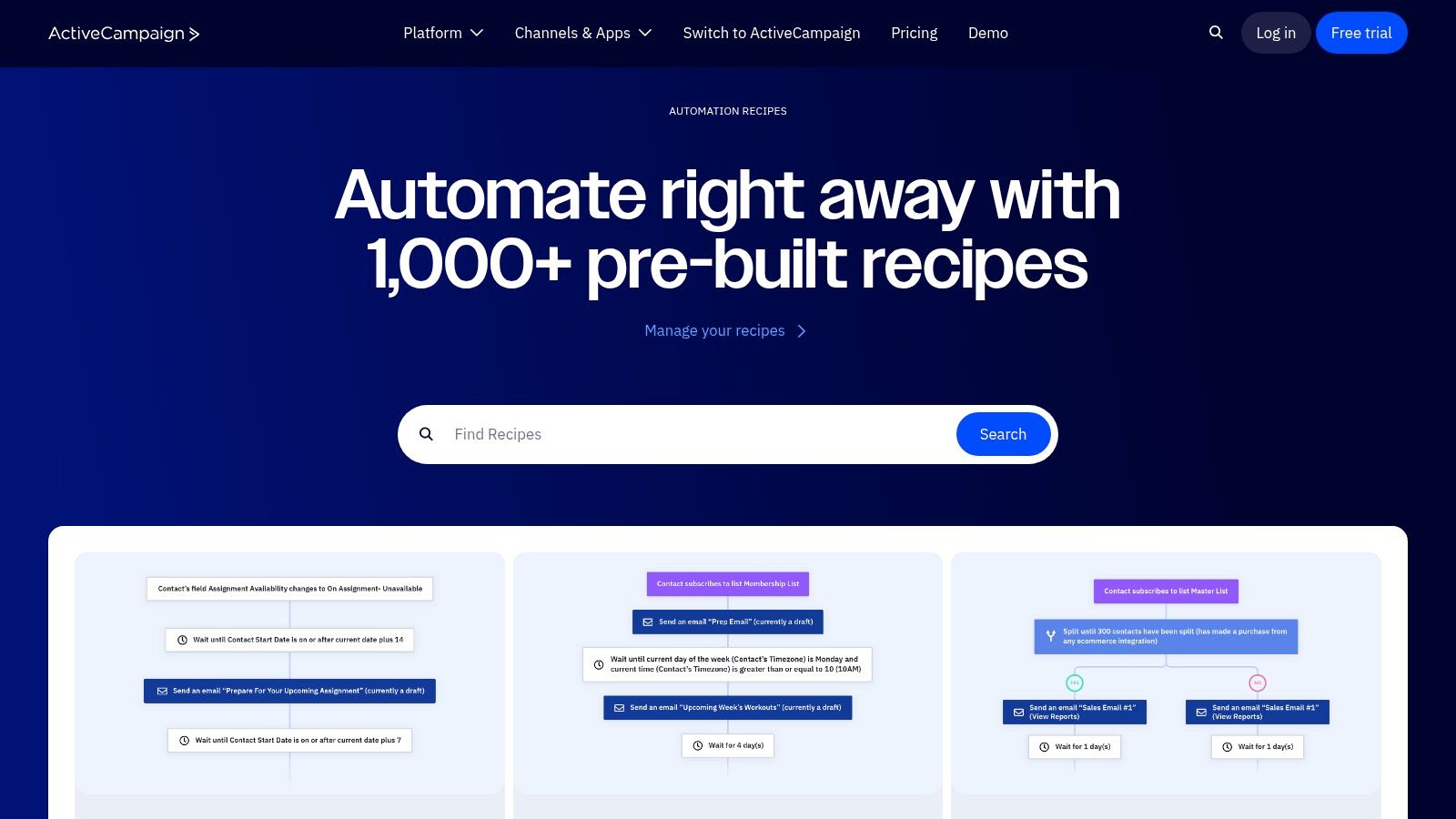
ActiveCampaign is a strong starting point when your email sequence needs to react to behavior rather than follow a fixed schedule. Its automation recipe library includes prebuilt flows for welcomes, nurture campaigns, webinars, abandoned carts, re-engagement, and sales follow-up. You can import a recipe, replace the generic copy, connect your forms or CRM, and launch without designing every branch from scratch.
Use it for lifecycle automation. A personal brand could trigger a welcome flow after someone downloads a leadership guide, then branch based on whether the subscriber clicks a case study, joins an event, or replies to a question. The visual builder supports triggers, conditions, and goals, while CRM connections make it easier to personalize later messages around contact activity.
The platform's depth is its main advantage. You can build a sequence where the first message delivers the promised resource, the next explains the thinking behind it, and a later email invites the reader to a consultation. That structure feels more useful than sending the same sales pitch repeatedly.
Practical rule: Treat each imported recipe as a skeleton. Replace its opening with a specific observation, story, or opinion that only your brand could credibly send.
Setup is fast, but the library can overwhelm beginners. Contact-based pricing may also become expensive as your audience grows, so calculate the cost of maintaining active automations before building a large system. Measure the sequence against its actual goal, such as replies, booked conversations, or completed applications, rather than judging it by opens alone.
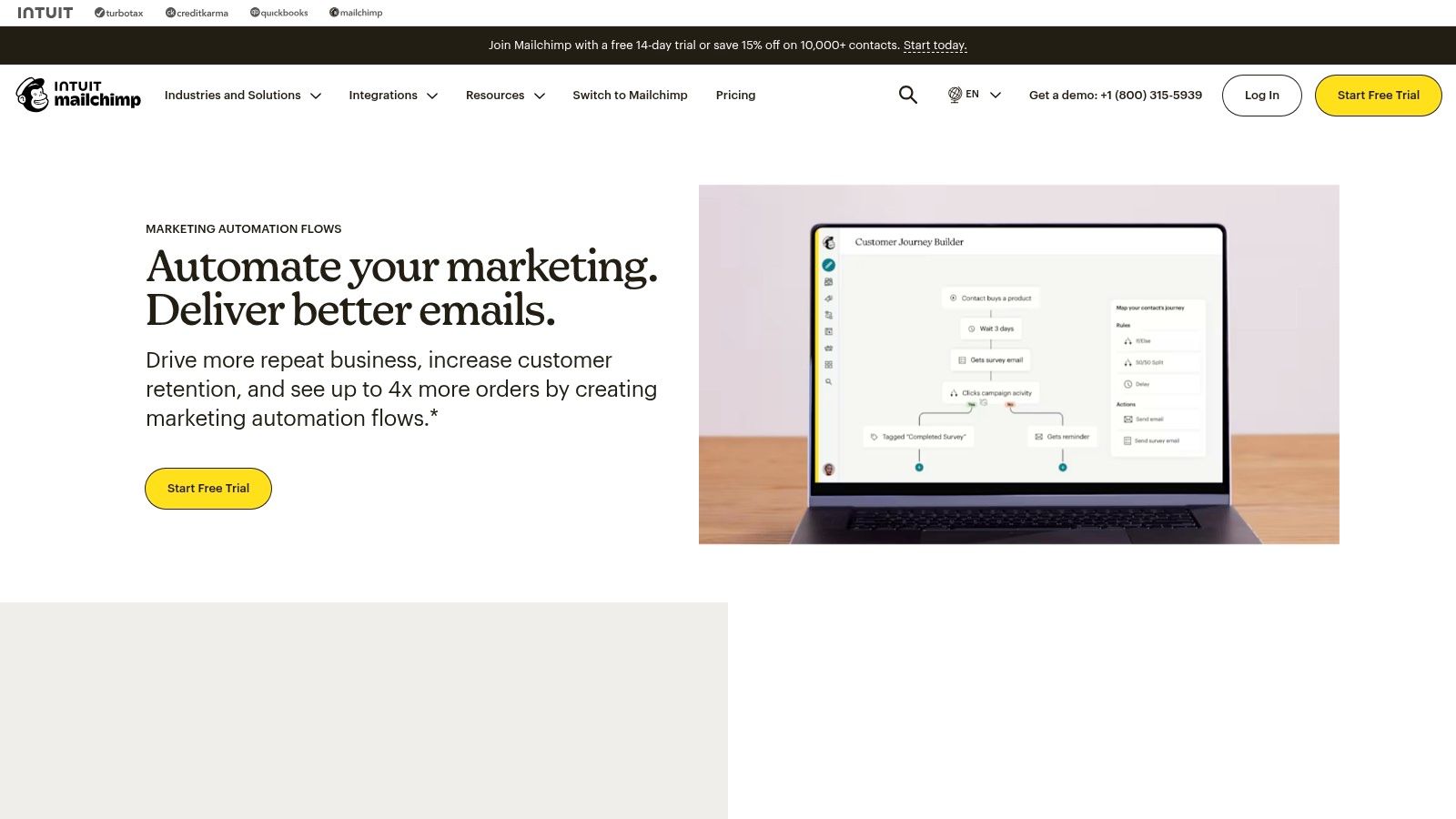
Mailchimp fits creators, small businesses, and commerce brands that want to launch standard customer journeys without a heavy technical setup. Its marketing automation flows provide prebuilt starting points for welcomes, re-engagement, abandoned carts, and other lifecycle moments. The visual journey builder can map multi-step email and SMS paths, and its wider ecosystem supports common commerce integrations.
Choose it for audience onboarding and basic lifecycle journeys. A personal brand might create a welcome flow for new subscribers, beginning with the promised download, followed by a short story about the founder's point of view, then a reply-based question about the reader's biggest challenge.
The template coverage helps you move quickly. The trade-off is control. Advanced branching and highly granular personalization may feel less flexible than specialist automation platforms, particularly when your audience needs several distinct paths. The free plan has also become more limited, so most serious users should evaluate paid-tier requirements before committing their whole list.
Personalization doesn't need to mean complex data fields. Add one relevant hook per message, such as the resource someone requested, the topic they selected, or the question they answered. Then make deliverability part of setup, not an afterthought. These email deliverability practices for 2026 are particularly relevant when a personal brand relies on a consistent sender identity.
Measure the journey by the next action you want. If the purpose is audience research, track replies and completed preference updates. If the purpose is conversion, track clicks and completed sales or bookings. Don't add branches because Mailchimp makes them possible.
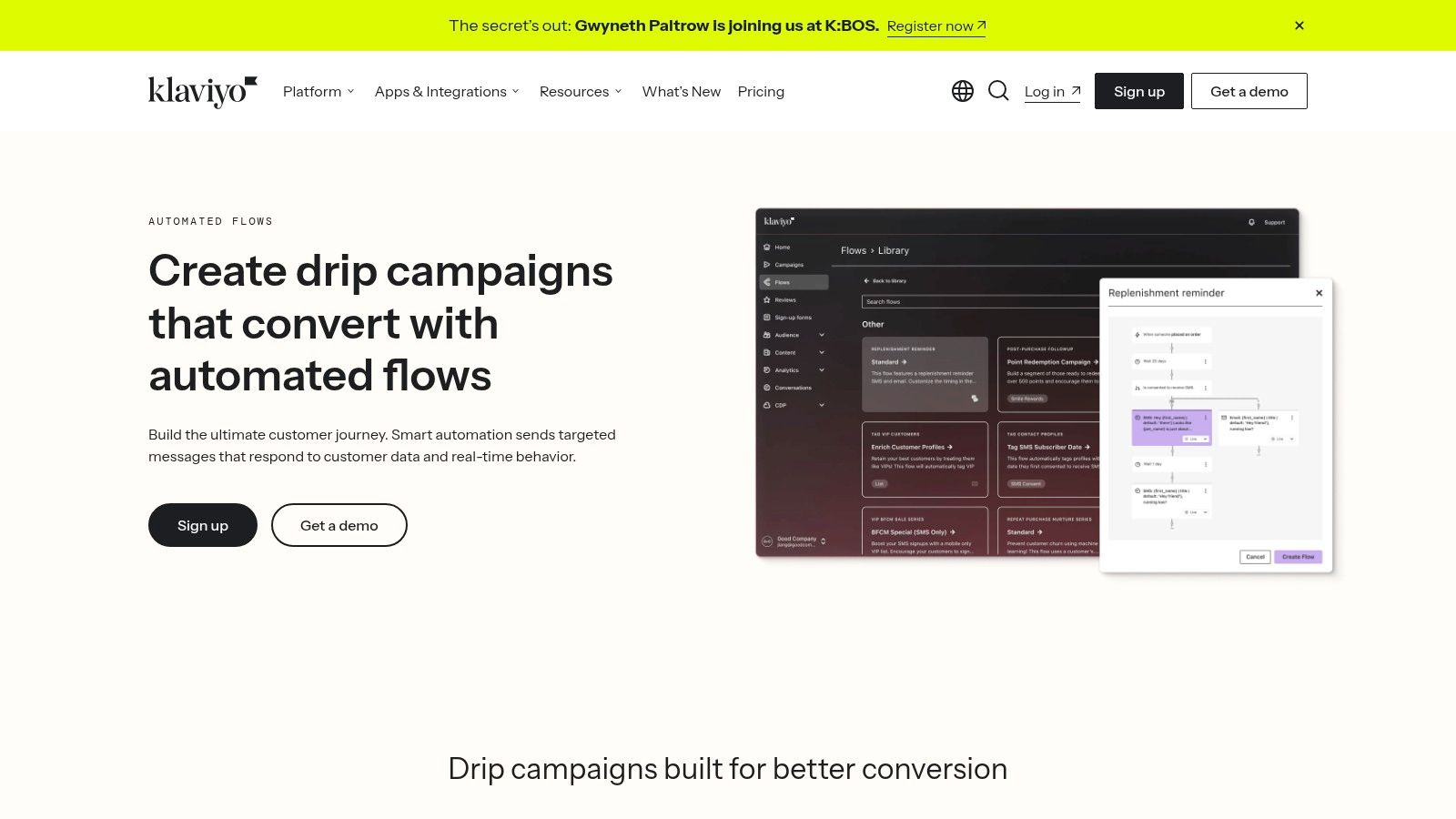
Klaviyo is built around event-driven commerce, so it makes the most sense when purchases, browsing behavior, product interest, and customer status shape the message. Its Flow Library includes plug-and-play automations for welcomes, cart abandonment, browse abandonment, post-purchase education, winback campaigns, and replenishment reminders. The platform also provides drag-and-drop email templates and detailed event triggers.
Use it for product-led lifecycle sequences. A personal brand selling courses, physical products, memberships, or digital resources can separate first-time buyers from repeat customers and write different follow-ups for each group. A buyer might receive a usage lesson, a related resource, and an invitation to share a result. A browser who hasn't purchased needs a different message entirely.
Klaviyo's strength is the connection between customer events and message timing. That makes generic broadcast logic less necessary. Instead of asking every subscriber to buy, the sequence can respond to what the person viewed, purchased, or ignored.
The limitation is fit. A consultant who only wants a simple newsletter welcome flow may find the commerce-oriented data model more elaborate than necessary. Pricing scales with active profiles, so audience growth can affect the operating cost. Review which profiles and events need automation before creating every possible flow.
A human hook still matters. Use the product event as context, then add your interpretation. For example, “You downloaded the workshop notes, so here's the part I'd apply first if I were rebuilding your weekly content system.” That sounds more personal than a standard product recommendation.
Track revenue when commerce is the goal, but also watch clicks, replies, unsubscribes, and the movement between lifecycle segments. A sequence that earns purchases while damaging long-term engagement needs revision.
HubSpot Sequences is designed for sales follow-up inside the CRM. It sends timed, targeted one-to-one emails and follow-up tasks from a connected inbox, while HubSpot's marketplace and workflow templates provide starting points for common sales motions. The HubSpot sequence documentation explains how teams can create and edit these workflows within the CRM environment.
Choose it for CRM-native follow-up. A consultant, agency owner, or B2B founder can enroll a prospect after a discovery call, send a relevant recap, create a task to review the account, and follow up with a useful resource. Contact history stays close to the sequence, which reduces the integration work required to personalize messages.
The strongest advantage is visibility. Teams can reuse templates, see enrollment activity, and coordinate follow-up without maintaining a separate sales engagement system. That matters when several people communicate with the same account.
The cost and access model require scrutiny. Stronger capabilities require higher Sales Hub tiers, and seat-based pricing can rise as more team members need access. For a solo personal brand, the platform may be unnecessary if the campaign only needs a simple welcome flow.
Write the email as a person who remembers the conversation, not as a CRM field wearing a first name.
A useful personal-brand sequence might use three distinct jobs: confirm what the prospect said, share one insight connected to that problem, and invite a low-pressure reply. Avoid stacking feature lists into every step. HubSpot's CRM context is valuable only when the message uses it thoughtfully.
For broader planning, these email marketing automation strategies for 2026 can help connect follow-up sequences with the rest of your audience system. For teams comparing adjacent sales tools, Mailtrack's guide to top prospecting and email tracking platforms offers additional context.
Measure replies, meetings booked, completed tasks, and conversion from qualified opportunity to the next sales stage. Open data can support diagnosis, but it shouldn't become the campaign's only success metric.
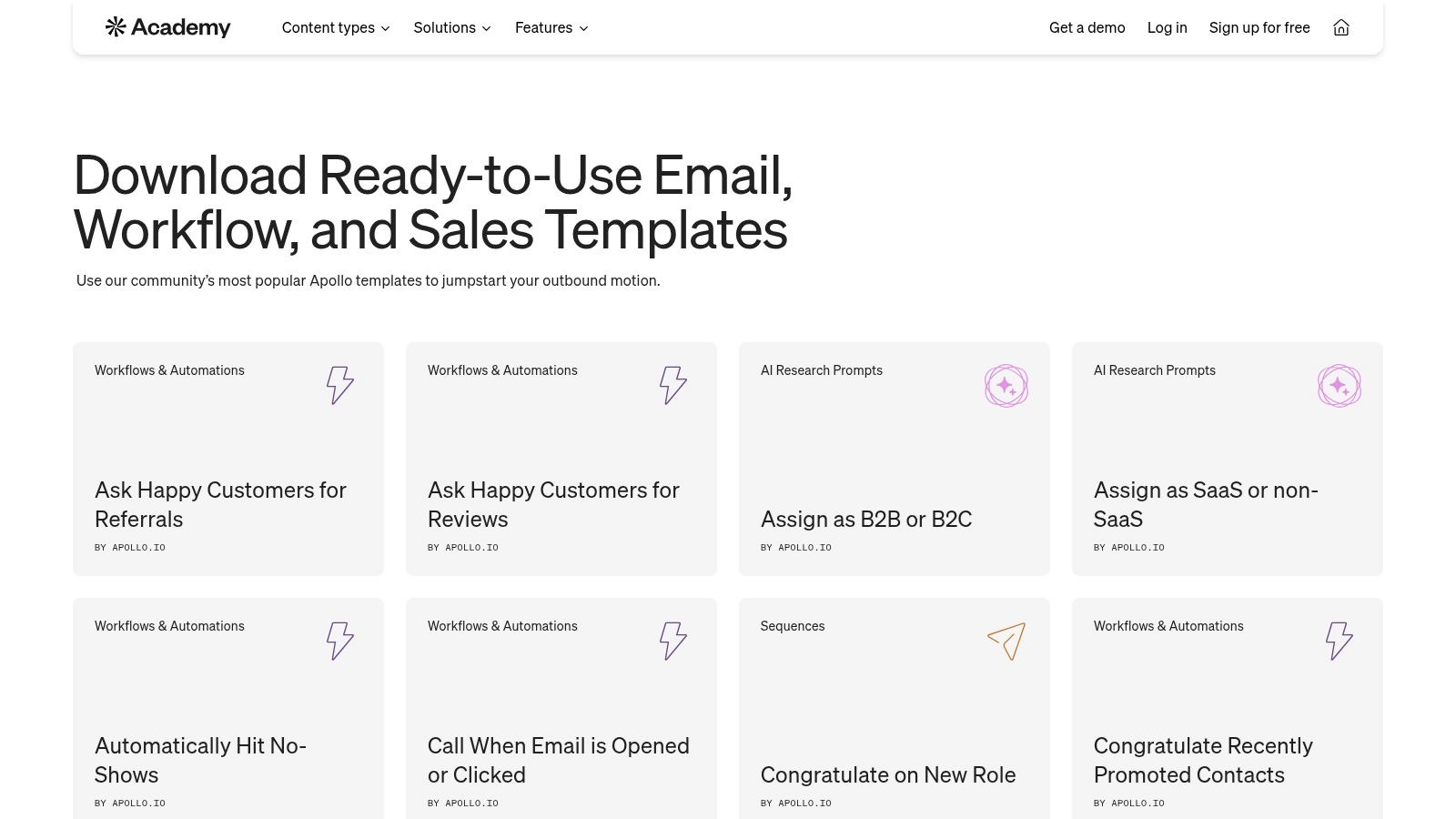
Apollo.io combines lead data and outbound sequencing, which makes it useful when sourcing prospects and contacting them happen in the same workflow. Its sequence templates and Academy resources give founders and go-to-market teams a starting point they can clone, edit, and reuse.
Use Apollo for prospecting sequences. A personal brand serving a narrow professional audience can define a clear prospect profile, select a relevant segment, and adapt the template around a real trigger, such as a new leadership role, a product launch, or a public change in the company's direction.
The platform's guardrails help teams avoid operational mistakes. Conflict checks, schedules, and team-level priority rules can reduce duplicate outreach and keep multiple users from contacting the same person with competing messages. The combined data and sequencing model also shortens the path from research to launch.
The danger is speed without judgment. A cloned sequence can be technically complete and still sound interchangeable with every other outbound campaign. The free tier limits sequencing, while advanced capabilities require paid plans, so evaluate both usage needs and data quality before scaling.
A practical structure is simple:
Use these email outreach practices for brand success to keep the sequence aligned with your public positioning. Track delivery, opens, replies, positive replies, meetings, and unsubscribes. If the inbox placement is weak, rewriting the subject line won't solve the problem.
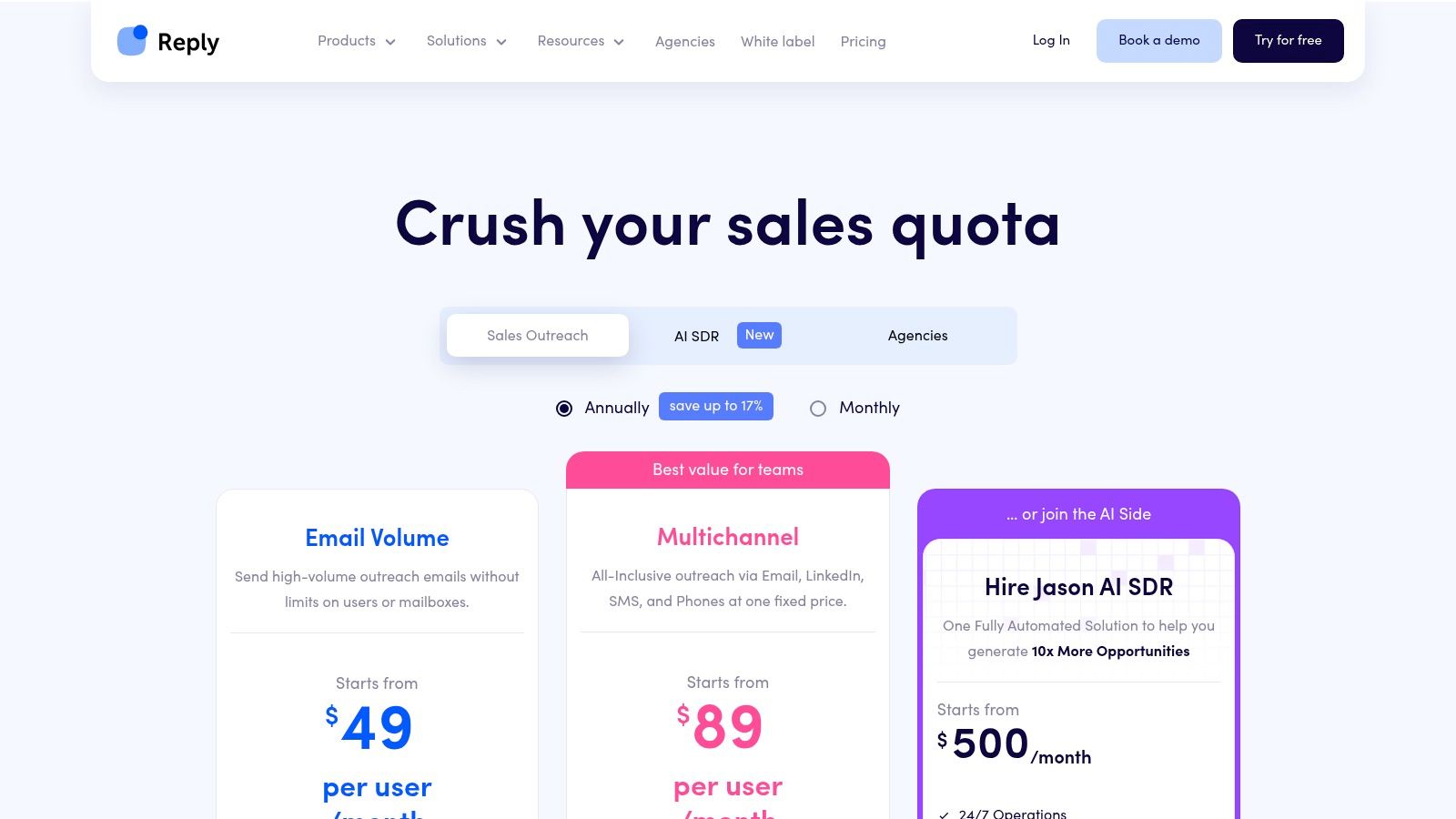
Reply.io is a better fit when email is only one part of the outreach motion. Its multichannel cadences can combine email, calls, LinkedIn, and SMS, while built-in templates and variables support repeatable execution. The Reply.io platform information also highlights reusable sequences and programmatic management for teams that need more control over their templates.
Choose it for multichannel outbound. A founder might send a thoughtful email, follow with a LinkedIn interaction, then create a call task for a qualified prospect. The sequence should not repeat the same pitch across every channel. Each touch needs a distinct role.
Email can introduce the point of view. LinkedIn can reinforce familiarity. A call can clarify whether the problem is active. SMS should be reserved for contexts where the recipient has a legitimate reason to expect it. Multichannel doesn't mean maximum contact. It means using the appropriate channel for the next useful interaction.
The feature breadth can feel heavy for a very small team. Variables can also encourage false personalization, where a first name or company field gets inserted into a message that still has no human relevance. Save a sequence as a reusable template only after you know which parts are repeatable.
For cold outreach, the Cold Email Sequence Structure guide can provide a useful copy framework, but your own observations should drive the message. A strong personal-brand version might open with a specific insight from the prospect's public work, offer a concise interpretation, and ask whether the issue is worth discussing.
Measure channel-level replies and completed actions, not just total activity. If LinkedIn touches add effort without improving qualified conversations, remove them. The goal is a sustainable path to a relevant response.
Salesloft is built for teams that need governance around sales cadences. Its platform combines email templates, calls, social steps, analytics, reporting, CRM integrations, and team controls. The Salesloft sales engagement platform is suited to organizations where multiple representatives need to follow a shared process without losing visibility into performance.
Use it for repeatable team outreach. A personal brand with a sales team, partnership function, or growing advisory business can turn a successful founder-led cadence into a documented playbook. Each step can have a clear purpose, from the initial insight to the final closeout message.
Reporting is the major advantage. Managers can compare cadence performance, identify weak steps, and coach writers using actual campaign behavior. Enablement resources, including cadence playbooks, can also help teams move beyond improvised follow-up.
The trade-off is cost and complexity. Salesloft doesn't publish public pricing, and its total ownership cost is typically more appropriate for established teams than solo creators. A single professional sending a modest number of highly personal follow-ups will likely get more value from a lighter tool.
The right template should preserve judgment. Give representatives room to replace generic proof with a relevant example, adjust the ask, and stop the sequence when a prospect responds. Governance should prevent inconsistency, not force every email into the same voice.
Track step-level conversion, meetings, positive replies, task completion, and unsubscribes. If one cadence earns activity but little qualified pipeline, review the audience and offer before blaming the copy.
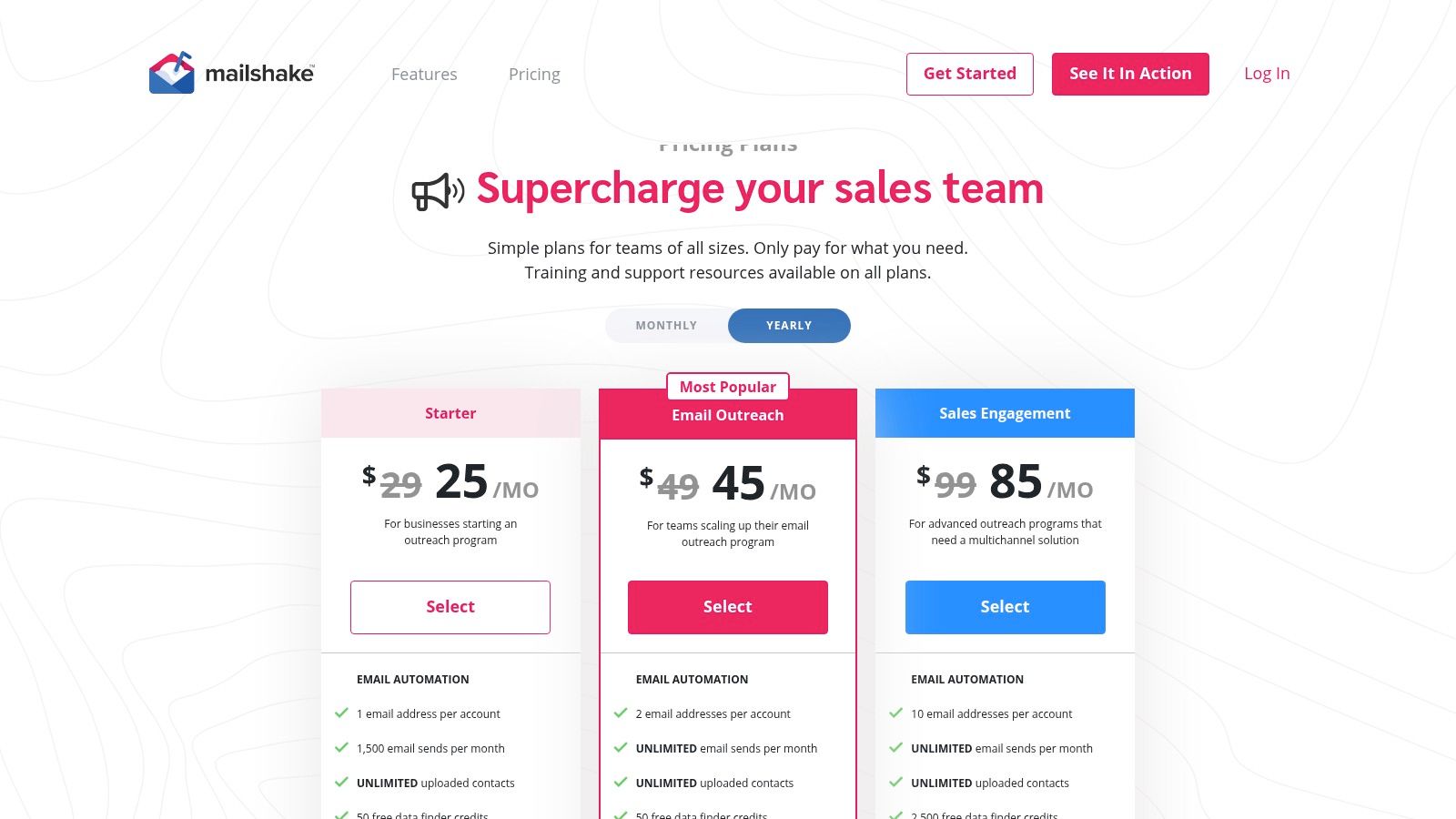
Mailshake focuses on cold email and drip outreach, which makes it approachable for founders and lean teams that don't need a full lifecycle marketing platform. Its cold outreach software includes prebuilt templates, a simple sequence editor, support for common inbox providers, and multi-mailbox workflows.
Pick Mailshake for straightforward outbound campaigns. It works well when the job is clear: identify a defined audience, introduce a relevant service, follow up with useful context, and create a path to reply. You won't need to build a complex commerce or customer-lifecycle architecture first.
The learning curve is a strength. A founder can start with a basic template, rewrite the opening in their own language, and build a sequence without managing many conditional branches. That simplicity also creates a boundary. Mailshake offers fewer lifecycle and e-commerce automations than a full email service provider, so it isn't the natural choice for onboarding customers or managing complex subscriber journeys.
A personal-brand sequence should avoid the familiar pattern of generic compliment, broad value proposition, and repeated meeting request. Replace the compliment with an observation that proves you understand the person's work. Then offer one practical idea before asking whether the topic is relevant.
The platform's research-backed outreach education can help with structure, but your measurement plan should remain concrete. Watch delivery, replies, qualified replies, meetings, conversions, and unsubscribes. A short sequence that reaches the right audience is more valuable than a longer one that creates fatigue.
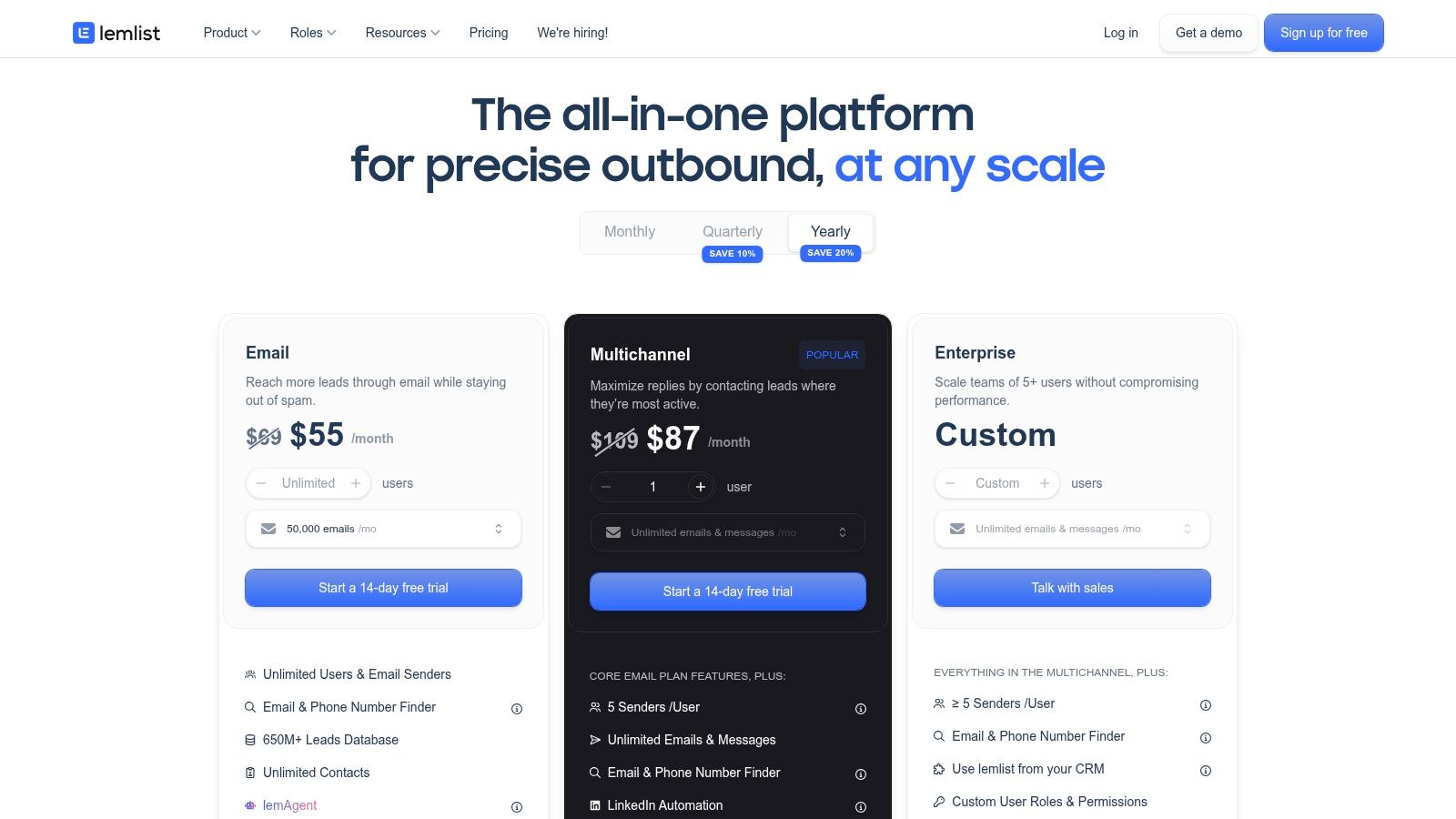
lemlist is designed for teams that want multistep outreach with stronger personalization and conditional logic. Its pricing and campaign features support email and multichannel sequences, reusable templates, campaign starters, and public playbooks informed by real campaign performance.
Use it for personalized prospecting experiments. A founder selling expertise rather than a standardized product can create different message paths for agencies, SaaS companies, or senior operators. The sequence can change based on engagement, prospect attributes, or the type of problem the recipient appears to be facing.
The public playbooks make it easier to study how other outreach teams structure their messages. Don't treat those examples as finished copy. Borrow the progression, then replace the claims with your own point of view and proof.
lemlist's personalization capabilities are useful when the hook needs more than a merge field. You might reference a specific page, product decision, hiring move, or public idea, then connect it to a short observation from your own work. That creates a reason to respond without pretending you know more about the prospect than you do.
The limitation is commercial fit. Pricing and bundles can change, so evaluate the current plan against your sending volume, number of users, and multichannel requirements. The interface also rewards teams willing to maintain campaign logic. If you only need a small, manual follow-up process, the added capability may become overhead.
Personalization should reduce the distance between two people. It shouldn't turn the recipient into a collection of scraped fields.
Measure the full path from delivered message to qualified reply and conversion. Separate positive replies from automatic responses, objections, and requests to stop. That distinction will tell you whether the sequence creates genuine interest or merely activity.
Kit, formerly ConvertKit, is built for creators, solo founders, and personal brands. Its pricing and automation options support email sequences, creator-oriented workflows, launch campaigns, welcomes, and product pre-launches. The visual automation builder is available on paid plans, while the overall workflow is intentionally easier to approach than a sales engagement system built for a large team.
Choose Kit for creator-focused audience automation. A personal brand can welcome a new subscriber, deliver a short educational series, invite a reply, and introduce a product or service without building a complicated sales operation. You can also save broadcasts and sequences as reusable templates, which helps maintain a consistent publishing rhythm.
The clean workflow is the main benefit. You can spend more time shaping the story and less time configuring technical branches. The trade-off is a simpler template library and fewer advanced automation capabilities than specialist platforms. Paid plans are required for more advanced workflows, so confirm that the features you need are available at your chosen tier.
A strong Kit sequence should sound like a continuation of your public content. Start with the promise that earned the subscription. Follow with a personal story that explains why you care about the issue. Then teach one practical idea, ask a question that invites a reply, and make the conversion request only after you've established relevance.
For creators, metrics should remain connected to the relationship. Track delivery, opens, clicks, replies, conversions, and unsubscribes where the platform provides them. An email that earns fewer clicks but more meaningful replies may be doing exactly what a personal brand needs.
| Tool | 👥 Target audience | Core features | ★ UX / Quality | 💰 Price & value | ✨ / 🏆 Unique selling point |
|---|---|---|---|---|---|
| ActiveCampaign | Marketers, SMBs, B2B & B2C | 900+ automation "recipes", visual builder, CRM triggers | ★★★★☆ | 💰 Scales with contacts; mid→high cost | ✨ Importable proven flows for fast launches 🏆 large recipe library |
| Mailchimp | Creators, e‑commerce, SMBs | Pre-built customer journeys, email+SMS builder, commerce integrations | ★★★★☆ | 💰 Free limits tightened; moderate tiers | ✨ Strong ecosystem & commerce plugins 🏆 wide template coverage |
| Klaviyo | E‑commerce brands | 60+ flows, 160+ templates, event/data-driven triggers | ★★★★☆ | 💰 Scales with active profiles; can get expensive | ✨ Deep commerce lifecycle playbooks 🏆 templates free after signup |
| HubSpot Sequences | B2B sales teams (CRM-native) | One-to-one timed sequences, marketplace templates, CRM enrollment | ★★★★☆ | 💰 Seat-based; best features in higher tiers (expensive) | ✨ Native HubSpot CRM integration 🏆 team visibility & workflow sync |
| Apollo.io | Founders & GTM/sales teams | Cloneable sequences, Apollo Academy, lead sourcing + sequencing | ★★★★☆ | 💰 Free tier limited; paid for full features | ✨ Combined data + sequencing for fast outreach 🏆 strong template+data tie-in |
| Reply.io | SDRs & outbound teams | Multichannel cadences (email, calls, LinkedIn, SMS), API & templating | ★★★★☆ | 💰 Mid-range; paid for advanced API features | ✨ Multichannel + programmatic templating 🏆 flexible for A/B testing |
| Salesloft | Mid → large sales teams | Cadence builder, analytics, playbooks, CRM integrations | ★★★★☆ | 💰 Quote-only; typically higher TCO | ✨ Governance & reporting at scale 🏆 mature enterprise engagement |
| Mailshake | Founders & lean outbound teams | Cold email templates, simple sequence editor, multi-mailbox support | ★★★★☆ | 💰 Affordable for startups; clear plans | ✨ Very approachable cold outreach setup 🏆 quick to launch campaigns |
| lemlist | Outreach teams focused on personalization | Multistep & multichannel sequences, conditional logic, public playbooks | ★★★★☆ | 💰 Variable bundles; evaluate for volume | ✨ High-performing user-sourced playbooks 🏆 strong personalization tools |
| Kit (ConvertKit) | Creators, solo founders, personal brands | Creator-friendly sequences, starter templates, visual automations | ★★★★★ | 💰 Free tier for getting started; paid for advanced automations | ✨ Clean, creator-first UX 🏆 simple for non-technical creators |
The right platform depends on the campaign job, not the size of its template library. If you already have an engaged audience and need welcomes, onboarding, re-engagement, or post-purchase journeys, start with lifecycle automation. ActiveCampaign offers deep behavioral triggers, Mailchimp keeps standard journeys approachable, and Klaviyo is the stronger fit when commerce events shape the customer experience.
Sales teams should start with the CRM they already use. HubSpot Sequences reduces integration friction for teams working inside HubSpot, while Salesloft provides stronger cadence governance and reporting for larger sales organizations. If your main challenge is finding prospects and launching outbound in one workflow, Apollo.io combines data and sequencing. Mailshake is easier for lean cold-email teams, while Reply.io and lemlist make more sense when multichannel steps, conditional logic, or richer personalization justify the extra complexity.
Personal brands often need less automation than they think. Kit is a practical starting point when the audience relationship depends on your stories, teaching, launches, and consistent voice. You don't need a complicated branching system until you can explain which audience behavior should change the next message.
Before you launch, make the sequence operationally specific:
Benchmark against comparable campaigns, not a universal average. Definitions and audience mixes vary substantially. One benchmark analysis cites a 31% average open rate across more than 183,000 brands and a 45.1% open rate among the top 10% of senders, while a separate dataset reports a 43.46% median open rate and a 2.09% click rate across 3.6 million campaigns. The benchmark comparison makes the practical point clearly: align definitions with your platform and evaluate similar use cases.
Review the first complete sequence before changing every email at once. Identify the step where readers stop engaging, compare the conversion goal with the actual behavior, and test one meaningful change at a time. For more advanced workflow planning, Eludic's cold outreach automation guide can help teams connect sequencing with broader outbound operations.
A template is a scaffold. The lasting relationship comes from an authentic voice, useful audience-specific value, and consistent follow-through. Choose the workflow you can maintain when the launch excitement fades, then improve it with evidence from real conversations.
Legacy Builder helps professionals turn their stories, insights, and visions into consistent content and audience engagement, including the ideas that can support authentic email sequences. Visit Legacy Builder to explore a supported approach to personal-brand content creation, distribution, and audience growth.


You could – but most in-house teams struggle with the nuance of growing on specific platforms.
We partner with in-house teams all the time to help them grow on X, LI, and Email.
Consider us the special forces unit you call in to get the job done without anyone knowing (for a fraction of what you would pay).
Short answer – yes.
Long answer – yes because of our process.
We start with an in-depth interview that gives us the opportunity to learn more about you, your stories, and your vision.
We take that and craft your content then we ship it to you. You are then able to give us the final sign-off (and any adjustments to nail it 100%) before we schedule for posting.
No problem.
We have helped clients for years or for just a season.
All the content we create is yours and yours alone.
If you want to take it over or work on transitioning we will help ensure you are set up for success.
We want this to be a living breathing brand. We will give you best practices for posting and make sure you are set up to win – so post away.
Subscribe to our newsletter and get insights on how to grow your personal brand.
