.svg)
Subscribe to our newsletter and get insights on how to grow your personal brand.
Thank you! Your submission has been received!
Oops! Something went wrong while submitting the form.
.svg)


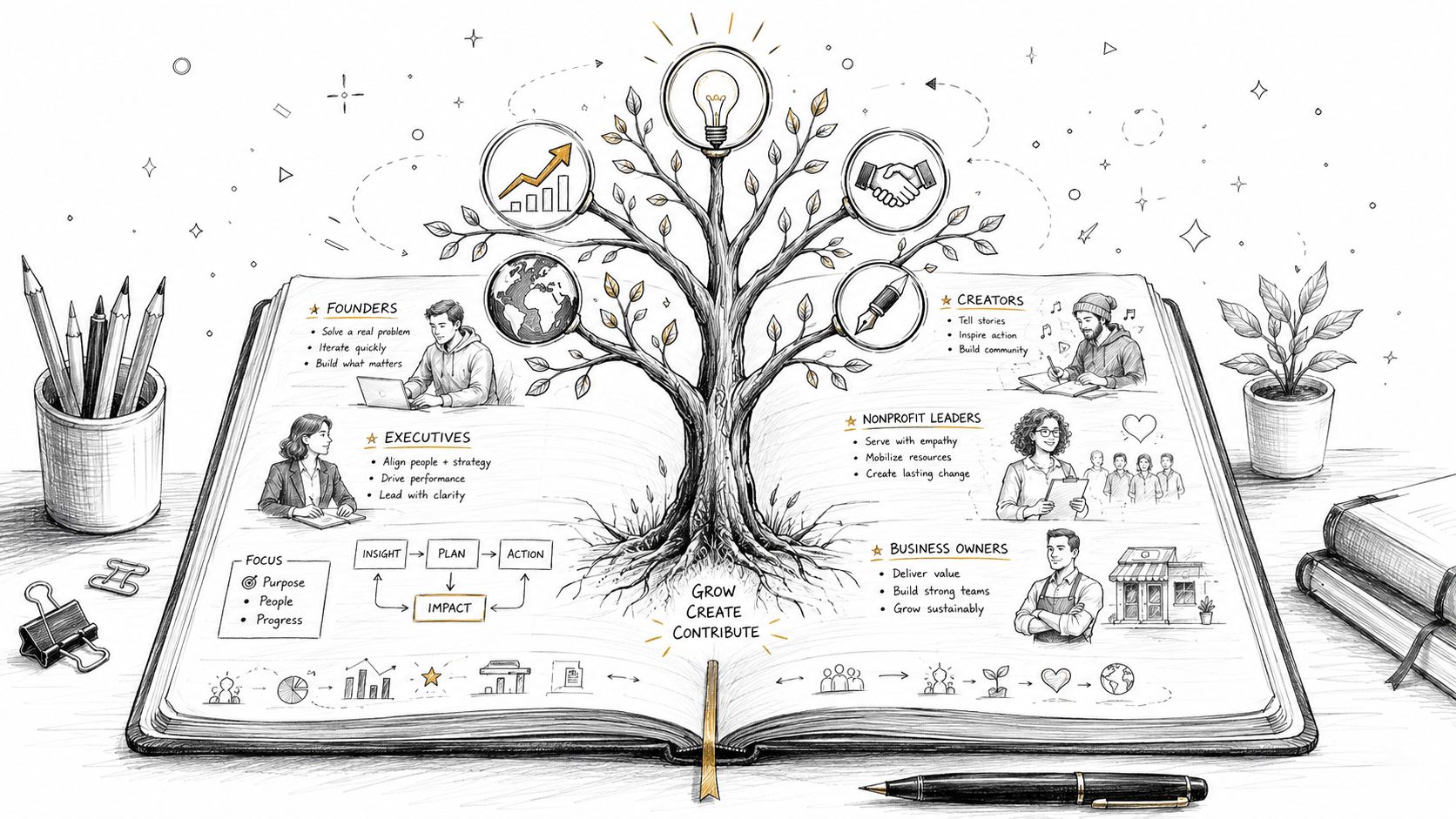
Most advice about legacy is backward. It tells you to think about wills, charitable gifts, and what people will say after you're gone. That's incomplete, and for most professionals, it's useless. A real legacy isn't a retirement project. It's what you're building through your decisions, your standards, your relationships, and the body of work you publish while you're still in the room.
The gap is obvious. In Trust & Will's 2025 report on defining legacy, 23% of respondents said a home or property was the most meaningful thing they would leave behind, and 22% named money or financial assets. But 19% said passing down values or life lessons would be their most meaningful legacy, ahead of sentimental heirlooms at 13%. That should reset how you think about personal legacy examples. People still care about assets. They also want meaning, context, and identity to survive them.
If you're a founder, operator, executive, or creator, waiting until later is a mistake. Your posts, your frameworks, your mentoring habits, and your documented values are already teaching people who you are. The only question is whether you're shaping that deliberately.
If you want a longer-form way to capture your thinking, start with how to finally finish your book. But don't wait for a manuscript to begin. Start where you are. Here are eight personal legacy examples you can build now.
Some legacies live in companies. Others live in ideas. If you want people to cite your thinking long after a job title changes, publish work that carries your point of view clearly.
Books matter. Essays matter. Strong LinkedIn posts matter too. Satya Nadella used Hit Refresh to make Microsoft's leadership philosophy visible. Sheryl Sandberg used Lean In to push a workplace conversation into the mainstream. Naval Ravikant turned short-form internet writing into durable reference points for founders and operators.
Individuals often stall because they pick the hardest format first. I tell clients to earn the book by publishing consistently in public. Write one sharp idea at a time. If it resonates, expand it into an article, workshop, keynote, or manuscript.
If you need a practical breakdown of how authority compounds over time, read this clear guide to building influence through thought leadership. Then do the obvious next step. Publish on a schedule you can keep.
Practical rule: Don't write to sound important. Write to make a useful idea easy to repeat.
A few moves work well here:
If you already have expertise but no publishing habit, fix that before anything else. Then, when you're ready, use these publishing steps for new authors to move from drafts to a finished book.
A lot of smart professionals confuse being helpful with building a mentorship legacy. They're not the same. Casual advice is fine. Structured transfer is what lasts.
Warren Buffett's long relationship with Bill Gates gets attention because it shaped thinking beyond business. Paul Graham built Y Combinator into a repeatable mentorship engine for founders. Oprah has built leaders by doing more than encouraging talent. She has created environments where people grow into larger roles.
The strongest mentorship legacies have a method. Research on legacy and serious illness identifies three intersecting legacy goals: remembrance of the individual self, remembrance of the social self, and impact on others' well-being, outlined in this legacy framework study. That's useful beyond healthcare. Good mentors transfer who they are, how they relate, and how they help others move forward.
That same research says the strongest legacy statements tend to work best at one to three pages, or as a few short audio or video messages. Use that insight. Record short lessons for your team. Write a concise founder memo. Leave behind guidance people will revisit.
Don't mentor only in conversation. Codify your approach.
The mentor people remember isn't the one with the best speeches. It's the one who made growth repeatable.
If your company needs a stronger process for institutional memory, study your own gaps first, then strengthen them with a knowledge sharing strategy for 2026. Legacy gets stronger when your guidance survives your calendar.
People hear "legacy" and jump straight to philanthropy. That's one version of it, but most advice gets this wrong by making it sound like social impact starts only when you have excess wealth. It doesn't. You can contribute capital, skill, access, credibility, or operating discipline.
Bill and Melinda Gates built one kind of philanthropic legacy. MacKenzie Scott represents another style, focused on rapid distribution. Mark Zuckerberg and Priscilla Chan used an initiative structure to direct resources toward education and science. Those are high-visibility examples, but the useful lesson is simpler. Pick a problem you care about, then commit in public.
Weak philanthropy writes checks and disappears. Strong philanthropy connects your capabilities to the issue. A healthcare founder can support patient navigation. A SaaS executive can help nonprofits improve systems. A marketer can build visibility for a local cause that can't afford strategic help.
The story matters too. If people don't understand why the issue matters to you, your giving looks cosmetic. Explain the personal connection, the operating philosophy, and the type of change you're trying to support.
A few standards keep this credible:
This category is powerful, but don't use it to hide. Plenty of professionals donate generously while leaving no clear record of what they stood for. If your social impact work isn't connected to your voice, your principles, and your day-to-day behavior, it won't carry your identity forward.
Some of the strongest personal legacy examples have nothing to do with public visibility. They live inside a family. A recipe. A holiday ritual. A phrase everyone repeats in hard moments. A recorded story that explains why the family values what it values.
People frequently procrastinate the most when faced with certain tasks. They assume they'll document family history later, when life slows down. Life rarely slows down. Meanwhile, stories disappear.
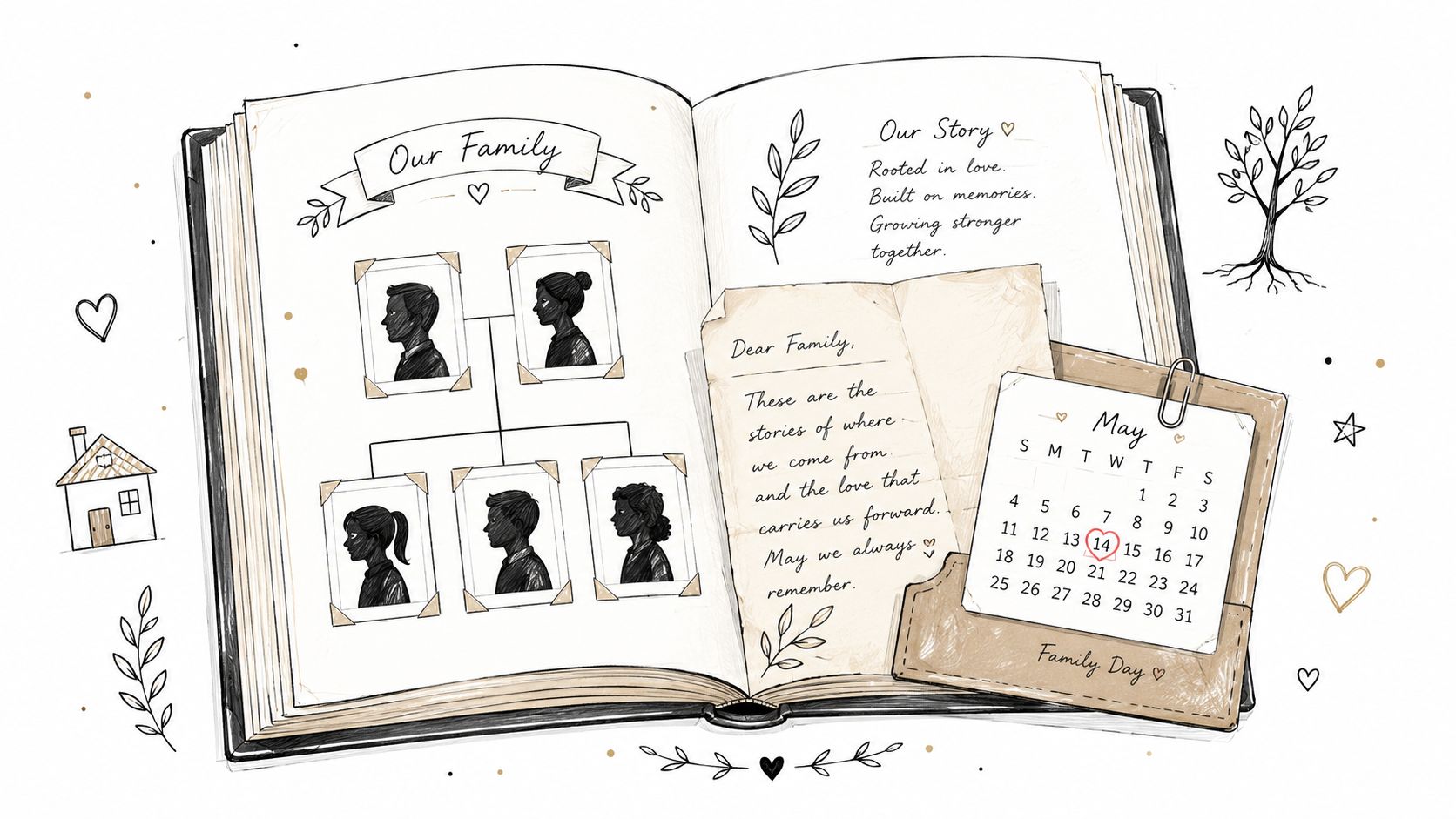
The biggest mistake here is saving artifacts without context. A watch becomes a watch if nobody knows who wore it, what it marked, or why it mattered. The same goes for photos, letters, recipes, and places.
In the Trust & Will report cited earlier, tangible assets still ranked highly in how people define legacy. That's real. But meaning doesn't ride inside an object by itself. You have to attach the story.
Do this in practical formats your family will use:
Families don't lose legacy because they lacked love. They lose it because no one documented the details in time.
You don't need a polished archive. You need a usable one. Start with one folder, one notebook, or one shared drive. Then keep adding to it while the people and memories are still accessible.
This is the most ignored legacy channel for modern professionals, and that's a mistake. If you work online, lead teams, attract clients, or build in public, your digital footprint isn't side material. It's the living record of what you believe, how you think, and what you teach repeatedly.
A source on modern legacy building makes the point directly: MicoCF's discussion of building personal legacy says 68% of legacy seekers are under 45, yet most guidance still treats digital legacy as secondary. That's outdated. For many professionals, content is the primary way other people experience their values in real time.
Gary Vaynerchuk built a media machine through relentless personal storytelling. Brené Brown built trust by making vulnerability central to her public voice. Naval Ravikant used concise digital writing to shape how founders think. None of that happened through a single viral hit. It came from consistency.
If your positioning is fuzzy, fix that first with this guide to what personal branding actually is. Then commit to a simple operating model: a few themes, a few formats, and a cadence you can sustain.
A practical setup looks like this:
If you want examples of digital positioning done well, review a personal brand strategy for creators. Then stop overthinking and start posting.
A private skill helps you. A teachable system outlasts you. That's why educational products belong on any serious list of personal legacy examples.
Tim Ferriss turned his thinking into teachable frameworks. LinkedIn Learning and Skillshare gave subject-matter experts a way to package expertise at scale. Plenty of professionals never build a course or workshop because they assume they need academic credentials or a perfect curriculum. They don't. They need a clear outcome and a repeatable path.
Start with the simplest version. Teach a live workshop. Run a cohort. Record a short internal training for your team. Once people respond well, turn it into a product.
Here's a useful example of teaching in action:
Most weak courses are bloated libraries of content. Strong educational products solve one real problem in a way students can apply immediately.
The format can stay simple:
Your educational legacy gets stronger when your material carries your point of view. Don't just explain best practices. Explain your method, your standards, and the mistakes you learned from. That's what makes a knowledge product feel like your work, not generic internet information.
This is often the first part considered, and that instinct isn't wrong. Financial structure matters. Property matters. Clear legal planning matters. If you care about reducing chaos for the people who depend on you, this is not optional.
The same Trust & Will report noted earlier found that home or property and money or financial assets were the two dominant tangible categories people named when defining what they'd leave behind. That's a reminder to treat estate planning as part of legacy, not as the whole thing.
A will can transfer ownership. It can't explain your philosophy. It can't tell your children why one asset mattered more than another or what kind of stewardship you hoped they would practice.
So build both layers:
This matters even if your estate is modest. A structured plan isn't about wealth theater. It's about clarity. If you leave money without context, you transfer assets but not judgment. If you leave both, you give people a better chance of carrying your principles forward.
For professionals with a visible brand, your financial legacy should align with your public values. If your content says one thing and your actual estate choices say another, people notice.
Some of the most durable legacies don't sit in a memoir or a trust. They sit inside a framework people keep using after the creator is gone. David Allen's Getting Things Done is a classic example. Agile, Scrum, Lean, Jobs to Be Done, and OKRs all outlived the rooms where they started because they solved recurring problems in language people could apply.
If you've solved the same issue repeatedly across clients, teams, or companies, you may already have the bones of a framework. Many individuals never formalize it. They keep delivering the method privately instead of naming it, documenting it, and teaching it.
This category rewards clarity. A useful framework has steps, definitions, boundaries, and examples. People should be able to test it without needing you in the room.
The case for imperfect, human-centered frameworks matters here too. In a discussion of authentic story and legacy examples, the contrast is clear: strong legacy work can include mistakes and changed decisions, not just polished wins. That's a good rule for methodology builders. Show where your framework came from, including the failed versions.
If your method only works when you explain it live, you don't have a framework yet. You have personal expertise.
A solid path looks like this:
This is one of the most impactful personal legacy examples for consultants, operators, and founders. A framework turns experience into an asset other people can carry.
| Legacy Type | 🔄 Implementation Complexity | ⚡ Resource Requirements | 📊 Expected Outcomes | 💡 Ideal Use Cases | ⭐ Key Advantages |
|---|---|---|---|---|---|
| Thought Leadership & Published Works | High 🔄, lengthy research, editing, publishing cycles | Medium–High ⚡, time, writing/editing, publishing costs | Enduring credibility, citations, passive opportunities 📊 | Establishing authority, academic influence, industry framing 💡 | Lasting visibility and compounding influence ⭐ |
| Mentorship & Knowledge Transfer Programs | Medium 🔄, structured programs + ongoing commitment | Medium ⚡, time, people management, frameworks | Deep individual impact; network growth and succession 📊 | Talent development, succession planning, culture building 💡 | Multiplies influence via mentees; builds loyalty ⭐ |
| Philanthropic Initiatives & Social Impact Ventures | High 🔄, governance, legal, program complexity | High ⚡, significant capital, organizational capacity | Measurable community outcomes and brand alignment 📊 | Values-driven giving, large-scale social change, CSR 💡 | Tangible societal impact; inspires others to give ⭐ |
| Family Traditions & Documented Family Legacy | Low–Medium 🔄, documentation and routine maintenance | Low ⚡, time, basic recording/storage costs | Preserved history, stronger family bonds, intergenerational values 📊 | Passing values, rituals, and stories to heirs 💡 | Emotional continuity and low-cost preservation ⭐ |
| Personal Brand & Content Legacy | Medium 🔄, consistent strategy and content cadence | Medium ⚡, content production, platform management | Real-time influence, discoverability, opportunity flow 📊 | Client attraction, career growth, entrepreneurship 💡 | Ongoing visibility and audience-driven opportunities ⭐ |
| Educational Programs & Knowledge Products | Medium–High 🔄, curriculum design and course production | Medium–High ⚡, production, platform, marketing investment | Scalable reach, passive income, documented learning outcomes 📊 | Teaching expertise at scale, certification, revenue diversification 💡 | Scales expertise broadly; generates recurring revenue ⭐ |
| Estate Planning & Financial Legacy Structure | High 🔄, legal/tax complexity and regular updates | High ⚡, professional fees, administration costs | Asset protection, tax efficiency, clear beneficiary outcomes 📊 | Multi‑generational wealth transfer, philanthropic structuring 💡 | Legal certainty and stewardship of intentions ⭐ |
| Innovation & Methodological Frameworks | High 🔄, R&D, testing, rigorous documentation | Medium–High ⚡, research, tooling, promotion | Adoption-driven impact; reputational authority and licensing 📊 | Systemizing repeatable solutions, industry transformation 💡 | Exponential impact through adoption; monetization potential ⭐ |
A powerful personal legacy isn't built by accident. It comes from repeated, intentional action. That's the part many individuals avoid because it sounds less glamorous than a major donation, a memoir, or a retirement speech. But that's where the actual work is done.
The best personal legacy examples all share one trait. They exist in forms other people can use. A published idea can be reread. A mentorship system can be repeated. A family archive can be revisited. A course can keep teaching. A framework can keep solving problems. A well-structured estate plan can keep reducing friction and preserving intent.
If you want the most accessible starting point, begin with content. It's the fastest way to clarify your voice, test your ideas, and create a living record of what you stand for. You don't need to become an influencer. You need to become legible. Your audience should know what you believe, how you solve problems, what standards you hold, and what kind of contribution you're trying to make.
There's also a practical benefit to starting with content. It strengthens every other legacy category. It makes your thought leadership visible. It attracts mentees who fit your values. It gives your philanthropy context. It preserves family stories. It becomes source material for courses, frameworks, and even the letters that sit beside your estate documents.
If you're stuck, don't ask, "What do I want people to say about me someday?" Ask better questions. What lesson do I repeat most often? What problem have I solved enough times to teach? What value do I want my team or family to recognize in my decisions? What story am I failing to document while it's still fresh?
Then pick one action and do it this week. Publish one post. Record one family story. Write one page about your leadership values. Turn one recurring client process into a named framework. Invite one younger professional into a real mentorship conversation. Legacy grows from visible, repeatable acts.
Ready to stop waiting and start building? If you're a professional who wants to turn your expertise into a clear, credible personal brand, Legacy Builder can help. They turn your thinking, stories, and experience into consistent, high-impact content so your digital presence starts reflecting the legacy you're trying to create. Book a call and start building with intention.
If you're serious about building a living legacy, not just talking about one, Legacy Builder gives you the structure to do it. Their team helps professionals turn hard-won experience into clear, consistent content that builds authority, preserves perspective, and creates long-term influence.


You could – but most in-house teams struggle with the nuance of growing on specific platforms.
We partner with in-house teams all the time to help them grow on X, LI, and Email.
Consider us the special forces unit you call in to get the job done without anyone knowing (for a fraction of what you would pay).
Short answer – yes.
Long answer – yes because of our process.
We start with an in-depth interview that gives us the opportunity to learn more about you, your stories, and your vision.
We take that and craft your content then we ship it to you. You are then able to give us the final sign-off (and any adjustments to nail it 100%) before we schedule for posting.
No problem.
We have helped clients for years or for just a season.
All the content we create is yours and yours alone.
If you want to take it over or work on transitioning we will help ensure you are set up for success.
We want this to be a living breathing brand. We will give you best practices for posting and make sure you are set up to win – so post away.
Subscribe to our newsletter and get insights on how to grow your personal brand.
