.svg)
Subscribe to our newsletter and get insights on how to grow your personal brand.
Thank you! Your submission has been received!
Oops! Something went wrong while submitting the form.
.svg)


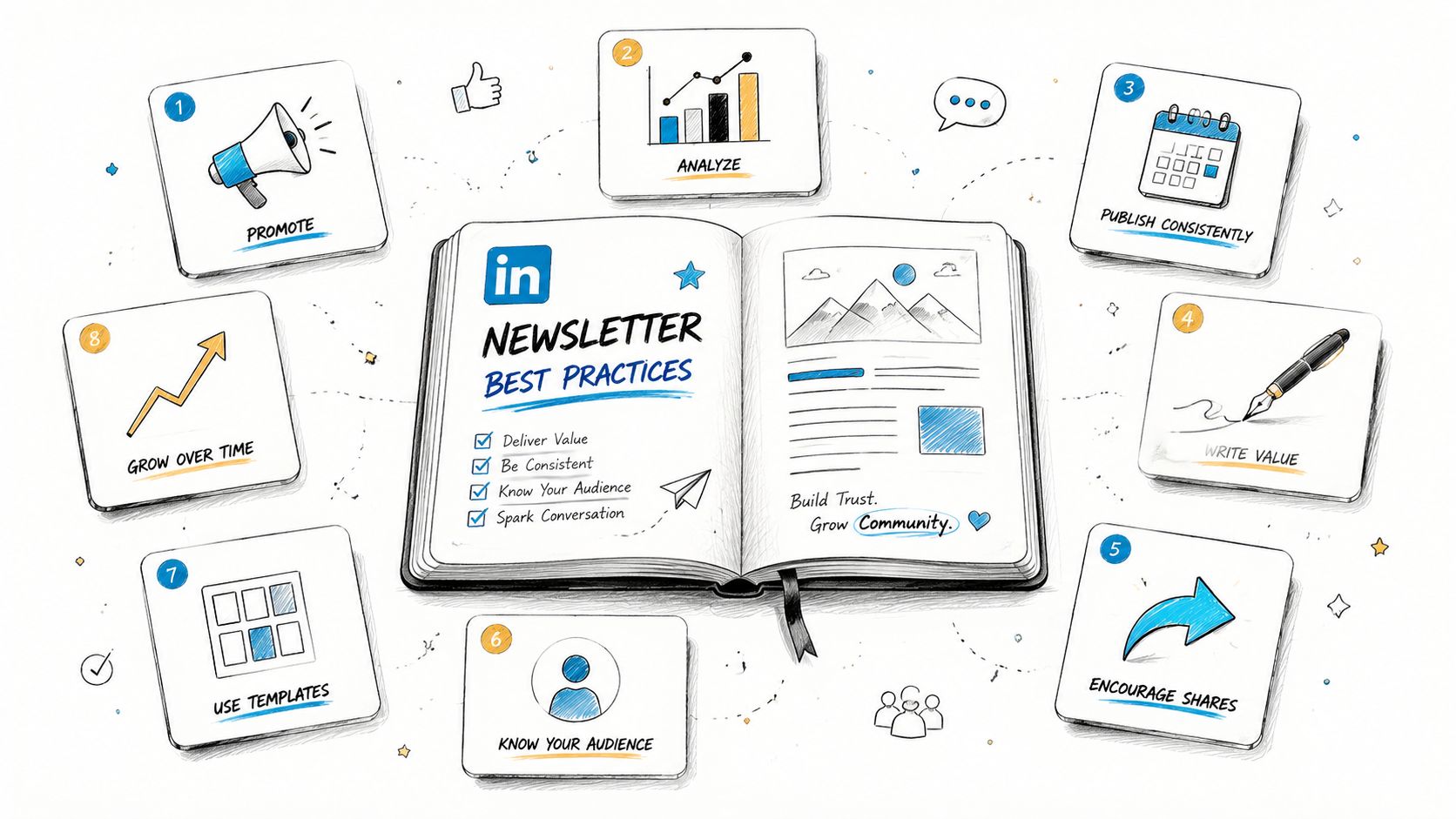
Beyond the Inbox: Turn Your Newsletter Into a Legacy Asset
Most professionals treat a LinkedIn newsletter like a lighter version of email. Publish something useful, collect a few subscribers, move on. That's the wrong frame.
A strong newsletter isn't just another content channel. It's your published body of work. It's the place where your thinking compounds, your stories gain context, and your reputation stops depending on fleeting posts. A good feed post gets attention for a moment. A good newsletter builds a record of how you think, what you believe, and why people should trust you.
That's why most popular advice misses the point. Posting every week isn't enough. Writing "valuable content" isn't enough. Chasing opens isn't enough. If your newsletter reads like generic industry commentary, you won't build authority. You'll build noise.
LinkedIn has already shown this format isn't a niche experiment. Nearly 30 million members subscribed to at least one newsletter within six months of launch, according to SociableKit's summary of LinkedIn newsletter adoption. That tells you two things. First, the behavior is already there. Second, you don't need to overcomplicate the launch.
If you want real results, think bigger. Use your newsletter to document your lessons, sharpen your positioning, and create a compounding asset people associate with your name. The eight practices below aren't nice extras. They're the baseline for turning a LinkedIn newsletter into influence, trust, and long-term brand equity.
Random publishing kills momentum. Your audience shouldn't have to wonder whether you'll show up this week, this month, or ever again.
Consistency matters because trust is built through rhythm. When readers know you publish every Tuesday morning, every other Thursday, or the first Monday of the month, they start to make room for your perspective. That habit is what turns a casual subscriber into a loyal reader.
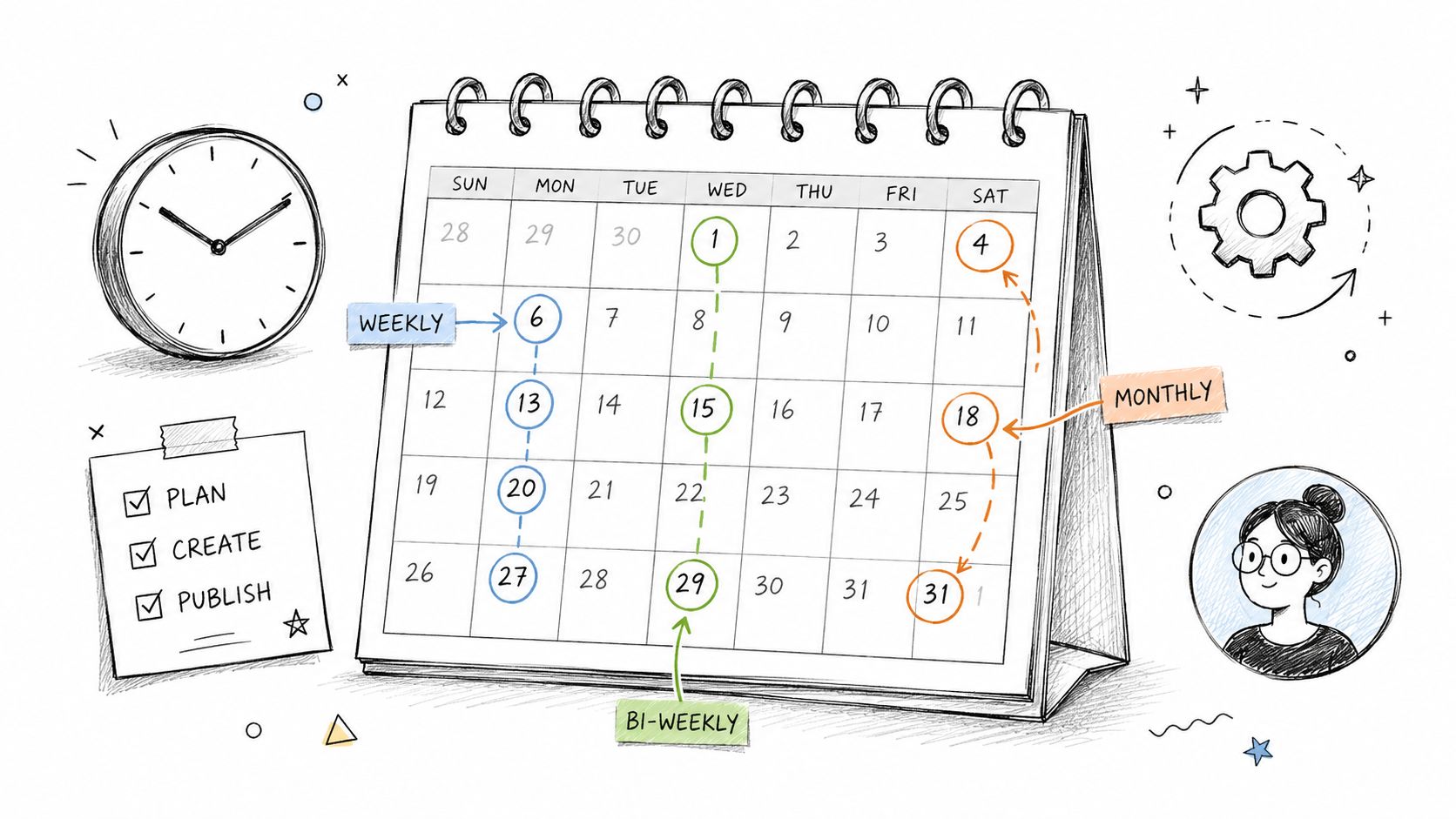
The mistake I see most often is copying someone else's cadence. A founder sees a creator publish weekly and assumes that must be the standard. It isn't. The right schedule is the one you can sustain without lowering quality or disappearing after three issues.
LinkedIn creators often default to weekly or biweekly schedules, but cadence shouldn't stay rigid if your data says the audience responds better to event-driven publishing. Narrareach's guidance on LinkedIn newsletter best practices points out that many creators miss the role of early engagement velocity, especially the first 60-minute comment window, when deciding how often to publish.
That means you need a real operating rule, not a vague intention.
Practical rule: Publish often enough to stay remembered, but not so often that your newsletter turns into rushed filler.
Early timing also matters. A LinkedIn post from Nathan May notes that early-morning publishing tends to perform better and that engagement drops later in the day, while also recommending a 1920×1080 featured cover image for strong display across surfaces in the platform experience. You can review that guidance in Nathan May's LinkedIn newsletter optimization post.
If you want one of the most practical LinkedIn newsletter best practices, it's this. Make your schedule boring. Reliability is memorable.
Polished newsletters do not build memorable brands. Specific stories do.
Readers stay for perspective they can attach to a person. They want to see how you make decisions, what you got wrong, what changed your mind, and which lesson was expensive enough to matter. That is how a newsletter stops being content and starts becoming a compounding asset tied to your name.
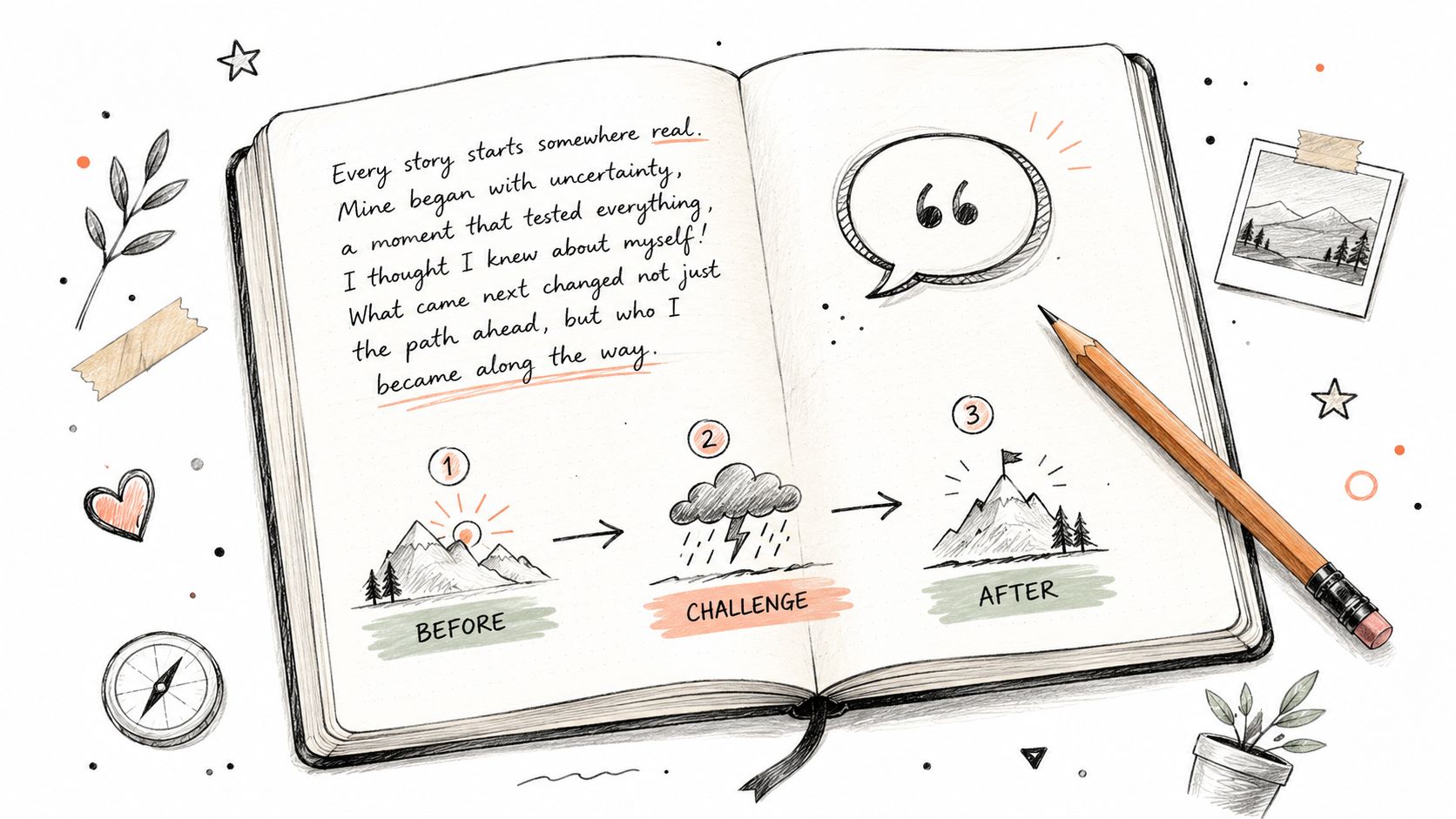
Story-driven writing gives your expertise a spine. A lesson about hiring gets sharper when you open with the candidate you misread. A piece about leadership gets stronger when you show the conversation that exposed a flaw in how you were managing. Readers remember scenes, not abstract advice.
Authenticity is not confession. It is selective honesty in service of a useful point.
Use a simple structure that keeps the story tight and practical:
A SaaS founder writing about churn should not start with generic retention tips. Start with the cancellation that stung, explain what the team failed to see, then show the operating rule that came out of it. That kind of story builds trust because it proves experience. Over time, those stories become part of your professional legacy. People start to remember your lessons, your standards, and your voice.
If you want stronger models for narrative structure, study these email storytelling examples to inspire stronger narrative content. If your newsletter stories keep turning into shallow anecdotes, reviewing good book ideas for experts can also help you spot themes worth developing into bigger signature ideas.
Readers forget polished tips. They remember the story that gave the lesson weight.
Personal newsletters usually outperform brand-heavy ones for a simple reason. People form loyalty around a clear voice, not a committee. If you want your LinkedIn newsletter to compound, write like a real operator with a point of view, not a department trying to sound safe.
Curating links doesn't make you a thought leader. Repeating common advice doesn't either.
If you want people to stay subscribed, give them something they can't get from ten other creators in their feed. Original insight is the difference between a newsletter people skim and a newsletter people wait for. Your readers should feel that your edition moved their thinking forward.
That doesn't require a giant research team. It requires a point of view and a habit of turning experience into usable frameworks. A sales leader can break down why one discovery call failed. A consultant can show how they diagnose positioning problems. A founder can explain the operating rule they now use after getting burned by a bad partnership.
The best newsletters become known for recurring mental models. That's what makes them referable.
A few strong formats:
You don't need to sound academic. You need to be specific. If you're always summarizing trends, readers borrow your information but not your identity. If you share original thinking, they associate the idea with you.
For experts who want to turn newsletters into bigger authority plays, it also helps to think beyond the platform. This guide on good book ideas for experts is useful because strong newsletter themes often evolve into talks, frameworks, workshops, and books.
A leadership coach, for example, might stop writing broad advice about executive presence and instead publish a recurring "decision audit" series based on real mistakes leaders make under pressure. That gives readers a clear reason to subscribe. They know what kind of thinking they'll get, and they know who it comes from.
Originality isn't about being shocking. It's about being unmistakable.
If your subject line is weak, the newsletter dies before the first paragraph has a chance.
Too many LinkedIn newsletter writers treat the title like an afterthought. They write the edition, paste in a serviceable headline, and hope the content carries the weight. It won't. Your subject line and preview text are the gatekeepers. If they don't create relevance, curiosity, or urgency, readers keep scrolling.
One verified benchmark matters here. According to HashMeta's LinkedIn newsletter strategy guide, LinkedIn newsletters consistently achieve open rates between 40% and 60%, which is far higher than typical email marketing ranges. That's a major advantage, but don't waste it with bland packaging.
The strongest subject lines usually do one of three things:
Preview text should support the subject line, not repeat it. If the headline creates curiosity, the preview should add context. If the headline is direct, the preview should sharpen the value.
For example, don't write:
Write:
Good writers draft multiple options. They don't settle on the first decent one.
If you want a stronger process, review these email subject line practices that improve open rates.
Sharp reminder: The title doesn't summarize your issue. It sells the first click.
Nathan May's LinkedIn post also notes that top-performing newsletters often reach the 40% to 60% range by using subject lines that trigger curiosity, contrarian interest, or a strong promise. That's a useful standard to aim at. Write titles like a publisher, not like an archivist.
A newsletter isn't a monologue. If you use it like one, you'll cap your growth.
The best LinkedIn newsletters don't just distribute ideas. They start conversations, pull readers into the comments, and turn subscribers into participants. That's not a soft branding point. It's central to distribution because LinkedIn rewards engagement velocity, especially comments that arrive soon after publication.
This is one of the most overlooked LinkedIn newsletter best practices. People obsess over writing the edition, then vanish after hitting publish. That's lazy. Distribution doesn't end at publication. It starts there.
The strongest engagement prompts are specific and low-friction.
Instead of ending with "What do you think?", ask:
Questions like that give readers something concrete to answer. They also make your newsletter feel like a professional gathering place instead of a content drop.
A good pattern is to build community loops around your issues:
Postiz's article on LinkedIn newsletter best practices also points to a monetization gap in most advice and notes that creators often overlook LinkedIn's Activity and Featured sections. That's not a small detail. When readers engage with your newsletter, those profile areas help convert attention into deeper trust. Use them to showcase your best editions, strongest posts, and proof of expertise.
If subscribers only consume your content, you have an audience. If they respond, return, and contribute, you have a community.
A practical example. If you're a fractional CMO, don't just publish an issue on pipeline quality and disappear. Ask readers where handoff breaks between sales and marketing. Then answer comments, surface patterns, and publish a follow-up issue built from those responses. That's how community compounds.
Publishing without reviewing performance is personal branding theater.
A LinkedIn newsletter is not just a distribution channel. It is a long-term asset. Every issue either strengthens your reputation, sharpens your point of view, and builds recall, or it adds to a pile of forgettable content that never compounds. If you want your newsletter to become part of your professional legacy, you need a review process that shows what people value.
LinkedIn's native analytics are useful, but they are only a starting point. Serious operators track what happens after the click too. Use UTM parameters on every off-platform link so you can see which issues drive site visits, call bookings, downloads, or replies. If you need a cleaner framework for audience analysis, this guide on how to segment email lists for higher engagement gives you a practical way to spot patterns by audience type and content interest.
Open rate and views can point you in the right direction. They cannot tell you whether your content is building authority.
Watch the signals that show stronger intent:
That last category matters more than creators admit. A story-driven issue might get fewer clicks than a tactical checklist and still do more for your brand because it makes the right people remember you. That is the difference between content that performs and content that compounds.
Skip the fancy dashboard if nobody is going to check it.
Review each issue with the same four questions:
Then make one adjustment per issue. Not ten. One.
A founder I advised learned this fast. His tactical editions drove more clicks to templates and resources. His story-led editions brought in better-fit clients because they showed judgment, not just information. Once he saw the pattern, he stopped chasing shallow engagement and started writing the kind of newsletter people associate with lasting expertise.
Use analytics to improve decisions, not replace them. The goal is not to please a dashboard. The goal is to publish issues that earn trust, shape perception, and keep paying you back long after you hit publish.
A newsletter built for everyone builds authority with no one.
If you want your LinkedIn newsletter to become a long-term brand asset, pick a clear reader and write like you know their stakes. That is how story-driven content compounds. It does more than earn opens. It gives the right people a reason to remember your name, trust your judgment, and associate you with a specific kind of value.
Start with the audience that matters most to your business and reputation.
A leadership consultant should not lump new managers, senior executives, and founders into one editorial stream. Their pressures are different. Their language is different. The stories that earn trust with each group are different too. The same applies if you run a SaaS company, advisory practice, or service business. Product leaders, revenue leaders, and bootstrapped founders may all care about growth, but they do not buy for the same reasons.
As noted earlier, your choice of publishing from a personal profile or company page is also a strategic decision. Make that call early, because it shapes who subscribes and what kind of authority you build over time.
LinkedIn newsletters do not offer advanced segmentation inside the product. That is fine. You do not need fancy tooling to make readers feel understood.
Use specificity instead:
That last point gets ignored too often. Personalization is not just inserting the right example. It is choosing stories that make a specific reader say, "This person understands my world."
If you want to connect LinkedIn to a broader owned-audience system, this guide on how to segment email lists for higher engagement shows how to carry that relevance into email, lead magnets, and offers.
Broad reach is overrated. Clear relevance wins first, and reach follows. As noted earlier in the article, standout newsletters grow because they own a niche before they expand beyond it.
One practical way to support that strategy is to build recurring formats for different reader groups. You can keep a founder edition, an operator edition, or a leadership edition in rotation, then borrow structure from proven resources like the top monthly email templates for 2026 without flattening your voice.
Specificity attracts the right audience. Generic content gets skimmed, forgotten, and replaced.
Good ideas lose power when the page looks exhausting.
Most readers won't consume your newsletter in one deep, uninterrupted sitting. They're scanning between meetings, on mobile, or during a quick break. If your formatting creates friction, even strong content gets abandoned. Readability isn't decoration. It's part of the value.
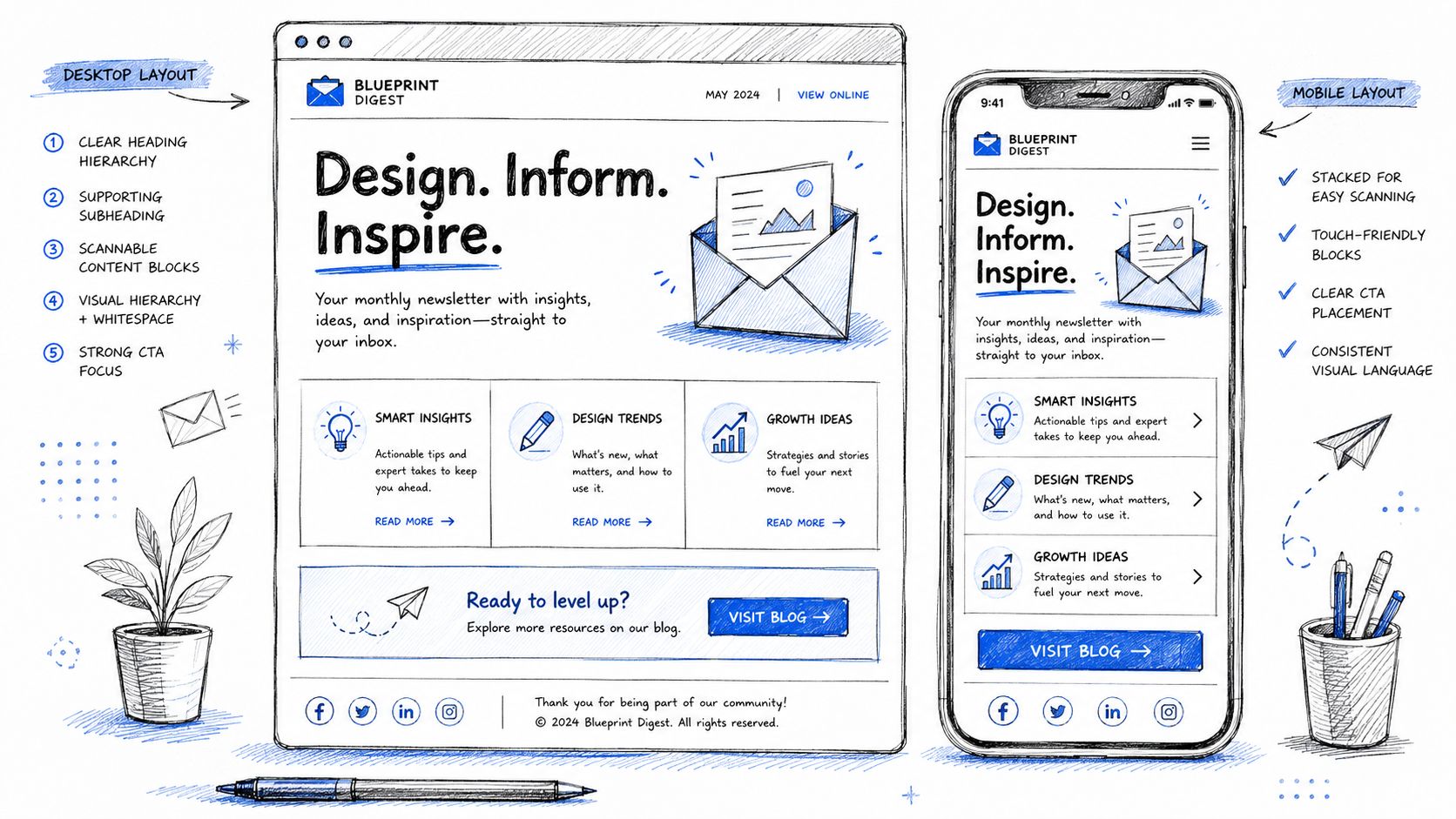
A clean issue usually includes a clear title, a sharp opening, short paragraphs, useful subheads, and enough spacing that readers can move without strain.
That doesn't mean you dumb the writing down. It means you respect the reading environment.
Use these standards:
Nathan May's LinkedIn post also recommends a 1920×1080 featured cover image for best visual display. That matters because your cover often shapes the first impression before a reader evaluates the writing.
Overdesigned newsletters often feel less authoritative, not more. Clean wins.
If you want a starting point for simpler structure, browse these monthly newsletter templates for cleaner issue design. Use them for layout thinking, not for making your voice sound templated.
A good newsletter page should feel like this:
The strongest design choice is restraint. One visual identity. One clear hierarchy. One obvious next step.
| Item | Implementation Complexity 🔄 | Resource Requirements ⚡ | Expected Outcomes ⭐📊 | Ideal Use Cases 💡 | Key Advantages ⭐ |
|---|---|---|---|---|---|
| Establish a Consistent Publishing Schedule | Medium, process, calendar, cadence management | Low–Medium, time commitment, scheduling tools | Predictable visibility, improved engagement and trust | Ongoing brand building, regular touchpoints (weekly/bi-weekly) | Builds audience expectation and reliability |
| Craft Authentic, Story-Driven Content | Medium–High, narrative skill and editorial process | Medium, strong writing, editing, time for reflection | Deeper emotional connection, higher shares and loyalty | Personal branding, relationship-focused newsletters | Emotional resonance and distinctiveness |
| Create High-Value, Original Insights | High, research, synthesis, proprietary frameworks | High, subject-matter expertise, research tools, time | Thought leadership, low churn, authoritative positioning | Niche expertise, premium or advisory content | Differentiation and long-term credibility |
| Optimize Subject Lines and Preview Text | Low–Medium, copy testing and iteration | Low, A/B testing tools, copywriting time | Significant lift in open rates and visibility | Any newsletter needing improved opens | Fast, measurable improvements to reach |
| Build Two-Way Engagement and Community | Medium–High, moderation and sustained interaction | Medium–High, community tools, staffing/time | Higher retention, advocacy, user-generated content | Creator-led newsletters, feedback-driven communities | Converts readers into active advocates |
| Leverage Data and Analytics for Continuous Improvement | Medium, tracking, analysis workflows | Medium, analytics tools, analyst time/expertise | Data-driven optimization, better ROI and reduced churn | Scaling newsletters, performance-focused teams | Informed decisions and measurable gains |
| Segment and Personalize Content for Different Personas | High, segmentation logic and content variants | High, data, platform capability, extra content | Increased relevance, engagement, conversions | Diverse/B2B audiences with distinct needs | Higher personalization and conversion rates |
| Design Visual and Structural Clarity for Readability | Medium, templates, testing across clients | Medium, design skills, templates, QA | Improved comprehension, time-on-content, professionalism | Text-heavy or mobile audiences, brand-focused editions | Accessibility, readability, and brand polish |
A common approach to newsletters involves a short-term mindset. This approach seeks more opens, more reactions, maybe a few inbound messages. That's fine, but it's small thinking.
A well-run LinkedIn newsletter does something bigger. It creates a published archive of your judgment. It shows how you solve problems, how you tell the truth, and how your ideas evolve over time. That's what turns content into a professional asset. People don't just subscribe to updates. They subscribe to your worldview.
That's why the best LinkedIn newsletter best practices aren't really about hacks. They're about discipline. Publish consistently. Write with story and substance. Package your ideas well. Invite discussion. Track what matters. Make the reading experience clean. Every one of those choices makes your work easier to trust.
You also don't need to implement everything at once. In fact, you shouldn't. If your newsletter is new, lock in cadence and voice first. If you're already publishing, tighten your headlines and engagement prompts. If your content is strong but business results are weak, improve analytics and profile conversion paths. Build in layers.
Legacy comes from repeated proof. One issue won't define you. Fifty strong ones will.
The platform itself supports that long-game view. LinkedIn newsletters have grown fast, personal newsletters often outperform company-led ones, and cross-promotion plus smart discoverability can widen your reach when the underlying content is worth subscribing to. But reach alone isn't the end goal. Reach without identity creates spectators. Reach with clarity creates advocates.
That distinction matters for founders, consultants, executives, and creators who want more than surface-level visibility. You don't need louder content. You need content people can attach to your name. Stories help do that. Original frameworks help do that. Consistency definitely does that.
If your current newsletter feels like a recurring task, rebuild it into a strategic asset. Publish fewer empty updates and more issues that carry your lived experience. Stop writing to "stay active" and start writing to be remembered.
That's the core opportunity here. Not just attention. Not just opens. A body of work that keeps introducing you long after the publish date passes.
If you're ready to stop guessing and start building an influential personal brand with content that reflects your voice, Legacy Builder can help turn your expertise into a durable digital footprint. That's where brand impact starts. Not with more content, but with better authorship.
Legacy Builder helps founders, executives, and experts turn scattered ideas into a clear, consistent personal brand. If you want a LinkedIn newsletter that sounds like you, builds authority, and compounds over time, Legacy Builder can help you shape the strategy, writing, design, and distribution that make it work.


You could – but most in-house teams struggle with the nuance of growing on specific platforms.
We partner with in-house teams all the time to help them grow on X, LI, and Email.
Consider us the special forces unit you call in to get the job done without anyone knowing (for a fraction of what you would pay).
Short answer – yes.
Long answer – yes because of our process.
We start with an in-depth interview that gives us the opportunity to learn more about you, your stories, and your vision.
We take that and craft your content then we ship it to you. You are then able to give us the final sign-off (and any adjustments to nail it 100%) before we schedule for posting.
No problem.
We have helped clients for years or for just a season.
All the content we create is yours and yours alone.
If you want to take it over or work on transitioning we will help ensure you are set up for success.
We want this to be a living breathing brand. We will give you best practices for posting and make sure you are set up to win – so post away.
Subscribe to our newsletter and get insights on how to grow your personal brand.
