.svg)
Subscribe to our newsletter and get insights on how to grow your personal brand.
Thank you! Your submission has been received!
Oops! Something went wrong while submitting the form.
.svg)


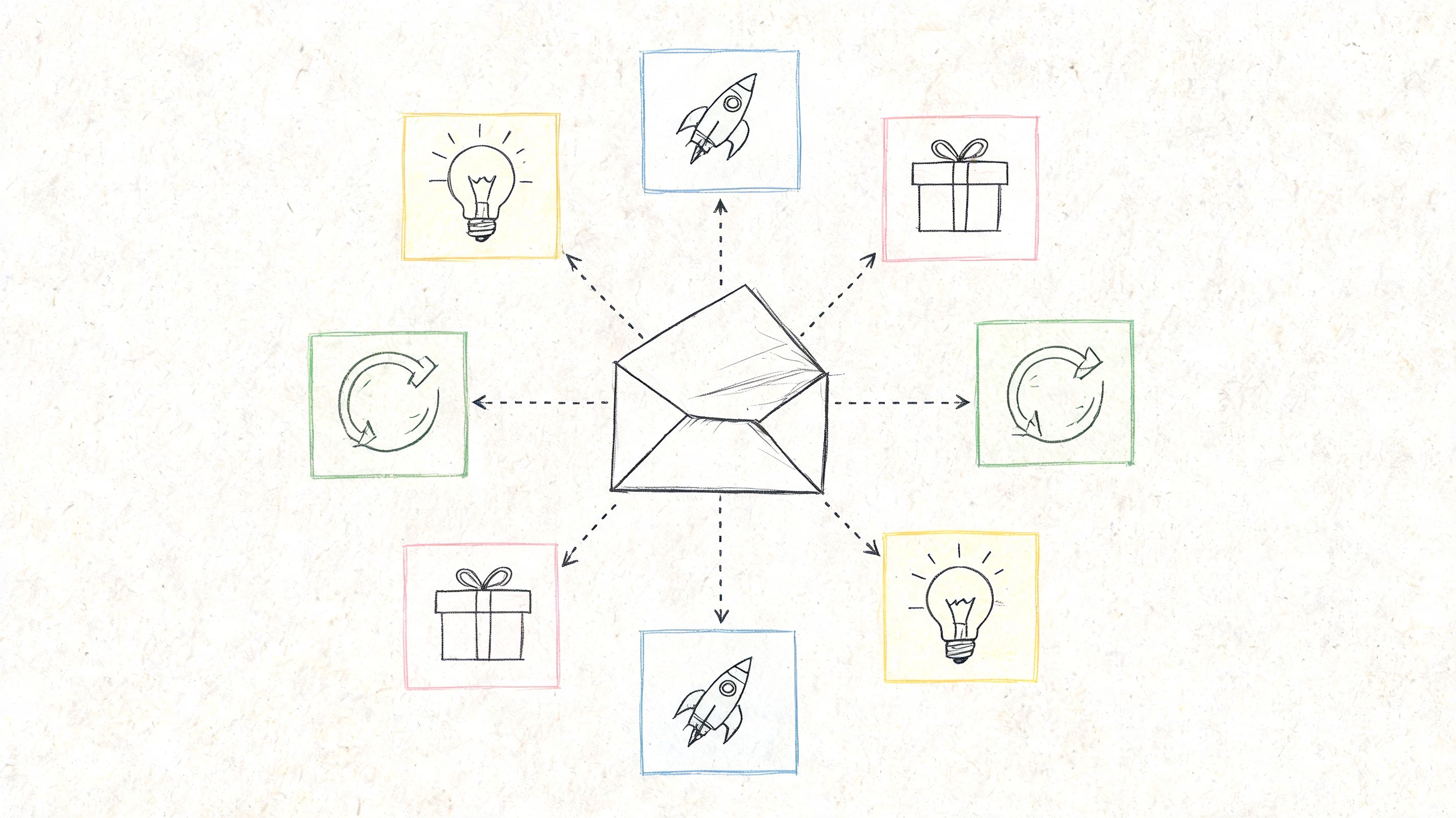
Stop sending updates. Start telling stories.
Your inbox is a graveyard of updates, newsletters, and promotions. Most get deleted in seconds. Not because email is dead. Because most emails read like announcements, not experiences.
The popular advice is wrong. “Provide value” isn’t enough. “Share tips consistently” isn’t enough. Even “write better subject lines” won’t save an email that has no tension, no stakes, and no human point of view. People don't remember another list of updates. They remember a moment, a mistake, a turning point, a result.
That’s why the best email storytelling examples work. They don’t dump information. They create movement. A person wanted something. Hit a problem. Found a shift. Took action. Got a result. That simple arc changes everything.
And the upside is real. One Ten by Three campaign moved from a promotional email with a 4.3% open rate, a 7.8% unsubscribe rate, and zero sales to storytelling follow-ups with 8.3% to 9.3% open rates, zero unsubscribes, and 16 bundle sales in 5 days, according to CXL’s breakdown of the Ten by Three campaign.
If you care about results, track the business side too. Use an email campaign return on investment calculator so your story emails aren't just “good content” but measurable assets.
Here are 8 email storytelling examples you can use right now, with the framework behind each one and swipe lines built for personal brands.
Your welcome email shouldn't say, “Thanks for subscribing.” That wastes the highest-attention email in your system.
It should answer one question fast. Why should this person trust you? A welcome story email does that by telling the short version of your origin. Not your full biography. Just the scene that makes your mission make sense.
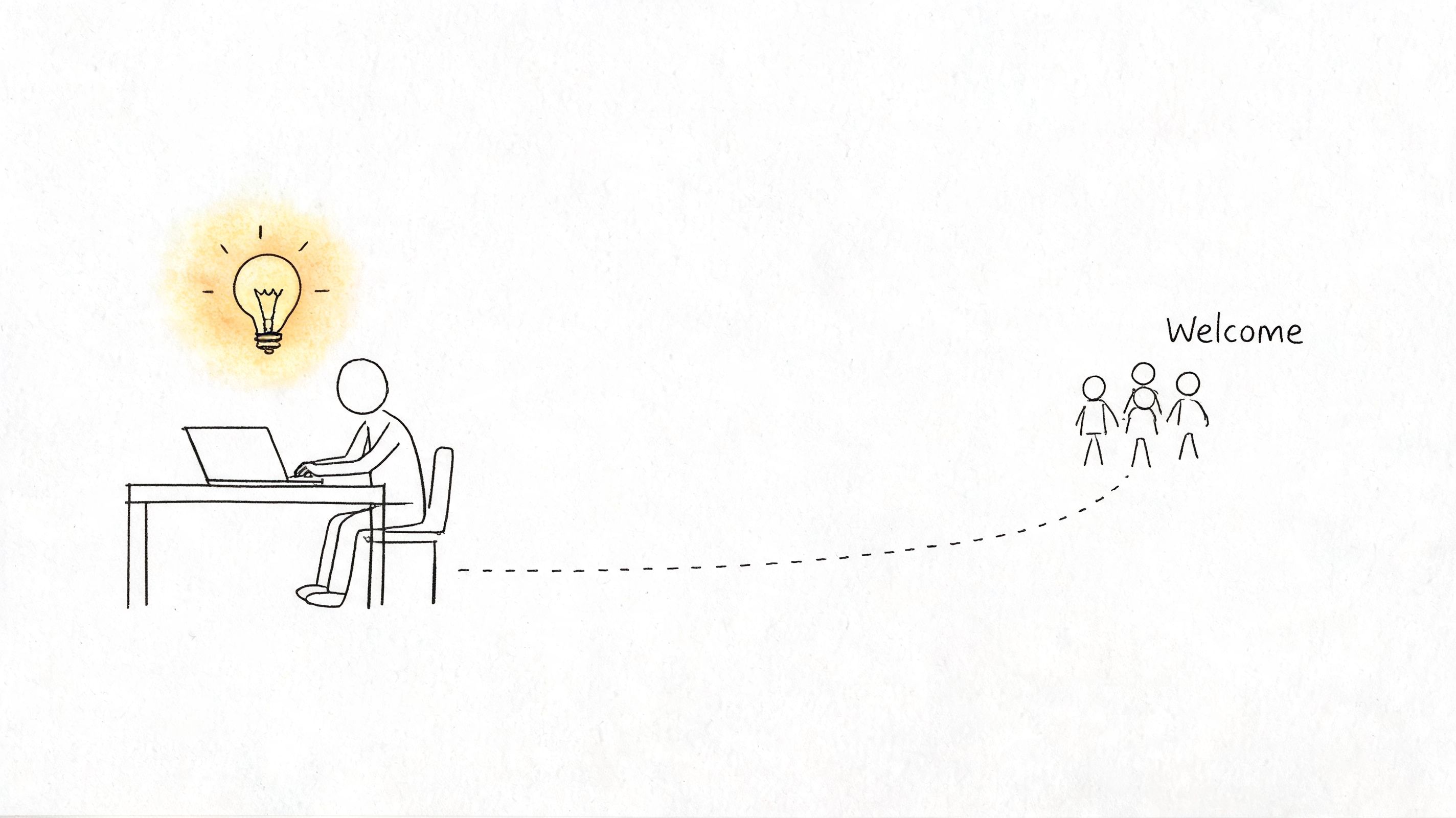
Airbnb and Patagonia are useful reference points here. The structure works because the reader immediately sees the person behind the brand and the belief behind the offer. For personal brands, that's your opening move.
Keep it tight. Four beats.
Most founders overwrite this email. Don't. Inbox readers skim. Give them one vivid moment, one clear belief, and one next step.
Practical rule: If your welcome story needs more than a couple short paragraphs to land, you're telling too much setup and not enough conflict.
A smart add-on is a simple preference question. Ask what they want help with. That turns the email from a monologue into the start of a relationship. If you want more structure around the sequence that follows, study these actionable welcome email strategies.
Try subject lines like:
Opening lines:
End with a soft CTA. Reply with one challenge. Click to set preferences. Read your best foundational piece. Don't pitch too hard. A welcome story earns attention first.
Some stories deserve their own email. This is one of them.
A founder origin narrative email goes deeper than your welcome note. It zooms in on the struggle that made your business inevitable. Warby Parker used affordability. TOMS used mission. Your version should use tension your audience already feels in their own life or work.
Generic founder emails fail because they sound polished. Strong ones feel specific. Time. Place. Stakes. What did you believe before the breakthrough? What did reality force you to admit?
Use this order:
That last part matters. If the story doesn't explain how you work now, it's just memoir.
A good founder email also teaches. The reader should finish with a lesson they can use, not just admiration for your persistence. If you want a broader breakdown of how story functions in growth, read what storytelling in business is and how it drives growth.
Use this skeleton:
Start with discomfort, not credentials. Nobody bonds with “I’ve always been passionate about...”
You can also invite replies at the end. Not with a vague “let me know your thoughts.” Ask a pointed question.
Examples:
That last line works well for consultants, coaches, service providers, and creators. It turns your origin into a conversation starter. That's what strong email storytelling examples do. They don't just explain the past. They open a loop into the next email.
Here, storytelling turns proof into persuasion.
A customer transformation email isn't a testimonial block pasted into an email. It's a before-and-after narrative with emotional context. HubSpot and Slack have both used customer spotlight formats well because they show change, not just praise.
Your reader needs to see themselves in the “before.” If they can't, the story won't convert.
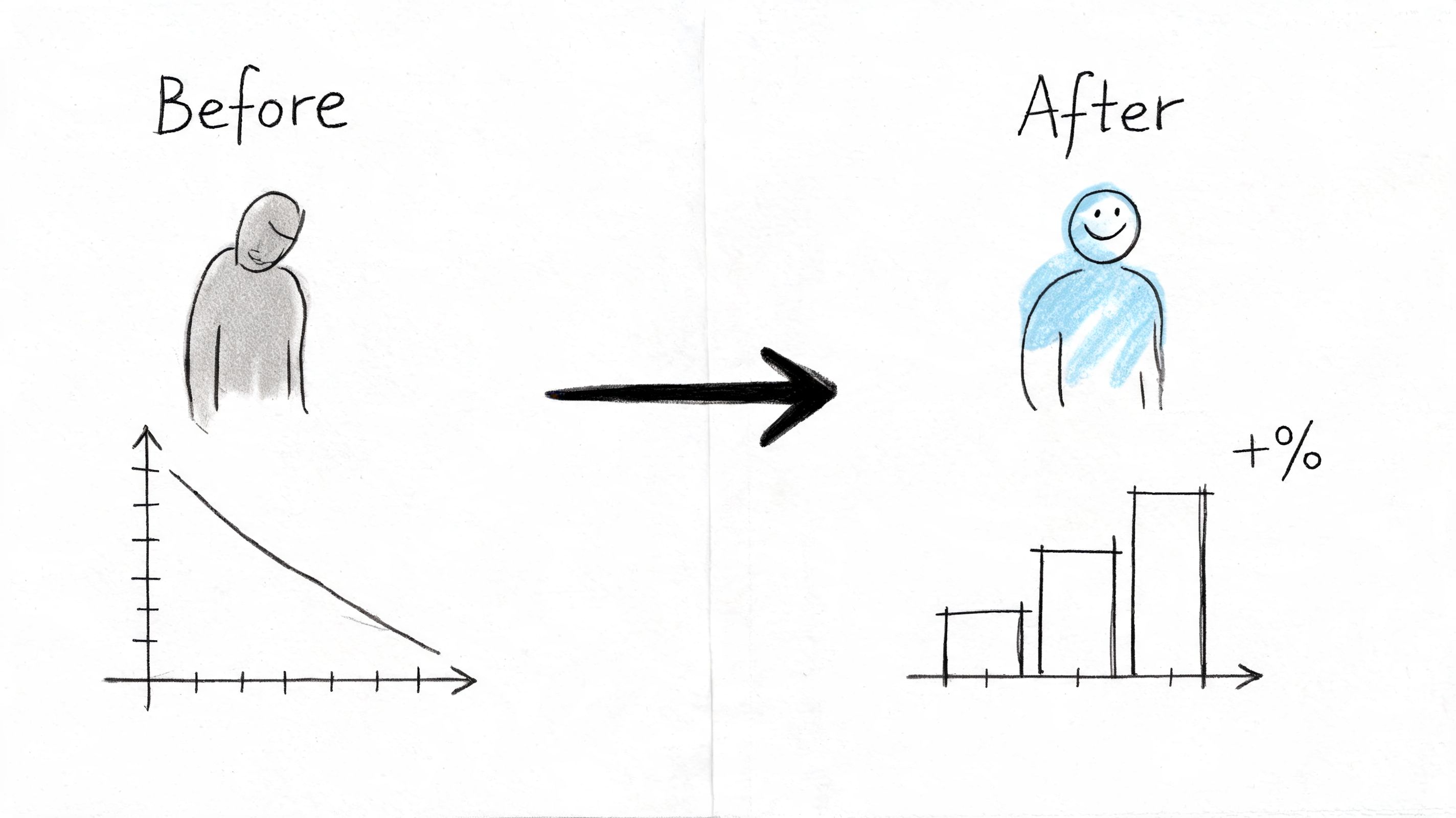
Build the email around five lines:
Use direct quotes if you have them. Keep them raw. Overedited testimonials lose force.
Research on story-based communication shows facts presented through stories are 22 times more likely to be remembered, and people retain 65% to 70% of information in narrative form versus 5% to 10% when it's just statistics, according to Sarah K. Longerbo’s storytelling in marketing article. That’s exactly why this format works so well in email. The story carries the proof.
Subject lines:
Body opener:
For a stronger personal-brand version, borrow narrative patterns from these personal narrative writing examples for brand building.
Close with a bridge, not a hard close:
If this sounds uncomfortably familiar, that's the point. The same pattern shows up for more people than you'd think.
Then invite the next step. Reply. Book a call. Read the case study. But anchor that CTA to the transformation they just read, not to your service menu.
Most onboarding sequences read like software instructions. Step 1. Click this. Step 2. Do that. People tune out because there’s no momentum.
A better onboarding sequence feels like guided progress. Intercom and Basecamp have both leaned into this style by framing the customer as someone already moving toward a meaningful win. That's the difference. Your emails shouldn't just explain features or next steps. They should narrate progress.
Don't cram everything into one giant sequence. Give each email one job.
A strong structure looks like this:
When you write this way, each email creates anticipation for the next. That's how you keep attention through onboarding.
Here’s a useful example to watch before you map your own sequence:
Use open loops. End each email with a line that hints at the next milestone.
Examples:
The reader doesn't need more information. They need a reason to keep going.
If you want inspiration for sequence mechanics, study these email drip campaign examples to steal.
One more point. Track where people stop engaging. If everyone opens email one and ignores email three, the issue usually isn't timing. It's narrative drop. The sequence stopped feeling like progress and started feeling like documentation.
Don't send dormant subscribers a guilt trip. Send them a reason to care again.
The usual re-engagement email says, “We miss you,” followed by a discount or a generic roundup. Weak move. A re-engagement tale works better because it reconnects the subscriber to a change, a missed chapter, or a new insight they haven't seen yet.
Duolingo-style progress reminders and Spotify-style nostalgia are both useful patterns. One reminds the reader who they were becoming. The other reconnects them to identity.
Use one of these angles:
This isn't about being dramatic. It's about giving context to their silence.
A useful data point here comes from a gap in the market. Public advice talks a lot about writing storytelling emails but offers far less guidance on measuring impact and attribution across sequences. One source notes emerging 2024 to 2025 platform data suggesting storytelling emails achieve 15% to 25% higher open rates, while conversion-to-revenue attribution remains less documented in public resources, according to Chase Dimond’s email storytelling examples page. Use that as a reminder to track your own re-engagement stories carefully.
Subject lines:
Body openings:
Give them a clean choice at the end. Rejoin. Update preferences. Unsubscribe. Respect sharpens trust. If they stay, they stay for the right reason.
Anniversary emails fail for one reason. They treat the date as the story.
The date is never the story. The change is.
A strong milestone email marks progress, sharpens identity, and gives the reader a reason to care about the next chapter. That is why this format works so well for personal brands. You are not just celebrating time passed. You are documenting what was built, what changed in the audience, and what that means now.
Use a simple four-part spine:
That structure keeps the email from turning into a vanity post. It also gives you a repeatable template. Every milestone email should answer four questions. Where did this begin? What changed? Why should the reader care? What should they do next?
Here’s the mistake to avoid. Writers spend three paragraphs thanking people and never name the actual transformation. Fix that. Call out a before-and-after clearly. If your list got sharper, say that. If your message changed, say why. If your readers started using your advice to get results, build the email around that shift.
Try this flow:
That last part matters. A milestone email should not end as a scrapbook entry. It should convert reflection into action.
Subject lines:
Body openings:
Reflection prompts:
Gratitude needs detail. Generic thanks feels automated.
If you include a gift, make it fit the narrative. Give early access to the next offer. Share a private lesson learned during the past year. Send a short personal note. Symbolic rewards outperform random discounts because they complete the story instead of interrupting it.
Behind-the-scenes emails work for one reason. They expose your decision-making.
Readers are not looking for casual updates or a watered-down diary. They want to see your standards in action. Why did you scrap the first draft? What made you change direction mid-project? Why did you say no to the easier option?
That is what makes this format useful for personal brands. You are not just showing the work. You are teaching people how you think, what you notice, and what you refuse to compromise on. Done well, a behind-the-scenes series becomes a trust engine and a sales asset at the same time.
Use a simple storytelling frame. Keep it tight. Repeat it weekly.
Build each email around one moment of tension:
That structure matters. Random updates fade fast. A clear story arc gives readers a reason to come back because each email delivers a lesson, not just access.
Here is the angle to use. Start with the work in motion. Show the friction. Name the judgment call. End with the takeaway your reader can apply to their own business or creative process.
Subject lines:
Body template:
If you have a team, rotate the narrator. Let the strategist explain a messaging call. Let the designer explain a visual tradeoff. Let the operator explain the system that keeps the work sharp. That variety keeps the series fresh and proves your brand is built on a method, not just personality.
The mistake to avoid is obvious. Do not send behind-the-scenes content that only says, “here’s what we did.” Deconstruct the story. Show the tension. Extract the lesson. Give the reader a line, template, or principle they can use today.
That is what turns inspiration into implementation.
After a strategy call, a recap is typically sent. Better than nothing. Still not enough.
A stronger move is a short success narrative about someone who hesitated in a similar spot, then moved forward and got a meaningful result. Salesforce and Drift have both used follow-up storytelling patterns like this because they lower uncertainty without forcing the close.
The key is relevance. The story has to mirror the prospect’s concern. Budget hesitation. Timing. Doubt about execution. Fear of visibility. Match the story to the friction.
Use this pattern:
Ten by Three offers an instructive lesson here. In one campaign, the organization reworked a Mother's Day promotion into a dual-narrative story that paired customer transformation with artisan upliftment. That shift took open rates from 4.3% to 8.3% to 9.3% and turned zero sales into 16 bundle transactions within five days, according to WhatTheyThink’s analysis of the storytelling email case study. The takeaway is simple. Layering personal benefit with a larger meaning makes the decision feel more compelling.
Subject lines:
Body copy:
You mentioned wanting stronger visibility but not wanting to sound forced. A past client said almost the same thing. They were worried that showing up more would make their brand feel performative. Once we built a story-led content system around their real experiences, the message got clearer and the next steps got easier.
End with one action. Book the next call. Review the proposal. Reply with one objection. Don't give them five options. Decision-making gets weaker when the path gets wider.
| Example | Implementation (🔄) | Resources (⚡) | Expected Outcomes (⭐📊) | Ideal Use Cases (💡) | Key Advantages (⭐) |
|---|---|---|---|---|---|
| Welcome Story Email | Low 🔄, single, self-contained message | Low ⚡, copy, founder photo, minor personalization | ⭐⭐⭐ 📊 Boosts opens and early engagement; builds trust quickly | New subscribers; first-touch onboarding | Builds rapport and sets content expectations |
| Founder Origin Narrative Email | Medium 🔄, longer, structured 3-act story | Medium ⚡, editing, authentic visuals, possible longform link | ⭐⭐⭐ 📊 Deepens brand authenticity and differentiation | Brand positioning; awareness campaigns | Strengthens founder connection and values alignment |
| Customer Transformation Story Email | Medium 🔄, case-focused narrative with metrics | Medium–High ⚡, client permission, data, quotes/video | ⭐⭐⭐⭐ 📊 Drives conversions by demonstrating clear ROI | Sales nurture; proof for hesitant prospects | Powerful social proof tied to measurable outcomes |
| Onboarding Story Sequence Email | High 🔄, multi-email sequence with milestones | High ⚡, content pipeline, automation, segmentation | ⭐⭐⭐⭐ 📊 Reduces churn and increases activation over time | New client onboarding; product adoption flows | Progressive trust-building and action-driven guidance |
| Re-engagement Tale Email | Medium 🔄, creative hook, short surprise or reveal | Low–Medium ⚡, personalization, exclusive offer or hook | ⭐⭐📊 Recovers dormant users; often higher CTR than generic blasts | Win-back campaigns for inactive subscribers | Rekindles curiosity without heavy discounting |
| Milestone / Anniversary Narrative Email | Low–Medium 🔄, periodic celebratory message | Low–Medium ⚡, timeline visuals, UGC, special offer | ⭐⭐📊 Strengthens loyalty; natural upsell/cross-sell moments | Anniversaries or subscriber milestones | Fosters community and appreciation-driven retention |
| Behind-the-Scenes Story Series Email | Medium–High 🔄, recurring episodic content | Medium–High ⚡, ongoing production (photos, video, writers) | ⭐⭐📊 Deepens affinity and shareability over time | Brand-building; sustaining engagement | Humanizes the brand and creates regular anticipation |
| Consultation Follow-Up Success Narrative Email | Low 🔄, brief, timely anecdote tied to call | Low ⚡, one tailored story or quote, calendar link | ⭐⭐⭐ 📊 Improves proposal conversions and reduces hesitation | Post-demo or post-call follow-ups | Timely personalization that leverages fresh context |
Here’s the mistake. Too many email marketers treat storytelling like decoration. It isn’t. It drives conversion, trust, and positioning.
The best email storytelling examples create movement. The reader starts in one state and ends in another. Curious turns committed. Unsure turns clear. Passive turns ready to act. If your email does not create that shift, it may deliver information, but it will not change behavior.
Ask a sharper question. Not “What should I send this week?” Ask, “What story will make the right reader feel understood, challenged, or ready to decide?” That question improves everything. Subject line. pacing. CTA. Outcome.
And don’t just admire the eight examples in this article. Break them apart. Use the framework behind each one.
Write a welcome story that earns trust fast. Send a founder origin email that explains why your method works. Turn a client win into a before-and-after transformation story. Build onboarding like a sequence of chapters with a clear next step in each one. Re-engage cold subscribers with tension and surprise, not another discount. Mark milestones with meaning. Show the work behind the work. After a consultation, send a story that answers the objection they did not say out loud.
That is the point of this article’s approach. It closes the gap between inspiration and execution. You are not just collecting examples. You are getting story frameworks, repeatable angles, and swipe-ready lines you can adapt to your own voice.
This matters even more for personal brands. People do not buy expertise in the abstract. They buy your judgment. Your pattern recognition. Your way of naming the problem and showing the path forward. Story carries that value better than explanation alone.
If these emails feel hard to write, good. That usually means you are sitting on stronger material than you realize. Many professionals already have the raw material. What they lack is structure, editorial discipline, and a repeatable process for turning lived experience into narrative that sells.
Legacy Builder is one option if you want help turning your ideas, experiences, and positioning into story-led content. The company works with professionals to shape authentic personal brands through strategy, writing, and consistent content execution.
Now pick one format and draft it today. Start small. One story. One audience. One clear action.
That’s how legacy gets built. One email at a time.
If you want help turning your experience into sharper, story-led emails and content, talk with Legacy Builder. They help professionals develop authentic personal brands through strategic storytelling, content creation, and consistent publishing.


You could – but most in-house teams struggle with the nuance of growing on specific platforms.
We partner with in-house teams all the time to help them grow on X, LI, and Email.
Consider us the special forces unit you call in to get the job done without anyone knowing (for a fraction of what you would pay).
Short answer – yes.
Long answer – yes because of our process.
We start with an in-depth interview that gives us the opportunity to learn more about you, your stories, and your vision.
We take that and craft your content then we ship it to you. You are then able to give us the final sign-off (and any adjustments to nail it 100%) before we schedule for posting.
No problem.
We have helped clients for years or for just a season.
All the content we create is yours and yours alone.
If you want to take it over or work on transitioning we will help ensure you are set up for success.
We want this to be a living breathing brand. We will give you best practices for posting and make sure you are set up to win – so post away.
Subscribe to our newsletter and get insights on how to grow your personal brand.
