.svg)
Subscribe to our newsletter and get insights on how to grow your personal brand.
Thank you! Your submission has been received!
Oops! Something went wrong while submitting the form.
.svg)


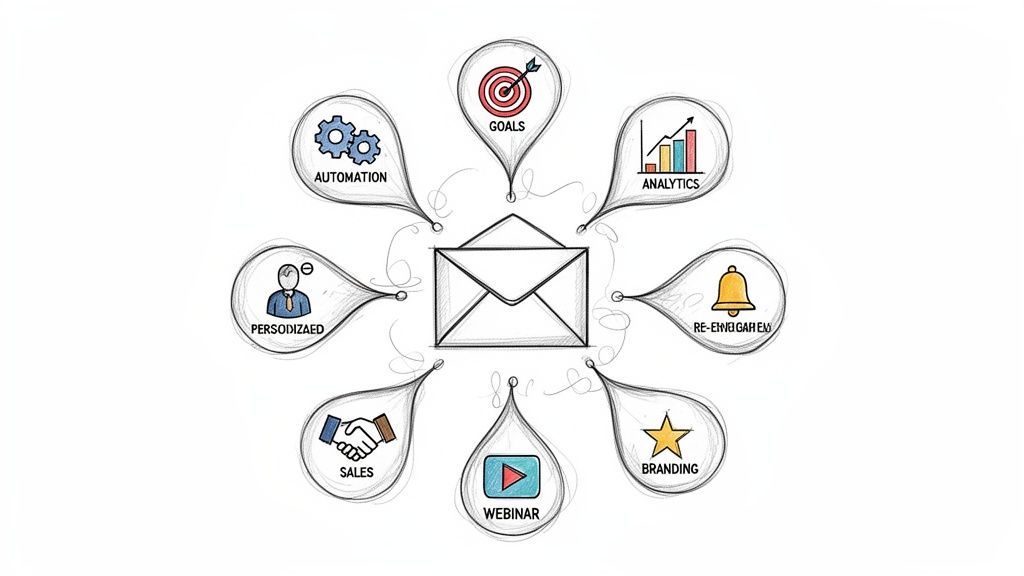
In a crowded market, a single welcome email is not enough to build a meaningful connection. Authentic personal brands require strategic, automated conversations that deliver value at every step. This is the core function of email drip campaigns. They are your silent, tireless brand-building partner, working 24/7 to nurture relationships, establish authority, and guide your audience from a casual subscriber to a loyal advocate.
This article moves beyond theory. We will break down eight essential email drip campaign examples that entrepreneurs and leaders can implement immediately. For each one, you will get a replicable blueprint to turn your email list into your most powerful asset. We will dissect the complete strategy, from objectives and cadence to sample copy and key performance indicators.
You will learn how to build automated sequences that:
Mastering these automated sequences is critical for scaling your influence and impact. Instead of just showing you what others have done, we will provide the behind-the-scenes details, tactical insights, and actionable takeaways you need to build these campaigns for yourself. Let's get started.
The first 48 hours after someone subscribes are the most critical for engagement. A Welcome Series is a foundational drip campaign that capitalizes on this peak interest. It's an automated sequence of emails sent immediately after a new user joins your list, designed to make an excellent first impression, introduce your brand, and set clear expectations for the value you will provide. This series is your first, best chance to turn a passive new contact into an engaged, loyal follower.
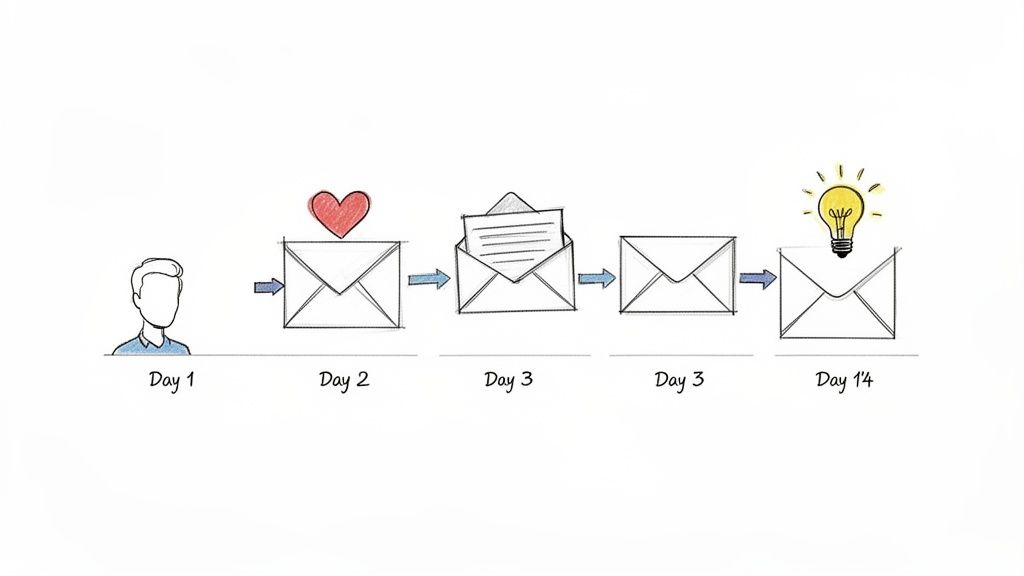
This campaign works by systematically building a relationship. Instead of a single, overloaded welcome email, it breaks down key information into a digestible 5-7 email sequence sent over 10-14 days. This avoids overwhelming the subscriber while consistently reinforcing your message. Personal branding expert Ramit Sethi, for example, uses his welcome series to tell his origin story and establish his "I Will Teach You to Be Rich" methodology, creating an immediate personal connection.
A successful welcome series is more than just a greeting; it's a strategic onboarding process. It confirms the subscription, delivers the promised lead magnet, and begins building a narrative around your brand.
Key Insight: The goal of a welcome series isn't to sell immediately, but to establish trust and train your new subscribers to open your emails. By delivering consistent value upfront, you earn the right to make an offer later.
While a welcome series builds initial rapport, an Educational Content Nurture Campaign solidifies your authority and solves real problems for your audience. This strategic drip campaign focuses on establishing you as a go-to expert by delivering valuable content over an extended period. Instead of selling, you are teaching. This approach methodically guides leads from awareness to consideration by addressing their most pressing pain points with actionable advice.
This campaign is not a quick win; it's a long-term play. Typically consisting of 8-12 emails spread over 4-6 weeks, each message teaches a distinct concept that builds on the last. It gradually warms up leads, making them more receptive to a future offer because you’ve already provided immense value. Industry leaders like HubSpot master this by teaching the entire inbound marketing methodology through their nurture sequences, building deep trust long before mentioning their software.
A powerful educational nurture campaign is built on a foundation of empathy. It starts by identifying your audience's core challenges and then reverse-engineers a curriculum to solve them. This positions your product or service as the logical next step, not a forced sales pitch.
Key Insight: The 80/20 rule is paramount here. Dedicate 80% of your content to pure education and only 20% to promotion. This balance ensures your audience feels served, not sold to, making the eventual offer a natural progression of the value you've already delivered. To enhance the effectiveness of your educational content nurture, consider various impactful approaches and consult lead nurturing workflow examples.
A product launch campaign is a meticulously orchestrated, time-sensitive drip sequence designed to build massive anticipation and drive initial sales for a new product, service, or program. This campaign typically runs from 2-3 weeks before the launch to one week after, creating a powerful wave of hype that converts subscribers into first-day customers. For entrepreneurs launching high-ticket coaching, digital products, or consulting services, this sequence is critical for turning personal brand equity into immediate revenue momentum.

This campaign works by creating a compelling narrative around the new offering. Instead of a single "it's here" email, it guides the audience through a journey of problem awareness, solution teasing, and exclusive access. Experts like Amy Porterfield and James Clear have masterfully used this model to launch digital courses and books, building excitement over several weeks with behind-the-scenes content, countdowns, and early bird offers that make the audience feel like insiders.
An effective launch campaign is a masterclass in storytelling and urgency. It connects the audience's pain points directly to the solution you've created, making the purchase feel like the next logical step in their journey.
Key Insight: A launch is an event, not an email. The goal is to create a shared experience built on anticipation and exclusivity. By making your email list the "VIPs" with special bonuses and early access, you generate a powerful sense of community and drive immediate action.
A Webinar Promotion and Registration Drip is a focused campaign built to maximize attendance for a live online event. This sequence moves beyond simple announcements; it educates potential attendees about the value of the topic, builds the speaker's authority, and creates a sense of urgency to drive registrations. It's an effective tool for entrepreneurs and leaders to demonstrate expertise, engage an audience in real-time, and convert followers into customers.
This campaign functions by creating a narrative around the event. Instead of a single "join my webinar" blast, it uses a 4-6 email sequence over 10-14 days to build anticipation and address audience pain points. Marketing expert Russell Brunson, for example, consistently fills his webinars by using a sequence that first agitates a problem, then presents his webinar as the exclusive solution, using social proof and scarcity to compel action. This strategic buildup is a hallmark of effective email drip campaign examples designed for high-stakes conversions.
A strong webinar promotion sequence is a masterclass in persuasion, guiding a contact from casual interest to committed registration. It systematically builds desire by highlighting the transformation the webinar promises.
Key Insight: The success of a webinar promotion hinges on building value before asking for the registration. Each email should solve a micro-problem or offer a new perspective, positioning the webinar itself as the ultimate culmination of that value.
Even the most engaged email lists experience natural decay over time. An Abandoned Engagement Recovery Campaign, also known as a re-engagement or win-back sequence, targets subscribers who have gone dormant, typically defined as not opening or clicking emails for 60-90 days. This automated series is designed to remind them of the value you provide, understand why they disengaged, and give them a compelling reason to become active again. It's a crucial list hygiene process that boosts overall deliverability and recovers valuable audience members.
This campaign works by isolating inactive subscribers and sending them a dedicated, short sequence of emails before removing them from your list for good. The goal isn't just to get an open, but to reignite the original connection. For example, Spotify’s personalized “Year in Review” campaigns are masters at this, re-engaging users by showing them data-driven insights about their own listening habits, reminding them of the platform's unique value and pulling them back into the app.
A strong recovery campaign is built on empathy and value, not guilt. It acknowledges the silence and offers a clear path back to engagement or an easy way to opt-out, which is equally beneficial for your list health.
Key Insight: A re-engagement campaign has two successful outcomes: winning back a subscriber or cleaning your list of a disengaged contact. Both results improve your email marketing metrics and ensure you're communicating with an audience that genuinely wants to hear from you.
A Lead Magnet campaign is a powerful list-building strategy that hinges on a simple value exchange: you offer a high-value, free resource (the lead magnet) in return for a person’s email address. This automated sequence immediately delivers the promised asset, like a guide, template, or checklist, and then begins a nurturing process to build trust and guide the new contact toward a deeper relationship or an initial offer. For many businesses, this is the primary mechanism for converting cold traffic into warm leads.
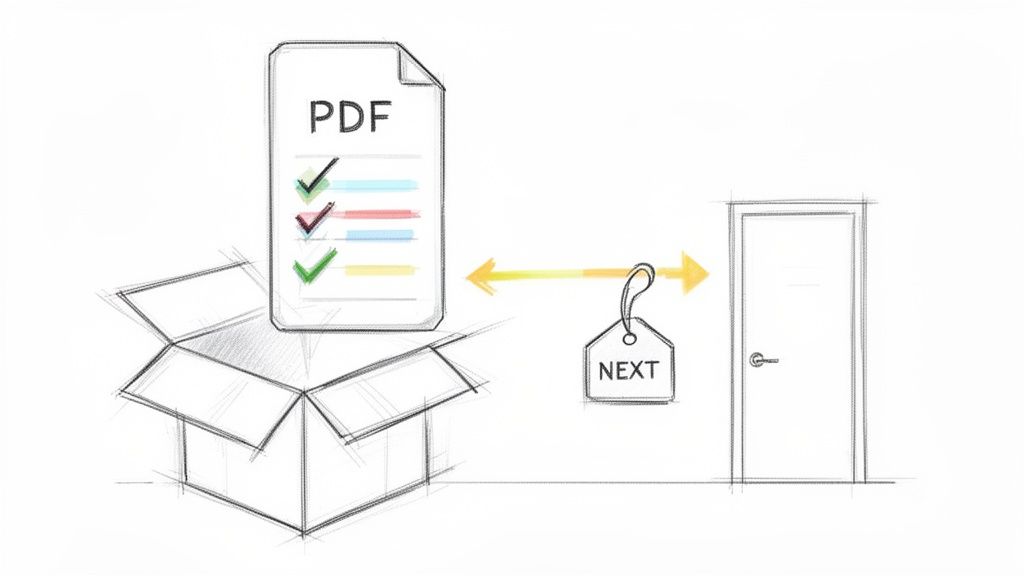
This campaign works by solving an immediate, specific problem for your audience. Instead of a generic newsletter signup, you offer a tangible solution. Growth marketer Brian Dean does this effectively with his SEO checklists, providing instant utility and positioning himself as an expert. The follow-up sequence then bridges the gap from that initial quick win to the broader solutions your products or services provide, making it one of the most effective email drip campaign examples for audience growth.
A successful lead magnet campaign is more than just the freebie; it's the entire experience from signup to the final nurture email. The goal is to prove your value quickly and maintain momentum.
Key Insight: The lead magnet earns you permission to enter someone's inbox. The follow-up sequence is where you earn the right to stay there. Focus the first few emails entirely on helping them implement the free resource to build immediate trust and goodwill.
A Thought Leadership series is a drip campaign designed to build authority and position you as a credible expert in your field. It moves beyond simple content marketing by delivering original insights, frameworks, and perspectives that challenge conventional wisdom. This sequence is not about a quick sale; it's a long-term play to establish trust, attract high-quality leads, and open doors to media, speaking, and partnership opportunities.
This campaign works by methodically sharing your deepest thinking over an extended period, often 6-10 emails sent over 2-3 months. Each email unpacks a distinct idea, building a cumulative case for your expertise. For example, venture capitalist Naval Ravikant used this approach to distill his philosophies on wealth and happiness, building a massive and loyal following. The goal is to make your audience think differently about a problem, with you as their trusted guide.
A powerful thought leadership campaign is built on original, well-researched ideas, not just curated content. It's your intellectual property delivered directly to your audience's inbox, proving you are at the forefront of your industry.
Key Insight: The primary goal is to shift your audience's perspective and earn their intellectual respect. By consistently delivering high-level insights, you stop competing on price or features and start competing on expertise and trust.
For businesses with paid memberships or exclusive groups, the work begins after the sale. A Community Building and Member Retention campaign is an ongoing drip sequence designed to foster engagement, create connection, and prove the continuing value of membership. This campaign is critical for maximizing member lifetime value and minimizing churn by consistently reinforcing the benefits of belonging.
This type of drip campaign works by creating a regular, value-packed communication rhythm that keeps the community top-of-mind. Instead of only reaching out when a renewal is due, it delivers exclusive insights, celebrates member wins, and facilitates interaction. For example, communities on platforms like Circle.so or Mighty Networks use these campaigns to announce events, spotlight successful members, and share exclusive content, turning a passive subscription into an active, thriving ecosystem.
A strong retention campaign makes members feel seen, valued, and connected to a larger purpose. It transforms a simple transaction into a meaningful relationship, making the decision to renew an easy one.
Key Insight: The primary goal of a community retention campaign is not to sell, but to serve. By consistently creating value and fostering genuine connection, you make membership indispensable, which naturally drives retention and turns members into your most powerful advocates.
Throughout this article, we've dissected eight distinct email drip campaign examples, from the crucial welcome series to the strategic thought leadership campaign. Each blueprint serves a specific purpose, but their true power emerges when you see them not as isolated tactics, but as interconnected parts of a larger communication system. The goal isn't just to copy a template; it's to understand the underlying psychology and strategy that makes each sequence effective.
We explored how a welcome series establishes trust from day one, how a content nurture campaign educates and builds authority, and how a re-engagement flow can recover otherwise lost connections. The common thread is purposeful automation. Each email is sent for a reason, triggered by a specific audience action, and designed to guide the subscriber toward a logical next step. This is how you build relationships at scale, ensuring every person in your audience feels seen and valued, no matter when they joined your list.
The detailed breakdowns of each campaign reveal several universal truths for successful email automation:
[First Name] is key. True personalization uses behavioral data to deliver content that feels uniquely relevant to the recipient's immediate needs and interests, making your brand feel like a helpful guide.Inspiration without action leads to a folder of unread articles and zero results. It’s time to move from reviewing these email drip campaign examples to implementing your own. Avoid the paralysis of trying to build all eight campaigns at once. Instead, follow this simple, focused approach:
By starting small and focusing on a single, high-impact campaign, you create momentum. You also generate real-world data that will inform the creation of your next automated sequence. For more ideas and structural guidance as you expand your efforts, exploring additional resources can be very helpful. To help you build your own effective strategies, explore some Top Email Drip Campaign Examples that can elevate your marketing strategy and increase conversions. This iterative process of building, measuring, and refining is how a single drip campaign evolves into a powerful, automated engine that drives consistent growth for your personal brand or business.
For leaders, founders, and experts, the challenge is often not a lack of expertise, but a lack of time to translate that expertise into a scalable content system. This is where Legacy Builder comes in. We partner with you to transform your unique voice and knowledge into a fully operational, automated personal brand engine, handling the strategy and execution so you can focus on what you do best.
Ready to turn your knowledge into an automated legacy? Learn more about Legacy Builder.


You could – but most in-house teams struggle with the nuance of growing on specific platforms.
We partner with in-house teams all the time to help them grow on X, LI, and Email.
Consider us the special forces unit you call in to get the job done without anyone knowing (for a fraction of what you would pay).
Short answer – yes.
Long answer – yes because of our process.
We start with an in-depth interview that gives us the opportunity to learn more about you, your stories, and your vision.
We take that and craft your content then we ship it to you. You are then able to give us the final sign-off (and any adjustments to nail it 100%) before we schedule for posting.
No problem.
We have helped clients for years or for just a season.
All the content we create is yours and yours alone.
If you want to take it over or work on transitioning we will help ensure you are set up for success.
We want this to be a living breathing brand. We will give you best practices for posting and make sure you are set up to win – so post away.
Subscribe to our newsletter and get insights on how to grow your personal brand.
