.svg)
Subscribe to our newsletter and get insights on how to grow your personal brand.
Thank you! Your submission has been received!
Oops! Something went wrong while submitting the form.
.svg)


Your Profile Is Losing You Money. Here's How to Fix It.
You've been told to optimize your profile by filling in every box, adding a polished headshot, and calling it a day. That advice is incomplete. A complete profile isn't the same as a persuasive one, and a polished profile isn't the same as a profile that brings in leads, invitations, and trust.
Most founders and professionals still treat their profile like a digital resume. That's the mistake. A resume summarizes the past. A strong profile creates demand in the present. It tells the right people what you solve, why you're credible, and what action they should take next.
A weak profile doesn't just sit there harmlessly. It repels attention. Prospects leave. Recruiters skip. Podcast hosts don't reach out. Buyers don't click. Partners don't see a reason to reply. Every vague headline, every low-effort image, and every empty section gradually diminishes your influence.
You need a system, not random profile tips.
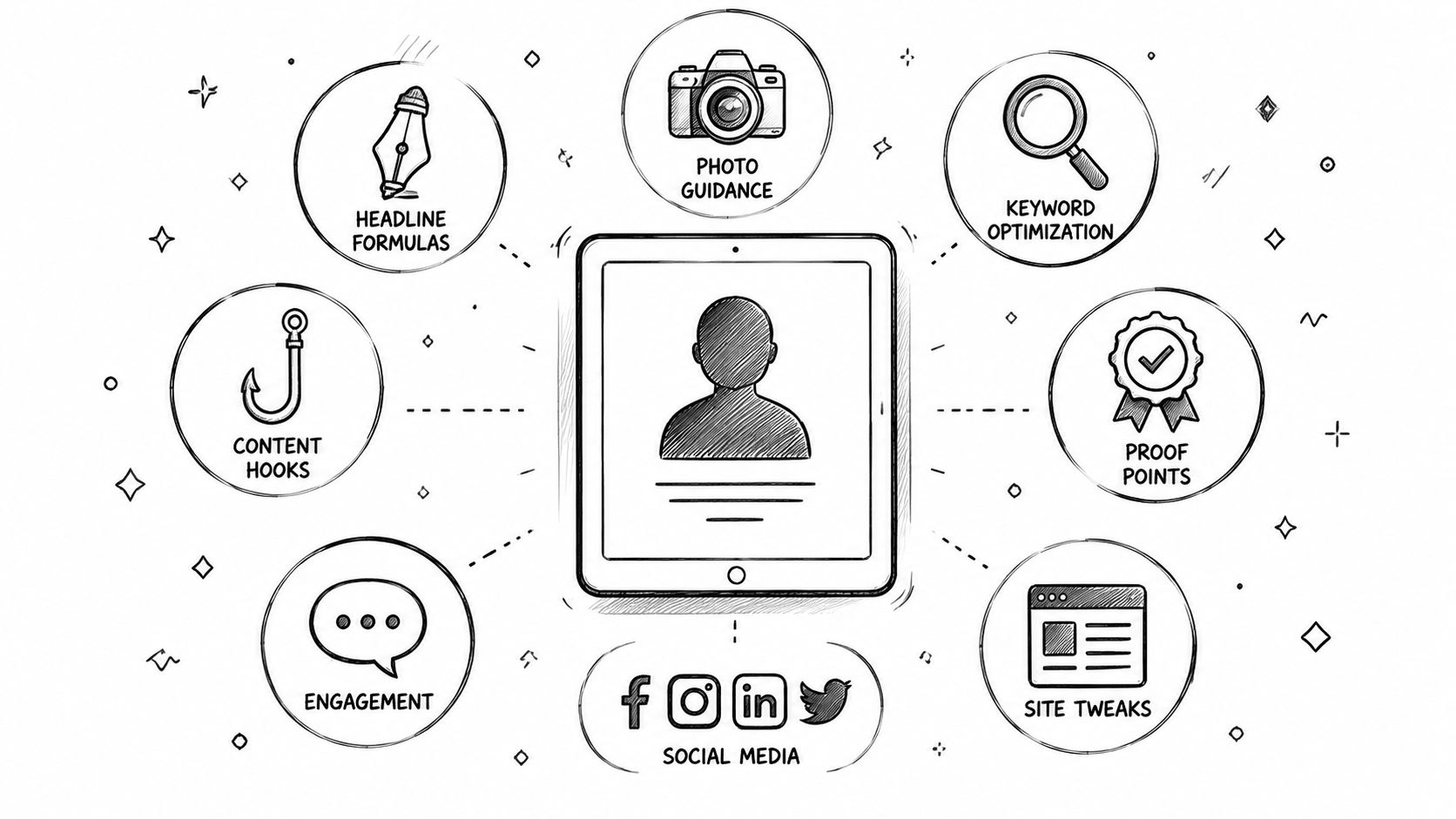
That system starts with visibility, moves into positioning, then turns attention into conversation. If you want a broader framework for platform cleanup, review these ways to optimize your creator social profiles. Then apply the eight moves below with discipline.
These aren't cosmetic tweaks. They're the building blocks of a profile that sells your thinking, compounds your authority, and gives people a clear reason to trust you.
Your photo does more work than your bio. People see your face before they read your claims, and they make a decision fast.
Adding a professional photo to a LinkedIn profile makes people 36 times more likely to receive a message, and profiles with any photo get 21 times more views than profiles without one, according to research on professional profile pictures. That is not a minor enhancement. It is a visibility multiplier.
Many individuals still sabotage this with cropped wedding photos, blurry conference shots, or filtered selfies. If you want strong profile tips that produce actual business outcomes, start with the image that signals competence before a single word is read.
Your headshot should be current, sharp, and aligned with the room you want to enter. If you advise SaaS founders, look like someone they'd trust on a sales call. If you're a consultant, coach, operator, or executive, your image should reflect that level of seriousness.
Use natural lighting. Keep your face fully visible. Choose a simple background. Wear what your best clients expect to see when they hire someone at your level. Then carry that same visual language into your banner, website portrait, speaker page, and newsletter avatar.
For a sharper standard, use this founder guide to professional photo guidelines.
Practical rule: If your current photo could also appear on a casual group chat profile, replace it.
A good banner matters too. Don't fill that space with abstract gradients or a skyline. Use it to reinforce one clear idea. State what you do, who you help, or what your body of work stands for.
This walkthrough is worth a quick watch before you rework your visuals.
If your visual branding is inconsistent across LinkedIn, X, your website, and your speaker pages, people hesitate. Consistency removes doubt. Doubt kills response.
A polished photo gets the click. Your headline and bio decide whether that click turns into attention, trust, or a lead.
Treat both as conversion copy. Your profile is not a digital resume. It is a positioning system that tells the right people, fast, why you matter, who you help, and what makes your perspective worth following. If that message is vague, your profile becomes a static credential page instead of an active business asset.
Your headline should state four things with zero fluff. What you do. Who you do it for. What outcome you help create. What gives you credibility.
“Founder at X” wastes premium real estate. It says employment status, not market value. A stronger headline gives a buyer, partner, podcast host, or recruiter an immediate reason to keep reading.
Use a structure like this:
Examples:
Clear language wins. LinkedIn's own guidance on profile basics emphasizes using your headline and About section to show what you do and the value you bring, not just your title, as outlined in LinkedIn's profile best practices.
Founders often write bios to sound impressive. That is the wrong goal. Write to create recognition.
A strong bio makes your audience feel understood. It shows that you know the problem they are trying to solve, the stakes attached to it, and the point of view you bring to fixing it. That is how a profile starts functioning like a lead generator instead of a vanity page.
Good bio copy usually includes:
That shift matters. Researchers covered by Berkeley Haas found that profile writers who signaled interest in other people were rated more favorably than those focused on how they wanted to be perceived, according to Berkeley Haas coverage of the profile study.
The professional takeaway is obvious. Stop writing for admiration. Write for response.
If a prospect cannot see their problem in your bio, they will not see you as the answer.
Your headline gets attention. Your bio should deepen the same positioning, not introduce a different identity.
If your headline says you help founders build authority, your bio should explain how you do it. Through content strategy, sharper narrative, better audience engagement, stronger differentiation, or a body of work that compounds over time. That continuity is what turns a profile into a system. Every line should reinforce the same market position from a different angle.
Keep the tone specific. Use the phrases your audience searches for and says out loud. Cut internal jargon. Cut clever wording that hides the offer. Clarity gets more profile actions than originality without substance.
For extra inspiration, review these LinkedIn profile optimization ideas.
A polished profile does not build demand by itself. Activity does.
Your profile starts working like a real business asset when visitors see proof that you think clearly, publish regularly, and stay relevant to the problems your market wants solved. Founders who treat posting like a burst of inspiration lose momentum fast. Professionals who post without a strategy train their audience to ignore them.
Consistency is not about feeding an algorithm. It is about building memory. People need repeated exposure to your ideas before they trust your judgment, share your work, or contact you.
Stop asking what to post this week. Decide what you want your name to mean.
If you want inbound leads, publish content that helps buyers diagnose expensive problems earlier. If you want speaking invitations, publish sharper opinions, stronger pattern recognition, and posts that show how you think under pressure. If you want stronger recruiting pull, show your standards, decisions, and operating philosophy.
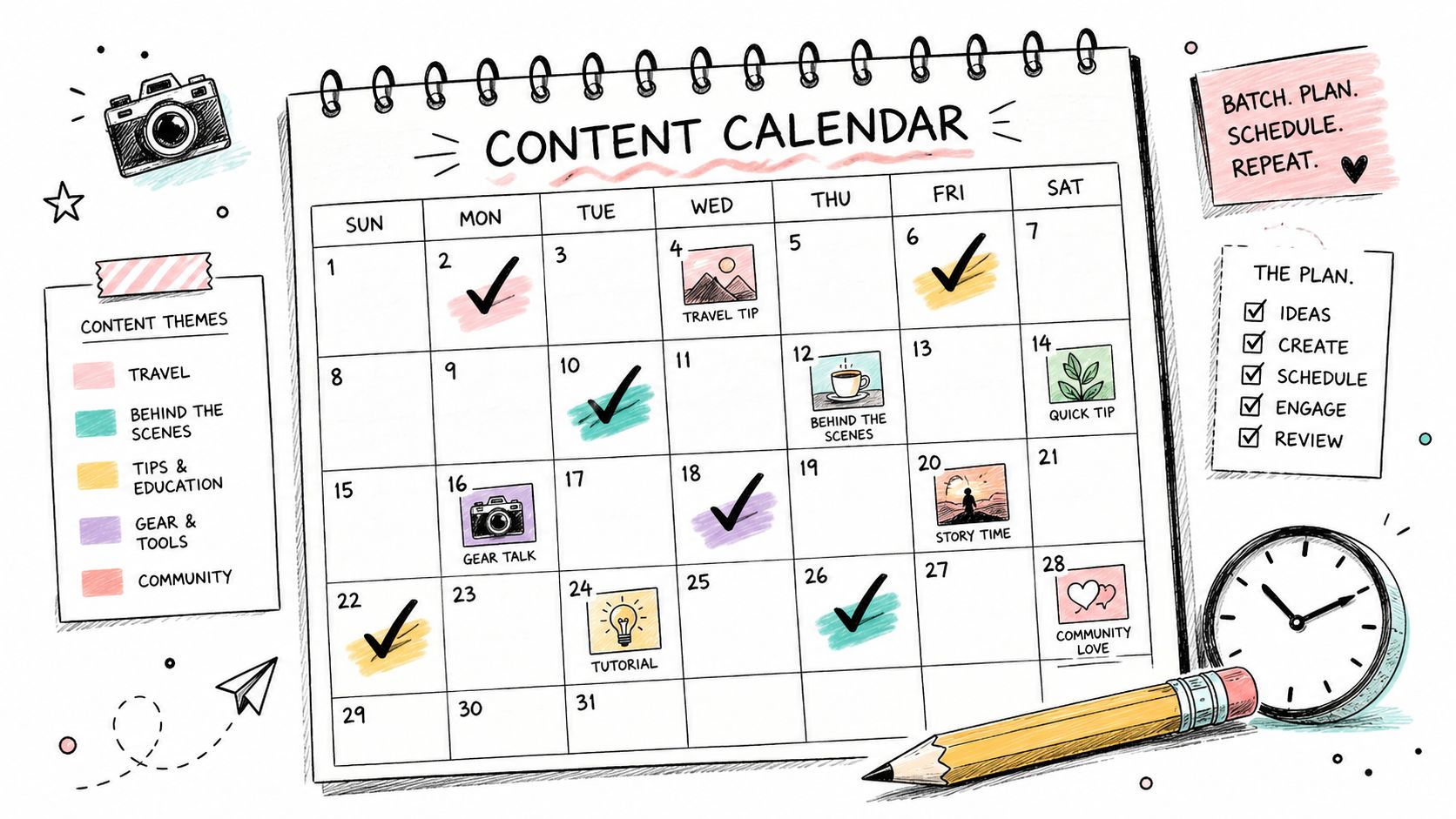
A practical cadence looks like this:
That mix turns a profile from a static credential page into an active trust-building system.
Scheduling tools help with execution. They do not fix weak positioning. Hootsuite recommends using a content calendar to maintain a consistent publishing rhythm across channels, which matters because regular posting keeps your brand visible and easier to recognize over time, according to its social media posting schedule guide.
Random posting creates random perception. Strong profiles use a small set of repeatable themes that reinforce the same market position from different angles.
Pick three to five pillars and stay with them for a full quarter. For example, a founder building authority around strategic growth might rotate between audience insights, brand positioning, leadership lessons, client transformation patterns, and contrarian views on common industry mistakes. That repetition is not boring. It is how expertise sticks.
If you need a sharper framework for shaping those themes into posts people remember, study these personal narrative writing examples for building your brand.
Operator's view: Your posting schedule should create recognition. Your audience should know what you stand for before they ever book a call.
The goal is not more content. The goal is stronger association between your name, your ideas, and the outcome people want.
Most profiles are accurate and forgettable. They list roles, credentials, and industries served. None of that creates attachment.
People remember a narrative. They remember why you care, what you've survived, what changed your perspective, and why your work has conviction behind it. If your profile reads like a sterile summary, it may look professional, but it won't build loyalty.
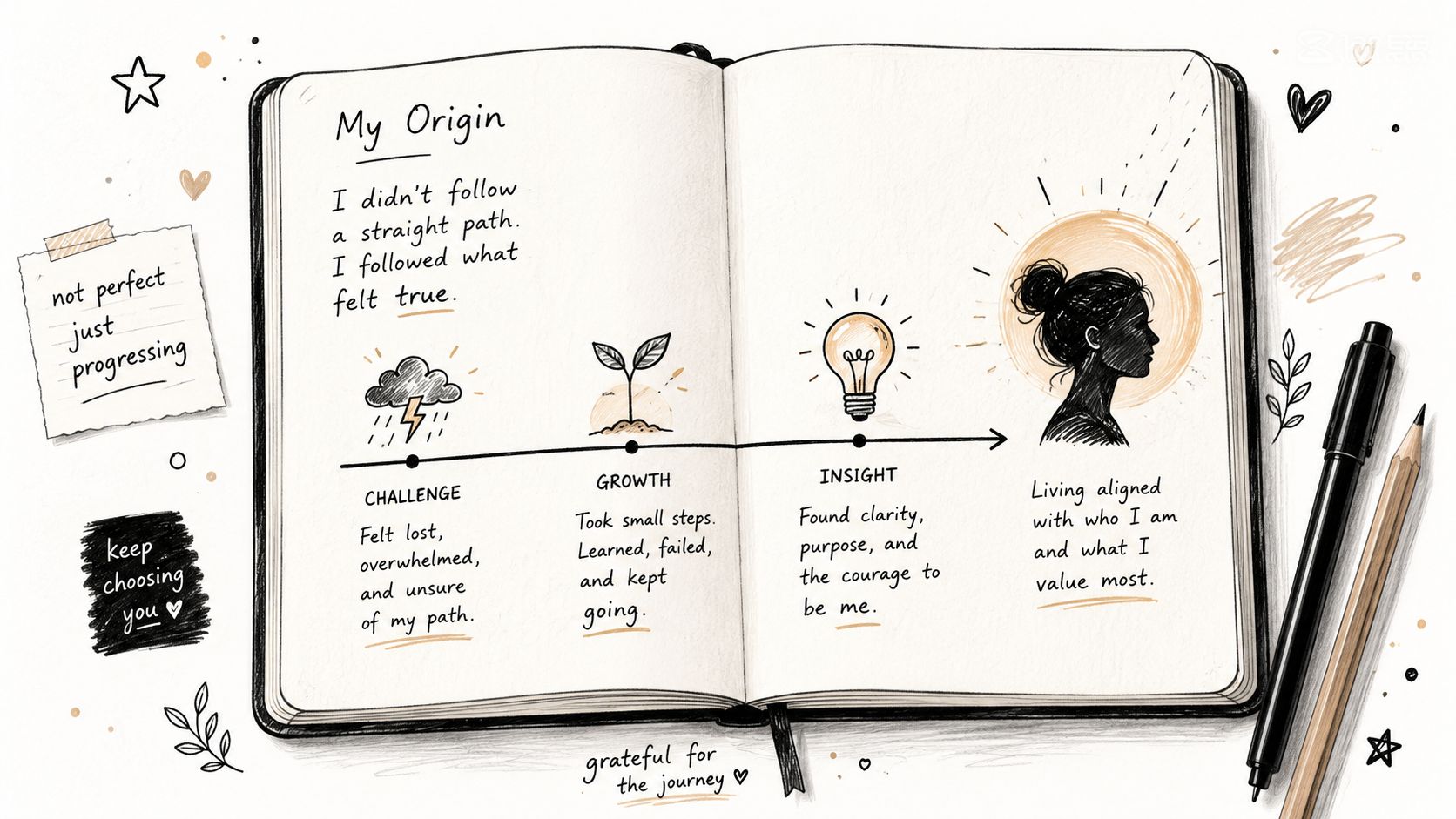
A founder who says, “I help companies improve marketing performance,” blends in. A founder who explains that they built the company after watching smart operators waste years on unclear messaging gives people something to hold onto.
Your narrative needs four parts.
This doesn't mean oversharing. It means selecting the details that explain your standards. If you run a consultancy, your story should explain why your method exists. If you lead a company, your profile should show the belief that drives your decisions.
Use your About section, pinned posts, featured media, and content themes to repeat the same narrative from different angles. Repetition builds recognition. Recognition builds trust.
If you need models for shaping that story, review these personal narrative writing examples for brand building.
People don't follow perfect professionals. They follow people with a coherent point of view.
Real-world example. A startup founder can post a product update, or they can explain the customer frustration that forced the team to rebuild a feature from scratch. The second version does more. It teaches, signals standards, and makes the company feel human.
Strong profile tips don't stop at optics. They give people a reason to care.
Posting without engaging is lazy distribution. You're asking for attention from people you never support.
Profiles grow faster when the owner acts like a participant, not a broadcaster. That means replying to comments, joining discussions, and adding substance to other people's posts. Not with “great post,” but with perspective.
You don't need thousands of interactions. You need consistent visibility in the right rooms.
Pick a small group of peers, clients, collaborators, and adjacent creators whose audiences overlap with yours. Comment where your ideal buyers already pay attention. If you advise founders, engage with operators, investors, category creators, and niche media voices in that space.
Your comments should do one of three things:
Founders who do this well become familiar before they become followed. That matters. By the time someone clicks through to your profile, they already associate your name with signal.
A good engagement habit is simple. Check your notifications daily. Reply while the conversation is still active. Leave thoughtful comments on a handful of posts from people in your market. Mention others when it helps the reader, not when you're fishing for reach.
One hard rule: Respond like a peer, not like an intern managing a brand account.
Real-world example. If an email marketer comments on a founder's post about lead quality with a concise observation about message-market fit, that comment can outperform a standalone post because it reaches a relevant audience at the exact moment the topic is live.
Community building doesn't happen in private ambition. It happens in public contribution.
A profile that sends mixed signals kills momentum. Founders lose leads here all the time. Someone finds you, gets interested, clicks around, and hits inconsistent titles, missing details, or dead-end links. That visit rarely gets a second chance.
Treat your profile stack like an acquisition system, not a digital resume. Every platform should point to the same core promise, the same audience, and the same next step. If LinkedIn positions you as a SaaS growth advisor, your website, newsletter, and booking page should reinforce that exact role instead of introducing three new identities.
On LinkedIn, complete the sections buyers scan before they respond. That includes your About section, Featured section, Experience entries, custom URL, contact info, skills, and attached proof of work. According to LinkedIn's own profile guidance, fully completed profiles provide a stronger foundation for visibility and credibility because they give both people and the platform more context to work with.
Your headline, banner, links, and featured assets should also agree with each other. Consistency lowers friction. Confusion lowers conversion.
For a stronger structure, study this definitive guide to standing out on LinkedIn.
Cross-platform alignment matters just as much. Use the same professional name, same profile photo style, and same core positioning across LinkedIn, X, your website, speaker bio, and creator platforms. A founder should not need to decode whether “brand strategist,” “operator,” and “growth architect” all mean the same thing. Pick the marketable label your buyers understand, then repeat it.
SEO for a personal brand is not complicated. Put buyer-language in the places that carry weight: your headline, About section, page titles, service pages, image alt text, and featured content. Do not write for your peers. Write for the person searching for help.
Examples:
Then earn those terms with content that matches the claim. If you want to rank in your market for positioning, publish analysis on category design, homepage messaging, sales narratives, and differentiation. Your profile should make a promise. Your content should prove it.
That is the core point of completeness. A finished, aligned, searchable profile does more than look polished. It helps the right people find you, understand you fast, and take action.
A polished profile does not close the credibility gap. Evidence does.
People trust proof they can verify. That means your profile needs visible signals that other credible people, companies, and platforms already trust your work. Reviews, recommendations, client results, media features, speaking footage, certifications, and recognizable partnerships all do that job. Together, they turn your profile from a self-description into a case for action.

Do not wait for testimonials to appear. Ask for them right after a clear win, while the result is still fresh and easy to describe.
Ask for specifics. You want the client or collaborator to name the problem, the change, and the business outcome. Strong social proof sounds like this: “We clarified our positioning, rewrote the homepage, and increased qualified inbound.” Weak social proof sounds like this: “Great to work with.”
Research published in the Journal of Marketing Research found that review content and volume shape purchase decisions in measurable ways. The lesson for founders is simple. Specific third-party validation reduces uncertainty and makes the next step easier.
Put that proof where buyers will see it:
One more rule. Match the proof to the claim. If you say you help founders sharpen messaging, show a founder saying your work clarified the story and improved conversions. If you sell speaking, show stage footage and organizer feedback. If you advise executives, display proof from executives, not generic praise from friends.
If your profile makes bold claims and shows no outside validation, serious buyers pause. A strong profile does more than describe your expertise. It shows that your expertise already created results for other people.
General competence does not convert. Clear positioning does.
If your profile reads like a polished summary of everything you can do, it will attract curiosity, not action. Founders and professionals do not need a broader list of skills. They need a sharper reason to choose you. Your profile should work like a market filter that pulls the right people closer and pushes the wrong people away.
That starts with a hard rule. Stop describing your value at the category level.
“I help businesses grow” is empty. “I help technical founders explain complex products in language buyers trust” has teeth. “I build content systems” is forgettable. “I turn executive expertise into posts, emails, and proof assets that generate qualified inbound” gives a buyer something concrete to evaluate.
A strong profile answers three questions fast:
The third point is where strong profiles separate themselves from digital resumes. Your difference is not a personality trait. It is a strategic advantage you can explain in one or two lines. That advantage might come from operator experience, a repeatable method, unusual pattern recognition, or access to a specific audience.
Researchers publishing in the Journal of Consumer Research found that clear, distinctive information improves evaluation and choice by making comparisons easier. That matters on a profile. People act faster when your positioning is easy to classify and hard to confuse with someone else.
Use a simple test. If a prospect removed your name from the profile, could they mistake it for five other consultants, advisors, or creators in your field? If yes, your positioning is weak.
Specificity fixes that.
A former SaaS operator advising seed-stage founders on go-to-market messaging has a real edge. A consultant who combines investor narrative, sales positioning, and founder-led content has a real edge. A creator who specializes in turning deep domain expertise into demand-generation assets has a real edge. Each one is easier to remember because each one owns a narrower promise.
Say less. Mean more.
Your profile should not present you as capable of many things. It should present you as the obvious fit for a specific problem, buyer, and outcome. That is how a profile stops being a static credential page and starts working as an active asset that attracts leads, grows audience trust, and compounds influence over time.
| Item | 🔄 Implementation complexity | ⚡ Resource requirements | 📊 Expected outcomes | 💡 Ideal use cases | ⭐ Key advantages |
|---|---|---|---|---|---|
| Professional Profile Photo & Visual Branding | Medium, professional shoot and style guidelines | Moderate cost (photography, editing); periodic updates | Increased credibility, recognition, higher engagement | Executives, founders, consultants needing strong first impressions | ⭐ Immediate trust & stronger brand recall |
| Compelling Bio & Headline Optimization | Low, copywriting and iterative testing | Low time cost; occasional A/B tests and keyword research | Better discoverability, clearer positioning, more clicks | Job-seekers, thought leaders, networkers | ⭐ Clear value proposition and search visibility |
| Content Consistency & Strategic Posting Schedule | High, systems, calendar, and discipline required | High time or team effort; scheduling tools and content batching | Sustained audience growth, improved algorithmic reach | Creators and brands focused on audience growth | ⭐ Predictable engagement and habit formation |
| Authentic Storytelling & Personal Brand Narrative | Medium–High, craft and refine narrative over time | Medium, content creation (stories, video), editorial effort | Deeper emotional connection, stronger loyalty and shares | Leaders, founders, coaches building trust-based brands | ⭐ Emotional resonance and memorable content |
| Engagement Strategy & Community Building | Medium, process and moderation setup | High daily time or community manager; engagement systems | Greater visibility, reciprocal amplification, collaboration | Community-driven brands and network builders | ⭐ Generates loyalty, feedback, and partnerships |
| Profile Completeness, Cross-Platform & SEO Optimization | Medium, multi-platform audits and SEO work | Medium–High, tools, audits, content adaptation | Long-term discoverability, diversified traffic sources | Professionals seeking omnichannel visibility | ⭐ Reduced platform risk and improved search reach |
| Social Proof & Credibility Signals | Low–Medium, solicit and curate proof elements | Medium, testimonials, PR outreach, verification efforts | Faster trust-building, higher conversion and opportunities | Emerging entrepreneurs and service providers | ⭐ Accelerates credibility and conversion rates |
| Strategic Differentiation & Unique Value Proposition | High, research, positioning, and testing | Low–Medium, time for analysis and messaging tests | Attracts ideal clients, commands premium rates | Niche practitioners, consultants, founders | ⭐ Defensible positioning and easier marketing |
Optimizing your profile isn't a one-time cleanup project. It's the foundation of your digital reputation and a working part of your revenue engine. When your profile is built correctly, it doesn't just summarize your background. It attracts the right people, frames your expertise, and starts trust before a call ever happens.
That's why these profile tips matter as a system, not as isolated upgrades. Your photo creates the first moment of confidence. Your headline and bio clarify what you do. Your content proves you're active and relevant. Your narrative gives people a reason to remember you. Your engagement habits place you inside the right conversations. Your complete, connected profiles improve discoverability. Your social proof reduces skepticism. Your differentiation gives buyers and collaborators a clear reason to choose you.
Many stop after one or two of those moves. They upload a new image, rewrite a headline, and assume the job is done. It isn't. A high-performing profile works because every part reinforces the same message. That alignment is what turns scattered attention into demand.
Start with the most impactful fix. If your photo is weak, replace it first. If your headline is vague, rewrite it today. If your profile is complete but inactive, commit to publishing and engaging consistently. If your positioning is blurry, define the specific audience and outcome you want attached to your name.
Then build a maintenance rhythm. Review your headline, banner, featured links, and proof assets regularly. Update old language when your focus evolves. Remove outdated wins. Add stronger signals. Keep your profile current enough that a high-value visitor can land on it at any moment and see a sharp, trustworthy version of you.
This work compounds. A stronger profile leads to better first impressions. Better first impressions lead to more conversations. More conversations create more opportunities to earn proof, tell your story, and strengthen your position. Over time, that becomes more than online visibility. It becomes a professional legacy people can recognize.
If doing all of this yourself feels inconsistent, slow, or impossible to sustain while running a business, get help. Services like Legacy Builder exist for exactly that reason. They help professionals turn ideas, stories, and expertise into a consistent public presence that builds influence over time.
Choose one fix today and implement it before the day ends. Momentum matters more than intention. Your next opportunity is already checking your profile.
If you want your profile to do more than look polished, Legacy Builder can help you turn it into a real growth asset. Their team builds authentic personal brands through profile optimization, content strategy, daily publishing support, and audience engagement systems that keep your story visible and credible. For founders, executives, and professionals who don't have time to manage the machine themselves, Legacy Builder gives you a way to show up consistently without sounding generic.


You could – but most in-house teams struggle with the nuance of growing on specific platforms.
We partner with in-house teams all the time to help them grow on X, LI, and Email.
Consider us the special forces unit you call in to get the job done without anyone knowing (for a fraction of what you would pay).
Short answer – yes.
Long answer – yes because of our process.
We start with an in-depth interview that gives us the opportunity to learn more about you, your stories, and your vision.
We take that and craft your content then we ship it to you. You are then able to give us the final sign-off (and any adjustments to nail it 100%) before we schedule for posting.
No problem.
We have helped clients for years or for just a season.
All the content we create is yours and yours alone.
If you want to take it over or work on transitioning we will help ensure you are set up for success.
We want this to be a living breathing brand. We will give you best practices for posting and make sure you are set up to win – so post away.
Subscribe to our newsletter and get insights on how to grow your personal brand.
