.svg)
Subscribe to our newsletter and get insights on how to grow your personal brand.
Thank you! Your submission has been received!
Oops! Something went wrong while submitting the form.
.svg)


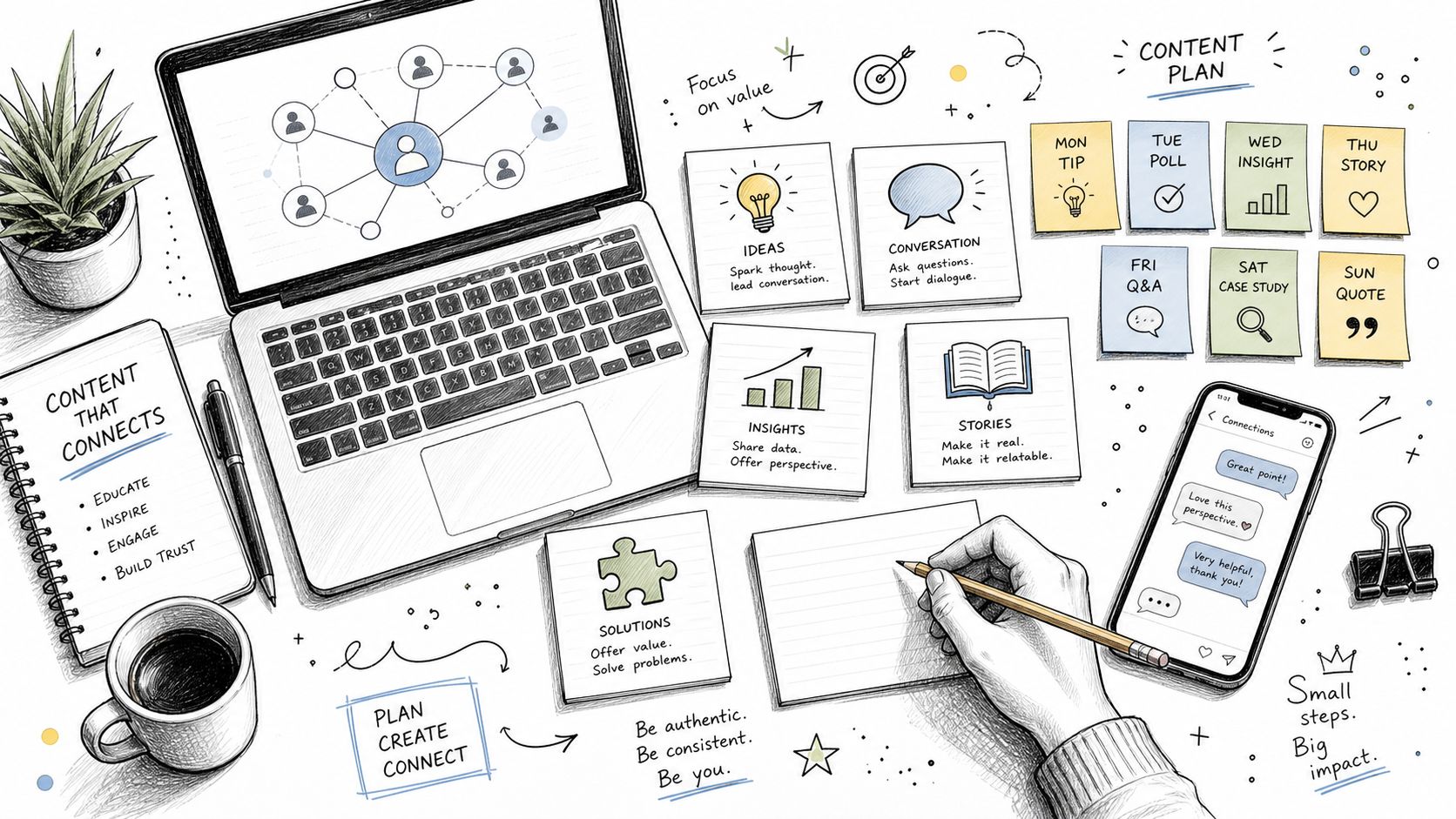
LinkedIn content is part of your professional balance sheet. Every post either adds proof to your body of work or burns attention you will not get back.
Treating LinkedIn as a place to stay active is the mistake. The right approach is to treat it as a system for documenting how you think, what you solve, what you believe, and where you are headed. That is how content stops feeling like upkeep and starts compounding into reputation.
Weak posts fail for a simple reason. They leave no imprint. Generic milestones, recycled links, and vague motivation do not show judgment. They do not show standards. They do not give the right clients, partners, or employers a reason to remember your name.
Strong content does the opposite. It turns experience into evidence.
That is the Legacy Builder view. Your posts are not disposable updates. They are strategic assets that build a public record of credibility over time. A useful story, a sharp opinion, a clear lesson, or a documented result can keep working for you long after the day you publish it.
If you use AI to draft faster, edit it until it sounds like you. This guide on improving AI-written posts for linkedin content ideas is a useful reference. If you want your content to carry more weight over time, study how to tell your story and build an unforgettable brand. The goal is not volume. The goal is a body of work people can trust.
People don't trust polished branding first. They trust context.
A strong origin post explains how you got here, what you believed at the time, what changed your direction, and what that shift now means for the people you serve. Reid Hoffman, Sheryl Sandberg, and Naval Ravikant all have one thing in common. Their ideas land harder because people understand the story behind them.
Your origin story should never read like a resume summary. It should read like a turning point. Start with the decision, setback, contradiction, or uncomfortable realization that forced growth.
Use details that make the story real. Mention the role you were in, the problem you kept seeing, the conversation that stuck with you, or the moment you realized your old path no longer fit.
Your story only works when it creates relevance for someone else.
If you want a sharper framework for this, study how to tell your story and build an unforgettable brand. That's the difference between autobiography and brand strategy.
A founder can write about leaving a stable executive role after noticing the same customer pain point in every meeting. A consultant can share the project that exposed a gap in their field. A creator can explain why they stopped chasing broad visibility and started building around a specific belief. Those posts don't just humanize you. They anchor your reputation.
Teaching in sequences is a direct path to authority.
Carousel and document posts turn your expertise into a format people can consume fast, save, and return to later. That matters because authority is not built from one clever post. It is built from repeatable teaching that attaches your name to clear ideas.
This format also fits the Legacy Builder approach. A strong carousel is not filler content. It is a public asset. Done well, it captures a method, point of view, or operating principle that keeps working for your brand long after you publish it.
Write like an operator explaining a process. Keep one core idea per slide. Give the post a clear progression so the reader knows where they are and why the next slide matters.
A simple structure works well:
Good educational posts are specific. Broad advice gets ignored. A carousel built from a real client question, a workshop outline, or a repeated mistake in your field will outperform abstract tips every time.
Practical rule: Turn one useful conversation into one teachable asset. Do not start from a blank page.
If you want to extend a strong carousel into longer-form authority content, use this guide on writing LinkedIn articles that build real authority. The best creators do not treat formats as separate ideas. They turn one sharp insight into a system.
James Clear helped popularize concise, framework-driven teaching across platforms. On LinkedIn, that discipline is even more valuable because professionals reward clarity. Give them a sequence they can apply, not a wall of text they have to interpret.
For anyone serious about building a lasting reputation, this is one of the smartest LinkedIn content ideas to use consistently. Every strong carousel becomes part of your public body of work. That is how you stop posting for attention and start publishing for legacy.

Most trend posts are useless because they repeat headlines. Your job is to interpret, not summarize.
A strong industry insight post answers three questions. What changed. Why it matters. What smart operators should do next. Satya Nadella, Paul Graham, and Lenny Rachitsky all stand out because they don't just point at movement in the market. They explain the implication.
Use your own operating experience as the filter. If you're in SaaS, explain how a shift affects pricing, retention, hiring, or product roadmaps. If you're in services, explain how buyer expectations are changing. If you're in media, show how distribution behavior is moving.
One useful way to deepen these posts is to turn them into article-led authority content. If you want to expand beyond short-form analysis, read how to write LinkedIn articles that build real authority.
Try openings like these:
The best trend analysis posts often become reference points. Someone reads your take, saves it, and starts associating your name with clarity. That is legacy-building content. You aren't just reacting to the market. You're helping shape how people understand it.
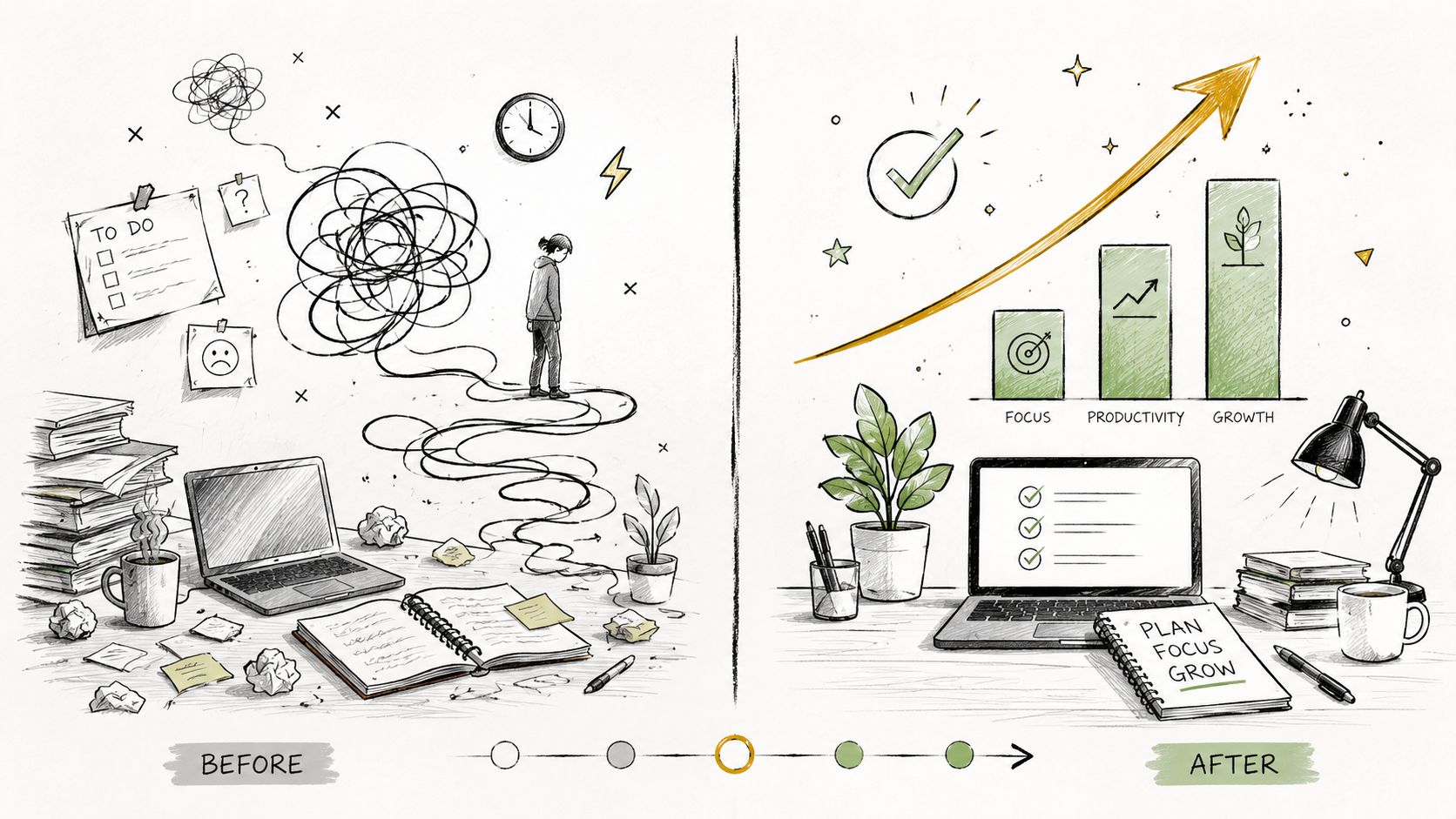
Transformation posts work when they show the mechanism, not just the outcome.
Too many professionals post the "after" and skip the part people care about. They announce the win, flash the polished result, and offer a vague lesson about consistency. That's weak content. The value is in the diagnosis, the changes, and the tradeoffs.
A useful transformation post can be personal or professional. A founder can show how their messaging evolved from vague capability claims to a sharp market position. A consultant can compare an old proposal process with a tighter, more strategic one. A leader can explain how they changed how they run meetings, hire, or delegate.
Set up the before state clearly. What was broken, messy, inefficient, confusing, or ineffective? Then explain what you changed.
Conbersa recommends campaign breakdowns that include at least one positive metric and one improvement metric, and it also highlights practical posts about A/B tests, format experiments, organic versus paid comparisons, and documented failures in its guide to LinkedIn content ideas for marketers. If you have real project data you can ethically share, use that logic. Show what worked, what didn't, and what changed after the lesson.
This format builds trust because it proves you can reflect, adapt, and improve. That's far more convincing than pretending every move was obvious from the start.
If you have no clear point of view, your content won't stick.
Hot takes work when they challenge lazy consensus with logic and experience. They fail when they exist only to provoke. Naval Ravikant, Paul Graham, and Gary Vaynerchuk all built audiences in part because they state positions cleanly and defend them.
Pick one belief in your industry that people repeat automatically. Then challenge it with reasoning.
Examples:
Your first sentence should be unmistakable. Don't warm up for six lines. State the position, then support it with two or three arguments.
The strongest opinion posts don't attack people. They attack weak assumptions.
Good contrarian content also shows judgment. Acknowledge when the common advice makes sense in certain contexts, then explain where it breaks down. That makes you sound experienced, not theatrical.
These posts matter for legacy because reputation isn't built on neutrality. People remember professionals who stand for something specific and defend it well. If your feed contains only safe summaries, you may stay agreeable, but you won't become memorable.
Consistency becomes easier when the format is fixed.
A weekly reflections post removes decision fatigue because you aren't inventing a new concept every time. You're documenting what the week taught you. That discipline turns ordinary work into recurring LinkedIn content ideas without forcing artificial inspiration.
Pick a day. Friday works well for many professionals because the week is fresh, but any consistent rhythm is fine. Then choose one frame and keep it stable.
You might post:
Hootsuite's 2026 guidance says the highest-engagement LinkedIn formats are short-form video, followed by carousels or document posts, text-only posts, newsletters, long-form articles, and polls, and it also recommends a 4-1-1 content mix in its LinkedIn marketing strategy guide. That framework is useful here. Your weekly reflections can be one of the educational or perspective-driven posts that balances out the occasional promotional update.
A CEO can reflect on one hiring mistake and one leadership lesson. A marketer can share what a live experiment taught them about messaging. A sales leader can summarize the objections that came up repeatedly and what the team changed.
This format compounds because it trains your audience to expect your thinking in a dependable cadence. Over time, those reflections become a public archive of judgment. That's a serious asset.

Bad questions get bad comments.
If you ask, "What do you think?" you'll get fluff. If you ask something specific, timely, and answerable from experience, you'll get useful discussion. That's the difference between chasing engagement and building community intelligence.
The best question posts come from real uncertainty or pattern recognition. Ask what you're trying to understand.
Examples:
Polls can work, but only when the options are sharp. Open-ended questions often generate better language because people answer in their own words. That language is gold. It gives you headlines, objections, phrasing, and future post angles.
If you're trying to turn audience interaction into a content engine, read how to write LinkedIn posts that build your personal brand. The strongest personal brands don't just publish at people. They listen, pattern-match, and respond.
Ask questions that help you learn something worth using in your next ten posts.
A leadership coach can ask what managers struggle to say in feedback conversations. A SaaS founder can ask what buyers now expect before booking a demo. A recruiter can ask what candidate behavior has changed most in the last year. Good question posts don't just create comments. They surface market intelligence.
Case studies are where authority stops being theoretical.
If you've done real work, document it. Break down the problem, the approach, the friction, the result, and the lesson. People trust professionals who can explain process under pressure. They ignore professionals who only post conclusions.
A clean case study post usually follows a simple progression.
Many so-called LinkedIn content ideas transform into powerful brand assets. A case study can prove strategic thinking, communication ability, and execution discipline in one post.
Use real scenarios. A consultant can explain how they repositioned a service offer after noticing prospects misunderstood the value. A product marketer can document a messaging shift after customer interviews exposed a mismatch. A founder can share how one recurring objection changed how they sell, hire, or onboard.
Don't airbrush the hard parts. Mention the assumption that turned out wrong. Mention the test that failed. Mention the pivot. Clean narratives are forgettable. Honest process is persuasive.
If you can use verified metrics, include them in the same sentence as the proof. If you can't, don't force numbers. Specificity still wins when you explain the choices and consequences in plain language.
Many professionals avoid video because they think production quality is the issue. It isn't. Clarity is.
Short-form video works when you say one useful thing quickly and on camera. Hootsuite's 2026 LinkedIn strategy guidance ranks short-form video as the highest-engagement format in its content mix recommendations. That should push more professionals to test it, even if they start simple.
Start with formats that don't require performance. You don't need a studio voice or a polished set.
Try these:
Keep the topic narrow. "How I structure a founder post" is better than "My thoughts on content." "What buyers ask before they trust you" is better than "Sales advice."
Add captions. Use a clear opening line. End with a direct next step. If you don't know what to say on camera, script the first two sentences and free-speak the rest.
The advantage of video in a legacy-building strategy is simple. People learn your face, voice, pacing, and conviction. Text can prove intelligence. Video also conveys presence. For executives, founders, and experts, that's often the missing layer.
Collaboration content expands credibility through association, but only when the conversation is worth sharing.
An interview post shouldn't exist because you tagged someone with a bigger audience. It should exist because the exchange surfaces insight your audience couldn't get from you alone. Strong collaboration shows range. It also shows that serious people trust you enough to think in public with you.
A practical example is to interview a complementary operator. A founder can interview a head of sales about buyer objections. A marketer can interview a product leader about launch alignment. A coach can interview a recruiter about what candidates misunderstand.
To spark ideas, watch how interview-driven content can be structured in practice.
Don't publish the full interview and stop there. Mine the exchange.
ToneMark's perspective on idea generation is useful here. It argues that blank-page syndrome is often a process issue, not an inspiration issue, and emphasizes building a knowledge base from first-party audience signals in its piece on generating LinkedIn content ideas from real audience signals. Interviews give you exactly that. They create fresh language, real questions, and nuanced points you can repurpose.
Collaboration content matters for legacy because it places you inside a network of ideas, not just a stream of solo opinions.
| Post Type | 🔄 Implementation Complexity | ⚡ Resource Requirements | 📊 Expected Outcomes | 💡 Ideal use cases | ⭐ Key advantages |
|---|---|---|---|---|---|
| Personal Story & Origin Narrative Posts | Medium, requires careful crafting and vulnerability | Medium, writing time, possible images | High emotional connection; higher engagement and brand recall | Founders building personal brand; legacy storytelling | ⭐⭐⭐⭐ Builds deep empathy and memorable identity |
| Educational Thread/Carousel Posts (Series Format) | High, needs planning, structure and design | High, research, slide design, copy | Strong authority, longer time-on-post, shareable evergreen value | Thought leadership, course creators, educators | ⭐⭐⭐⭐ Positions creator as expert; highly shareable |
| Industry Insights & Trend Analysis Posts | High, ongoing research and data analysis | Medium–High, data sources, charts, validation | High credibility; media attention and quality discussions | Execs, analysts, B2B founders commenting on market shifts | ⭐⭐⭐⭐ Demonstrates market expertise; sparks debate |
| Before-and-After Transformation Posts | Medium, requires documentation and narrative framing | Medium, visuals, metrics, timeline | High trust and aspirational engagement; proof-driven conversions | Coaches, agencies, product improvements, client stories | ⭐⭐⭐⭐ Concrete evidence of results; very shareable |
| Hot Takes & Contrarian Opinion Posts | Low–Medium, clear reasoning required to avoid backlash | Low, writing and examples | High visibility and comment activity; polarizing reach | Thought leaders seeking attention or differentiation | ⭐⭐⭐ Provokes debate and boosts algorithmic reach |
| Weekly Lessons or Reflections Posts | Low, formulaic but requires discipline | Low, regular short-form writing | Steady engagement pattern and audience habit formation | Building consistent touchpoints and audience retention | ⭐⭐⭐ Encourages repeat visits and personal connection |
| Question-Based Engagement Posts | Low, simple format focused on prompting responses | Low, no production, occasional poll tools | Very high comment rates; useful audience insights | Community building, market research, feedback gathering | ⭐⭐⭐⭐ Drives conversation and uncovers audience needs |
| Professional Case Study & Results Posts | High, detailed documentation, confidentiality checks | High, data collection, visuals, approvals | Very high credibility; generates qualified leads and trust | B2B sales, agencies, SaaS founders demonstrating ROI | ⭐⭐⭐⭐ Persuasive proof of capability; long-term value |
| Video & Short-Form Content Posts | Medium–High, filming, editing, hooks required | High, equipment, editing time, captions | Very high engagement (3–5x static); improved reach and conversions | Broad audience growth, quick tips, behind-the-scenes | ⭐⭐⭐⭐⭐ Most engaging format; algorithm-favored |
| Expert Interview & Collaboration Posts | Medium, coordination and curation of partners | Medium, scheduling, recording/editing | Expanded reach and shared credibility; fresh perspectives | Network expansion, thought leadership via partners | ⭐⭐⭐⭐ Increases reach and credibility with partner audiences |
These ten content ideas are not a creativity exercise. They are assets that document your judgment, prove your expertise, and shape how people remember your work.
That is the standard to use on LinkedIn. Stop treating content like a posting schedule and start treating it like a body of public evidence. Every format in this list plays a different role in that system. Personal stories explain what shaped you. Educational posts turn your methods into reusable intellectual property. Trend analysis shows how you think. Case studies give buyers and peers proof. Reflections show maturity. Collaborations attach your name to other credible voices.
Pick one or two formats and commit. Repetition builds recognition. Recognition builds trust. Trust builds opportunity.
The right mix depends on how you communicate best. Strong teachers should focus on carousels and case studies. Operators with strong pattern recognition should publish industry analysis and weekly lessons. Confident speakers should use short video and interviews. Variety is overrated. Clear association with a few strong formats does far more for your reputation than scattered experimentation.
Thought leadership deserves serious attention because influence comes from interpretation, not status updates. Role changes, launch posts, and milestone announcements have a place, but they do not build a lasting point of view on their own. If you want to become known for something, publish ideas that people can quote, reuse, debate, and remember.
Promotion matters too. It just needs to follow proof. If you want your content to support pipeline as well as reputation, these LinkedIn lead generation strategies show how to connect authority-building posts to real business outcomes without turning your feed into a sales brochure.
For founders, executives, and operators, the problem is not a lack of ideas. It is execution. Capturing insight, choosing the right format, maintaining consistency, and keeping the voice sharp takes structure. Legacy Builder helps professionals turn stories, expertise, and vision into publishable content that feels intentional instead of improvised.
A personal brand is your professional legacy in public. Build it that way. Publish with a point of view, document results, and repeat the patterns you want to be known for.
If you want help turning your expertise into a consistent LinkedIn presence, Legacy Builder can help you develop the strategy, shape the message, and publish content that reflects your real voice.


You could – but most in-house teams struggle with the nuance of growing on specific platforms.
We partner with in-house teams all the time to help them grow on X, LI, and Email.
Consider us the special forces unit you call in to get the job done without anyone knowing (for a fraction of what you would pay).
Short answer – yes.
Long answer – yes because of our process.
We start with an in-depth interview that gives us the opportunity to learn more about you, your stories, and your vision.
We take that and craft your content then we ship it to you. You are then able to give us the final sign-off (and any adjustments to nail it 100%) before we schedule for posting.
No problem.
We have helped clients for years or for just a season.
All the content we create is yours and yours alone.
If you want to take it over or work on transitioning we will help ensure you are set up for success.
We want this to be a living breathing brand. We will give you best practices for posting and make sure you are set up to win – so post away.
Subscribe to our newsletter and get insights on how to grow your personal brand.
