.svg)
Subscribe to our newsletter and get insights on how to grow your personal brand.
Thank you! Your submission has been received!
Oops! Something went wrong while submitting the form.
.svg)


Stop guessing. Most B2B content gets published, skimmed, and forgotten because it was built to fill a calendar, not to move a buyer. The market has already made its preference clear, 71% of B2B buyers expect personalized content experiences (Michael Semer's 2025 B2B content marketing statistics), and the winning formats are not random blog posts. They are short-form video, case studies, and interactive tools.
That means the old advice is weak. “Post more” is not a strategy. “Be helpful” is not a strategy. A strong B2B program starts with ideas that fit a real buying problem, then turns each idea into a repeatable asset, a distribution plan, and a measurement plan.
This list is built as a playbook, not a brainstorm dump. Each idea below includes the goal, the right channel, how to repurpose it, and what to watch so you know whether it's working. Use it to stop creating content that flatters your team and start creating content that earns attention, trust, and pipeline.
Strong thought leadership works when it takes a hard position and stays useful for the reader. Long-form articles are still one of the cleanest ways to do that because they let executives, founders, and subject-matter experts explain a point of view in full. The best ones solve a narrow problem, speak directly to a buyer's job, and end with a clear next step. They also travel farther when you place them on third-party platforms your audience already trusts.

Use this format when you need to shape how the market thinks, not just what it clicks. A founder explaining why generic lead-gen content fails belongs on LinkedIn and in a guest slot on a niche publication. A SaaS operator breaking down a specific implementation problem belongs in a blog post with a strong headline and tight subheads. For a practical framework on this approach, see Legacy Builder's guide to thought leadership content creation.
The best guest contributions are not broad opinion pieces. They are specific, editorially sharp, and tied to a problem your prospect feels. Mid-tier publications are the right starting point because they help you build credibility before you pitch larger outlets. Pitch editors first, follow their rules, and write for the publication's audience instead of treating it like a backlink target.
Practical rule: If the article would not still be useful without your company name in it, it is too promotional.
One article should not stay one article. Turn the argument into a LinkedIn carousel, a short founder video, three quote graphics, and a sales enablement one-pager. If the piece is strong, your team can also mine it for social posts, newsletter snippets, and a speaker abstract for events. That keeps the idea working long after the first publish date.
Track qualified inbound replies, newsletter signups from the article, referral traffic from the publication, and sales conversations that reference the argument. Do not obsess over vanity reactions. Thought leadership should create recognition and trust, not just applause.
LinkedIn is still the fastest place for a B2B leader to become visible without waiting on a corporate site to rank. But visibility does not come from random posting. It comes from a profile that says exactly who you help, a cadence that your audience can learn, and engagement that sounds like a human being instead of a brand bot.
Use LinkedIn when the seller is also the face of the expertise. That is especially true for founders, consultants, agency leaders, and executives in founder-led companies. The profile itself should do the heavy lifting. Your headline, banner, about section, and featured content should all tell the same story in plain language.
The tactics matter, but only after the positioning is clear. Post in the formats LinkedIn already rewards, use the platform's native tools like documents and carousels, and reply quickly when someone comments. A founder who posts one useful insight and then disappears is wasting the reach the platform gives them. A founder who answers comments thoughtfully within the first hour turns one post into a conversation.
Your profile should answer three questions immediately, who you help, what you help them do, and why they should trust you. That means your headline is not the place for a vague title parade. It is the place for a clear promise. The featured section should point to proof, case studies, or a strong piece of content that supports your positioning.
Use Legacy Builder's LinkedIn profile optimization guide if your profile still reads like a resume instead of a revenue asset.
A single insight can become a text post, a document post, a short video, and a personal story post. If a founder explains how they lost a deal because their positioning was too broad, that same lesson can become a post, a comment strategy, and a sales opener. Keep the voice consistent, but vary the wrapper.
Post like a person with a point of view, not a company trying to sound safe.
Watch profile views, connection requests from relevant buyers, comment quality, inbound DMs, and the number of conversations that begin with a post reference. Likes matter less than relevant attention. If your posts are attracting peers but not prospects, your message is too generic.
Case studies convert because they reduce risk. A prospect does not need another feature list. They need proof that someone like them had a problem, used your solution, and got to a better result. The strongest case studies are built like short business stories, with a challenge, a clear intervention, and a concrete outcome.
Start with the customer's situation, not your product. Readers should understand the stakes before they see your solution. Then show the implementation in plain terms. The final section should explain what changed and why that change mattered to the customer's team. Keep the structure tight, because buyers read case studies when they are close to a decision.
The format matters as much as the story. A long-form PDF works for sales follow-up. A short video works on social. A one-page summary works on landing pages. Add company logos, headshots, and direct client permission so the proof feels real, not staged. Update the story regularly so it still reflects the current product and current market.
The mistake many teams make is writing a disguised product brochure. That kills trust. The better move is to make the buyer see themselves in the story. If you sell to SaaS teams, show a SaaS team. If you sell to professional services firms, show a professional services firm. The more the prospect sees a familiar situation, the faster the story lands.
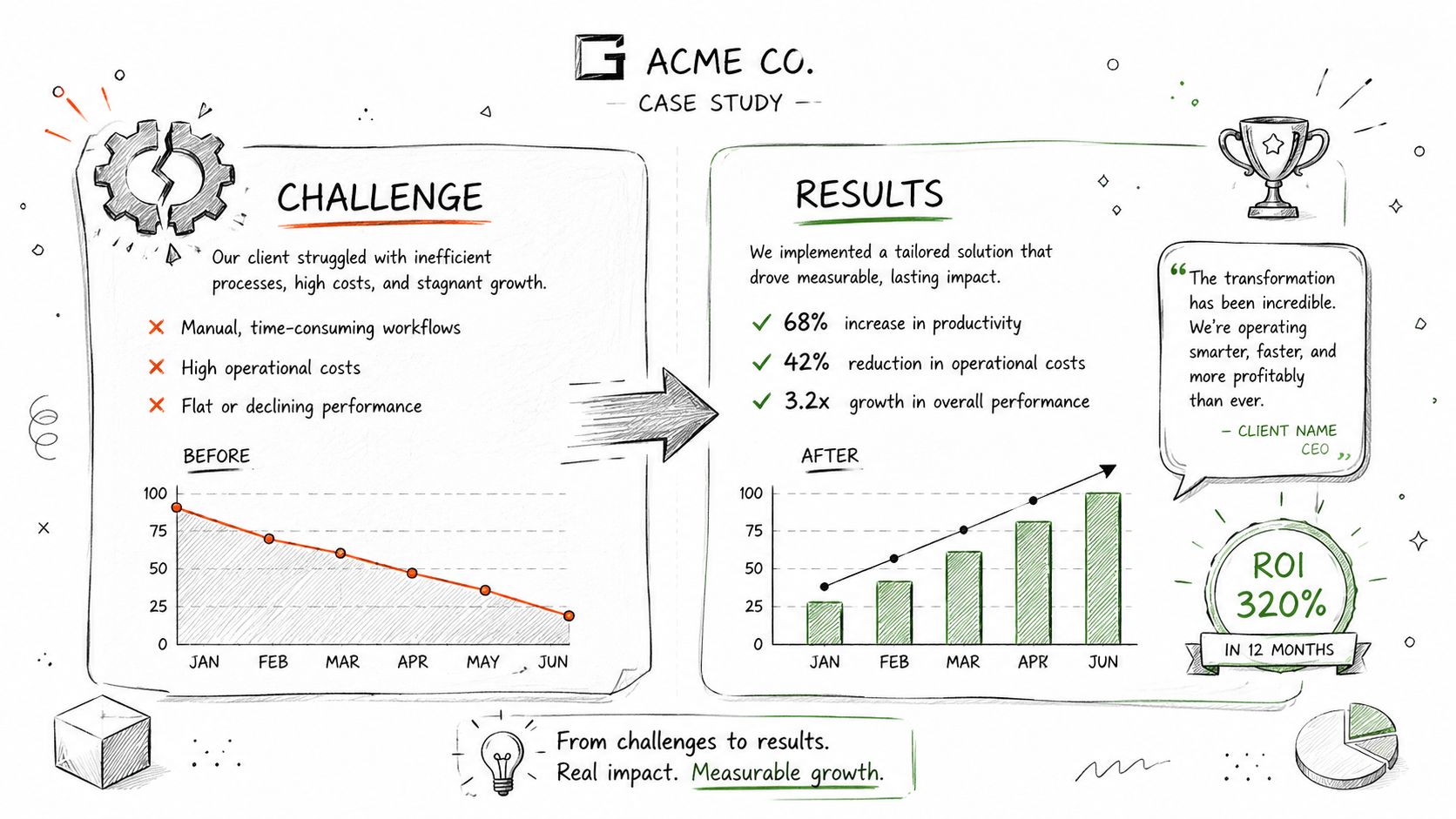
Use the same story in four places, a full PDF for sales, a short landing-page version, a one-minute video summary, and a quote-led LinkedIn post. If the customer is willing, turn their quote into a testimonial graphic and a newsletter highlight. A good case study should also feed nurture emails and retargeting ads.
Practical rule: If the customer story cannot be summarized in one sentence, the case study is too bloated.
Track assisted conversions, case-study clicks from sales emails, time on page, demo requests after reading, and whether prospects mention the customer by name in conversations. The win is not traffic. The win is a faster, more confident buying decision.
A later media asset can carry the same proof in a different way.
Email is where attention compounds because you own the channel. A good newsletter does not try to say everything. It gives readers two or three useful insights, in a voice they recognize, on a schedule they can expect. That consistency matters more than cleverness.
Use email when you need to stay relevant between buying cycles. Segment by role, lifecycle stage, or interest, because the same message should not hit a cold prospect and an active customer. A subscriber who downloaded a guide on lead nurturing should not get the same sequence as someone who attended a product webinar. That is lazy marketing, and it burns trust fast.
Keep the subject line conversational. Keep the body short enough that someone can finish it in one sitting. Make the call to action obvious, but not aggressive. If you are sending a weekly or bi-weekly newsletter, build the habit first and the sale second. People open emails that respect their time.
The smartest B2B newsletters feel like a note from a sharp operator, not a brand bulletin. One insight, one example, one useful link is often enough. The goal is to become familiar, credible, and worth opening again next week.
For more structure, this drip campaign examples for professional services resource is useful for seeing how email sequences support longer buying cycles.
Someone evaluating services needs different content from someone already in the funnel. Someone in operations needs a different example than someone in marketing leadership. If you can map your email sends to intent signals, the content will feel more personal without becoming creepy.
Practical rule: If your send list is one audience, your message will be too broad.
Watch open behavior over time, click patterns by segment, reply rates, and how often subscribers move into sales conversations. You should also watch unsubscribes, because healthy list pruning is better than keeping uninterested contacts. An email program that grows trust will eventually grow pipeline too.
Video wins when it teaches, shows, or persuades faster than text can. For B2B, that means short explainers, product walkthroughs, interview clips, founder commentary, and focused series content. YouTube is the long-term search layer, while LinkedIn and short-form platforms handle distribution and reach.
Do not make random videos. Pick three to five topics you can own, then build repeatable formats around them. A SaaS founder can do product tutorials, customer interviews, and “how we think about X” commentary. A consultant can do myth-busting, teardown videos, and case walkthroughs. The point is consistency. Viewers should know what they will get before they click.
Hooks matter. The first seconds decide whether someone stays. Title the video around a problem or result, use a thumbnail with contrast and clarity, and cut the intro fluff. Then make the body useful enough that the viewer wants the next video too.
One recorded session can become a YouTube upload, a LinkedIn native video, three short clips, a blog embed, and quote snippets for email. Add chapters, publish a transcript, and reuse the strongest lines in other content. That turns the recording into a content engine instead of a one-off asset.
The process is easier if your team has a workflow. Streamline video making with AI is a useful reference point if production speed is your bottleneck.
YouTube search rewards clarity. If the topic is “how to write a B2B case study,” make that obvious in the title and description. If the topic is a customer interview, frame it around the lesson, not just the guest. Then repurpose the same clip with a tighter hook for LinkedIn or TikTok.
Keep the first question in every video simple, sharp, and tied to the viewer's pain.
Track average watch time, completion rate, comments, subscription growth, and clicks from video to landing page. More important, watch whether sales teams start using the videos as pre-call education. If the content shortens the path to trust, it is doing its job.
Webinars work when the topic is specific and the promise is strong. Nobody wants another broad webinar about trends. They will show up for a practical session that solves a live problem, walks through a product use case, or answers a question they are struggling with right now.
Treat the webinar like an event, not a slide deck dump. Promote it early, land the speaker credibility upfront, and keep the presentation tight. Forty-five to fifty minutes with Q&A is enough if the content is sharp. If you make people sit through a long sales pitch, they will not come back.
The best webinar topics sit close to buyer pain. That could be a product demo, an implementation clinic, a teardown of a common mistake, or a panel with customers and practitioners. If the topic can also feed a replay, a follow-up email sequence, and a sales asset, it is worth the effort.
A strong webinar answers one important question well. That might be how to fix a lead nurture flow, how to compare two buying paths, or how to evaluate a service provider. The narrower the promise, the stronger the attendance quality.
Use Mastering viral video tactics as a useful input if you want sharper promotion and cutdown ideas after the live session.
Cut the recording into highlight clips, publish the transcript as a blog post, send the replay to registrants and no-shows, and turn the best answers into social posts. The replay should also feed nurture sequences for people who were interested but not ready to buy. That is where the value often lives.
Track registration-to-attendance rate, live questions asked, replay views, and the number of sales conversations that cite the event. If attendees stay, engage, and ask relevant questions, you have the right topic. If they drop early, tighten the promise and the pacing.
Audio builds trust because it feels direct. A podcast gives you time to explore a point of view, interview strong operators, and create a more personal relationship with the listener. It also works well for busy buyers who listen while commuting or working.
Do not launch a podcast because podcasts sound strategic. Launch one because you can sustain a clear format and a repeatable audience promise. Starting as a guest on established shows is often the smarter move, because it gives you borrowed trust before you invest in your own production. Once you know what topics draw attention, then you can build your own show around them.
Keep the episodes focused. A weekly cadence usually works better than an erratic release schedule because the audience learns when to expect you. Titles and descriptions should be keyword-aware, transcripts should be published, and each episode should map to a theme your market cares about.
A good episode feels like a real conversation, not a scripted performance. The host should know the audience, ask hard questions, and pull useful lessons out of the guest. That is what makes a show worth returning to.
The strongest podcasts also become content libraries. Each episode can become a blog post, a short clip set, a LinkedIn post, and a newsletter issue. That gives the show more reach than a typical team might anticipate.
If your brand stands for a specific point of view, the guests and questions should reinforce it. The listener should finish an episode understanding how you think, not just who you interviewed. That keeps the show aligned with business goals instead of drifting into generic chatter.
Track listens, completion rates, guest-driven distribution, clip performance, and whether the podcast influences warm intros or sales conversations. The goal is not to be everywhere. The goal is to become easier to trust.
Infographics still work because people understand visual hierarchy faster than long paragraphs. In B2B, they are especially useful when you need to simplify a process, summarize research, or make a comparison easier to scan. If your topic involves steps, timelines, frameworks, or data relationships, a visual asset can outperform a text-only explanation.
The best infographics are not crowded. They carry one message clearly. Use strong contrast, readable type, and a headline that tells the reader why the visual matters. If the asset is based on original research or proprietary data, make that obvious and cite the source inside the graphic. If it is designed to be shared, make it easy to embed with attribution.
A good visual should also support broader content. It can anchor a blog post, serve as a social graphic, or show up in a sales deck. The more often your team can reuse the same visual logic, the better the return.
If you have data, turn it into a chart or a simple comparison graphic. If you have a process, turn it into a step map. If you have a framework, turn it into a visual hierarchy. Clarity beats decoration every time.
Do not try to explain your whole business in one image. That is how visuals become clutter. A single infographic should make one idea easier to remember and easier to share.
Practical rule: If someone needs a legend to understand the main point, simplify the design.
Track social shares, embeds, backlinks, dwell time on the hosting page, and whether the visual gets picked up by sales or PR. The right infographic should make your message easier to repeat across channels.
Community is not a vanity play. It is a trust engine. When buyers see peers asking questions, sharing lessons, and interacting with your brand, your company stops feeling like a vendor and starts feeling like a useful hub. That matters more when the purchase is complex and the buying cycle is slow.
Build community around a specific audience problem or identity. Do not create a group because everyone else has one. The best communities are narrow enough to feel relevant and open enough to let members help each other. Your role is to facilitate, not dominate. People return when they get value from peers, access to useful conversations, and a sense that the space is active.
Start small and personal. Reply to comments, welcome new members, ask good questions, and surface member wins. Use AMAs, live discussions, and member spotlights to create momentum. Community feedback should also feed content and product decisions, because the best communities show you what people care about.
People do not join just to lurk forever. Give them prompts, topics, and low-friction ways to contribute. Ask a specific question, share a useful resource, or invite a member to explain how they solved a problem. That gets conversation moving.
Set rules early. Healthy communities need boundaries, especially when salespeople want to pitch and members want the space to stay useful. Celebrate helpful behavior, not just loud behavior. Share failures as well as wins, because that kind of honesty creates real trust.
Look at comment quality, return participation, peer-to-peer replies, event attendance, and whether the community generates content ideas or customer insight. A smaller group that talks is far better than a huge group that stays silent.
Retargeting and nurture funnels are where content turns into movement. A visitor who reads one article, watches one webinar, or downloads one guide is not a closed deal. They need a sequence that matches their interest and helps them take the next step. That is where pixel tracking, email workflows, and segmented follow-up matter.
Build the funnel around what the person consumed. Someone who read a comparison page needs different follow-up than someone who viewed a case study. Someone who downloaded a gated asset should receive a sequence that answers objections, shows proof, and points them toward a clearer next action. Do not send every lead the same generic drip.
The best funnels are simple. A strong landing page, a useful lead magnet, a short email sequence, and clear calls to action are enough to start. Add social proof, a relevant testimonial, and a next-step offer. Keep the spacing sensible so the sequence feels steady, not pushy.
For more concrete examples, see 8 powerful email drip campaign examples to steal in 2026.
Someone who keeps returning should not be treated like a first-time visitor. Use behavior to move high-intent contacts into sales outreach and lower-intent contacts into education. That is how you avoid wasting strong leads and overloading cold ones.
One funnel should have one job, such as booking a demo, scheduling a consult, or moving to a trial. If you ask for too much too soon, the sequence loses focus. If you ask for nothing, it becomes content without commercial purpose.
Watch click paths, conversion rates, sales acceptance, and the quality of leads that move through the funnel. Good nurture turns attention into action. Bad nurture just delays the inevitable unsubscribe.
| Channel / Content Type | Implementation Complexity 🔄 | Resource & Speed ⚡ | Expected Outcomes ⭐ / 📊 | Ideal Use Cases 💡 | Key Advantages ⭐ |
|---|---|---|---|---|---|
| Thought Leadership Articles & Guest Contributions | High, expert research, pitching and long-form writing required 🔄 | Moderate–High resources (research, time); slow ROI (weeks–months) ⚡ | High authority and SEO lift; long-term organic traffic and backlinks ⭐📊 | CEOs, founders, experts seeking credibility and SEO growth 💡 | Builds trust, backlinks, evergreen assets ⭐ |
| LinkedIn Personal Brand Strategy & Profile Optimization | Moderate, ongoing content, profile work, engagement 🔄 | Low–Medium resources; medium speed to visible results (weeks) ⚡ | Increased visibility, direct access to decision-makers, steady lead flow ⭐📊 | Emerging entrepreneurs, leaders, B2B founders 💡 | Targeted professional audience; high B2B ROI ⭐ |
| Case Studies & Success Stories | Moderate, data collection, client permissions, storytelling 🔄 | Moderate resources; faster impact on conversions once published ⚡ | Very high conversion influence (10–15%+); strong sales enablement ⭐📊 | Service businesses, SaaS, consultants closing deals 💡 | Concrete proof that addresses objections; high conversion rates ⭐ |
| Email Newsletter & Segmented Campaigns | Moderate, list building, segmentation, testing 🔄 | Low–Medium resources; fast engagement and measurable ROI (high) ⚡ | Strong nurture and retention; high ROI (industry-leading) ⭐📊 | Founders building communities, email marketers, lead nurture 💡 | Owned audience, personalized outreach, trackable metrics ⭐ |
| Video Content & YouTube Strategy | High, production, editing, channel optimization 🔄 | High resources; slow audience growth but high engagement ⚡ | High engagement and discoverability; strong brand connection and SEO lift ⭐📊 | Content creators, founders, coaches, SaaS product demos 💡 | Visual storytelling, repurpose potential, ranks in search ⭐ |
| Webinars & Virtual Events | High, production, promotion, tech setup and moderation 🔄 | Moderate–High resources; quick lead capture but attendance variance ⚡ | High-quality, sales-ready leads and relationship building ⭐📊 | SaaS, consulting, course creators, product launches 💡 | Interactive demos, direct Q&A, recordable on-demand assets ⭐ |
| Podcast & Audio Content Strategy | Moderate, recording, editing, guest booking and distribution 🔄 | Medium resources; long lead time to grow audience ⚡ | Deep authority and intimate listener relationships; sponsorship potential ⭐📊 | Thought leaders, coaches, founders with storytelling skills 💡 | Intimacy with audience, repurposing into other formats ⭐ |
| Infographics & Visual Data Storytelling | Moderate, design, data sourcing and production 🔄 | Medium resources; quick shareability and backlink potential ⚡ | High engagement and share rates; improved information retention and backlinks ⭐📊 | Data-driven companies, marketing teams, researchers 💡 | Highly shareable, linkable, concise insight delivery ⭐ |
| Community Building & Engagement Strategy | High, ongoing moderation, culture and content work 🔄 | High time investment; slow to scale but high lifetime value ⚡ | Loyal members, user-generated content, advocacy and retention ⭐📊 | Creators, community-first businesses, emerging entrepreneurs 💡 | Defensible advantage, feedback loops, recurring engagement ⭐ |
| Retargeting & Lead Nurture Funnels | High, tracking, automation, segmentation and compliance 🔄 | Medium–High resources; fast conversion lift when optimized ⚡ | Improved conversion rates and measurable ROI (3:1–5:1 typical) ⭐📊 | B2B service providers, SaaS with long sales cycles, e‑commerce 💡 | Automated personalization across channels; strong attribution ⭐ |
Having the right B2B content ideas is only the first step. Real growth comes from turning those ideas into a system that repeats, improves, and supports the buyer journey from first touch to final decision. That means choosing formats with a clear job, matching each one to a channel, repurposing it on purpose, and measuring whether it creates trust, not just traffic.
The fastest way to waste effort is to publish content that sounds smart but does not move a deal forward. The better move is to pick a few formats you can execute well, then build around them. A strong thought leadership article can feed LinkedIn, email, and sales. A good case study can support nurture, retargeting, and closing. A sharp webinar can become video clips, a replay page, and a blog summary. That is how content compounds.
If you are leading a team, the job is not to chase every trend. It is to build a content machine that your buyers use. That requires discipline, a strong point of view, and content that looks and feels relevant to the person on the other side of the screen.
Legacy Builder is built for that kind of execution. The team helps turn personal expertise into consistent content, profile presence, and audience interaction that supports a broader B2B growth strategy. If you want your content to work harder without adding more to your plate, the next step is to define the system and keep shipping against it.
Legacy Builder helps founders, executives, and professionals turn their expertise into consistent content that supports visibility, trust, and lead generation. If you want a practical system for your B2B content ideas, visit Legacy Builder and start building a content engine that fits your brand and your audience.


You could – but most in-house teams struggle with the nuance of growing on specific platforms.
We partner with in-house teams all the time to help them grow on X, LI, and Email.
Consider us the special forces unit you call in to get the job done without anyone knowing (for a fraction of what you would pay).
Short answer – yes.
Long answer – yes because of our process.
We start with an in-depth interview that gives us the opportunity to learn more about you, your stories, and your vision.
We take that and craft your content then we ship it to you. You are then able to give us the final sign-off (and any adjustments to nail it 100%) before we schedule for posting.
No problem.
We have helped clients for years or for just a season.
All the content we create is yours and yours alone.
If you want to take it over or work on transitioning we will help ensure you are set up for success.
We want this to be a living breathing brand. We will give you best practices for posting and make sure you are set up to win – so post away.
Subscribe to our newsletter and get insights on how to grow your personal brand.
