.svg)
Subscribe to our newsletter and get insights on how to grow your personal brand.
Thank you! Your submission has been received!
Oops! Something went wrong while submitting the form.
.svg)


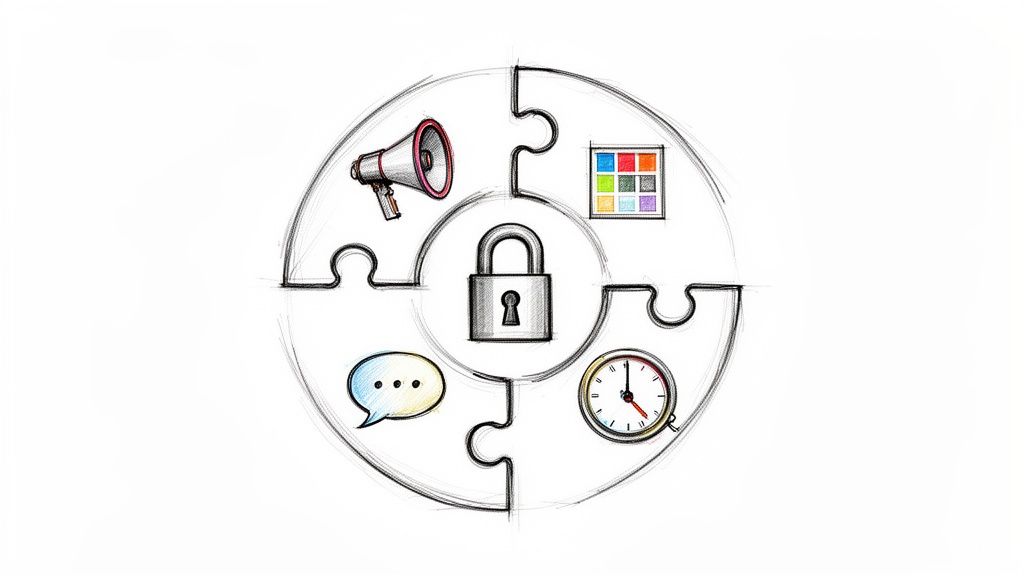
So, what do we actually mean when we talk about brand consistency?
It’s not just a buzzword. It’s the deliberate practice of making sure your message, your look, and your core values are all singing from the same hymn sheet—on every platform, in every interaction. Whether someone is reading your latest LinkedIn post, scrolling through your website, or listening to you on a podcast, the experience should feel unified and reliable.
This alignment is the bedrock of recognition and, more importantly, trust.
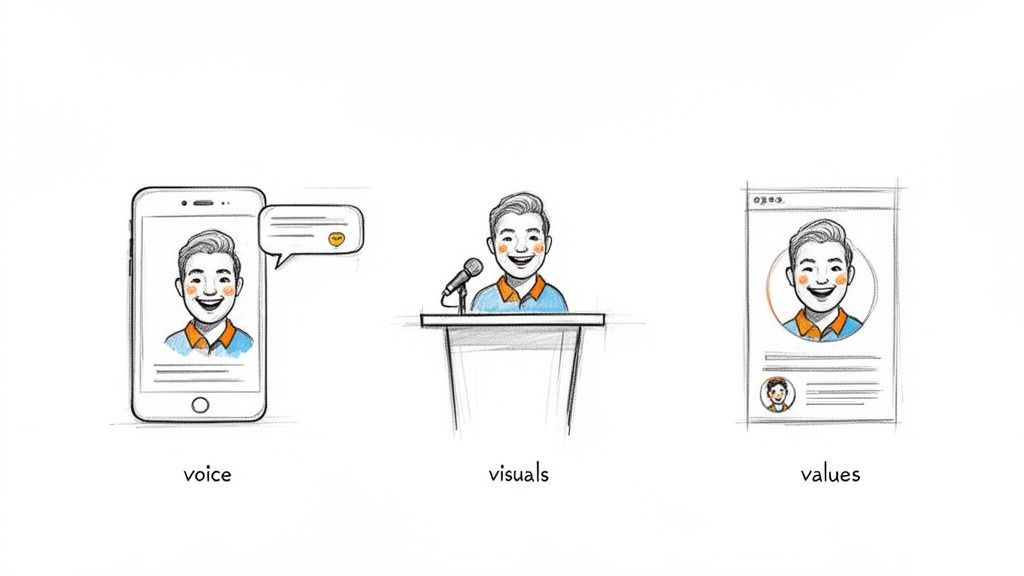
Think of it like a trusted friend. You know how they’ll talk, what they stand for, and the vibe you get when you’re around them. Their personality doesn’t flip-flop from one day to the next, and that’s precisely why you trust them.
Your personal brand needs to work the exact same way.
It’s about showing up with a cohesive identity at every single touchpoint. This isn’t about being robotic or boring; it’s about being dependable. When your audience starts to feel a sense of familiarity every time they see your name, they begin to view you as a stable, credible voice in your space.
That predictability is what builds deep-seated trust.
The whole point of brand consistency is to make your personal brand instantly recognizable and deeply reliable. You get there when every piece of content, every visual, and every message reinforces the same core identity.
When you nail this, a few things happen:
Brand consistency isn’t about following a rigid set of rules. It’s about creating a predictable, authentic experience. It’s the invisible thread connecting what you do to what you’re known for, turning first impressions into lasting trust.
Ultimately, this is how you build an influential personal brand. It takes all your scattered efforts and focuses them into a powerful, unified presence that truly connects with the right people.
And speaking of authenticity, it goes hand-in-hand with consistency. To dive deeper, check out our guide on what is brand authenticity and why it matters.
Let's move past the textbook definition. Brand consistency isn't just about having a pretty logo or sticking to a style guide—it's the engine that powers real business growth. It's a strategic move that directly builds your reputation, creates unshakable trust, and earns you fierce loyalty.
Think about it. When your brand feels reliable, people actually want to listen. They engage, they connect, and eventually, they invest in what you have to offer.
This reliability kicks off a powerful compound effect. Every piece of content, every LinkedIn comment, every single interaction works together to hammer home the same core message. It's this focused effort that makes you stand out in a ridiculously crowded market, turning your personal brand from background noise into an unforgettable authority.
Brand consistency is the bridge between people knowing who you are and people paying you.
Imagine an entrepreneur who’s buttoned-up and formal on LinkedIn, super casual and meme-heavy on Instagram, and deeply technical on their blog. It’s jarring. This kind of disjointed presence forces their audience to constantly re-evaluate who they are, and that confusion quietly kills credibility.
On the flip side, a consistent presence makes the entire journey seamless for a potential client. They know exactly what to expect. They feel secure.
And that security isn't just a warm, fuzzy feeling—it translates into cold, hard cash. A survey of over 400 brand experts revealed that 68% of companies saw a direct revenue boost of 10% or more from brand consistency alone, with many seeing gains between 10-20%. The full report on Oberlo has even more insights if you're curious.
This data tells a critical truth: consistency isn’t a creative cage. It’s a strategic driver that turns brand awareness into a number you can take to the bank. To dig deeper into that connection, check out our guide on how to measure brand awareness and fuel your growth.
By delivering a predictable, high-quality experience every single time, you eliminate friction and doubt. Trust flourishes in that environment, turning passive followers into true advocates for your mission.
Real loyalty isn't built in a day. It's forged through one positive experience after another, stacked on top of each other. When your brand consistently delivers on its promises, you build a powerful sense of dependability.
Your audience learns they can count on you for a certain level of insight, a specific tone, and a clear set of values.
This is how you create a powerful emotional bond. People stop following you just for information—they follow you because they align with what you stand for. That's how you build a real community, not just an audience list.
At the end of the day, consistency is your greatest asset because it makes your brand:
Knowing what brand consistency is feels good, but putting it into practice is what actually gets results.
It’s not some vague, abstract concept. Think of your personal brand as a structure built on four essential pillars. When they're all aligned, you create a memorable, trustworthy presence that holds strong on every single platform.
But if even one pillar is wobbly? The whole thing feels unstable to your audience.
Let's break down each one so you can start looking at your own brand with fresh eyes today.
This is the most obvious pillar, the one people can see and touch. Your visual identity is the collection of design elements that makes your brand instantly recognizable. It’s the consistent look and feel that screams, “This is me,” before anyone reads a single word.
Key components here are pretty straightforward:
If visuals are how you look, your voice is how you sound. This pillar defines the personality, the language, and the tone you use everywhere—from a 2,000-word blog post to a quick reply on X.
It’s about more than what you say; it’s about how you say it.
A consistent voice makes you sound like the same person, no matter where someone finds you. That’s the bedrock of trust. Ask yourself: is your tone witty and informal, or is it more professional and data-driven?
To nail this, you need a deep understanding of what goes into creating a strong personal brand. Our friends at Secta have a great resource that can help you sharpen this pillar.
A brand’s voice should be as unique as a fingerprint. It’s the consistent personality that turns a transactional relationship with an audience into a genuine connection. Without it, you're just another faceless expert.
To bring this to life, let’s compare how the tangible "look" and the intangible "sound" of your brand work together.
As you can see, one isn't more important than the other. They're two sides of the same coin, both critical for building a brand that people remember and trust.
Your core messaging is the substance behind the style. It’s the central theme—your mission, your values, what makes you the go-to expert—that runs through everything you create. This pillar answers the question, “What do I consistently stand for?”
This isn’t about just repeating the same taglines. It's about making sure every piece of content, every talk, and every post reinforces your foundational beliefs. When your messaging is consistent, your audience knows exactly what you’re about and why they should tune in.
If you’re struggling to define your core message, take a look at our playbook for personal branding for leaders.
Finally, the experience. This is where your brand promise meets reality.
It’s all about how you deliver on what you claim, from the quality of your work to the way you interact with your community. Consistency here means your audience gets the same level of value and professionalism every single time they interact with you. No surprises.
This diagram pulls it all together, showing how these pillars build value, leading directly to trust, loyalty, and growth.
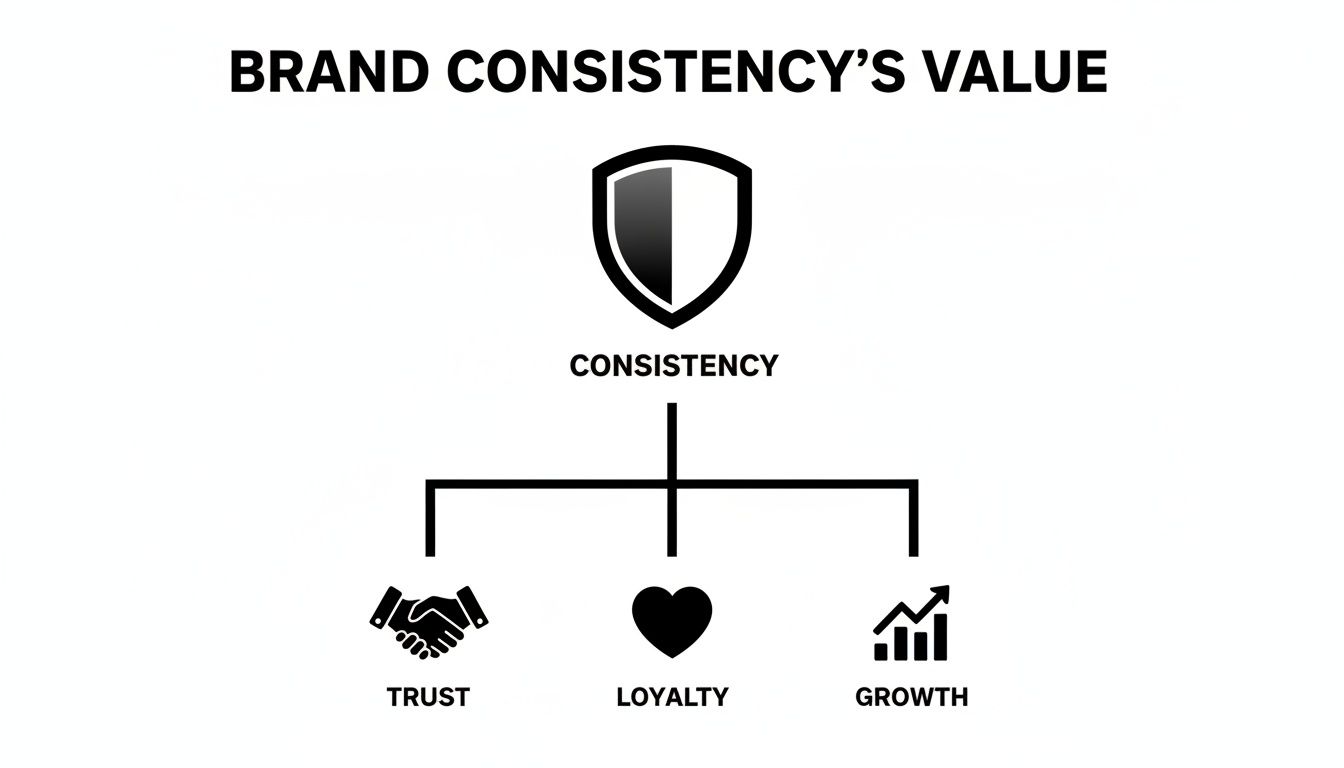
The visual makes it crystal clear: consistency is the foundation. Without it, trying to build lasting trust or loyalty is like building a house on sand.
There’s a massive competitive advantage hiding in plain sight, and it boils down to one simple thing: the gap between expectation and reality.
Your audience craves reliability. They want to know that the person they see on a keynote stage is the same one they'll get in their inbox. They want to know what to expect. Simple as that.
But here’s the problem—most brands just aren't delivering. This disconnect between what people want and what they actually get creates a huge opening for entrepreneurs and executives who are willing to just be dependable.
This isn’t about just having the same logo everywhere. It’s about delivering a predictable, high-quality experience that turns casual followers into die-hard fans.
Let's be real: your audience has high standards. They expect a seamless journey whether they’re on your website, your LinkedIn, or your Instagram. But more often than not, their experience is clunky and inconsistent. This isn't just a minor hiccup; it’s a breakdown of trust that leaves a sour taste.
The numbers don't lie. Data from Think with Google paints a clear picture: while 62% of people expect a consistent experience from brands across all their channels, only 42% feel like brands are actually pulling it off. You can dive deeper into these consumer trends and see the full picture on consistent experiences for yourself.
That 20-point gap isn't just a number on a page. It's a wide-open playing field. For every brand that drops the ball, there’s a chance for a consistent leader to step in and build the real, lasting relationship the audience was looking for in the first place.
Look at it this way: every single time a competitor delivers a disjointed or unpredictable experience, they’re basically telling their audience to go find someone more reliable. By simply doing what you say you’ll do—over and over again—you immediately stand out. You become the trustworthy voice in a sea of digital noise.
Mastering what is brand consistency is how you win. It allows you to:
Closing this gap means you stop making your audience work to figure out who you are. Instead, you give them a clear, dependable, and authentic experience that cements your authority and turns followers into a true community.
Building a consistent brand is a conscious effort, but tearing it down? That often happens by accident. The real damage comes from the small, seemingly harmless slip-ups that quietly chip away at the trust you’ve worked so hard to earn. These missteps create friction, confuse your audience, and ultimately make your brand feel less reliable.
Recognizing these common pitfalls is the first step toward dodging them. The truth is, even the sharpest leaders fall into these traps without a clear game plan, turning what could be a powerful personal brand into a forgettable and disjointed mess.
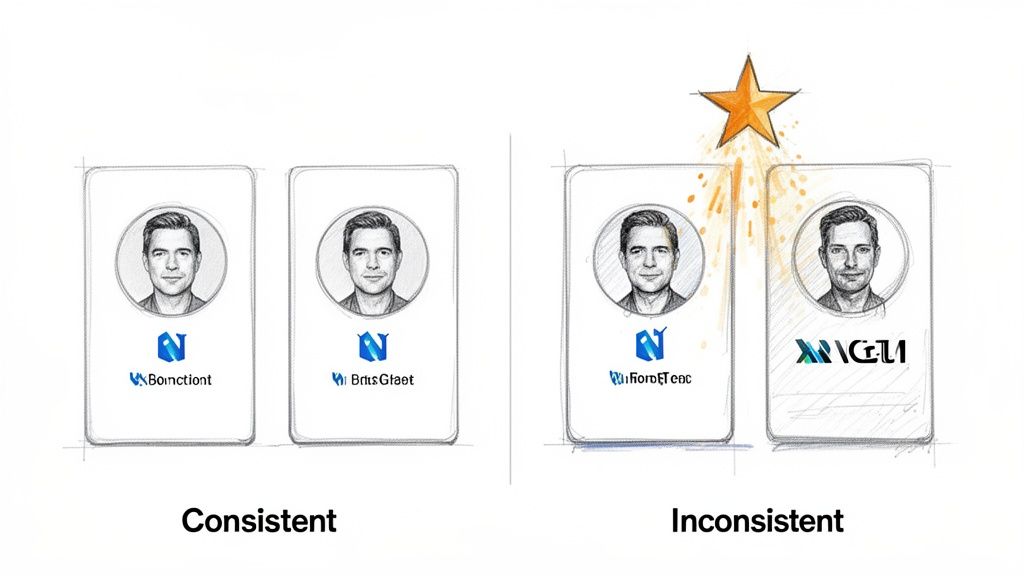
One of the most jarring mistakes is having a split personality online. You can't be a buttoned-up, data-driven expert on LinkedIn and then suddenly pivot to a casual, meme-slinging persona on X (formerly Twitter). This kind of tonal whiplash forces your audience to constantly ask themselves, "Which one is the real you?"
This isn’t about being a robot and posting the exact same thing everywhere. You should absolutely adapt your content for the platform. But your core personality—your foundational brand voice—has to stay the same. The goal is for someone to recognize your "sound" whether they're reading a 2,000-word article or a 280-character post.
Your visuals are your brand’s first handshake, and inconsistency here is a major red flag. Using different headshots from different eras, outdated logos, or a clashing color palette across your digital footprint just makes you look disorganized. It screams a lack of attention to detail, which can make people question your professional abilities.
The same goes for your content. A lack of a clear strategy leads to random, off-brand posts that feel scattered and aimless. Without defined messaging pillars, you fail to reinforce what you're an expert in, leaving your audience wondering what you actually stand for.
Inconsistency is the enemy of memory. A fragmented brand forces your audience to re-learn who you are with every interaction, preventing the deep-seated recognition that builds lasting trust and authority.
Another huge problem crops up when you're working with a team—a ghostwriter, a designer, a social media manager—without a shared brand guide. When everyone operates from their own interpretation of your brand, the result is a disjointed mess. It creates a fractured, confusing experience for anyone trying to follow you.
In today's world, a massive mistake is pumping out low-quality, obviously AI-generated content. Understanding what AI Slop is and how to avoid it is critical for maintaining authenticity and trust.
Here are the top mistakes to watch for:
Avoiding these common errors isn’t about being rigid; it’s about being reliable. Fixing them is non-negotiable if you want to maintain the credibility that defines a truly powerful personal brand.
Knowing what brand consistency is and actually doing it are two different things. This is where most brands fall short and why so many stay forgettable.
It’s time to stop talking theory and start taking action.
I’m not talking about some massive, months-long project. This is about small, deliberate steps that build on each other to create a powerful, unified presence. This is the exact roadmap I use with busy leaders and entrepreneurs to turn scattered efforts into a cohesive brand that actually works for them.
Before you can build, you have to know what you’re working with. A brand audit is just a simple inventory of everything you’ve got out there online.
Don’t overthink this. Just open a doc and start pulling links.
Your goal here is simple: see your brand the way your audience does. Hunt for the obvious disconnects in your visuals, your tone, and what you’re actually saying.
This quick exercise will immediately show you where the biggest gaps are. The point isn’t to fix everything at once, but to find the most glaring issues and tackle those first.
Okay, now it’s time to get intentional. Instead of letting your brand just happen, you’re going to define it on your terms. This gives you a North Star for every single thing you create.
Let’s keep it simple and focus on three pillars:
A brand audit shows you where you are, but defining your pillars tells you where you're going. The simple act of writing this stuff down is the first real step toward building a brand people remember.
You don’t need some 50-page brand bible. A one-page document is more than enough to keep you (and anyone on your team) on track. This becomes your go-to reference for what brand consistency means for you.
Here’s what to include:
This little guide is a game-changer. It makes sure that whether you’re whipping up a social media post or writing an article, it always feels like it came from you.
Consistency isn't just about how you look or sound—it's about how often you show up. This is where most people fail.
A content calendar is your best friend here. It doesn't have to be fancy; a simple spreadsheet will do the trick.
Map out your posts based on your messaging pillars. This stops you from posting randomly and ensures you’re constantly reinforcing your expertise. It’s this methodical execution, day in and day out, that builds real authority over time.
Ready to stop guessing and start building an influential personal brand that truly reflects your vision? Legacy Builder transforms your expertise into high-impact content, ensuring your voice is heard consistently and authentically. Let's build your legacy together.


You could – but most in-house teams struggle with the nuance of growing on specific platforms.
We partner with in-house teams all the time to help them grow on X, LI, and Email.
Consider us the special forces unit you call in to get the job done without anyone knowing (for a fraction of what you would pay).
Short answer – yes.
Long answer – yes because of our process.
We start with an in-depth interview that gives us the opportunity to learn more about you, your stories, and your vision.
We take that and craft your content then we ship it to you. You are then able to give us the final sign-off (and any adjustments to nail it 100%) before we schedule for posting.
No problem.
We have helped clients for years or for just a season.
All the content we create is yours and yours alone.
If you want to take it over or work on transitioning we will help ensure you are set up for success.
We want this to be a living breathing brand. We will give you best practices for posting and make sure you are set up to win – so post away.
Subscribe to our newsletter and get insights on how to grow your personal brand.
