.svg)
Subscribe to our newsletter and get insights on how to grow your personal brand.
Thank you! Your submission has been received!
Oops! Something went wrong while submitting the form.
.svg)


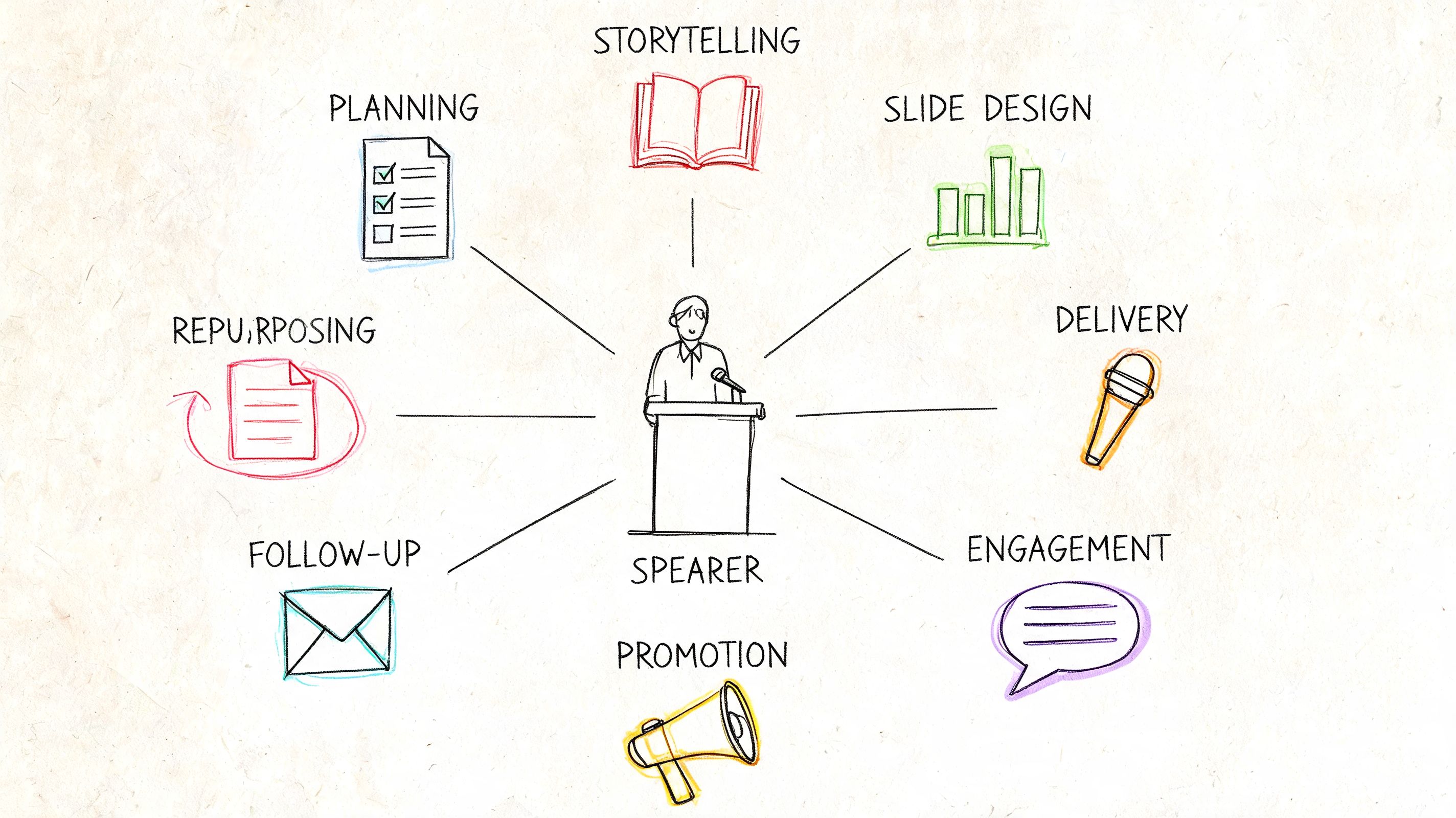
Stop giving presentations like they disappear the moment you leave the stage. They don't. Every talk becomes part of how people remember your expertise, describe your value, and decide whether to trust you later.
You've probably heard the standard advice. Build clean slides. Practice your delivery. Stand up straight. Those things matter, but they're not the point. A conference presentation isn't a performance trophy. It's a brand asset. If you treat it like a one-time event, you waste the room, the recording, the audience reaction, and the authority boost that can follow for months.
That's the myth I want to kill. Polished slides alone won't build a reputation. A flawless delivery alone won't create demand. What works is a talk designed to travel. It needs a clear point, a memorable point of view, and a structure you can turn into clips, articles, outreach, and follow-up content after the event. That's how speaking starts compounding.
If you want a smarter framework for building talks with strategic purpose, study these effective keynote strategies. Then stop obsessing over looking impressive and start building something reusable.
Here's the playbook I'd use.
Most speakers dump information on people and call it value. Audiences don't remember information dumps. They remember tension, stakes, decisions, and change.
If you want your conference presentation tips to work, start with a story spine. What problem did you face, what did you learn, and why should this room care right now? That structure beats a résumé recap every time. Brené Brown built trust by talking about vulnerability through lived experience, not detached theory. Satya Nadella reshaped Microsoft's public narrative by tying leadership to empathy and transformation, not just product updates.
Use your own material. Talk about the failed launch, the hiring mistake, the customer objection you misunderstood, the moment your strategy broke, or the belief you had to unlearn. Those details make you credible because they sound lived, not manufactured.
The strongest story in a conference setting isn't self-centered. It's transferable. Your audience should hear your experience and immediately map it onto their own business, team, or career.
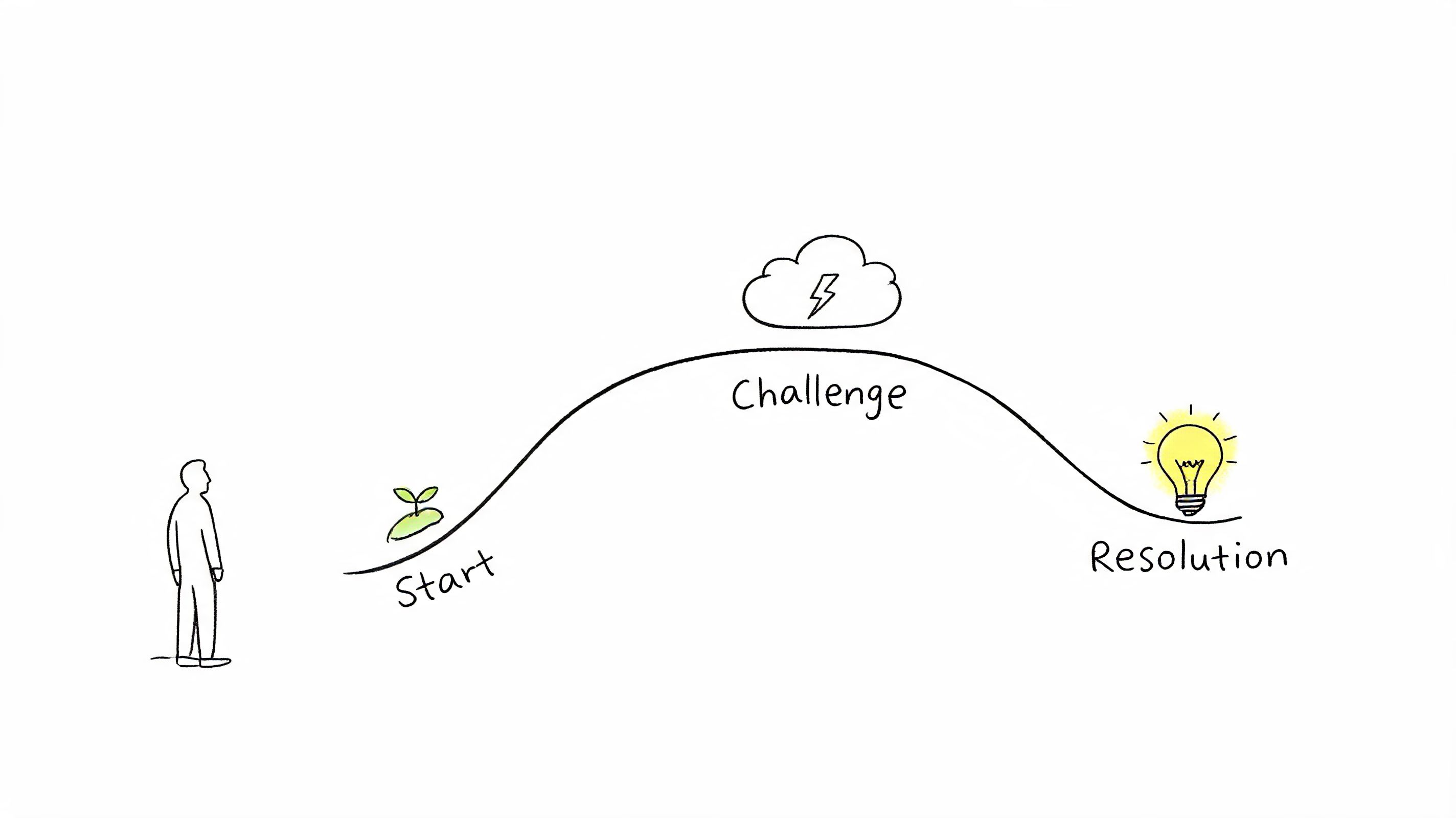
That means you need a simple arc:
Practical rule: If your story only proves you're impressive, cut it. If it helps the audience make a better decision, keep it.
Storytelling also helps with retention in hybrid and digital settings. A projected 2025 EventMB report says 55% of major events are now hybrid, and Zoom data cited in the same background notes that attention drops faster in digital environments. That's exactly why founders and executives need narrative structure instead of slide narration. The best way to sharpen that skill is to study approaches like master storytelling for personal branding success.
Bad slides don't make you look prepared. They make you look insecure.
I see it all the time. Founders, executives, and subject matter experts cram every idea onto the screen because they're afraid to leave anything out. That habit kills attention and weakens authority. Your audience starts reading, stops listening, and remembers neither. If you want your talk to strengthen your personal brand after the event, your slides need to work as sharp visual assets, not crowded speaker notes.
Visual support matters. Presentations with visual aids are 43% more persuasive according to Duarte's presentation analysis. I'd go one step further. Good slides improve the live talk and increase the odds that someone screenshots, shares, or reuses your ideas later. That matters if you want one conference appearance to keep building trust long after you leave the stage.
A strong conference deck looks restrained on purpose. Each slide should carry a single job. Make one claim, show one proof point, or reinforce one idea.
Use this standard:
Steve Jobs understood this. Simon Sinek does too. Their slides frame attention. They don't compete for it.
Your audience should never read a paragraph while you're speaking. If they're reading, they're gone.
That rule also protects the afterlife of your presentation. Conference decks rarely stay in the room. They get photographed, clipped into recap posts, turned into LinkedIn carousels, and dropped into internal team docs. Clean slides travel. Messy slides die on contact.
Test the deck in the actual format people will see. Projector brightness can wreck subtle colors. Small fonts disappear in the back row. Weak contrast makes data useless. Skip decorative animations and transitions unless they explain a sequence or change over time.
One more rule I give every client. Build slides that still make sense as isolated assets. If someone shares slide 12 without your narration, it should still communicate a clear idea. That's how you turn a conference presentation from a one-time performance into a library of brand-building content.
Anxiety drops when uncertainty drops. That is the primary job of preparation.
I see too many speakers rehearse a neat, uninterrupted version of the talk and call that readiness. Conference rooms do not cooperate. Clickers fail. Intros run long. A question derails your pacing. If you want to look credible, prepare for the room you will face.
For a standard 10 to 15 minute slot, keep the structure tight. A useful rule is one slide per minute, which Lumivero recommends in its guide to presenting statistical results. That constraint forces you to choose the strongest ideas instead of dumping your notes onto the screen. It also protects the recording, the screenshots, and the post-event clips you will reuse later as brand assets.
Preparation should cover delivery, timing, and asset quality at the same time.
Stand up and run the session out loud. Use the clicker. Advance the slides yourself. Practice the opening until it sounds natural, not memorized, because your first 60 seconds often become the clip people share, quote, and remember.
Then pressure-test the talk from four angles:
The guidance cited by Lumivero, drawing from American Statistical Association presentation advice, also recommends ending 1 to 2 minutes early and keeping slides readable. I agree. Finishing with a margin changes your whole delivery. You sound calmer, you answer questions better, and you avoid the rushed close that makes a strong talk feel unfinished.
One habit separates speakers who build authority from speakers who just survive the slot. Create a hidden appendix for Q&A, proof points, data cuts, and implementation details. Duarte makes the same case in its advice on how to handle audience questions during a presentation. You may never show those backup slides. That is not the point. The appendix gives you command in the room and creates extra material you can turn into follow-up posts, carousels, recap emails, and future talks.
Good preparation does more than reduce nerves. It gives your presentation a longer shelf life. The better you prepare, the easier it becomes to turn one conference appearance into repeatable proof of expertise.
Audience engagement is not a nice extra. It is the difference between giving a talk people forget by lunch and giving one that keeps working for your brand long after the event ends.
A conference presentation should create participation on purpose. Ask people to commit to a position. Give them a short reflection prompt. Run a live poll. Use a show-of-hands question that exposes the split in the room. Those moments do two jobs at once. They hold attention in real time, and they generate language, objections, and reactions you can reuse in posts, clips, and follow-up content.
Q&A deserves the same level of planning as your opening and close. I treat it as a visibility asset, not leftover time. The audience is watching how you think under pressure, how you handle disagreement, and whether your ideas hold up without slide support. That is personal branding in plain view.
Your answers shape your reputation faster than your deck does. A clear, concise response signals authority. A scattered answer makes people question your expertise, even if your material was strong.
Build your Q&A around a simple method:
That last point matters more than speakers realize. Good Q&A lines often become the part people post on LinkedIn, mention in recap emails, or quote in private introductions. If you want stronger speaking ROI, improve your live responses as aggressively as your slides. A practical place to start is how to improve verbal communication skills.
Hostile questions are part of the job. Handle them without getting defensive. I use a simple pattern: acknowledge the challenge, define the condition where your recommendation works, then explain where you would adjust it. A response like, “Fair pushback. This works best when the team already has buy-in. If that is missing, I would start with a smaller pilot,” keeps you credible and in control.
Interactive moments also give you material for repurposing. A sharp audience question can become a follow-up post. A poll result can become a slide for your next talk. A thoughtful objection can become a carousel, a newsletter topic, or a short video. That is why I do not treat engagement as crowd management. I treat it as content capture and authority building.
A strong Q&A shows that your expertise survives contact with real people. That is what makes a conference talk a brand asset instead of a one-off performance.
Public speakers often try to fix nerves by acting more polished. That usually makes them stiffer. Presence beats polish.
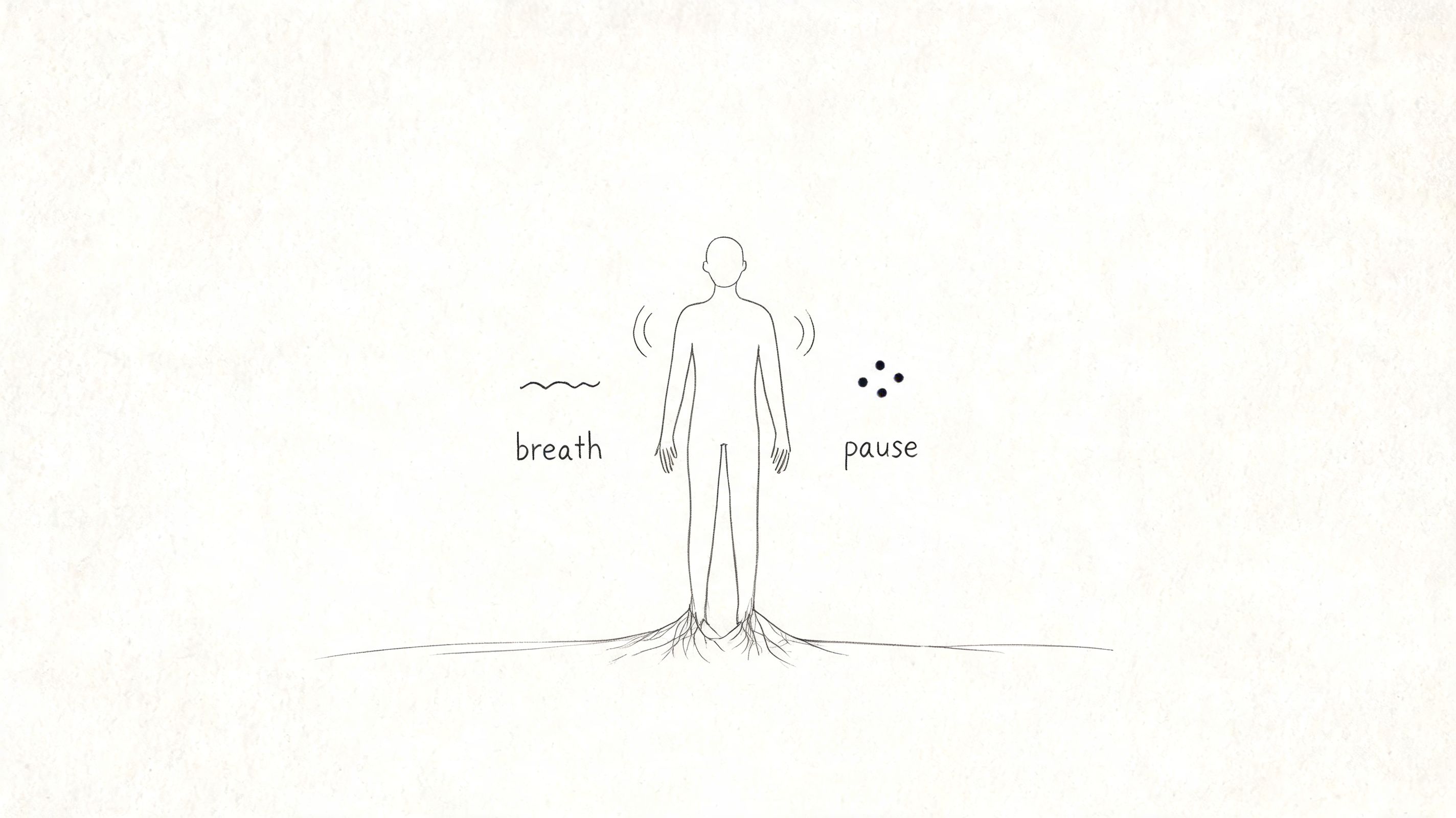
Audiences don't connect with perfect. They connect with someone who looks grounded, clear, and comfortable in their own skin. Michelle Obama does this well. So does Brené Brown. They don't speak like they're reciting. They speak like they mean it.
Your body tells the audience whether to trust your message. If you pace too fast, grip the clicker like a lifeline, and rush to fill every silence, people feel your anxiety before they process your words. Slow down and own the space.
A strong delivery starts before you touch the mic. Build a routine that settles your system and sharpens your focus.
I like a simple sequence:
This is also where verbal skill matters. If your spoken delivery feels flat, clipped, or over-rehearsed, work on the basics of pacing, articulation, and emphasis through resources on how to improve verbal communication skills.
One more point. Don't chase nonstop intensity. Pauses create authority. Eye contact creates trust. Natural gestures create credibility. You are not trying to impress the room with theatrical energy. You are trying to make the room feel safe paying attention to you.
Here's a useful visual explainer if you need to reset your speaking mechanics:
Most speakers leave value on the table. They give the talk, post one photo, and move on. That's a waste.
A strong conference presentation can feed your content pipeline for months. The keynote becomes short video clips. The Q&A becomes a LinkedIn post series. The framework becomes a newsletter. The story becomes a podcast segment. The summary becomes a one-page lead magnet. One room can generate an entire authority campaign if you plan for repurposing before you speak.
Gary Vaynerchuk built a lot of his reach by turning live appearances into endless content fragments. TED talks spread because they're designed to travel beyond the room. You should think the same way even if your conference is smaller.
Don't wait until after the event to decide what content to make. Decide in advance what assets you want and what team or tools will capture them.
Use a simple repurposing stack:
The strategy matters as much as the recording. If you want a framework for turning one talk into a larger visibility engine, use this guide on how to repurpose content and multiply your reach.
I'd also make your slides pull double duty. Design them so individual slides can become social graphics. Write your talk in strong, standalone lines. Build one clear framework people can screenshot, share, and repeat. That's how conference presentation tips become brand growth tactics instead of event-day tactics.
A polished talk means very little if people leave with nothing to do. Conference presentations earn real value when the audience can repeat your core idea, apply it fast, and remember who gave them the shortcut.
People do not need more information. They need compression.
Lumivero's summary of American Statistical Association guidance points to a smart structure for clarity: define the problem, acknowledge prior work, explain your approach, show the added value, and end with next steps. I use that sequence far beyond research talks because it forces discipline. It keeps speakers from dumping ideas and calling it insight.
Your close should do three jobs at once. It should help the room act, help your message spread, and help your brand stick. That is the difference between a talk that gets polite applause and a talk that keeps creating opportunities weeks later.
I recommend a closing built around these three moves:
Keep the number of takeaways tight. A crowded ending weakens recall and kills momentum. I want the audience leaving with one memorable idea, two or three supporting points, and one obvious next step.
That approach also strengthens your authority. Clear takeaways are a core part of thought leadership that builds real influence over time, because people remember and repeat frameworks that simplify decisions.
Then turn those takeaways into assets. Your closing slide can become a social carousel. Your action step can become an email CTA. Your three supporting points can become short video clips. If you want a practical model for that, this guide shows how to maximize reach through smart content recycling. The best conference presentation tips do more than improve the room. They give you reusable building blocks for a long-term brand.
One good talk can open doors. A pattern of strong talks builds a market position.
Too many founders and executives treat speaking as random exposure. They say yes to whatever event lands in the inbox. That's backwards. Conference participation should serve your positioning. You want the right rooms, the right audience, and a message you refine over time until people start associating your name with a clear idea.
Think about how Simon Sinek kept reinforcing a consistent message around purpose and leadership. Or how Brené Brown moved from one influential talk into a broader reputation anchored in a few recognizable themes. Repetition, done well, builds authority. Reinvention every week does not.
You don't need more conferences. You need better conference fit.
I'd make speaking decisions through four filters:
One practical benchmark comes from the AEA forum guidance. It notes that 61% of top-rated speakers use single-page handouts with notation, data sources, and contact QR codes in conference settings. That's worth borrowing because it turns a talk into an ongoing connection point without forcing a hard sell.
Authority compounds when you document your thinking, sharpen one signature talk, and use each appearance to strengthen the same core reputation. If you want that process to become intentional, study what thought leadership really means and how influence is built.
The goal isn't to be seen everywhere. The goal is to be remembered for something specific wherever you show up.
| Title | Implementation Complexity 🔄 | Resource Requirements ⚡ | Expected Outcomes ⭐📊 | Ideal Use Cases 💡 | Key Advantages 📊 |
|---|---|---|---|---|---|
| Master the Art of Storytelling to Build Authentic Connection | Medium, craft narrative arc and edit for focus | Low–Medium, time for writing and rehearsal | High ⭐, stronger emotional connection and recall | Keynotes, personal-brand talks, vision-driven sessions | Differentiation, authenticity, increased shareability |
| Design Visually Compelling Slides That Enhance Rather Than Distract | Medium–High, design skills or vendor needed | Medium–High, design tools, assets, testing time | High ⭐, improved comprehension and perceived professionalism | Data presentations, product launches, brand-led talks | Polished visuals, reusable content, reduced cognitive load |
| Prepare Thoroughly to Reduce Anxiety and Increase Impact | High, multiple rehearsals, audience research, contingencies | High, time, practice runs, venue/tech checks | Very High ⭐, greater fluency, lower anxiety, smoother delivery | High‑stakes keynotes, demos, media appearances | Reliability under pressure, contingency readiness |
| Engage Your Audience Through Interactive Elements and Q&A | Medium–High, design interaction points and manage flow | Medium, polling tools, facilitation, tech setup | High ⭐, increased attention, UGC, and real‑time insights | Workshops, panels, training sessions, interactive keynotes | Higher retention, community building, adaptable content |
| Deliver with Presence and Master Your Nervous System | Medium, develop presence habits and regulation routines | Low–Medium, coaching, practice, pre‑event routines | High ⭐, authentic delivery, clearer voice and pacing | Any live speaking, vulnerable or emotional topics | Trust building, consistent performance, reduced burnout |
| Leverage Conference Presentations as Multi-Platform Content Assets | Medium, plan recordings and repurposing workflow | Medium–High, recording/editing, rights, distribution | Very High ⭐, multiplied reach, lead gen, SEO benefits | Thought leadership, marketing funnels, content programs | ROI multiplication, long‑term content pipeline |
| Establish Clear Takeaways and Actionable Next Steps | Low–Medium, distill content to 3–5 actionable points | Low, one‑sheets, CTAs, follow‑up infrastructure | High ⭐, increased audience action and measurable impact | Educational talks, sales presentations, workshops | Behavior change, easier follow‑up, higher conversion |
| Build Long-Term Authority Through Strategic Conference Participation | High, multi‑year planning and consistent quality | High, time, travel, networking, proposal effort | Very High ⭐, compounding credibility and opportunities | Career/brand authority building, industry leadership | Sustained visibility, network growth, competitive advantage |
A great conference presentation ends. A strong personal brand keeps speaking after you've left the stage.
That's the shift I want you to make. Stop judging your talk only by applause, compliments, or whether you felt nervous. Judge it by what it builds. Did it make your expertise easier to understand? Did it sharpen your positioning? Did it create content you can reuse? Did it give people a reason to follow you, contact you, or invite you again? That's what turns speaking into an asset.
The best conference presentation tips aren't just about stagecraft. They're about strategic advantage. A good talk gives the audience clarity in the room. A smart talk also gives you reusable stories, clips, frameworks, proof of authority, and relationship openings after the event. That's where the most significant return sits.
If you take only a few ideas from this list, take these. Tell real stories instead of reciting polished abstractions. Use slides that support your message instead of duplicating it. Rehearse for pressure, not perfection. Build Q&A into the strategy. Regulate your nervous system so your presence feels grounded. Package every talk for repurposing. End with actions people can use. Then choose conferences with the same care you'd use to choose business partnerships.
Do that consistently and your presentations stop being isolated appearances. They become a body of work. People start hearing the same clear message from you in different rooms, across different formats, over time. That repetition builds trust. Trust builds demand. Demand builds authority.
This matters even more for founders, operators, executives, and creators who don't want to live on social media all day. A conference stage can generate the raw material for months of high-quality content when you plan it correctly. One well-built talk can feed your newsletter, your LinkedIn strategy, your website, your outreach, and your future speaking proposals.
That's how you build a legacy from a live event. Not by chasing polished performance for its own sake, but by turning each presentation into a durable piece of your public identity.
If your next talk is coming up, don't just ask, “How do I give a better presentation?” Ask a better question. “How do I make this talk keep working after the room is gone?” That question changes everything.
If you're ready to turn speaking engagements into a long-term authority and content engine, Legacy Builder can help you do it with strategy, structure, and content that sounds like you. They specialize in transforming your ideas, stories, and expertise into authentic brand assets that keep building influence long after the conference ends.


You could – but most in-house teams struggle with the nuance of growing on specific platforms.
We partner with in-house teams all the time to help them grow on X, LI, and Email.
Consider us the special forces unit you call in to get the job done without anyone knowing (for a fraction of what you would pay).
Short answer – yes.
Long answer – yes because of our process.
We start with an in-depth interview that gives us the opportunity to learn more about you, your stories, and your vision.
We take that and craft your content then we ship it to you. You are then able to give us the final sign-off (and any adjustments to nail it 100%) before we schedule for posting.
No problem.
We have helped clients for years or for just a season.
All the content we create is yours and yours alone.
If you want to take it over or work on transitioning we will help ensure you are set up for success.
We want this to be a living breathing brand. We will give you best practices for posting and make sure you are set up to win – so post away.
Subscribe to our newsletter and get insights on how to grow your personal brand.
