.svg)
Subscribe to our newsletter and get insights on how to grow your personal brand.
Thank you! Your submission has been received!
Oops! Something went wrong while submitting the form.
.svg)


If you've ever been told you're "too sensitive," you're in the right place. In a world that often prioritizes ruthless efficiency, your innate ability to feel deeply and understand others is not a liability; it's a rare and valuable asset. True empaths possess an emotional intelligence that allows them to connect, heal, and innovate in ways others simply can't.
But channeling this superpower into a fulfilling and profitable career requires a strategic approach. It’s about finding roles where your sensitivity isn't just tolerated, but celebrated and rewarded. This guide moves beyond a simple list of professions; it’s a strategic roadmap to the best jobs for an empath, designed to help you build not just a career, but a lasting legacy.
We will explore eight powerful career paths where your unique abilities can thrive. For each role, we'll detail why it aligns with your empathic nature, how to position your personal brand for success, and crucial tips for setting boundaries to protect your energy. Let's start the process of turning your greatest strength into your most significant professional achievement.
For an empath, the ability to intuitively understand another person's emotional state and motivations is a powerful asset. Executive coaching is one of the best jobs for an empath because it directly channels this ability into helping leaders grow. You act as a strategic partner to C-suite executives, founders, and high-potential managers, guiding them through complex business challenges and personal development hurdles. Your work involves active listening and asking insightful questions to help clients uncover their own solutions, improve their emotional intelligence, and build a more authentic leadership style.

Unlike consulting, where you provide direct answers, coaching is about unlocking a client’s potential. You create a safe, confidential space for leaders to explore vulnerabilities, test new behaviors, and align their actions with their core values. This process is deeply rewarding, as you witness firsthand the positive ripple effect your client’s growth has on their teams and organization.
Boundary-Setting Tip: As a coach, you will absorb a lot of your clients' stress. Schedule "buffer" time between sessions to decompress. A 15-minute walk, meditation, or journaling can help you emotionally reset and avoid carrying that energy into your next meeting.
For an empath, the profound ability to feel and understand another's emotional landscape is more than a trait; it's a tool for healing. Working as a licensed therapist or counselor is one of the best jobs for an empath as it places this intuitive gift at the heart of the profession. You guide individuals, couples, and families through their most difficult challenges, including trauma, anxiety, and depression. Your work involves creating a secure and non-judgmental space where clients feel safe enough to explore their deepest vulnerabilities and develop healthier coping mechanisms.
Unlike friendship, which is reciprocal, the therapeutic relationship is intentionally focused on the client's growth. As a therapist, your empathy is structured by clinical training, allowing you to not only connect with a client's pain but also to guide them toward insight and change. This role is deeply meaningful, as you witness people reclaim their lives, mend relationships, and build a stronger sense of self, all because you provided a space for authentic connection and professional guidance.
Boundary-Setting Tip: The emotional weight of therapy is significant. Protect your energy by creating firm boundaries around your schedule. Avoid checking client emails after work hours and build a strong peer support network of other therapists to process vicarious trauma and avoid burnout.
For empaths driven to help others find purpose and direction, becoming a career or life coach is a natural fit. This role allows you to use your intuitive understanding of people's hopes, fears, and motivations to guide them toward a more fulfilling life and career. You work one-on-one with clients to clarify their goals, dismantle limiting beliefs, and create concrete plans for personal and professional growth. This is more than just giving advice; it’s about empowering individuals to find their own authentic path.
Unlike a consultant who provides answers, a coach asks the right questions to help clients discover their own strengths and values. You create a supportive, non-judgmental space where people can explore their true aspirations without external pressure. The reward comes from seeing your clients achieve breakthroughs, whether it's landing a dream job, starting a business, or simply finding more joy and meaning in their daily lives. For those considering this path, understanding the value of a career coach can be a crucial first step.
Boundary-Setting Tip: Your clients will share deep personal struggles, which can be emotionally draining. Define clear office hours and communicate them upfront. Avoid checking client messages outside of these hours to protect your personal time and maintain the professional container of the coaching relationship.
For an empath, the ability to deeply understand another person’s needs and frustrations is a core strength. UX research and design is one of the best jobs for an empath because it places this skill at the center of creating digital products. Your role is to bridge the gap between technology and human emotion, ensuring that websites, apps, and software are intuitive, accessible, and genuinely helpful. You achieve this by conducting interviews, observing user behavior, and translating those human stories into design solutions.

Unlike a purely technical role, a UX professional acts as the user's advocate within a company. You are responsible for uncovering unspoken pain points and championing designs that solve real problems. Pioneers like Don Norman and Brenda Laurel have built their careers on this foundation of "emotional design," proving that the most successful products are those that resonate with users on a human level. It’s a rewarding field where you see the direct impact of your empathy on making technology better for everyone.
Boundary-Setting Tip: During user interviews, you will hear many stories of frustration and difficulty. Practice "compassionate detachment." Acknowledge and validate the user's feelings without internalizing their emotions as your own. After a series of interviews, take a break to engage in a non-digital activity to clear your head.
For an empath, a career in the nonprofit sector is a direct path to aligning work with deeply held values. Roles like Program Director or Development Officer are among the best jobs for an empath because they are built on understanding human needs and inspiring action. You work daily with a wide range of people: donors, volunteers, staff, and the community members your organization serves. Your innate ability to connect with others' emotions and motivations is the core of the job.
As a Program Director, you translate the organization’s mission into real-world impact. As a Development Officer, you build bridges between passionate donors and the causes they care about through authentic storytelling. Both roles require high emotional intelligence to navigate complex relationships, inspire commitment, and craft narratives that resonate on a human level, much like the successful models of Charity Water or DonorChoose.org.
Boundary-Setting Tip: The passion-driven nature of nonprofit work can lead to emotional exhaustion. Create a strict "end of day" ritual, such as turning off work notifications and engaging in a completely unrelated hobby. This creates a clear mental separation between your mission-driven work and your personal time to recharge.
For empaths, the drive to connect and share meaningful insights finds a powerful outlet in content creation. This role is one of the best jobs for an empath because it is built on understanding an audience's needs, fears, and aspirations. As a creator or educator, you build a community by sharing authentic perspectives through platforms like YouTube, podcasts, or online courses. Your success depends on your ability to "read the room" digitally, respond to feedback with genuine care, and build trust by consistently providing value.
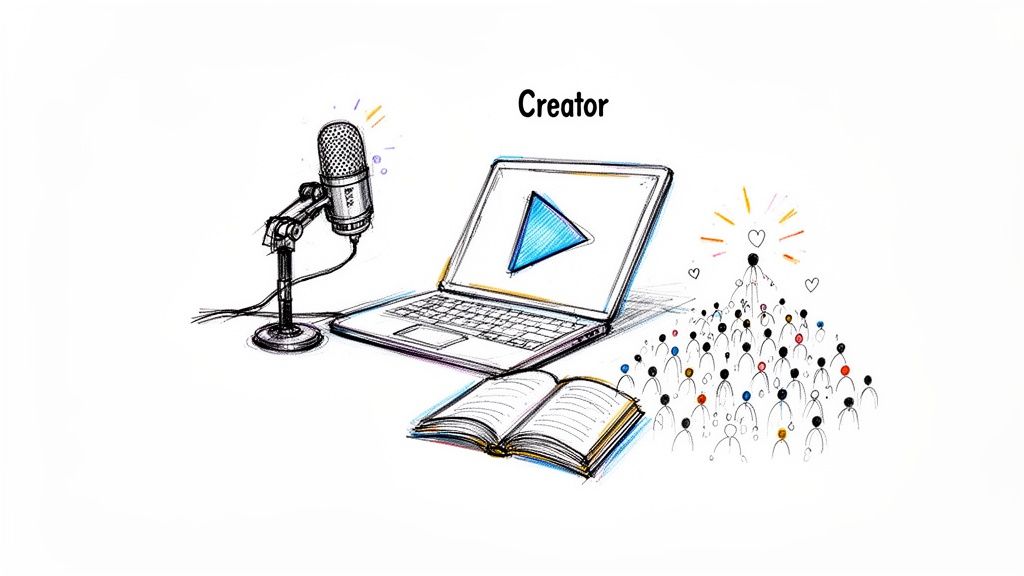
Unlike traditional roles, content creation allows you to scale your impact exponentially. You can translate complex topics into accessible, emotionally resonant content that helps thousands, or even millions, of people. This path allows you to create a legacy based on your unique voice and what you care about most, attracting an audience that connects with your authentic self. Figures like Brené Brown have shown how vulnerability and deep empathy can build a global community around shared ideas.
Boundary-Setting Tip: Public-facing work invites criticism. As an empath, negative feedback can be particularly draining. Create a "praise file" of positive comments and testimonials to review when you feel discouraged. Also, set clear boundaries on when and how you engage with comments to protect your mental energy.
For an empath, the drive to alleviate suffering is often a core part of their identity. A career in healthcare as a doctor, nurse, or medical professional directly channels this innate compassion into a structured, impactful profession. These roles place you on the front lines of human vulnerability, where your ability to sense a patient’s fear, anxiety, and hope is just as critical as your clinical knowledge. You build trust, provide comfort, and guide people through some of the most challenging moments of their lives.
This work goes far beyond diagnosing conditions and administering treatments. An empathic healthcare provider creates a healing environment through active listening and genuine presence. Your capacity for emotional attunement can lead to better patient outcomes, as individuals feel heard and respected, making them more likely to adhere to care plans. This career is demanding but offers a profound sense of purpose, knowing your skills directly contribute to human well-being.
Boundary-Setting Tip: Compassion fatigue is a significant risk in healthcare. Create a "clearing ritual" at the end of your shift. This could be changing out of your scrubs immediately, listening to a specific playlist on your commute home, or spending 10 minutes in nature to consciously leave the emotional weight of your work behind.
For an empath, the ability to sense the underlying emotional currents within a group is a natural talent. Human Resources and Organizational Development roles are some of the best jobs for an empath because they place you at the heart of an organization's most valuable asset: its people. You serve as a culture architect and employee advocate, shaping policies and environments that allow people to do their best work. Your work involves everything from conflict resolution and performance management to designing employee wellness programs and fostering an inclusive workplace.
This field has moved far beyond administrative tasks. Modern HR professionals focus on creating psychologically safe and engaging workplaces. Your empathetic nature allows you to genuinely understand employee needs, mediate sensitive issues with compassion, and build trust across all levels of the organization. You become the crucial link between individual well-being and overall business success, seeing the direct impact of a positive culture on morale and productivity.
Boundary-Setting Tip: HR is often the destination for everyone's workplace frustrations. To avoid burnout, establish clear "office hours" for non-urgent matters and learn to triage issues effectively. Protecting your personal time is crucial for maintaining the emotional capacity this role demands.
The journey to finding a fulfilling career as an empath doesn't end with a job title. As we've explored, roles from UX Researcher to Executive Coach and Nonprofit Director offer incredible platforms for your innate abilities. These positions are not just jobs; they are arenas where your capacity to understand, connect, and advocate becomes your greatest professional asset. The common thread weaving through all these opportunities is the power of human-centered work.
This article has laid out a roadmap, detailing the practical steps for securing one of the best jobs for an empath. We've covered everything from reframing your sensitivity as a strategic skill on your resume to setting non-negotiable boundaries that protect your energy. The goal is to move beyond simply surviving in the workplace to actively thriving because of who you are.
Your next steps involve a conscious and strategic application of these insights. It's about moving from understanding to action.
Ultimately, finding the right career is about creating a powerful alignment between your internal gifts and your external impact. Whether you're designing more intuitive products, coaching the next generation of leaders, or creating content that fosters genuine community, your work contributes to a more connected and considerate world. This is the foundation of a true legacy.
Your empathic nature isn't just a personality trait to be managed; it's the very engine of your professional purpose. By choosing a career that honors this gift and building a personal brand that amplifies it, you position yourself not just as a successful professional, but as a meaningful contributor-a true legacy builder.
Ready to turn your professional expertise and empathic insights into a powerful personal brand? Legacy Builder specializes in working with leaders and creators like you, handling the content strategy and creation so you can focus on making a difference. Schedule a call with us to discover how we can help build your legacy, together.


You could – but most in-house teams struggle with the nuance of growing on specific platforms.
We partner with in-house teams all the time to help them grow on X, LI, and Email.
Consider us the special forces unit you call in to get the job done without anyone knowing (for a fraction of what you would pay).
Short answer – yes.
Long answer – yes because of our process.
We start with an in-depth interview that gives us the opportunity to learn more about you, your stories, and your vision.
We take that and craft your content then we ship it to you. You are then able to give us the final sign-off (and any adjustments to nail it 100%) before we schedule for posting.
No problem.
We have helped clients for years or for just a season.
All the content we create is yours and yours alone.
If you want to take it over or work on transitioning we will help ensure you are set up for success.
We want this to be a living breathing brand. We will give you best practices for posting and make sure you are set up to win – so post away.
Subscribe to our newsletter and get insights on how to grow your personal brand.
