.svg)
Subscribe to our newsletter and get insights on how to grow your personal brand.
Thank you! Your submission has been received!
Oops! Something went wrong while submitting the form.
.svg)


Most advice on how to build rapport is weak. It tells you to smile more, make small talk, remember names, and “be relatable.” That’s not a strategy. That’s social wallpaper.
Rapport isn’t about getting people to like you in the moment. It’s about making people feel understood, respected, and safe enough to keep engaging with you. In business, that changes everything. People buy faster, stay longer, refer more often, and pay closer attention when trust is in place.
That matters even more now because much of your personal brand lives in places where you can’t rely on eye contact, a handshake, or real-time chemistry. Your audience reads your posts alone. Prospects skim your emails between meetings. Clients decide what you stand for from your content cadence, your follow-up, and how you handle friction. If your rapport skills only work in a coffee chat, they’re incomplete.
Being liked is overrated. In business, rapport does a different job. It reduces friction, increases trust, and gives people a reason to keep listening when the interaction is happening on a sales call, in a leadership meeting, or through a post they read alone on their phone.
Real rapport creates traction. It helps people feel accurately understood, not socially entertained. That distinction matters because modern personal brands are built across both live and async moments. If your connection only works face-to-face, it breaks the second someone evaluates you through your content, your follow-up, or your tone in a DM.
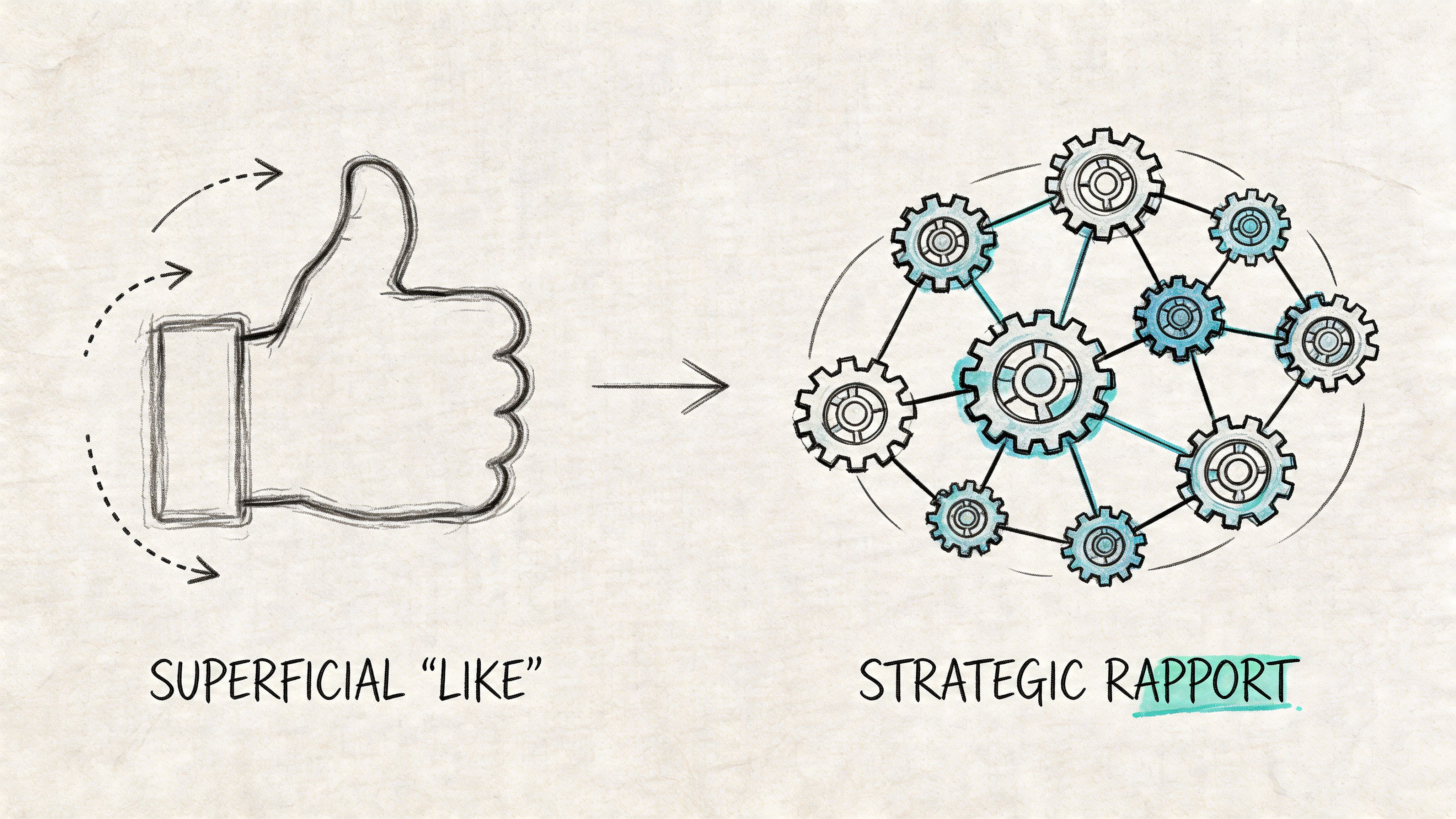
Founders miss this all the time. They polish their message until it sounds safe, generic, and professionally pleasant. Then they wonder why the market respects them but does not remember them. Rapport does not come from being broadly agreeable. It comes from showing people that you understand their stakes, their pressure, and the gap between what they want to say and what they can clearly express.
Use this rule instead:
Practical rule: Stop aiming for likability. Aim for relevance, precision, and emotional accuracy.
That shift pays off. According to PwC’s Trust in US Business survey, trust shapes whether customers buy, stay loyal, and advocate for a brand. For a personal brand, that is revenue behavior, retention behavior, and reputation behavior rolled into one.
Rapport is not a gift reserved for charismatic people. It is a set of behaviors you can practice and measure.
The people who build it consistently do a few things well. They ask sharper questions. They notice hesitation. They adjust their pace. They remove ambiguity. They make the other person feel understood without slipping into flattery or performance.
That matters even more if you care about brand authenticity and why it matters. Authenticity without rapport often reads as self-expression with no audience awareness. Rapport turns authenticity into something other people can trust.
If you want to study the mechanics behind that trust, these influence strategies for brands explain why people respond to consistency, clarity, and alignment far more than polished charm.
Strong rapport changes interpretation. People assume good intent faster. They give your ideas more attention. They stay with you through disagreement. They respond with less resistance.
In practical terms:
Treat rapport like social polish and you will use it casually. Treat it like trust infrastructure and you will build a brand that performs online, in rooms, and across every delayed, digital touchpoint that now decides whether people buy in.
If you want a reliable model for how to build rapport, use one that forces you to understand people before trying to influence them. The strongest one I’ve found is Collaborative Problem Solving, developed by Dr. Ross Greene.
It works because it replaces the usual bad habit: one person diagnoses, prescribes, and pushes. In contrast, CPS starts with empathy, creates a shared definition of the issue, and then builds a solution together. According to the CPS overview and supporting discussion, the method shows 80-90% resolution in challenging cases and can boost B2B deal closures by 25-35%.

It's common to hear a problem and immediately label it. “They need confidence.” “They need content strategy.” “They need better positioning.” Maybe. But if you jump there too early, people feel handled instead of heard.
Empathy in practice is simple. Name the pressure you think they’re under, then let them correct you.
Try lines like:
Many founders underestimate content. A strong digital presence starts with showing that you understand the audience’s lived tension. That’s why guides like the PostSyncer blog on LinkedIn success matter. They focus on presence that feels human, not manufactured.
A neutral definition is underrated. It keeps people out of defense mode.
Bad version: “You need to be more consistent.”
Better version: “You want to show up regularly without turning your brand into a second full-time job.”
One blames the person. The other identifies the constraint.
The fastest way to lose rapport is to describe someone’s problem in a way they wouldn’t describe it themselves.
This principle also applies to branding. If your content says one thing while your behavior says another, trust breaks. That’s why brand authenticity and why it matters is not a branding slogan issue. It’s a rapport issue.
Rapport deepens when people have agency. They don’t want a polished answer dropped on them. They want a path they can believe in and help shape.
Use collaborative language:
| Situation | Weak approach | Strong approach |
|---|---|---|
| Sales call | “Here’s what you need to do.” | “Which of these options feels realistic for your team?” |
| Leadership chat | “This has to change.” | “What would make this easier to execute consistently?” |
| Content strategy | “Post daily on these topics.” | “Which themes can you talk about without forcing it?” |
The point is not to surrender expertise. The point is to involve the other person in the solution so the relationship stays intact.
People decide whether to trust you from a small set of cues. Keep these visible:
Those principles don’t just improve conversations. They shape the whole feel of your brand.
The demand isn't for more theory. It's for behaviors they can use today. Good. Here’s the operating system.
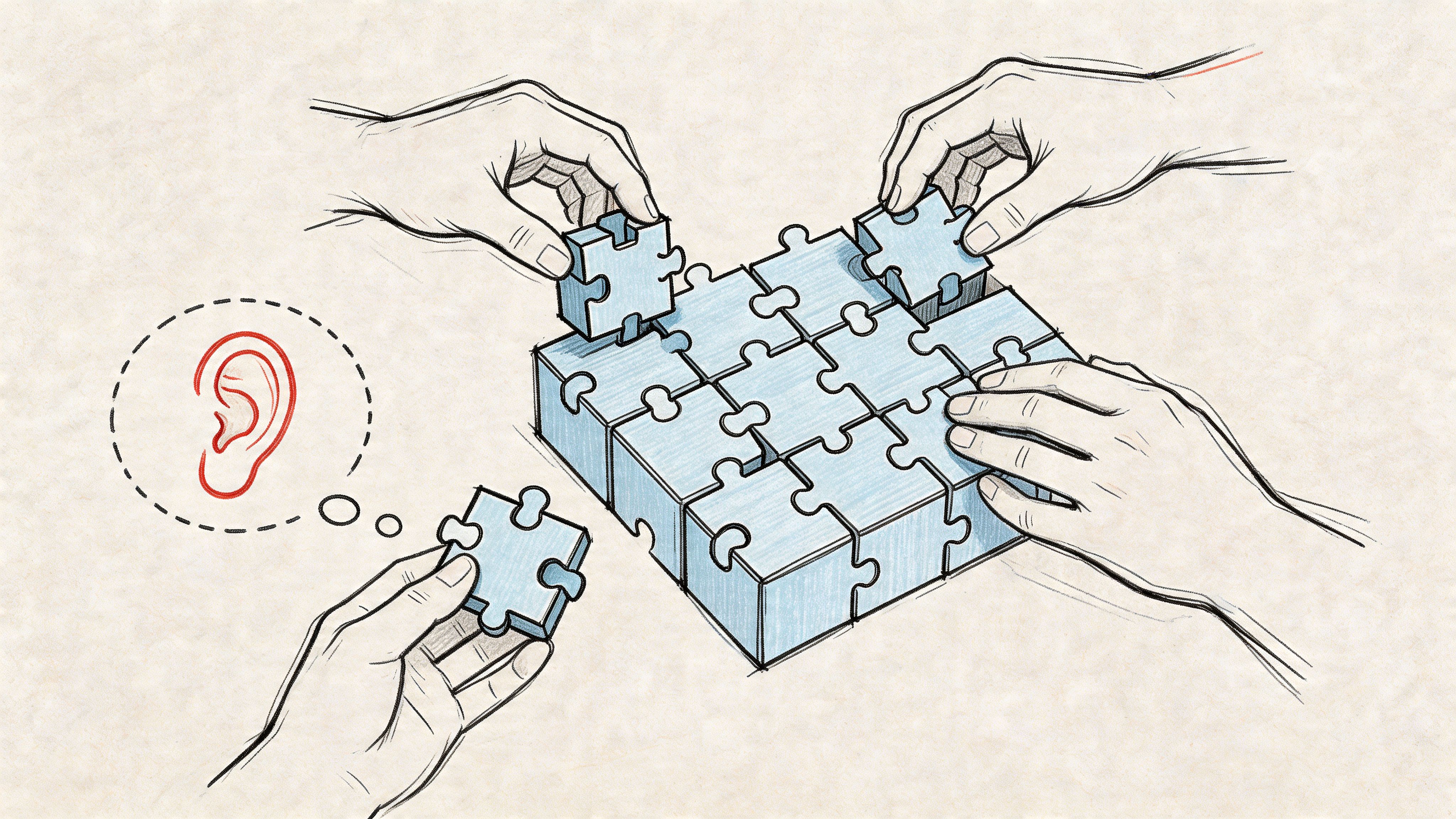
If someone says, “We’ve been trying to post more consistently,” the fact is content frequency. The friction is usually something else. Fear of sounding generic. Internal bottlenecks. Low confidence on camera. Too many stakeholders. No clear point of view.
Your job is to hear the hidden obstacle.
Ask questions that surface reality:
These questions work because they don’t force a polished answer. They invite honesty.
For written communication, the same principle applies. If you’re trying to connect through posts, newsletters, or DMs, your words need to sound like a conversation, not a brochure. This guide on tips for engaging your audience is useful because it shows how conversational language creates accessibility without sounding sloppy.
You don’t need cleverness. You need disciplined responses.
Here are three that work.
Each line tells the other person, “I’m tracking with you.” That’s how rapport grows.
Field note: If your response makes you sound smart but doesn’t make the other person feel understood, it’s the wrong response.
This technique gets abused because people hear “mirror” and start copying gestures like an amateur negotiator in a bad movie.
Done properly, it’s subtle. According to Psychology Today’s discussion of matching and mirroring, the approach can increase perceived likability and trust by 60-80% within the first 5 minutes when used with a 10-20% variance so it doesn’t feel obvious.
Use it like this:
Then lead gently. Once the interaction feels synchronized, shift toward the tone you want. Slow the pace. Open your shoulders. Make your questions more solution-oriented. If the rapport is real, the other person often follows.
Here’s a useful explainer to watch before you try to apply it live:
A lot of professionals freeze because they don’t know how to start. Use these.
“Before we talk solutions, what’s making this urgent now?”
That question gets past vanity goals and into actual stakes.
“What are you focused on this quarter that’s taking most of your attention?”
It’s better than “What do you do?” because it reveals priorities, not titles.
“I kept thinking about what you said about staying visible without sounding overproduced. Curious where that’s still feeling stuck.”
That works because it proves you listened. It also gives the other person an easy point of re-entry. If you need a stronger system for staying in touch after an initial interaction, this article on how to follow up after networking and build real connections is worth reading.
Use this in sales, leadership, and brand conversations:
| Step | What to do | What it sounds like |
|---|---|---|
| 1 | Observe | “You seem torn between growth and sustainability.” |
| 2 | Confirm | “Is that accurate, or am I missing it?” |
| 3 | Expand | “What’s underneath that?” |
| 4 | Reframe | “So the issue isn’t output. It’s trust in the process.” |
| 5 | Co-create | “What would a workable version of this look like?” |
That’s how to build rapport without theatrics. Stay present. Get specific. Prove understanding before you offer direction.
Rapport is not a personality trait. It is a context skill. If you use the same tone in a sales call, a team meeting, a networking conversation, and a LinkedIn comment thread, you will sound careless in at least three of them.

The core task is calibration. Keep the same character. Change the delivery. That is how founders build a personal brand people trust across rooms they may never physically enter.
Rapport in sales starts before your pitch. The buyer is asking a simple question first. Do you understand my situation well enough to be useful?
A founder joins a call, gives a polished overview, and walks through features. The prospect stays polite and disappears after the meeting. That outcome is predictable. People do not buy because your explanation was organized. They buy when they feel understood with enough precision to believe your solution fits their constraints.
Start with diagnosis. Ask where the process breaks, what the team has already tried, what political friction exists internally, and what a good outcome cannot compromise. Then reflect back the pattern in plain language before you offer direction.
Good sales rapport reduces friction. It shortens the distance between interest and decision because the other person no longer has to work to feel understood.
Founders often confuse rapport with approachability. That is too shallow. A team does not trust you because you are relaxed. A team trusts you when your reactions are clear, fair, and consistent, especially under pressure.
I have seen leaders damage trust by treating every missed deadline as a discipline problem. The team hears blame, gets cautious, and starts filtering information. The smarter move is to surface reality early. Ask, “What is slowing this down?” Then ask, “What would make this easier to execute well the first time?”
That shift matters because rapport in leadership is operational. If people can tell you the truth early, problems stay manageable. If they wait until the situation is messy, the cost shows up in missed handoffs, quiet resentment, and weak execution.
In leadership, rapport is the quality of truth you get back from people.
Bad networking is usually two people reciting relevance at each other. Titles get traded. Vague enthusiasm gets exchanged. Nothing sticks.
Useful networking gets specific fast. Ask what they are trying to solve, what kind of opportunity they want more of, or what constraint keeps showing up. Then respond to the tension, not the résumé.
Use this contrast:
The second response shows actual listening. It gives the other person a reason to keep talking because you named something real.
Under current conditions, old rapport advice breaks. A lot of trust-building now happens without eye contact, body language, or immediate feedback. Your audience meets you through posts, newsletters, DMs, comments, voice notes, and short videos. Rapport still matters. The signals just change.
In digital settings, rapport comes from recognizable voice, sharp observation, and reliable follow-through. Your content has to sound like the same person your prospect would meet on a call or your team would hear in a meeting. If your public voice is bold, your DMs are flat, and your sales calls are vague, your brand feels manufactured.
Specificity carries a lot of weight online.
One creator posts generic advice about consistency. Another says, “If your content is getting engagement but no inbound leads, your audience may like your ideas without understanding what you sell.” The second version builds more trust because it identifies a business problem, not just a motivational theme.
That is the modern shift founders need to understand. Rapport is no longer just an in-person skill. It has to hold up asynchronously, across channels, and over time.
| Context | What people need from you | What to avoid |
|---|---|---|
| Sales | Accurate diagnosis and relevant guidance | Explaining your offer before the problem is clear |
| Leadership | Clear reactions and honest conversation | Mistaking friendliness for trust |
| Networking | Specific curiosity and sharp reflection | Defaulting to bio swaps and vague praise |
| Content | Consistent voice and useful pattern recognition | Posting polished generalities that say nothing |
Rapport works when people feel accurately read, whether they are across the table or reading you on a screen.
You can build trust over weeks and damage it in one sentence. That’s why sloppy communication is expensive.
The first mistake is solution-jumping. Someone tells you what’s difficult, and you respond with advice before you’ve earned the right to give it. That signals impatience. It also tells the other person you care more about resolution than understanding.
Another mistake is invalidating emotion by trying to “stay constructive.” Founders do this all the time. A teammate expresses frustration, and they answer with productivity talk. A prospect raises doubt, and they answer with certainty theater. That kills honesty.
If people feel edited in your presence, they stop giving you real information.
Most advice about how to build rapport still centers on live interaction. That’s a problem because a lot of modern relationship-building happens through digital, asynchronous channels. As noted in this discussion of rapport-building gaps in digital communication, mainstream guidance often leans on eye contact and body language, which don’t exist in email, comments, or social media.
That means you need stricter discipline online.
Here’s what breaks rapport in asynchronous communication:
Use this quick check:
| Question | If the answer is no, revise |
|---|---|
| Does this sound like a real person? | Remove jargon and filler |
| Does it reflect their actual concern? | Add a line of interpretation |
| Is the tone appropriate for the moment? | Adjust pacing and word choice |
| Is there one clear next step? | Make the ask specific |
One more mistake deserves blunt treatment. Trying to win rapport with performance. People can feel when you’re running a technique on them. If your curiosity is fake, your empathy is scripted, or your warmth appears only when you want something, people notice. Maybe not instantly, but always eventually.
Rapport survives imperfection. It does not survive insincerity.
A single good conversation won’t build a trusted brand. Repeated signals do that.
That’s why rapport has to become operational. You need habits, not occasional bursts of social effort. The founders who build strong brands don’t “turn on” connection when they need leads. They bake it into meetings, follow-ups, content, and replies.
Use something simple. At the end of each day or week, review these five prompts:
If those answers are weak, your rapport isn’t weak because people are difficult. It’s weak because your process is inconsistent.
Here’s what that looks like in practice:
A strong personal brand grows from these repeated micro-signals. If you need a broader system for making that happen, this guide on how to develop a personal brand and build influence gives a useful next layer.
Rapport is not a trick. It’s not a networking hack. It’s not code for being agreeable. It’s the discipline of making people feel accurately understood, consistently respected, and safe enough to keep moving closer to you.
That discipline compounds. So does the brand that comes from it.
If you want help turning your expertise into a personal brand people trust, Legacy Builder helps founders, leaders, and professionals turn their stories, insights, and perspective into consistent content that builds real connection, not empty visibility.


You could – but most in-house teams struggle with the nuance of growing on specific platforms.
We partner with in-house teams all the time to help them grow on X, LI, and Email.
Consider us the special forces unit you call in to get the job done without anyone knowing (for a fraction of what you would pay).
Short answer – yes.
Long answer – yes because of our process.
We start with an in-depth interview that gives us the opportunity to learn more about you, your stories, and your vision.
We take that and craft your content then we ship it to you. You are then able to give us the final sign-off (and any adjustments to nail it 100%) before we schedule for posting.
No problem.
We have helped clients for years or for just a season.
All the content we create is yours and yours alone.
If you want to take it over or work on transitioning we will help ensure you are set up for success.
We want this to be a living breathing brand. We will give you best practices for posting and make sure you are set up to win – so post away.
Subscribe to our newsletter and get insights on how to grow your personal brand.
