.svg)
Subscribe to our newsletter and get insights on how to grow your personal brand.
Thank you! Your submission has been received!
Oops! Something went wrong while submitting the form.
.svg)


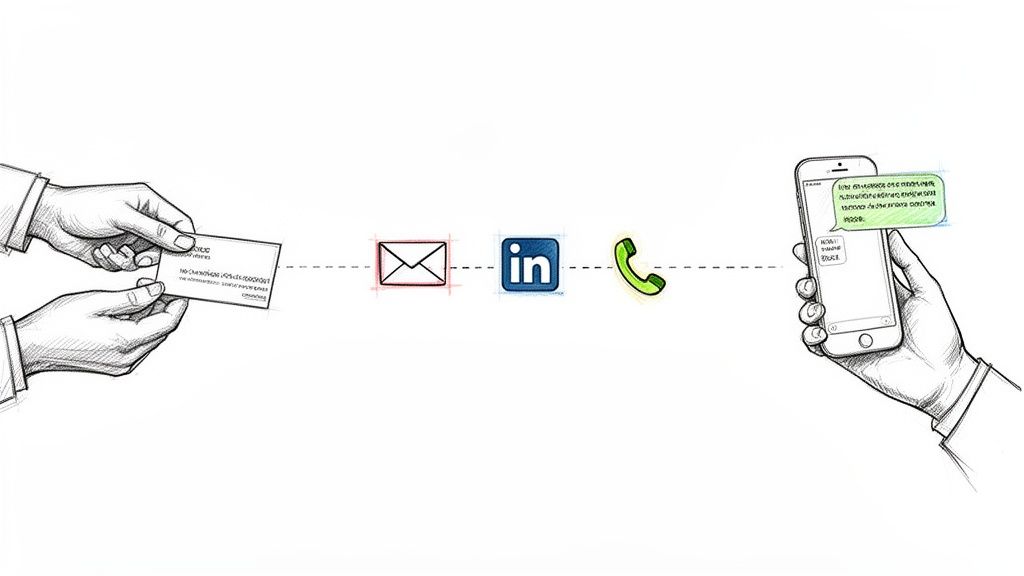
A solid follow-up isn't just sending a "nice to meet you" email. It's a strategic play to turn a quick hello into a real professional asset.
Here's the secret: act within 24-48 hours, mention something specific from your chat, and give them something valuable without asking for anything. This one move puts you miles ahead of everyone else and starts building a genuine connection.

Most people think the handshake at a networking event is the finish line. It's not. It’s the starting pistol.
The real work—and the real opportunity—kicks off with your follow-up. A great first impression gets your foot in the door, sure, but a thoughtful follow-up is what keeps that door from slamming shut.
Without that prompt, personal touchpoint, the rapport you built fades. Fast. Your new contact probably met dozens of other people, and your conversation can easily get lost in the noise. This is where a smart approach is critical. It shows you're a pro, reinforces what you're about, and proves you’re serious about building real relationships.
The best follow-ups are all about giving value, not making a request. Ditch the immediate ask for a favor, a job, or a sale. Instead, focus on giving. This simple mindset shift changes the whole vibe of the conversation.
The goal isn't just to be remembered. It's to be remembered as someone who is helpful, insightful, and genuinely invested in seeing others win.
This value-first approach is a power move, especially for leaders and entrepreneurs. Think about it: somewhere between 35% and 50% of sales go to the business that follows up first. That same rule applies to networking—being the first to provide value locks in your position.
This guide is packed with more post-event follow-up strategies that highlight just how critical it is to nurture these new connections. Master this, and you'll start building the kind of industry https://www.legacybuilder.co/authority that actually moves the needle.
That moment you walk away from a great networking conversation? It's golden. But it's also fleeting. If you wait too long, the connection fizzles out and the memory fades. Jump the gun, and you can come off as pushy or even a little desperate.
Mastering the follow-up is all about timing and picking the right place to continue the conversation.
The sweet spot is almost always within 24 to 48 hours. This window is perfect—the chat is still fresh in their mind, but you’ve given them enough space to get back to their routine. A follow-up inside this timeframe sends a clear message: you’re intentional, organized, and genuinely interested.
Think of this as a professional courtesy. Sending a message the second an event ends can get buried in the post-conference chaos. But waiting a week? That makes your message feel like an afterthought. Sticking to the one-to-two-day rule hits the perfect balance of promptness and professionalism.
Of course, context is everything. If you promised to send over a link or make a quick introduction, do it sooner. The goal is to match your timing to the expectations you set in person.
Once you’ve got the timing down, you need to decide where to send your message. This isn't just about logistics; your channel choice says a lot about your communication style and how well you read the room.
Before we dive into the specifics of what to say, let's break down the best channels for your follow-up and when to use each one.
A quick comparison of the most effective channels for networking follow-ups, highlighting their best use cases, pros, and cons to help you select the right one for any situation.
Ultimately, the right channel depends entirely on the context of your conversation and the relationship you want to build. Don't be afraid to mix and match—a LinkedIn connection followed by a more detailed email a day later can be a powerful one-two punch.
Now, let's dig into the two most common and effective channels: email and LinkedIn.
For a thoughtful, value-packed follow-up, email is still king. It gives you the real estate to craft a proper message, reference specific points from your conversation, and attach files or links without feeling spammy.
Sending a LinkedIn connection request is the new standard for making a professional connection stick. It's a low-pressure, high-impact move that serves as the perfect first step toward building a real professional relationship.
Here's a non-negotiable rule: Always, always personalize your LinkedIn invitation. A blank request is a missed opportunity and easy to ignore. A simple note like, "Hi [Name], it was great discussing [Topic] with you at [Event]. Would love to connect," makes all the difference.
Turning that connection into something more is the next step. This is where you can weave these individual touchpoints into a cohesive B2B social media strategy, transforming a simple follow-up into a long-term asset for your personal brand.
This isn't just busywork; it's a critical business practice. While 48% of professionals say they actively work on their network, a staggering 38% admit they struggle to stay in touch. Considering 80% of professionals believe networking is vital to their career, a sharp follow-up game on the right channel closes a massive gap.
Let’s be honest. A generic "nice to meet you" message is a one-way ticket to the digital trash bin. It's polite, sure, but it does absolutely nothing to build on the connection you just made.
If you want to actually start a conversation and build genuine rapport, you have to move beyond those tired templates.
The secret is dead simple: reference a specific detail from your conversation. Did you both laugh about the terrible conference coffee? Did they mention a book they just finished or a project they were about to kick off? That one, tiny detail is your golden ticket. It proves you were actually listening and makes your message feel human, not like it was spit out by a robot.
From there, you can easily bridge the gap to what you do or offer something valuable with no strings attached. This completely flips the script—instead of asking for something, you're giving something. That's how you start building trust right out of the gate.
Every great follow-up message, whether it's an email or a LinkedIn DM, has a few things in common. It's short, it's personal, and it has a clear next step—even if that step is just to stay connected.
Think of it less like a formal letter and more like you're just picking up where the conversation left off.
Here are the essential pieces that will get your message read and, more importantly, remembered.
This visual decision tree helps map out when to send your follow-up based on the urgency of your conversation.
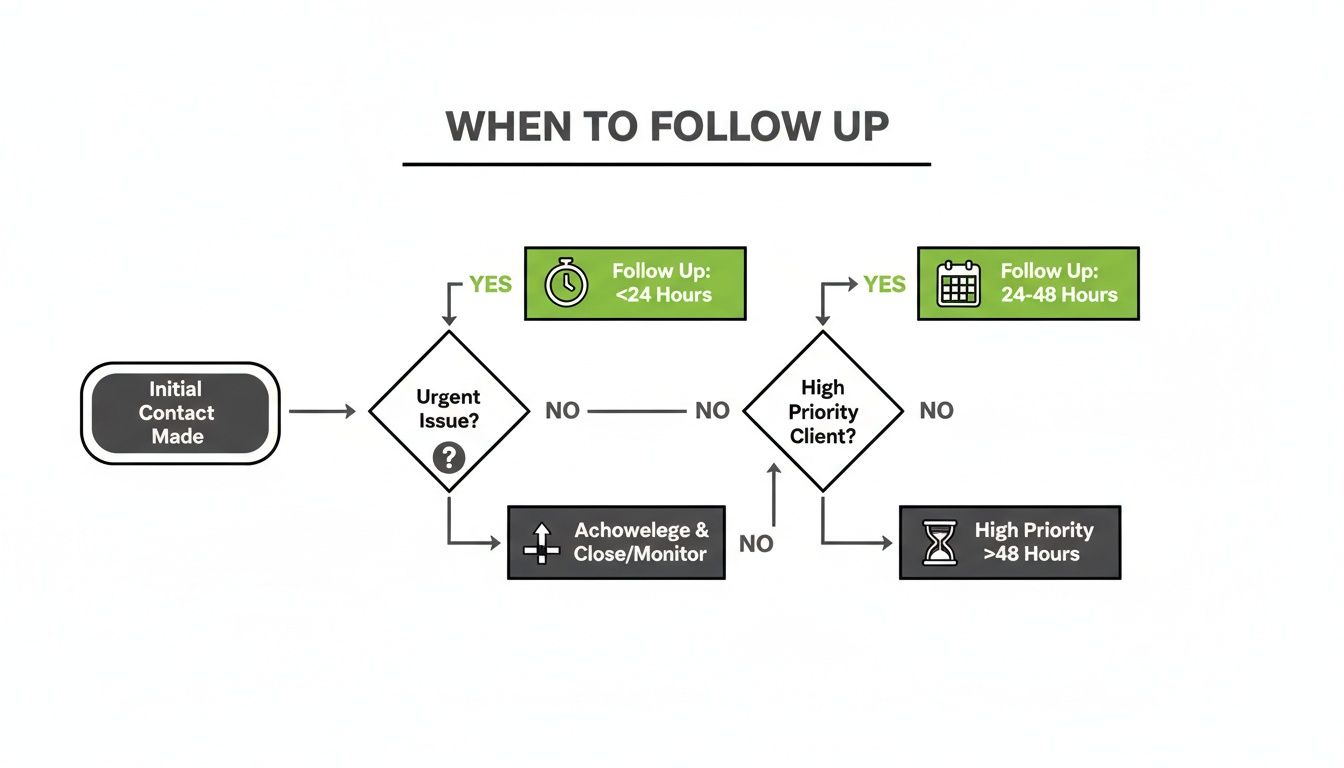
The key takeaway? When a specific, time-sensitive opportunity was on the table, that follow-up window gets a lot smaller. Act fast.
Okay, let's put this framework into action. Notice how each of these examples is personalized and focuses on giving value, not taking it.
And if you really want to level up your messaging game, check out these proven strategies for writing emails that get replies.
Subject: Following up from the Tech Leaders Mixer
Hi [Name],
It was a real pleasure meeting you at the Tech Leaders Mixer last night. I was particularly inspired by your story about pivoting your first company.
You mentioned you were looking for new data on Gen Z marketing trends. This report just came across my desk this morning, and I thought you might find it insightful.
Thanks again for the great conversation. I'd love to stay connected and continue learning from your experience.
Best,
[Your Name]
Subject: That podcast you recommended!
Hi [Name],
Great chatting with you at the [Conference Name] lunch yesterday. I just subscribed to the [Podcast Name] you recommended—can't wait to dive in on my commute tomorrow.
It was interesting to hear about the challenges you're facing with [Project Name]. It reminded me of a case study I saw recently that tackled a similar issue. You can find it here if it’s helpful.
Let's definitely keep in touch.
Cheers,
[Your Name]
Remember, authenticity is your greatest asset. Don't invent a connection or a value-add. The best follow-ups are simply a natural extension of a genuine conversation you've already had. Your goal is to be a resource, not a request.
Look, not every follow-up is a straight line. Sometimes a promising contact just goes quiet. Other times, a job you were excited about closes. Or maybe you're trying to connect with someone through a friend. These situations demand a bit more finesse than your standard "nice to meet you" email.
Knowing how to handle these awkward spots is what separates the amateurs from the pros. It's all about navigating the moment with a bit of grace, a lot of professionalism, and a clear game plan. With the right move, you can turn a dead end into a real opportunity.
We've all been there. You have a great conversation, fire off a thoughtful follow-up, and then... crickets. The silence can sting, but trust me, it’s almost never personal. People get slammed, inboxes become black holes, and your message just gets buried.
The trick is to re-engage without coming off as pushy or accusatory. Your only goal is to pop your name back to the top of their inbox by offering another piece of value. No strings attached.
Example Script:
Subject: Quick thought on our [Event Name] chat
Hi [Name],
Hope you’ve had a solid week since we connected at [Event Name].
Just stumbled across this article on [Relevant Topic] and immediately thought of our conversation about your team's upcoming projects. Figured you might find the data on page three interesting.
No need to reply—just wanted to share.
Best,
[Your Name]
This approach is gold because it’s a no-pressure, value-first touchpoint. You’re not asking for anything or pointing out they ignored you; you’re just being helpful.
Following up after you didn't get the job feels backward, I know. But it’s actually a huge opportunity to build your network and leave a fantastic impression. Think about it: the hiring manager already knows you and saw your potential. That makes them an incredibly valuable connection for whatever comes next.
Your goal here is simple: show gratitude, reinforce your professionalism, and keep the door wide open for other roles. This kind of mature response makes you memorable for all the right reasons.
Responding with grace after a rejection shows you're resilient and you think long-term. It turns a one-off transaction into a real professional relationship.
Here's how to frame it:
This simple act of professional courtesy pays off big time when another position opens up down the road.
When a friend or colleague says, "You should really talk to so-and-so," your follow-up needs to juggle a few things. You have to establish context instantly, use your mutual connection’s name to build credibility, and be crystal clear about why you're reaching out.
It's all about borrowing trust. Mentioning your mutual contact’s name is what gets your foot in the door, so you need to use it wisely and with respect.
Example Script:
Subject: [Mutual Connection's Name] suggested I reach out
Hi [Name],
Our mutual friend, [Mutual Connection's Name], suggested I get in touch with you. I was telling her about my work in [Your Field], and she immediately mentioned you were the go-to expert on [Their Area of Expertise].
I’m in the middle of a project involving [Specific Challenge] and would be incredibly grateful for any brief insights you might have.
I know how busy you are, but if you had 15 minutes in the coming weeks, I’d love to hear your thoughts.
Best,
[Your Name]
This works because it's direct, it shows you respect their time, and it immediately explains who you are and why you're in their inbox.
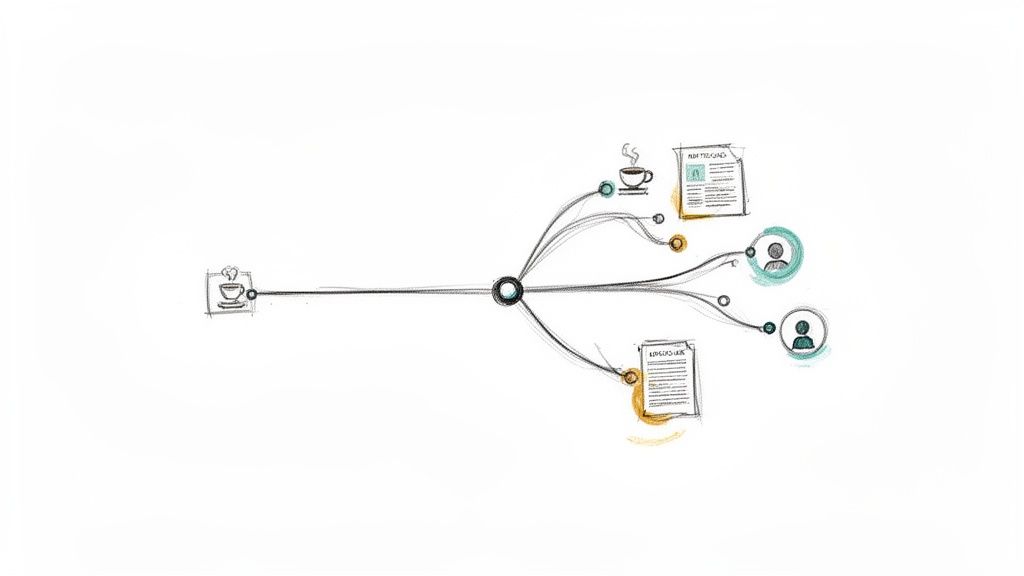
Let's get one thing straight: the first follow-up isn't the finish line. It’s the starting pistol.
That initial email or LinkedIn message just cracks the door open. The real work is keeping that door from slamming shut. You need a game plan to turn that quick "nice to meet you" into a real, lasting professional asset.
The goal here is to stop thinking in one-off touchpoints and start building a long-term nurturing cadence. This is how you stay top-of-mind without being a pest. It’s about being seen as a valuable, insightful resource, not just another contact asking for something.
A killer long-term strategy is all about light, meaningful interactions over time. Ditch the monthly "just checking in" emails—they’re worthless. Instead, build an ecosystem where your name pops up naturally and positively.
This isn’t rocket science. It’s consistent, low-effort engagement that builds familiarity and trust, positioning you as a go-to person in your space. In the world of personal branding, where 80% of B2B leads come from LinkedIn, this kind of steady nurturing is non-negotiable.
Think about it: follow-up emails can bump response rates by 11%, and a crazy 70% of sales emails need a follow-up just to get a reply. Persistence pays. If you want to dive deeper, Kinsta has some great LinkedIn marketing stats.
One of the most authentic ways to reconnect is to let your own work do the talking. I'm not talking about spammy self-promotion. I’m talking about sharing your expertise in a way that actually helps them.
Just published a blog post on a topic you two discussed? Share it. This is a subtle flex that reinforces your authority and provides them with tangible value.
Your goal is to become a trusted node in their professional network. When they think of [Your Area of Expertise], your name should be one of the first that comes to mind. This only happens through consistent, value-driven engagement.
This long-game mindset is what separates amateurs from pros. It's not about how many connections you have; it's about cultivating relationships that generate real opportunities. This is the exact principle we use to generate high-quality leads for your business. The first follow-up is just day one.
Even with the best playbook, you're going to run into some tricky situations. It's just part of the game. Let's tackle the questions that come up most often when you're trying to turn a conversation into a real connection.
Think of these as the finishing touches on your strategy, designed to help you navigate any scenario like you've been doing it for years.
That 24-48 hour window is a solid guideline, but don't treat it like a rigid rule. Sending a note the same day is totally fine—in fact, it can be a power move if the situation calls for it. Did you promise to send a link to an article or a resource? Get it over to them quickly. It shows you’re reliable and on top of your game.
The only time it's "too soon" is when it comes off as desperate. Blasting out a message two minutes after you part ways is a bad look. Give it a few hours. Let the day breathe a little.
First off, relax. It happens to literally everyone. Your best move is to check the event's attendee list or see if there was an event app. If that's a dead end, fire up LinkedIn and do some searching based on their company or other details you remember.
Worst case? A quick, polite message to the event organizer can be a lifesaver. Just be upfront and brief.
Don't let the embarrassment of forgetting a name kill the opportunity entirely. A slightly delayed but well-crafted follow-up is infinitely better than complete radio silence.
For a standard networking contact, one gentle follow-up about a week after your first message is plenty. The key is to frame it as a no-pressure value-add, not a "just checking in" nudge. Share another article you think they'd find interesting.
Now, if it's a much warmer lead or a high-stakes opportunity, you can stretch it to 2-3 follow-ups, but space them out over a few weeks. Every single message needs to offer fresh value. If you're just asking if they saw your last email, you've already lost.
At Legacy Builder, we specialize in turning these small interactions into major career momentum. We’ll help you build a personal brand that makes every single follow-up land with impact. See how we transform professional stories by visiting us at https://www.legacybuilder.co.


You could – but most in-house teams struggle with the nuance of growing on specific platforms.
We partner with in-house teams all the time to help them grow on X, LI, and Email.
Consider us the special forces unit you call in to get the job done without anyone knowing (for a fraction of what you would pay).
Short answer – yes.
Long answer – yes because of our process.
We start with an in-depth interview that gives us the opportunity to learn more about you, your stories, and your vision.
We take that and craft your content then we ship it to you. You are then able to give us the final sign-off (and any adjustments to nail it 100%) before we schedule for posting.
No problem.
We have helped clients for years or for just a season.
All the content we create is yours and yours alone.
If you want to take it over or work on transitioning we will help ensure you are set up for success.
We want this to be a living breathing brand. We will give you best practices for posting and make sure you are set up to win – so post away.
Subscribe to our newsletter and get insights on how to grow your personal brand.
