.svg)
Subscribe to our newsletter and get insights on how to grow your personal brand.
Thank you! Your submission has been received!
Oops! Something went wrong while submitting the form.
.svg)


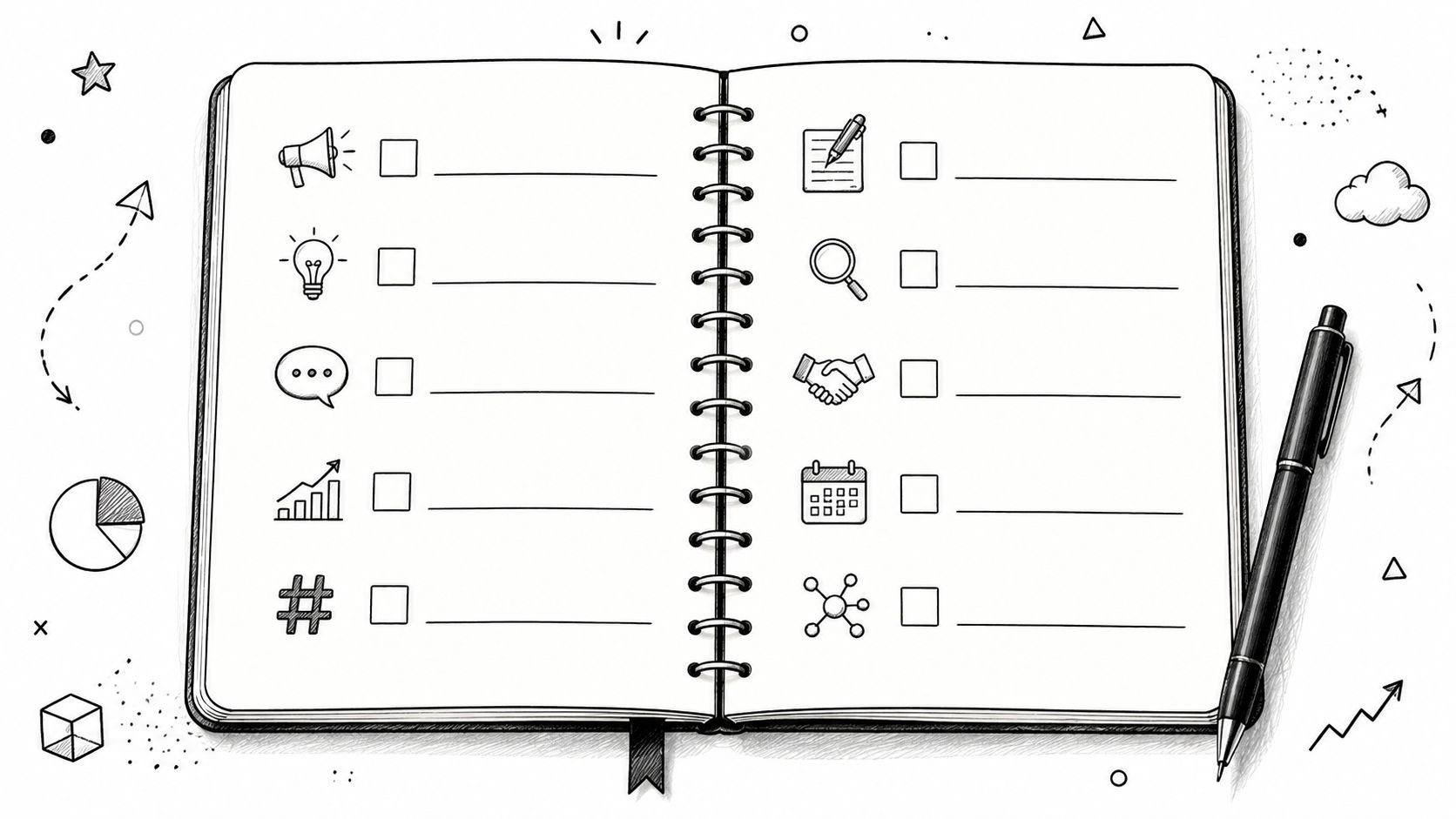
Most advice about ways to increase brand awareness is shallow. Post more. Chase trends. Try every platform. That approach creates noise, drains your time, and leaves you with a brand that disappears the moment you slow down.
If you want awareness that compounds, build something people can recognize, trust, and remember. That means consistency, real expertise, and repeated visibility across the places your audience already pays attention. It also means rejecting vanity-first tactics in favor of a system that can survive a busy schedule and still grow your reputation over time.
NielsenIQ advises brands to embrace a multichannel presence, and that's the right starting point. Awareness doesn't come from a single signal. People notice you through search, social, your website, events, referrals, interviews, and the conversations others have about you when you're not in the room.
That's the gap most professionals miss. They treat brand awareness like a campaign. It works better as infrastructure.
If you want a sharper view of how visibility is changing, read these LLMrefs insights on brand awareness. Then build your brand like it's meant to outlast the algorithm.
Here are 10 proven strategies that separate real thought leaders from the noise.
Busy professionals usually fail at content for one reason. They create when they feel inspired instead of publishing on a system.
If you want brand awareness that lasts, publish on a rhythm your audience can rely on. That doesn't require posting random thoughts all day. It requires a clear content engine built around your expertise, your story, and the questions your market keeps asking.
Neil Patel, HubSpot, Buffer, and Gary Vaynerchuk all became known in part because they kept showing up. Not once. Repeatedly.
Start with one pillar topic each week or each month. Turn it into a LinkedIn post, a short video, an email, a blog article, a quote graphic, and a talking point for interviews. That kind of repurposing keeps your message consistent without forcing you to reinvent your voice every day.
Qualtrics recommends consistency, cross-promotion on owned and third-party channels, and thought leadership appearances throughout the year as part of a stronger awareness strategy. That matters because your audience rarely sees just one touchpoint before deciding whether you're credible.
Practical rule: Don't ask, “What should I post today?” Ask, “What message do I want remembered this quarter?”
A strong calendar solves most inconsistency problems. Map themes in advance, assign each one to a business goal, and leave room for timely commentary. If your process breaks every time your schedule gets busy, it isn't a strategy.
Use this guide on how to create a content calendar that actually works to turn content from an obligation into an asset.
Legacy brands aren't built through bursts of activity. They're built through recognizable repetition.
Social media is often treated like a loudspeaker. The smarter move is to use it like a room.
Awareness grows faster when people feel seen. That happens in the comments, the replies, the direct responses to good questions, and the small interactions that make your name familiar before anyone buys from you.
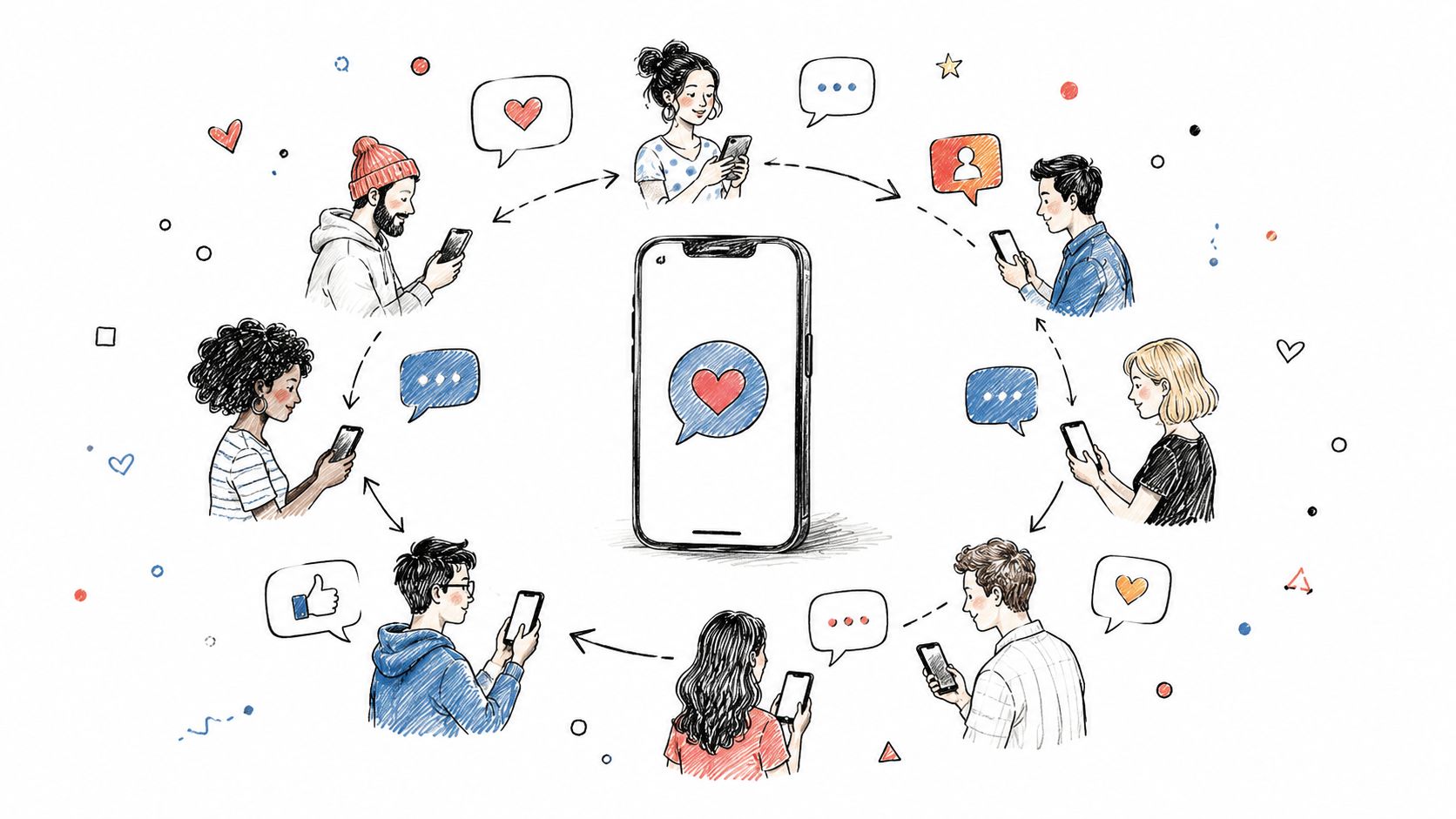
Glossier built a reputation around community participation. MrBeast keeps audiences engaged by understanding exactly what viewers respond to. Slack's broader reputation has also benefited from community-first thinking rather than one-way broadcasting.
Ask better questions. Reply with substance. Share behind-the-scenes thinking, not just polished wins. If someone comments with a thoughtful objection, treat it like an opportunity to show judgment, not defend your ego.
For professionals building a long-term reputation, this matters more than reach-chasing. Your future clients, partners, and podcast hosts often watch how you engage long before they contact you.
Harvard Business Review research, cited by Qualtrics, found that 73% of shoppers use multiple channels during their purchase journey, and customers who used 4+ channels spent 9% more in-store and 10% more online than single-channel customers. That makes social media most effective when it supports a broader cross-channel brand, not when it operates alone.
Show up on social like a peer with a point of view, not a content vending machine.
If you want a practical framework, study how to grow business on social media by building your personal brand.
A few moves work especially well:
Community is slower than clout. It lasts longer.
You can borrow trust faster than you can build it alone. That's what strong partnerships do.
The wrong collaboration makes you look opportunistic. The right one introduces you to an aligned audience that's already primed to care about your work. Shopify's creator ecosystem shows how powerful this can be when the brand, the educator, and the audience all benefit. Airbnb's travel collaborations followed the same logic.
Look for partners whose audience overlaps with yours, but whose offer doesn't compete directly with yours. A founder can collaborate with a podcast host, a SaaS leader can partner with a niche consultant, and an executive coach can co-host a session with a recruiter or investor.
SurveyMonkey identifies referral programs as a key brand-awareness tactic, and NielsenIQ also includes referral promotions among the core ways to expand awareness. You can see that guidance in SurveyMonkey's overview of ways to increase brand awareness through referrals and customer promotion. In practice, that means your best partners often include customers, peers, and advocates, not only influencers.
Partnerships work best when the exchange is concrete. Guest appearances, joint webinars, co-authored content, newsletter swaps, and curated roundtables all create visibility without feeling forced.
Too many professionals agree to vague collaborations and then wonder why nothing happens.
Set the topic, audience, channel, timeline, promotion plan, and follow-up assets before you go live. Decide who owns the recording, who emails their list, and what each side wants the audience to do next.
Partnerships don't just increase visibility. They accelerate credibility through association.
If people can't explain why your perspective matters, your brand awareness stays shallow.
Thought leadership isn't self-promotion dressed up in polished language. It's the discipline of making useful ideas visible often enough that people associate your name with a specific kind of insight. Brené Brown did this with vulnerability and leadership. Malcolm Gladwell became known for pattern-based cultural analysis. Andy Grove became synonymous with hard-edged strategic clarity.
You need more than good content. You need a recognizable lens.
That can be a framework, a repeated question, a strong stance, or a pattern you help people see. The point is to become quotable in substance, not just visible in volume. Qualtrics specifically recommends appearances such as panels, keynotes, podcast interviews, and events across the year because expert visibility compounds when your ideas travel through trusted channels.
If you're serious about this path, read what thought leadership is and how to build influence and study more examples of how to grow your audience with thought leadership.
Editorial test: If your name were removed from your post, would anyone still recognize your thinking?
Write articles for respected publications. Join podcasts where your audience already listens. Speak on panels that let you demonstrate judgment, not just recite general advice. Then bring those appearances back into your own ecosystem through clips, summaries, and commentary.
A founder who explains market shifts with clarity will attract better opportunities than a founder who only posts company updates. A consultant who publishes a distinct methodology will stay top of mind longer than one who shares generic motivation.
Thought leadership is one of the strongest ways to increase brand awareness because it gives people a reason to remember you.
Social platforms rent you attention. Email lets you keep a relationship.
That distinction matters for professionals who want stable visibility. A newsletter creates a direct line to people who chose to hear from you. No algorithm decides whether your message appears. No platform shift wipes out your access overnight.
Tim Ferriss used a consistent newsletter format to build expectation. The Hustle became known in part because its voice was distinct and repeatable. ConvertKit built much of its relevance by serving creators who wanted ownership, not dependence.
Most newsletters fail because they read like announcements. Strong ones read like perspective.
Send one clear idea, one useful lesson, one practical story, or one sharp opinion. Keep the promise consistent. If your audience expects strategic advice every Tuesday, deliver that. If they expect a concise founder note every Friday, protect that rhythm.
Email also strengthens the rest of your awareness strategy. It drives traffic to your videos, articles, speaking appearances, and offers. It gives you a place to deepen points that move too fast on social.
A simple structure works well:
Your strongest brand voice often shows up in email before it shows up anywhere else. The setting is smaller, more direct, and more forgiving of nuance.
That makes email an excellent channel for testing angles, developing stories, and building the kind of familiarity that public content alone rarely creates. If you want legacy-level awareness, build owned attention, not just borrowed reach.
If your audience searches for the problem you solve and you don't appear, you're invisible at a high-intent moment.
SEO remains one of the most durable ways to increase brand awareness because it puts your expertise in front of people who are actively looking for answers. This isn't only about ranking for your brand name. It's about showing up before people know you exist.
HubSpot, Backlinko, Neil Patel, and Moz all used search as a credibility engine. They didn't just publish. They built searchable libraries.
The strongest SEO strategy covers two jobs. It helps people find you when they already know your name, and it introduces you when they only know their problem.
Business.com recommends optimizing for branded and non-branded keywords, review placements, Featured Snippets, and Google Shopping results. That guidance is especially useful in crowded markets, where one search session can expose a buyer to several competing brands at once.
Your site should answer commercial questions, educational questions, and credibility questions. If you're a consultant, that might mean service pages, articles, case-method thinking, podcast features, and media mentions all working together. If you're a founder, it means search content should reinforce the same message people see on LinkedIn, YouTube, and your homepage.
Traditional SEO still matters, but discovery behavior is shifting. Some audiences now rely more on closed platforms, curated communities, and AI-mediated summaries before they ever visit the open web. That doesn't make SEO obsolete. It makes your content quality, clarity, and distribution more important.
This is one reason I also recommend learning about improving AI search presence. Search visibility is no longer just about rankings. It's about whether your ideas are easy to find, cite, and repeat across multiple discovery environments.
SEO is slow compared with paid reach. It's stronger because it compounds.
Video builds familiarity faster than text alone. People hear your voice, see your cadence, and decide whether they trust you in minutes.
That's why YouTube remains a serious brand-awareness channel for experts, educators, founders, and operators. Gary Vaynerchuk used video to scale his personality and convictions. Tom Scott built loyal attention through clear educational storytelling. Charisma on Command turned analysis into a recognizable format.
A visual reminder helps here:

The best brand videos don't just explain. They reveal how you think.
That could be a founder unpacking a market shift, a consultant breaking down a failed campaign, or a leadership expert reacting to a real workplace scenario. Useful analysis creates trust because people can watch your reasoning happen in real time.
Keep production standards clean but not overdesigned. Clear audio, solid framing, and strong editing matter. What matters more is whether the topic earns attention and whether your delivery respects the viewer's time.
A practical example is below:
A long-form video can become shorts, quote cards, newsletter content, blog posts, and talking points for live sessions. That makes video one of the most efficient awareness assets for a busy professional.
You don't need to become an entertainer. You need to become recognizable on camera.
Offline and live visibility still matter. In many industries, they matter more than people admit.
NielsenIQ notes that live events such as trade shows, conferences, sponsored webinars, and festivals can contribute to brand awareness, especially because audiences compare brands across digital and in-person touchpoints before forming recognition or trust. That's one reason speaking remains such a highly effective strategy for professionals building authority.
A webinar, conference panel, podcast interview, or industry roundtable gives you borrowed attention in a trusted setting. Simon Sinek expanded his visibility through repeated speaking. Michelle Obama's public speaking presence reinforced her broader public identity. Naval Ravikant's podcast and speaking appearances did the same in a more niche business context.
You don't need a massive stage first. Smaller webinars and specialist podcasts often give you a better audience match and more room to show substance.
The best speaking opportunity isn't the biggest room. It's the room where the right people already listen carefully.
One event should fuel weeks of content. Clip the strongest moments. Pull out one contrarian point for social. Send a follow-up email with your main takeaway. Add the event logo or recording to your site if appropriate. Use each appearance as proof of relevance, not just a calendar entry.
Prepare a simple speaker one-sheet with your topics, audience fit, short bio, and past appearances. Event organizers want clarity. Give it to them.
Speaking is one of the cleanest ways to increase brand awareness because it compresses credibility, trust, and visibility into one moment.
Awareness becomes durable when people don't just follow you. They gather around you.
A real community creates repeated interaction without forcing you to restart attention from zero every time you publish. Seth Godin's seminars built that kind of connection. Creator communities on platforms like Mighty Networks have done the same by giving people a reason to participate, not just consume.
This doesn't have to begin as a paid membership. It can start as a private group, a curated discussion circle, a recurring office-hours session, or a client-and-peer network around a focused theme.
The key is usefulness. Members should gain access, perspective, relationships, or accountability they can't get from your public feed alone. When that happens, your community starts reinforcing your brand on your behalf.
Strong communities have recurring patterns. Monthly calls. Welcome posts. Member spotlights. Shared language. A simple code of conduct. Topic threads people expect.
These elements make the space feel alive and intentional. They also help transform passive followers into active advocates who mention your work in rooms you never enter yourself.
A good community structure usually includes:
Community doesn't replace content. It deepens it. And over time, it becomes one of the most sustainable ways to increase brand awareness through trust and word of mouth.
People remember information. They repeat stories.
That's why personal storytelling matters so much for professional brand awareness. Your experience gives shape to your expertise. Brené Brown's work became more memorable because her message and personal voice aligned. Oprah's public identity has long been tied to a larger narrative of transformation and empathy. Steve Jobs used story to make ideas feel cultural, not merely technical.

You don't need a dramatic life story. You need a clear one.
Identify the moments that shaped your standards, your methods, and your mission. Maybe you built a company after seeing waste inside a larger one. Maybe you became a coach after leading through burnout. Maybe your edge comes from years inside an industry most outsiders misunderstand.
Those moments shouldn't sit hidden on an About page. They should inform your tone, your examples, your offers, and your public point of view.
Storytelling fails when it becomes self-indulgent. It works when your audience can see themselves in the lesson.
Connect your story to the benefit you deliver now. Show the challenge, the lesson, and the principle that emerged from it. Then repeat that narrative in different forms across your site, social profiles, interviews, and talks.
Your story is not decoration. It is one of the clearest signals that your brand belongs to a real person with real conviction. For a professional who wants to build a legacy, that matters more than polished slogans ever will.
| Strategy | Complexity (🔄) | Resources & Speed (⚡) | Expected Outcomes (⭐📊) | Ideal Use Cases (💡) | Key Advantages |
|---|---|---|---|---|---|
| Consistent Content Marketing & Daily Publishing | 🔄 High, continuous workflow and planning | ⚡ Medium–High (content team, CMS); slow to compound | ⭐⭐⭐⭐📊 Improved SEO, steady traffic growth, stronger authority over months | 💡 Brands seeking long-term visibility and audience trust | Reliable discoverability, compounding traffic, authority |
| Strategic Social Media Engagement & Community Building | 🔄 Medium, ongoing moderation and conversation | ⚡ Medium (community managers, real-time effort); fast engagement signals | ⭐⭐⭐📊 Higher engagement, organic reach gains, stronger retention | 💡 Consumer brands, creators, companies needing active audience | Builds loyalty, humanizes brand, word-of-mouth growth |
| Strategic Partnerships & Influencer Collaborations | 🔄 Medium, outreach and coordination | ⚡ Variable (partner costs, co-creation); can deliver fast audience spikes | ⭐⭐⭐⭐📊 Rapid audience growth, credibility via association | 💡 New product launches, market expansion, rapid growth goals | Access to new audiences, shared costs, third-party validation |
| Thought Leadership & Expert Positioning | 🔄 High, requires original research and credibility work | ⚡ High (time, expertise); slow but high-value outcomes | ⭐⭐⭐⭐⭐📊 Premium opportunities, high authority, long-term moat | 💡 Executives, consultants, experts aiming for premium positioning | Commands higher fees, attracts quality opportunities, lasting credibility |
| Email Marketing & Direct Audience Communication | 🔄 Medium, list management and sequencing | ⚡ Low–Medium (tools, content); fast to convert once list exists | ⭐⭐⭐⭐📊 High ROI, direct conversions, measurable engagement | 💡 SaaS, creators, e-commerce relying on repeat engagement | Owned channel, measurable results, strong conversion rates |
| Search Engine Optimization (SEO) & Organic Discovery | 🔄 High, technical and content coordination | ⚡ Medium–High (SEO expertise, content); results in 3–6 months | ⭐⭐⭐⭐📊 Sustainable qualified traffic, compounding organic leads | 💡 Businesses targeting intent-driven search traffic | Cost-effective long-term traffic, high intent leads, durable advantage |
| Video Content & YouTube Strategy | 🔄 High, production, editing, and optimization | ⚡ High (equipment, editing); moderate-to-slow channel growth | ⭐⭐⭐⭐📊 Deep engagement, strong brand affinity, monetization paths | 💡 Personal brands, educators, product demos, storytelling focus | Highest engagement, personality-driven trust, repurposing potential |
| Speaking Engagements & Event Visibility | 🔄 Medium, pitching and preparation | ⚡ Medium (travel, materials); often fast visibility gains | ⭐⭐⭐📊 Large concentrated exposure, networking, credibility boosts | 💡 Founders, executives, authors seeking PR and authority | High-impact exposure, networking, memorable brand moments |
| Community Building & Membership Programs | 🔄 High, ongoing management and value delivery | ⚡ High (platforms, staff, content); slow to scale but sticky | ⭐⭐⭐⭐📊 Recurring revenue, high LTV, advocacy and feedback loops | 💡 Creators, coaches, niche brands with engaged followers | Recurring revenue, strong loyalty, member advocacy |
| Personal Storytelling & Narrative Branding | 🔄 Medium, crafting and consistent application | ⚡ Low–Medium (time, editorial care); immediate emotional impact | ⭐⭐⭐⭐📊 Increased differentiation, deeper connections, shareability | 💡 Entrepreneurs, founders, professionals building authentic brands | Differentiation, emotional resonance, easier consistent messaging |
Increasing brand awareness doesn't require doing everything at once. It requires choosing a handful of strategies that fit your strengths, your market, and the kind of reputation you want to build. Then it requires discipline. Not a week of enthusiasm. Not a burst of content. Discipline.
The professionals who win long term don't rely on isolated tactics. They build a system. Content keeps their ideas visible. Social engagement turns visibility into familiarity. Partnerships extend trust. Search captures demand. Email protects audience access. Speaking, video, community, and storytelling deepen recognition into authority.
That combination is what creates durable awareness. People don't just see your name once. They encounter your perspective repeatedly, in different formats, across different environments, until your brand starts to mean something specific.
That matters even more now because the standard playbook is getting weaker. Recent coverage on brand awareness still emphasizes classic tactics like social media, SEO, influencers, events, and ads, but it doesn't offer much evidence-based guidance on how awareness forms in more fragmented, closed, or AI-mediated environments. Stran's summary of current tactics highlights that gap in the market's thinking around how brands are still building awareness with classic channels. If your strategy depends on one platform or one trend, you're exposed.
A legacy approach is different. It treats your brand like an asset with a long shelf life. It uses multiple channels, but it keeps one identity. It builds reach, but it protects authenticity. It makes your story easier to discover without turning you into a caricature of yourself.
If you're a founder, executive, creator, or operator with limited time, that kind of system matters. You probably don't need more random marketing activity. You need clear positioning, consistent content, strategic distribution, and a process that keeps moving even when your schedule gets crowded.
That's where support becomes useful. Legacy Builder is one relevant option for professionals who want help turning their insights, story, and expertise into consistent brand-building content. The company's service is built around strategy, content creation, distribution, and audience engagement so clients can focus on their core work while their visibility grows in a structured way.
The opportunity is straightforward. Stop treating awareness like exposure alone. Build it like reputation. Build it like trust. Build it like something people will still remember when the current platform cycle changes.
If you're ready to build a personal brand with more structure and less guesswork, Legacy Builder can help you turn your story, expertise, and vision into consistent content that supports long-term brand awareness.


You could – but most in-house teams struggle with the nuance of growing on specific platforms.
We partner with in-house teams all the time to help them grow on X, LI, and Email.
Consider us the special forces unit you call in to get the job done without anyone knowing (for a fraction of what you would pay).
Short answer – yes.
Long answer – yes because of our process.
We start with an in-depth interview that gives us the opportunity to learn more about you, your stories, and your vision.
We take that and craft your content then we ship it to you. You are then able to give us the final sign-off (and any adjustments to nail it 100%) before we schedule for posting.
No problem.
We have helped clients for years or for just a season.
All the content we create is yours and yours alone.
If you want to take it over or work on transitioning we will help ensure you are set up for success.
We want this to be a living breathing brand. We will give you best practices for posting and make sure you are set up to win – so post away.
Subscribe to our newsletter and get insights on how to grow your personal brand.
