.svg)
Subscribe to our newsletter and get insights on how to grow your personal brand.
Thank you! Your submission has been received!
Oops! Something went wrong while submitting the form.
.svg)


Are your LinkedIn posts getting lost in the feed because you need better ideas, or because your system is broken?
Most advice stops at isolated tips: write a stronger hook, post more often, try video. That's not enough. Strong LinkedIn posting best practices work when content, timing, profile positioning, storytelling, and engagement all reinforce each other. If one part is weak, the rest underperform. A great post on a neglected profile stalls. A useful carousel posted inconsistently never compounds. A thoughtful story without a takeaway gets sympathy, not authority.
Professionals building personal brands need a working blueprint, not random tactics. You need a rhythm you can sustain, formats that fit how people consume content on LinkedIn, and a voice that sounds human instead of polished into irrelevance. You also need to know the trade-offs. Posting more often can help, but only if quality holds. Vulnerability can build trust, but leaders still need boundaries. Repurposing saves time, but recycled content falls flat if every post feels copied from the last one.
The professionals who build real influence usually do a few simple things well, over and over. They show up consistently. They package expertise clearly. They make native content that respects the platform. They start conversations, then stay in them. Most important, they build a brand around a person, not a logo.
Here's how to do that step by step.
Random posting creates random results. If you disappear for a week, flood the feed for three days, then disappear again, LinkedIn gets mixed signals and your audience does too.
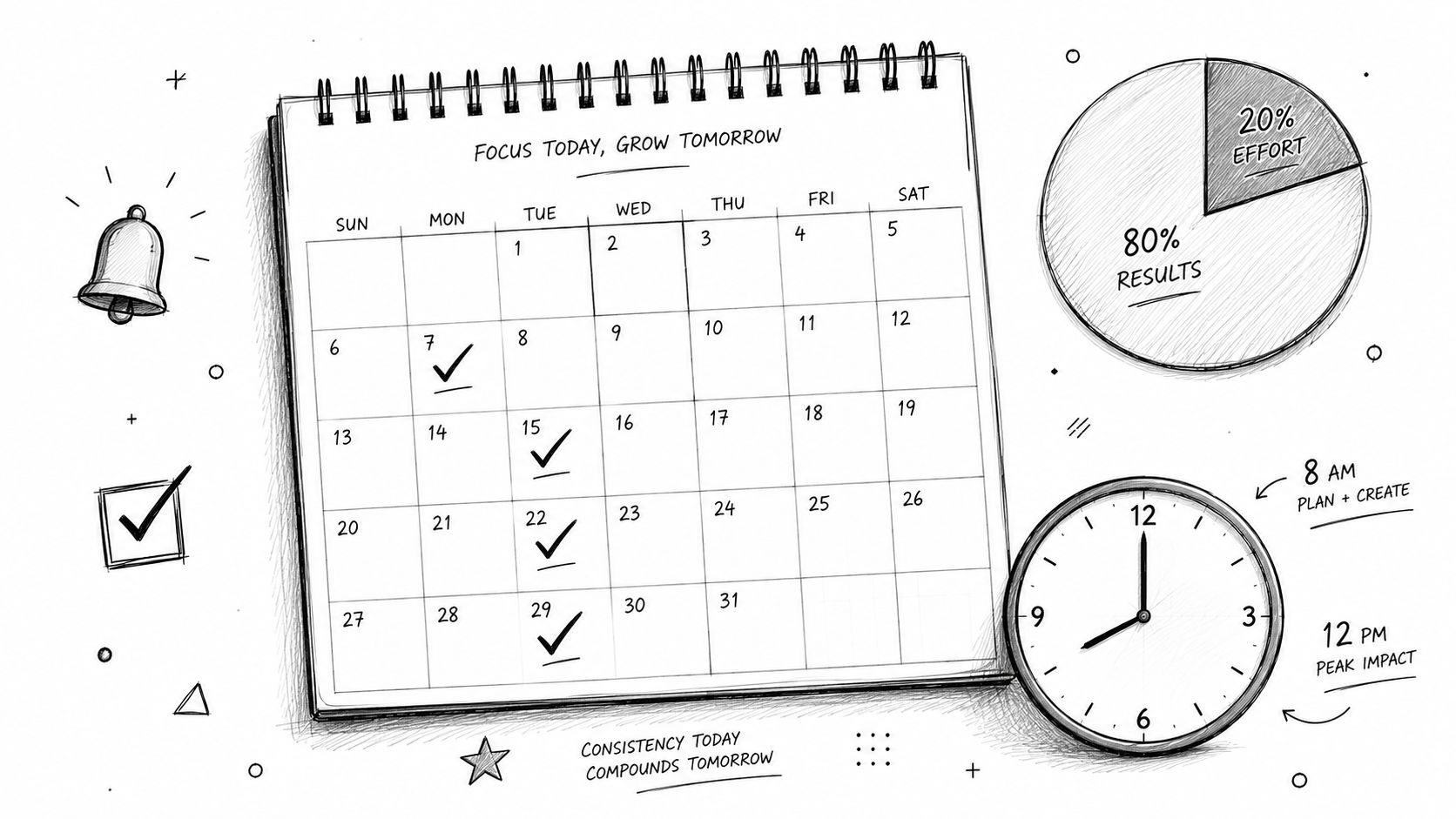
The most reliable cadence is consistency first, volume second. Buffer's analysis of more than 2 million posts identified 2 to 5 LinkedIn posts per week as the sweet spot for sustainable growth. For individual creators, a steady rhythm of 3 to 5 posts weekly tends to work especially well. That's enough frequency to stay visible without pushing quality off a cliff.
The biggest mistake I see is copying the output of creators with teams. Founders and executives usually don't need a daily publishing grind. They need a repeatable system that still leaves time for actual work.
A practical weekly setup looks like this:
Practical rule: Consistency beats intensity. A dependable three-post rhythm is stronger than a burst of daily posting you can't maintain.
The 80/20 framing is useful here. Keep most posts educational, observational, or story-based, and reserve a smaller share for direct promotion. If every post points back to your offer, people start reading with their guard up. If most posts are helpful, promotional moments feel earned.
This visual captures the discipline behind a sustainable publishing habit:
The first line does one job. It earns the second line.
On LinkedIn, people decide fast whether your post is worth expanding. If your opening sounds generic, the rest of the post never gets a chance. Strong hooks don't need hype. They need tension, clarity, or a point of view strong enough to interrupt a scroll.
A good opening line usually does one of three things:
These work because they create a reason to continue. Not fake suspense. Useful suspense.
If you want a deeper framework for writing stronger post intros, this guide to compelling headlines is worth keeping in your workflow.
Most LinkedIn reading happens in compressed attention windows. Long preambles waste the most valuable real estate in the post.
Use these rules when drafting:
What doesn't work is trying to sound dramatic for its own sake. “You won't believe this” belongs in clickbait, not in a professional brand. Authority on LinkedIn often looks plain at first glance. It's plain in a precise way.
What do you want this post to do. Get reach inside LinkedIn, or send people somewhere else? Decide that before you draft, because the format should follow the goal.
LinkedIn has a clear incentive to keep attention on-platform. Posts that can be consumed without leaving the feed usually have an easier time earning early engagement. That is why text posts, document posts, image posts, and videos uploaded directly to LinkedIn tend to fit personal-brand growth better than posts built around an external link.
The practical mistake I see is treating every post like a traffic post. If you publish a newsletter, podcast, or blog, it is tempting to paste the URL into the post and call it done. That saves time, but it often weakens distribution. A stronger approach is to turn the original asset into a native version first, then use the external link only when it serves a clear purpose.
A YouTube link asks the reader to leave LinkedIn before they have fully engaged with your idea. A native video lets them consume the point immediately. The same logic applies to written content. Instead of leading with a blog link, extract the sharpest insight and publish it as a self-contained post, then offer the full article to people who want more depth.
Repurposing functions as a real operating system for personal branding, not a content chore. One good idea can become multiple native assets that match how LinkedIn distributes content and how professionals read in the feed. If you want a stronger framework for turning expertise into story-led posts, this guide to storytelling for personal branding is a useful next step.
Take one article or core idea and rebuild it into formats that belong on LinkedIn:
Keep the post valuable on its own. Readers should get the main point without clicking away.
There is a trade-off here. If your priority is lead capture, webinar signups, or direct blog traffic, external links are fine. Use them on purpose. If your priority is visibility, engagement, and audience growth, native content usually gives you a better shot.
This matters even more for personal brands than company pages. Institutional content can get away with polished summaries and outbound links because the brand already carries weight. Individual professionals usually grow faster by publishing native posts that feel complete, useful, and clearly shaped by personal expertise.
People don't follow personal brands for information alone. They follow them for interpretation.
Two professionals can teach the same lesson about hiring, product strategy, or leadership. The one who wraps that lesson in a lived experience will usually be more memorable. That's because stories help readers attach your expertise to a human point of view.
Strong LinkedIn storytelling usually follows a simple pattern. Start with a real situation, show the tension, then land on the lesson. The story earns attention. The lesson earns authority.
The nuance for leaders is knowing where vulnerability should stop. Guidance around LinkedIn increasingly encourages openness, but the gap between vulnerability and professional authority is still underdefined for executives and founders. In practice, that means sharing a struggle only after you can frame what you learned and how you handled it. If the post reads like unresolved emotional processing, it weakens trust instead of building it.
A better structure looks like this:
If you want to sharpen that approach, this storytelling guide for personal branding gives a useful framework for turning lived experience into strong content.
This image gets at the idea behind reflective content that still teaches:

A story-heavy post fails when the reader can't extract anything useful from it. That's why “story to lesson” is a better rule than “be vulnerable.”
Share the part of the story that helps the reader think better, not every detail that happened to you.
Reid Hoffman-style founder reflection works because the post usually points outward. It doesn't ask the audience to admire the storyteller's honesty. It helps them make a better decision.
What happens after you publish decides whether the post keeps traveling or stalls out.
On LinkedIn, distribution and relationship-building are tied together. A post can have a strong hook and a clear story, but if the comments sit unanswered, you cut off one of the main signals that the conversation is still active. You also miss the easiest way to turn a single post into trust, profile visits, and future content ideas.
A common best practice is to stay close to the post right after publishing and reply while the first wave of comments is coming in. The exact timing matters less than the habit. Be present early enough to keep the discussion moving.
Short acknowledgments are fine occasionally, but they do very little for reach or trust. Good replies add something:
That approach helps on two levels. LinkedIn sees active discussion under the post, and your audience sees that you are there to exchange ideas, not just broadcast.
The best personal-brand operators do not separate posting from discussion. They use the comment section to extend the post.
If a reader raises a smart objection, answer it clearly. If several people ask the same follow-up, that is often your next post. If someone adds a strong example, reference it and keep the thread going. This is one of the most practical ways to blend algorithm-aware behavior with authentic presence. You are feeding distribution while collecting language, pain points, and angles you can repurpose later.
One operational rule helps a lot. Do not publish when you know you will disappear into meetings for the next three hours. Post when you can stay with the conversation.
A thoughtful comment thread usually does more for a professional brand than a pile of reactions with no real discussion.
Comments also send people to your profile. If the thread is strong and your profile is weak, you lose momentum at the point of interest. Before you push harder on engagement, make sure your profile supports that attention with a clear promise, relevant proof, and a reason to follow. This LinkedIn profile optimization guide for career growth is a useful checklist for tightening that handoff.
Every post sends people somewhere, even if you never include a link. It sends them to your profile.
That profile has to answer a few fast questions. Who are you? What do you help with? Why should someone follow you? If your profile is vague, your content has to work harder than it should.
There's a major distribution advantage in posting from a person instead of a brand page. Personal profile posts average 9,265 impressions per post, compared with 1,386 for company pages. That gap is one reason professionals building personal brands should publish through founder, executive, or subject-matter-expert profiles first.
But reach only matters if the profile converts attention into interest. Tighten the basics:
If you want a solid benchmark to work from, this LinkedIn profile optimization guide covers the positioning details well.
This is what strong profile presentation looks like in principle:
LinkedIn's algorithm weighs profile-content alignment. If your headline says one thing and your posts constantly jump across unrelated subjects, your brand feels diluted.
A SaaS founder can still post about leadership, hiring, and growth. But those themes should feel like extensions of the same professional identity, not a string of disconnected opinions.
Why do some LinkedIn posts earn attention fast while others disappear, even when the ideas are equally strong?
Format is often the difference. LinkedIn does not reward every content type the same way in every situation, and your audience does not consume every idea the same way either. If you want to build a personal brand that feels credible and consistent, choose the format that best carries the message. Then turn strong ideas into multiple native assets instead of posting the same text pattern every time.
Use text when the idea is sharp and self-contained. Use document posts when the value comes from sequence, examples, or visual structure. Use native video when your delivery changes how the message is received, especially for nuanced takes, contrarian views, or trust-building content where tone matters.
A simple operating rule helps here:
Carousels work best when each slide does one job. One point. One example. One transition to the next idea. If a slide looks crowded, split it. If the caption has to explain everything the slides failed to make clear, simplify the asset before you publish.
Here's a practical walkthrough if you're adding video to your mix:
If you need help with the mechanics, this guide on posting videos on LinkedIn covers the upload process.
The strongest personal brands do not rely on constant new inspiration. They reuse proven ideas in formats that fit different moments in the feed.
A client lesson can begin as a short text post. If it gets traction in comments, turn it into a document post with a clearer step-by-step structure. If the topic has personality or tension, record a short video version that adds context, conviction, and lived experience. That approach fits both the platform and the workload. It also helps you balance algorithm-friendly native content with authentic storytelling people remember.
Repetition becomes a problem only when the packaging and wording stay identical. Repurposing works when each version adds a different kind of value. Text sharpens the point. Slides organize the logic. Video adds trust.
What can someone do with your post in the next 10 minutes?
That question improves LinkedIn content fast. Posts get saved, shared, and sent around teams when they help someone make a decision, fix a problem, or try a better approach the same day. Strong personal brands are built on that kind of usefulness. The algorithm rewards engagement, but readers reward clarity and application.
A smart opinion is a starting point. A useful post goes further and shows the reader how to apply the idea in real work.
If you tell people to post more consistently, define the operating standard. For example: pick three content themes, publish on two fixed weekdays, and turn one strong post into a follow-up format if comments reveal demand. If you tell people to build trust, show the mechanics. Share the kind of client lesson, mistake, or behind-the-scenes decision that gives the audience something concrete to learn from.
Useful posts usually include a few practical ingredients:
Depth matters here. Short posts can work, especially when the point is sharp or the story carries the message on its own. But if the post is meant to teach, it needs enough detail to move from “good thought” to “I can use this.” Brevity gets attention. Specificity gets saves.
Every post does not need to become a mini playbook. It does need to leave the reader with a clear action, question, or decision.
One simple test works well: after drafting the post, ask what the reader should do differently after reading it. If the answer is fuzzy, the post probably needs one more layer of specificity. Add a checklist. Add a short example. Add the sentence you would say to a client who asked, “How would I use this?”
That approach also makes repurposing easier. A post with a defined takeaway can become a carousel, a short video, or a comment thread follow-up without losing the core lesson. That is the blueprint that works on LinkedIn. Native content that fits the feed, authentic experience that gives it credibility, and practical instruction that gives people a reason to come back.
What happens if you treat LinkedIn like a publishing tool instead of a relationship tool?
Reach usually gets weaker over time. Personal brands grow faster when posting and participation work together. Strong LinkedIn operators do both. They publish clear ideas, then show up in the conversations already happening around those ideas.
A practical routine helps. Before you publish, spend 10 to 15 minutes engaging with other people's posts. The goal is not to trigger a hack. It is to re-enter the feed as an active peer, not a drive-by poster.
That matters even more for smaller accounts. If your network is still developing, early visibility often comes from recognizable names seeing you in context first, then noticing your post when it appears a little later.
Use a tight pre-post checklist:
The trade-off is straightforward. Broad commenting can raise raw visibility, but it can also blur what you want to be known for. Focused commenting grows slower at first, yet it builds the right associations. For professionals building a genuine personal brand, that second path usually compounds better.
Timing still matters, but use it as a starting point, not a rule. Midweek mornings often perform well for many professional audiences, as noted earlier. The better approach is to match your posting window to when your specific network is active, then support the post with comments before and after it goes live.
This is also where repurposing pays off. A strong post can produce three separate engagement moves: a pre-post comment on someone else's related discussion, the post itself, and a follow-up reply thread that expands on one argument or example. One idea becomes multiple touchpoints in the same professional conversation.
Done well, strategic engagement makes the algorithmic side and the human side reinforce each other. People recognize your name before they see your post. Then they have a reason to stop and read.
| Strategy | Implementation Complexity 🔄 | Resource Requirements ⚡ | Expected Outcomes 📊 | Ideal Use Cases 💡 | Key Advantages ⭐ |
|---|---|---|---|---|---|
| Post Consistently and Strategically (The 80/20 Rule) | 🔄 Moderate, ongoing scheduling and discipline | ⚡ Moderate, regular content creation, calendar tools, batching time | 📊 Steady visibility and engagement growth; algorithmic favor | 💡 Audience growth, thought leadership, brand rhythm | ⭐ Reliable reach, trust-building, predictable engagement |
| Craft Compelling Headlines and Opening Lines | 🔄 Moderate, copy skill + continuous testing | ⚡ Low, writing time and A/B testing | 📊 Large lift in CTR and early engagement (higher feed reach) | 💡 Hook-first posts, viral attempts, crowded feeds | ⭐ Stops scrolls quickly; boosts time-on-post and shareability |
| Use Native Content and Avoid External Links | 🔄 Low, tactical change in post format | ⚡ Moderate, uploads, bandwidth for video/pdf | 📊 Higher reach (2–5x) and longer on-platform engagement | 💡 Media-rich posts where platform reach matters | ⭐ Maximizes distribution and watch-time on LinkedIn |
| Tell Authentic Stories and Share Personal Insights | 🔄 Moderate, narrative craft and vulnerability | ⚡ Low–Moderate, writing time and selective editing | 📊 Deeper emotional engagement; higher comments and loyalty | 💡 Personal branding, trust-building, authority creation | ⭐ Emotional resonance, stronger community ties |
| Engage Actively in Comments Section (Comment Strategy) | 🔄 High, time-sensitive, sustained responsiveness | ⚡ High, daily time (15–30 min per post) or team support | 📊 Significant algorithmic boost and community growth | 💡 Launch days, high-priority posts, community activation | ⭐ Creates conversation momentum and profile visibility |
| Optimize Profile as Your Landing Page (Profile Optimization) | 🔄 Medium, one-time overhaul + periodic updates | ⚡ Low–Moderate, copywriting, photos, featured assets | 📊 Higher conversion of visitors to followers/customers (~30%+) | 💡 Converting new visitors, sales, executive branding | ⭐ Improves credibility, discoverability, conversion |
| Leverage Multimedia (Video, Carousels, Images) for Higher Engagement | 🔄 High, production and editing workflow | ⚡ High, equipment, design skills, editing time | 📊 Much higher engagement (5–10x); increased dwell time | 💡 Visual storytelling, product demos, complex ideas | ⭐ Strong attention-grabbing, shareability, algorithm priority |
| Provide Actionable Insights and Clear Takeaways | 🔄 Moderate, requires expertise and clear structure | ⚡ Moderate, research, examples, templates | 📊 More saves/shares and perceived practical value | 💡 B2B education, how-to posts, lead-generation content | ⭐ Positions you as a practical expert; repeatable value |
| Engage Your Network Strategically (Relationship Building) | 🔄 Moderate–High, deliberate, consistent outreach | ⚡ Moderate, daily engagement time (15–30 min) | 📊 Expanded visibility and reciprocal engagement networks | 💡 Networking, partnership development, organic reach | ⭐ Builds genuine relationships and long-term opportunities |
The strongest LinkedIn presence rarely comes from a single brilliant post. It comes from a system that compounds. That system has a few core parts: a consistent cadence, strong opening lines, native content, personal storytelling with boundaries, active comment management, a profile that converts curiosity into follows, varied formats, useful takeaways, and real network participation.
What makes these LinkedIn posting best practices effective is how they work together. Consistency helps the algorithm trust your presence. Strong hooks help people stop. Native formats keep attention on-platform. Stories make expertise memorable. Comments turn posts into conversations. Your profile closes the loop by explaining who you are and why your perspective matters. When these pieces align, your content starts to feel less like isolated updates and more like a recognizable body of work.
There are trade-offs in every part of the process. Posting more often can increase visibility, but weak posts erode trust. Vulnerability can humanize your brand, but leaders still need judgment. Multimedia can improve engagement, but only if the format matches the idea. Even repurposing has a line. It saves time when you adapt the message to the medium. It hurts your brand when every post feels cloned.
That's why the smartest way to improve is incremental. Pick one or two habits and tighten them first. For some professionals, that's a realistic posting cadence. For others, it's rewriting the first two lines of every post until the openings are sharper. For many, the fastest win is treating the comments section as part of the content, not an afterthought.
Keep the long game in mind. LinkedIn rewards professionals who show up with a coherent point of view over time. You don't need to sound like everyone else who talks about growth, leadership, or entrepreneurship. You need to sound like someone who has done the work, thought carefully about it, and can explain it clearly.
If you're refining your broader LinkedIn posting strategy, measure what helps you build trust, not just what inflates impressions. Look for signals that your content is attracting the right conversations, profile visits, inbound opportunities, and repeat readers.
That's the true benchmark. Not whether one post spikes, but whether your presence keeps getting clearer, stronger, and more trusted with every month you stay in the game.
If you want help turning your expertise into a consistent LinkedIn presence without sounding generic, Legacy Builder can do the heavy lifting with you. They help founders, executives, and professionals turn real experience into authentic content, optimize profiles, and build a steady publishing system that supports long-term brand growth.


You could – but most in-house teams struggle with the nuance of growing on specific platforms.
We partner with in-house teams all the time to help them grow on X, LI, and Email.
Consider us the special forces unit you call in to get the job done without anyone knowing (for a fraction of what you would pay).
Short answer – yes.
Long answer – yes because of our process.
We start with an in-depth interview that gives us the opportunity to learn more about you, your stories, and your vision.
We take that and craft your content then we ship it to you. You are then able to give us the final sign-off (and any adjustments to nail it 100%) before we schedule for posting.
No problem.
We have helped clients for years or for just a season.
All the content we create is yours and yours alone.
If you want to take it over or work on transitioning we will help ensure you are set up for success.
We want this to be a living breathing brand. We will give you best practices for posting and make sure you are set up to win – so post away.
Subscribe to our newsletter and get insights on how to grow your personal brand.
