.svg)
Subscribe to our newsletter and get insights on how to grow your personal brand.
Thank you! Your submission has been received!
Oops! Something went wrong while submitting the form.
.svg)


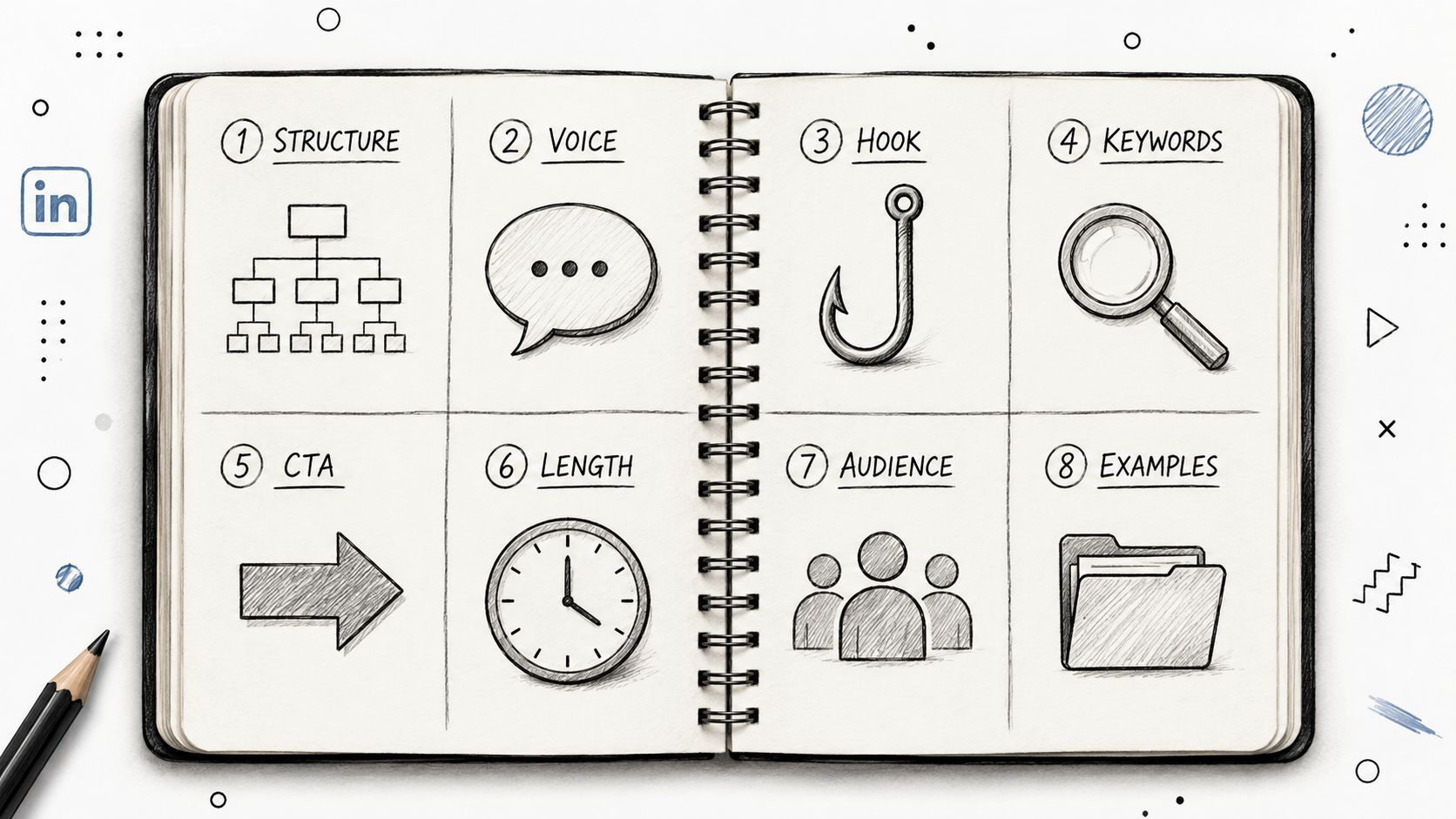
A polished job history isn't enough to make a LinkedIn profile persuasive. LinkedIn's own guidance has treated the About section as a foundational part of profile completeness for more than a decade, and its profile data guidance reports that challenge-focused summaries increase reading time by 64%, while story-based formats generate 3.2 times more meaningful replies. LinkedIn's profile guidance and its summary-writing recommendations point to the same conclusion: your About section should do more than describe your career.
It should function as a conversion path. A visitor should quickly understand who you serve, what problem you solve, why your perspective is credible, and what to do next. That applies whether you're a founder attracting buyers, an executive building authority, or a creator turning expertise into opportunities.
These eight LinkedIn About section best practices cover positioning, story, audience, proof, search visibility, personality, calls to action, and maintenance. The examples stay practical and adaptable, with scannable formatting and a focus on the story behind email tools.
Core principle: Your About section isn't a biography. It's the shortest useful path from “Who is this?” to “This person can help me.”
Your headline is often the first positioning statement people see beside your name. A job title tells visitors where you sit. A strong headline tells them why your work matters to them.
“CEO at TechCorp” may be accurate, but it leaves valuable context unused. “CEO helping SaaS founders build scalable growth systems | Leadership Strategy” gives prospects, recruiters, and peers more reasons to click. The same principle works for creators. “Content Writer” is broad. “Content Strategist helping technology founders turn expertise into thought leadership” communicates audience, service, and outcome.
Use the headline to connect three elements:
Vertical bars can separate ideas cleanly, but they won't rescue a vague message. Don't cram every skill into the field. Choose the terms that support your current commercial or professional focus, then move secondary keywords into your About section, Experience entries, and Skills.
A founder might write, “SaaS Founder helping early-stage teams clarify product positioning and customer acquisition.” An executive could use, “Chief People Officer | Building resilient leadership teams and accountable cultures.” A creator might choose, “B2B Creator translating complex technology into clear, useful stories.”
Review these LinkedIn profile headline examples for patterns, then write a version that sounds like a person, not a keyword list. Update it when your specialization changes. A headline that matched your old role can undermine the About section you worked hard to improve.
People trust expertise more readily when they understand where it came from. Your opening story doesn't need a dramatic hardship or a polished founder myth. It needs a specific reason your current work exists.
Start with a moment that changed how you see the problem you now solve. A founder might explain how repeated customer confusion exposed a positioning gap. An executive might describe a failed transformation initiative that taught them why leadership behavior matters more than strategy documents. A creator might share how struggling to explain complex work led to a passion for clear communication.
Keep the origin narrative brief. Three or four sentences can establish context without making the reader wait for your value proposition. A useful structure is:
The story should point toward the audience's problem, not remain an autobiography. If your personal history doesn't explain what you do for others today, it belongs elsewhere.
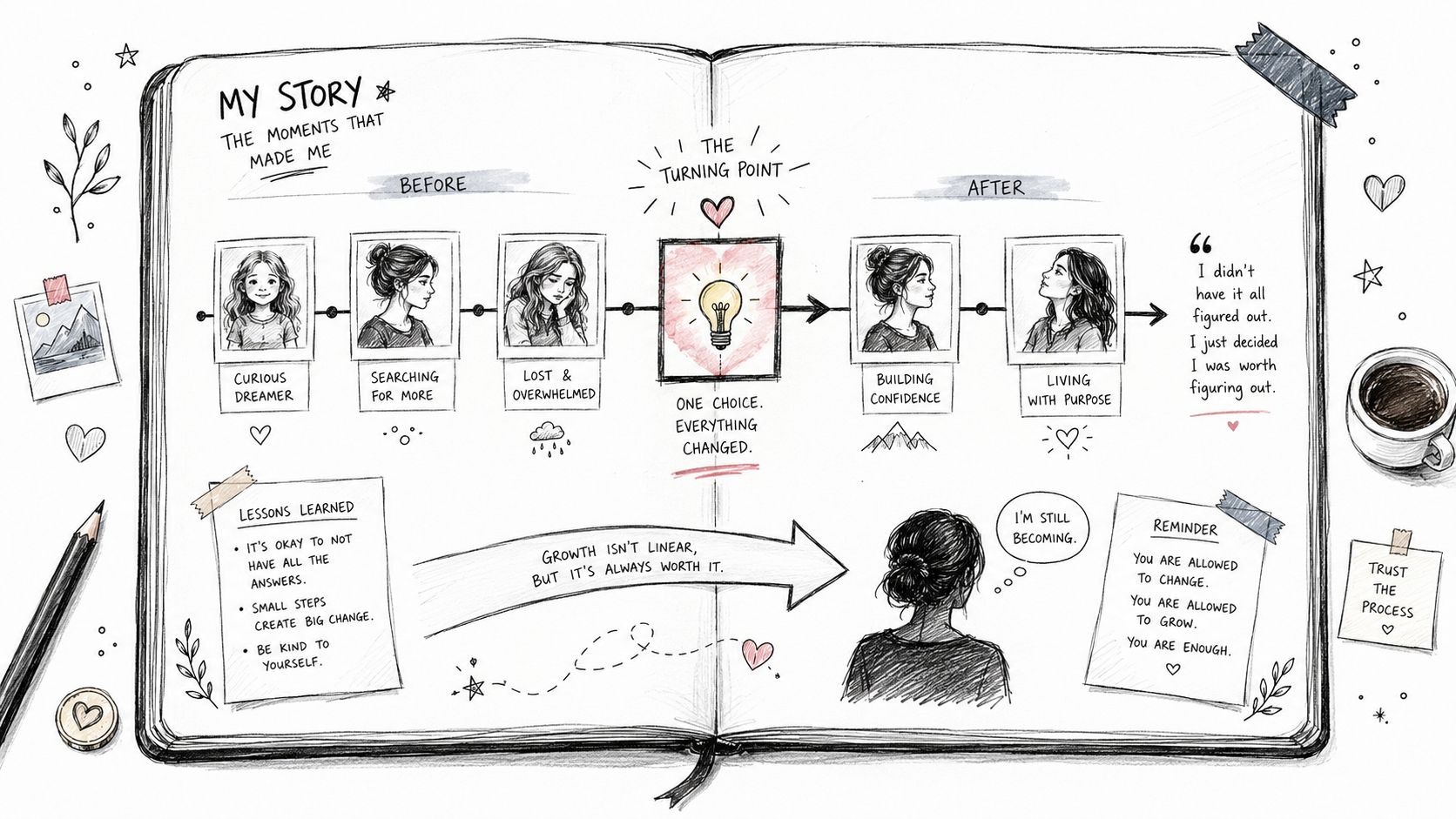
The best personal-brand stories create recognition. A reader should see their own challenge in your experience and understand why you're equipped to help.
Avoid vague openings such as “I've always been passionate about innovation.” Replace them with an observable detail, a hard-earned lesson, or a precise shift in direction. For more guidance on connecting personal history to professional positioning, explore how to tell your story and build an unforgettable brand.
If you use video or other media to deepen the narrative, introduce it after the written opening has done its job.
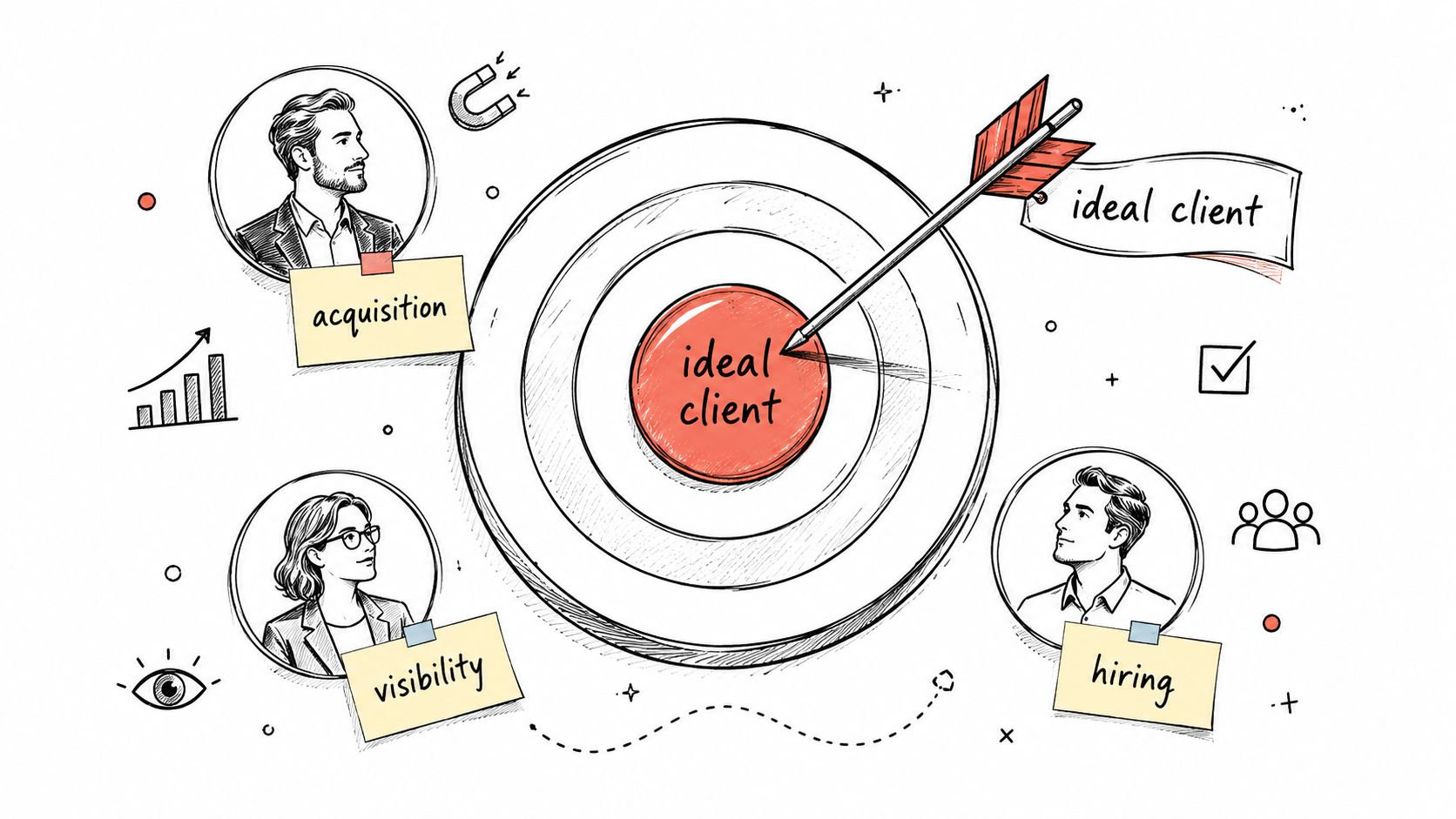
Trying to speak to clients, recruiters, investors, peers, and future employers in the same opening usually produces bland copy. The About field can support several audiences, but it still needs a primary reader and primary outcome. Recent About-section guidance identifies this audience tension as one of the central practical challenges of profile optimization.
Choose the person most likely to take the next step you want. For a founder, that might be a buyer or strategic partner. For an executive, it might be a hiring committee or industry peer. For a creator, it may be a brand client, subscriber, or event organizer.
Then name the problem in the language that audience uses. “I help businesses grow” is too broad to create recognition. “I help email marketers improve subscriber loyalty without relying on clickbait” gives the right reader a clear reason to continue.
A practical audience statement might look like this:
Audience before autobiography: Name the person you help, then describe the costly or frustrating problem they're trying to solve.
Use specific roles, business types, or situations:
You don't need to describe every pain point your audience has. Pick the problems your work solves best, then connect them to the proof and CTA that follow. If your audience has changed, rewrite this passage rather than forcing an old market into your current profile. This guide to finding your target audience can help sharpen the language before you edit.
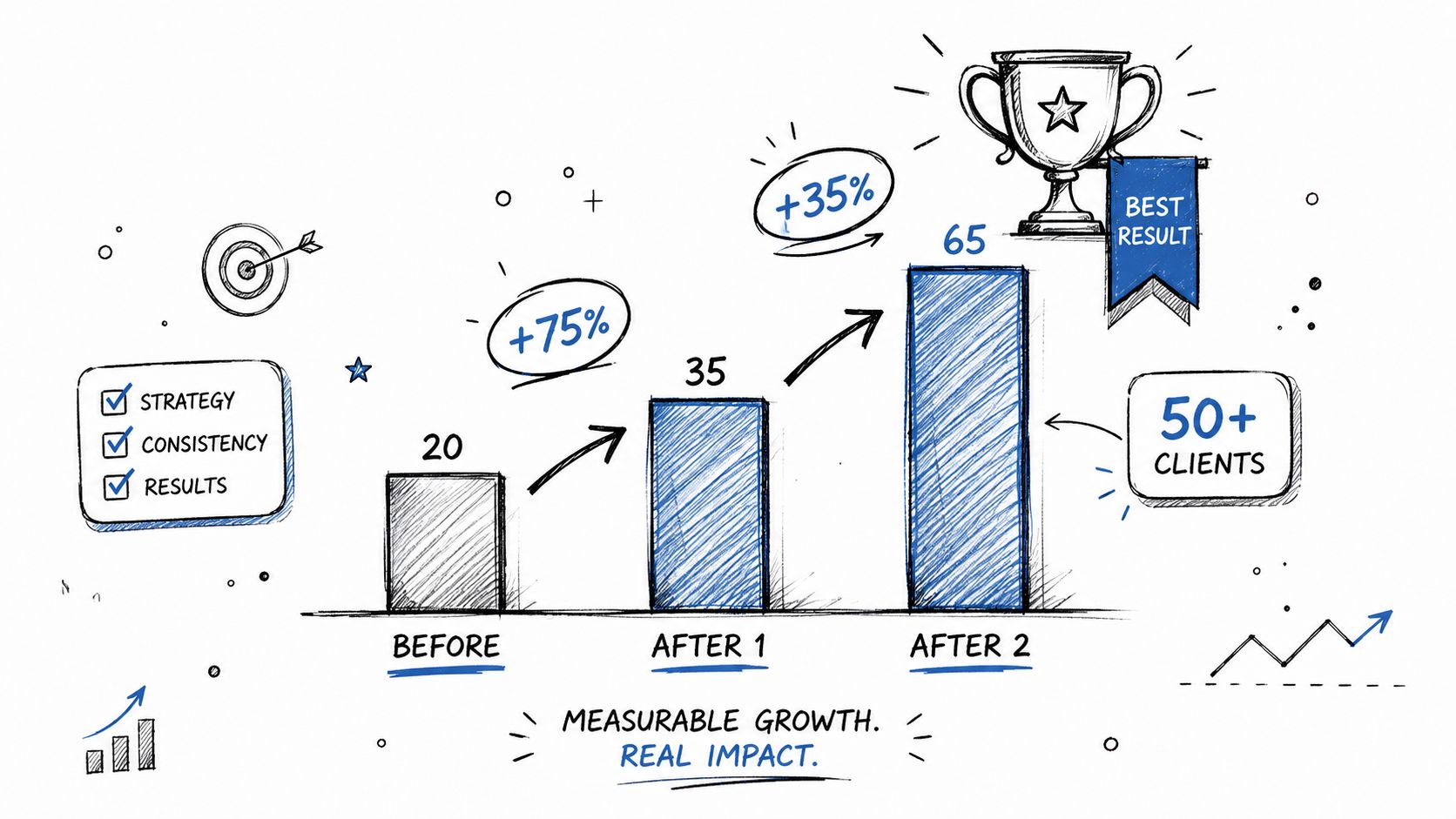
Credibility comes from evidence. Adjectives make claims, while concrete outcomes let readers judge your impact. Replace labels such as “strategic leader,” “results-driven operator,” and “passionate advisor” with proof that connects your work to a meaningful result.
Choose metrics you can explain and defend. They may show revenue impact, conversion improvement, team growth, delivery speed, customer retention, audience development, or program scope. Context matters as much as the figure. “Improved onboarding” says little. “Reduced onboarding friction by redesigning the first customer handoff” gives readers a clearer view of the work, even without a public metric.
The available field benchmark reports that About sections containing at least three concrete metrics generated 280% more connection requests from decision-makers than vague sections. The benchmark and its Hook, Proof, CTA framework supports a practical rule: include measurable proof when it is real, and never manufacture precision.
A useful achievement statement combines an action, its context, and an outcome:
Add a defensible metric when you can share one. Confidentiality may limit the detail, so use scope and specificity instead. Name the type of organization, the decision you influenced, the system you built, or the timeframe in qualitative terms.
Select proof that supports the promise near the top of your About section. A creator seeking speaking opportunities should emphasize audience education and communication. A founder attracting customers should show the customer problem and business outcome. An executive seeking board work should highlight governance, transformation, and organizational judgment.
Each proof point should lead toward a clear next step. Help the reader connect your story to their needs, then understand why the result matters to the people you serve. That connection turns achievements into part of a conversion path rather than a detached list of accomplishments.
Your About section serves two audiences: people judging your relevance and LinkedIn members searching for expertise. Integrate keywords naturally through context. Semantic relevance comes from the complete context, not from forcing a term into every available sentence.
Start with the language your ideal audience uses. Search LinkedIn for phrases such as “founder coaching,” “executive coaching,” “thought leadership,” “personal branding,” “product-market fit,” or “customer acquisition.” Compare those terms with the wording clients use in conversations, proposals, and search queries. The goal is terminology that matches both your work and your audience's intent.
Place priority terms where they support the reader's decision:
A SaaS founder could write: “I work on product-market fit, customer acquisition, and growth strategy with teams building their first repeatable sales motion.” A leadership coach might say: “My work combines executive coaching, leadership development, and organizational culture for senior teams managing growth.”
Repeating one phrase in every paragraph makes the copy sound artificial and weakens the reading experience. Use related language to show the full scope of your expertise. A content strategist may mention editorial systems, founder visibility, brand storytelling, and executive communication alongside “content strategy.” A recruiter can clarify a specialty through role names and the problems those roles address.
Keep terminology consistent across your headline, Experience section, Skills, and featured work. Give each field a distinct job instead of copying the same paragraph across your profile. Search visibility matters when the visitor finds a coherent professional position after clicking, understands who you help, sees evidence of the work, and knows where to go next.
A strong About section can lose momentum in its final lines. “Feel free to connect” sounds friendly, but it doesn't tell the right visitor why connecting would be useful or what conversation to start.
Choose one primary action. A service-based founder might invite a strategy conversation. A creator might direct readers to a newsletter or portfolio. An executive might welcome a conversation about advisory work, speaking, or leadership development. The CTA should match the profile's main purpose, not every possible opportunity.
Use a simple sequence:
For example: “If you're a SaaS founder working through unclear positioning, message me with the word ‘positioning' and tell me what's blocking growth. I'll reply with the first question I'd ask about your market.” Or: “If you're building a stronger executive voice, subscribe to my weekly notes on leadership communication.”
“Visit my website” is less useful than “Review my advisory work and recent leadership essays.” “Let's connect” is less useful than “Send me a message with the challenge your team is facing.” Specific instructions reduce uncertainty and make the interaction easier to begin.
Keep the CTA near the end, after your story, audience, and proof have earned attention. LinkedIn's About field can hold up to 2,600 characters, while the opening 300 characters typically carry the visible opening before “See more.” CareerBldr's About-section guidance recommends using the full space strategically, so the ending can supply context without weakening the first impression.
Don't add several competing CTAs. A profile that asks readers to book a call, download a guide, join a newsletter, follow a podcast, and connect with a message creates decision fatigue. Pick the action that best serves your current business goal, then change it when that goal changes.
Your About section should sound like you at your best in a thoughtful professional conversation. It shouldn't read like a legal document, a résumé pasted into a text box, or a motivational speech.
Credibility comes from specificity. Personality comes from voice, perspective, and selective detail. You can establish both in the same paragraph: “Years in technology leadership taught me that strategy fails when teams don't understand the decision behind it. I now help executives communicate priorities clearly, build accountable teams, and make complex change easier to act on.”
Contractions help the writing sound spoken. “I'm” usually feels more direct than “I am.” “I don't believe in publishing for the sake of visibility” creates a point of view that “My philosophy is to maximize strategic content alignment” does not.
You don't need to disclose private information or list hobbies unrelated to your professional promise. Choose a detail that reinforces how you work. A creator might say, “I still keep a notebook of awkward customer questions because they often reveal the clearest content ideas.” An executive might mention a habit of asking quieter team members for their view before making a decision.
Use personality to make your expertise easier to remember. Avoid jargon such as “synergy,” “disruptive,” and “thought leader” unless you explain what those words mean in your actual work. A clear opinion is more distinctive than a stack of flattering labels.
Read the draft aloud. If you wouldn't say a sentence to a prospective client, colleague, or hiring manager, rewrite it. The right tone sits between casual and corporate. It respects the reader's time, demonstrates judgment, and leaves enough warmth for someone to start a conversation.
A strong About section is a conversion path, not a permanent biography. It should connect your story, audience, proof, discoverability, and one clear next step. Because your work changes, the language that attracts the right visitor can become inaccurate or irrelevant.
Review the section whenever your role, audience, offer, or point of view changes. A founder moving from consulting to software needs different positioning. An executive taking on board work needs proof related to governance and strategic oversight. A creator shifting from general marketing education to email strategy should revise the promise, keywords, examples, and CTA together.
Use clear triggers instead of editing at random:
Keep earlier drafts in a simple document. Comparing them over time shows whether your positioning is becoming clearer or merely longer. Review profile views, connection quality, messages, and the conversations your CTA generates. A change does not need a dramatic result to be useful. The practical test is whether the section attracts better-fit people and gives them a clear reason to continue.
Update related profile areas at the same time. If your About section presents you as a leadership advisor while your headline and Experience entries emphasize an old operating role, visitors may hesitate. Consistency builds trust, while regular maintenance keeps your promise, proof, keywords, and next step aligned. LinkedIn's profile-completeness framework also treats profile freshness as part of a complete presence, reinforcing the value of reviewing the section as your professional direction develops.
| Item | 🔄 Implementation Complexity | ⚡ Resource / Effort | 📊 Expected Outcomes | ⭐ Ideal Use Cases | 💡 Key Advantage / Tip |
|---|---|---|---|---|---|
| Craft a Compelling Professional Headline Beyond Job Title | Low, copywriting + keyword selection | Low, ~15–60 min; periodic tests | ↑Search visibility and click-throughs | Professionals needing immediate discoverability | Lead with transformation; include 3–5 keywords; test variations |
| Tell Your Authentic Story with a Clear Origin Narrative | Medium, crafting a concise, vulnerable narrative | Moderate, writing + review (30–90 min) | Stronger emotional connection and differentiation | Career pivots, founders, personal brands | Start with "Before I..." ; keep to 3–4 sentences; balance personal/professional |
| Clearly Define Your Target Audience and Their Pain Points | Medium, audience research and positioning | Moderate, persona work and language testing | Higher-quality leads; fewer wrong-fit inquiries | Consultants, coaches, niche specialists | Use specific job titles/pain points; update as focus changes |
| Highlight Specific Achievements with Quantifiable Results | Medium–High, data collection and verification | Moderate, gather metrics, permissions, context | Increased credibility and trust; persuasive proof points | Growth, sales, case-study-driven roles | Use concrete numbers and before→after comparisons; refresh quarterly |
| Incorporate Strategic Keywords for Search Discoverability | Medium, keyword research and natural integration | Moderate, tools + competitor analysis; periodic updates | Improved algorithm ranking and targeted discovery | Professionals aiming for organic reach and recruiter searches | Research via LinkedIn autocomplete; avoid keyword-stuffing; monitor trends |
| Create a Clear Call-to-Action That Guides Next Steps | Low, decide single CTA and tracking method | Low, link/calendar setup; A/B testing | Higher conversion and clearer inbound opportunities | Lead generation, booking calls, promoting content/offers | Use one action verb, include direct link, test monthly |
| Balance Professional Credibility with Approachable Personality | Medium, tone calibration and editing | Low–Moderate, peer review, rehearsal | Greater engagement, trust, and approachable authority | Thought leaders, client-facing executives, coaches | Read aloud; include one personal detail; avoid corporate jargon |
| Regularly Update and Refresh Your About Section Content | Low–Medium, schedule and iterative edits | Ongoing, quarterly reviews, analytics tracking | Keeps profile current; signals activity to algorithm | Active professionals, evolving founders, marketers | Set calendar reminders; keep version notes; update after wins |
An effective LinkedIn About section reads like a short, well-structured journey. The reader meets a clear promise, recognizes a problem, sees evidence that you understand it, experiences a human voice, and receives one reasonable next step. Every sentence should help that journey continue.
Start by choosing the primary audience and outcome. Don't try to give equal space to every possible reader. A founder may prioritize qualified buyers. An executive may prioritize authority and advisory conversations. A creator may prioritize subscribers, collaborators, or clients. Other audiences can still find value in the section, but the opening message needs a center.
Open with an authentic hook that explains why your work matters. Then connect that origin story to the problem you solve today. Use concrete proof, including defensible metrics when you have them, and describe outcomes in language a non-specialist can understand. LinkedIn's own guidance positions the About section as a highly visible summary box, while its engagement guidance supports challenge-focused and story-based writing. That combination favors a narrative with a job to do, not a personal history with no destination.
Weave in keywords naturally as you explain your audience, method, and results. Don't sacrifice clarity for search visibility. A profile that ranks for a term but sounds generic won't create meaningful conversations. Use the words your audience searches for, then support them with the examples and perspective that make your positioning believable.
Keep personality in the draft. Your About section should show how you think, what you care about, and what a conversation with you might feel like. Professional credibility and warmth aren't competing goals. Specificity gives you authority, while a clear human voice gives people permission to reach out.
Finish with one CTA. Review the entire section as a reader journey instead of polishing isolated sentences. Does the first visible opening earn “See more”? Does the middle explain relevance and proof? Does the final line make the next action obvious?
Founders, executives, and creators who need help turning their stories into consistent, authentic personal-brand content can explore Legacy Builder. Its services connect content strategy, writing, design, profile optimization, and audience engagement, which can help maintain the message after the About section is updated.
Legacy Builder helps founders, executives, and creators turn personal stories and expertise into consistent LinkedIn content, including profile optimization, daily posting, engagement strategy, and a monthly newsletter. Visit Legacy Builder to see how its tailored content process can support a clearer About section and a stronger personal-brand presence.


You could – but most in-house teams struggle with the nuance of growing on specific platforms.
We partner with in-house teams all the time to help them grow on X, LI, and Email.
Consider us the special forces unit you call in to get the job done without anyone knowing (for a fraction of what you would pay).
Short answer – yes.
Long answer – yes because of our process.
We start with an in-depth interview that gives us the opportunity to learn more about you, your stories, and your vision.
We take that and craft your content then we ship it to you. You are then able to give us the final sign-off (and any adjustments to nail it 100%) before we schedule for posting.
No problem.
We have helped clients for years or for just a season.
All the content we create is yours and yours alone.
If you want to take it over or work on transitioning we will help ensure you are set up for success.
We want this to be a living breathing brand. We will give you best practices for posting and make sure you are set up to win – so post away.
Subscribe to our newsletter and get insights on how to grow your personal brand.
