.svg)
Subscribe to our newsletter and get insights on how to grow your personal brand.
Thank you! Your submission has been received!
Oops! Something went wrong while submitting the form.
.svg)


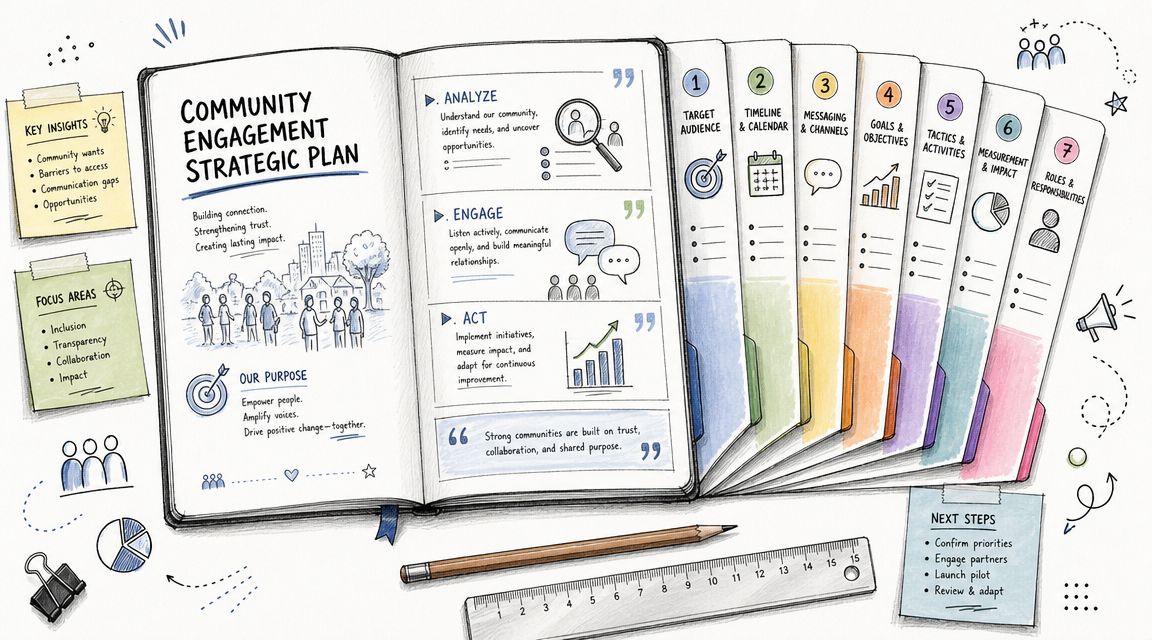
Stop following the usual advice on community building. Most “community engagement plan sample” content gives you a bland template, a few empty boxes to fill in, and no operating logic for what happens next. That's why so many plans die as soon as the kickoff meeting ends. The document exists. The engagement doesn't.
A real plan starts with structure, accountability, and measurable milestones. Public-sector guides consistently push teams to define objectives, audience segments, channels, timelines, and evaluation criteria before launch, then review and refine based on results, as outlined in GovStack's 6-step engagement planning guide. That's the part most businesses skip. They post, email, host an event, and call it strategy.
If you're running a SaaS company, local organization, or founder-led brand, you need a plan you can execute. You also need one that matches the decision you're asking people to influence. Low-stakes updates need information-sharing. Product direction, policy shifts, and partnership design need deeper involvement. If that sounds familiar, start with a stronger framework and borrow what already works. If you're already thinking about audience trust and retention in adjacent contexts, this breakdown pairs well with these enhancing patient experience strategies.
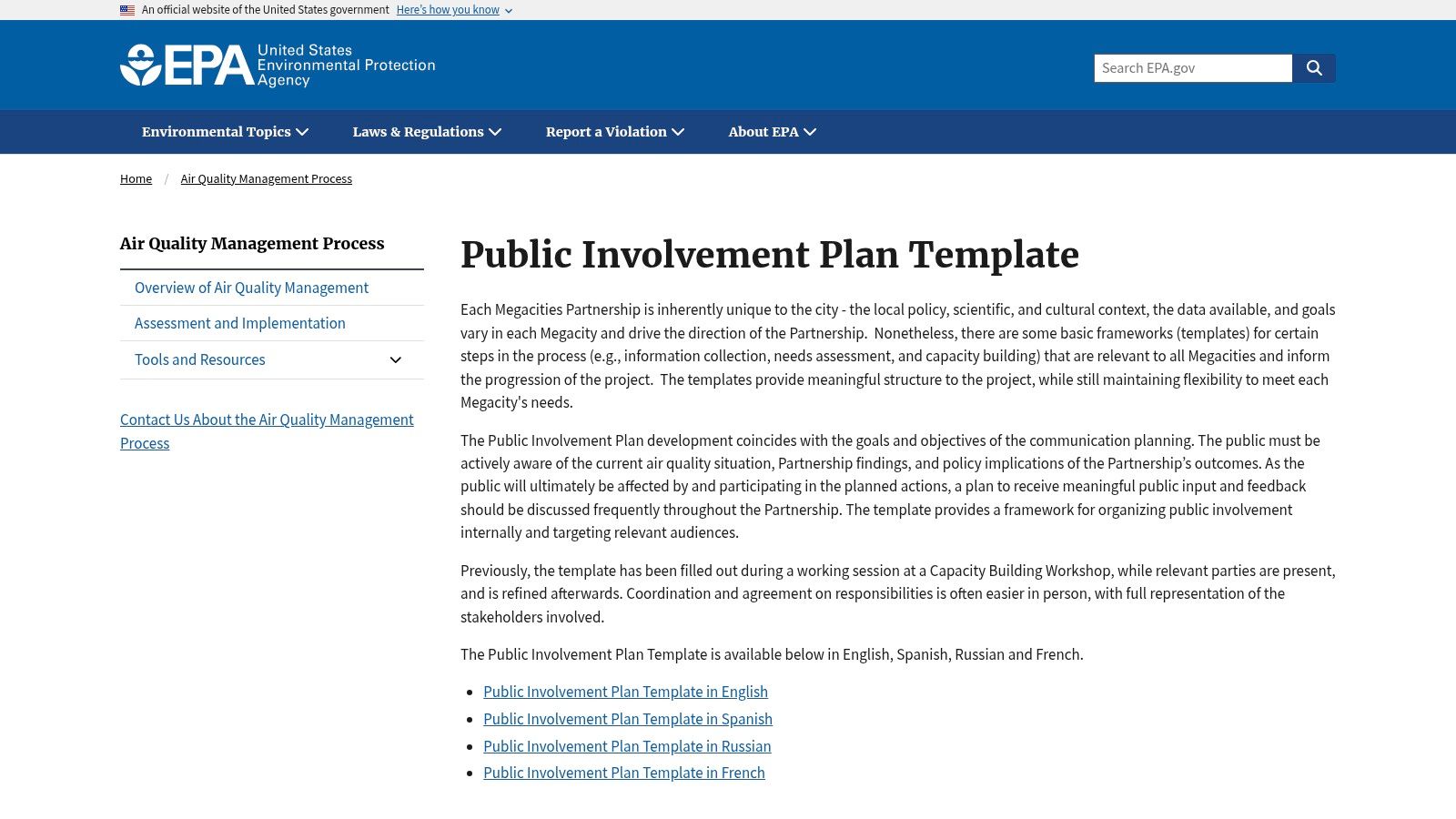
If you want a disciplined starting point, use the EPA's Public Involvement Plan Template. It's government-grade, which is exactly why it works. You get a framework built for transparency, stakeholder visibility, and two-way communication instead of a loose marketing worksheet.
This template is best for organizations dealing with scrutiny, compliance pressure, or public trust issues. That includes local service businesses expanding into a neighborhood, health organizations launching outreach, and SaaS teams rolling out changes that affect user workflows. The wording is air-quality specific, but the logic transfers cleanly.
Don't copy the terminology. Copy the structure.
Practical rule: If your plan only lists activities and not decision points, it isn't a community engagement plan. It's a content calendar.
For KPIs, keep it simple and measurable. Use participation counts, response rates, feedback volume, and satisfaction signals. That aligns with broader engagement measurement guidance that recommends tracking response rate, depth of engagement, sentiment balance, and feedback volume in a way that connects back to your original goals, as discussed in Maptionnaire's community engagement metrics overview.
The downside is tone. It reads like a federal document because it is one. That's not a problem if you rewrite the language before your team sees it.
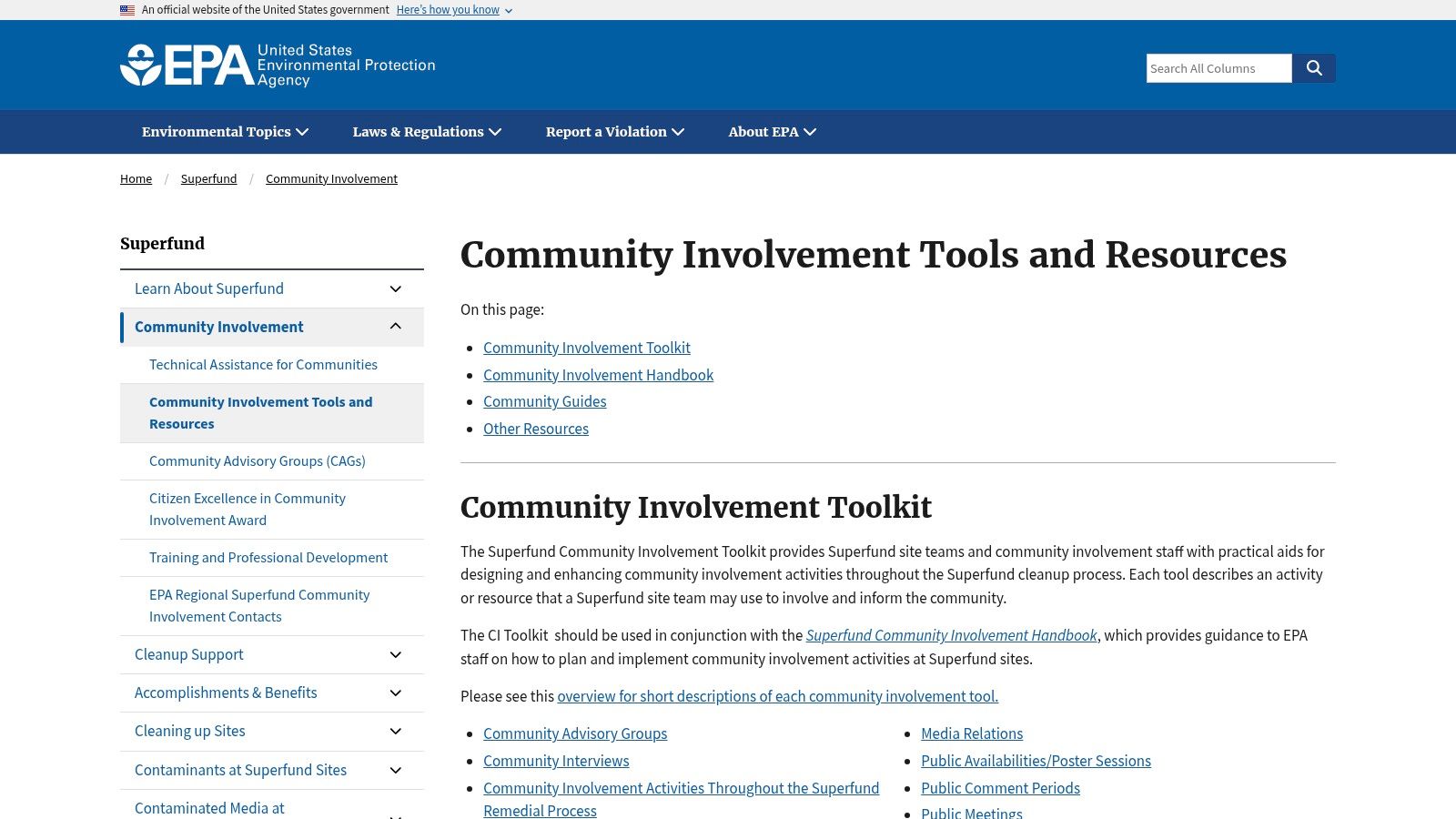
Not every initiative needs this much detail. Some absolutely do. If your initiative is messy, high-stakes, or politically sensitive, use the EPA's Superfund community involvement tools and resources.
This is the heavy-duty option. You're not just getting a sample plan. You're getting a system for workplans, meeting design, surveys, outreach documentation, and follow-through. For larger organizations, that matters because engagement falls apart when nobody owns the recordkeeping and nobody knows how decisions will be communicated back.
Use this one when you need depth in stakeholder mapping and a stronger accountability trail. It's especially useful if your project affects multiple groups differently and you can't afford vague communication.
A technically sound plan should include measurable outcomes, not just tactics. Guidance from Visible Network Labs recommends SMART goals, baseline data before launch, and tracking both quantitative and qualitative signals after implementation. It also recommends analyzing who participated, who didn't, and why, then reporting back on how input changed the plan in its community engagement plan template examples guide. That's exactly the operating model this toolkit supports.
Use it like this:
This template is overkill for a simple newsletter-driven community. It's the right choice for contested decisions.
The con is obvious. It's long. You'll need to translate environmental language into your own context. Do that once, then save your edited version as your internal master.
If the EPA templates feel too rigid, go to the University of Kansas Community Tool Box. This isn't one file. It's a planning library. That's also its strength.
You can pull the VMOSA framework, action-planning worksheets, needs-assessment tools, and participation checklists into one custom operating document. For entrepreneurs and brand-led businesses, that flexibility is useful because community engagement often intersects with growth, customer research, partnerships, and education.
The Community Tool Box works when you need to build your own process without starting from zero. It gives you the planning spine, but you decide what goes into the final version.
Here's the right way to use it:
This approach gets stronger when you define the level of engagement clearly. Community-engagement spectrum guidance recommends naming the level up front, assigning decision rights, being transparent about stakeholder roles, and using culturally appropriate methods before claiming collaboration or shared leadership in the Community Engagement Spectrum with case studies. That matters because too many brands say “co-create” when they only mean “leave a comment.”
A founder using this community engagement plan sample should create a simple matrix:
That one matrix turns a pile of worksheets into an execution plan.
The downside is assembly. You have to build the final document yourself. If you want a polished one-page draft in an hour, pick a different template.
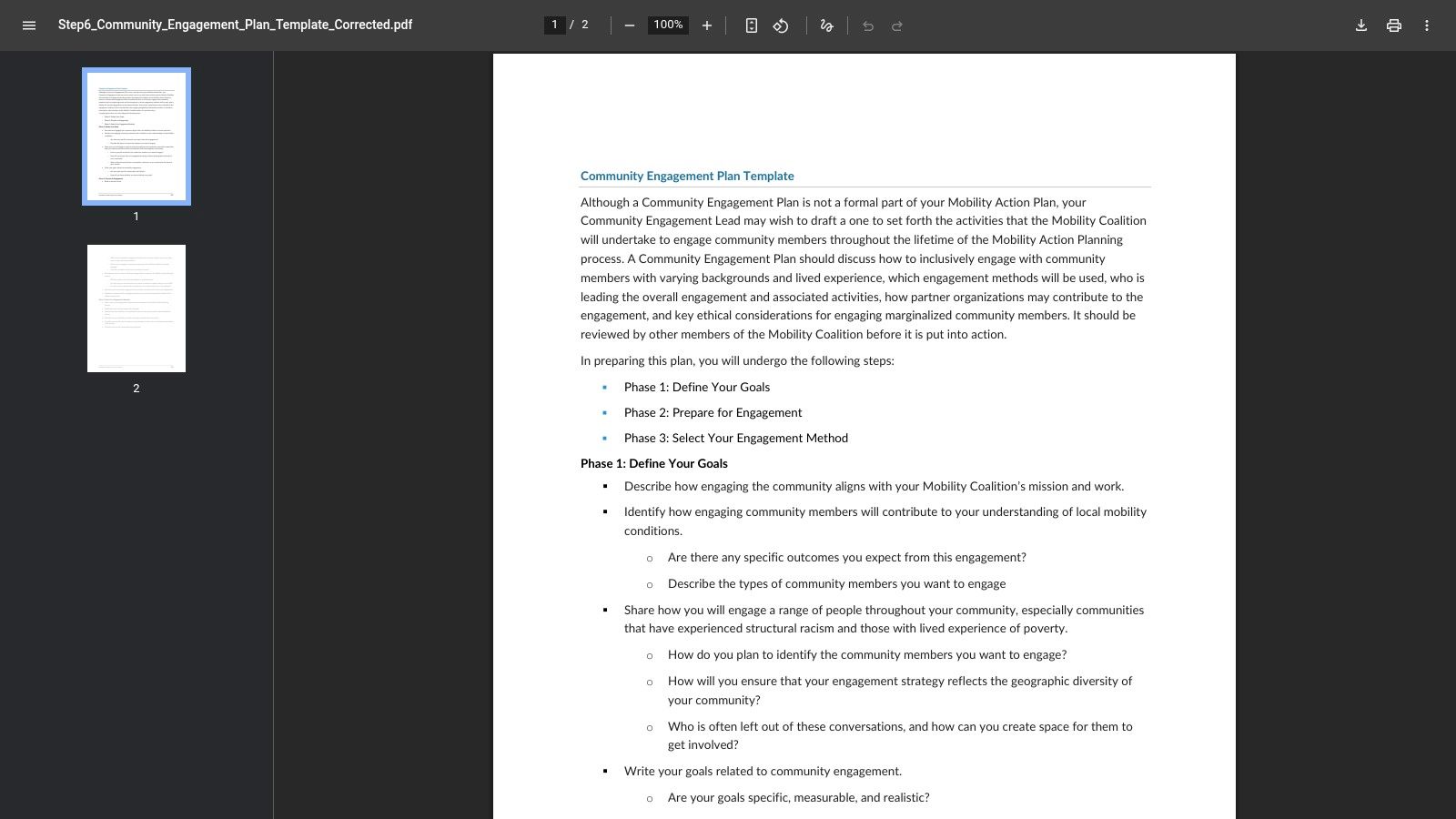
The Urban Institute community engagement plan template is the fastest serious option on this list. It's concise, editable, and built around objectives, partners, activities, timelines, and measures. If your team keeps delaying because “we need more time to plan,” use this and draft the first version today.
This one is especially useful for nonprofits, place-based initiatives, community programs, and founder-led brands that need an equity lens without drowning in procedural language. It forces clarity without forcing bureaucracy.
Don't treat “resident voice” as something only public agencies need. Translate it to customer voice, member voice, or partner voice and keep the structure intact.
A practical adaptation for a SaaS company might look like this:
That last part matters. Good plans track both quantitative and qualitative outcomes, including participant counts, survey completion rates, trust or value scores, perceived alignment, satisfaction, and influence. They also work better when teams combine in-person and digital channels, then report back on how input changed the original plan, as outlined in Visible Network Labs' planning guidance noted earlier.
“Fast draft” doesn't mean “lightweight thinking.” It means you stop delaying execution.
If you're building a founder-led audience and want to connect engagement planning to brand growth, study this alongside Legacy Builder's guide on how to build a community around your brand.
The tradeoff is depth. You won't get the issue-management rigor of the federal templates. You will get a clean plan your team will indeed use.
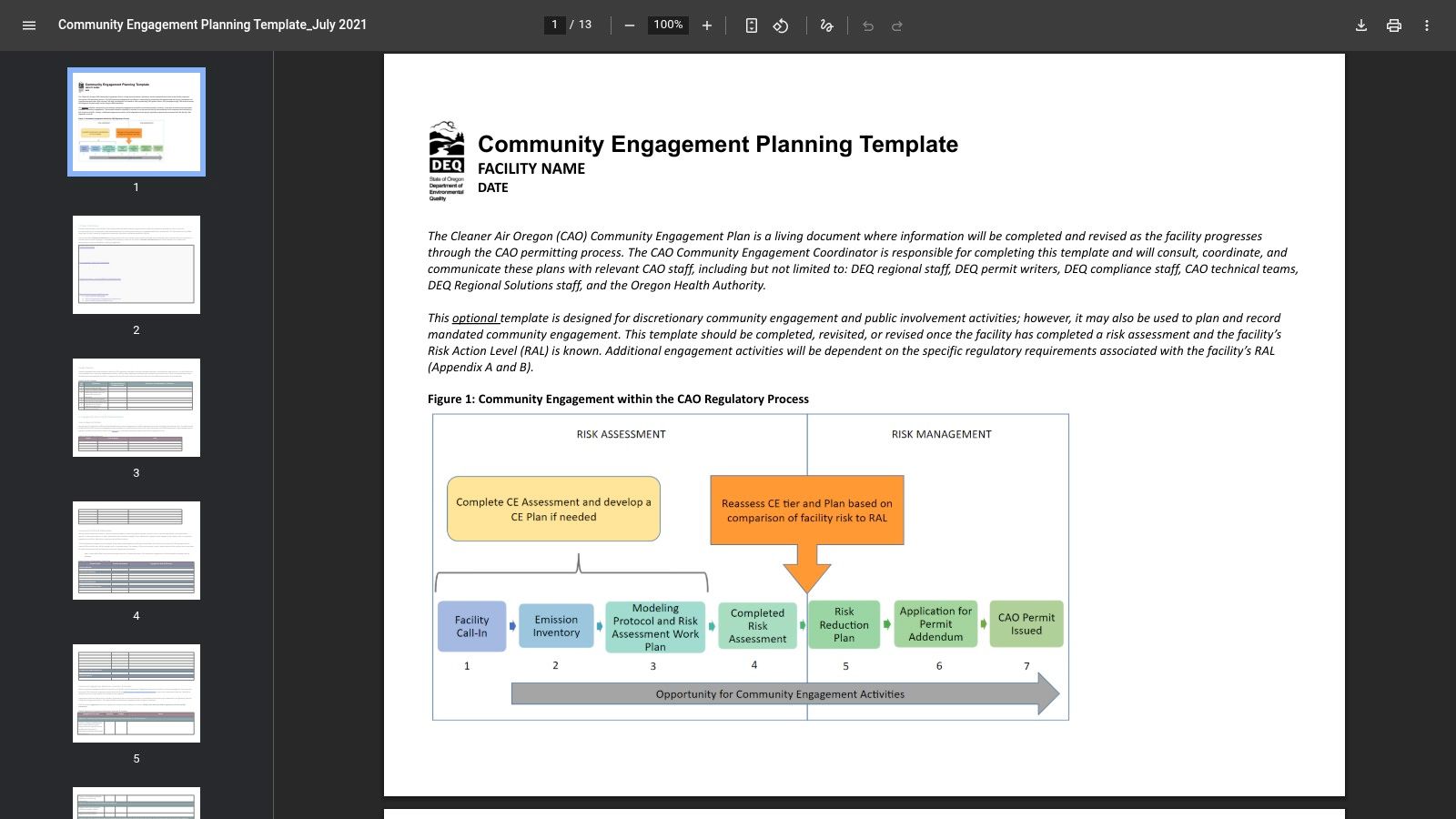
The Oregon DEQ Community Engagement Planning Template is the plain-language operator's version. It's structured, practical, and easier to finish than the more technical government templates. That makes it a strong fit for small to mid-sized teams.
If you're running a local organization, a regional service business, or a community-facing startup, this is often the better choice than a giant toolkit. It keeps the essentials in view: goals, audience profiles, tactics, reporting, and feedback.
The best thing about this template is that it forces you to think in audience profiles instead of broad public messaging. That alone improves engagement quality because different groups need different levels of communication and different ways to respond.
EPA's broader planning guidance makes that point clearly. Different groups may require different levels of engagement, and the plan should maintain recurring communication through outreach meetings, newsletters, email listservs, social media pages, and monthly calls, as described in the agency's community engagement plan template document. Oregon's template is easier to execute because it keeps that principle in a simpler planning format.
Use it to map a local campaign like this:
This template is lighter on advanced measurement. If you need a deep KPI framework, add your own baseline section and review schedule.
The language also leans environmental. Rewrite the labels once and move on. Don't overthink it.
The NYSERDA guide to community engagement plans is the best option here for trust-sensitive work. It doesn't just help you organize outreach. It pushes you toward partnership, cultural responsiveness, and community-based collaboration.
That matters if your audience is skeptical, over-consulted, or tired of being asked for input that changes nothing. A lot of templates ignore that reality. This guide doesn't.
A common gap in community engagement plan sample content is credibility under low-trust conditions. Process checklists aren't enough when groups have been excluded, ignored, or burned by prior consultation. The stronger move is to build a trust-repair strategy into the plan itself. That means deciding who the messengers are, which commitments are firm, how decisions will be documented, and how feedback will visibly change outcomes, reflecting the accountability emphasis in the EPA guidance cited earlier.
NYSERDA's partnership orientation makes that easier to operationalize.
Field note: When trust is low, better outreach won't save you. Better governance might.
For a founder or leadership team, adapt this guide in three steps:
This is also the right template to pair with relationship-driven business development. If you want the long game, read Legacy Builder's guide to building relationships in business that last.
The main drawback is format. It reads like a practitioner guide, not a one-page worksheet. That's fine. Extract the planning components and build your internal version.
Most templates help you plan. Very few help you execute. That's why ClickUp deserves a spot here. The ClickUp Community Engagement Communication Plan Template turns your plan into assignments, timelines, recurring tasks, and trackable work.
If your team already runs projects inside ClickUp, this is the easiest way to stop treating engagement as a side activity. Put the plan where the work already happens.
This template is strongest when your problem isn't strategy quality. It's consistency. Teams know what they should do, but no one owns deadlines, approvals, cadence, or reporting.
A solid execution setup inside ClickUp should include:
Good engagement plans rely on measurable milestones rather than a loose list of activities. Major planning templates consistently recommend defining objectives, audience segments, channels, timelines, and evaluation criteria before launch, then measuring progress against those goals, which is the core logic summarized in GovStack's guide noted earlier. ClickUp is where that logic becomes routine.
ClickUp's default communication template won't give you deep research design or strong governance language. Add those yourself.
Specifically, add:
If your community is primarily digital, pair this system with Legacy Builder's article on how to build an engaged online community.
The limitation is obvious. You need a ClickUp account, and the template leans communication-first. But for teams that fail in execution, software beats another static PDF.
| Template | Implementation Complexity 🔄 | Resource Requirements ⚡ | Expected Outcomes ⭐📊 | Ideal Use Cases 💡 | Key Advantages ⭐ |
|---|---|---|---|---|---|
| US EPA, Public Involvement Plan Template (Air Quality Management Process) | Low, concise, compliance‑oriented structure | Low, single template, minimal tooling | Baseline, compliance‑aware public involvement plan; transparent two‑way engagement | Small–mid projects needing a government‑grade framework or regulatory alignment | Free, authoritative, easy to adapt; strong risk/equity baseline |
| US EPA, Superfund Community Involvement Plan (CIP) Template & Toolkit | High, modular and detailed; many appendices | High, time, staff, legal/recordkeeping resources | Comprehensive CIP with deep stakeholder mapping and formal records | Large, complex remediation or multi‑stakeholder initiatives requiring rigor | Very detailed templates, tools for surveys, translation, and evaluation |
| University of Kansas, Community Tool Box | Medium, assemble modular content into a plan | Medium, time to curate sections; printable worksheets | Practical, customizable action plans (VMOSA) with evaluation guidance | Cross‑sector community initiatives and capacity‑building efforts | Extremely comprehensive, practical examples, and checklists |
| Urban Institute, Community Engagement Plan Template (Upward Mobility) | Low, short, fill‑in‑the‑blank format | Low, quick to use; minimal setup | Fast starter plan emphasizing equity, partners, timelines, and measures | Nonprofits, foundations, and public‑private teams needing a quick equity‑centered draft | Equity lens, built‑in metrics and timeline table; fast to deploy |
| Oregon DEQ, Community Engagement Planning Template | Low, plain‑language prompts and structure | Low, easy to complete for local teams | Accessible engagement plan focused on audience, tactics, and reporting | Local or small‑to‑mid projects prioritizing clear communication | Clear, straightforward, easy to adapt for community projects |
| NYSERDA, Guide to Community Engagement Plans | Medium, guide‑style; extract template portions | Medium, time to adapt examples and checklists | Trust‑building plans with culturally responsive outreach and partnership guidance | Clean‑energy programs or projects needing partnership and trust strategies | Strong practical tactics, partnership structures, and culturally responsive tools |
| ClickUp, Community Engagement Communication Plan Template (software‑based) | Medium, template plus workspace setup and automations | Medium–High, ClickUp account; paid features may be required | Operationalized execution: linked tasks, calendars, owners, and reporting | Teams wanting plan → execution in a single collaborative workspace | Integrates planning and execution with automations, views, and tracking |
A template won't build trust for you. It won't fix weak messaging, unclear ownership, or lazy follow-up. It gives you structure. You still have to lead.
That's why the best community engagement plan sample isn't automatically the longest or the most polished. It's the one your team will use, review, and improve. If you need rigor and auditability, start with EPA. If you need speed, use Urban Institute. If you need flexibility, use the University of Kansas toolset. If you need trust repair, NYSERDA is the smarter pick. If you need execution discipline, ClickUp closes the gap between planning and daily work.
Teams should do three things before launch. First, define the objective in plain language. Second, separate audiences by role, not by convenience. Third, decide what will be measured before the first message goes out. Without those three moves, your plan becomes a public-facing document with no internal traction.
You should also be honest about engagement level. Don't promise collaboration if the decision is already made. Don't ask for deep input if you only have room for comments. People can handle constraints. What they won't tolerate is fake participation.
Strong plans also close the loop. You ask. People respond. Then you report back with specifics about what changed, what didn't, and why. That's the difference between collecting reactions and building a community people trust.
Brand building and community engagement overlap. At Legacy Builder, that's the same principle behind durable personal brands. Consistency beats noise. Clear positioning beats vague presence. Follow-through beats clever campaigns. Use these templates as working systems, not downloads you forget after one meeting.
And if your engagement engine depends on forms, registrations, applications, or structured feedback, it's worth reviewing practical ways to find high-converting form templates so your plan doesn't break at the conversion point.
Choose one template. Adapt it to your decision-making process. Assign owners. Set milestones. Then execute with discipline. That's how engagement stops being performative and starts becoming part of your legacy.
If you want help turning your expertise, story, and audience into a real brand community, Legacy Builder gives you the strategy and execution to do it consistently. They help founders, executives, and growth-minded professionals turn scattered content and weak engagement into a clear personal brand people trust and follow.


You could – but most in-house teams struggle with the nuance of growing on specific platforms.
We partner with in-house teams all the time to help them grow on X, LI, and Email.
Consider us the special forces unit you call in to get the job done without anyone knowing (for a fraction of what you would pay).
Short answer – yes.
Long answer – yes because of our process.
We start with an in-depth interview that gives us the opportunity to learn more about you, your stories, and your vision.
We take that and craft your content then we ship it to you. You are then able to give us the final sign-off (and any adjustments to nail it 100%) before we schedule for posting.
No problem.
We have helped clients for years or for just a season.
All the content we create is yours and yours alone.
If you want to take it over or work on transitioning we will help ensure you are set up for success.
We want this to be a living breathing brand. We will give you best practices for posting and make sure you are set up to win – so post away.
Subscribe to our newsletter and get insights on how to grow your personal brand.
