.svg)
Subscribe to our newsletter and get insights on how to grow your personal brand.
Thank you! Your submission has been received!
Oops! Something went wrong while submitting the form.
.svg)


In a crowded market, a strong brand isn't just an asset; it's a necessity for being seen, heard, and trusted. But what separates fleeting trends from lasting influence? The answer lies in strategic, authentic, and consistent digital branding. This article moves beyond surface-level inspiration to provide a deep analysis of world-class digital branding examples. We'll dissect the "why" behind their success, breaking down their visual identity, content strategy, and audience engagement into replicable tactics.
A key element in transforming a brand from anonymous to authoritative is the development of compelling strategic thought leadership content. This guide shows you exactly how leading brands achieve that status. Whether you're a founder building from scratch, a professional cultivating a personal brand, or a marketer looking to refresh an established name, you will find actionable steps to translate inspiration into impact.
We will explore how platforms and brands like Behance, Awwwards, and BP&O master everything from website user experience to social media voice, giving you a comprehensive playbook. Each example includes a direct link and screenshots, along with a detailed breakdown of:
This curated collection is designed to equip you with the insights needed to build a brand that not only stands out but also builds genuine authority and connection. Let's dive into the examples.
Legacy Builder demonstrates a powerful approach to digital branding by perfectly aligning its service with its public-facing identity. As a service designed for busy professionals, its core offering is turning personal narratives into strategic, high-impact content. Their website, LegacyBuilder.co, is not just a digital brochure; it's a living case study of their own methodology.
The platform excels by practicing what it preaches. Every element, from the clean user interface to the value-packed blog posts, reinforces their brand promise: building a lasting legacy without the operational headache. This makes Legacy Builder an outstanding digital branding example because its entire online presence functions as proof of concept.
Legacy Builder's digital strategy is built on three pillars: expertise, trust, and a clear value proposition. They don't just sell a service; they educate their audience on the principles of authentic brand building. This approach positions them as an authority, not just a vendor.
Their user experience is seamless. The site guides visitors from understanding the problem (the difficulty of consistent content creation) to seeing the solution (their done-for-you model). This clarity is a direct reflection of the strategic thinking they apply to their clients' brands.
Strategic Insight: The most effective digital branding showcases your expertise in action. Legacy Builder’s website and content are not just about their service; they are the service in miniature, demonstrating the quality, clarity, and strategic depth clients can expect.
You can adapt Legacy Builder’s approach by turning your own digital presence into a demonstration of your skills.
By treating your own website and social channels as the primary case study for your capabilities, you build credibility and attract clients who value your demonstrated expertise.
Awwwards serves as a juried gallery and benchmark for the world's best web design and digital brand experiences. Instead of being a single brand example, it’s a curated collection where you can see how thousands of modern brands express their identity through motion, typography, and interactive storytelling. Its website, Awwwards.com, is a critical resource for inspiration and technical execution.

The platform functions as a daily competition, with winning sites awarded "Site of the Day" honors. This model ensures a constant stream of fresh, high-quality digital branding examples. It's an indispensable tool for designers, developers, and brand strategists who want to understand current trends and see what is possible at the intersection of brand identity and digital interaction.
Awwwards’ strength lies in its high standard of curation and its focus on creative expression. It doesn't just show you a finished website; it provides a deep dive into the elements that make it work, from micro-interactions to bold typographic choices. This makes it an excellent place to study how a brand's personality can be translated into a memorable user experience.
The site's powerful filtering tools allow users to search by industry, technology, color, and country, making it easy to find relevant examples. This organized approach helps you move from broad inspiration to specific, actionable ideas for your own digital brand, making it one of the best sources for digital branding examples available.
Strategic Insight: A powerful digital brand is not just about a logo and a color palette; it’s about the feeling and experience you create. Awwwards demonstrates that motion, interactivity, and narrative can be just as crucial to brand identity as static visual elements, creating an immersive world for the user to explore.
You can use Awwwards as a tool to elevate your own digital branding by looking beyond standard templates and embracing creative expression.
Behance, Adobe's creative showcase platform, functions as a massive, open-source library of digital branding examples. It's not a single brand to emulate but rather a destination to deconstruct thousands of real-world brand identity projects. For anyone building a brand, Behance.net offers an unparalleled look into the strategic and visual processes behind professional branding.
The platform's strength lies in its long-form project pages. Designers and agencies don't just post a final logo; they often publish comprehensive case studies that walk through the entire branding journey. This includes initial strategy, mood boards, logo development, typography, color palettes, and mockups showing the brand applied across websites, social media, and physical products. This makes Behance a critical research tool for understanding how a brand identity comes to life.
Behance provides a transparent, behind-the-scenes view of the brand-building process at scale. Its value comes from the sheer volume and diversity of work available, from global corporate redesigns to niche personal brand identities. The platform allows you to see the tangible deliverables that constitute a full brand system.
The user experience is built for discovery. You can filter projects by creative fields like "Branding" and "UI/UX" or use specific tags like "brand identity case study" to find relevant examples in your sector. This granular searchability turns a potentially overwhelming repository into a targeted research tool. While quality can vary, the best projects offer a masterclass in visual storytelling and strategic design.
Strategic Insight: Great branding is a system, not just a logo. Behance excels at showing how a core brand idea is translated into a cohesive set of visual and verbal assets. Studying these systems reveals how consistency is built across every customer touchpoint.
You can use Behance as a strategic resource for inspiration and to define the scope of your own branding efforts.
By using Behance as an educational tool, you can move from abstract ideas to a concrete understanding of the components required to build a professional and effective digital brand.
Dribbble is less of a single brand example and more of a massive, living gallery of digital branding in action. As a showcase platform for designers and creative agencies, it provides a real-time look at how brand identities are developed and applied across digital touchpoints. Its website, Dribbble.com, functions as a visual search engine for branding concepts, from logos and color palettes to full-fledged website UI and mobile app designs.
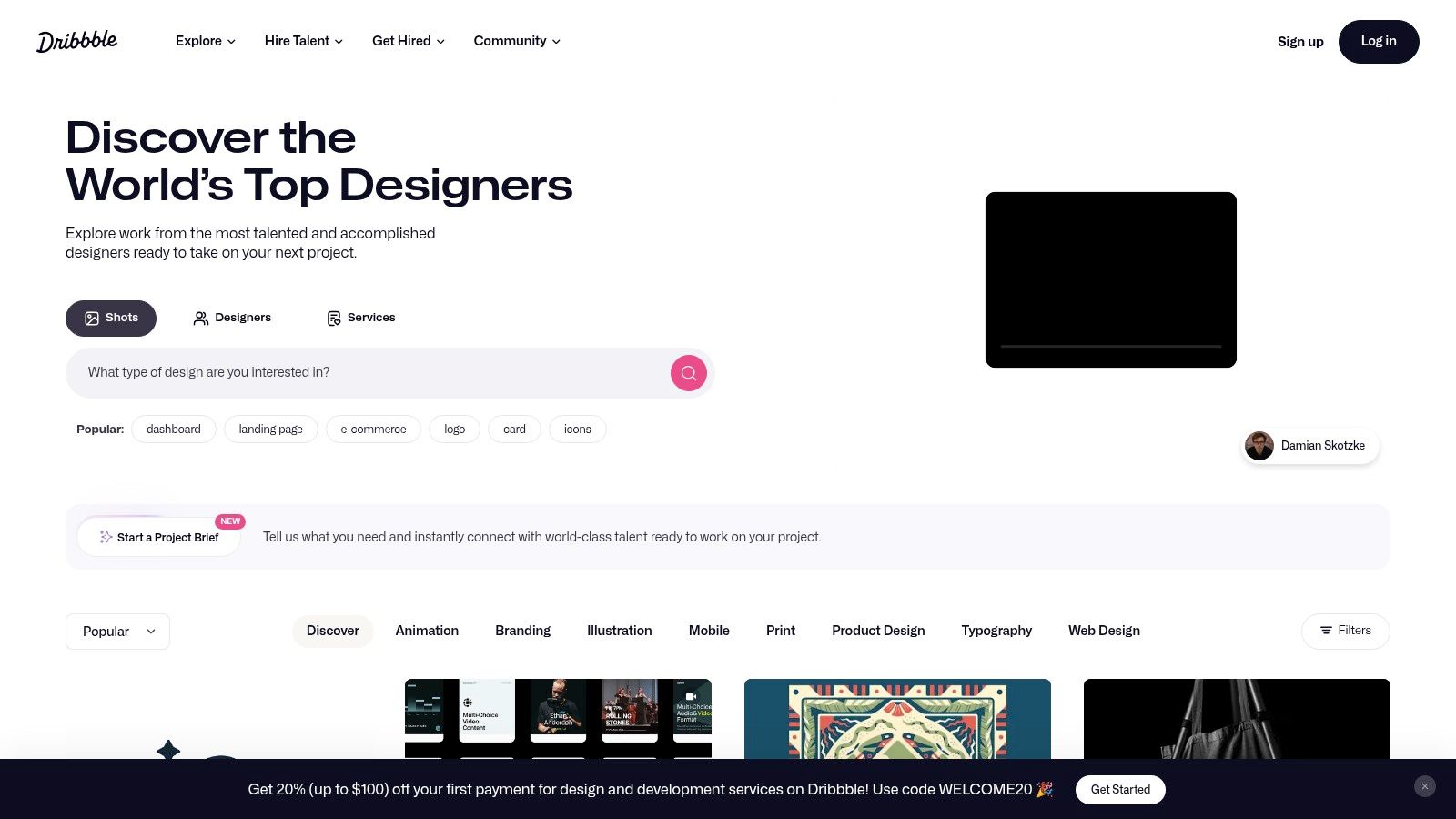
The platform’s strength lies in its visual-first, bite-sized format. Designers share "Shots"-small screenshots of their work-that give you a quick glimpse into a project. This makes Dribbble an invaluable resource for entrepreneurs and marketers who need to quickly gather inspiration, spot visual trends, and understand how a brand system can be translated into practical applications. It is one of the best digital branding examples because it shows thousands of brands at once.
Dribbble's value is in its sheer volume and focus on application. Unlike a static portfolio, the platform shows branding in motion, giving context to how a logo, font, and color scheme work together on a website, in an app, or as part of a social media campaign. It connects the abstract idea of a "brand identity" with concrete visual products.
The user experience is built for discovery. With powerful tagging and search functions, you can easily filter for specific needs like "brand identity case study" or "SaaS dashboard UI". This makes it an efficient tool for research, helping you build a mood board or find designers whose work aligns with your vision. While many shots are conceptual, they offer a window into what’s creatively possible.
Strategic Insight: Your brand's visual identity must be flexible enough to work across multiple digital contexts. Use Dribbble not just for inspiration, but to audit the adaptability of your own brand. Does your logo work as a tiny app icon? Is your color palette effective on a landing page?
You can use Dribbble as a strategic tool for developing or refining your own digital brand, even if you aren't a designer.
BP&O (Branding, Packaging & Opinion) is an editorially curated platform that serves as an essential resource for understanding the strategic thinking behind great design. Instead of being a passive inspiration gallery, it offers in-depth critiques and case studies of brand identities, connecting visual choices to core business objectives. The site, bpando.org, is a powerful learning tool for anyone looking to build a brand with substance and intentionality.
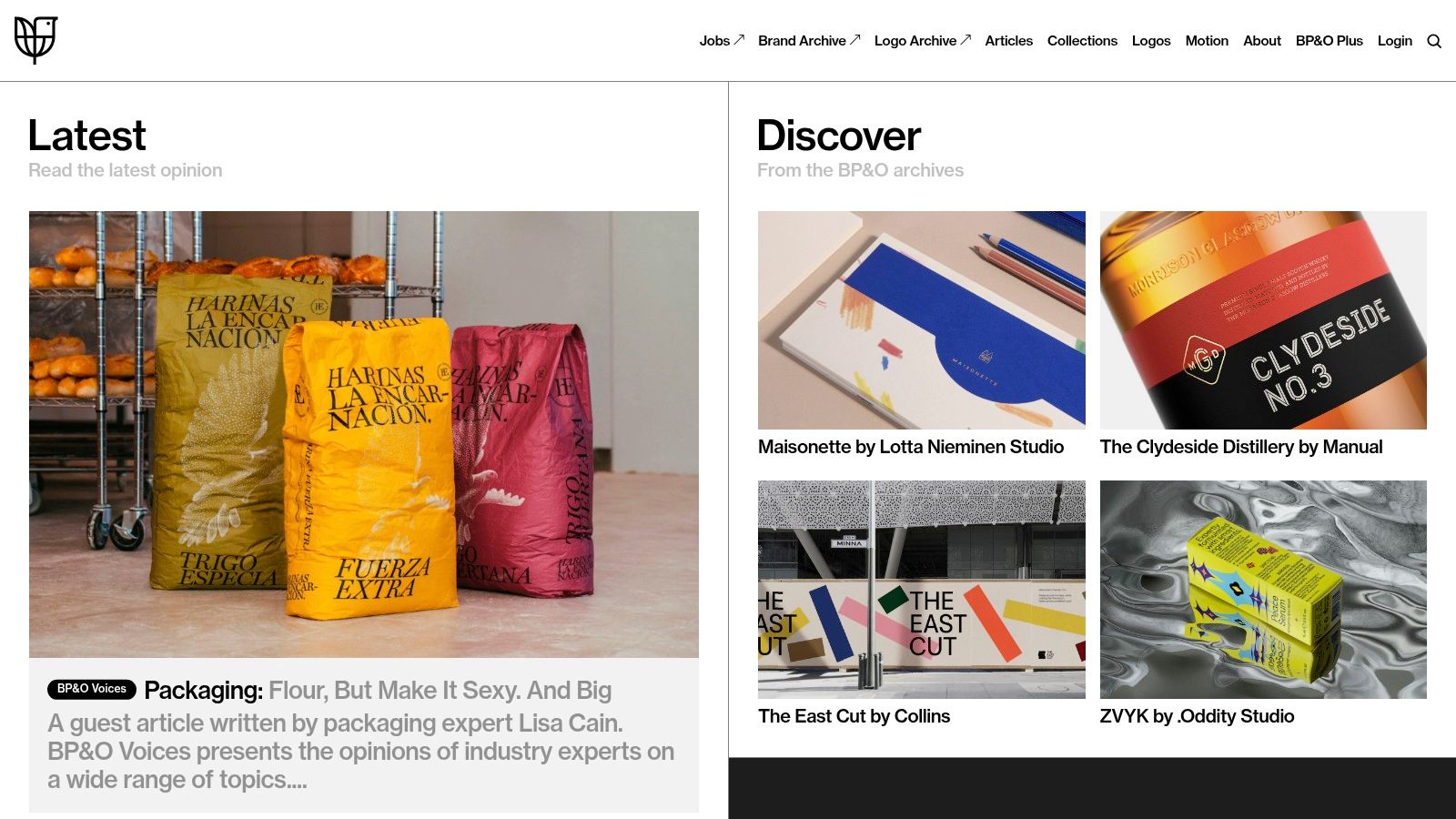
This platform is a standout among digital branding examples because it focuses on the "why" of design, not just the "what." It moves beyond aesthetics to analyze how typography, color, and form work together to communicate a brand's positioning. For founders and marketers, it provides a language and framework for evaluating design work and collaborating more effectively with creative partners. The user interface is clean and academic, prioritizing the content and analysis.
BP&O’s strength lies in its critical, educational perspective. While other sites show you what’s new, BP&O explains what works and why. Its written critiques are detailed, dissecting the rationale behind everything from logo construction to packaging materials. This makes it an invaluable resource for learning how to build a unified and meaningful brand system that functions across print, digital, and physical spaces.
The curated nature means you find fewer examples than on open platforms like Behance, but the quality is consistently high. This focus on depth over breadth saves time and trains your eye to recognize strategic design. While a BP&O Plus membership is required for some features like creating private galleries, the core critiques and articles remain freely accessible.
Strategic Insight: A strong brand is a cohesive system, not just a logo. BP&O demonstrates that every design element, from the typeface on your website to the texture of your packaging, should be a deliberate choice that reinforces your brand’s core message and strategic goals.
You can use the principles championed by BP&O to bring more strategic depth to your own digital brand, even without being a designer.
DIELINE offers a masterclass in translating a physical product’s brand into a cohesive digital experience. As a leading publication focused on packaging design, its extensive archives at thedieline.com serve as a critical resource for seeing how a brand’s story, look, and feel extend from the shelf to the screen. It is an essential reference for any business, especially in the consumer packaged goods (CPG) sector, needing to maintain brand consistency across physical and digital touchpoints.
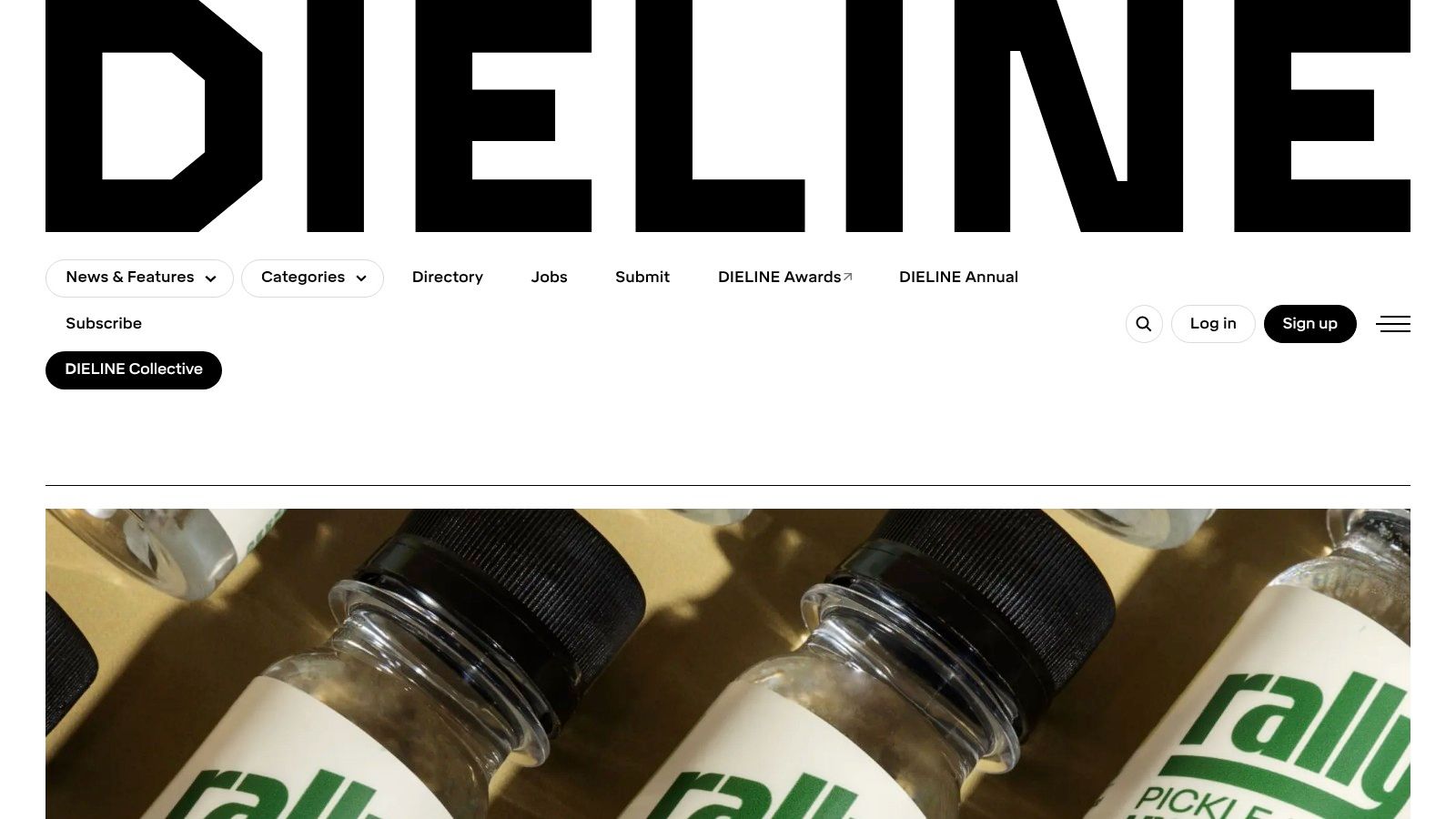
The platform’s strength lies in its curated case studies, which increasingly showcase not just the packaging but also the corresponding e-commerce websites, social media content, and launch campaigns. This makes DIELINE a standout digital branding example because it provides a searchable library of real-world solutions for a common business challenge: creating a unified brand world. The user experience is clean, allowing easy filtering by industry or material, though some deeper content requires a Pro membership.
DIELINE’s value is its focus on the translation of a brand. It systematically breaks down how typography, color palettes, and brand voice are adapted from a physical object to a digital interface. The site’s annual awards and daily editorial features act as a quality filter, presenting top-tier work that sets industry standards.
By studying the examples on DIELINE, you can see how successful brands build a sensory and emotional connection that persists whether a customer is holding a product or browsing a website. The platform illustrates how packaging details inform web design elements, creating a fluid and recognizable brand presence. This makes it an invaluable tool for understanding holistic brand architecture.
Strategic Insight: A strong digital brand for a physical product isn't a separate entity; it's an extension of the tangible experience. DIELINE’s case studies show that the most successful brands treat their website and social media as the digital continuation of the story that begins on the packaging.
You can use DIELINE's library to inform your own brand's transition from physical to digital.
Mindsparkle Mag operates as a high-end gallery for digital and brand design, offering a masterclass in taste and execution. Instead of overwhelming users with volume, it provides a meticulously curated selection of branding projects, websites, and design systems. Their platform, mindsparklemag.com, serves as an essential resource for anyone looking to understand what truly excellent digital branding looks like in practice.
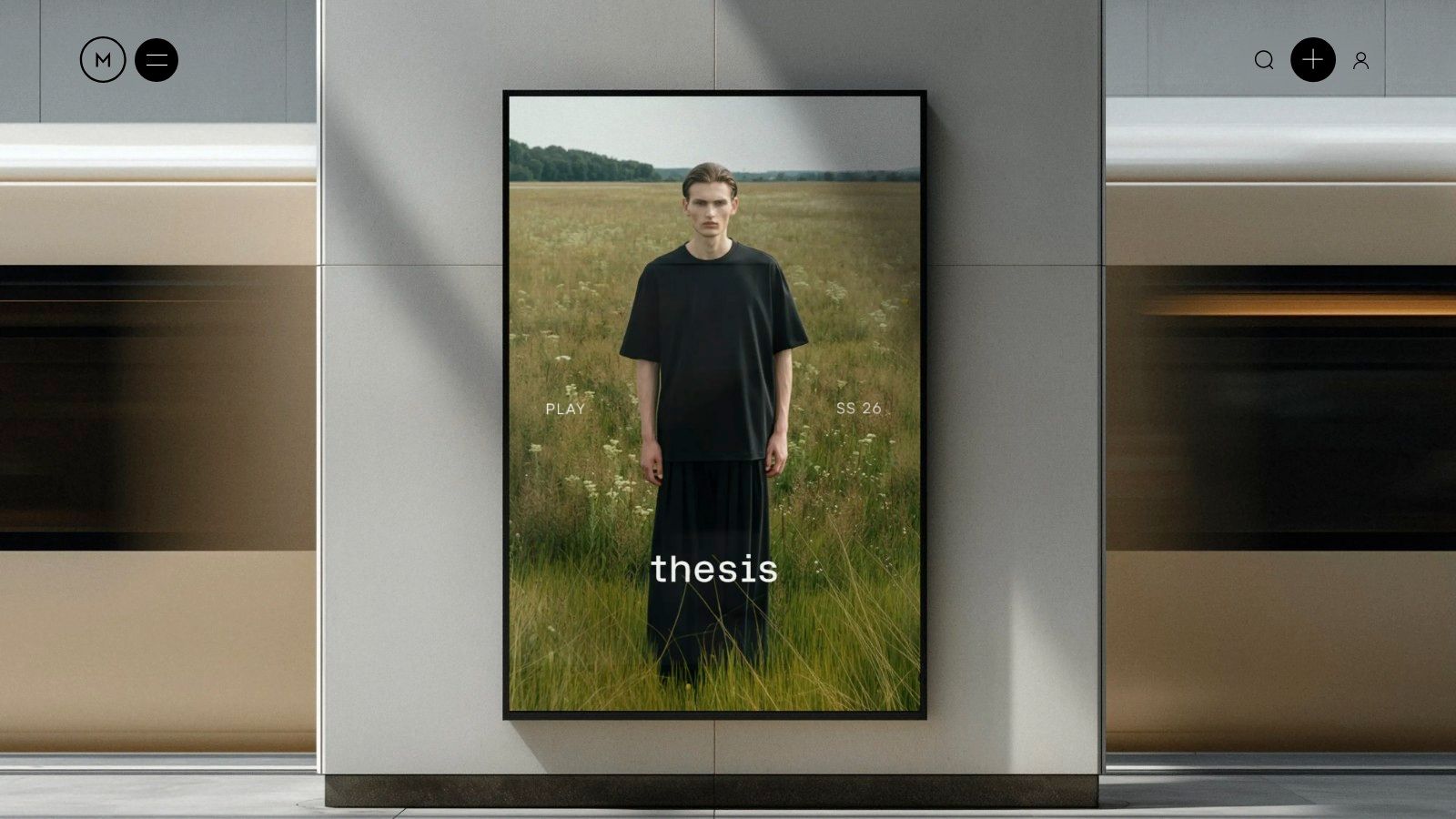
The website itself embodies the principles it showcases: minimalist design, intuitive navigation, and a focus on high-quality visuals. It’s an effective digital branding example because its entire function is to elevate and analyze the branding of others, making it a meta-resource for brand builders. By observing what Mindsparkle chooses to feature and how they present it, users get an education in contemporary brand excellence.
Mindsparkle Mag’s strength lies in its editorial curation. While other platforms are algorithm-driven or community-voted, Mindsparkle’s selections are hand-picked by a team with a strong point of view on design. This human-centric approach guarantees a consistent level of quality and relevance that machines cannot replicate.
The user experience is clean and respectful of the work being shown. Projects are presented with large images, brief but insightful descriptions, and links to the creative studios behind them. This format allows visitors to absorb the visual language of a brand first, then dig deeper if a particular style or strategy resonates with them.
Strategic Insight: Your brand is defined by the company it keeps. Mindsparkle demonstrates that curation is a powerful branding tool. By selectively showcasing excellence, they have built a brand synonymous with top-tier design and creative direction.
You can adopt Mindsparkle’s curatorial approach to build authority and refine your own brand’s position.
By becoming a trusted filter for quality in your niche, you build a powerful brand that attracts an audience who shares your values and appreciates your expertise.
| Source | Implementation Complexity 🔄 | Resource Requirements ⚡ | Expected Outcomes 📊 (Quality ⭐) | Ideal Use Cases 💡 | Key Advantages ⭐ |
|---|---|---|---|---|---|
| Legacy Builder | High — managed, multi-role onboarding and daily operations | High — ongoing retainer, team coordination, time for deep dives | Consistent audience growth and engagement over time — ⭐⭐⭐⭐ | Busy leaders, founders, creators seeking authentic, long-term personal brand growth | Authenticity-first, end-to-end team, daily posting and optimization |
| Awwwards | Low — browseable gallery, filtered searches | Low — free browsing; paid features for deeper access | Discover cutting-edge visual and interaction trends — ⭐⭐⭐ | Benchmarking web motion, typography, and interaction design | High curation, broad global examples, strong visual showpieces |
| Behance (Adobe) | Low–Medium — search and curate long-form case studies | Low — free access; time investment to sift quality | Wide variety of process-rich case studies; quality varies — ⭐⭐⭐ | Researching sector-specific deliverables and full brand systems | Enormous volume, many comprehensive process and guideline materials |
| Dribbble | Low — rapid visual scanning of portfolio shots | Low — free browsing; Pro features optional | Fast trend spotting and UI/identity previews; often speculative — ⭐⭐ | Quick visual inspiration, hiring designers, spotting design trends | Active feed, bite-size previews, strong designer community |
| BP&O (Branding, Packaging & Opinion) | Medium — read editorial critiques and curated archives | Low–Medium — free content; membership for archives/features | Clear strategic rationale and typographic-focused insights — ⭐⭐⭐⭐ | Learning why identity decisions work; unified identity systems across media | Balanced critical perspective, deep strategic context, curated examples |
| DIELINE | Medium — focused on packaging with digital extensions | Low–Medium — free articles; Pro content behind paywall | Strong examples of packaging-to-digital translation — ⭐⭐⭐ | FMCG/CPG brands needing consistent packaging → ecommerce translation | Packaging-centric expertise, awards and editorials as quality filters |
| Mindsparkle Mag | Low — curated magazine format with editorial picks | Low — free browsing; occasional paid events | Tasteful, high-quality inspiration with editorial notes — ⭐⭐⭐ | Curated inspiration when quality and aesthetic cohesion matter | Curated, tasteful selection, mix of digital and identity projects |
We've explored a diverse set of digital branding examples, from the polished, award-winning showcases on Awwwards to the process-driven deep dives on Behance. While their presentations vary, a few universal principles emerge that are crucial for anyone looking to build an influential brand online. These takeaways are the strategic threads connecting all successful digital brands, providing a blueprint for your own efforts.
The core lesson from platforms like Dribbble and Mindsparkle Mag is the power of focused consistency. They don't try to be everything to everyone. Dribbble is for quick design snapshots, while Mindsparkle Mag curates clean, minimalist inspiration. This focus builds a predictable, reliable experience that attracts and retains a specific audience. Your brand, too, must define its niche and consistently deliver on that promise.
Across all the examples, a clear pattern emerges: the most respected brands are not just showcases, they are educational resources and community hubs.
To create your own lasting impact and build a robust digital legacy, studying successful showcases can be incredibly insightful, such as these 7 Personal Brand Website Examples. These demonstrate how individuals effectively apply these principles to their own online presence.
Translating these insights into action requires selecting the right platforms and implementing a deliberate strategy. Your choice should align with your specific goals and the nature of your work.
No matter the tool, the key is to move beyond simply posting content. Engage with the community, provide context for your work, and share the story behind your brand. This strategic approach turns a simple portfolio into a dynamic and memorable digital brand. All of the digital branding examples we analyzed succeed because they are more than just collections of images; they are destinations built on purpose and participation. Building your digital legacy is not a sprint; it's a marathon of consistent, value-driven actions that compound over time, creating a brand that truly resonates and endures.
Ready to stop curating and start creating your own digital legacy? Legacy Builder provides the tools you need to build a professional, powerful personal brand website that showcases your unique story and expertise. Turn the inspiration from these digital branding examples into your reality with Legacy Builder.


You could – but most in-house teams struggle with the nuance of growing on specific platforms.
We partner with in-house teams all the time to help them grow on X, LI, and Email.
Consider us the special forces unit you call in to get the job done without anyone knowing (for a fraction of what you would pay).
Short answer – yes.
Long answer – yes because of our process.
We start with an in-depth interview that gives us the opportunity to learn more about you, your stories, and your vision.
We take that and craft your content then we ship it to you. You are then able to give us the final sign-off (and any adjustments to nail it 100%) before we schedule for posting.
No problem.
We have helped clients for years or for just a season.
All the content we create is yours and yours alone.
If you want to take it over or work on transitioning we will help ensure you are set up for success.
We want this to be a living breathing brand. We will give you best practices for posting and make sure you are set up to win – so post away.
Subscribe to our newsletter and get insights on how to grow your personal brand.
