.svg)
Subscribe to our newsletter and get insights on how to grow your personal brand.
Thank you! Your submission has been received!
Oops! Something went wrong while submitting the form.
.svg)


In a world saturated with digital communication, the value of a genuine professional connection has never been higher. Yet, many of us still rely on outdated networking formats that feel transactional and yield little return. Standard mixers often lead to a pocketful of business cards but few meaningful relationships. To build a powerful personal brand and unlock new opportunities, you need to think strategically about where and how you connect. This requires moving beyond the conventional handshake and surface-level small talk.
This guide moves beyond generic advice to provide a blueprint for impactful engagement. We will explore 10 distinct business networking event ideas, each meticulously broken down to help you choose the right format, maximize your time, and build a network that truly works for you. You'll find actionable strategies for every type of event, from high-energy speed networking sessions to intimate roundtable discussions. The goal is to equip you with a diverse toolkit for creating and nurturing professional relationships that are both authentic and mutually beneficial.
To truly revolutionize how professionals connect, it's essential to continually explore fresh and engaging event formats. For instance, discovering unforgettable corporate event ideas can provide inspiration for unique networking opportunities that leave a lasting impression. Whether you're a founder seeking investors, a CEO building an industry presence, or a professional expanding your influence, the concepts in this article are designed to foster authentic relationships that propel your career forward. We’ll cover everything from purpose and promotion to engagement techniques and follow-up templates, ensuring you have a complete plan for success.
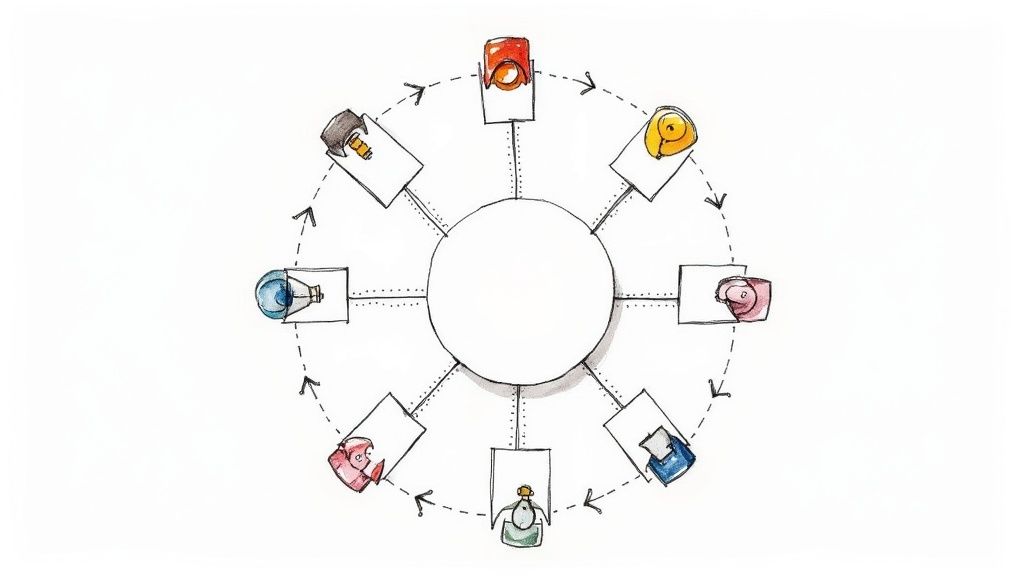
Speed networking events adapt the popular "speed dating" model for the professional world, creating a high-energy, structured environment for making a large number of initial connections in a short amount of time. Attendees are organized into pairs and given a strict time limit, typically 3-5 minutes, for a one-on-one conversation. When the timer sounds, one side of the rotation moves to the next partner, ensuring everyone meets dozens of new people.
This format is one of the most efficient business networking event ideas for professionals with limited time. Its structured nature eliminates the awkwardness of approaching strangers and ensures no one gets stuck in a lengthy, unproductive conversation. It forces participants to be concise and memorable.
Ideal Audience: This format excels for sales professionals, recruiters, startup founders, and anyone looking to rapidly expand their contact list in a new city or industry.
To maximize your impact, focus on a few key strategies. First, perfect your "micro-pitch," a 30-second introduction that clearly states who you are, what you do, and who you want to meet. Second, shift your focus from pitching to asking insightful questions. This makes the conversation a two-way street and helps you quickly qualify potential connections.
Pro-Tip: Your goal isn't to close a deal in three minutes. It's to create enough intrigue to justify a follow-up conversation. Identify 3-5 high-potential contacts to connect with more deeply after the event. For strategies on turning these initial contacts into qualified prospects, you can learn more about developing a robust lead generation system on legacybuilder.co.
Industry-specific conferences and trade shows are large-scale gatherings dedicated to a single professional sector, such as technology, finance, or creative arts. These multi-day events bring together a high concentration of thought leaders, decision-makers, and innovators, offering a powerful platform for deep-dive networking, learning about industry trends, and showcasing products or services. Unlike general networking mixers, these events ensure every connection shares a relevant professional context.
Events like CES for consumer electronics or Dreamforce for enterprise software create an immersive environment where companies exhibit their latest offerings, experts deliver keynotes, and thousands of attendees connect. This format is a cornerstone of B2B networking, providing unparalleled access to a niche audience that is actively seeking solutions, partnerships, and industry knowledge.
Ideal Audience: This format is invaluable for B2B sales teams, product marketers, C-suite executives, and professionals looking to establish themselves as experts or gain a comprehensive understanding of their industry's landscape.
Success at a large conference is about preparation, not just participation. Before the event, meticulously review the attendee list and speaker schedule. Use the event's app or LinkedIn to schedule 3-5 key meetings in advance to guarantee time with high-value contacts. During the event, focus your energy on quality interactions rather than just collecting business cards.
Pro-Tip: The most meaningful conversations often happen outside the main exhibit hall. Attend the satellite social events, dinners, and sponsored happy hours. These less formal settings allow for deeper, more authentic relationship-building away from the noise and pressure of the conference floor.
Moving away from highly structured formats, these events use a shared activity or meal as a natural icebreaker, fostering more relaxed and authentic conversations. Whether it's a breakfast meeting, a round of golf, or a wine tasting, the activity itself provides a common ground that lowers the typical pressure of networking, allowing relationships to develop more organically.
This approach is one of the most effective business networking event ideas for building deeper, more memorable connections. Instead of a quick exchange of business cards, participants bond over a shared experience. This creates a stronger foundation for a lasting professional relationship, as the interaction feels less transactional and more genuine.
Ideal Audience: This format is perfect for building rapport with high-value clients, strengthening team bonds, or connecting with executive-level professionals who prefer less formal settings. It is also great for industry-specific groups, like a tech-focused bowling night or a real estate developers' golf tournament.
The success of these events hinges on creating the right atmosphere. First, choose a venue and activity that align with your audience's interests and provides an environment conducive to conversation. A loud, crowded restaurant defeats the purpose. Second, keep any formal presentations extremely brief. The focus should be on facilitating interaction, not delivering a speech.
Pro-Tip: Strategically arrange seating or teams to gently guide networking. Mix people from different companies or with complementary skill sets. The goal is to engineer serendipity, creating opportunities for valuable connections that might not happen otherwise. This small detail can transform a simple lunch into a powerhouse networking session.
Mastermind groups and peer advisory boards offer a deeper, more intimate networking experience built on trust and mutual growth. Unlike large, open events, these are small, curated groups of professionals (typically 5-12 members) who meet regularly to tackle challenges, share high-level insights, and hold each other accountable. The model, popularized by organizations like Vistage and EO, relies on confidentiality and a commitment to collective problem-solving.
This format is one of the most powerful business networking event ideas for seasoned leaders seeking confidential advice and long-term strategic relationships. The value comes from the structured exchange of experience among non-competing peers, creating a personal board of directors dedicated to each member's success. It shifts the focus from transactional connections to transformational, collaborative partnerships.
Ideal Audience: This format is perfect for CEOs, founders, senior executives, and established entrepreneurs who have moved beyond basic networking and require a confidential space for high-stakes problem-solving and strategic planning.
Success in a mastermind hinges on curation and commitment. When vetting a group, ensure members are at a similar business stage but from non-competing industries to foster open dialogue. Ask to attend a meeting as a guest before making a long-term commitment, which is often 1-2 years to see the full benefits. Be prepared to be vulnerable and contribute as much as you receive; the group's value is directly proportional to the transparency of its members.
Pro-Tip: The goal isn't just to receive advice but to implement it. Treat your commitments to the group like promises to your board of directors. The accountability structure is the most valuable asset, turning passive ideas into tangible business results. For those looking to join established groups, organizations like the Entrepreneurs' Organization (EO) provide a vetted and structured experience.
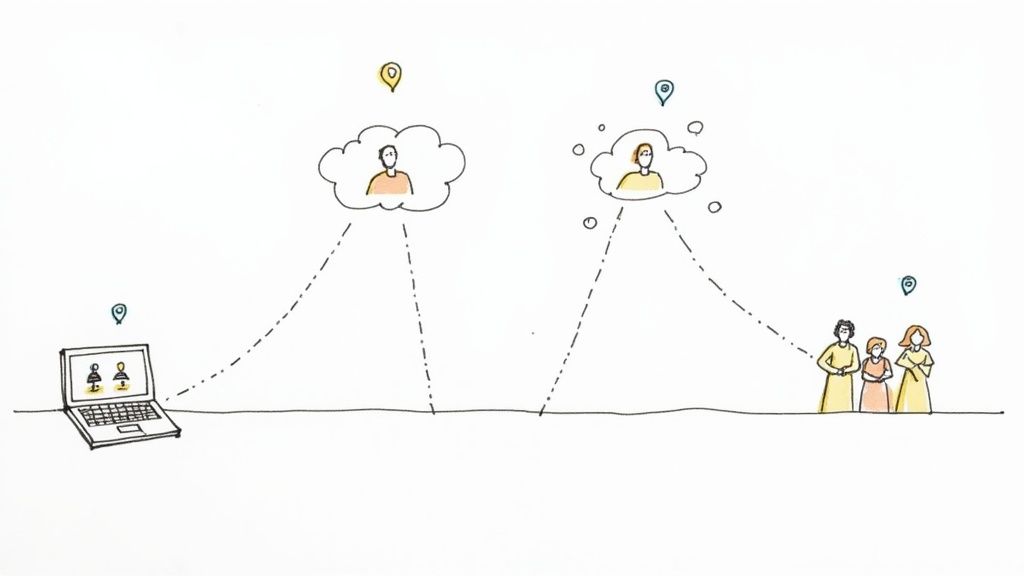
Virtual and hybrid networking events leverage technology to connect professionals across geographical boundaries. These events, held on platforms like Zoom, Hopin, or Airmeet, use features like breakout rooms, virtual booths, and interactive chat functions to simulate the experience of an in-person gathering. Hybrid models merge the best of both worlds, allowing for simultaneous in-person and online participation.
This format has become one of the most essential business networking event ideas, offering unparalleled accessibility and scalability. It eliminates travel costs and time constraints, opening up events to a global audience. The digital nature also provides rich data on attendee engagement and simplifies the process of post-event follow-up.
Ideal Audience: This format is perfect for global organizations, tech companies, industry associations with widespread membership, and businesses aiming for maximum reach with a limited budget.
Success in a virtual setting hinges on active participation and combating "Zoom fatigue." Organizers should design shorter, more dynamic sessions compared to in-person events, typically 45-60 minutes. Use interactive tools like polls, live Q&As, and collaborative whiteboards to keep attendees engaged. For participants, having a professional background and testing your technology beforehand is crucial.
Pro-Tip: Make your first move before the event begins. Connect with key speakers or attendees on LinkedIn beforehand to establish a warm connection. Your digital interactions are a key part of your overall brand, just like your social media presence. To elevate your digital footprint, you can discover more about building a modern B2B social media strategy on legacybuilder.co.
Volunteer and community service events integrate professional networking with social impact, creating a powerful environment for building authentic relationships. Instead of gathering in a formal conference room, attendees connect while working together on a meaningful project, such as a Habitat for Humanity build, a local park cleanup, or sorting donations at a food bank. This shared purpose fosters camaraderie and organic conversation.
This approach is one of the most effective business networking event ideas for forging deeper, more memorable connections. Working side-by-side on a common goal reveals character, work ethic, and teamwork skills in a way traditional events cannot. The focus shifts from "what can you do for me?" to "what can we accomplish together?", leading to relationships built on shared values and mutual respect.
Ideal Audience: This format is excellent for corporate teams building ESG (Environmental, Social, and Governance) initiatives, B Corporations, community-focused businesses, and professionals seeking to connect with others who share a passion for social responsibility.
Success hinges on partnering with a well-organized nonprofit that can manage the volunteer logistics, allowing you to focus on the networking aspect. Choose an activity that facilitates conversation; tasks that require teamwork and communication are better than solitary ones. Ensure you provide clear name tags to help participants identify each other's professional backgrounds.
Pro-Tip: The shared experience is a powerful catalyst for follow-up. Instead of a generic "nice to meet you" email, your message can reference a specific moment from the event, such as, "It was great working with you on the community garden project." This creates an instant, personal connection that sets you apart from the crowd.
Roundtable discussions and dinner forums shift the focus from quantity of connections to quality of conversation. These curated, small-group events gather 8-12 professionals around a table to engage in a moderated discussion on a specific business topic, challenge, or industry trend. Unlike larger, more chaotic networking events, this format prioritizes depth, peer-to-peer learning, and the formation of meaningful relationships.
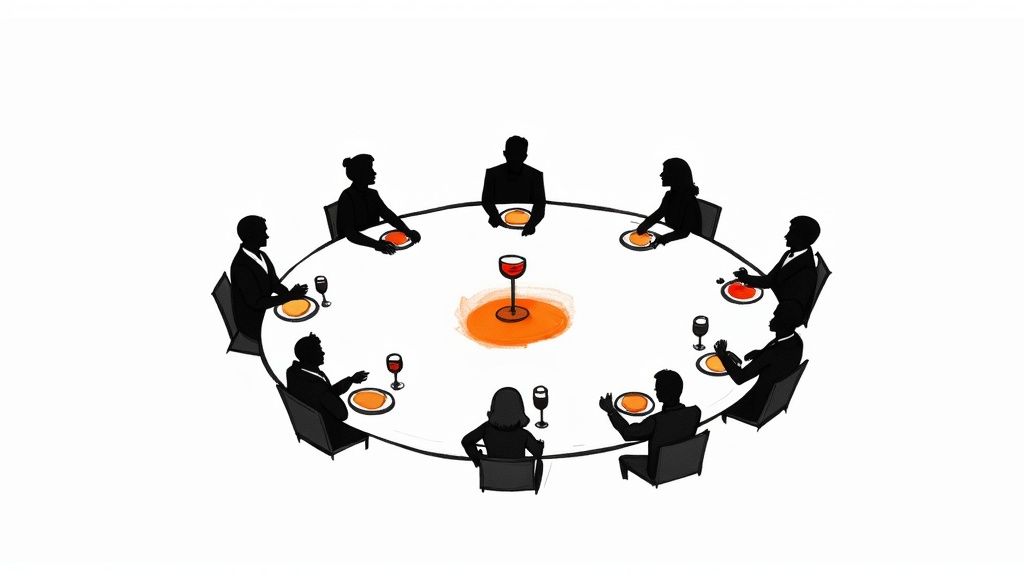
This format is one of the more intimate and high-value business networking event ideas. By creating an exclusive, facilitated environment, it encourages genuine dialogue and allows participants to showcase their expertise and learn from the collective wisdom of the group. The shared experience of a meal or focused discussion builds a stronger foundation for lasting professional bonds.
Ideal Audience: This format is perfect for senior executives, industry experts, thought leaders, and founders looking to solve complex problems, share high-level insights, and build a trusted circle of advisors.
Success hinges on meticulous curation and expert facilitation. First, carefully select attendees to ensure a diversity of thought and experience, not just a room full of similar titles. Share attendee bios beforehand to spark curiosity and allow for preparation. Second, the moderator is crucial; they must be skilled at keeping the conversation on track, drawing out quieter participants, and tactfully managing dominant personalities.
Pro-Tip: The goal is to create a trusted space for authentic exchange, not a sales pitch session. Prepare 5-7 thought-provoking questions that go beyond surface-level topics. To truly leverage these high-caliber connections, focus on building rapport and demonstrating value, which you can learn more about by mastering relationship-driven marketing on legacybuilder.co.
Startup pitch events and demo days are high-stakes, dynamic environments where innovation meets investment. These events provide a platform for early-stage companies to present their business ideas, products, or services to a curated audience of investors, potential customers, media, and fellow entrepreneurs. Typically hosted by accelerators like Y Combinator or publications like TechCrunch, they feature a series of short, structured presentations followed by dedicated networking sessions.
This format is one of the most powerful business networking event ideas for anyone operating within the startup ecosystem. For founders, it’s a critical opportunity for fundraising and visibility. For investors and attendees, it’s a highly efficient way to scout emerging trends, discover investment opportunities, and connect with the next generation of industry leaders.
Ideal Audience: This format is essential for startup founders seeking capital, venture capitalists, angel investors, corporate innovation scouts, and tech journalists.
For presenters, success hinges on a meticulously practiced pitch. Your story must be compelling, your financials clear, and your "ask" precise, all delivered within a strict time limit. For attendees, preparation is key. Review the list of presenting companies beforehand and identify 2-3 you want to connect with. During the networking portion, ask insightful questions that go beyond surface-level metrics to understand the team's vision and execution capability.
Pro-Tip: As an attendee, your goal is to identify genuine potential, not just follow the crowd. Focus on having meaningful conversations with a few founders rather than collecting a stack of business cards. A thoughtful follow-up email referencing a specific part of their pitch will be far more effective than a generic connection request.
Joining a professional association or membership group shifts networking from a one-off event to an ongoing, community-based activity. These organizations, like a local Chamber of Commerce or an industry-specific body such as the American Marketing Association, provide a recurring platform for members to connect, learn, and collaborate. The structure often involves regular meetings, educational sessions, and special events centered around a shared professional interest or geographical area.
This approach is one of the most effective business networking event ideas for building deep, trust-based relationships over time. Unlike a single event where connections can be fleeting, consistent participation within a dedicated group establishes credibility and positions you as a committed member of your professional community. It fosters a sense of belonging and provides a reliable stream of relevant contacts.
Ideal Audience: This format is perfect for professionals seeking industry-specific connections, B2B service providers, business owners wanting to build local authority, and anyone who prefers long-term relationship building over rapid, high-volume networking.
Success in association meetings hinges on consistent engagement. Don't just attend; participate. Start by joining a committee or volunteering for an event. This dramatically increases your visibility and demonstrates your commitment to the group's success. Your goal is to become a known resource within the community, not just another face in the crowd.
Make it a point to provide value to other members before asking for anything in return. Offer helpful introductions, share relevant resources, or provide referrals. This builds social capital and solidifies your reputation as a valuable, collaborative contact.
Pro-Tip: Don't spread yourself too thin by joining multiple groups at once. Choose one or two highly relevant associations and commit to deep involvement. Taking on a leadership role, such as treasurer or committee chair, is the fastest way to build authority and forge powerful connections with the group's most influential members.
Skill-building workshops and seminars are powerful business networking event ideas that center on shared learning. Instead of open-ended mingling, attendees connect through a common goal: acquiring a new skill, mastering a tool, or exploring an emerging industry topic. The educational framework provides a natural, low-pressure context for interaction and relationship building.
This format positions the host as a valuable resource while attracting a highly targeted and motivated audience. Participants who invest time to learn about a specific subject, like advanced SEO tactics or leadership communication, are inherently more engaged. The interactive nature of workshops, featuring Q&A sessions, group exercises, and hands-on activities, facilitates deeper connections than a simple cocktail hour.
Ideal Audience: This format is perfect for consultants, B2B service providers, tech companies, and industry associations looking to attract qualified leads and establish thought leadership.
Success hinges on choosing a topic that addresses a genuine pain point for your target audience. Secure a credible, engaging instructor who is not only an expert but also a skilled facilitator. Build structured networking opportunities directly into the agenda, such as assigned seating at round tables or guided group discussions, rather than relying solely on breaks.
Keep the group size manageable, ideally between 25-75 people, to foster interaction and ensure everyone gets value. Providing high-quality, practical takeaways, like worksheets or digital resources, encourages attendees to remember the event and share your brand with their networks.
Pro-Tip: Your event's expert speaker is your biggest draw. Leveraging their reputation instantly boosts your event's credibility and attracts their existing followers. Hosting these events is a direct path to building your own brand's reputation and you can discover more about how to build a respected personal brand on legacybuilder.co.
The journey from a list of contacts to a powerful, supportive professional network is paved with intentionality and action. We've explored a comprehensive menu of business networking event ideas, moving far beyond the stereotypical cocktail mixer. From the high-energy efficiency of Speed Networking to the deep, collaborative trust built within Mastermind Groups, each format offers a unique stage for forging meaningful connections. The diverse options, including virtual summits, community volunteer days, and intensive skill-building workshops, prove that modern networking is not a one-size-fits-all endeavor. It is a dynamic, adaptable practice that can and should be tailored to your specific industry, personality, and strategic goals.
The core takeaway is this: The most effective networking is strategic, not just social. It’s about choosing the right environment where you can both contribute value and find the people who will shape your future. A startup founder gains more from a Pitch Event than a casual mixer, just as a seasoned executive can cultivate deeper alliances in a Roundtable Discussion. Your choice of event is the first and most critical step in your networking strategy.
Reflect on the ten formats detailed in this guide. The true power lies not in attending every type of event, but in carefully selecting the ones that align with your objectives.
This strategic selection transforms networking from a chore into a high-impact component of your professional growth and personal brand development.
Reading about these business networking event ideas is only the beginning. The next crucial step is implementation. Your network's value isn't measured by the number of business cards you collect or LinkedIn connections you amass; it's measured by the quality of the relationships you actively cultivate. Every handshake, virtual introduction, and follow-up email is a brick in the foundation of your professional legacy.
To put this knowledge into practice, commit to these actionable next steps:
Ultimately, successful networking is the engine that powers personal branding. It’s how you translate your skills and expertise into influence and opportunity. It's about being known, trusted, and respected within your industry. By consistently and strategically engaging in the right environments, you are not just meeting people; you are actively architecting your future and building a legacy that endures, one meaningful connection at a time.
Are you an expert in your field but struggle to translate that authority into a compelling online brand that attracts high-value connections? Legacy Builder specializes in transforming expert knowledge into influential content and a powerful digital presence. Let us manage your content strategy so you can focus on what you do best: building your empire. Visit Legacy Builder to learn how we amplify the voices of leaders.


You could – but most in-house teams struggle with the nuance of growing on specific platforms.
We partner with in-house teams all the time to help them grow on X, LI, and Email.
Consider us the special forces unit you call in to get the job done without anyone knowing (for a fraction of what you would pay).
Short answer – yes.
Long answer – yes because of our process.
We start with an in-depth interview that gives us the opportunity to learn more about you, your stories, and your vision.
We take that and craft your content then we ship it to you. You are then able to give us the final sign-off (and any adjustments to nail it 100%) before we schedule for posting.
No problem.
We have helped clients for years or for just a season.
All the content we create is yours and yours alone.
If you want to take it over or work on transitioning we will help ensure you are set up for success.
We want this to be a living breathing brand. We will give you best practices for posting and make sure you are set up to win – so post away.
Subscribe to our newsletter and get insights on how to grow your personal brand.
