10 Email Segmentation Best Practices for Personal Brands in 2026

Written by

10 Email Segmentation Best Practices for Personal Brands in 2026

Building a powerful personal brand isn't just about creating great content; it's about delivering it to the right people at the right time. A one-size-fits-all email strategy no longer works. Your audience is diverse, with unique needs, professional goals, and levels of engagement. Sending the same message to everyone guarantees that most of your audience will feel misunderstood, leading to unsubscribes and missed opportunities.

This is where mastering email segmentation becomes a non-negotiable skill for thought leaders, entrepreneurs, and professionals. By dividing your audience into smaller, more focused groups, you can craft highly personalized messages that resonate deeply, build authentic relationships, and drive meaningful action. To effectively combat the issues of generic emails and build stronger connections, implementing proven email segmentation best practices is crucial for personal brands. This approach shifts your communication from a generic broadcast into a valuable, one-on-one conversation that supports growth.

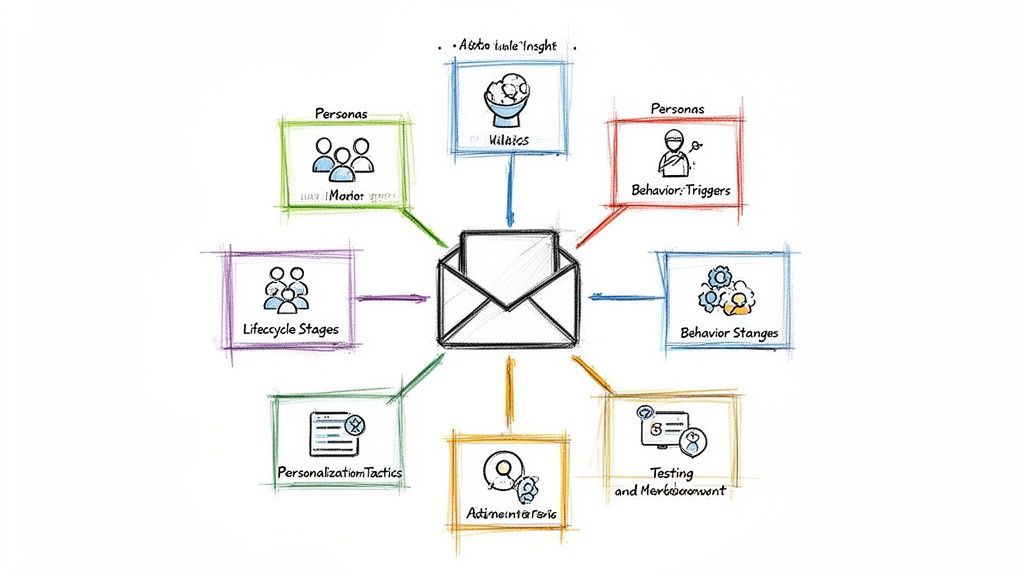
This guide provides a comprehensive roundup of 10 essential segmentation strategies, designed specifically for personal brands looking to cultivate genuine influence. You will learn how to divide your subscribers based on:

  • Behavior: How they interact with your content.
  • Demographics: Their professional roles and backgrounds.
  • Lifecycle Stage: Where they are in their journey with you.

Each practice is broken down into actionable steps, with real-world examples to help you apply these concepts immediately. Whether you're a founder trying to connect with early adopters or a content creator building a loyal community, these strategies will give you the tools to send emails that feel personal, relevant, and impossible to ignore.

1. Behavioral Segmentation Based on Content Engagement

One of the most effective email segmentation best practices involves grouping subscribers based on how they interact with your content. Behavioral segmentation analyzes actions like email opens, link clicks, resource downloads, and even how long someone views your email. This method allows personal brands and thought leaders to distinguish between their most dedicated followers and those who are more passive, creating opportunities for deeper connection and targeted messaging.
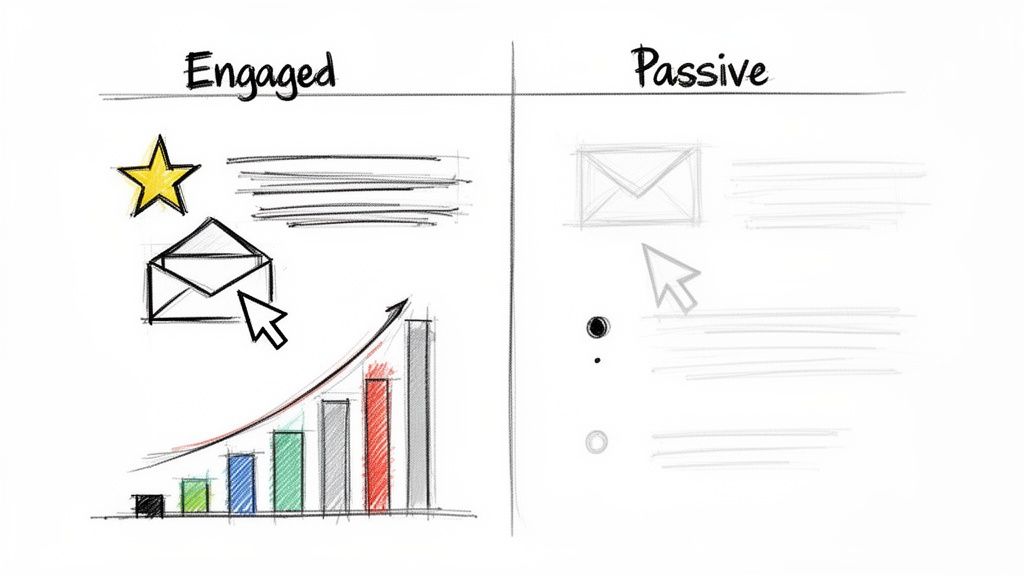
Diagram illustrating engaged versus passive email segmentation with vibrant icons and a growth chart.

This approach recognizes a simple truth: not every subscriber is equally interested in everything you send. By segmenting based on engagement, you can send your best material to those who will appreciate it most, while strategically attempting to re-engage those who have become inactive.

Implementation Examples

  • For CEOs and Founders: A founder can create a 'VIP' segment for subscribers who have opened over 80% of their emails in the last 90 days. This group might receive exclusive invitations to webinars, early access to new products, or even personal networking opportunities.
  • For SaaS Companies: A software business can track which subscribers click on links related to technical product updates versus those who engage with broader thought leadership articles. This allows them to send targeted content that aligns with specific user interests, improving relevance and reducing unsubscribes.
  • For Content Creators: A creator building a personal brand can identify followers who consistently download their guides or checklists. This segment is primed for offers related to premium courses or paid workshops on similar topics.

Key Insight: Behavioral data doesn't just show who is engaged; it reveals what they are engaged with. This information is a direct signal of their interests and priorities, providing a clear roadmap for your content strategy.

Actionable Tips for Implementation

To put this into practice, consider the following steps:

  1. Define Engagement Thresholds: Establish clear, measurable criteria for your segments. For instance, an "Engaged" segment could be anyone who has opened at least two emails or clicked one link in the past 30 days.
  2. Create a Re-engagement Strategy: Before purging inactive subscribers, create a "win-back" campaign. Send a sequence of 2-3 emails designed to reignite their interest. If they remain inactive, you can then confidently remove them to improve your sender reputation.
  3. Use Engagement Scoring: Many email platforms, like HubSpot and Klaviyo, offer engagement scoring. Assign points to actions (e.g., 5 points for a click, 1 for an open) to automatically identify your most valuable subscribers.
  4. Combine with Other Data: For powerful insights, combine behavioral data with demographics or psychographics. A segment of "Engaged subscribers in the tech industry" is far more specific and actionable than just "Engaged subscribers."

2. Demographic and Professional Role Segmentation

Dividing your email list by professional characteristics like job title, industry, and company size is a foundational email segmentation best practice. For personal brands targeting professionals, this method is critical because a CEO's content needs are vastly different from a freelancer's. This segmentation ensures each subscriber receives messaging that resonates with their specific career stage, industry context, and professional goals.

This approach moves beyond generic advice and allows you to speak directly to the challenges and aspirations of distinct professional groups. It acknowledges that a mid-level manager is focused on team leadership and project execution, while a founder is consumed with scaling, fundraising, and market positioning. Tailoring content this way builds authority and demonstrates a true understanding of your audience.

Implementation Examples

  • For Personal Brand Coaches: A coach could create a "Legacy Builder" segment for CEO clients and a "Creative Entrepreneur" segment for freelancers. The CEO group gets content on succession planning and industry influence, while the freelancer group receives tips on client acquisition and pricing strategies.
  • For LinkedIn Thought Leaders: A B2B influencer can send different content to their C-suite followers versus mid-level managers. The C-suite might receive high-level strategic frameworks, while managers get practical guides on implementing those strategies with their teams.
  • For Founder-Focused Newsletters: A newsletter for founders can feature industry-specific case studies. A segment of SaaS founders would receive an analysis of a successful software company's growth, while a segment of e-commerce founders would see a breakdown of a direct-to-consumer brand's marketing funnel.

Key Insight: People want to see themselves in the content they consume. When you segment by professional role, your examples, case studies, and advice become instantly more relevant and credible, making subscribers feel understood and valued.

Actionable Tips for Implementation

To apply this segmentation method effectively, follow these steps:

  1. Collect Data at Signup: Add optional fields to your signup form for "Job Title" or "Industry." Keep it simple to avoid friction, but capture this key information early.
  2. Use Progressive Profiling: Don't ask for everything at once. After a subscriber joins, use subsequent interactions to ask for more details like "Company Size" or "Years of Experience" to gradually build a complete profile.
  3. Create Audience Personas: Develop detailed personas for your main professional segments. A "Marketing Manager Megan" persona will have different pain points and goals than a "Startup Founder Sam," helping you craft more empathetic content.
  4. Segment by Aspiration: Don't just segment by current role; consider career goals. Create a segment for "Aspiring Managers" or "Future Founders" and provide them with content that helps them reach the next level.

3. Purchase History and Product Interest Segmentation

Segmenting your audience based on their purchase history and expressed product interest is a cornerstone of effective email marketing. This practice involves grouping contacts based on what they have bought, services they have considered, or specific product pages they have viewed. For businesses with multiple offerings, like SaaS companies or service providers, this method allows for precise upselling, cross-selling, and relevant communication.

This approach transforms your email list from a simple broadcast channel into a strategic sales tool. By understanding which services resonate with different client segments, you can tailor recommendations that feel helpful rather than pushy, directly addressing their known needs and guiding them through your value ladder.

Implementation Examples

  • For Service-Based Businesses: A brand consultancy like Legacy Builder can send case studies about content strategy to clients who have only purchased writing services, demonstrating the value of a more complete solution.
  • For SaaS Companies: A software platform can identify users on a premium plan and send them targeted emails about advanced features they aren't using yet, increasing product adoption and retention.
  • For Coaches and Consultants: A business coach can recommend a group coaching program to clients who have completed a 1-on-1 coaching package, offering a way to continue their development in a community setting.

Key Insight: Past purchasing behavior is the strongest indicator of future buying intent. A customer who has already trusted you with their money is your most qualified lead for another, complementary offer.

Actionable Tips for Implementation

To put this into practice, consider the following steps:

  1. Create a Service Matrix: Map out your products and services to identify complementary offerings. For example, a client who bought a "Brand Identity Kit" is a prime candidate for a "Website Design Package."
  2. Time Your Recommendations: Wait 2-4 weeks after a purchase before suggesting a related service. This gives the client time to see value from their initial investment, making them more receptive to another offer.
  3. Lead with Education: Before sending a direct sales pitch, warm up the segment with educational content that demonstrates the value of the upsell. A blog post or case study can pave the way for a recommendation.
  4. Track Interest Signals: Monitor engagement with your upsell or cross-sell recommendations. If a segment isn't clicking, you may need to adjust your timing, messaging, or the offer itself.

4. Lead Source and Channel Segmentation

Segmenting subscribers based on where they came from allows for personalized messaging that acknowledges their unique discovery journey. Lead source segmentation separates audiences from organic social media, paid ads, partnerships, referrals, or direct website visits. This practice recognizes that someone who found you through a LinkedIn post has different context and expectations than someone who joined from a podcast sponsorship.

This approach is one of the core email segmentation best practices because it bridges the gap between acquisition and retention. It ensures the first emails a subscriber receives align with the promises and tone of the channel that brought them to you, creating a consistent brand experience from the very first interaction.

Implementation Examples

  • For LinkedIn Creators: A business leader can create a segment for new subscribers who came from their LinkedIn profile. Their welcome series can reference their LinkedIn content, encourage followers to connect on the platform, and offer resources that expand on topics popular there.
  • For Podcasters: A host can send a different welcome email to listeners who signed up via a link in the show notes versus those who signed up from their website's blog. The podcast-sourced segment might receive a curated list of "top 5 most popular episodes" to deepen their engagement.
  • For Consultants: A consultant using paid ads can segment subscribers by campaign. Someone who signed up from an ad promoting a "free financial modeling template" should immediately receive that template and follow-up content related to financial strategy, not general business advice.

Key Insight: The acquisition channel is your first piece of data on a new subscriber's intent and context. Using this information to tailor the initial experience shows you're paying attention and helps build a stronger connection from day one.

Actionable Tips for Implementation

To put this into practice, consider the following steps:

  1. Use UTM Parameters: Systematically use UTM parameters in all links pointing to your sign-up forms. This is the most reliable way to automatically track which channel, source, and campaign a new subscriber came from.
  2. Create Channel-Specific Landing Pages: Design unique landing pages for major campaigns or channels (e.g., podcast sponsorship, specific ad campaign). This not only improves conversion rates but also simplifies segmentation. You can learn more by exploring various proven email list-building strategies.
  3. Reference the Source: In your welcome email, mention how they found you. A simple line like, "Great to have you here from the 'Marketing Masters' podcast!" makes the message feel personal and relevant.
  4. Analyze Channel Performance: Track which sources generate the most engaged subscribers over time. A robust CRM provides invaluable CRM audience insights that can show which channels deliver not just leads, but future loyal fans.

5. Lifecycle Stage Segmentation

A powerful email segmentation best practice is dividing your audience based on their relationship stage with your brand. Lifecycle stage segmentation tracks subscribers from their first point of contact through to becoming loyal advocates. For personal brands, this means sending different messages to newcomers just discovering your work, engaged followers consuming content regularly, active community members, current clients, and brand champions.
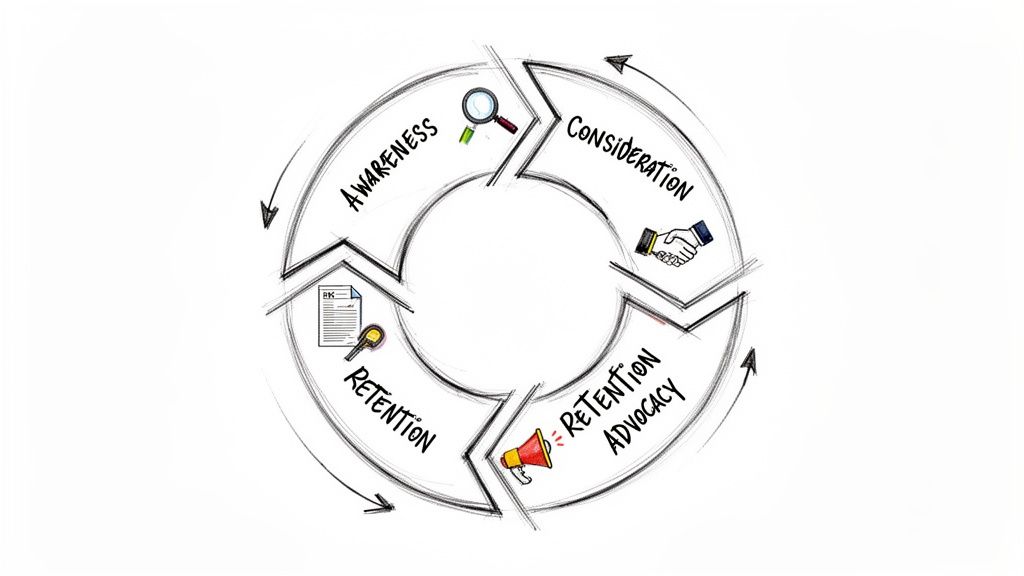
A circular diagram illustrating customer lifecycle stages: Awareness, Consideration, Retention, and Retention Advocacy.

This method ensures your communication is always appropriate and relevant. You wouldn't ask a brand-new subscriber to promote your services, just as you wouldn't send a basic introductory guide to a long-term client. The goal is to nurture the relationship at every step, a principle popularized by models like HubSpot's Flywheel and Marketo's lead lifecycle stages.

Implementation Examples

  • For Thought Leaders: Provide free, high-value resources to "Awareness" stage followers to build trust. For "Committed" followers who regularly engage, offer exclusive Q&A sessions or early access to new content to deepen their loyalty.
  • For SaaS Companies: Guide new users through a structured onboarding sequence that moves them from setup and activation to feature adoption and expansion. Different emails target each milestone to reduce churn and increase product stickiness.
  • For Founders: Legacy Builder can send educational content about brand voice to "Awareness" stage followers. For current clients in the "Advocacy" stage, they might send strategic planning workbooks and invitations to an exclusive referral program.

Key Insight: Lifecycle segmentation is proactive, not reactive. It anticipates a subscriber's needs based on their journey, allowing you to guide them toward deeper engagement rather than just reacting to their last action.

Actionable Tips for Implementation

To implement this strategy effectively, follow these steps:

  1. Define Stage Triggers: Clearly define the behaviors that signal a subscriber's progression. A move from "Awareness" to "Consideration" might be triggered by downloading a case study or visiting a services page.
  2. Create Stage-Specific Campaigns: Build automated email series for each stage. A welcome sequence is perfect for moving subscribers from awareness to consideration, while other stage-specific email drip campaign examples can nurture them further.
  3. Align Calls-to-Action (CTAs): Ensure your CTAs match the subscriber's stage. Early-stage CTAs should encourage content consumption ("Read the blog"), while later-stage CTAs can be more direct ("Book a consultation").
  4. Build Feedback Loops: Use surveys and direct questions at each stage to gather input and refine your process. Ask new subscribers what they hope to learn and ask loyal advocates what they value most.

6. Content Preference and Topic Interest Segmentation

A powerful email segmentation best practice is to group subscribers based on the topics and content formats they prefer. This means segmenting based on whether someone enjoys written articles, videos, podcasts, case studies, or industry-specific news. For personal brands and thought leaders, this is critical because audience interests are rarely uniform. One person might want high-level brand strategy, while another craves technical implementation guides.
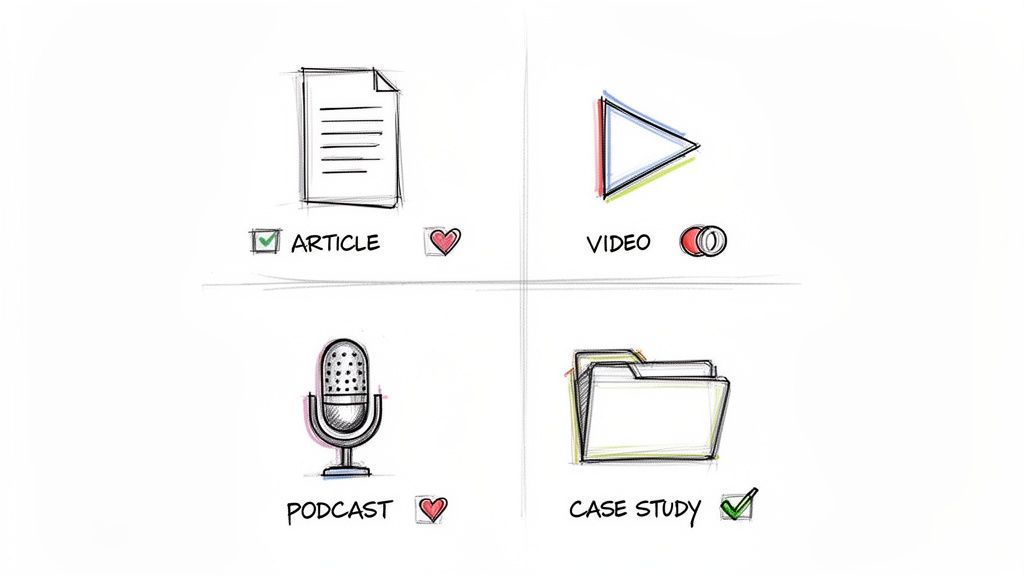
Sketched icons representing different content types: article, video, podcast, and case study with status indicators.

Giving subscribers control over what they receive respects their time and dramatically improves engagement. This method, popularized by newsletter platforms like Substack and Beehiiv, moves away from a one-size-fits-all broadcast and toward a personalized content subscription model that delivers exactly what each person wants to consume.

Implementation Examples

  • For Content Creators: A creator could offer subscribers a choice between "Quick Tips," "Deep Dives," and "Case Studies." This allows followers to self-select the depth of information they want, ensuring every email feels relevant and valuable.
  • For Founders: A founder might segment their audience into "Business Scaling" and "Personal Branding" tracks. This ensures that entrepreneurs receive content about growing their company, while creators get advice on building their online presence.
  • For SaaS Companies: A software business can send product updates only to users who have opted into them. Meanwhile, they can send thought leadership articles about industry trends to a broader segment, keeping all subscribers engaged without causing feature fatigue.

Key Insight: Don't assume you know what your audience wants; ask them directly. A content preference center is the most direct and effective way to gather this data, turning your email list into a collection of personalized content streams.

Actionable Tips for Implementation

To apply this strategy, follow these steps:

  1. Add a Preference Center: Include options in your signup form and email footer where subscribers can choose their preferred topics and content formats.
  2. Tag Your Content: Create internal tags for every piece of content based on topic (e.g., "marketing," "leadership") and format (e.g., "video," "article"). This makes it easy to build your segments.
  3. Use Progressive Profiling: Instead of asking everything at once, use email clicks and occasional polls to learn about interests over time. For example, if someone clicks on three video links, tag them as "prefers video."
  4. Monitor Unsubscribe Reasons: Pay close attention to why people leave. If you see a pattern of unsubscribes after sending emails on a specific topic, it may be a sign to segment that content more carefully. Finding out how to write email newsletters that people actually read can reduce these unsubscribes.

7. Geographic and Timezone Segmentation

For personal brands with a global reach, understanding where your audience is located is a fundamental email segmentation best practice. Geographic and timezone segmentation involves dividing subscribers by their location, enabling you to deliver content that feels local and timely, no matter the distance. This practice moves beyond one-size-fits-all sends, recognizing that an email sent at 9 a.m. in New York is an inconvenient 2 p.m. in London and an after-hours 6:30 p.m. in Mumbai.

This method ensures your message arrives when subscribers are most likely to be checking their inbox, boosting open rates. It also allows you to tailor examples, case studies, and event details to be regionally relevant, which builds a stronger connection with an international audience.

Implementation Examples

  • For Global Thought Leaders: A thought leader with followers in North America, Europe, and Asia can schedule the same email to send at 8 a.m. local time for each region. This simple adjustment prevents their European audience from receiving emails in the middle of their workday.
  • For International SaaS Platforms: A software company can segment users by country to feature region-specific success stories. An email to Australian customers might highlight how a Melbourne-based business used their product, making the benefits feel more tangible and relatable.
  • For Virtual Event Promoters: A creator hosting a live webinar can segment by timezone to promote the event with the correct local time. A subscriber in Los Angeles sees "Join us at 10 a.m. PST," while a subscriber in Paris sees "Join us at 7 p.m. CET," removing friction and reducing confusion.

Key Insight: Geographic segmentation is about more than just scheduling; it's about context. Acknowledging a subscriber's location, whether through timely delivery or relevant content, shows that you see them as an individual, not just another entry on a global list.

Actionable Tips for Implementation

To implement this effectively, follow these steps:

  1. Collect Location Data: Gather location information during signup by asking for a city or country. Alternatively, use IP address inference, a common feature in most email service providers, to automatically estimate a subscriber's location.
  2. Use Timezone-Aware Scheduling: Choose an email platform with timezone-intelligent sending features, like those popularized by Mailchimp and Klaviyo. This allows you to schedule a campaign for "9:00 a.m. recipient's local time."
  3. Create Region-Specific Content: Develop case studies, testimonials, and examples that feature customers from different geographic markets. Highlight these in emails sent to the corresponding regional segments.
  4. Consider Cultural Nuances: Be mindful of regional holidays, cultural events, and local customs when planning your campaigns. Avoid sending a major promotion during a national holiday in a key market.

8. Customer Persona and Ideal Client Profile (ICP) Segmentation

A foundational practice in effective email marketing is segmenting your audience based on well-defined customer personas or Ideal Client Profiles (ICPs). This method moves beyond single data points to create holistic representations of your key audience groups, encompassing their roles, goals, challenges, and motivations. By grouping subscribers this way, your messaging directly addresses the specific context of each distinct group.

This strategic approach recognizes that even within the same industry, different roles have different problems. For a personal brand, it means communicating with an emerging entrepreneur about bootstrapping and finding product-market fit, while discussing scaling culture and legacy with an established CEO. This alignment ensures your content resonates on a much deeper level, significantly improving relevance and conversion rates.

Implementation Examples

  • For B2B SaaS Companies: A software firm can create separate personas for the CFO, CTO, and Operations Manager. The CFO receives content about ROI and cost savings, the CTO gets technical deep dives and integration guides, and the Operations Manager learns about workflow efficiency.
  • For Personal Development Brands: A coach can segment their audience into a "Corporate Professional" persona and a "Solo Entrepreneur" persona. They can then send leadership and career advancement content to the former, while the latter receives emails focused on business growth and resilience.
  • For a Legacy Builder Brand: The brand can create a "Bootstrapped Founder" persona who receives content on scrappy marketing tactics and a "Corporate Executive" persona who gets articles on leading large teams and navigating corporate politics.

Key Insight: Persona-based segmentation isn't about stereotyping; it's about empathy at scale. It forces you to step into your audience's shoes and craft messages that speak directly to their worldview, making your communication feel like a one-on-one conversation.

Actionable Tips for Implementation

To build and use personas effectively, follow these steps:

  1. Develop Personas from Real Data: Interview current customers, survey your audience, and analyze CRM data to build 3-5 primary personas. Avoid creating too many, which can become unmanageable.
  2. Document Key Attributes: For each persona, clearly document their primary pain points, goals, common objections, and preferred communication channels. Use these documents when planning campaigns to stay focused.
  3. Create Persona-Specific Messaging: Develop distinct email templates, subject lines, and calls-to-action for each persona. A message for a "Startup Marketer" should feel different from one for a "Fortune 500 VP."
  4. Track and Validate: Monitor engagement metrics (opens, clicks, conversions) separately for each persona segment. If one persona consistently underperforms, it may be a sign that your profile or messaging needs refinement. Review and update all personas at least once a year.

9. Engagement Frequency and Email Preference Segmentation

Respecting a subscriber's inbox is a cornerstone of modern email marketing. Not everyone wants to hear from you with the same regularity. Engagement frequency segmentation addresses this directly by allowing subscribers to choose how often they receive your emails, moving away from a one-size-fits-all send schedule. This practice demonstrates respect for your audience's time and preferences, building trust and significantly reducing unsubscribe rates.

This approach is one of the most effective email segmentation best practices because it puts the subscriber in control. By offering choices like daily updates, weekly digests, or monthly summaries, you can keep your most eager followers informed while retaining those who prefer a less frequent cadence. It's a proactive strategy to prevent email fatigue and maintain a healthy, engaged list.

Implementation Examples

  • For Thought Leaders: A thought leader can offer different tiers of communication. A 'Daily Insights' option for hyper-engaged followers, a 'Weekly Deep Dive' for the core audience, and a 'Monthly Strategy Brief' for senior executives with limited time.
  • For Newsletter Platforms: A platform like Morning Brew allows users to select which newsletters they receive, effectively letting them manage frequency and topic. This empowers users to curate their own experience, ensuring they only get content they value.
  • For SaaS Companies: A software business can let users choose between receiving all marketing announcements, only critical product updates, or just a monthly roundup. This is especially useful for segmenting users from decision-makers who have different informational needs.

Key Insight: Giving subscribers control over email frequency is a powerful act of transparency. It shifts the dynamic from a brand pushing messages to a subscriber pulling information, which dramatically improves list health and long-term loyalty.

Actionable Tips for Implementation

To implement frequency and preference segmentation, follow these steps:

  1. Offer Clear Options at Signup: Include frequency choices (e.g., daily, weekly, monthly) directly on your opt-in form. This sets clear expectations from the very beginning of the relationship.
  2. Create a User-Friendly Preference Center: Your email footer should link to a simple, accessible preference center where subscribers can easily adjust their settings at any time without having to search for it.
  3. Develop Digest Versions: For weekly or monthly options, create curated digests that summarize your most important content. This ensures subscribers don't miss out while respecting their chosen frequency.
  4. Monitor Engagement by Tier: Analyze the open and click-through rates for each frequency segment. If your 'daily' segment shows signs of fatigue, you might be sending too much, even for your most avid fans.
  5. Set a Sensible Default: If a subscriber doesn't make a choice, default them to a moderate frequency, such as weekly. This serves as a balanced starting point that prevents immediate unsubscribes.

10. Win-Back and Re-Engagement Segmentation

Not all subscribers remain actively engaged forever, and creating a specific segment for inactive subscribers is a vital practice for list maintenance. This approach identifies subscribers who have not opened or clicked an email in a defined period, typically 60 to 90 days. It then deploys a targeted re-engagement campaign designed to remind them of your value and invite them back into the conversation.

This strategy directly combats list decay, protects your sender reputation from being damaged by low engagement rates, and successfully reactivates valuable relationships that have simply gone dormant. For personal brands, maintaining an active, interested community is crucial, and win-back campaigns help preserve that perception and reality.

Implementation Examples

  • For Legacy Builders: A seasoned professional might notice that a group of once-active followers has gone quiet. They can create a "We miss you" segment and send a short series highlighting their most popular recent articles or a personal note about what's coming next, reigniting the connection.
  • For SaaS Companies: A software business can automatically segment users who haven't logged into the platform for over 90 days. This segment could receive a "What's New Since You've Been Gone?" campaign, showcasing new features and improvements that solve key pain points.
  • For Thought Leaders: A thought leader can offer a piece of exclusive, high-value content, like a new eBook or a private Q&A recording, to a segment of subscribers who have stopped opening their regular newsletters. This incentive can be enough to draw them back in.

Key Insight: Inactivity isn't always a sign of disinterest; it's often a sign of distraction. A well-crafted re-engagement campaign doesn't just ask subscribers to come back, it gives them a compelling new reason to pay attention.

Actionable Tips for Implementation

To build your own win-back strategy, follow these steps:

  1. Set Clear Inactivity Thresholds: Define "inactive" based on your sending frequency. If you email daily, a 30-day window may be appropriate; for monthly senders, 90-180 days is more realistic.
  2. Create a Compelling Win-Back Series: Design a short sequence of 2-3 emails. Use engaging subject lines like "Is this goodbye?" or "Here's what you've missed."
  3. Highlight New Value: Remind them why they subscribed. Showcase new content, product updates, or insights you've shared since they last engaged. An offer, like a discount or exclusive resource, can be effective.
  4. Purge Non-Responders: If a subscriber doesn't re-engage after the campaign, remove them from your list. This final step is crucial for maintaining good list hygiene and protecting your sender score.

10-Point Email Segmentation Best Practices Comparison

Segment Type🔄 Implementation Complexity⚡ Resource Requirements⭐ Expected Outcomes💡 Ideal Use Cases📊 Key Advantages
Behavioral Segmentation Based on Content EngagementHigh — needs tracking infra & automationMedium–High — analytics, tagging, monitoring⭐⭐⭐⭐ — higher open/click rates & ROIPersonal brands, thought leaders, SaaS engagement trackingIdentifies advocates; improves relevance; reduces churn
Demographic and Professional Role SegmentationMedium — data collection & upkeepMedium — signup fields, profiling, updates⭐⭐⭐ — improved role relevance & credibilityB2B, executives vs. freelancers, industry-specific messagingRole-specific content; targeted networking; higher engagement
Purchase History and Product Interest SegmentationMedium–High — CRM integration & timingMedium–High — CRM, tracking, sales coordination⭐⭐⭐⭐ — increased AOV & effective upsellsSaaS, service tiers, businesses with add-onsPersonalized offers; better cross-sell/upsell; fewer irrelevant messages
Lead Source and Channel SegmentationMedium — attribution & consistent trackingMedium — UTMs, landing pages, analytics⭐⭐⭐ — improved attribution & tailored messagingMulti-channel acquisition, campaign optimizationBetter ROI measurement; channel-specific relevance
Lifecycle Stage SegmentationMedium — define stages & automate progressionMedium — content mapping, automation flows⭐⭐⭐⭐ — higher conversion & retentionOnboarding flows, funnel optimization, community buildingRight message at right time; reduces premature selling
Content Preference and Topic Interest SegmentationMedium — tagging and preference centersMedium–High — tagging, multiple formats, profiling⭐⭐⭐⭐ — significant engagement liftNewsletters, creators, multi-topic audiencesPersonalized content; fewer unsubscribes; content prioritization
Geographic and Timezone SegmentationLow–Medium — collect timezone & schedule sendsMedium — localization, scheduling, possible translation⭐⭐⭐ — improved open rates & regional relevanceGlobal audiences, events, region-specific campaignsOptimized send times; culturally relevant messaging
Customer Persona and ICP SegmentationMedium — persona research & maintenanceMedium–High — interviews, documentation, aligned content⭐⭐⭐⭐ — improved conversions & retentionStrategic marketing, sales-aligned campaigns, high-touch offersTargeted messaging; higher CLV; better resource allocation
Engagement Frequency and Email Preference SegmentationLow — preference center & cadence rulesMedium — preference UI, digest creation, cadence ops⭐⭐⭐ — reduced churn & email fatigueLarge newsletters, diverse audience cadence needsRespects inbox preferences; improves deliverability
Win-Back and Re-Engagement SegmentationLow — define inactivity thresholds & automationsLow–Medium — campaign content & performance tracking⭐⭐⭐ — recovers some dormant users; list hygieneList maintenance, deliverability improvement, lapsed usersCleans list; reactivates subscribers; protects sender reputation

Building Your Legacy, One Segment at a Time

We've explored the foundational pillars of building a powerful, personal brand through communication that truly connects. Moving beyond generic email blasts is not just a technical upgrade; it's a fundamental shift in how you perceive and interact with your audience. Implementing the email segmentation best practices detailed in this guide is the key to making that shift successful and sustainable.

Your audience isn't a monolith. It’s a collection of individuals with distinct needs, interests, and relationships with your brand. By systematically applying segmentation, you honor that individuality. Each practice, from tracking content engagement to identifying lifecycle stages, adds a new layer of understanding, allowing you to deliver the right message to the right person at the precise moment they need to hear it. This is how you transform a passive mailing list into an active, engaged community.

Key Takeaways for Immediate Action

Let's distill our journey into a clear, actionable summary. The core principle is that effective segmentation is a conversation, not a broadcast.

  • Start with Behavior: Your audience's actions speak volumes. Segmenting based on content consumption, purchase history, and engagement frequency provides the most direct path to relevance.
  • Layer the Data: Don't rely on a single data point. Combine demographic information (like professional roles) with behavioral triggers (like a recent download) to create highly specific and effective micro-segments.
  • Respect the Journey: A new subscriber requires a different conversation than a loyal customer or a disengaged lead. Lifecycle segmentation ensures your messaging supports, rather than interrupts, their natural progression with your brand.
  • Test and Refine: The most effective segments are not set in stone. Continuously measure your open rates, click-through rates, and conversion metrics for each segment. Use this data to refine your criteria and messaging, ensuring your strategy evolves alongside your audience.

"The goal is not to have the most segments, but the most effective ones. Each segment should have a clear purpose and a distinct communication strategy."

Your Next Steps to Segmentation Mastery

Feeling overwhelmed by the possibilities is normal. The secret is to start small and build momentum. Don't try to implement all ten strategies at once. Instead, choose one or two that feel most aligned with your immediate business goals.

  1. Choose Your Starting Point: Are you focused on converting new leads? Begin with Lifecycle Stage Segmentation. Want to increase repeat purchases? Focus on Purchase History and Product Interest Segmentation.
  2. Define Your "Why": For the segment you choose, ask yourself: What is the specific goal for this group? Is it to educate, re-engage, or drive a specific action? Clarity of purpose will guide your messaging.
  3. Implement and Measure: Set up your first segment in your email service provider. Create a simple, targeted campaign and send it. After a week, analyze the results. What worked? What didn't? This feedback loop is your most valuable asset.

Mastering these email segmentation best practices is more than just a marketing tactic; it is an act of brand building. It’s the difference between shouting into a crowd and having a meaningful, one-on-one conversation, scaled. Each targeted email, each piece of relevant content, is a deposit into the bank of trust and authority you are building. This is how you create a legacy-a brand that people not only follow but also believe in. Your legacy is built on the strength of your connections, and smart segmentation is the key to making every connection count.


As your brand grows, so does the complexity of managing these connections. If you're ready to scale your personal brand with authentic content and strategic oversight across all your audience segments, Legacy Builder can help. We provide the content creation engine and strategic direction to ensure your messaging remains potent and personal, no matter how large your audience becomes. Discover how we build brands that last at Legacy Builder.

Logo

We’re ready to turn you into an authority today. Are you?

Became a Leader

Common Questions

Why shouldn’t I just hire an in-house team?

You could – but most in-house teams struggle with the nuance of growing on specific platforms.


We partner with in-house teams all the time to help them grow on X, LI, and Email.

Consider us the special forces unit you call in to get the job done without anyone knowing (for a fraction of what you would pay).

Can you really match my voice?

Short answer – yes.

Long answer – yes because of our process.

We start with an in-depth interview that gives us the opportunity to learn more about you, your stories, and your vision.

We take that and craft your content then we ship it to you. You are then able to give us the final sign-off (and any adjustments to nail it 100%) before we schedule for posting.

What if I eventually want to take it over?

No problem.

We have helped clients for years or for just a season.

All the content we create is yours and yours alone.

If you want to take it over or work on transitioning we will help ensure you are set up for success.


What if I want to post myself (on top of what Legacy Builder does)?

We want this to be a living breathing brand. We will give you best practices for posting and make sure you are set up to win – so post away.