.svg)
Subscribe to our newsletter and get insights on how to grow your personal brand.
Thank you! Your submission has been received!
Oops! Something went wrong while submitting the form.
.svg)


To pull in more LinkedIn followers, you have to stop thinking of your profile as a digital resume. It’s not. It needs to be a resource—a magnet for the right people. This means your headline has to scream value, your 'About' section has to tell a real story, and your banner and featured content must instantly prove you know your stuff. When you get this right, following you becomes a no-brainer for your ideal audience.
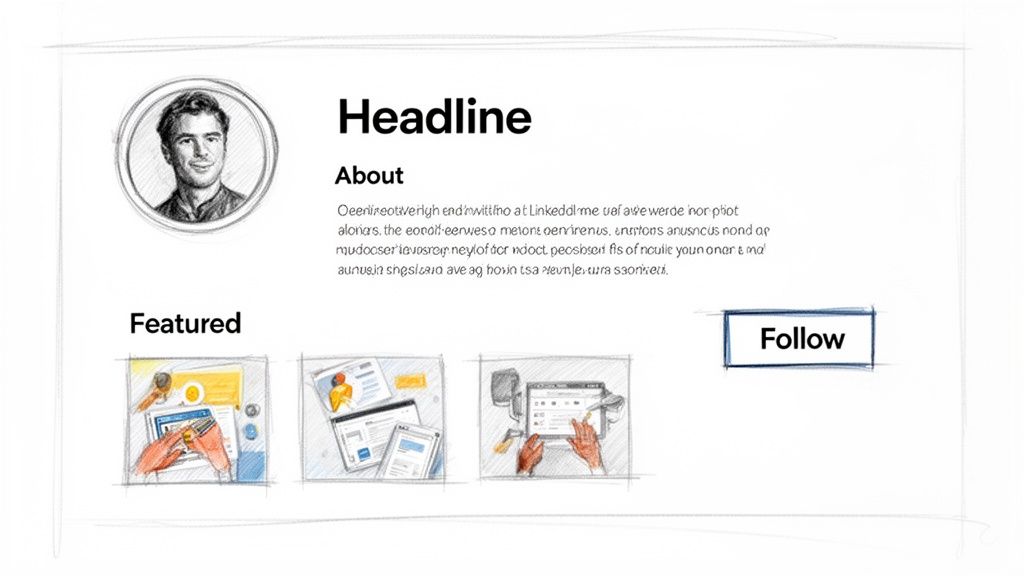
Before you even think about posting content or engaging with others, your profile has to do the heavy lifting. It’s the entire foundation.
When someone lands on your page, they’re making a snap judgment: is this person worth my time? A half-baked profile is an instant "no."
Think of it like your digital storefront. Your banner and headshot are the window display—they need to look professional and draw people in. Your headline is the sign above the door; it has to be crystal clear about what’s inside. And once they step in, your 'About' and 'Featured' sections should guide them straight to your best ideas.
Your headline is the single most important piece of real estate on your profile. It follows you everywhere—every comment you leave, every connection you request, every search result you appear in. It has to do more than just state your job title.
A killer headline answers one simple question: "How do you help people?"
See the difference? The second one immediately signals value and expertise, pulling in exactly the right crowd. It’s also packed with keywords that help you show up in the right searches, without sounding like a robot.
Your 'About' section is not the place for a stuffy, third-person bio. This is your shot to connect on a human level. Write like you talk, tell the story of your mission, and be clear about who you’re here to help.
Keep it scannable with short paragraphs and bullet points. A solid 'About' section usually has:
This is how you build the personal authority that makes people want to stick around. If you're just getting started, learning the basics of creating a compelling LinkedIn business profile is a great first step.
Here's a quick checklist to make sure you've covered all your bases. Run through this to turn your profile from a static page into a follower-conversion machine.
Nailing these elements sets the stage for everything else. It ensures that when you do drive traffic to your page, people will actually stick.
The 'Featured' section is your highlight reel. It’s where you prove you’re the real deal, so don't let it sit empty. Pin your most valuable assets here—the stuff that gives visitors an immediate taste of the value you provide.
Here’s what you should be featuring to turn those visitors into followers:
Your LinkedIn profile should be working for you 24/7. Every single element needs to be dialed in to answer a visitor’s questions: "Who are they?", "How can they help me?", and "Why should I follow them?"
When you treat your profile as the central hub for your brand, you create a powerful magnet for your ideal audience. This is the non-negotiable first move in any real strategy to grow your following.

Alright, your profile is dialed in. Now for the engine that actually drives follower growth: your content.
Forget vague advice like "post valuable stuff." That doesn't help anyone. You need a reliable framework that gets results without leading to burnout.
Just posting random thoughts when inspiration hits is a recipe for disaster. That scattered approach won't build a loyal audience. To get more followers on LinkedIn, you need a plan that proves your expertise and makes your profile the go-to spot for insights in your niche.
The best way I've found to do this is with the Pillar and Spoke model. It’s simple, powerful, and keeps you from chasing shiny objects.
Instead of trying to be an expert on everything, you’re going to pick 3-5 core themes—your "pillars"—and you are going to own them. These topics should live at the intersection of what you genuinely know, what your audience struggles with, and what you want to achieve professionally.
Think of these pillars as the main channels on your personal media network. If you're a B2B marketing leader, for example, your pillars might look something like this:
By defining these pillars, you create a clear roadmap. Every single piece of content you create will tie back to one of these themes, hammering home your authority and pulling in followers who actually care about what you have to say.
Your content pillars are your promise to your audience. They set expectations and build trust by signaling exactly what kind of value a new follower will get by clicking that "Follow" button.
This focused approach makes sure every post is building a cohesive personal brand. It also kills writer's block. No more staring at a blank screen wondering what to post.
Once you have your pillars locked in, you can start brainstorming the "spokes"—all the different content formats you can create for each one. This is key. Variety keeps your audience from getting bored and hitting the unfollow button.
Not everyone likes to consume content the same way, so mixing it up is crucial.
For each pillar, think about creating a mix of content with different goals:
A great way to think about this is by blending value-driven content with genuine engagement. You can dig deeper into a modern B2B social media strategy that works to see how this plays out.
Let me be blunt: consistency is the single most important factor in growing your LinkedIn following. The algorithm loves it, and your audience learns to expect it. A content calendar is how you make this happen without going insane.
It doesn’t have to be fancy. A simple spreadsheet with columns for the date, pillar, post idea, and status (Draft, Scheduled, Posted) is all you need. The goal is to get at least a week or two ahead.
Planning ahead lets you batch your content creation, which saves a ton of time and mental energy. Instead of scrambling for an idea every morning, you can block out a few hours a week to write and schedule everything.
And this isn't just theory; it has a massive impact. Pages that publish at least once a week see 5.6 times more follower growth than those posting once a month. For creators with under 5,000 followers, the numbers are even crazier, with some seeing audience growth of over 40% year-over-year just by sticking to a weekly cadence.
When you commit to a regular posting schedule built around your core pillars, you create a magnet. You're building a reliable stream of value that turns casual visitors into dedicated followers, pulling in exactly the right people and giving them a damn good reason to stick around.
Alright, you've got your content pillars sorted. But how you package those ideas is just as critical as the ideas themselves.
Let’s be real—the LinkedIn algorithm has its favorites. More importantly, so do the people scrolling through their feeds. Just throwing content out there isn't a strategy. You have to use the formats that actually stop the scroll and get people talking.
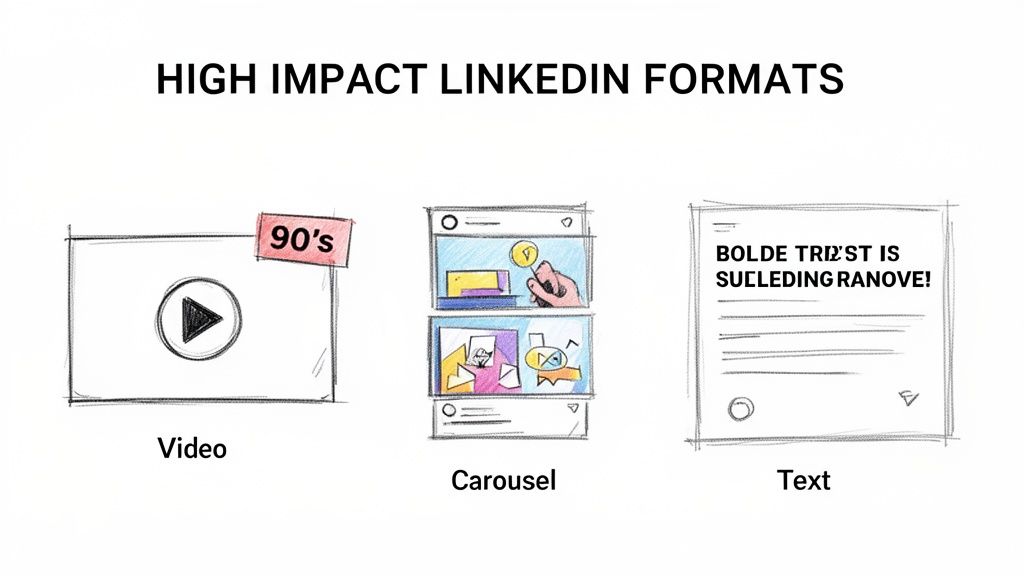
Choosing the right format can be the difference between a post that gets buried in minutes and one that brings thousands of new eyeballs to your profile. We're going to break down the three formats that consistently deliver: native video, carousels, and the surprisingly powerful text-only post. Nailing these is a huge part of learning how to grow your follower count day after day.
Video is an absolute beast on LinkedIn, but there's a catch. It has to be native video. That means you're uploading the file directly to LinkedIn, not just dropping a link from YouTube or Vimeo. Why? Because native videos auto-play in the feed, and that's your chance to grab someone's attention instantly.
The numbers don't lie. Native video consistently pulls in some of the highest engagement rates on the platform, with some reports showing median engagement sits around a hefty 5.6%. This isn't just about pleasing the algorithm; it's about giving people the authentic, on-platform content they actually want to see. You can dig deeper into these trends with LinkedIn statistics and insights from Metricool.com.
To make your videos land, you have to follow a few simple rules:
One more thing—create a custom thumbnail. A blurry, auto-generated shot looks amateur. A simple graphic with a clear, compelling title tells people exactly why they should hit play.
Carousels—those multi-image posts you often see as PDFs—are engagement gold. They work because they spike your dwell time, which is just a fancy way of saying how long someone spends on your post. The longer they stick around, the more the algorithm shows your content to other people.
The secret to a killer carousel is to tell a story, one slide at a time. Each slide needs to build on the last, creating a sense of "what's next?" that pulls the reader all the way to the end.
A great carousel isn't just a slide deck. It's a narrative. It walks someone through a problem, a process, or a lesson and delivers a satisfying punchline on the final slide.
Here’s a simple formula I use for high-performing carousels:
Don't ever sleep on a well-formatted text-only post. When you get it right, these posts feel raw, personal, and are ridiculously easy to consume. That makes them incredibly shareable. The magic isn't just what you say, but how you say it.
Massive walls of text are a death sentence on LinkedIn. Your job is to make your posts scannable.
Use these formatting tricks to make your text posts jump off the screen:
For example, instead of writing a dense paragraph, you could structure a post like this:
I learned a tough lesson about leadership last week.
It’s not about having all the answers.
It’s about asking the right questions.
Here are three I’m now asking my team daily:
See how much more inviting that is? This format is easy to skim and digest, making it far more likely to get the likes and comments that introduce your profile to a whole new wave of potential followers.
Let's be real—just posting content is only half the battle. That's broadcasting. If you want real, sustainable growth on LinkedIn, you have to stop thinking like a publisher and start acting like a valued member of the community. It’s the difference between a monologue and a dialogue.
The goal isn't just to get seen; it's to get remembered. When you actively engage, you're not just another post in the feed. You become a thoughtful expert, build genuine relationships, and consistently get your profile in front of new, relevant people. This is how you shift from passively hoping for followers to actively building a community where growth just happens.
The fastest way to get noticed by the right people? Drop insightful comments on posts from influential creators and leaders in your space.
A generic "great post!" is completely invisible. It's just noise. A thoughtful comment, on the other hand, is like a mini-article that puts your expertise on full display and actually moves the conversation forward.
Think about it: this strategy puts your name and that value-packed headline of yours right in front of a big-name creator's entire audience. It’s like getting a guest spot on their stage, for free.
Here’s a dead-simple framework for a comment that actually works:
For instance, someone posts about leadership challenges. Instead of just saying, "Totally agree," try this:
"This is a fantastic point on psychological safety. I've found that one practical way to build this is by having leaders openly share a 'productive failure' of their own in team meetings. It immediately lowers the stakes for everyone else and makes vulnerability a team sport, not just a buzzword."
A comment like that gets likes and replies. But more importantly, it gets profile clicks from people who want to know more about the person who just dropped so much value.
You can't be everywhere at once, so you have to be strategic. Stop wasting your time jumping on random trending topics. Instead, build a small, curated "watch list" of people whose audiences you actually want to reach.
Your ideal watch list should have a mix of:
Spend just 15-20 minutes a day scrolling through the recent posts from this specific list. This focused approach makes sure your engagement time is always high-impact. You're not just commenting randomly; you're placing yourself in conversations that directly fuel your follower growth.
Real growth also comes from building your network one genuine connection at a time. This means you have to stop just passively accepting whatever requests come your way. Proactive, personalized outreach is a game-changer.
When you send a connection request, always add a personal note. A blank request is easy to ignore and screams "I'm just trying to boost my numbers." A thoughtful one is hard to turn down.
Your note should be short, sweet, and specific. Mention something you have in common or something you genuinely admire about their work.
This simple move shows you've actually paid attention and are interested in a real connection. Every new connection you make expands your reach, making it easier for their network to find you. When you stack this with high-value content and insightful comments, you create a powerful engine for authentic follower growth that just keeps running.
Strategy is just a plan until you actually do the work. All the advice in the world on profiles, content, and engagement means nothing if you don't build it into a repeatable system. This is where we turn those big ideas into a simple workflow that takes out the guesswork.
Without a routine, it’s way too easy to get overwhelmed, post randomly, and wonder why nothing’s happening. A structured workflow keeps your efforts focused and efficient. The trick is to separate your quick daily habits from your deeper weekly planning. This creates a rhythm that builds momentum without burning you out.
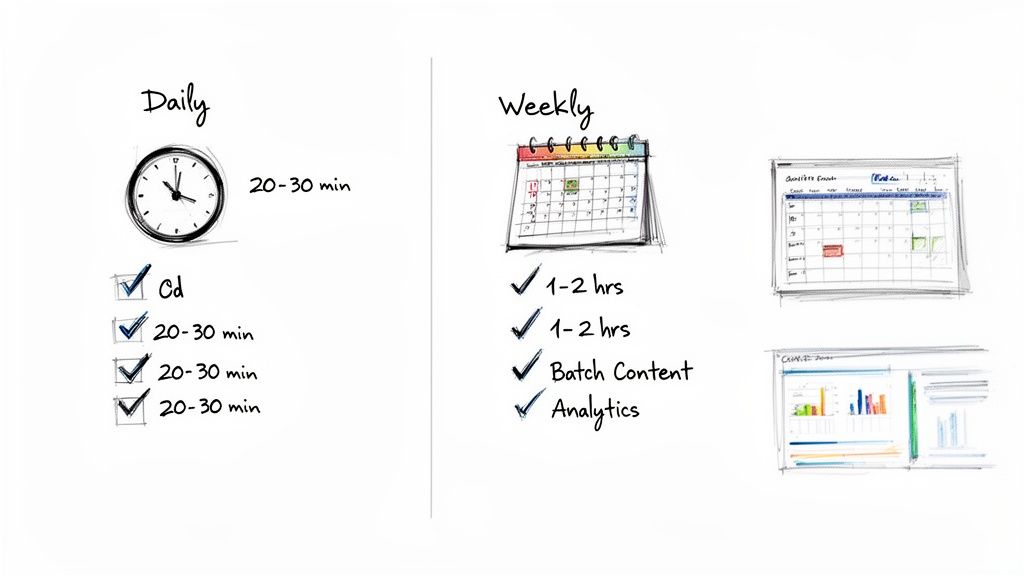
This is your daily pulse-check. A short, high-intensity block of activity to keep you visible and engaged. It’s not about spending hours scrolling—it’s about making every minute count.
Here’s a simple checklist to run through each day:
Your daily actions are the compound interest of your LinkedIn growth. That small, consistent investment of 20 minutes a day yields massive returns over time.
This is where you zoom out and work on your strategy, not just in it. Block out 1-2 hours once a week—maybe a Friday afternoon or Sunday evening—to handle the bigger-picture tasks. This is how you stay ahead and avoid the daily "what should I post?" scramble.
Your weekly session should cover these core activities:
To give you a clearer picture of how this breaks down, here’s a sample schedule you can adapt.
This structure turns a vague goal like "grow on LinkedIn" into a set of simple, repeatable tasks.
For a deeper dive into a proven strategy, check out this guide on the exact system for gaining LinkedIn followers. It lays out a 90-day framework that fits perfectly with this workflow.
By building this simple routine, managing your personal brand becomes second nature. If you need a hand making this process even smoother, a daily content management system can provide the structure to turn these habits into a powerful growth engine.
Even with a solid game plan, you're going to have questions pop up. It's only natural. Let's tackle some of the most common hurdles I see people face when they're trying to grow their following.
Getting these things straight will keep you focused on what actually moves the needle.
Look, there’s no magic button here. But with consistent, smart effort, you’ll see results faster than you think. If you’re committed—posting valuable content 3-5 times a week and jumping into real conversations every day—most people start feeling real momentum within 90 days.
Getting your first 1,000 followers is usually the hardest part. It's like pushing a giant boulder uphill. But once you hit that milestone, things start to snowball. The network effect kicks in, and growth gets easier.
A great benchmark to aim for is a 40% year-over-year growth rate. It’s not an overnight explosion, but it’s a powerful sign that your steady, consistent work is paying off big time.
I get the temptation to look for shortcuts. But trust me on this: using automation for follows, connection requests, or comments is a huge mistake. Not only does it violate LinkedIn's rules, but it makes you look spammy and can seriously torch your personal brand.
The goal isn't just a bigger number. It’s to build a real community that trusts what you have to say. Authentic, human interaction takes more time, but the long-term results are infinitely better. A bot can't replicate a genuine conversation.
Easy one. Engagement rate, every single time.
I’d take a highly engaged audience of 2,000 people who actually comment, share, and talk about my content over 20,000 passive followers any day of the week. High engagement tells the LinkedIn algorithm your content is valuable, and it'll show it to more people.
That increased reach is exactly how you attract the right kind of followers—the ones who are actually interested in your expertise. So, stop worrying about the number and start worrying about the conversations. A quality following will naturally come from that.
A smart hashtag strategy can give your content a serious discovery boost. The trick is to stop stuffing your posts with a dozen generic tags. Instead, focus on 3-5 super-relevant hashtags for each post.
Here’s a simple formula that works wonders:
#Marketing or #SaaS.#ContentStrategy or #B2BLeadGen.#YourBrandHere, or a community you're part of, like #LinkedInForCreators.A great way to find good tags is to see what the leaders in your industry are using. You can also just type a hashtag into the LinkedIn search bar to see how many people follow it. A mix of popular and niche tags is usually the sweet spot.
Building a real personal brand that pulls in the right followers takes a clear strategy and a lot of consistency. If you're ready to turn your expertise into high-impact content without the daily grind, Legacy Builder can help. We run the whole playbook for you—from strategy to posting—so you can stay focused on what you do best.


You could – but most in-house teams struggle with the nuance of growing on specific platforms.
We partner with in-house teams all the time to help them grow on X, LI, and Email.
Consider us the special forces unit you call in to get the job done without anyone knowing (for a fraction of what you would pay).
Short answer – yes.
Long answer – yes because of our process.
We start with an in-depth interview that gives us the opportunity to learn more about you, your stories, and your vision.
We take that and craft your content then we ship it to you. You are then able to give us the final sign-off (and any adjustments to nail it 100%) before we schedule for posting.
No problem.
We have helped clients for years or for just a season.
All the content we create is yours and yours alone.
If you want to take it over or work on transitioning we will help ensure you are set up for success.
We want this to be a living breathing brand. We will give you best practices for posting and make sure you are set up to win – so post away.
Subscribe to our newsletter and get insights on how to grow your personal brand.
