.svg)
Subscribe to our newsletter and get insights on how to grow your personal brand.
Thank you! Your submission has been received!
Oops! Something went wrong while submitting the form.
.svg)


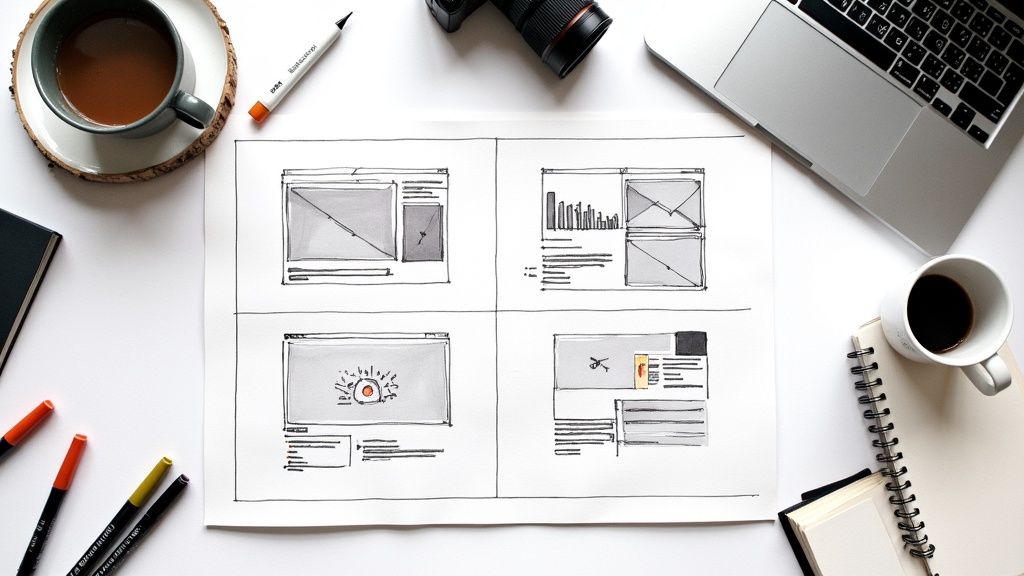
Think of a media kit as your brand's story, packaged up and ready to go. It’s your digital handshake—the one document that pulls together your key numbers, audience insights, and unique personality to grab the attention of high-value brand partners.
A great media kit isn't just a nice-to-have; it's your single most effective sales tool. It makes saying "yes" to a collaboration a no-brainer.
Let’s be real. Getting noticed by the right brands can feel like shouting into an empty room. A media kit is way more than a digital resume; it's your secret weapon for making a stellar first impression. It turns a hopeful cold email into a confident business proposal, separating the hobbyists from the true professionals.
A polished, data-backed kit does the heavy lifting for you. It screams that you’re serious about your work and that you get the business side of brand deals. Instead of forcing brands to hunt for your info, you hand it to them on a silver platter, controlling the narrative from the get-go.
A well-put-together media kit is a sign of pure professionalism. It tells potential partners you've done your homework and you respect their time. In a market where so many creators wing it, this simple act of being prepared puts you leagues ahead.
When you proactively share clear, verified data and glowing testimonials, you start building trust before you even hop on a call. It's a non-negotiable step in building the authority of your personal brand and positioning yourself as someone brands want to work with.
Your media kit is more than just a list of stats; it’s a storytelling tool. This is where you nail down what makes you, you—your niche, your voice, and the genuine connection you have with your audience. This document lets you frame your value proposition in your own words, making sure brands know exactly what they’re getting.
Your media kit functions as the primary introduction to your brand's audience demographics, reach, and advertising offerings—key factors that potential partners scrutinize.
This is especially true right now. With global digital ad spending projected to hit a massive $790 billion in 2025, brands are being pickier than ever. They need partners who can deliver real results, and a solid media kit gives them the hard proof they need to justify investing in you.
To really dig into how to build a tool this powerful, check out this comprehensive guide to creating a content creator media kit. It breaks down exactly how to turn your creative work into a document that speaks the language of business, making you an irresistible choice for any partnership.
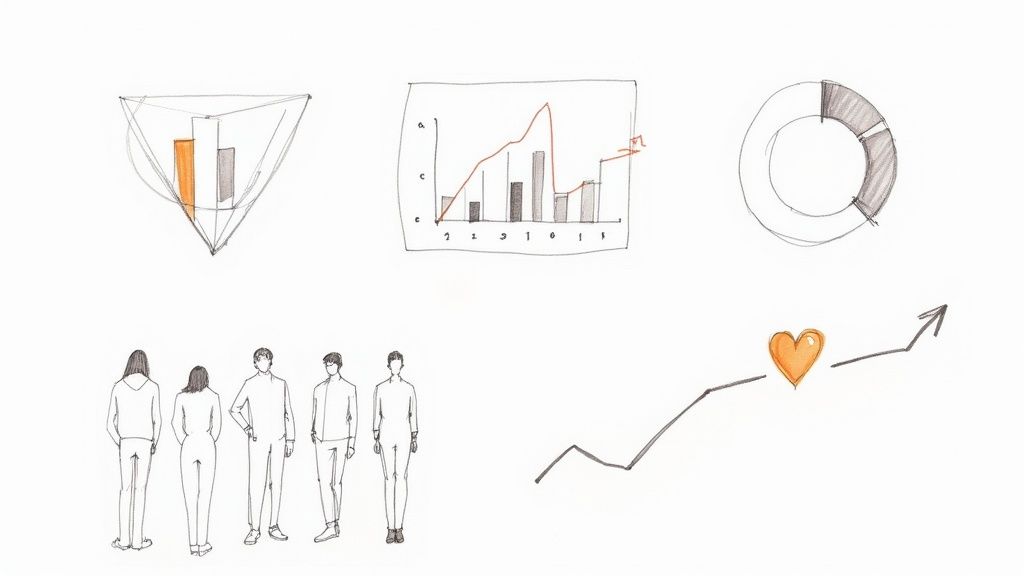
Before you even think about design or fancy layouts, you need to get your hands on the raw materials. This is where the real work begins—gathering the hard data and crafting the story that will actually win you partnerships.
Think of it this way: you're building a business case. You need to present undeniable proof that working with you is a smart move for a brand. That means finding the right numbers, not just any numbers, and wrapping them in a story that connects.
Your bio is the first handshake. It's where a brand manager decides if they want to keep reading or move on. This isn't just a list of your accomplishments; it's your origin story, your mission, and your voice, all rolled into one.
A killer bio gives context to all the numbers that follow. It’s the hook that proves there's an authentic, driven person behind the stats.
Let’s be honest: follower count is a vanity metric. Seasoned marketers look way deeper to see if a partnership is actually worth their budget. Your job is to make it easy for them.
A media kit that works provides a clean, data-backed snapshot of your audience and performance. It cuts through the noise and shows you're a serious professional who understands what brands are looking for.
This means you have to pull real, verifiable numbers directly from your platform analytics. Don’t guess. Don’t estimate. Accuracy is everything when you're building trust.
Here are the non-negotiables:
Pulling these numbers is easier than you think. Every major platform gives you the tools you need.
The whole concept of a media kit has changed. They used to be static PDFs with a basic rate card. Now, they're dynamic digital assets packed with rich, verifiable data—a shift that mirrors how marketing itself has become data-driven. For a deeper look at this shift, check out this piece on the historical evolution of media kits and modern best practices. It's why presenting precise, up-to-date analytics is no longer optional; it's the standard.
Look, a list of impressive numbers is a great starting point, but data alone doesn’t close deals. If you want to grab a brand's attention and keep it, you have to turn those stats into a story they can't ignore.
This is where you connect the dots for them. It’s not just about what you can do, but why it matters to their bottom line. Think of your media kit's narrative as the bridge between your raw data and a signed contract. It’s your best elevator pitch, laid out so clearly they can’t say no.
Your intro isn't just a bio—it's your hook. A busy brand manager has about five seconds to decide if you’re worth their time. Forget the generic summary. You need to lead with your unique value proposition.
What problem are you solving for your audience? What unique angle do you bring to your niche? Frame your intro around that. It's not about who you are; it's about the impact you create.
A weak intro sounds like this:
"I am a lifestyle content creator based in Austin, Texas, with a passion for sustainable living."
A strong intro sounds like this:
"I help busy professionals in Austin discover practical, stylish ways to live more sustainably, proving that an eco-conscious life doesn't require sacrifice. My audience trusts me to cut through the noise and find products that truly work for their lifestyle."
See the difference? The second one immediately tells the brand who the audience is and what value you provide. It’s instantly more compelling.
Okay, you’ve hooked them. Now you need to flesh out your story. This isn’t your life story—it’s a quick, punchy explanation of your journey and your mission. This is what makes a brand feel like they’re partnering with a real person, not just a set of metrics.
Keep it brief but impactful. Make sure it answers three key questions:
This narrative gives your analytics context. A 5% engagement rate is just a number. But when you explain it represents a dedicated community of first-time homeowners actively looking for product recommendations? Suddenly, that number has meaning and a dollar value attached to it. Building a strong story is at the heart of any solid content strategy.
Nothing builds trust faster than proof you’ve done this before. Testimonials and case studies are your secret weapons because they offer third-party validation. They show potential partners you don’t just talk about getting results—you actually deliver them.
But don’t just drop a random quote on the page. Give it some context. Briefly introduce the brand you worked with, the campaign goal, and then let their words seal the deal.
"Working with [Your Name] was a game-changer for our new product launch. Not only did we see a 150% spike in traffic from their content, but the audience they brought in was incredibly engaged and ready to buy. We hit our sales targets a week ahead of schedule."
- Marketing Manager, XYZ Brand
That kind of specific, results-driven feedback is pure gold. If you're just starting out and don't have brand testimonials yet, use quotes from your audience. A heartfelt comment from a follower about how your content helped them can be just as powerful.
Finally, your story should lead directly to how brands can work with you. Don't make them guess. Clearly list your services, but frame them around the benefits, not the features.
Instead of writing "Sponsored Instagram Post," try something like this: "Custom Instagram Post & Story Series: I'll create a set of high-engagement posts and stories to introduce your product to my audience, woven into authentic content that drives curiosity and clicks."
This simple switch reframes your services around the value you bring to the brand. If you can, organize your offerings into clear packages. Make it as easy as possible for a brand manager to say "yes." When you nail the blend of data and story, your media kit stops being a resume and becomes an irresistible proposal.
You’ve got a compelling story and the numbers to back it up. Now, it's time to wrap it all in a design that screams "pro" before anyone even reads a word.
Think of your media kit's design as its body language. A messy, inconsistent layout hints at disorganization. On the other hand, a clean, sharp design tells brands you’re a serious, detail-oriented partner they want to work with. You don't need a graphic design degree to get this right.
Your design should support a simple, three-part flow: an introduction that hooks them, a story that connects, and proof that seals the deal.
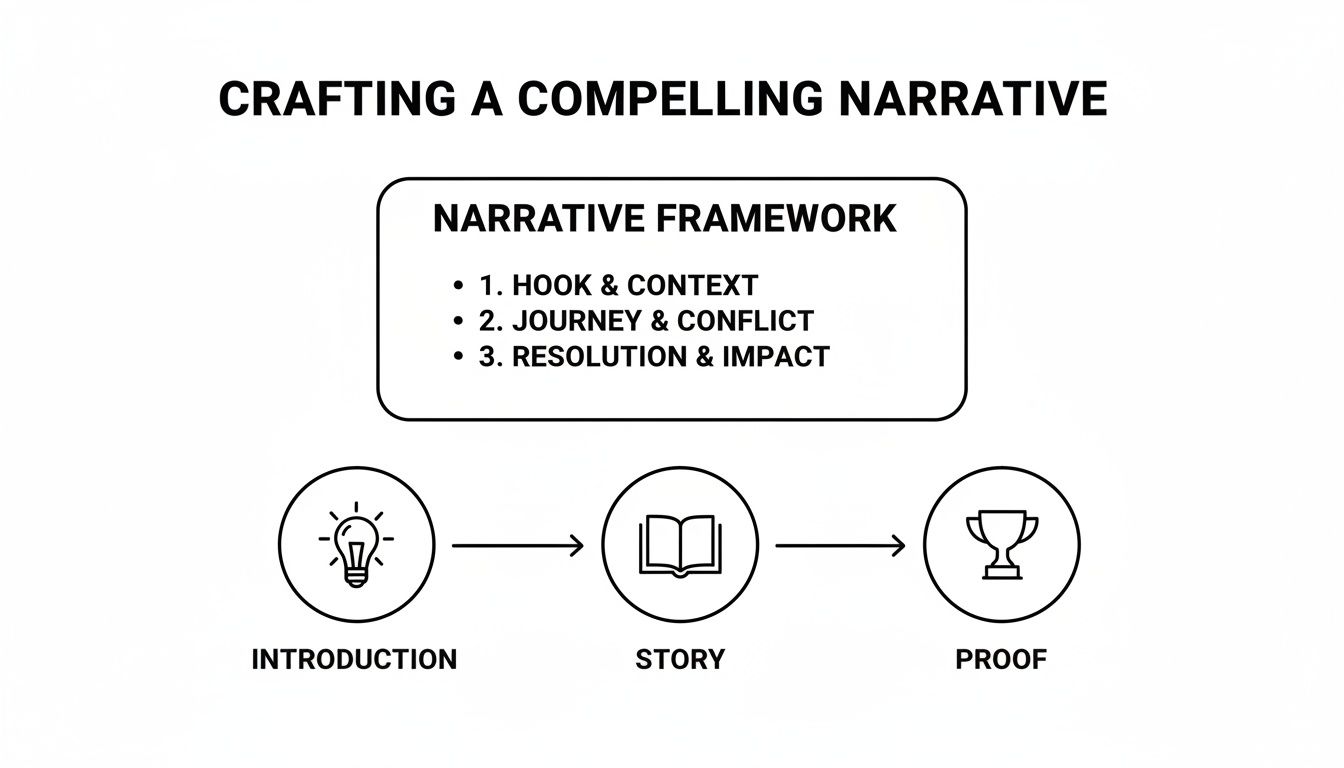
This visual is a good reminder that a great media kit isn't just a list of stats; it's a journey you guide the reader on, from a strong first impression to the undeniable proof of your value.
Forget expensive, complicated software. There are plenty of user-friendly platforms that make professional-level design accessible to everyone.
Just as important is the format. This is all about how brands will actually see and use your kit. The industry standard is a downloadable PDF. It’s professional, works on any device, and holds its formatting perfectly. It's exactly what you want for email attachments or for a download link on your site.
Good design isn't about being flashy; it's about leading the reader's eye where you want it to go. You’re creating a visual hierarchy that tells them what’s important without them even realizing it. Stick to these principles.
Use High-Quality Visuals
Your photos are a direct reflection of your brand. Use professional headshots and high-resolution images that are crisp, clear, and well-lit. Blurry, pixelated, or poorly cropped photos are an instant turn-off.
Stick to Your Brand Palette
Consistency is everything. Use the same 2-3 core colors from your website and social media. This reinforces your brand identity and makes your kit instantly recognizable. If you don't have a set palette, use a free online tool to build one.
Embrace Whitespace
Don't cram every inch of the page with text and images. Whitespace (the empty area around elements) is your friend. It gives your content room to breathe and makes the important stuff stand out. A cluttered page is overwhelming; a clean page is confident.
A clean, crisp design is ideal, with the most important information immediately visible. Function is more important than form in this case. Ensure that the design is mobile-friendly; it’s surprising how many documents still don't work well on mobile.
The format you choose should match how you plan to use your media kit. A one-size-fits-all approach doesn't really work here. You need to pick the right tool for the job.
I've put together a quick comparison to help you decide which format makes the most sense for your goals.
For most creators, a 1-3 page PDF hits the sweet spot. It gives you enough room to tell your story and show off your key numbers without burying the person reading it in details.
Think of it as the perfect, all-around tool for pitching brands and locking in the partnerships you’re after.
So, you’ve put in the work. You’ve crunched the numbers, crafted a story that pops, and designed a media kit that looks incredible. But here’s the hard truth: a world-class media kit does you zero good sitting on your desktop.
The real magic happens when you get it into the right hands. This isn't about blasting your kit into the void and hoping for the best. It's about smart, targeted outreach that shows you’re a serious professional from the very first hello.
When it’s time to send your kit, make it a PDF. It’s the undisputed industry standard for a reason.
A PDF is clean, professional, and looks the same on every device, locking in all that hard design work. Think of it as the digital version of handing someone a crisp, perfectly printed brochure. It just works.
Before you export, though, a few quick pro tips:
Final_Kit_v4_updated.pdf is not the move. Go with something clean and professional, like [Your Brand Name] Media Kit 2024.pdf. Details like this signal you’re organized.Don't force potential partners to go on a scavenger hunt. Your goal is to make it ridiculously easy for them to see what you offer. There are a couple of key places your media kit needs to live, period.
Build a Dedicated "Work With Me" Page
Your website needs a clear, easy-to-find page for partnerships. This is non-negotiable.
Briefly outline your services and—most importantly—have a big, obvious button to download your media kit. This not only snags inbound leads but also shows everyone you’re actively looking for the right collaborations.
Drop It In Your Email Signature
This is one of the easiest, most powerful moves you can make.
Add a simple line to your email signature like, "Interested in partnering? View my media kit here." Just like that, every single email you send becomes a low-key marketing tool.
A well-designed media kit shows you understand your brand goals and are serious about partnerships. From a marketer’s perspective, it also speeds up the decision-making process.
By making your kit accessible, you’re sending a clear signal: you're professional, you're ready for business, and you’re a partner worth considering. This is how you attract opportunities you didn't even know were out there.
When you’re the one reaching out, your pitch email is your first impression. Your media kit is the knockout punch that closes the deal. The email itself needs to be short, personal, and all about them.
Please, never just attach your kit with a lazy "see attached." You have to earn the click.
Here’s a simple framework that I’ve seen work time and time again:
For example, you could close your email with something like this: "I've attached my media kit, which gives a deeper look at my audience demographics and past campaign results. I have a few specific ideas for how we could drive some serious engagement for your upcoming launch."
This approach is a win-win. It respects their time while showing you're a strategic thinker, not just another creator looking for a handout. This kind of targeted, value-first outreach is a cornerstone of a modern B2B social media strategy that works because it’s built on relationships, not just transactions.
Even after you've pulled together a media kit you're genuinely proud of, a few questions might still be bouncing around in your head. That’s completely normal. When you're dealing with brand partnerships, you're always adapting to new situations and unexpected requests.
Think of this as the final check-in to boost your confidence. I'm going to walk you through the most common questions I hear from creators and founders, giving you straight-up answers so you can handle these things like a pro.
This is a big one. An outdated media kit is actually worse than having no media kit at all. It sends the wrong signal—that you aren't paying attention to your own growth or, worse, that you're not actively in the game.
The sweet spot? Give it a refresh quarterly.
A three-month cycle is perfect. It’s frequent enough to show real growth in your stats (like audience size or engagement rates) without turning it into a constant, tedious task.
Here’s a quick rundown for your quarterly update:
Your media kit is a living document, not a one-and-done project. Keeping it current shows potential partners you’re an active, growing professional who takes their business seriously.
The easiest way to stay on top of this? Set a recurring calendar reminder right now. Treat it like any other critical business meeting—because it is.
One hundred percent, yes. You should have a master version that lives on your website, but creating tailored kits for specific pitches can be a total game-changer. Customizing it shows a brand you’ve done your homework and you're serious about a real partnership, not just chasing a paycheck.
Think about it: if you're a lifestyle creator who also geeks out on tech, you wouldn't send the same kit to a skincare brand that you'd send to a company launching a new smartwatch.
When to Customize Your Kit
This little bit of extra effort might seem like a hassle, but it dramatically increases your chances of getting a "yes." It positions you as a strategic partner, not just another creator on a list.
Honestly, these terms get thrown around interchangeably all the time, and for most creators and personal brands, the difference is pretty small. Both are designed to give outsiders the essential info about you.
But there is a classic distinction.
A media kit is built for potential advertisers, sponsors, and brand partners. Its main job is to sell a collaboration. It's all about showcasing your audience demographics, engagement metrics, and what you offer.
A press kit, on the other hand, is traditionally for journalists, reporters, and media folks. Its goal is to make it dead simple for them to write a story about you. Think company history, executive bios, high-res logos, and official press releases. For a deeper dive, check out this comprehensive guide on how to create a press kit that gets results.
For most solo entrepreneurs and personal brands, a single, solid media kit that pulls the best elements from both worlds is all you need. Just make sure it has the key info that both potential partners and journalists would be looking for.
At Legacy Builder, we specialize in transforming your expertise into a powerful online presence that attracts the right opportunities. If you're ready to build an authentic personal brand that stands out, we can help.
Learn more about how Legacy Builder can elevate your personal brand.


You could – but most in-house teams struggle with the nuance of growing on specific platforms.
We partner with in-house teams all the time to help them grow on X, LI, and Email.
Consider us the special forces unit you call in to get the job done without anyone knowing (for a fraction of what you would pay).
Short answer – yes.
Long answer – yes because of our process.
We start with an in-depth interview that gives us the opportunity to learn more about you, your stories, and your vision.
We take that and craft your content then we ship it to you. You are then able to give us the final sign-off (and any adjustments to nail it 100%) before we schedule for posting.
No problem.
We have helped clients for years or for just a season.
All the content we create is yours and yours alone.
If you want to take it over or work on transitioning we will help ensure you are set up for success.
We want this to be a living breathing brand. We will give you best practices for posting and make sure you are set up to win – so post away.
Subscribe to our newsletter and get insights on how to grow your personal brand.
