.svg)
Subscribe to our newsletter and get insights on how to grow your personal brand.
Thank you! Your submission has been received!
Oops! Something went wrong while submitting the form.
.svg)


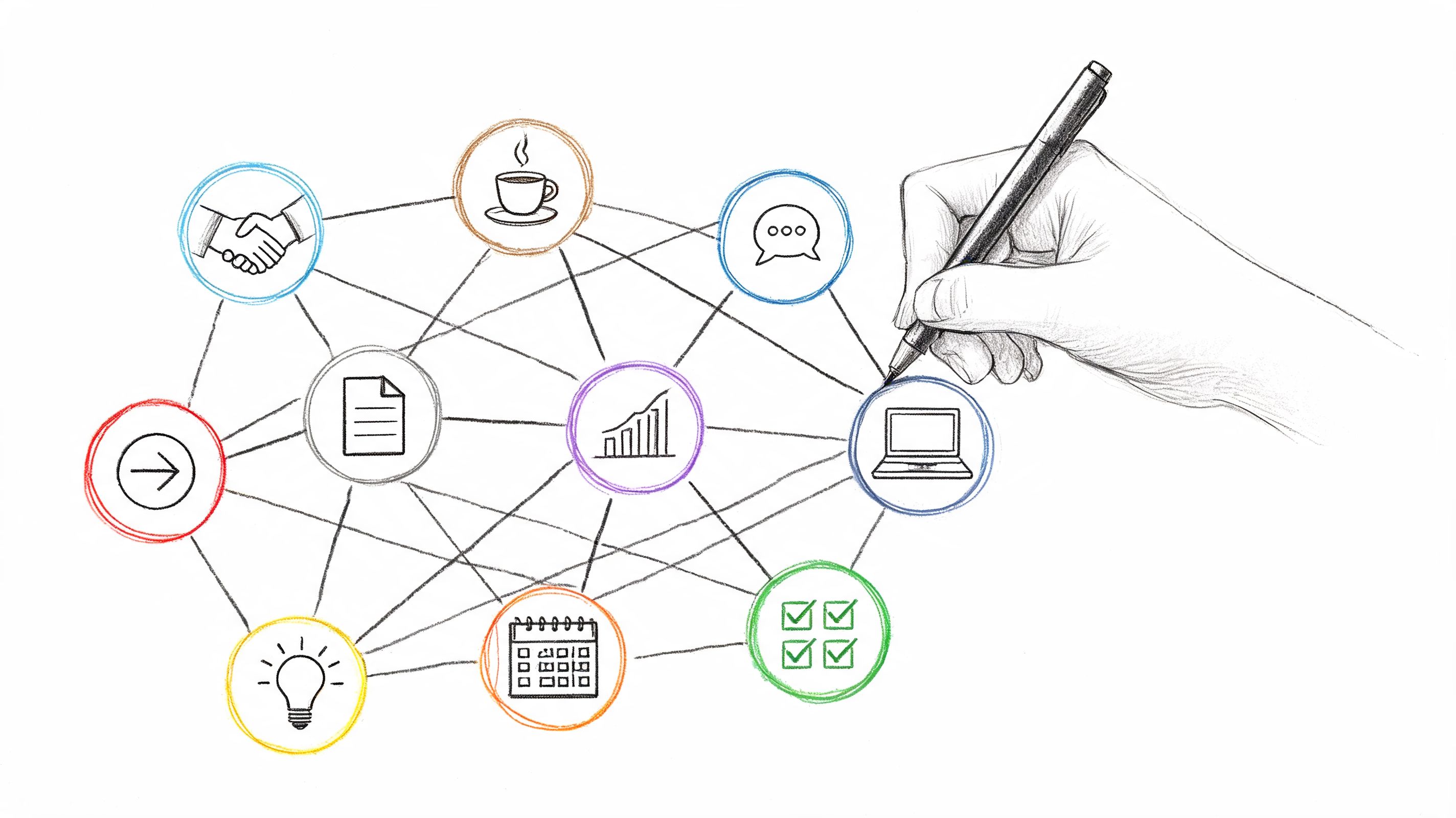
Stop collecting contacts. Start building relationships.
Many professionals treat networking as a volume-based storage challenge. More names. More followers. More business cards. More LinkedIn connections. That approach is lazy, noisy, and weak. A large contact list provides no value if nobody trusts you, remembers you, or feels comfortable putting their reputation behind you.
A few real relationships beat a giant pile of forgettable interactions. Every time.
This isn't soft advice. Relationship marketing became a major management approach in the late 20th century, and the research summarized by Zion & Zion on relationship-building and business outcomes ties trust and rapport to customer loyalty, retention, satisfaction, and positive word-of-mouth. That means relationship building strategies aren't a vibe. They're infrastructure.
You also can't hide behind “just be authentic.” That phrase has been beaten into meaninglessness. Authenticity without structure is inconsistency. Inconsistency kills trust. Trust is what closes opportunities, gets introductions, keeps customers, and makes people reply when you reach out.
So build a system.
You need a narrative people can remember, content people can rely on, conversations that go both ways, and partnerships that expand your reach without making you look desperate. You need offense tactics that create new relationships and defense tactics that protect the ones you already have.
If you're serious about growth, study effective networking for Midwestern entrepreneurs and then raise your standard. Don't just network. Build relationship capital.
Here are 10 battle-tested relationship building strategies that turn your personal brand into a lead-generating machine.
People don't remember polished bios. They remember tension, stakes, mistakes, and what you learned under pressure.
If your content sounds like a resume, you're invisible. If it sounds like a real person with scars, convictions, and pattern recognition, people lean in. That's why storytelling sits at the foundation of strong relationship building strategies. It gives people a reason to trust your perspective before they ever buy from you.
Start with three core stories. One about where you started. One about a hard lesson. One about the standard you refuse to compromise on.

You don't need to spill your whole life online. You need controlled vulnerability. Share enough truth to create trust, not so much that you lose clarity.
Use a simple story bank:
Brené Brown built resonance through vulnerability-centered ideas. Oprah turned personal transformation into a media identity. Gary Vaynerchuk made daily documentation part of his brand. Different style. Same principle. They gave people a narrative thread to follow.
Practical rule: Don't share for catharsis. Share for connection and clarity.
If you don't know how to tell your story without sounding self-important, use this template:
“I used to believe [old belief]. Then I went through [specific experience]. Now I believe [new conviction], and that's why I help [audience] do [result].”
That works in LinkedIn posts, podcast intros, email welcome sequences, and speaking bios.
Defense tactic. Keep your stories consistent. If your narrative changes every month, people stop trusting your positioning.
Offense tactic. Turn one personal story into multiple formats. Record it on video, post the text version on LinkedIn, expand it in email, and mention it on calls. Repetition builds memory. Memory builds familiarity. Familiarity opens doors.
Good content posted inconsistently is a hobby. Distributed content is a growth system.
You don't need to be everywhere. You need to show up reliably where your audience already pays attention. Most professionals fail at this point. They create one strong post, disappear for two weeks, then wonder why nobody thinks of them when opportunities show up.
Consistency builds trust because predictability signals reliability. If your audience sees you every week with something useful, they start treating you like a serious operator.
Build around one core asset each week. That could be a sharp LinkedIn post, a short video, a founder memo, a newsletter essay, or a podcast clip. Then repurpose it across channels without copy-pasting lazily.
Your workflow can be simple:
Harvard DCE notes that marketers can track conversion rate, click-through rate, average purchase, and customer engagement to tailor offers more effectively. In the same source, Harvard DCE reports that 78% of customers are more likely to make future purchases when offers match their interests, wants, or needs. That matters because personalization is how content starts feeling like relationship building instead of broadcasting.
A founder, creator, and executive shouldn't all get the same message. Segment by intent. Write one angle for founders who want growth, another for operators who want systems, another for creators who want audience trust.
Most people don't need more content. They need more signal.
Offense tactic. Publish opinion-led content that starts conversations with strangers.
Defense tactic. Keep a consistent publishing cadence so the people already watching don't forget you.
If you want stronger relationships, distribute with discipline. Trust doesn't scale through random posting.
Attention is cheap. Replies are not.
A comment, DM, share, or thoughtful question is a buying signal, a trust signal, or a future referral signal. Treat it that way. If you post and disappear, you train people not to bother engaging with you again.

Community loyalty does not come from charisma. It comes from response patterns people can count on.
Use this operating rhythm:
A survey from Crucial Learning found that team performance depends more on relationship strength than team size, department, or team makeup. The practical takeaway is simple. Strong relationships improve execution. Weak ones slow everything down.
Loyalty grows around repeated participation. Give your audience a reason to come back and a format they recognize.
Start with a few simple rituals:
This is the founder's playbook. You do not wait for “community” to happen. You create loops that reward participation and make people feel seen.
Use message templates. They save time and improve consistency.
Public reply template:
“Good point. What are you seeing in your team or market that makes this hard?”
DM follow-up template:
“You've added smart comments a few times. Appreciate it. What are you working on right now?”
Recognition template:
“Your comment was one of the strongest on this post. Mind if I feature it in tomorrow's roundup?”
Offense tactic. Enter relevant conversations in other people's communities and add a sharp, useful point.
Defense tactic. Show up for your own people fast, remember your regulars, and reward contribution in public.
That is how audience turns into community, and community turns into loyalty.
Random networking wastes time. Targeted relationship expansion creates momentum.
You don't need to “meet more people.” You need the right peers, mentors, referrers, collaborators, and community connectors. That means building a network on purpose. A relationship building strategy without targeting becomes social drift.
Make a hit list. Not of famous people you want attention from. Of specific people whose work, audience, or judgment overlaps with yours.
One of the smartest moves in relationship building is borrowing trust through the right connector. Research on community engagement describes how gatekeepers and trusted leaders can act as advocates and facilitate trust and stronger working relationships. That applies far beyond research settings. In business, the gatekeeper-advocate model is a force multiplier.
If you want access to a new community, don't barge in cold. Find the person that community already trusts.
Use this sequence:
Borrow trust carefully. One strong advocate can collapse months of friction.
Stop sending fake-friendly messages. People know when you want something.
Use a direct note like this:
“I've been following your work on [specific topic]. You've built trust with [specific audience], and I respect that. I think there's a useful overlap with what I do for [audience]. If it's relevant, I'd love to explore one simple way to create value for your people first.”
That works because it's honest. It recognizes their position. It frames collaboration around service, not extraction.
Offense tactic. Use introductions, communities, and collaborators to enter rooms you haven't earned direct access to yet.
Defense tactic. Maintain your top relationships with light, useful touchpoints so they don't go cold between opportunities.
If every piece of content smells like a pitch, people back away.
Value-first content earns trust before you ask for anything. It answers real questions, removes friction, and proves you understand the problem better than the average loud person in your market. This is one of the few relationship building strategies that works before a conversation even starts.
Teach generously. Hold back only what requires direct execution, nuance, or customization.
Strong value-first content has utility. Not inspiration alone. Utility.
Create assets like these:
Buffer built attention through free educational resources. HubSpot became a default reference point by teaching practical marketing mechanics. Plenty of creators grew by answering the same painful questions their audience kept asking.
Before you publish, ask one question. Can someone apply this without hiring you?
If the answer is no, the content is probably too vague. Fix it.
Here's a simple format:
This is how you become useful. Useful beats clever.
Offense tactic. Create assets designed to be shared internally, forwarded to peers, or saved for later.
Defense tactic. Update old evergreen content so your best ideas don't decay and die in the archive.
The fastest way to become memorable is to make people better at their job.
If you're for everyone, you're forgettable.
A weak brand says, “I help businesses grow.” A sharp brand says, “I help SaaS founders turn founder-led content into qualified conversations.” One is generic. One creates recall. Positioning is a relationship advantage because people refer clear specialists faster than broad generalists.
You need a tight answer to three questions. Who do you help? What problem do you solve? Why are you different?
Use this:
“I help [specific audience] achieve [specific outcome] through [specific method or lens].”
Then pressure-test it in bios, DMs, podcast intros, sales calls, and your website headline. If it sounds stiff, unclear, or inflated, rewrite it.
Good positioning usually comes from the overlap of lived experience, market demand, and repeated proof. Brené Brown owned vulnerability and courage. Neil Patel owns SEO and digital marketing. Tim Ferriss built a lane around performance, experimentation, and lifestyle design.
Individuals often weaken their brand by stacking too many identities. Consultant. Speaker. Coach. Creator. Investor. Advisor. Writer. Operator. Nobody knows what to do with that.
Trim it down:
Positioning also helps your relationships because it tells the right people when to think of you. Referrals happen when your name attaches to a clear use case.
Offense tactic. State your niche loudly enough that ideal people self-select in.
Defense tactic. Audit your profiles and content so you stop sending mixed signals to the people already paying attention.
Clarity is attractive. Confusion repels.
Social platforms rent you attention. Email gives you direct access.
If relationship building matters to your business, build a list. Not because email is trendy. Because it lets you communicate without depending on an algorithm, a platform mood swing, or a disappearing post. Email is where lightweight attention becomes durable connection.
You own the cadence. You own the archive. You control the depth.
A weak email strategy says, “Join my newsletter.” A strong one gives people a reason.
Offer something with immediate value:
Then segment by interest. Founders should get different angles than creators or executives. If everyone gets the same message, relevance drops.
The best relationship emails sound direct, useful, and slightly more personal than social content. They don't need corporate polish. They need clarity and rhythm.
A strong email often includes:
You can also use email as a defense channel. When social reach dips, your strongest people still hear from you. When you launch something, your warm audience gets context first. When someone replies, the relationship gets deeper fast.
A creator like Seth Godin built trust through regular direct writing. Many operators build stronger business relationships in inboxes than on any public platform because email creates space for nuance.
Offense tactic. Use lead magnets and guest appearances to pull new people into your owned audience.
Defense tactic. Send consistently enough that subscribers remember who you are and why they joined.
Collaboration is how you scale trust without faking authority.
The right partner gives you access to attention you haven't earned alone yet. But weak collaborations feel transactional fast. Strong ones feel like a service to both audiences. That's the standard.
Such an approach is where many individuals take a wrong turn. They pitch a collaboration because they want reach. Your audience can smell that. So can the partner.
Start with overlap. Not vanity. Not follower count.
Look for collaborators who have:
Podcast guest swaps, live workshops, newsletter exchanges, webinars, teardown sessions, co-authored guides, and panel appearances all work if the audience gets real value.
If you're capturing new leads from these efforts, make sure the back end is clean. A sloppy handoff wastes relationship equity. Tighten the intake process with systems like using database systems to capture leads.
One of the biggest blind spots in relationship building is pretending there's no transaction involved. In real life, there often is. Research on community relationship practice highlights the value of being transparent about why you are choosing to reach out and sharing power in the partnership. That's not weakness. That's maturity.
Use a collaboration note like this:
“I think our audiences overlap around [problem]. I'd like to create something practical together that helps them solve it. If there's a fit, I'd want this to be useful for your community first and easy for your team to run.”
That message wins because it's honest and low-friction.
Offense tactic. Use collaborations to enter new markets with borrowed credibility.
Defense tactic. Debrief every partnership, keep promises, and look for a second project if the first one worked.
People judge your credibility before they read your best sentence.
Visual inconsistency creates subtle distrust. One day you look polished. The next day you look chaotic. That gap matters. Design won't replace substance, but it absolutely affects whether people assume you're organized, premium, and worth paying attention to.
Strong visual branding supports relationship building strategies because recognition reduces friction. If people can spot your work instantly, they remember you faster.
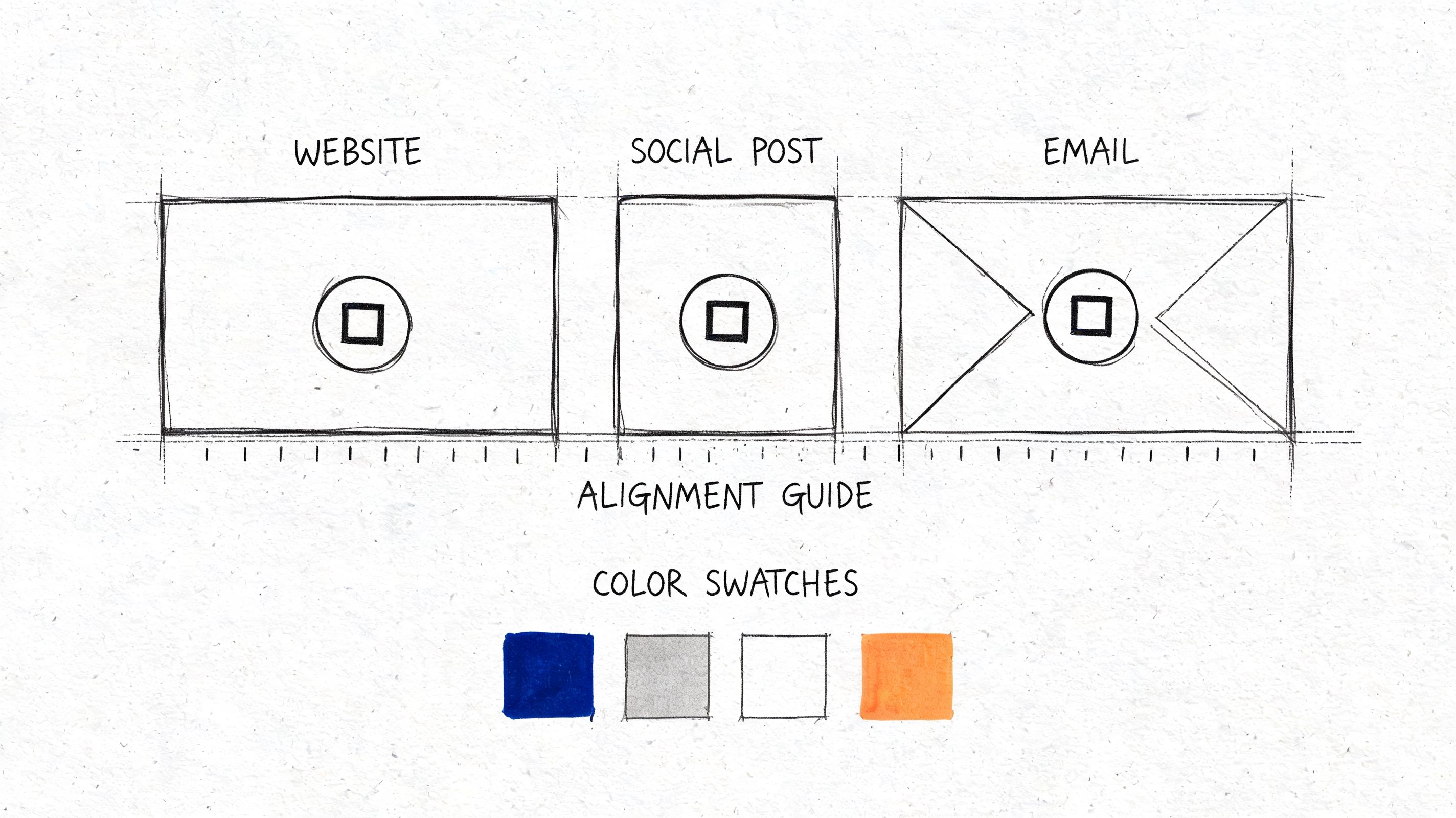
You do not need an overbuilt style guide. You need repeatable choices.
Lock in:
Canva is enough for many early-stage brands. Figma works if you want tighter control. A skilled designer helps if your brand is central to premium positioning.
A founder brand about sharp strategy shouldn't look like a lifestyle scrapbook. A creative educator brand shouldn't look sterile and over-corporate. Your visual system should reinforce your positioning, not contradict it.
HubSpot's branding is recognizable because it stays coherent. Marie Forleo built familiarity with a bright, energetic visual signature. Seth Godin uses simplicity to support clarity. Different aesthetics. Same discipline.
Your design is a trust cue. Treat it that way.
Offense tactic. Make branded assets easy for collaborators, podcast hosts, and event organizers to share.
Defense tactic. Audit your platforms every quarter so old visuals don't undermine your current positioning.
Thought leadership gets abused. A few loud opinions and a posting habit do not make you an authority.
Authority comes from original synthesis. You spot patterns early, give them clear language, and turn them into frameworks other people can apply. That is how your reputation spreads beyond the people who already know you.
As noted earlier, relationship building keeps rising in value because trust and judgment still win where automation falls short. If you can teach trust clearly and repeatedly, you stop competing on volume. You become the person people cite.
You need a sharp stance. Generic advice never travels.
Start here:
The best-known thinkers did not win by being everywhere. They won by being memorable. Drucker gave managers language. Sinek gave leaders a repeatable model. Christensen gave operators a lens for change. Their ideas spread because people could repeat them in one sentence.
You do not need academic credentials. You need receipts.
Your best ideas are usually hiding in plain sight. They show up in sales calls, client work, team mistakes, failed experiments, and the questions people keep asking you. Capture those patterns every week. Then turn them into assets with names, diagrams, and examples.
Document these first:
A named concept travels faster than a pile of smart observations. That is the founder playbook. You move from insight to framework to distribution.
Offense tactic. Publish ideas worth stealing, quoting, and teaching.
Defense tactic. Pressure-test every framework against real work, real outcomes, and real objections so your authority stays credible.
| Strategy | 🔄 Implementation Complexity | ⚡ Resource Requirements | 📊 Expected Outcomes | 💡 Ideal Use Cases | ⭐ Key Advantages |
|---|---|---|---|---|---|
| Authentic Storytelling and Personal Narrative Sharing | 🔄 Moderate–High (emotional labor, craft) | ⚡ Moderate (time, video/audio tools) | ⭐⭐⭐⭐, Deep trust & high engagement | Personal brands, coaches, authors | Builds emotional connection; differentiation; loyalty |
| Strategic Consistent Content Distribution | 🔄 Medium (systems + analytics) | ⚡ Moderate–High (production + scheduling tools) | ⭐⭐⭐, Increased visibility & steady growth | Multi-platform growth, thought leadership | Algorithmic reach; consistent top-of-mind presence |
| Active Engagement and Community Loyalty | 🔄 High (ongoing two-way interaction) | ⚡ High (daily time or community team) | ⭐⭐⭐⭐, Strong retention & advocacy | Memberships, creators, service businesses | Loyal advocates; UGC; direct feedback loop |
| Strategic Network Expansion and Relationship Leverage | 🔄 Medium (targeted outreach + nurture) | ⚡ Moderate (time, CRM/relationship tools) | ⭐⭐⭐⭐, Credibility boost & new audiences | Partnerships, PR, collaborative launches | Access to new audiences; mentorship; social proof |
| Value-First Content Marketing | 🔄 Medium–High (expertise + consistency) | ⚡ Moderate–High (research, production) | ⭐⭐⭐⭐, Authority & organic shareability | Educators, consultants, SaaS freemium funnels | Trust through value; shareable assets; self-qualification |
| Personal Brand Positioning and Niche Clarity | 🔄 Medium (research & commitment) | ⚡ Low–Moderate (strategy, branding work) | ⭐⭐⭐⭐, Clear differentiation & premium positioning | Specialists, consultants, coaches | Easier messaging; targeted opportunities; premium pricing |
| Email List Building and Direct Audience Communication | 🔄 Low–Medium (setup + compliance) | ⚡ Moderate (lead magnets, ESP costs) | ⭐⭐⭐⭐, High ROI & owned reach | Product launches, monetization, long-term nurturing | Owned channel; high conversion; predictable launches |
| Strategic Collaboration and Co-Creation | 🔄 Medium (coordination & agreements) | ⚡ Moderate (partner coordination, shared production) | ⭐⭐⭐, Audience expansion & richer content | Podcasts, webinars, joint products | New audiences; shared workload; boosted credibility |
| Visual Branding and Design Consistency | 🔄 Low–Medium (design system setup) | ⚡ Moderate (designer or tools, templates) | ⭐⭐⭐, Improved recall & professional perception | Public-facing brands, creators, course sellers | Recognition; content efficiency; perceived quality |
| Authority Building Through Thought Leadership | 🔄 High (original research + visibility) | ⚡ High (research, publishing, speaking prep) | ⭐⭐⭐⭐, Long-term influence & premium opportunities | CEOs, academics, keynote speakers | Credibility, media opportunities, defensible expertise |
Followers are visible. Relationships are valuable.
A big audience can flatter your ego while doing nothing for your business. A smaller network of trusted peers, engaged subscribers, loyal clients, and respected collaborators can change the trajectory of your company. That's the difference between attention and relationship equity. One is easy to brag about. The other produces introductions, retention, referrals, partnerships, and repeat opportunities.
That's why these relationship building strategies matter. They create compounding assets. A clear story makes people remember you. Consistent distribution keeps you top of mind. Engagement builds loyalty. Positioning sharpens referrals. Email deepens direct connection. Collaboration expands trust. Thought leadership gives people language to share your ideas when you're not in the room.
You don't need to implement all ten at once. That's how people stay stuck. They read, agree, overcomplicate, and do nothing. Pick one and run it hard for the next month.
If your foundation is weak, start with storytelling. If people forget you, fix distribution. If you're getting impressions but no real traction, improve engagement. If your brand feels blurry, tighten positioning. If you rely too much on social reach, build your email list. If you've hit a ceiling alone, pursue collaborations. If people see you as capable but not definitive, publish stronger ideas.
Run these strategies with offense and defense in mind.
Offense creates new relationship opportunities. That includes outreach, collaborations, thought leadership, guest appearances, and conversation-starting content.
Defense protects and deepens the relationships you already have. That includes follow-ups, email consistency, community recognition, clear positioning, and reliable delivery. Most professionals are over-focused on offense. They chase new people while neglecting the audience, clients, and peers already paying attention. That's a costly mistake.
You should also stop pretending relationship building is separate from operations. It isn't. Your calendar, CRM, content workflow, lead capture, email system, design standards, and follow-up habits all shape how relationships grow or die. BARC's adoption research found that BI and analytics adoption averages 25% among employees, while 50% of data and analytics leaders say usage has increased a lot, with progress driven by data-minded executives, training, embedded analytics, governance, centers of excellence, and agile delivery. The lesson for your brand is simple. Ad hoc effort loses to operational discipline.
So build the machine.
Track what people respond to. Note which stories generate replies. Record which collaborators bring the right audience. Watch where trust shows up in behavior. Are people replying, sharing, introducing, revisiting, and asking better questions? Those are relationship signals. Learn from them and tighten the system every week.
If you're a founder, creator, executive, or operator, your legacy won't be built by posting more noise. It will be built by earning trust repeatedly, delivering value consistently, and creating relationships that outlast platforms, trends, and campaigns.
Choose one strategy from this list. Commit to it for the next 30 days. Execute it like it matters.
It does.
If you want help turning these relationship building strategies into a real operating system, Legacy Builder can do that with you. They help founders, executives, creators, and growth-minded professionals turn personal narratives into consistent content, strategic distribution, stronger audience engagement, and a brand people trust. If you're tired of posting inconsistently, sounding generic, or handling your brand alone, Legacy Builder gives you the team and structure to build relationships that compound.


You could – but most in-house teams struggle with the nuance of growing on specific platforms.
We partner with in-house teams all the time to help them grow on X, LI, and Email.
Consider us the special forces unit you call in to get the job done without anyone knowing (for a fraction of what you would pay).
Short answer – yes.
Long answer – yes because of our process.
We start with an in-depth interview that gives us the opportunity to learn more about you, your stories, and your vision.
We take that and craft your content then we ship it to you. You are then able to give us the final sign-off (and any adjustments to nail it 100%) before we schedule for posting.
No problem.
We have helped clients for years or for just a season.
All the content we create is yours and yours alone.
If you want to take it over or work on transitioning we will help ensure you are set up for success.
We want this to be a living breathing brand. We will give you best practices for posting and make sure you are set up to win – so post away.
Subscribe to our newsletter and get insights on how to grow your personal brand.
